
Stocks Slip as Mixed Jobs Data and Oil Selloff Pressure Sentiment
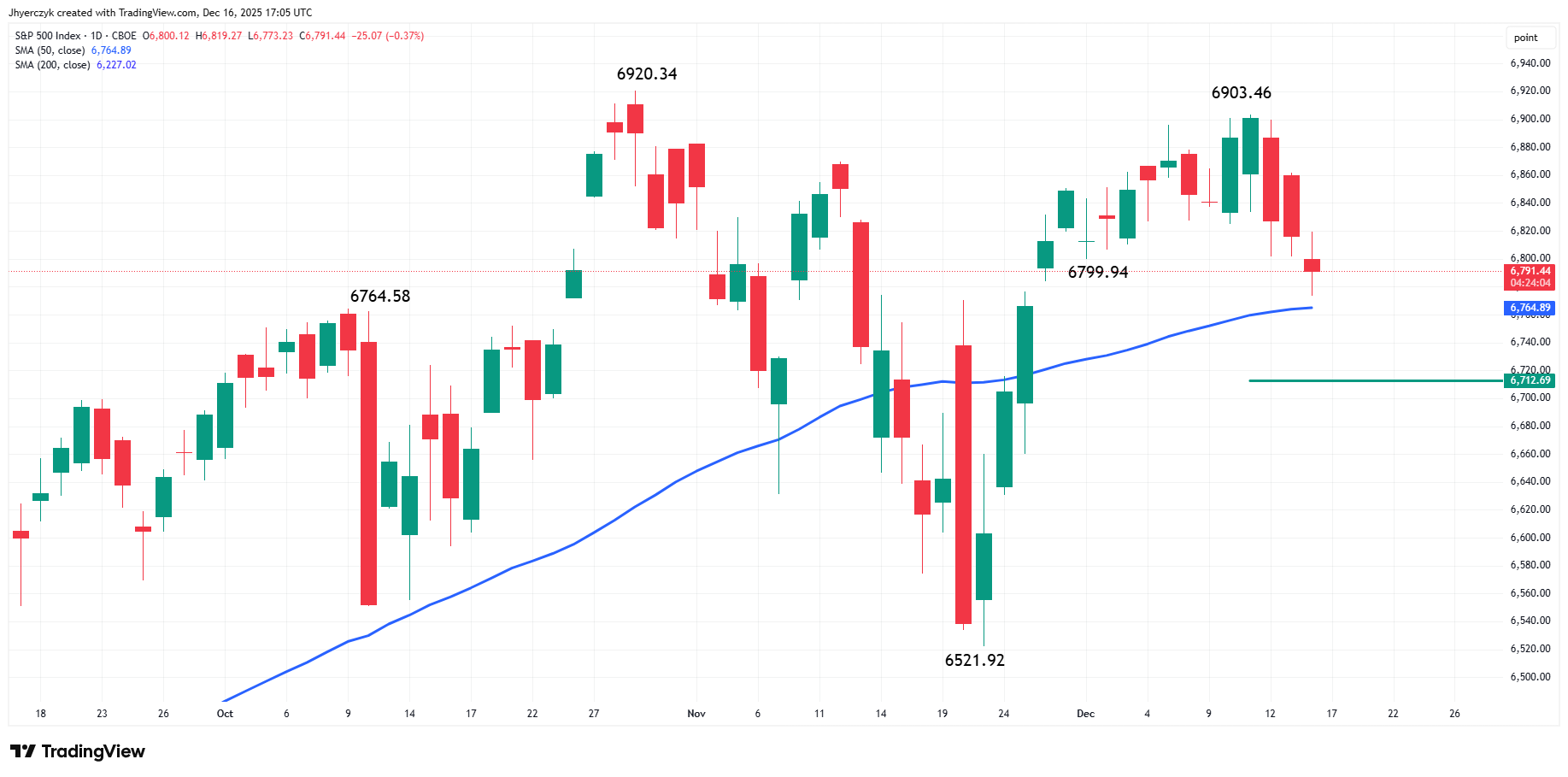
Stocks fell Tuesday as traders evaluated a delayed November jobs report and a sharp downturn in crude oil that added pressure to the broader market. The S&P 500 declined 0.5%, the Nasdaq Composite slipped 0.4%, and the Dow Jones Industrial Average lost 235 points, or 0.5%. Monday’s retreat in major artificial intelligence names continued to influence risk appetite as investors shifted toward defensive positioning.
The Bureau of Labor Statistics reported a 64,000 increase in November payrolls, exceeding expectations for 45,000. October’s figures were revised sharply lower with a loss of 105,000 jobs, and the unemployment rate rose to 4.6% versus the 4.5% forecast.
Fed funds futures now show a 26% chance of a January rate cut, slightly above the prior 24%, as traders assess uneven labor trends approaching year-end.

How Did Broader Sectors Perform?
Health care led declines with a 1.42% drop, while technology eased 0.24% as investors reduced exposure to high-multiple AI names. Industrials, financials, utilities, and real estate posted moderate losses, reflecting a cautious tone across cyclicals. Consumer discretionary finished unchanged, offering the only sector-level stability in an otherwise negative session.
Which Stocks Led Market Movers?
Comcast, United Airlines, Robinhood, Estee Lauder, and Zoetis advanced between roughly 2.7% and 3.5%. On the downside, Humana fell more than 5%, and Pfizer declined 4.6%.
What Triggered Crude’s Breakdown, and How Did It Hit Energy Stocks and the Sector?
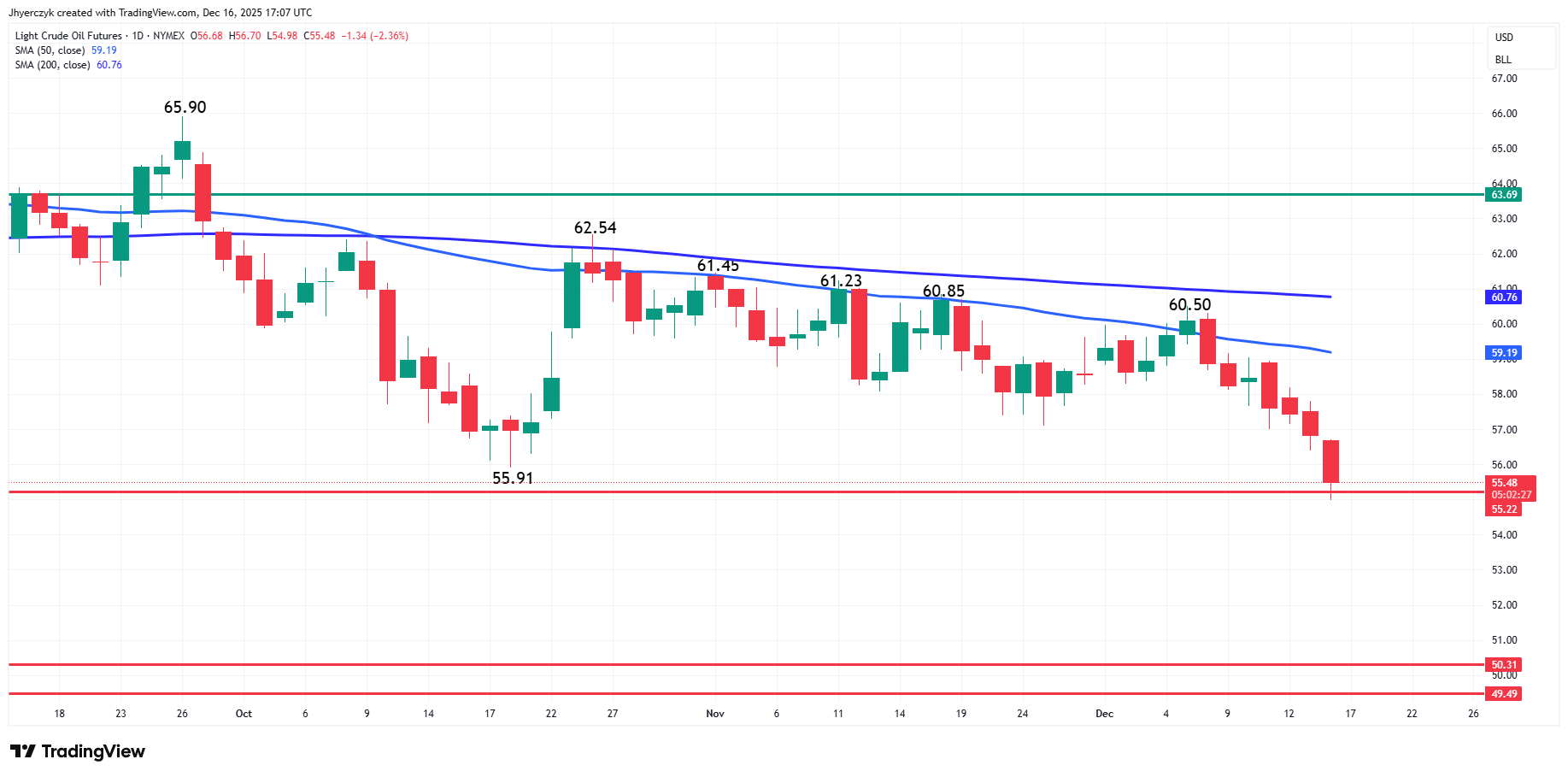
U.S. crude fell below $55 a barrel, reaching $54.98 — its lowest level since early 2021 — before last trading at $55.16, down 2.92%. Brent declined 2.77% to $58.88. Crude has now lost about 23% this year as rising OPEC+ output expanded supply faster than anticipated demand. Traders also evaluated the potential for reduced geopolitical tension if Ukraine accepts a peace arrangement encouraged by President Donald Trump.
The slide in crude resulted in a 2.58% decline in the energy sector, the steepest loss across major S&P 500 groups. Oil-linked stocks APA, Halliburton, and Diamondback Energy fell between 4.6% and 4.8%, reflecting the direct impact of lower crude prices on producers and services firms. The commodity drop drove both the sector move and the individual stock declines, forming one of the day’s clearest market catalysts.
Dow Jones Price Forecast
Every new Dow Jones analysis as it publishes, today's technical signal and key levels, live price — on one page.
See all Dow Jones forecastsMarket Outlook
With today’s mixed employment report and crude sitting at multi-year lows, the short-term bias for U.S. equities is bearish. Traders are treating the jobs data as another sign of a cooling but not collapsing economy, which keeps rate-cut timing in play but does not remove recession risk.
Attention now turns to the upcoming CPI inflation release, which will be the next major driver for Federal Reserve expectations. A softer CPI print would support the case for rate cuts in the first half of 2026 and could ease some of the pressure on indexes, particularly in rate-sensitive groups. A hotter reading, however, would likely push back easing expectations and extend selling in cyclicals, financials, and high-multiple tech.
Until CPI provides clearer direction, many active traders are keeping risk exposure contained, favoring defensives and high-quality balance sheets over cyclical and commodity-linked names, with index levels likely to trade with a bearish tilt in the very near term.
More Information in our Economic Calendar.