Supreme Court Strikes Down Trump Tariffs, Sending Stocks Higher
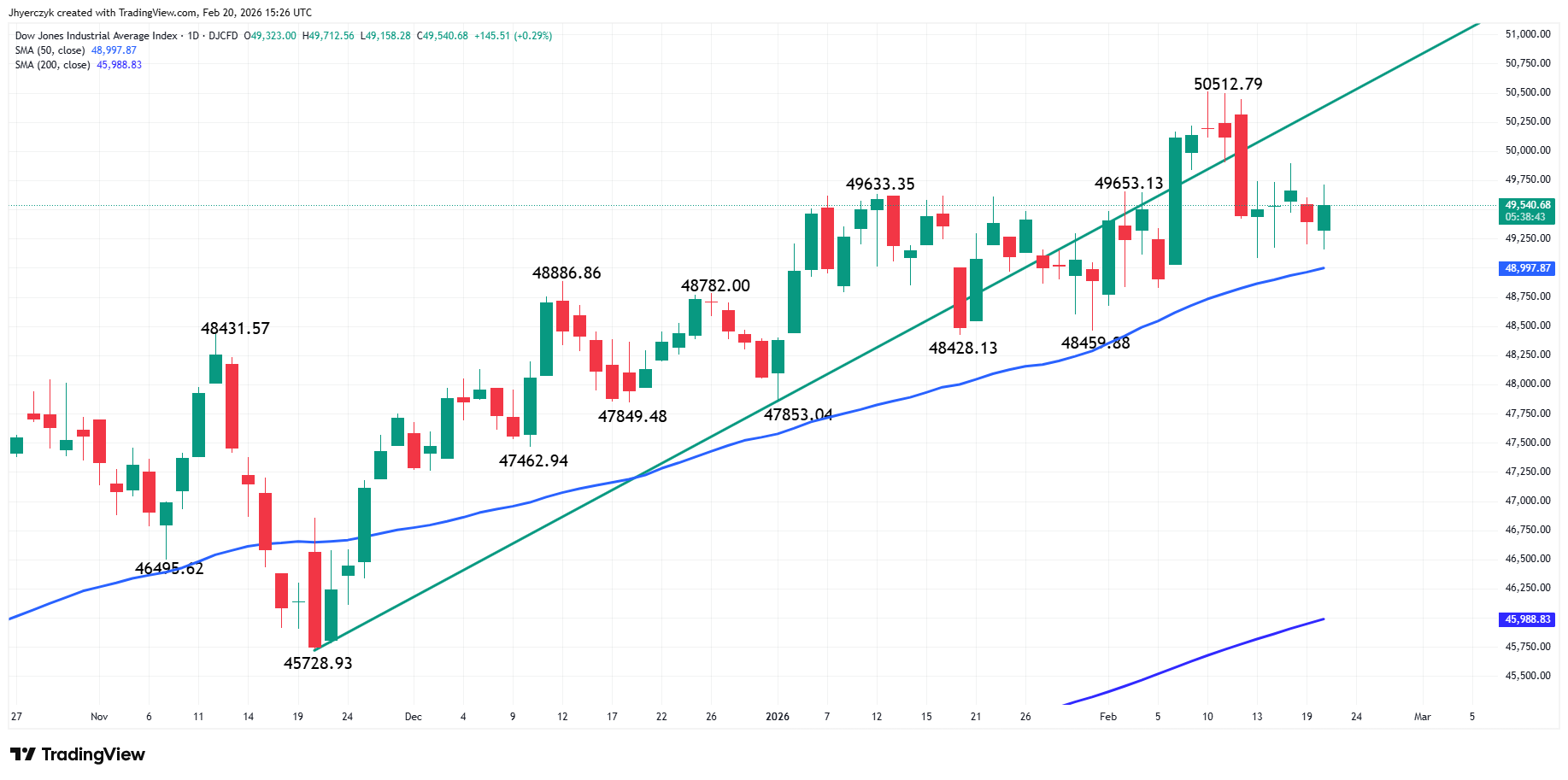
The U.S. stock market turned positive across the board on Friday after the Supreme Court knocked down President Trump’s emergency tariffs. The vote was 6-3 against. This news is being interpreted as bullish because it removes a significant cost burden from companies that import materials and goods. It also removes uncertainty from corporate earnings guidance and because it’s disinflationary, it gives the Fed more room to cut rates.

Earlier in the Session, the Picture Looked Much Darker
The major U.S. stock indexes opened lower after fresh economic data on growth and inflation dampened the odds of a June Fed rate cut. Traders were also nervous as they awaited a possible decision from the Supreme Court on the legality of President Trump’s tariffs.
GDP Misses Badly as Commerce Department Points to Government Shutdown
Investor confidence in the strength of the economy was shaken this morning with the release of fourth quarter GDP data, which showed an increase of 1.4%, well below the 2.5% estimate. The Commerce Department blamed the government shutdown for the weak number, saying it probably took about 1% off the final figure.
PCE Holds Above Fed Target, Trimming June Rate Cut Odds
More bad news for investors came in the form of the personal consumption expenditures (PCE) price index report. It came in as expected at 3%, but this number remained above the 2% Fed target, dampening the chances of a June rate cut. The latest CME FedWatch Tool data read 46.8% after the close, down from 50.2% on Thursday.
No Panic Yet, but the Stagflation Warning Signs Are Building
So far the reaction in the stock market is normal, with sellers being driven by slowing growth and higher interest rates for longer. There is no panic in the market yet, but a scenario of slow growth and climbing inflation will be a bad sign for the economy. It’s known as stagflation.
Dow Jones Price Forecast
Every new Dow Jones analysis as it publishes, today's technical signal and key levels, live price — on one page.
See all Dow Jones forecastsTechnical Outlook: 50-Day MA Remains the Key — Breakthrough or Breakdown?
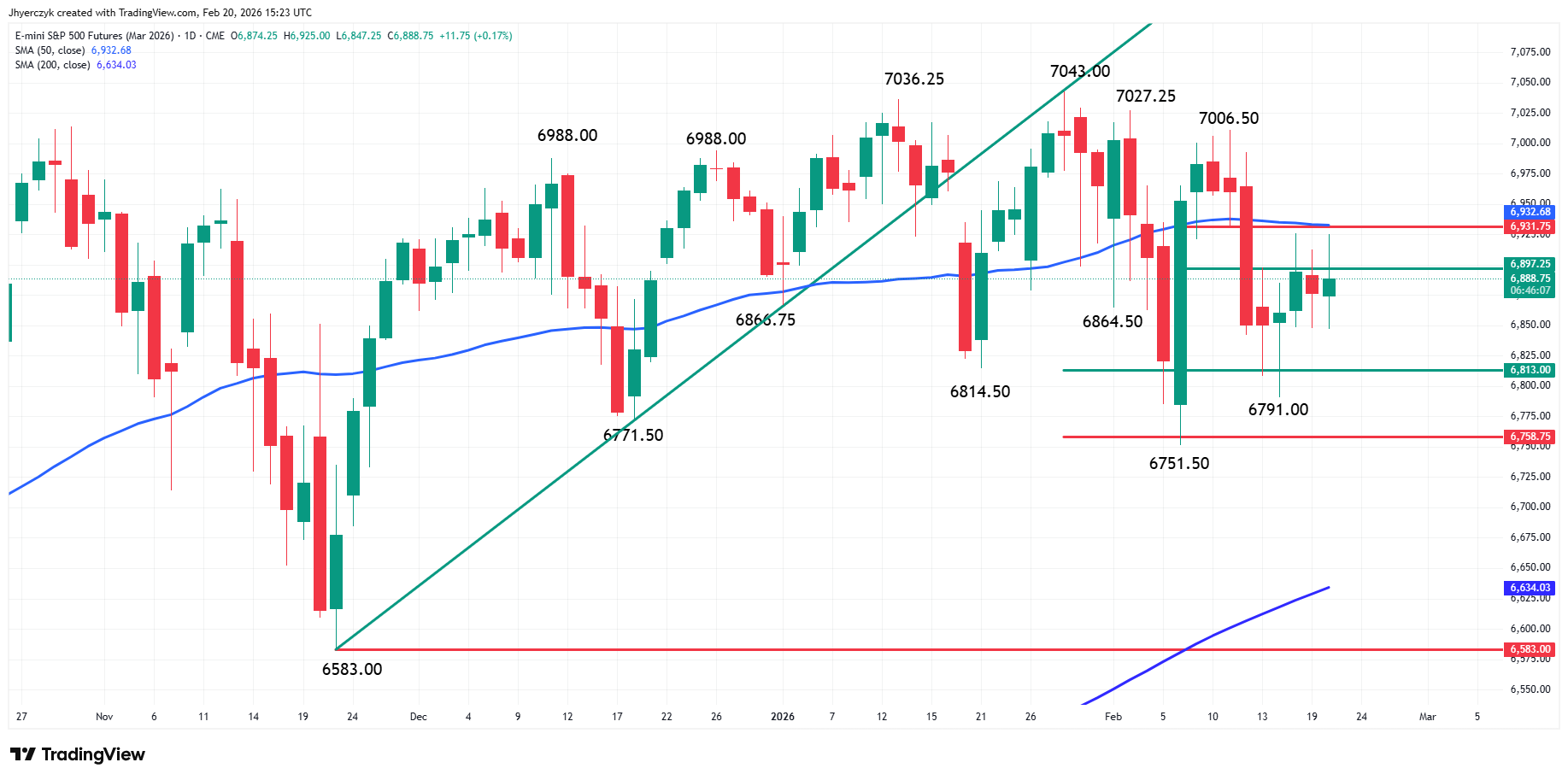
Despite the intraday reversal, the E-mini March S&P 500 Index is still struggling to overcome the retracement zone at 6897.25 to 6931.75 and, more importantly, the 50-day moving average at 6932.62.
The 50-day MA is a potential trigger point for an acceleration to the upside, putting back into play the last three tops at 7006.50, 7027.25, and 7043.00.
If buyers throw in the towel because of the inability to take out the 50-day MA, prices could retreat hard, back toward the major support zone at 6813.00 to 6758.75.
More Information in our Economic Calendar.