
BTC Pulls Back for Fifth Straight Month as Resistance Holds
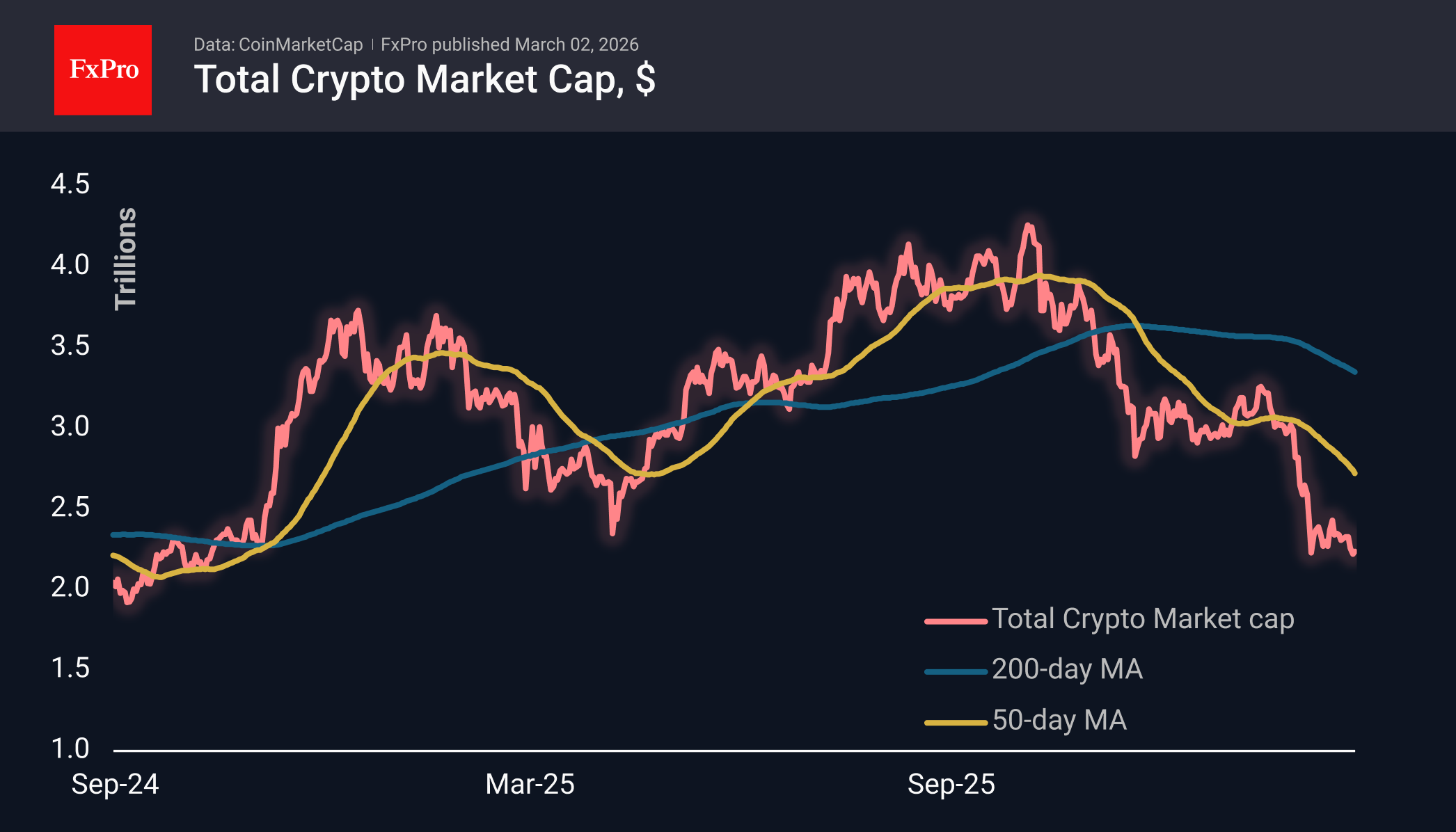
The crypto market capitalisation is roughly where it was a week ago, even though the world has changed dramatically. Events surrounding Iran initially caused cryptocurrencies to fall over the weekend, but they then rebounded, returning closer to the middle of their recent trading range. Retail traders, who dominated over the weekend, balanced between the bullish factor from geopolitics and the somewhat depressed sentiment that has prevailed in cryptocurrencies since October. We still believe that cryptocurrencies remain in a bear market, although it is worth keeping a close eye on the bullish risks for Bitcoin.
The first cryptocurrency fell to $63K over the weekend, soon rebounding to $66K, where it currently stands. In the current geopolitical situation, playing it safe is the best short-term strategy for Bitcoin. It may be wiser to let more established markets such as oil, gold and bonds take the lead during periods of geopolitical tension. In addition, the current wait-and-see attitude towards BTC is fully justified by technical factors and was anticipated by us weeks ago, as this area was an important resistance zone in 2024.
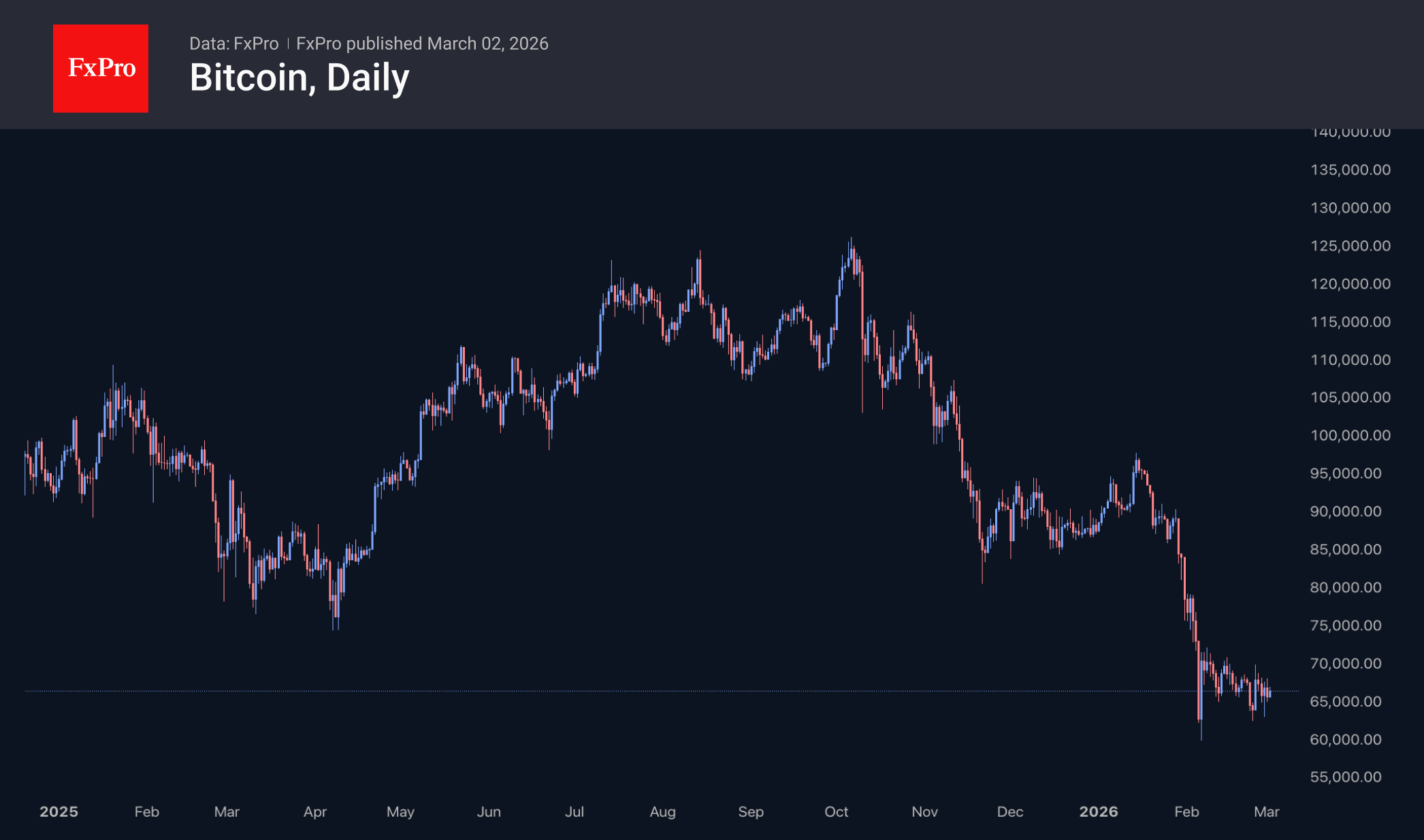
Bitcoin fell 14.1% in February to $67,000, continuing its decline for the fifth consecutive month. This is the second time in history that BTC has fallen for five months in a row — the first was at the end of 2018. From a seasonal perspective, March is one of the three worst months of the year. Over the past 15 years, Bitcoin has ended this month with a decline in nine cases and only six times with an increase. The average decline was 13.5%, while the average increase was 14.2%.

Crypto News
In February, investors withdrew a modest $0.21 billion from spot Bitcoin ETFs in the US, amid a price decline of approximately 17%. Nevertheless, the outflow from the funds continues for a record four months in a row. Investors withdrew $0.37 billion from spot Ethereum ETFs in the US in February. This was against the backdrop of a nearly 23% drop in price over the month.
Inflows into spot Solana ETFs in the US amounted to $63 million in February, reaching $934 million. Inflows into US spot XRP ETFs totalled $58 million in February, bringing total assets to $1.24 billion.
The end of Bitcoin’s bearish trend is more likely in the fourth quarter of 2026, with a return to growth in the first half of 2027, according to analyst Willy Woo. In his opinion, the potential low in the current cycle could be $45,000.
Bitcoin miner MARA reported a loss of $1.7 billion for the fourth quarter of 2025. MARA presented a strategy for a gradual transition from BTC mining to projects related to artificial intelligence (AI).
Mark Karpeles, former CEO of the bankrupt MtGox exchange, proposed a one-time change to the Bitcoin network’s consensus rules that would allow the return of approximately 80,000 BTC stolen from the platform in 2011.
Bitcoin Price Forecast
Every new Bitcoin analysis as it publishes, today's technical signal and key levels, live price — on one page.
See all Bitcoin forecasts