
The Week’s Dominant Theme: Trump Tariff Escalation, Markets Adapt
From July 6–9, President Trump’s tariff escalation and the extension of the July 9 deadline to August 1 have been the clear drivers across commodities, FX, equities, and bonds. Unlike April’s panic selling, this week’s market reaction has been measured, sector-specific, and adaptive.

Key Developments This Week
- Sunday–Monday: Trump announced 50% tariffs on copper imports, issued “tariff letters” to 14 countries including Japan and South Korea threatening 25–40% duties.
- Monday Afternoon: Official extension of the July 9 tariff deadline to August 1 via executive order.
- Tuesday: Trump reaffirmed “no further extensions,” locking in August 1 as the next critical date.
Equities: Modest Declines, Sector Divergence
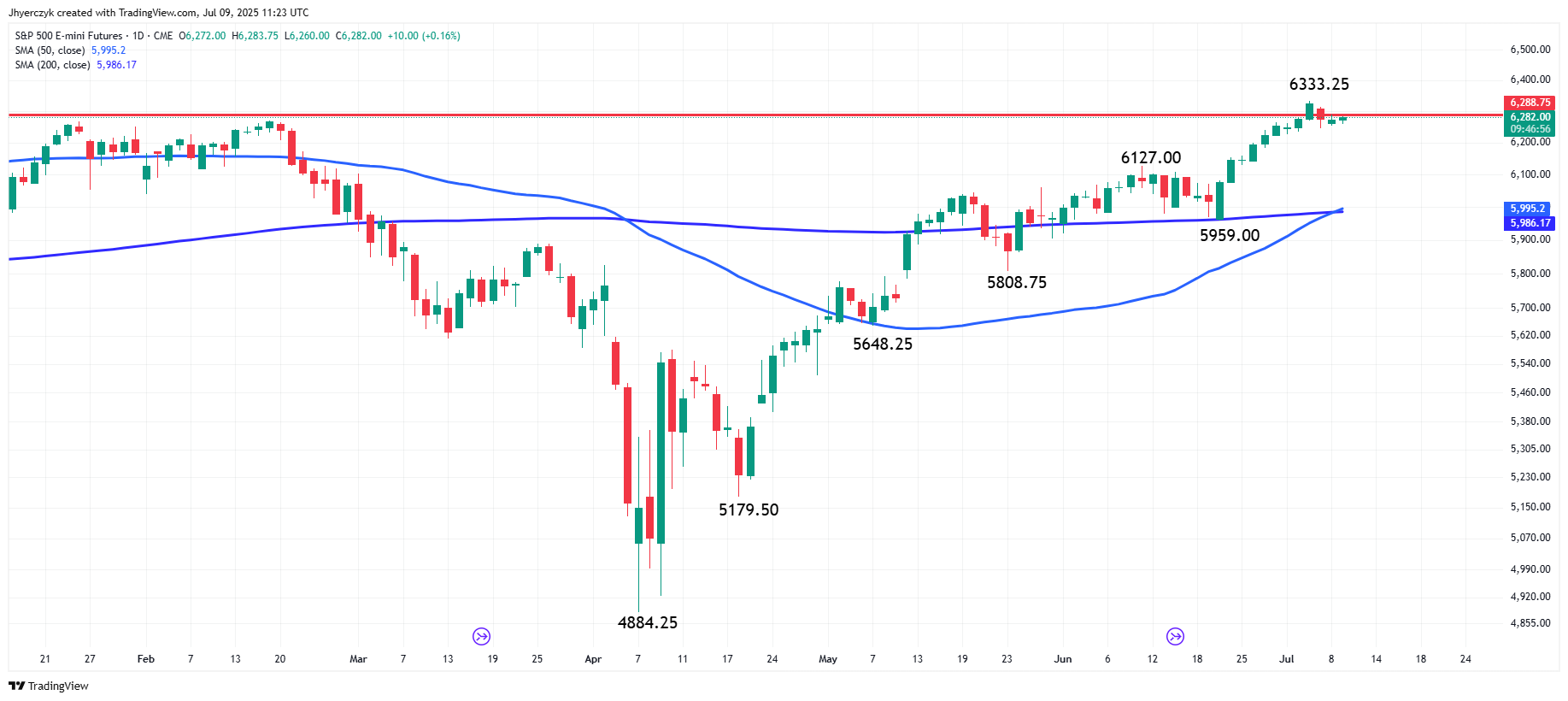
- Performance:
- Monday: S&P 500 -0.8%, Dow -0.9%, Nasdaq -0.9%
- Tuesday: S&P 500 -0.1%, Dow -0.4%, Nasdaq flat
- Russell 2000 +0.7% Tuesday, outperforming large caps on domestic focus.
- Winners: Copper miners (Freeport-McMoRan), domestic-focused small caps, selective large-cap tech.
- Losers: Manufacturing and industrials (input cost pressures), import-dependent sectors (autos, electronics), trade-exposed multinationals.
- The tariff extension reduced immediate fear, shifting markets from broad liquidation to selective rotation.
Bonds: Yields Rise on Inflation Fears
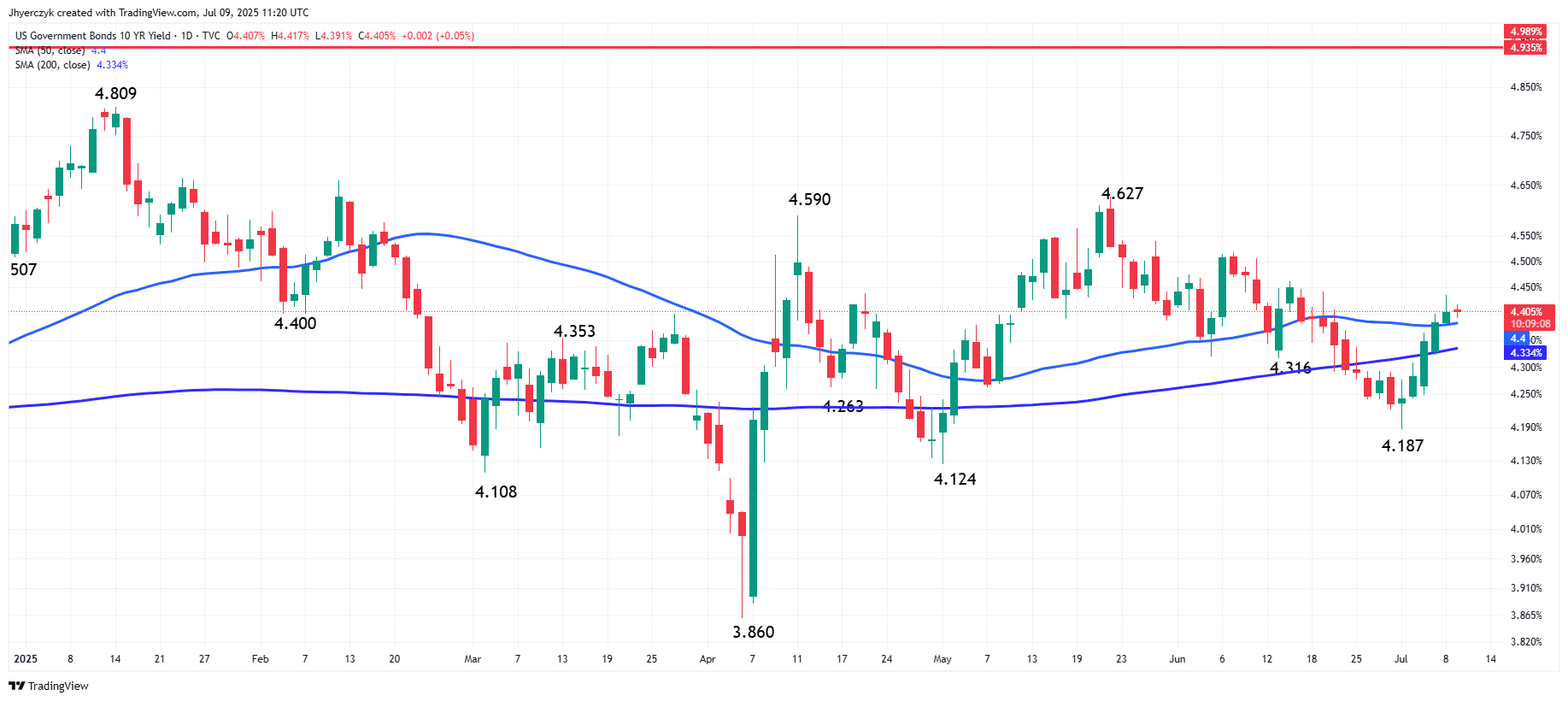
- 10-year yield climbed to 4.394% mid-week.
- Unusual correlation breakdown: bonds sold off alongside equities.
- Driver: Tariff-induced inflation concerns outweighing traditional safe-haven demand.
Copper: The Week’s Standout Winner
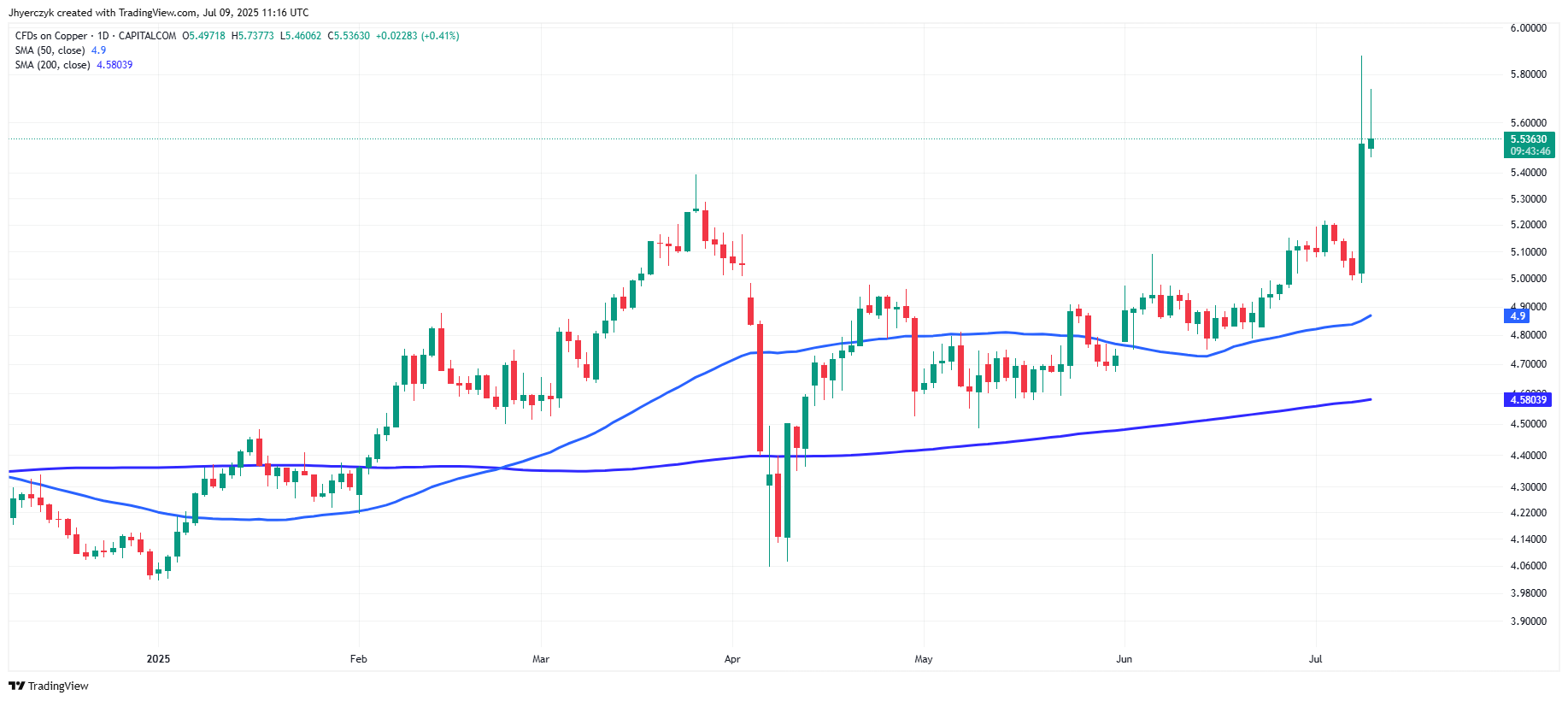
- Surged 12% following the 50% tariff announcement as markets priced in supply shocks.
- The U.S. imports ~50% of its copper and has only three operating smelters, intensifying supply disruption fears.
- The rally in copper is driving immediate inflation pressure in construction, EV, and infrastructure-linked sectors.
Gold: Consolidation, No Breakout
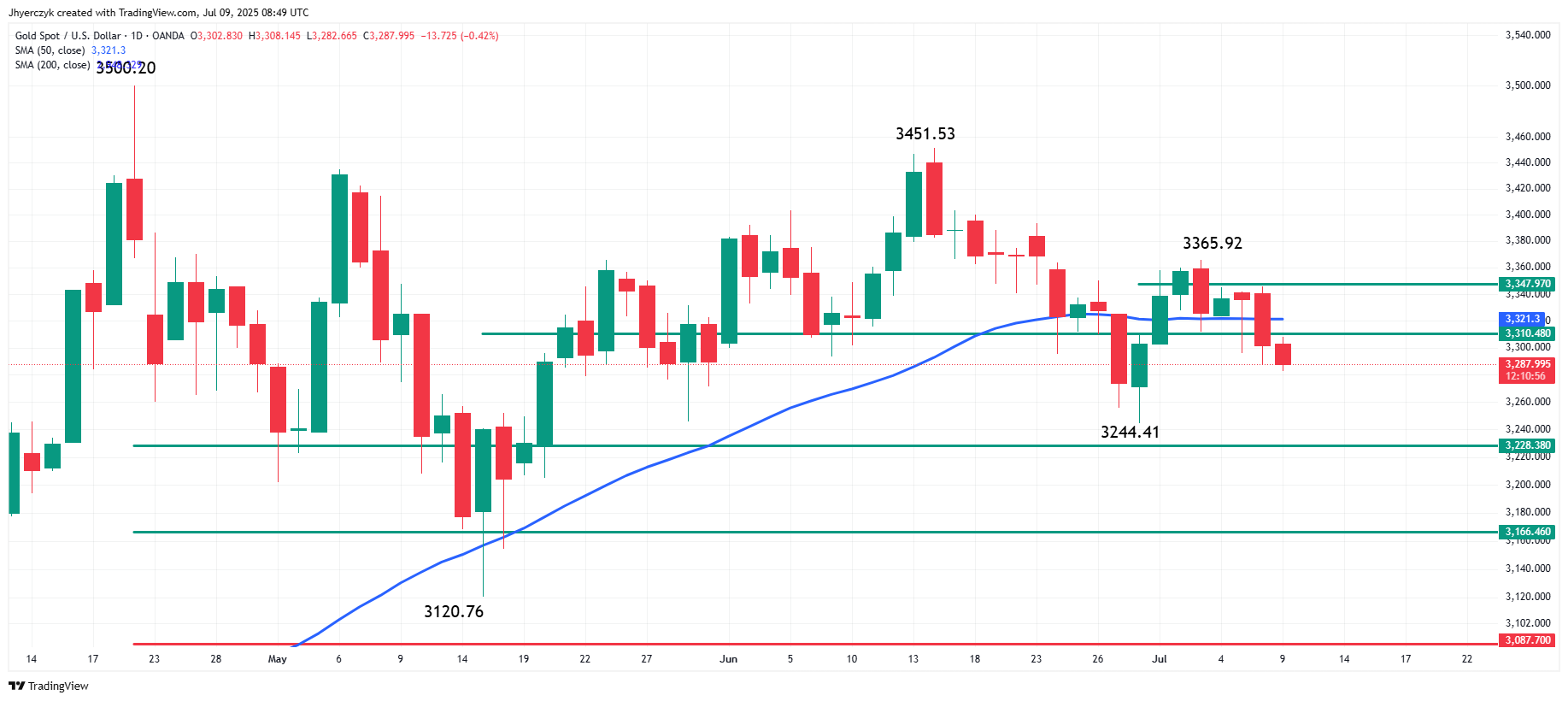
- Trading in a $3,310–$3,348 band, well below the April 22 record high of $3,500.20.
- The tariff extension reduced urgency for hedging, and rising yields added headwinds.
- No new highs despite inflation discussions, with gold currently consolidating rather than leading flows.
Crude Oil: Volatile Within Range
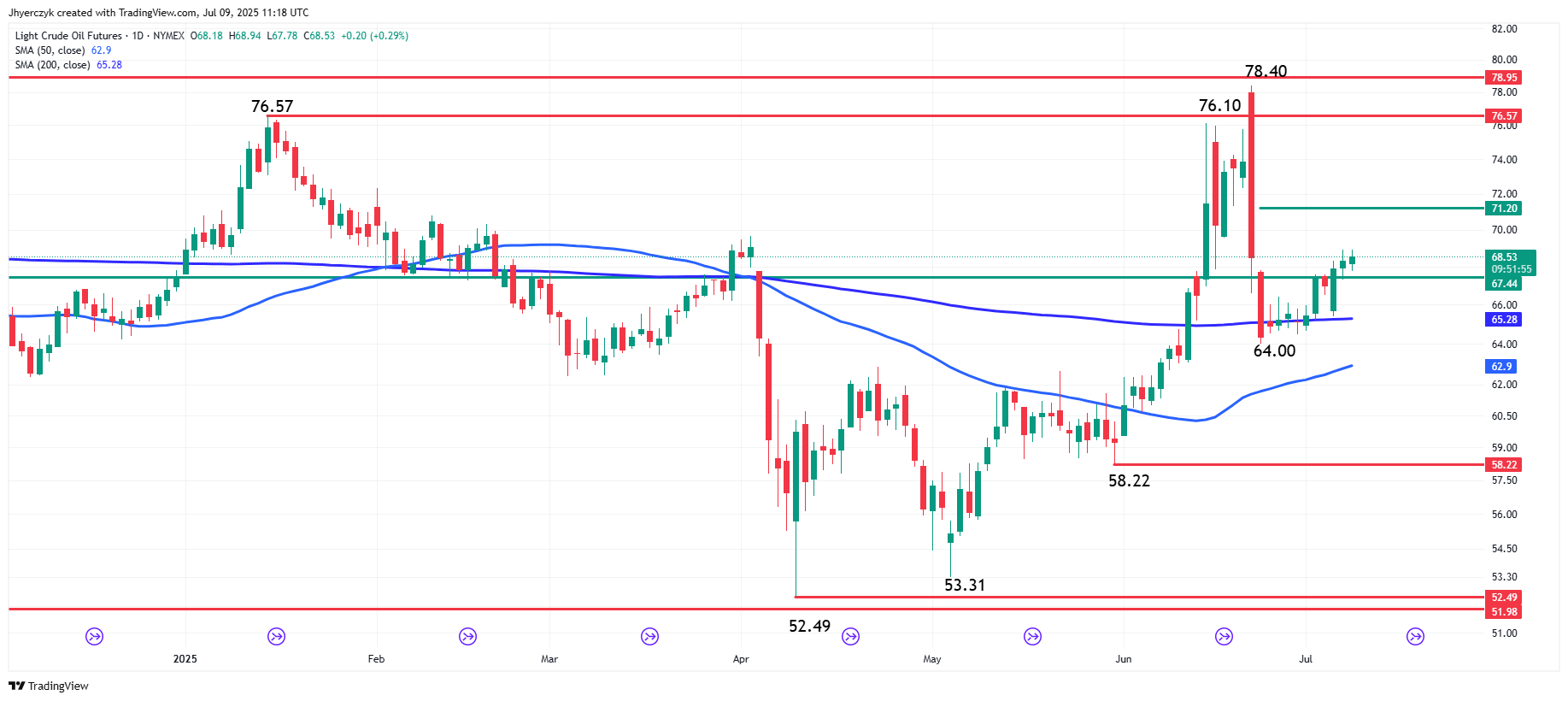
- WTI crude fluctuating in the $68–$75 range, caught between tariff-related demand concerns and geopolitical/supply-side support.
- Positioning remains cautious, with no clear directional conviction.
FX: Tactical USD Strength
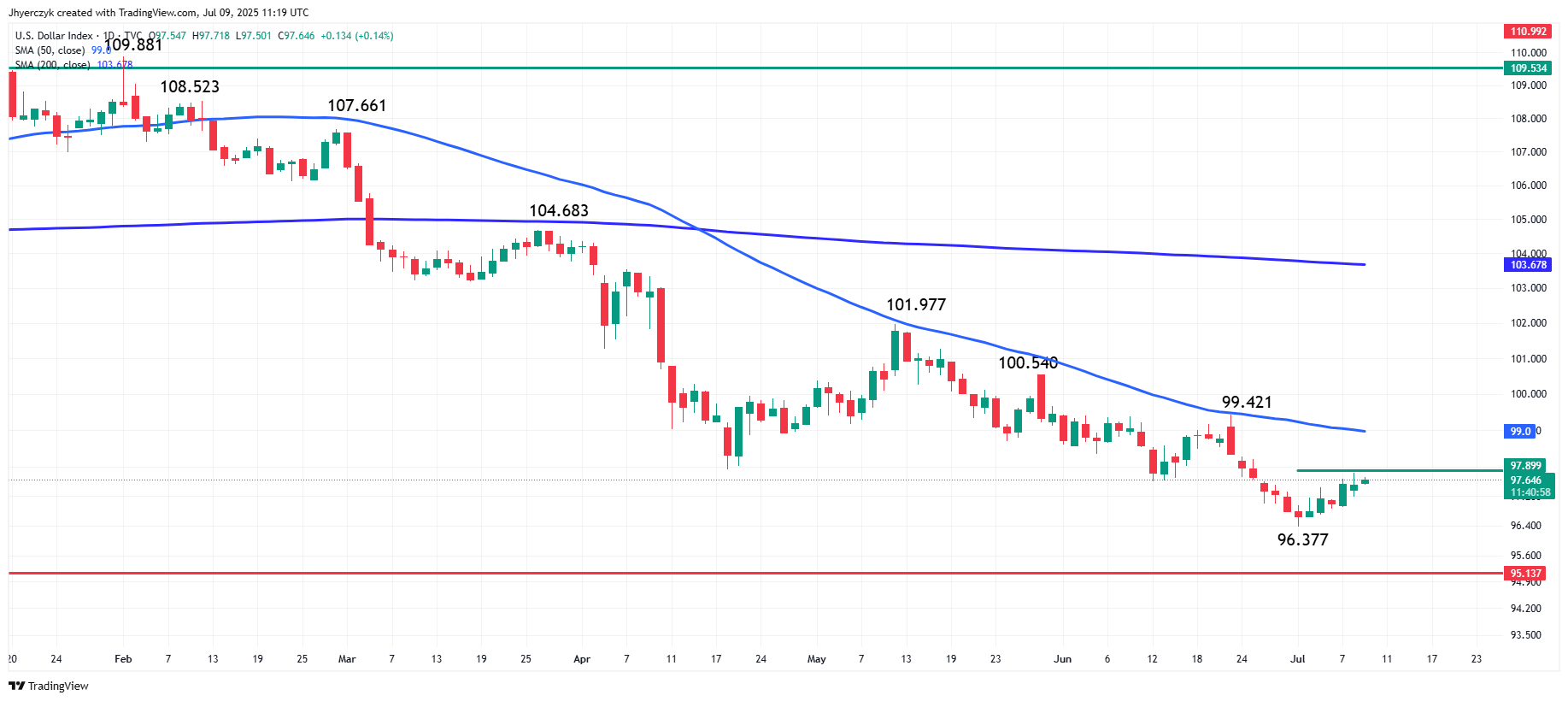
- USD showed short-term strength against risk currencies (JPY, KRW) despite 8–9% YTD decline.
- EUR/USD, GBP/USD resilient; EM currencies broadly weaker on trade exposure.
- The tariff extension reduced immediate safe-haven dollar demand but maintained two-way flows.
Fed Watch: Inflation Concerns Edge Out Rate-Cut Hopes
- Fed funds futures now price a 70% probability of a September cut, down from near-certainty pre-tariffs.
- Markets are recalibrating expectations as tariff-driven inflation concerns rise, reducing room for the Fed to cut aggressively.
- Wednesday’s Fed minutes at 18:00 GMT are a key risk event, potentially shifting rate expectations if they reveal a firmer inflation stance.
This Week vs. April’s Panic
April’s tariff shock triggered broad liquidation (-10% in two days). In contrast, this week:
- Markets are reacting selectively rather than with blanket selling.
- Copper is the clear outperformer while trade-exposed sectors are pressured.
- Small caps are outperforming large caps due to domestic orientation.
- The bond market is reflecting inflation fears rather than classic risk-off flows.
Summary: Adaptation Under Uncertainty
July 6–9 has been defined by Trump’s trade escalation, but markets are adapting rather than panicking. The August 1 deadline provides temporary breathing room while maintaining headline risk. Copper’s 12% surge underscores the targeted impacts of these policies, while bonds, gold, and FX markets are aligning with inflation risks rather than systemic crisis fears.
Traders are maintaining a cautious yet opportunistic stance, with Wednesday’s Fed minutes as the next pivot for cross-asset flows.
More Information in our Economic Calendar.