
Trump’s new deadline for tariffs has added yet another uncertainty to the U.S.-EU trade agreement. He has told the European Union to adopt its deal with the United States by July 4. If the bloc does not proceed, the tariffs might be much higher. The threat occurred just after his claim of imposing 25% tariff on EU cars and trucks. This has created significant uncertainty regarding trade, inflation, company profits, currencies and global risk sentiment. Liquidity and continued positive equity momentum continue to support markets. But if negotiations become stalled or a deal is delayed, tariff risk can quickly turn everything around.

Trump Raises Pressure on the EU Before July 4 Deadline
Trump’s message puts pressure on the EU at a sensitive time. He said that the EU had agreed in last year’s trade deal in Scotland that tariffs would be phased out entirely. The new deadline is Brussels’ choice. It either accelerates towards ratification or else runs the risk of more stringent U.S. tariffs.
The uncertainty is due to the range of the threat. It is unclear if increase in tariffs would apply to all EU products or primarily to automobiles. This is significant as cars are one of the main export industries in Europe. Germany would be particularly vulnerable since the country’s economy is largely dependent on exports of cars, machinery and industrial goods. The magnitude of the shock would be greater if the tariff were broad based rather than targeted on cars.
The EU is seeking to salvage the talks. According to the comments by Ursula von der Leyen, the bloc is fully committed to the deal and work is underway to reduce tariffs by the start of July. European lawmakers, however, also concede there’s still a long way to go. This could keep markets on a relatively quiet footing for the time being, but volatility could increase as the July 4 deadline approaches.
Trade Tensions Could Hit Growth and Keep Inflation Sticky
The economic consequences will vary with the extent of the tariff threat. If the U.S. only targets tariffs on autos, the European automakers and U.S. customers of imported cars will feel the pressure. A broader-based tariff would have repercussions throughout supply chains, business costs and consumer prices.
EUR/USD Price Forecast
Every new EUR/USD analysis as it publishes, today's technical signal and key levels, live price — on one page.
See all EUR/USD forecastsTypically, tariffs function as a tax on trade. Inequality increases the importer’s cost, some of which are sometimes passed on to consumers. This can help to maintain higher inflation. That would make the Federal Reserve‘s task more difficult as the Fed could face difficulty in quickly reducing interest rates if tariff induced inflation remains.
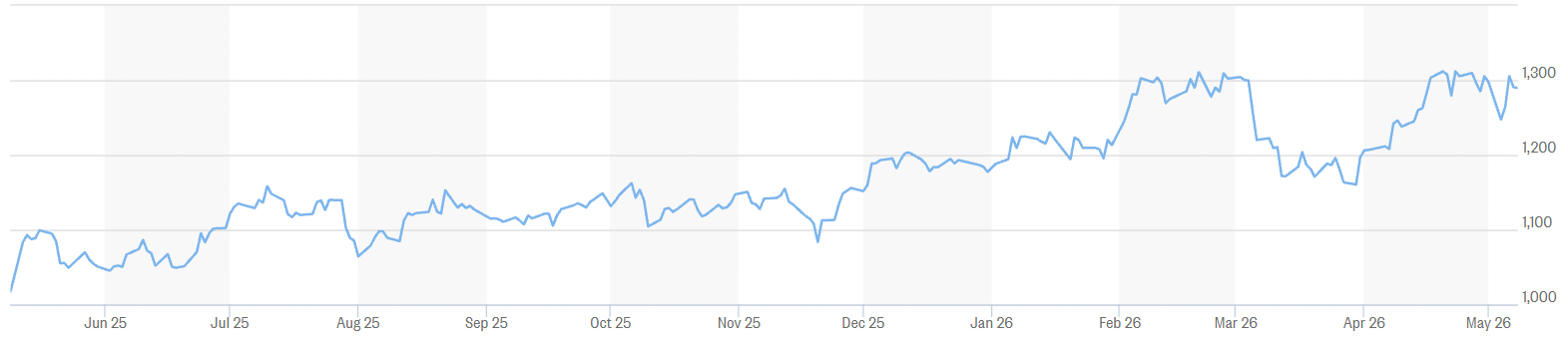
Overall, the U.S. economy presents mixed signals. The S&P 1500 Transportation Index is attempting to break resistance around recent highs. That is an indicator of economic activity getting better.
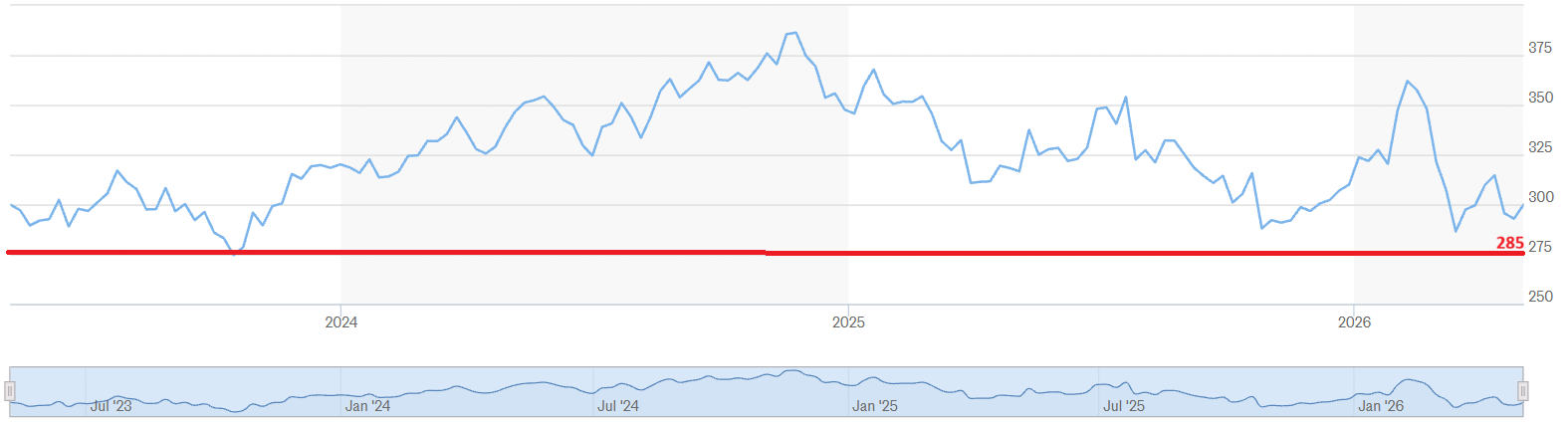
But the S&P 1500 Containers & Packaging Index is reaching primary support at 285. This indicates that strength could be in fields such as data centre construction while other Main Street activity could be weaker.
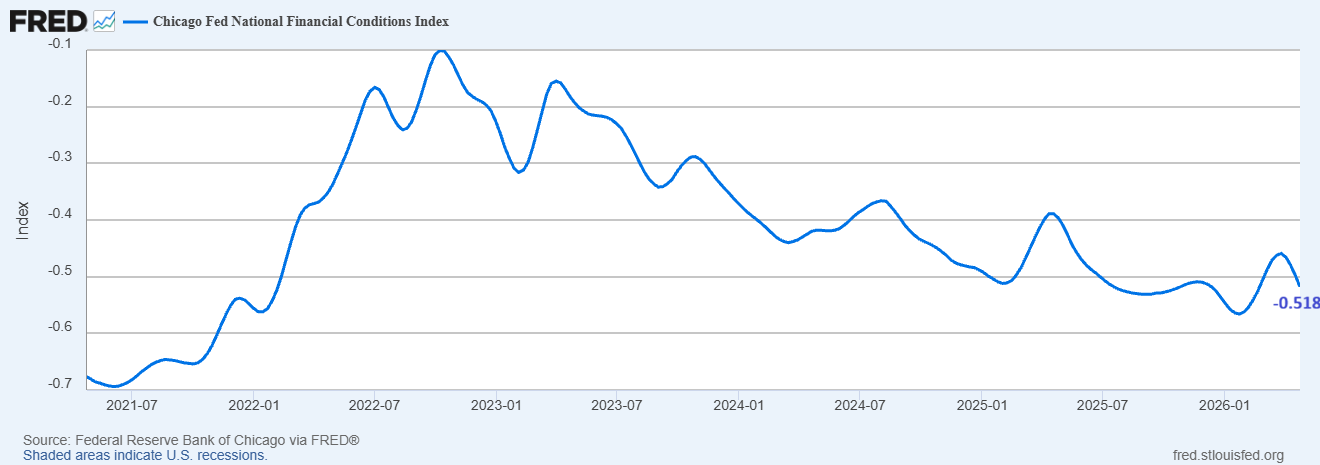
Liquidity is also supporting markets. The Chicago Fed National Financial Conditions Index has fallen to -0.51 which indicates easier financial conditions. This liquidity can be used to nourish the risk assets in the short term. But easier conditions can also help to maintain inflation pressure as demand remains strong and tariffs drive up the cost of inputs.
Trump Tariffs: Market Impact on Stocks, Dollar and Yields
U.S. Dollar Index: Tariff Risk Fails to Lift the Greenback
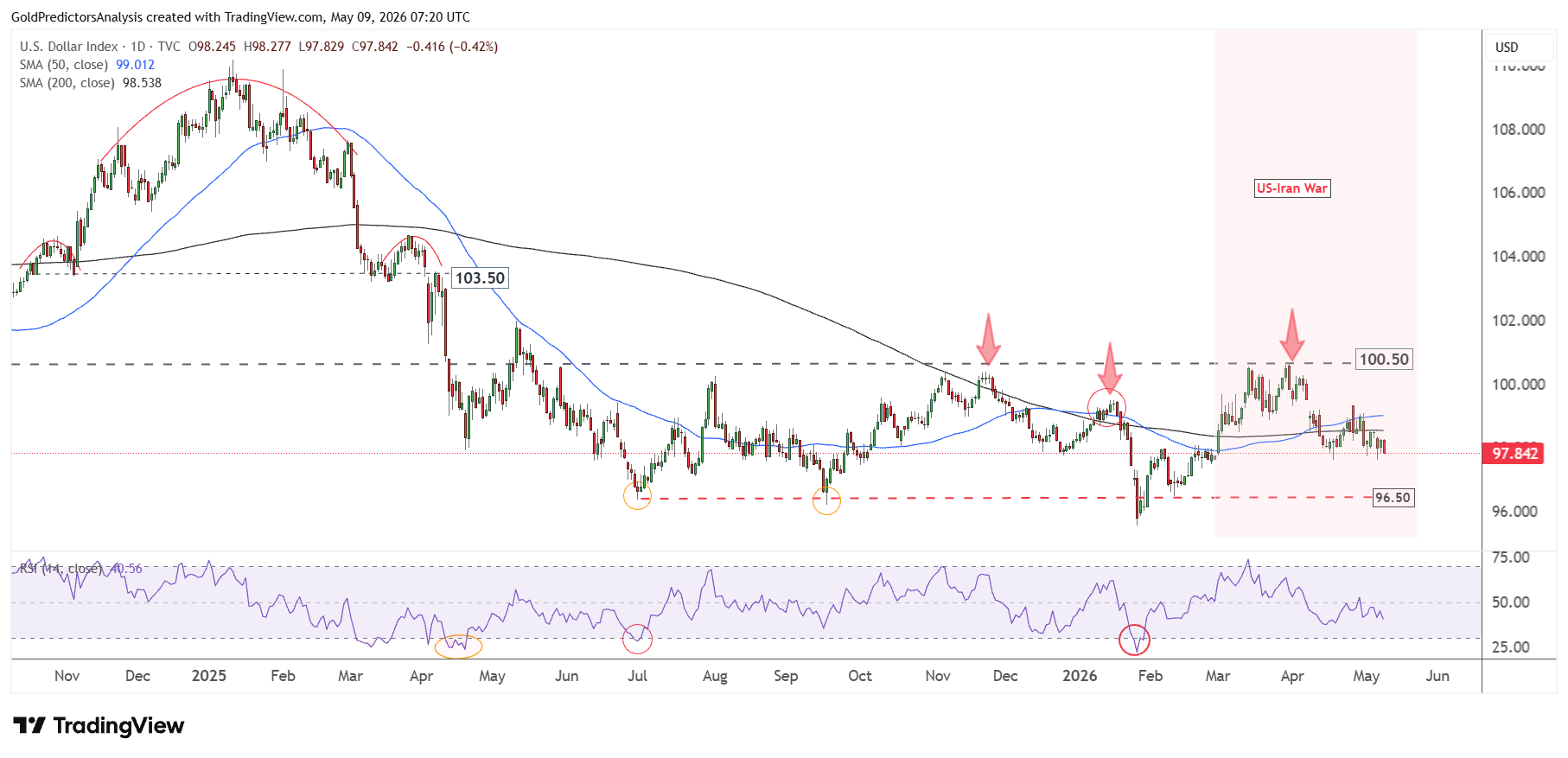
The U.S. Dollar Index is trading within the range of 96-100.50. A break below 96 will open the door for deeper drop to 90. The tariff threat can help the dollar in times of stress but not this time. Investors could be worried that the tariffs are hurting U.S. growth or that they are legally insecure, which could make it difficult for the dollar to sustain its upward momentum.
From the technical perspective, the US dollar index shows strong bearish price development this week. The index has broken the 98.50 and moved to the 96 level. The RSI is also trending below the mid-level which indicates a negative trend. This negative price action will likely push the US dollar lower next week.
EUR/USD: Dollar Weakness Supports a Bullish Recovery
EURUSD may continue with choppy trading in the short term. If investors worry about the impact of rising tariffs on European exports, the euro could be put under pressure. But dollar weakness may push the EURUSD higher.
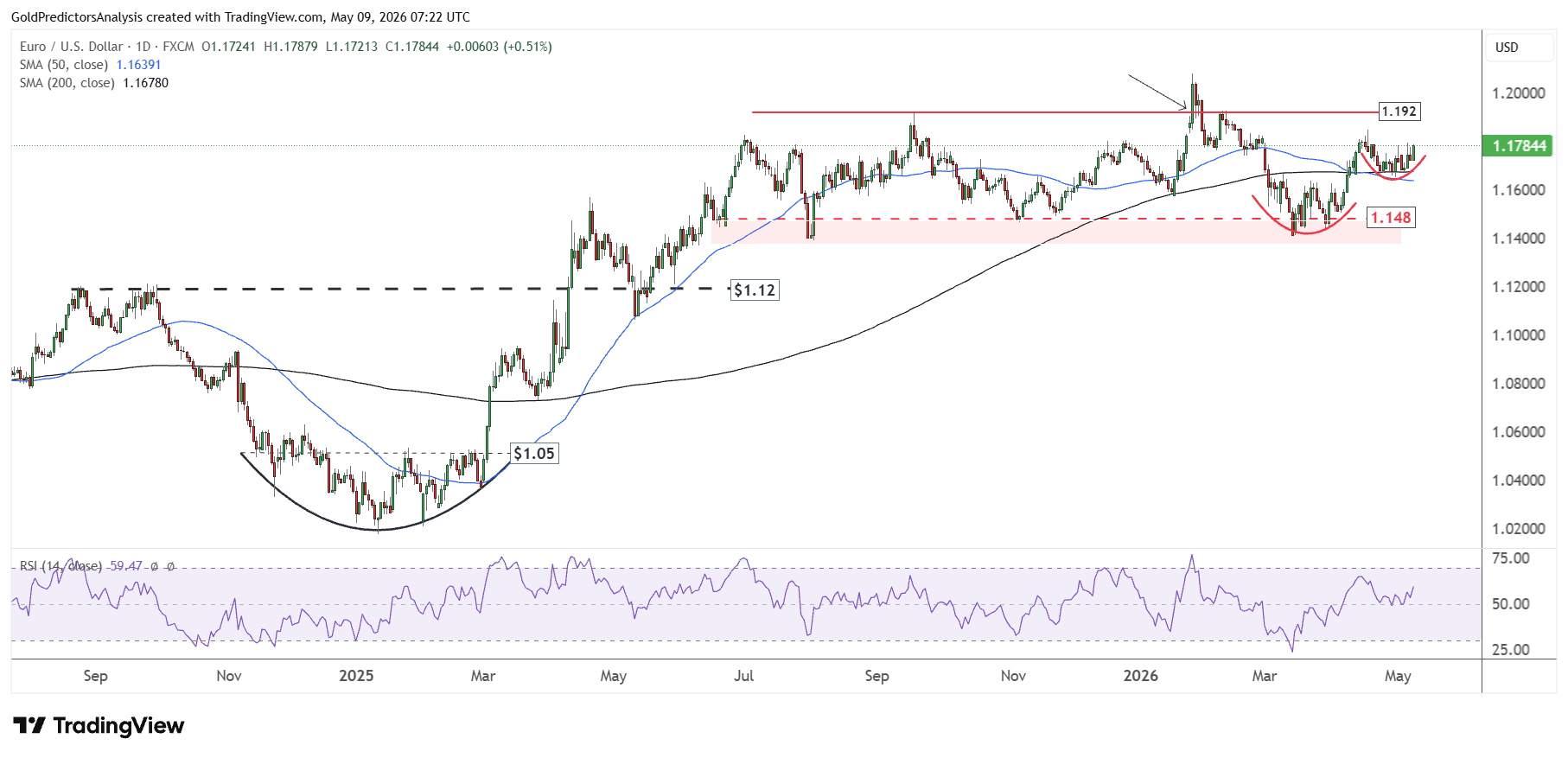
The chart below shows that EURUSD is constructing bullish price action due to the negative price action in the US dollar index. The strong recovery above 1.148 has formed a rounding bottom where the pair has broken the key moving average to sustain the bullish momentum. The immediate resistance remains 1.192. A break above 1.192 will signal a surge in the pair to 1.22 as the primary target.
Euro Stoxx: Trade Uncertainty Tests the Bullish Trend
A potential escalation in the tariff dispute could put pressure on the EURO STOXX. European stocks are vulnerable to the global trade, autos, industrials, luxury goods and financials. Failure to ratify could leave investors wary, particularly if the U.S. broadens tariffs to include more than just cars.
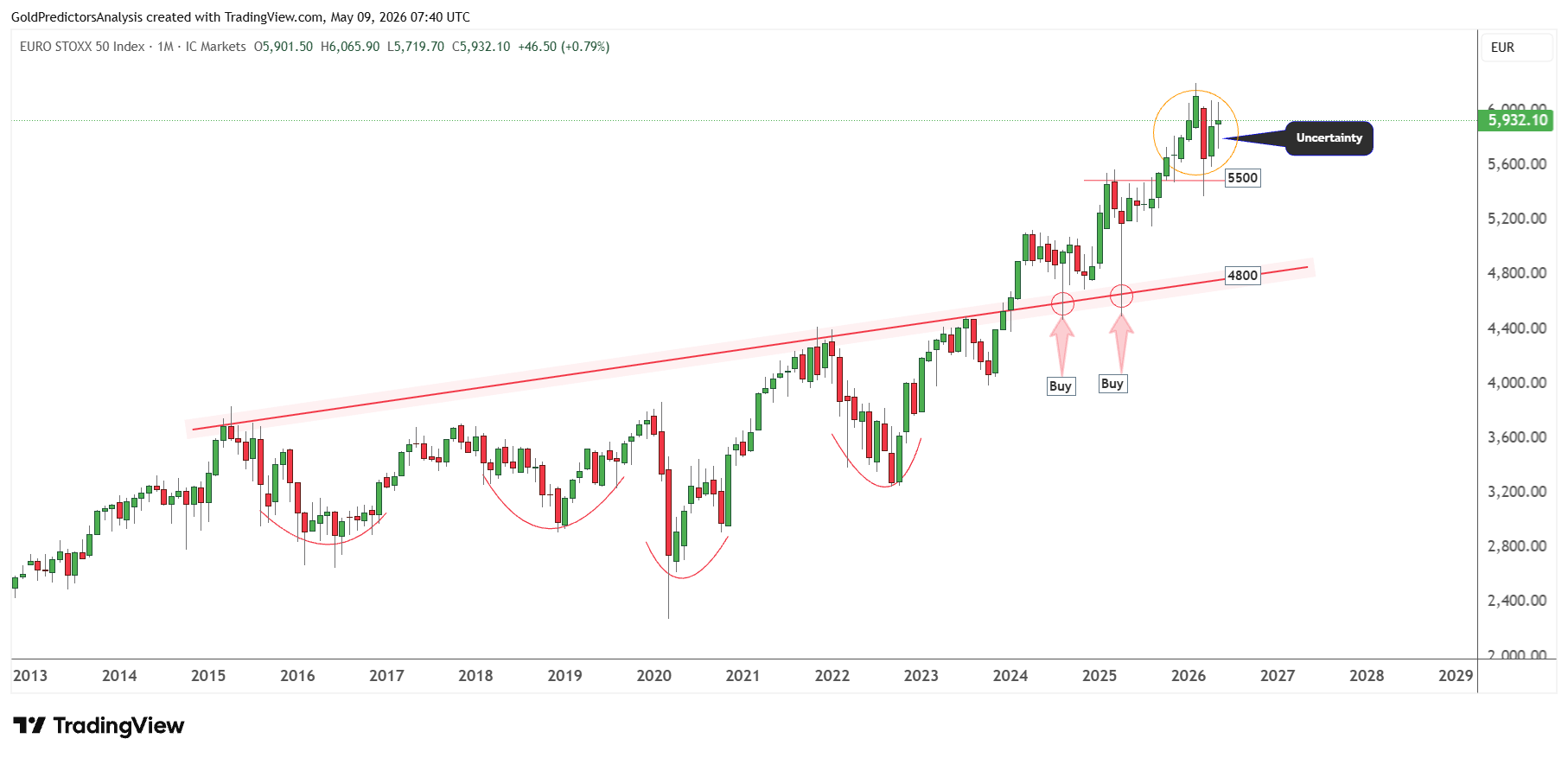
The chart below shows that the EURO STOXX remains in a strong bullish trend above 5,500. But the strong volatility was observed in March and April due to the US-Iran war. Moreover, the tariffs are also creating uncertainty in the European market. As long as the 5,500 holds, the index will likely break higher. However, a break below 5,500 will push the index to 5,100 and 4,800 as the long term accumulation zone.
European Auto Stocks: Tariff Threat Keeps the Sector Under Pressure
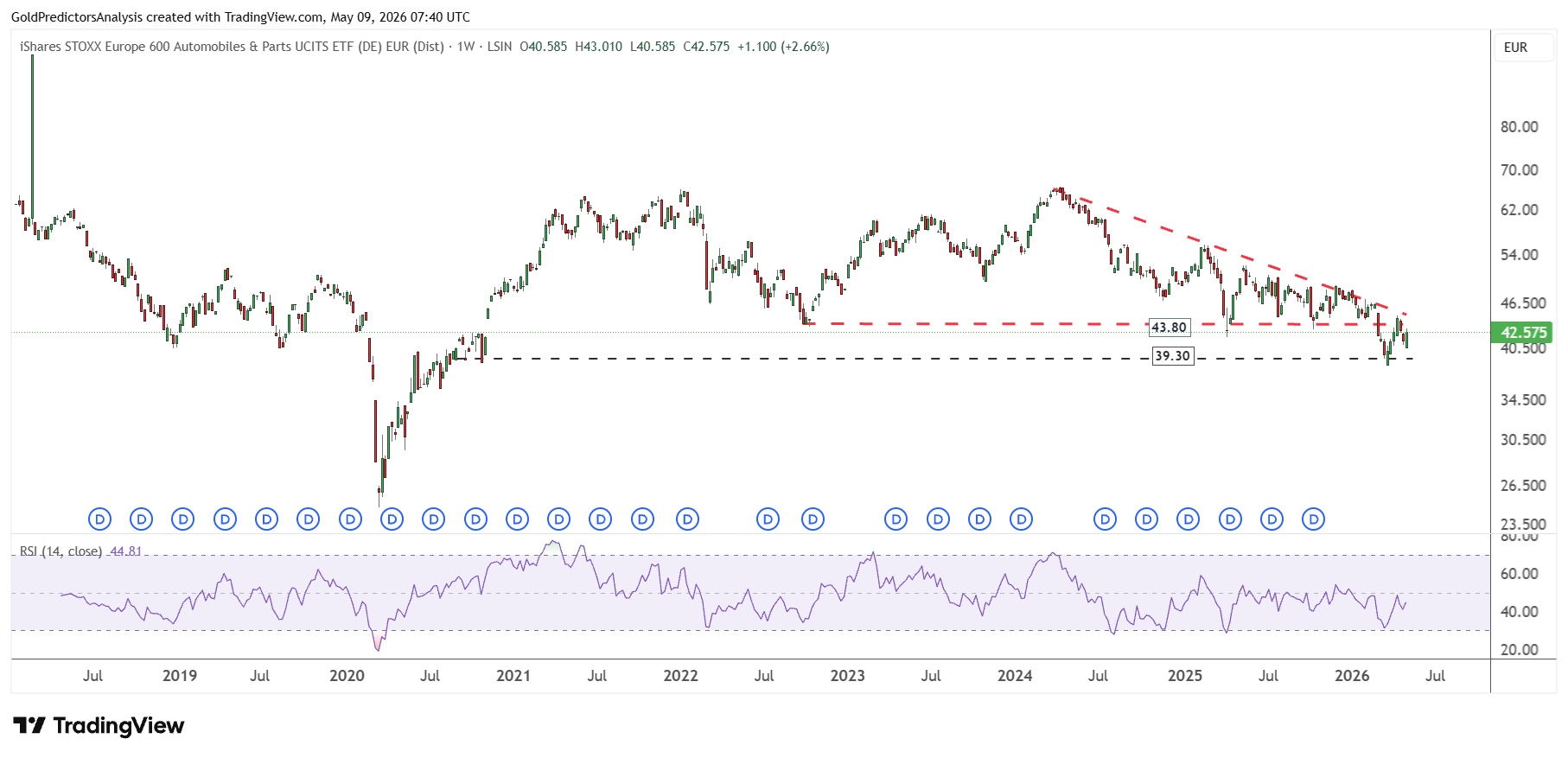
On the other hand, the iShares STOXX Europe 600 Automobiles & Parts UCITS ETF has been trading below the 43.80 level as the threat of tariffs is keeping the markets volatile in the short term. As long as the ETF remains below 43.80, the consolidations are likely in the short term.
DAX: Export Exposure Makes Germany More Vulnerable
On the other hand, Germany has a big export base making the DAX more vulnerable. Increased import costs for the U.S. could put pressure on automakers, suppliers, chemical companies and equipment manufacturers. The DAX could respond more strongly if Trump’s threat is directed at cars and trucks only. But a deal before July 4 would probably help to spur a relief rally.
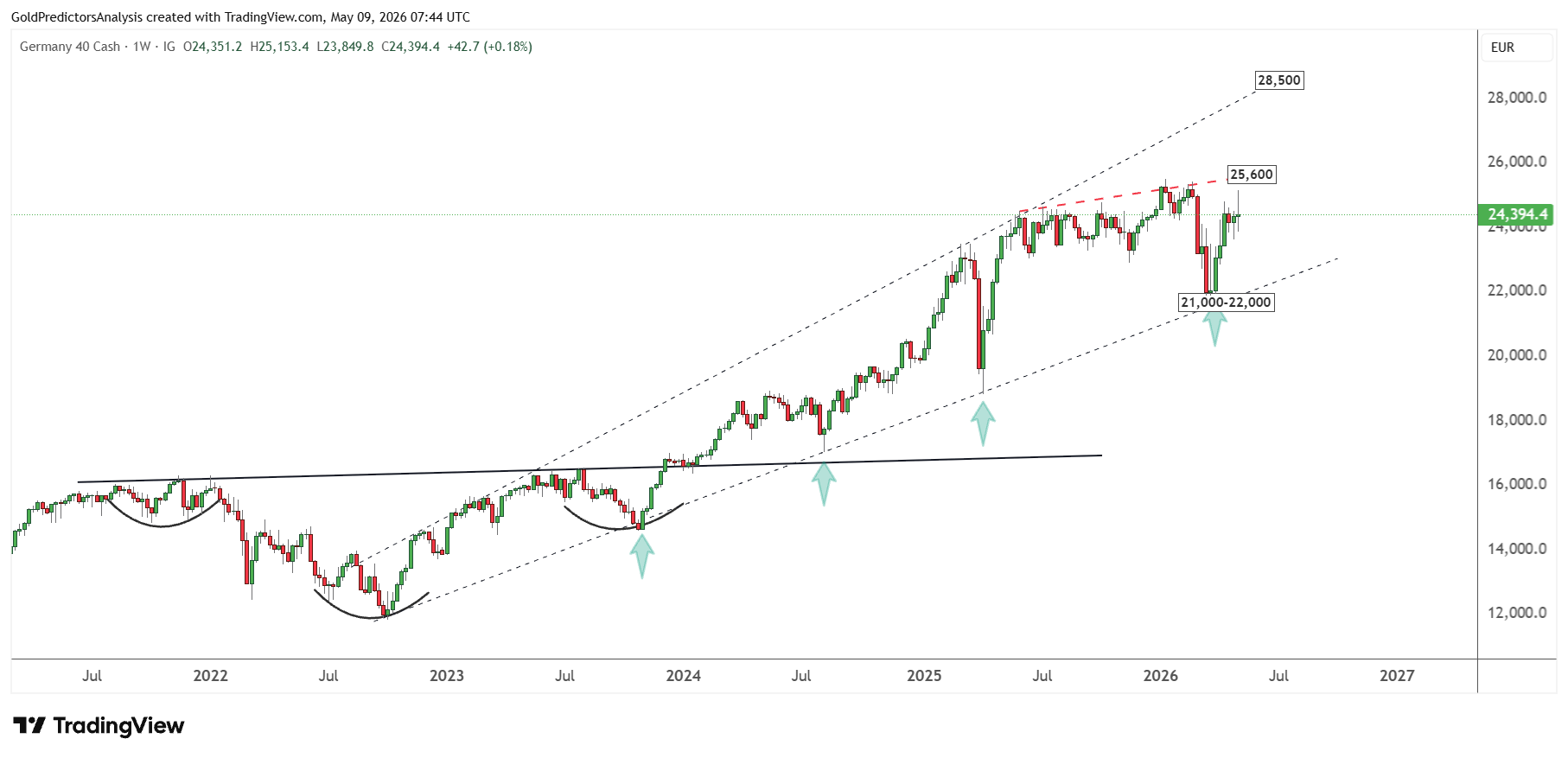
The chart below confirms that the DAX rebounds from the long term support zone of 21,000 to 22,000 after the US-Iran ceasefire announcements. The index is challenging the key resistance of 25,600. A break above 25,600 will push the index to 28,500. However, if the tariff threats become reality, the pressure may appear in the index. A break below 21,000 will push the index to 19,500. But the price action is supportive and suggests a positive trend.
S&P 500 and Dow Jones: AI Momentum Offsets Tariff Risk
The S&P 500 has reached a new high of 7,398. The move towards 7,000 might be a retracement test of the new support level. But the bullish momentum points to a target of 8,000 as per my previous discussion. In my view, the correction from 7,000 to test the long-term support of the 6,200 area and then the V-shaped recovery and the breakout of 7,000 points into a strong surge to 8,000.
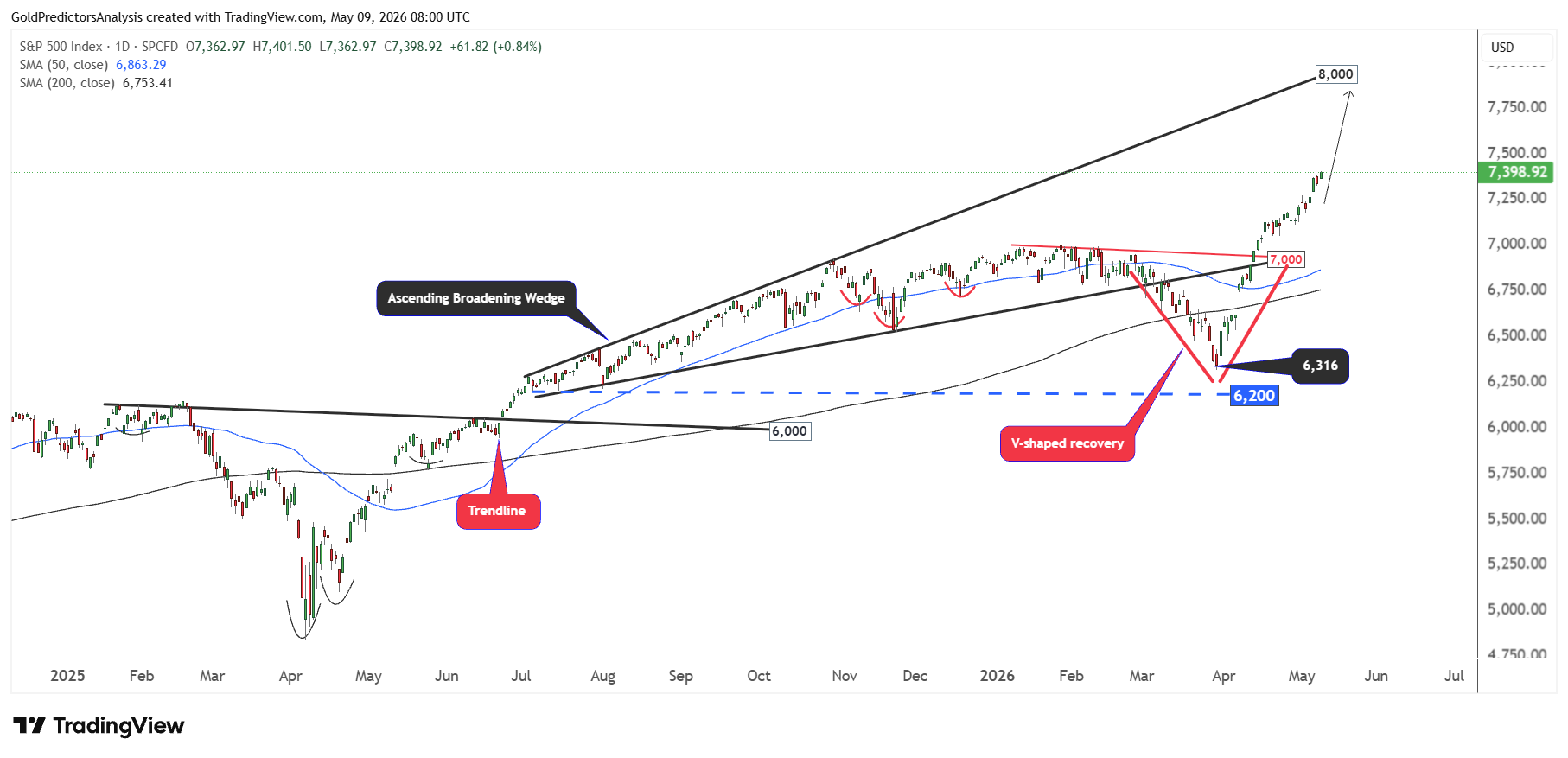
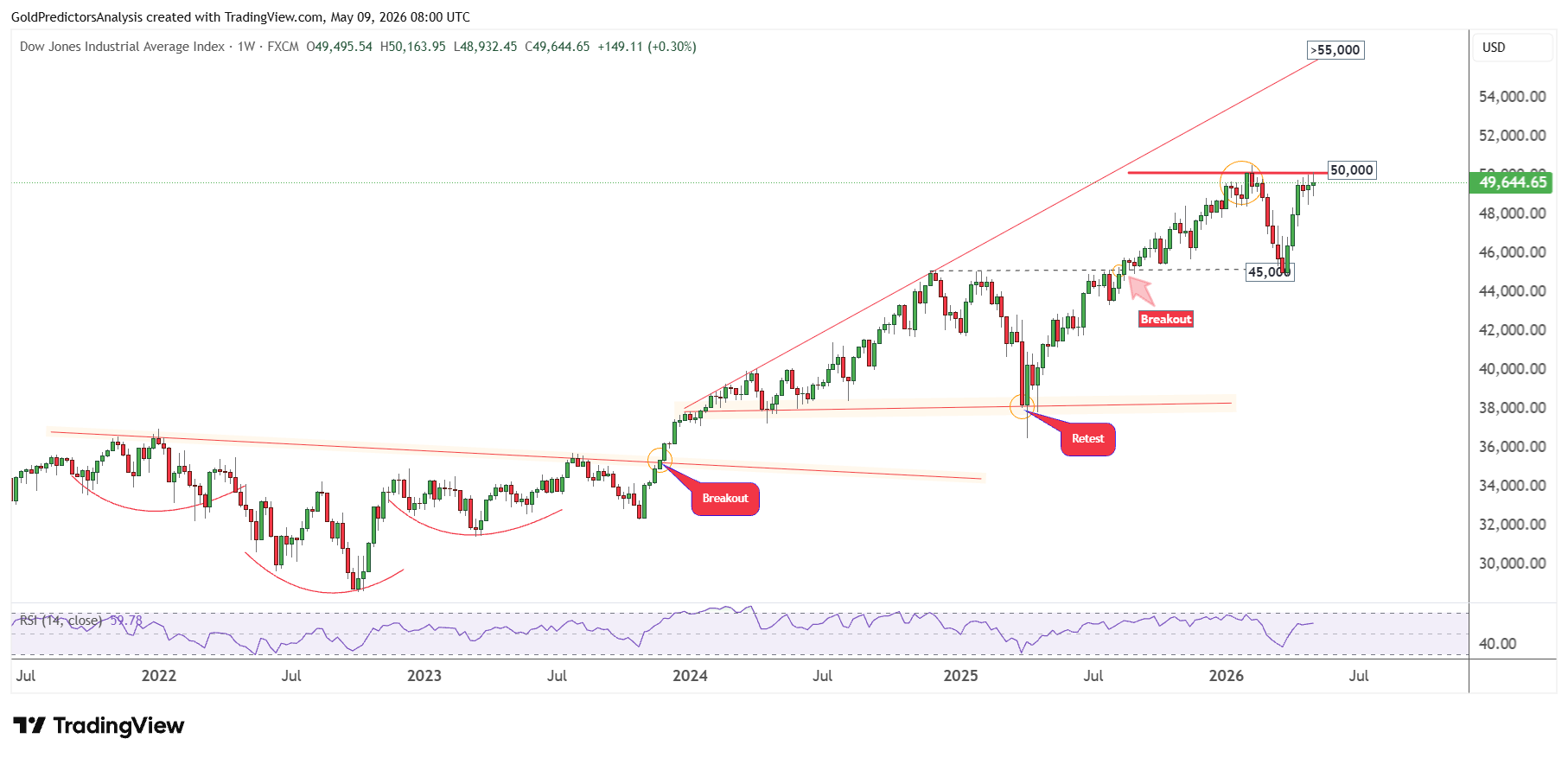
Nevertheless, tariffs pose a risk to earnings. Higher input costs, declining European demand and lower profit margins could be ahead for large U.S. companies. But the AI growth will likely keep the rally alive. The Dow Industrial Average also has resistance in the 50,000 area. A breakout would indicate a strengthening in the bull market.
U.S. 10-Year Treasury Yield: Inflation Risk Keeps 4.25% in Focus
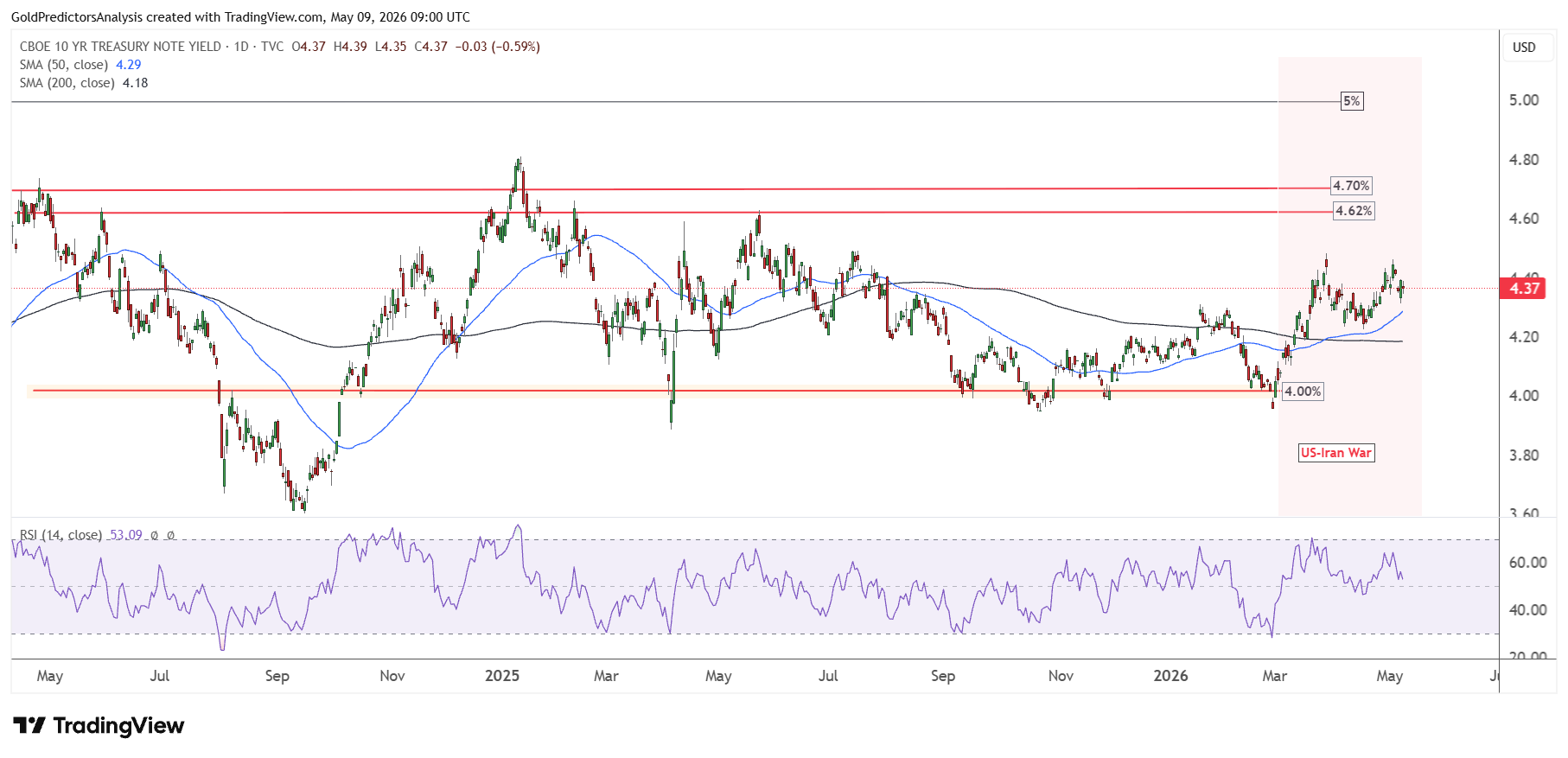
The U.S. 10-year Treasury yield moves towards the 4.25% support this week but remains constructive after the US-Iran war. It indicates that yields are in an uptrend if this level is respected. That would be in keeping with the notion that tariff uncertainty could be a headwind to inflation pressures.
Raising tariffs can drive up prices and raise bond yields. That is why it is unlikely to see a dramatic decline in Treasury yields unless there is an increase in growth concerns versus inflation concerns. Weaker trade and slower growth may be the market’s focus and cause yields to break lower.
The tariff story thus poses a tricky situation. Liquid conditions are still good and there is good technical momentum for equities. The dollar appears to be weak. European assets are directly at risk of trade. Yields in the Treasury are in a critical support zone. The next big piece of news will be the U.S.-EU talks and whether the EU will be able to demonstrate sufficient progress before Trump’s July 4 deadline.
Despite these uncertainties, the 10-year Treasury yields are trading with the 4% and 4.60% during the past 12 months. As long as the 4.25% holds, the risk of a positive trend towards 4.60% remains likely.
Final Thoughts
The U.S.-EU trade deal now is a direct market risk as Trump’s tariff deadline nears. Now the July 4 deadline applies to inflation expectations, bond yields, currencies and stocks. The EU may be signalling relief to the markets if it moves forward with the accord. European stocks, the DAX and auto stocks may rally further on a deal. EUR/USD could gain if the dollar continues to be weak. But if negotiations come to a halt or tariffs increase, the pressure could return. European exporters would be the first to face a hit, but U.S. businesses could be subject to margin pressures due to rising costs and slow foreign demand.
Overall market conditions remain positive from a liquidity, AI surge and robust equity technical structures. The S&P 500 is holding strong, while the Euro Stoxx and the DAX are holding critical support areas. But there is still a risk. If the 10-year Treasury yield remains above 4.25%, tariffs can help anchor inflation, reduce expectations of Fed rate cuts and help maintain higher yields on Treasurys. The next step will be to see if trade progress comes before the deadline. That could keep the markets bullish, but more vulnerable to any bad news out of Washington or Brussels.