


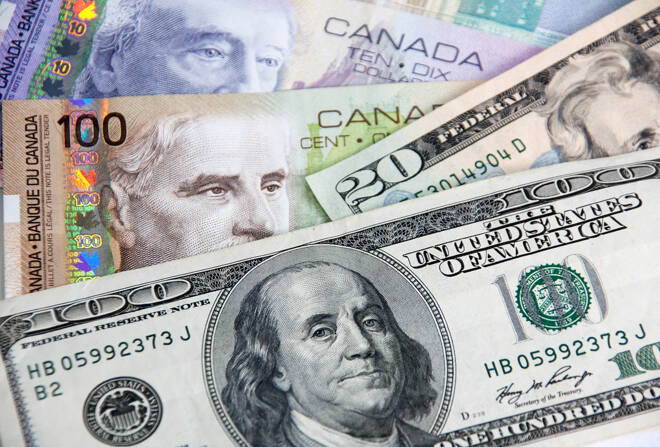
The Canadian dollar hit its lowest level in eight weeks against the U.S. counterpart in early trading on Tuesday after the greenback hovered around 16-month highs and crude oil prices slid amid threat of demand fall due to a resurgence of COVID-19 in Europe that weighed on the commodity currency.
“With oil under pressure following reports that the US, China and other major oil consumers may be preparing to release crude oil reserves, CAD underperforms its peers,” noted analysts at Citi.
“Citi expects the BoC to start lifting rates by April 2022 though comments from BoC Governor Macklem, while suggesting the Bank is getting closer to lift-off, also warn that they have not changed their view on the transitory nature of inflation. Therefore, CAD still remains a buy on dips but more versus funders (EUR, JPY, CHF) than against USD and AUD.”
Today, the USD/CAD pair rose to 1.2744 up from Monday’s close of 1.2698. After gaining about 2.3% last month, the Canadian dollar weakened by nearly 2.7% so far this month.
The re-election of Jerome Powell as Federal Reserve Chair confirms market expectations that interest rates will go up next year. The Fed meets again December 14-15.
The dollar index, which measures the value of the dollar against six foreign currencies, was trading 0.11% lower at 96.438 – close to a 16-month high. Last week, the greenback rose to 16-month highs against most other major currencies because of the hottest U.S. inflation reading in a generation that pushed investors to bet that interest rates are likely to rise sooner than previously thought.
“There is a case to be made for DXY to tactically top out around the current 96.00 area given market pricing for a relatively shallow expected Fed terminal rate of 1.5% and UST 10Yr real yields still below -1.0% – hardly the mix to take DXY to 97.50+,” Citi analyst added.
US Dollar Index Price Forecast
Every new US Dollar Index analysis as it publishes, today's technical signal and key levels, live price — on one page.
See all US Dollar Index forecasts“A couple of tactical drivers before year-end that could potentially put a short-term (and temporary) bid into DXY that include – (1) the unexpected announcement Friday of a 20-day national lockdown by Austria, and (2) renewed US debt ceiling concerns that may see financial institutions placing more of their USD cash balances with the Fed if such concerns intensify by mid-December. This may reduce the availability of USD liquidity to markets and put a temporary bid into USD.”
It is highly likely that the world’s dominant reserve currency, the USD, will rise by end of the year, largely due to the expectation of at least one rate hike next year. With the dollar strengthening and a possibility that the Federal Reserve will raise interest rates earlier than expected, the USD/CAD pair may experience a rise.
Canada is the world’s fourth-largest exporter of oil, which edged lower on rising concerns that increasing COVID-19 cases in Europe could threaten the economic economy. At the time of writing, U.S. West Texas Intermediate (WTI) crude was trading 0.23% lower at $76.58 a barrel. Lower oil prices lead to lower U.S. dollar earnings for Canadian exporters, resulting in a decreased value of the loonie.