EUR/USD
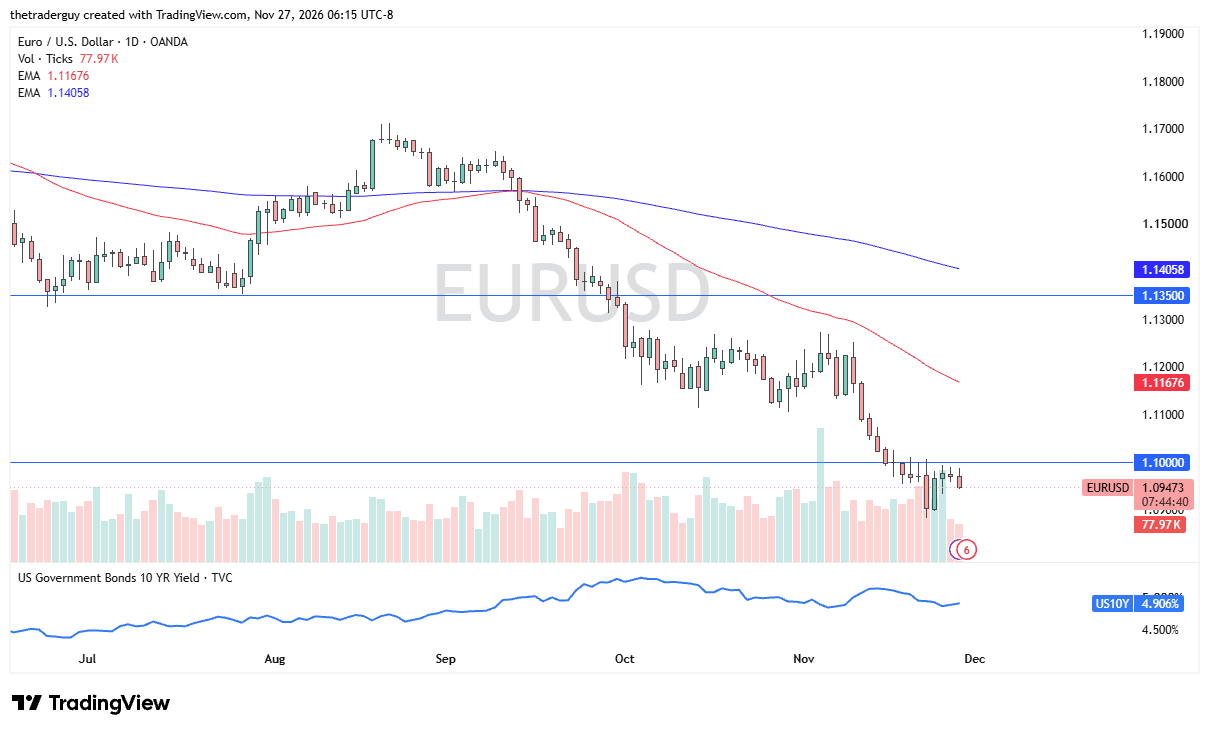
The euro initially tried to rally but is drifting lower during the trading session on Friday, which is not a huge surprise. We’re simply drifting around in the same range we’ve been in for some time.
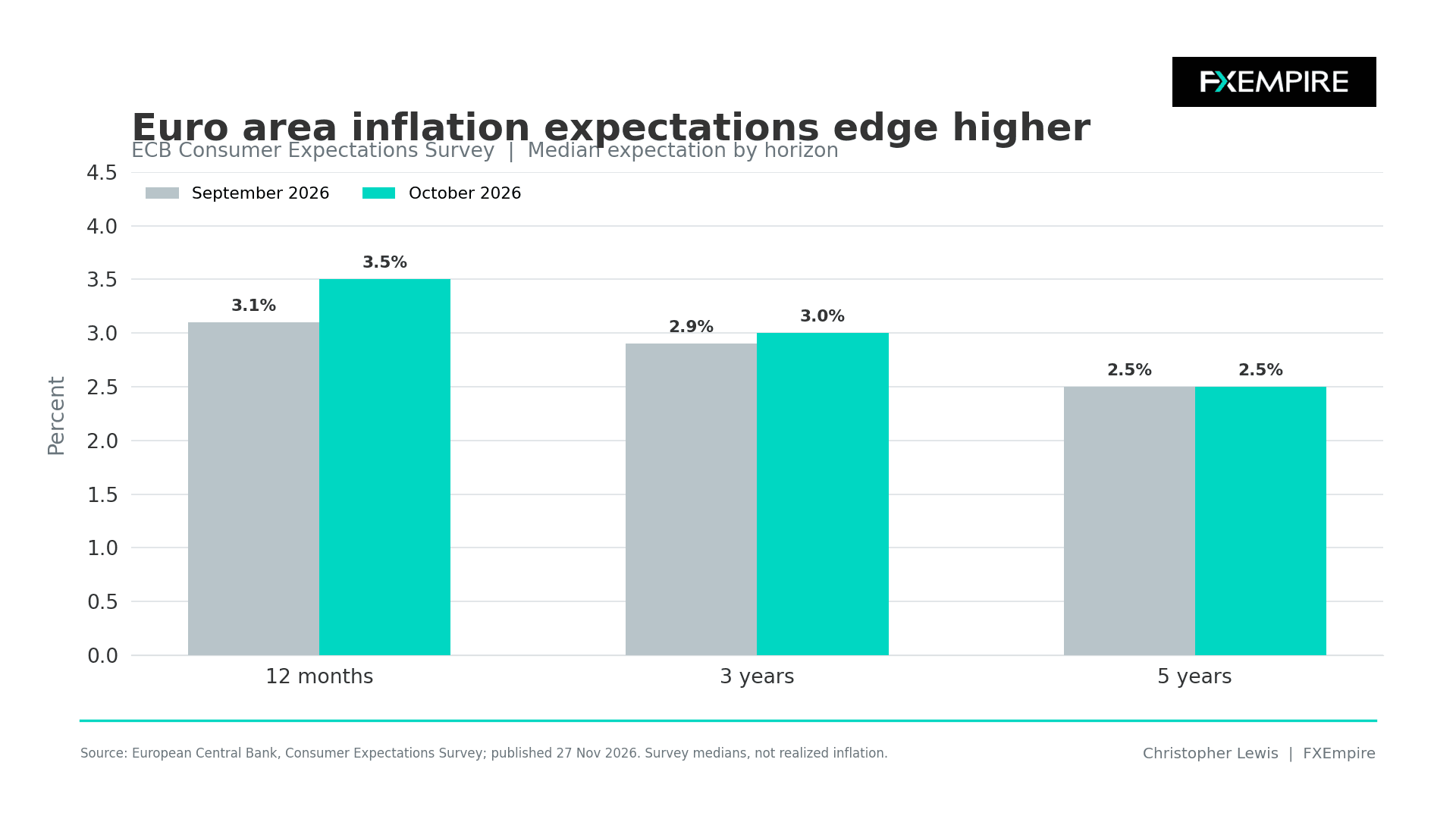
The ECB’s October Consumer Expectations Survey was released today, and median expected inflation over the next 12 months rose to 3.5% from 3.1% in September. But the survey itself wasn’t enough to move the market to the upside. The demand side is less supportive. Expected nominal income growth fell to 0.6% from 1.1%, even as consumers’ growth outlook improved modestly to -1% from -1.5%.
The Federal Reserve is expected to raise interest rates this month and is pretty much starting to bake in the very real possibility of next month as well. That continues to put downward pressure on this. I remain short in the euro.
GBP/USD
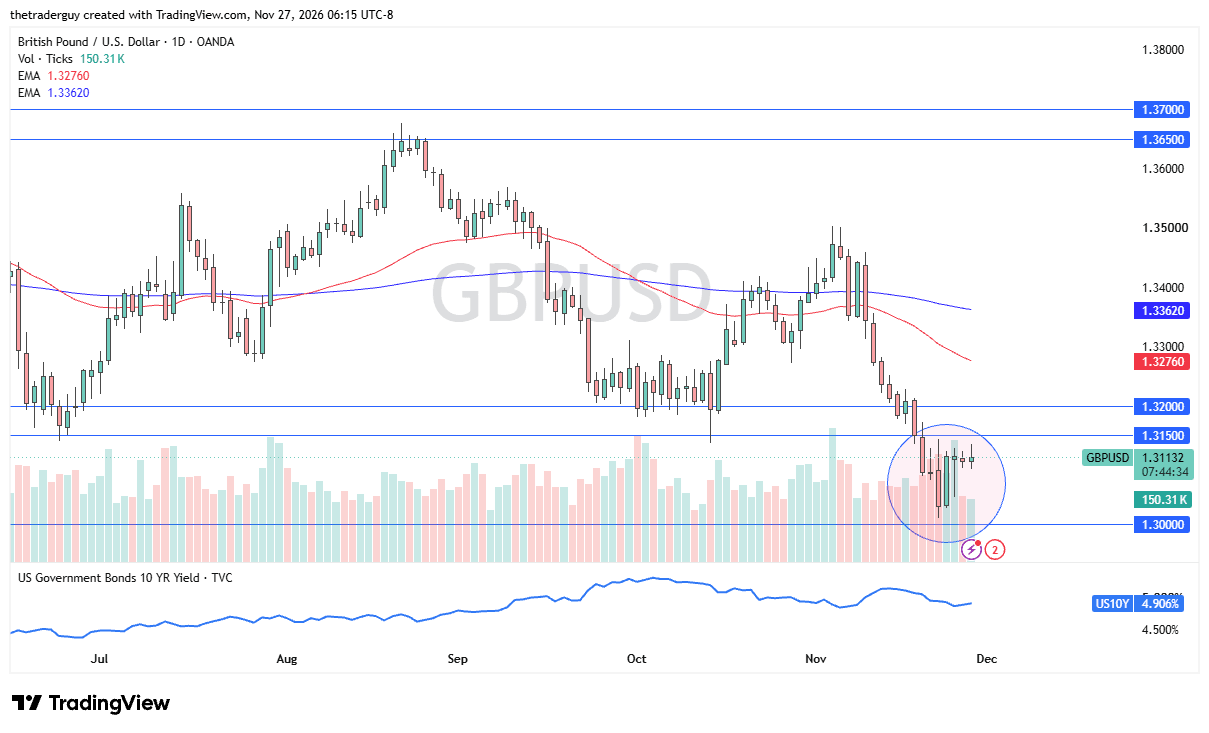
The British pound rallied towards the 1.1350 level early. Yesterday, I talked about this area as a potential shorting area, and we’ve seen sellers come back in.
Today’s Office for National Statistics release shows how uneven the UK’s cost-of-living pressure remained. In the year to September, the household cost for second income rose 1.4% versus 3.7% for the previous reading. The percentage gap is the widest since June 2022. The all-household cost index rose 3.9%, and this is part of the concern in Britain. Prices are rising, but not for good reasons.
The Bank of England raised its bank rate to 4% on November 5 by an 8-to-1 vote. One member actually preferred 4.25%. The MPC said it would watch for energy costs feeding into wages and firm prices. It doesn’t look like that’s quite happening yet, and therefore we are seeing the U.S. dollar, with its higher nominal yield, at least get a little bit of downward pressure.
I think ultimately we’re just sitting here consolidating. I’m willing to short but recognize it’s a short-term trade at best.
EUR/USD Price Forecast
Every new EUR/USD analysis as it publishes, today's technical signal and key levels, live price — on one page.
See all EUR/USD forecastsUSD/CHF
The U.S. dollar is rising against the Swiss franc, and really, at this point in time, that should not be a huge surprise. The Swiss National Bank holds a zero-interest-rate policy. The Federal Reserve is likely to raise rates. This is a simple carry trade.
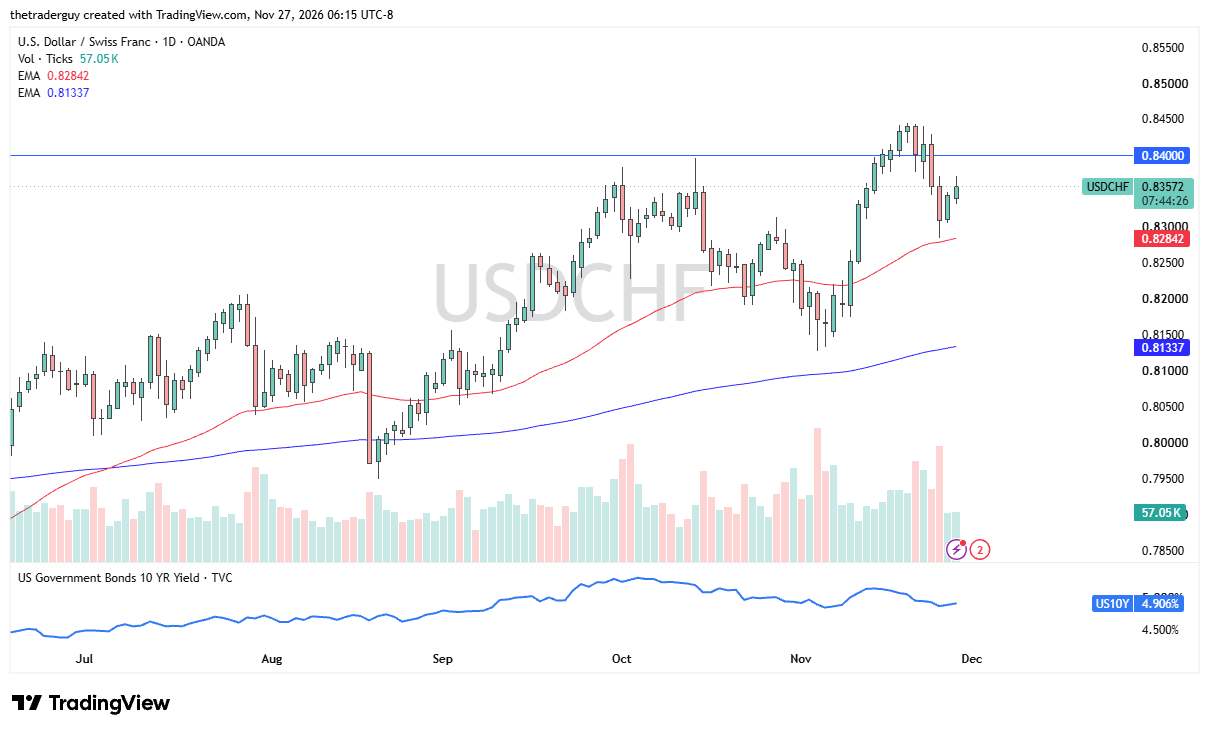
I’m long this already. I’m perfectly comfortable here. I have no interest whatsoever in shorting, and in fact, could even think about adding to my position. The 50-day EMA at this point in time seems to be offering a bit of support as well.
AUD/USD
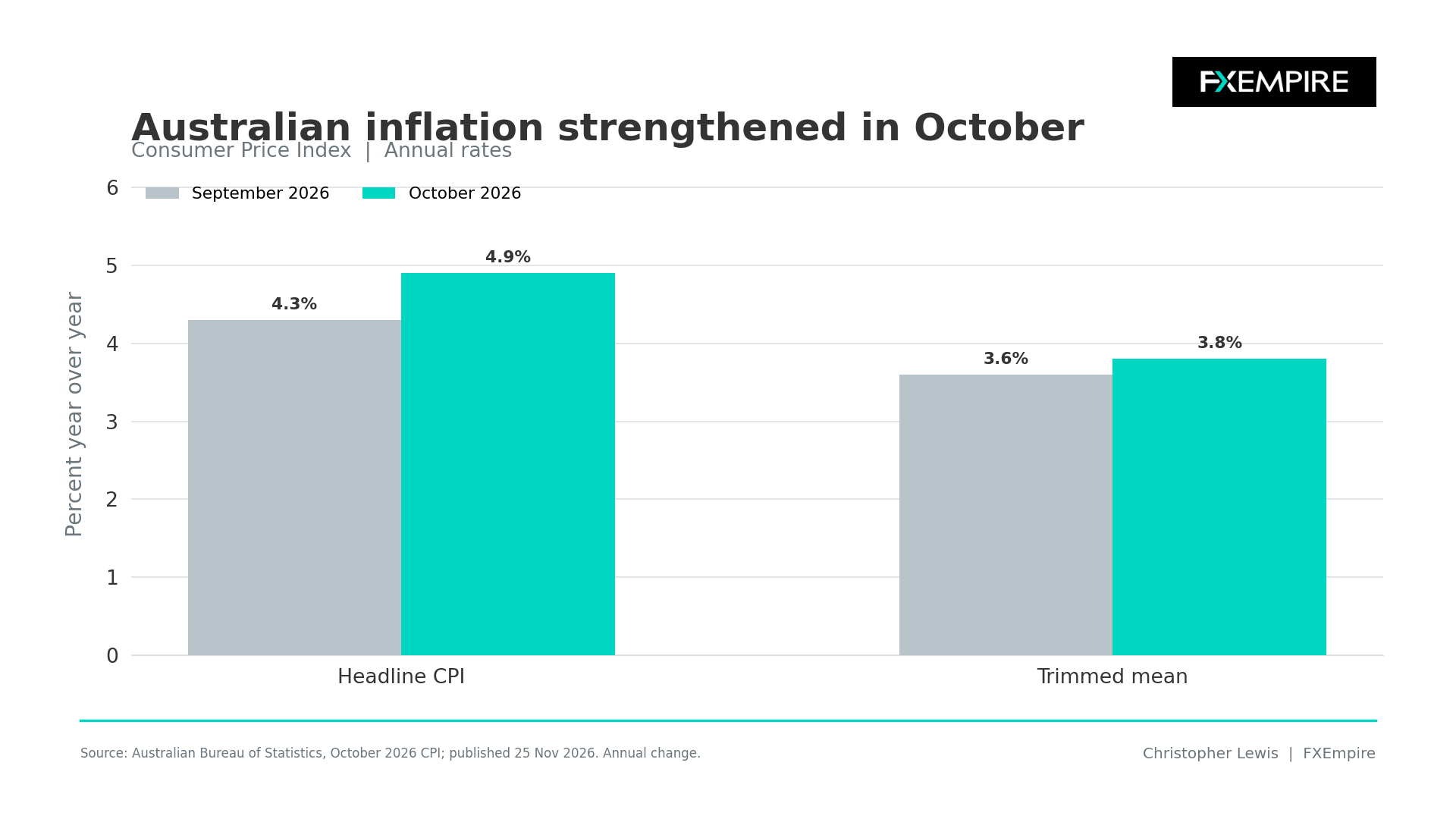
The Australian dollar is trying to rally during the trading session, with the recent CPI release in Australia strengthening the case for the RBA to keep the policy rate somewhat restrictive. Annual headline inflation rose to 4.9% from 4.3% in September, while trimmed-mean inflation increased to 3.8% from 3.6%. The monthly CPI gain was 0.7% seasonally adjusted, so the acceleration was not necessarily confined to the annual comparison.
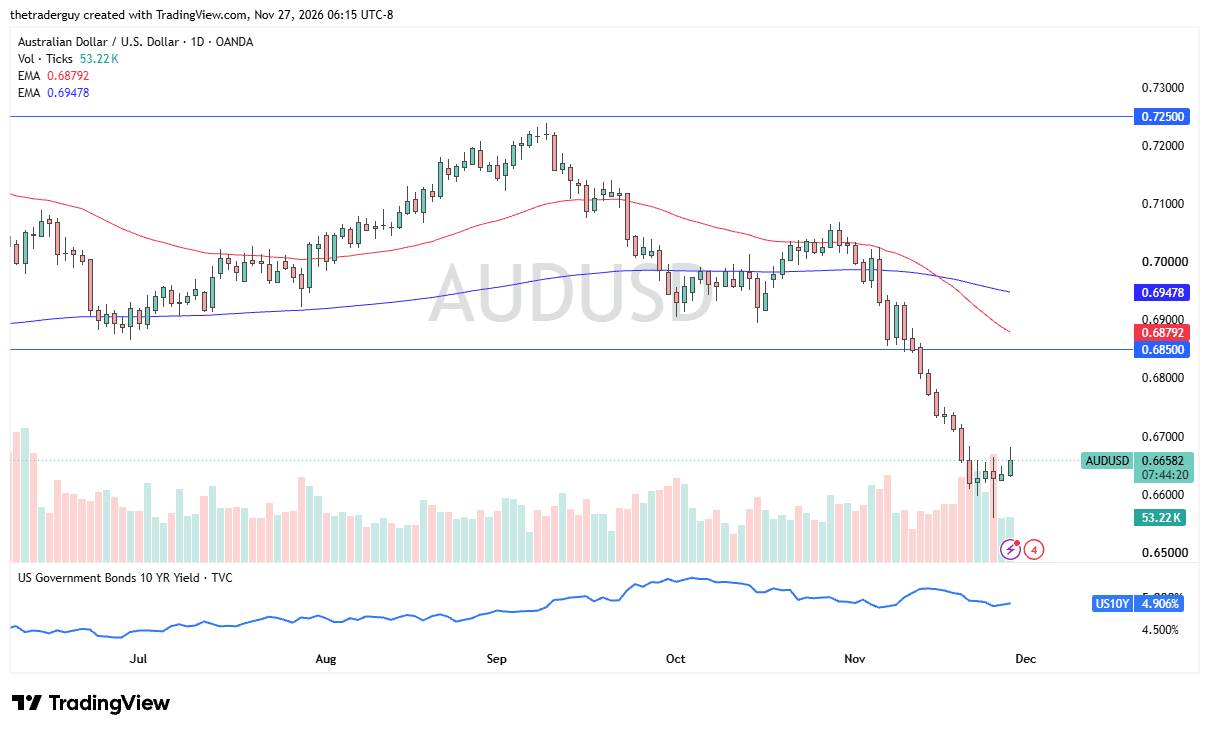
All things being equal, though, a lot of the inflation comes from energy, and that’s not good. The RBA raised its cash rate to 4.85% on November 4. Its November outlook says inflation is likely to remain above target for longer, with a return to the midpoint of the 2% to 3% band not expected until the middle of 2028.
That could give the Aussie some upward pressure eventually. But with the U.S. offering real yields and very serious concerns about other types of inflation out there, I still think this is a fade-the-rally market, as evident at the 0.67 level, causing downward pressure. Short-term traders probably continue to fade the Aussie dollar.