Boeing Reports Larger-Than-Expected Q2 Loss Amid Ongoing Challenges
Boeing’s second-quarter financial results have fallen short of analyst expectations, reflecting persistent struggles in both its commercial airplane and defense divisions.

Key Financial Figures
The aerospace giant reported a net loss of $1.44 billion, or $2.33 per share, for the quarter. On an adjusted basis, the loss widened to $2.90 per share, significantly underperforming the expected $1.97 per share loss. Revenue declined 15% to $16.87 billion, missing the projected $17.23 billion.
Production and Delivery Hurdles
Boeing’s performance continues to be impacted by the January door plug blowout incident involving a 737 Max, which has intensified regulatory scrutiny and slowed new aircraft deliveries. The company’s production rate for its best-selling 737 Max planes remains in the mid-20s per month, far below the target of 38.
Supply Chain and Workforce Challenges
Like its competitor Airbus, Boeing is grappling with a workforce influx and supply chain constraints that are hampering production capacity. These issues have emerged in the wake of pandemic-induced demand fluctuations that disrupted the industry.
Financial Outlook
CFO Brian West had previously warned of an expected cash burn of approximately $4 billion in Q2, mirroring Q1 results. This burn rate is primarily attributed to lower-than-anticipated production and delivery rates.
Commitment to Improvement
CEO Dave Calhoun emphasized the company’s efforts to enhance its quality management system, despite the challenging quarter. Stephanie Pope, CEO of Boeing’s commercial airplane unit, acknowledged the need for lasting changes in training and quality control to regain customer trust.
Market Forecast
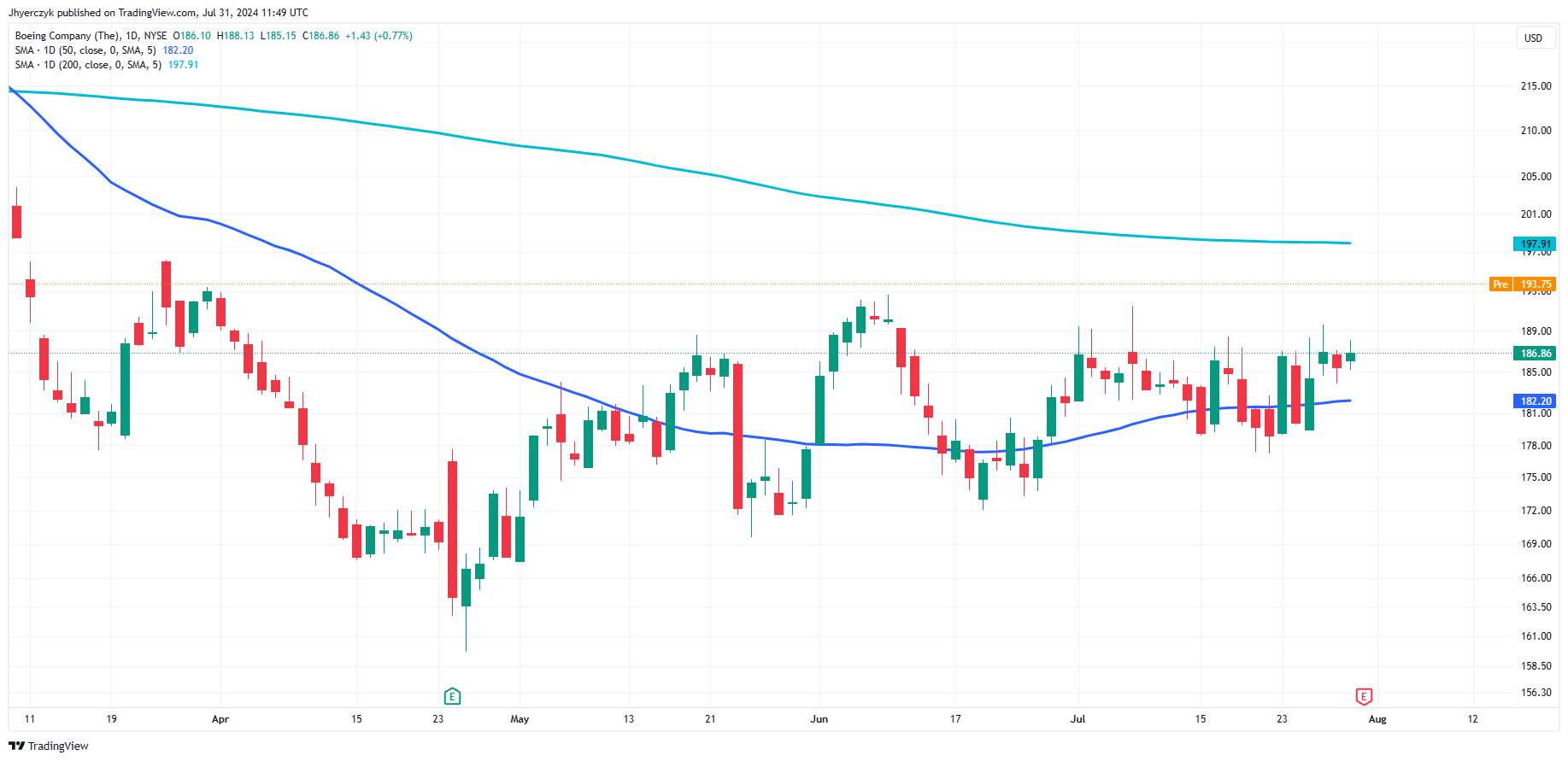
The persistent challenges facing Boeing, including production delays, regulatory scrutiny, and financial underperformance, suggest a bearish short-term outlook for the company. Investors may exercise caution as Boeing works to address these issues and regain its competitive footing in the aerospace industry.