


Following economic data for the Eurozone on Tuesday, inflation figures were in focus this morning.
Eurozone Inflation
In April, the annual rate of inflation picked up from 1.3% to 1.6%, which was in line with prelim figures. A year earlier, the annual rate of inflation had been 0.3%.
According to Eurostat,
- The lowest annual rates of inflation were registered in Greece (-1.1%), Portugal (-0.1%), and Malta (+0.1%).
- Luxembourg registered the highest annual rate inflation at 3.3%.
The highest contribution to the annual euro area rate of inflation came from:
- Energy (+0.96 percentage points)
- Services (+0.37 pp)
- Food, alcohol, & tobacco (+0.16 pp)
- Non-energy industrial goods (+0.12 pp)
The annul core rate of inflation softened from 0.9% to 0.7%, however, which worse than a forecasted annual core rate of inflation of 0.8%.
In the month of April, consumer prices rose by a further 0.6%, which was in line with forecasts. In March, consumer prices had risen by 0.9%.
Market Impact
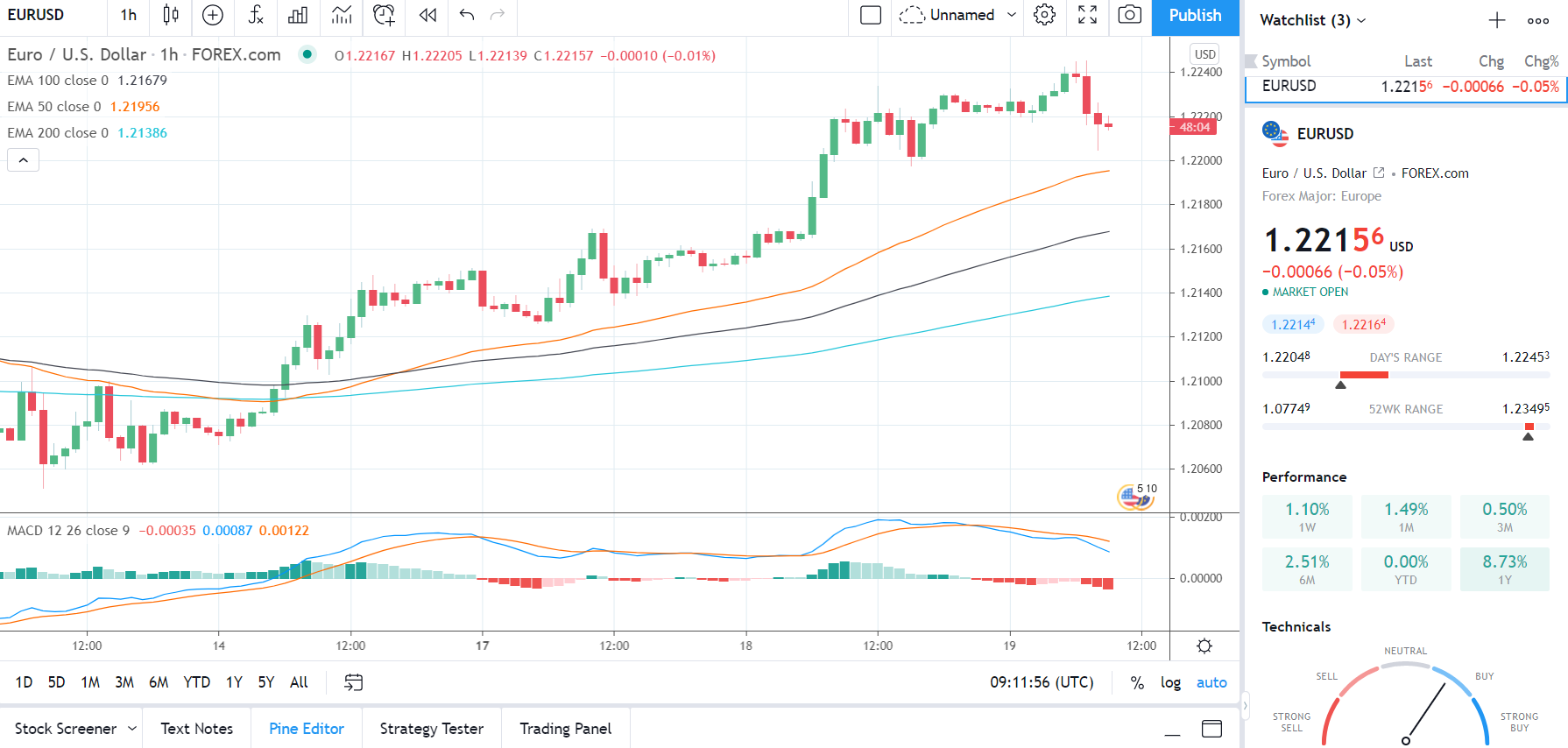
Ahead of the numbers the EUR had risen to a pre-stat and current day high $1.22453 before falling to a pre-stat and current day low $1.22048.
In response to today’s stats, the EUR rose to a post-stat high $1.22205 before falling to a post-stat low $1.22139.
At the time of writing, the EUR was down by 0.05% to $1.22157.
Next Up
The FOMC Meeting Minutes…