
Highlights
- German wholesale prices fell by 0.6% in December after declining by 0.2% in November.
- A weak demand environment impacted wholesale price trends.
- Next up, German GDP numbers for Q4, Eurozone industrial production figures, and trade data.
On Monday, the German economy was in focus early in the European session.

German Wholesale Prices
German wholesale prices were down 2.6% in December year-over-year versus 3.6% in November. Economists forecast wholesale prices to decline by 2.3% year-over-year. Wholesale prices fell by 0.6% in December compared with November after declining by 0.2% in November. Economists expected wholesale prices to fall by 0.3% in December.
According to Destatis,
- Mineral oil products continued to impact year-on-year wholesale prices, declining 9.8% in December.
- There were also declines in wholesale prices for:
- Grain, unmanufactured tobacco, seeds, and animal feeds (-19.7%).
- Chemical products (-19.0%).
- Metals and metal ores (-12.7%).
- Waste and scrap (-7.6%).
- However, there were year-on-year price increases for:
- Fruit, vegetables, and potatoes (+13.9%).
- Sugar, confectionary, and bakery products (+8.9%).
- Wholesale prices beverages (+7.1%).
- Tobacco (+5.8%).
- Average wholesale prices fell by 0.5% on an annual average basis in 2023.
EUR/USD Reaction to German Wholesale Prices
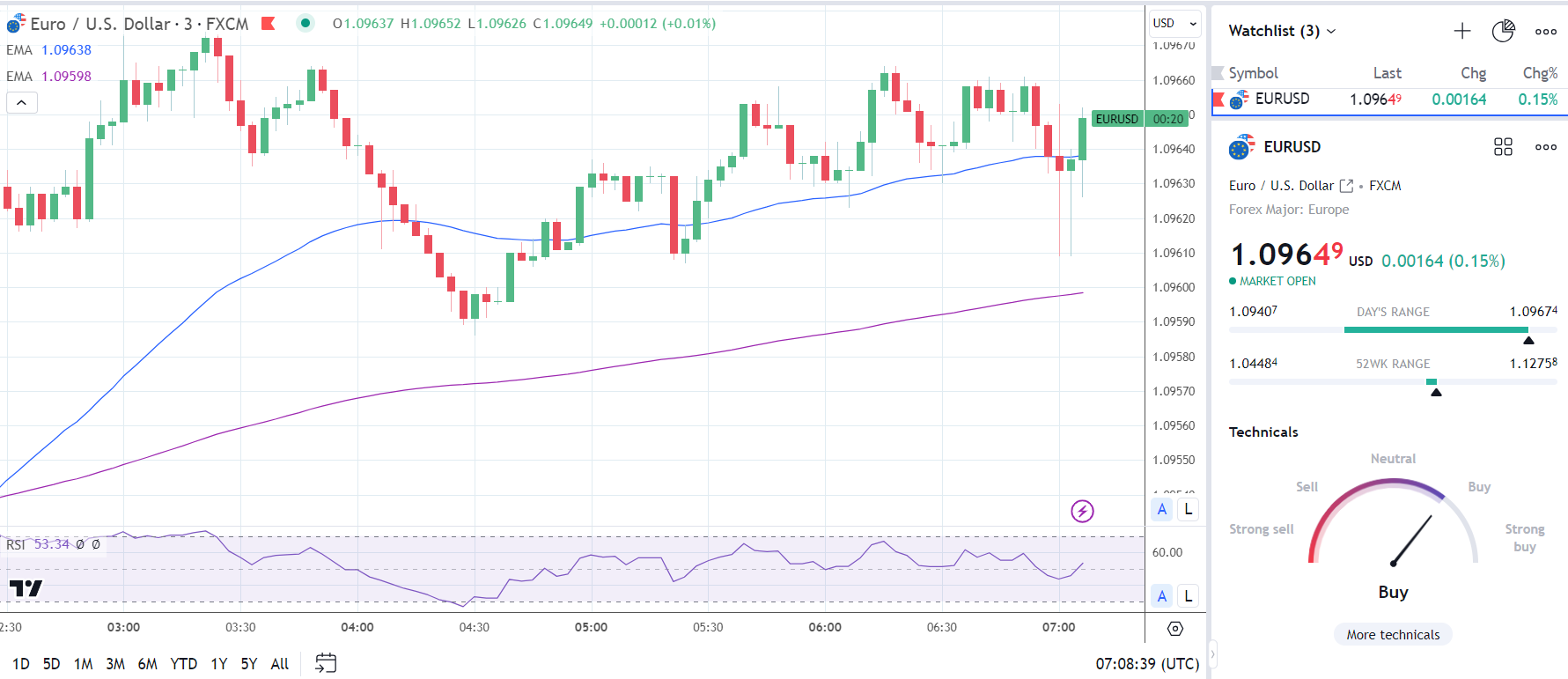
Before the German industrial production numbers, the EUR/USD fell to a low of $1.09407 before rising to a high of $1.09674.
However, in response to the wholesale price report, the EUR/USD rose to a high of $1.09653 before falling to a low of $1.09609.
On Monday, the EUR/USD was up 0.15% to $1.09649.
German GDP Numbers to Affirm Recession
Later this morning, German GDP numbers for Q4 2023 warrant investor attention. Recent economic indicators showed the German economy in recession in the final quarter of 2023. Retail sales and industrial production figures raised concerns about the German economy.
A more marked-than-expected contraction in the German economy could signal a prolonged economic recession. More significantly, a more marked contraction than expected could fuel fears of a Eurozone recession.
Last Monday, the Sentix Indicator showed the German economy in recession, affecting the Eurozone economy. A deteriorating macroeconomic outlook could raise bets on an H1 2024 ECB interest rate cut.
Eurozone Industrial Production and Trade Data to Send Mixed Signals
Investors must also consider Eurozone economic indicators later in the session. Eurozone industrial production and trade data will garner investor interest.
Economists forecast industrial production to fall by 0.3%. However, economists predict the trade surplus to widen from €11.1 billion to €12.5 billion in November. Improving trade terms and falling industrial production would align with the November numbers from Germany.