



On Thursday, August 22, private sector PMI numbers from Germany garnered investor interest. The Services PMI is likely to influence the ECB rate path more, accounting for about 70% of GDP and an inflation contributor.
German Services PMI: Demand
Germany’s HCOB Services PMI dropped from 52.5 in July to a 5-month low of 51.4 in August.
According to the Flash Survey,
- New business across the German services sector barely increased in August.
- Firms also reported sharp falls in new export business orders.
- Backlogs of work declined, forcing firms to reduce staffing levels amidst the weak demand environment.
- Output price inflation accelerated, while input prices increased at the slowest pace since March 2021.
ECB Rate Cut Expectations
The input price and labor market subcomponents of the Flash survey may fuel speculation about a September ECB rate cut.
Weaker labor market conditions and downward input price trends could signal a softer inflation outlook. Input prices consider wages. Softer wages could reduce disposable income, and consumer spending, possibly dampening demand-driven inflation.
EUR/USD Price Forecast
Every new EUR/USD analysis as it publishes, today's technical signal and key levels, live price — on one page.
See all EUR/USD forecastsNevertheless, investors should consider the Eurozone PMI numbers, which may have more impact on the ECB rate path. Economists expect the Eurozone’s HCOB Services PMI to remain at 51.9 in August.
An unexpected fall in the Services PMI, downward input price trends, and softer labor market conditions may bolster bets on a September rate cut.
EUR/USD Reaction to Private Sector PMIs
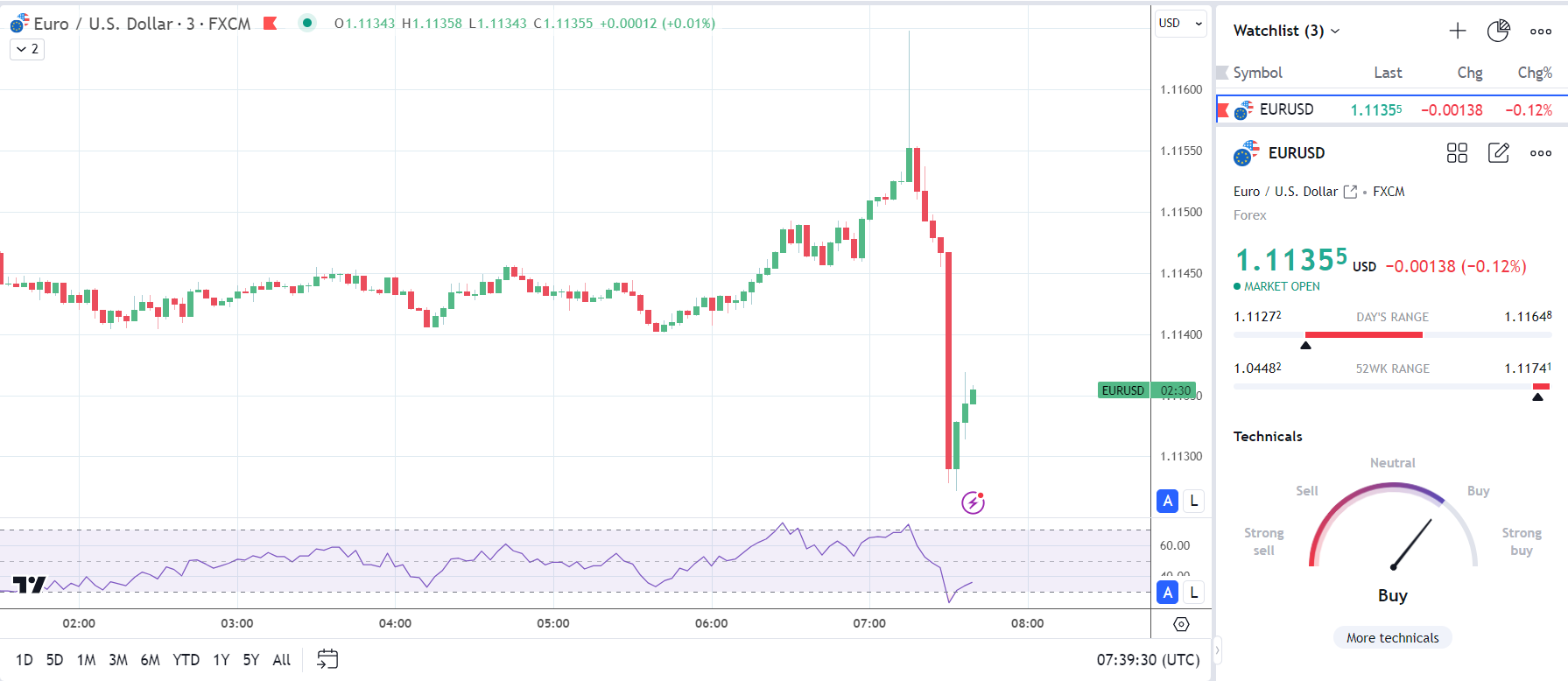
Before the private sector PMI release, the EUR/USD fell to a low of $1.11401 before climbing to a high of $1.11648.
However, following the Flash PMIs, the EUR/USD slid from $1.11467 to $1.11272.
On Thursday, August 22, the EUR/USD was down 0.12% to $1.11355.
Up Next
Eurozone private sector PMIs will also draw interest as investors speculate about a September ECB rate cut. However, investors should also consider the ECB’s consumer inflation expectations survey and the monetary policy meeting minutes.
Softer inflation expectations may signal reduced consumer spending on the expectation of lower consumer prices. A weaker consumption outlook could raise investor expectations of a September ECB rate cut.
Additionally, the ECB monetary policy meeting minutes could give investors insight into the ECB’s views on a September rate cut.
US Economic Calendar
Later in the session on Thursday, US jobless claims and Services PMIs will influence sentiment toward the Fed rate path.
Higher jobless claims and slower service sector activity may increase bets on a 50-basis point September Fed rate cut.