Crude oil gave back most of the weeks 4.8% gains on Friday’s trading as investors come to the realization that the huge draws in oil inventories reported by API and EIA were likely one-time anomalies that skewed the overarching supply problems that still exist. Late Wednesday API reported a surprising inventory draw of 12.08 mln barrels, compared to last week’s build of 0.942 mln barrels and to expectations for a draw of ~100k barrels for the week ending Sept 2.
Oil continued to slide as the new week begins falling as much as 75 cents at the open on Monday.
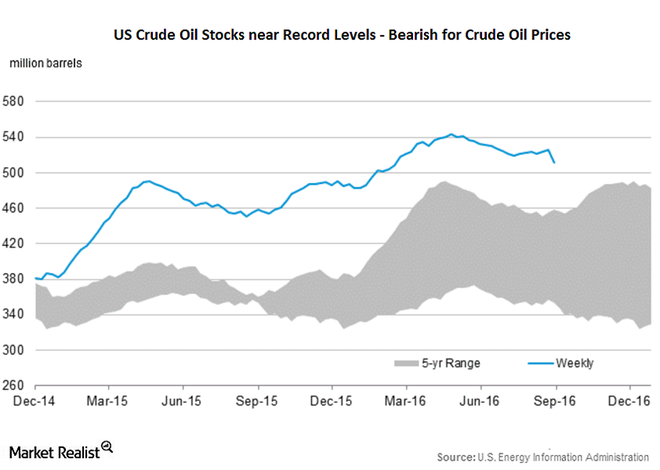
Following API data, on Thursday EIA petroleum data reported the largest single draw since 1999, as inventories dropped by nearly 15 mln barrels. Crude’s initial reaction was a large spike followed by a sustained rally to close pit trading near 2-week highs yesterday.
Thursday’s rally was short-lived however, as a crude oil sell-off ensued on Friday with a contributing factor being last week’s tropical Hurricane Hermine, which negatively impacted production in the Gulf region, forcing producers to take precautions & shut down production.
Gulf region imports also fell to ~2.5 mln barrels, their lowest level since 1990 as a result of the storm. Imports in this region are expected to return to normal levels next week. The next OPEC meeting will take place in Algiers from Sept 26-28.
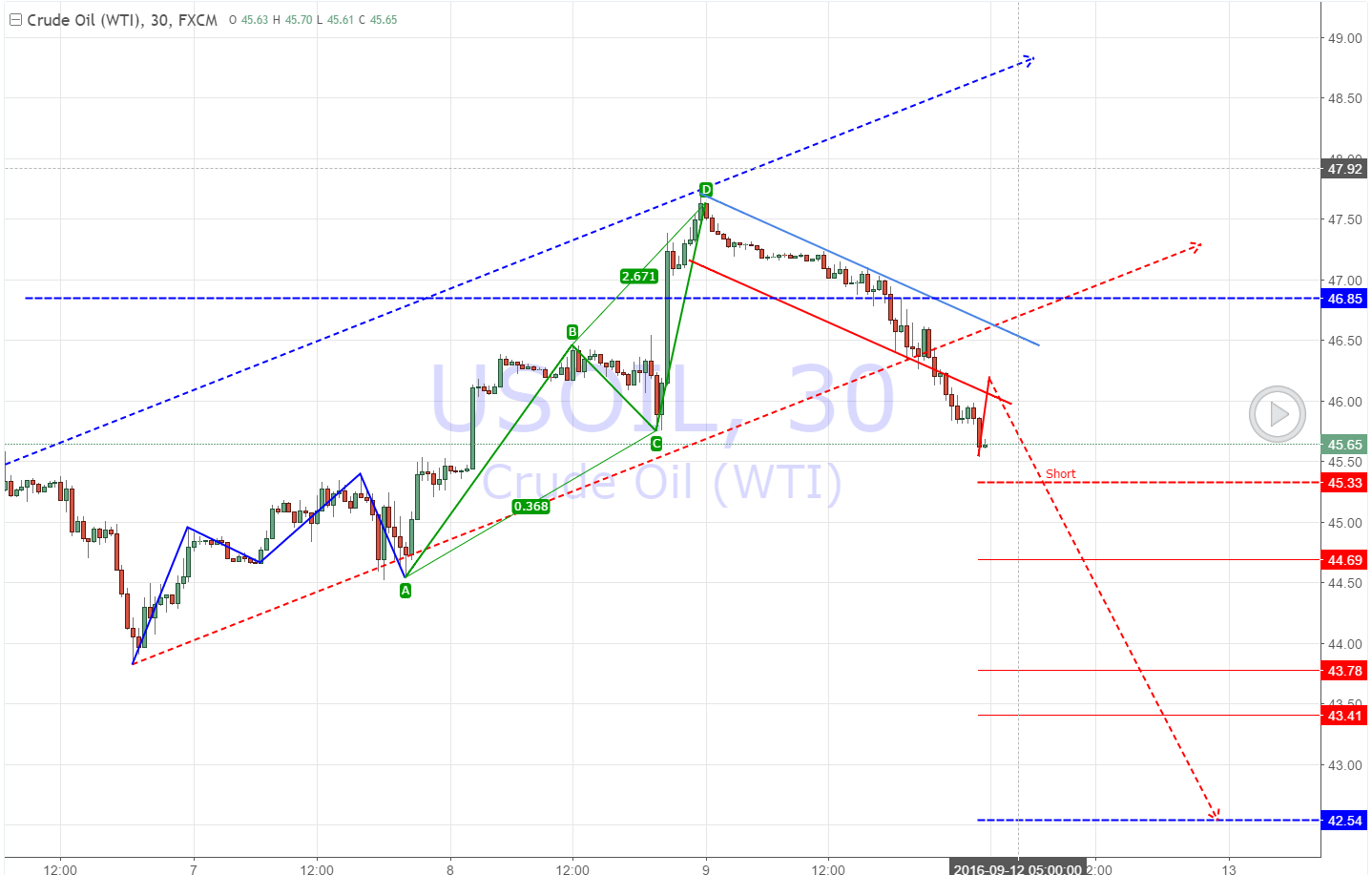
Crude hit a new high of 47.69 on Thursday, its highest level in nearly two weeks back to when the commodity traded as high as 48.46. However, Kloza believes a sell-off could occur because of these potential pitfalls, as well as challenges that come with gaining accurate data on oil levels in the U.S. Crude closed the week at 45.72 seeing a significant decline on Friday. Crude saw a one day drop of almost 4%.
“We put too much faith in EIA, particularly in the energy department’s weekly numbers,” noted Kloza in reference to the U.S. Energy Information Administration.
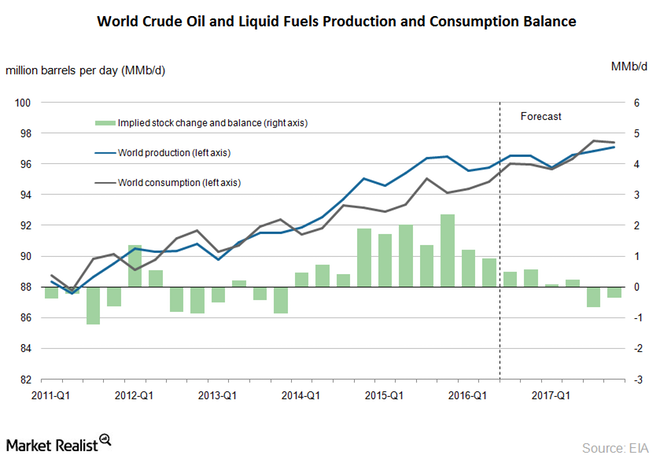
The EIA released its monthly Short-Term Energy Outlook report on September 7, 2016. It reported that the global crude oil supply could outstrip demand by 1.1 MMbpd (million barrels per day) in 2H16—compared to 2.2 MMbpd in 1H16. The EIA expects that the crude oil supply and demand will reach a balance in 2017.
The International Energy Agency reported that production could lag demand by 1 MMbpd in 3Q16 in its August report. Its next report will be released on September 13, 2016. In a recent meeting, the IEA chief stated that crude oil supply and demand will reach equilibrium in 2017.
Supply and demand factors impact the volatility in crude oil prices. Read Tropical Storm Causes Crude Oil Prices to Rebound for more on US crude oil prices’ peaks and lows.
Crude oil prices could feel the heat due to glut in refined products, easing supply outages, as well as high OPEC and Russian crude oil production.
The International Energy Agency said that global crude supplies were outstripping demand. However, Croft maintains that the oil oversupply looks to be easing, and that the persistence of the global glut has potentially been overblown. In a recent note, she wrote that “acute downside risks to the oil market are visible and are likely already mostly priced in.”

For now, all eyes are now on the informal OPEC meeting slated for September, with the big question being whether a production freeze will be agreed upon.