
Bitcoin (BTC) briefly reclaimed the $80,000 level at the weekly open but lost momentum as renewed Middle East tensions dented risk appetite.
The BTC/USD pair rose 2.41% to an intraday high above $80,600 on Monday before slipping below $79,000. The decline followed reports from Iran’s Fars agency claiming two missiles struck a US patrol boat, though US officials denied the claim.
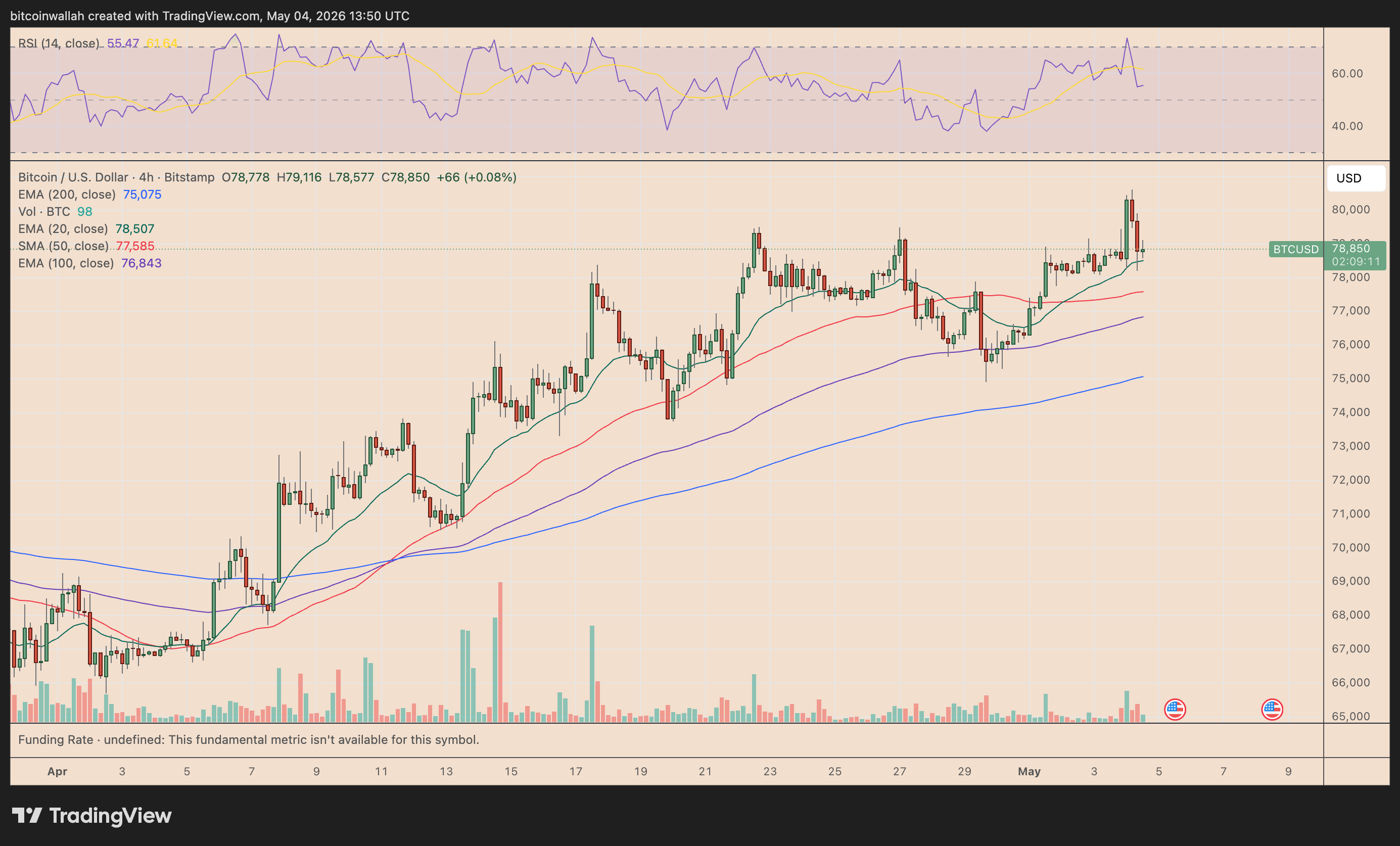
Here are the five key BTC indicators to watch this week following the new geopolitical developments.

1. Oil May Cross $150 Per Barrel, Hurting Bitcoin
Iran moved to assert control over the Strait of Hormuz, a key global oil chokepoint, after President Donald Trump said the US would begin guiding non-conflict vessels through the route from Monday.
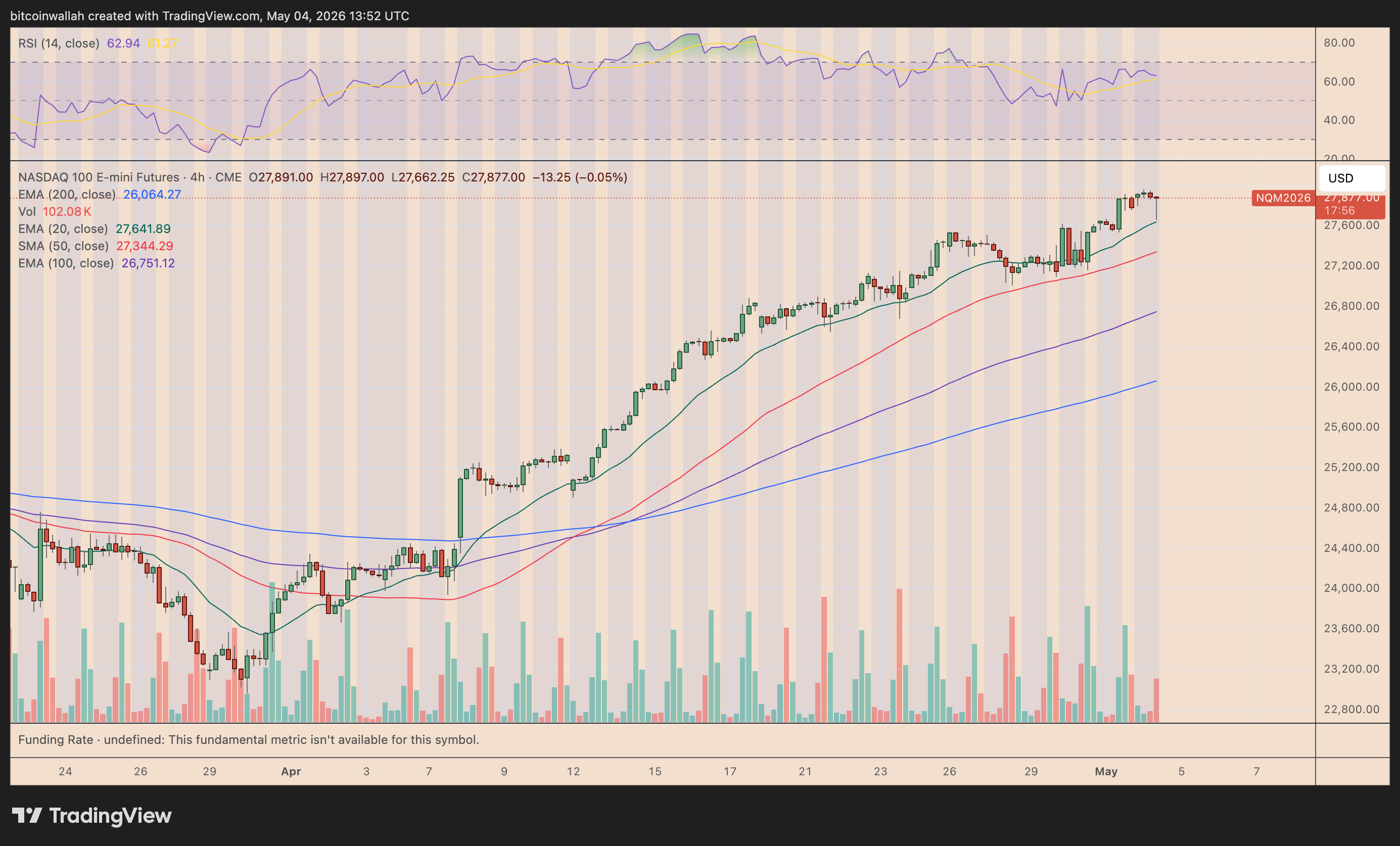
The escalation dampened a broader global equities rally that had been fueled by AI optimism and strong tech earnings. Bitcoin, which typically moves in tandem with risk assets, dropped alongside.
Brent crude surged as much as 8.21% before trimming gains, but the move still reinforces a bullish technical structure.
The daily chart shows price breaking above a multi-week symmetrical triangle, typically a continuation pattern following the strong uptrend from February lows.
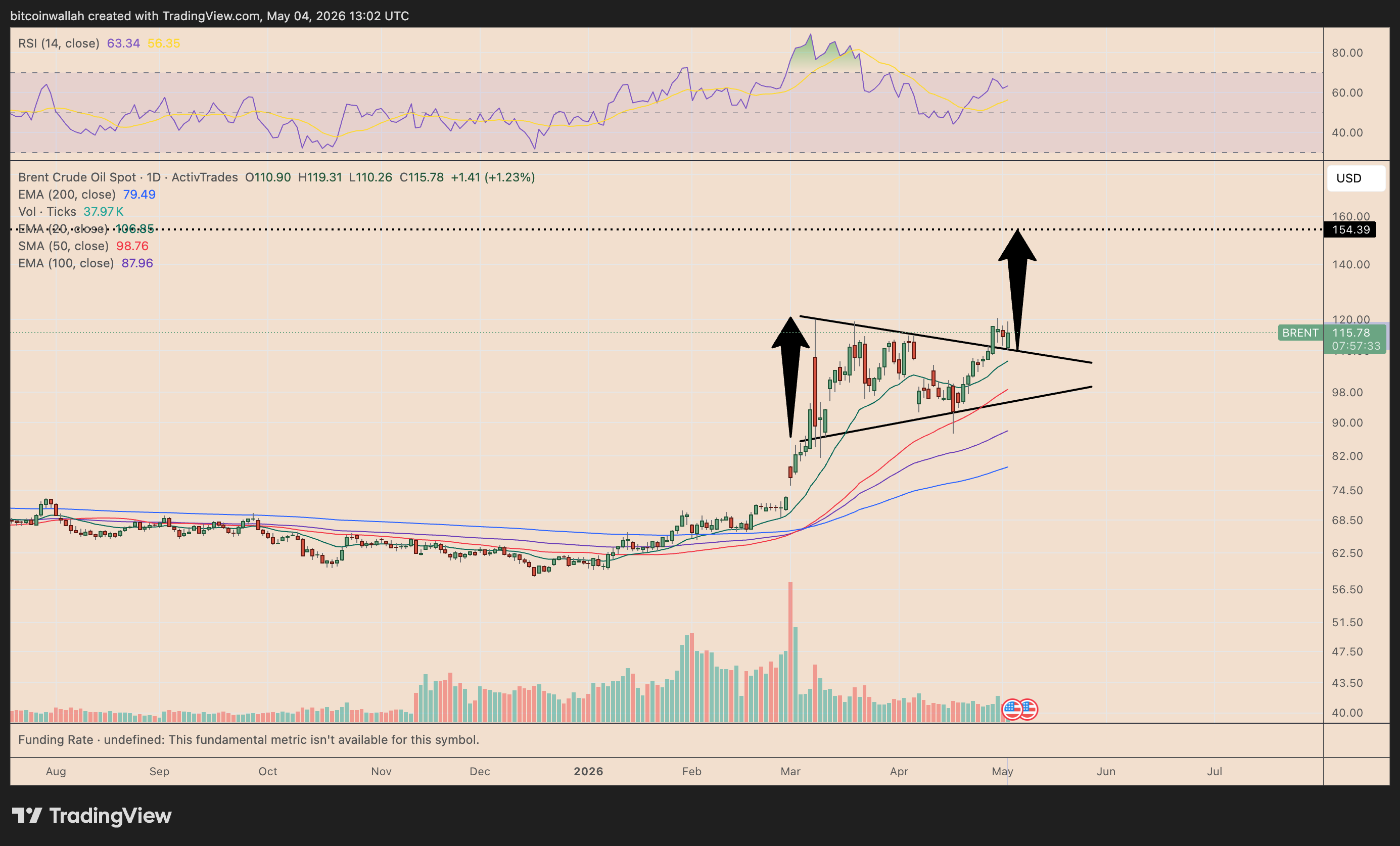
If the breakout holds, the pattern projects a continuation above the $150 mark, aligning with prior resistance zones and the measured move of the triangle. A failure back inside the pattern, however, would weaken the bullish case and signal a potential fakeout.
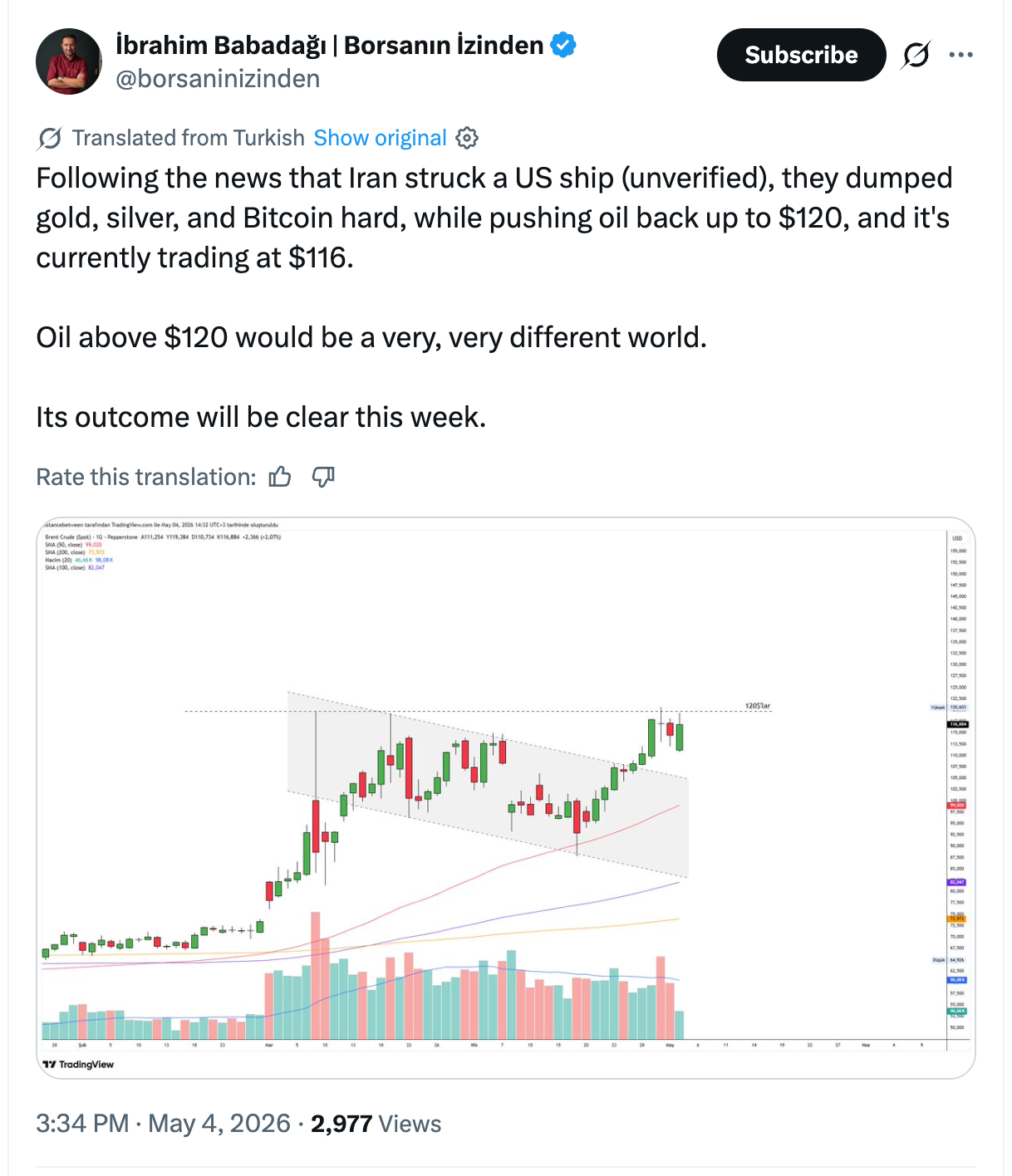
“There’s a very clear inverse relationship between $BTC and Oil prices,” said analyst Dee, adding:
Bitcoin Price Forecast
Every new Bitcoin analysis as it publishes, today's technical signal and key levels, live price — on one page.
See all Bitcoin forecasts“Both cannot be going up and staying up at the same time. Beyond that, the general markets are already over extended. $150k won’t be happening anytime soon.”
2. Barclays Joins Wall Street in Scrapping 2026 Fed Rate Cuts
Barclays has scrapped its 2026 Fed rate-cut outlook, now expecting no easing until a single 25-basis-point cut in March 2027, citing sticky inflation above 3% and elevated oil prices driven by Strait of Hormuz tensions.
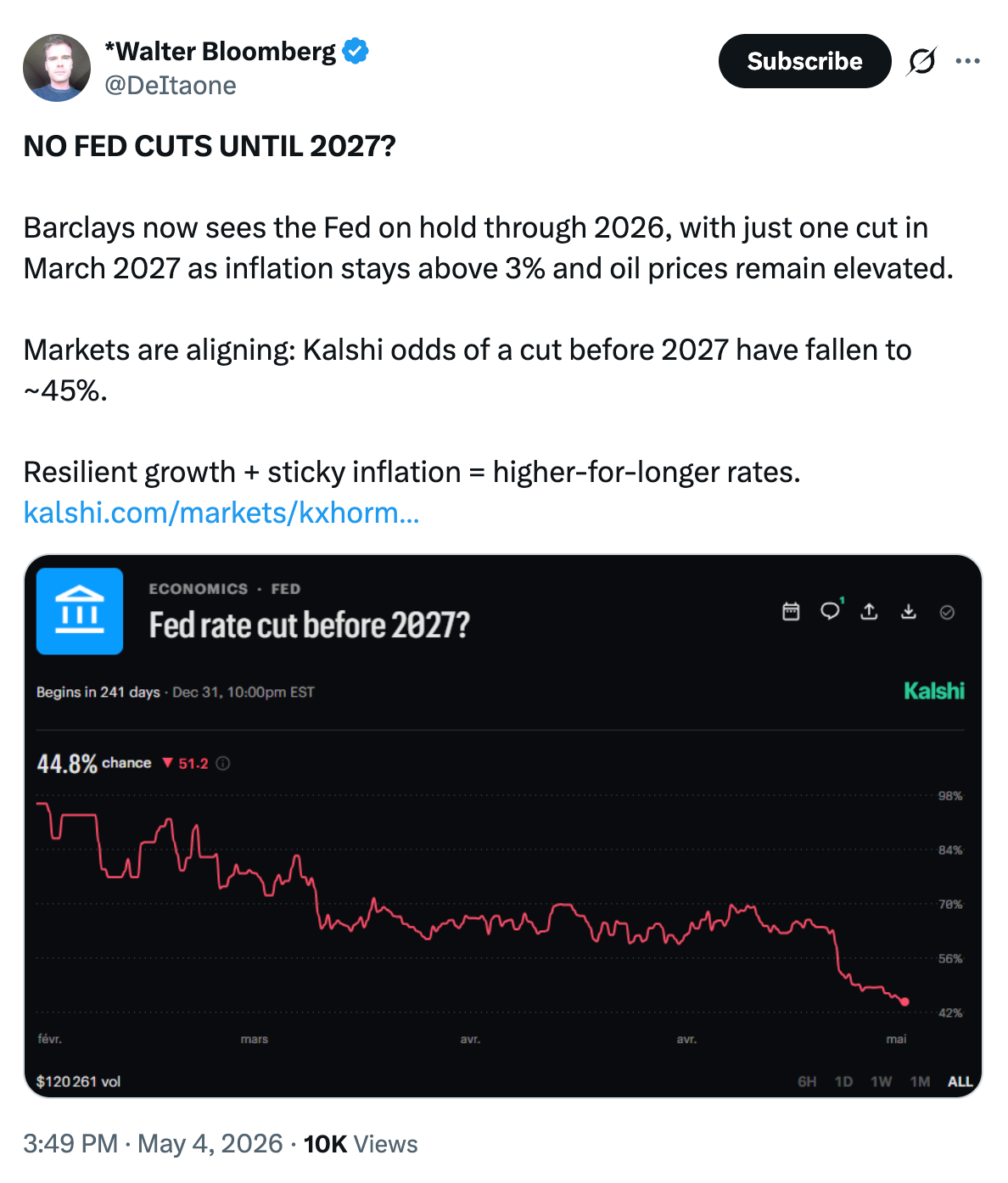
For Bitcoin, the shift reinforces a “higher-for-longer” macro backdrop. Elevated rates typically tighten liquidity, strengthen the US dollar, and cap upside in risk assets, including BTC.
Markets are already adjusting, with odds of any rate cut before 2027 falling to around 45%. That reduces the likelihood of a near-term liquidity-driven Bitcoin rally, keeping price action sensitive to macro headlines, especially oil and inflation.
3. Bitcoin’s $81,500 Cost Basis Becomes Next Target To Break
Bitcoin is now testing a critical on-chain level near $81,500, the short-term holder (STH) realized price.
This level represents the average cost basis of coins moved over the past 155 days. Price trading below it keeps recent buyers underwater, historically forming a strong resistance zone during recovery phases.
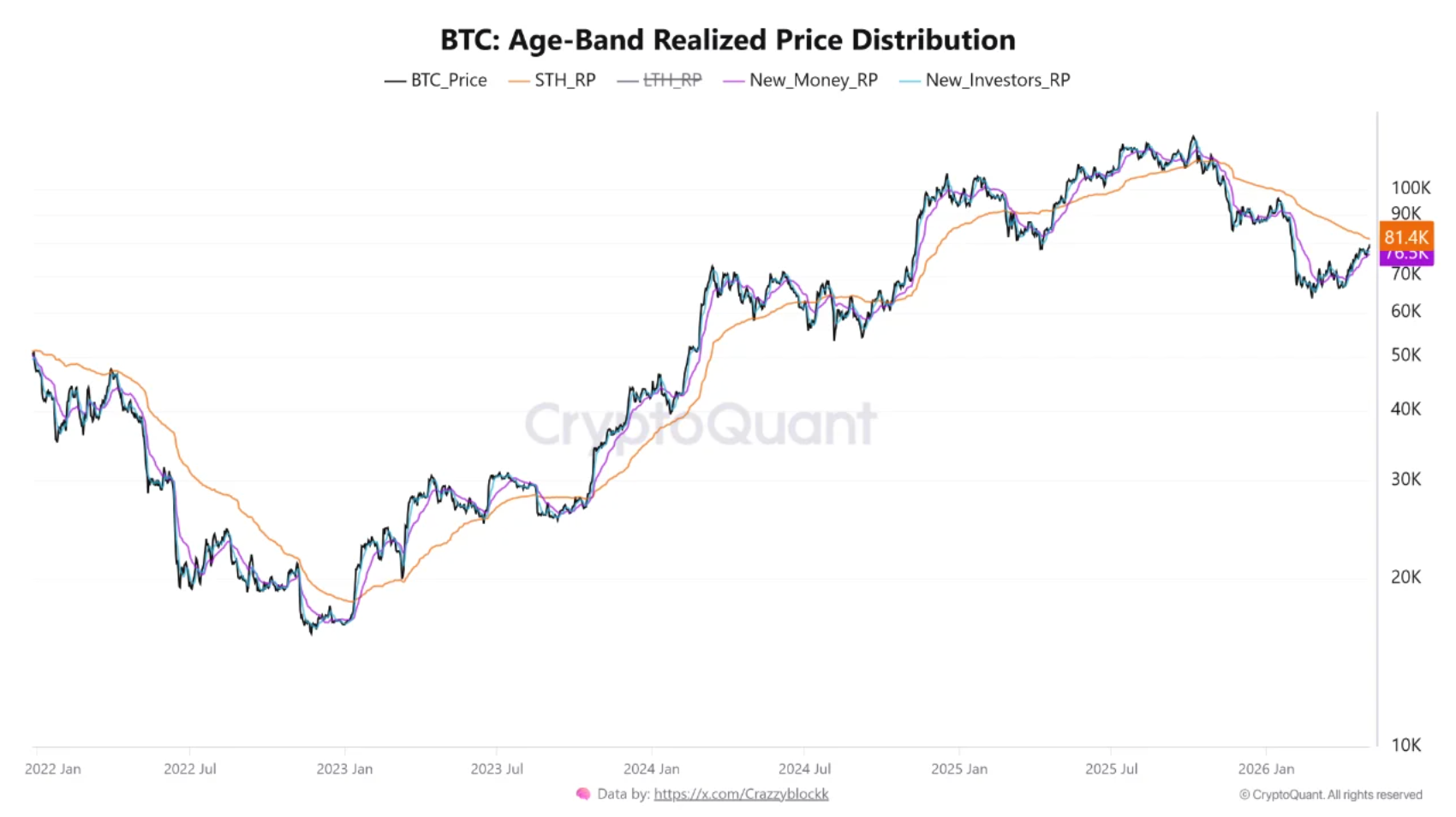
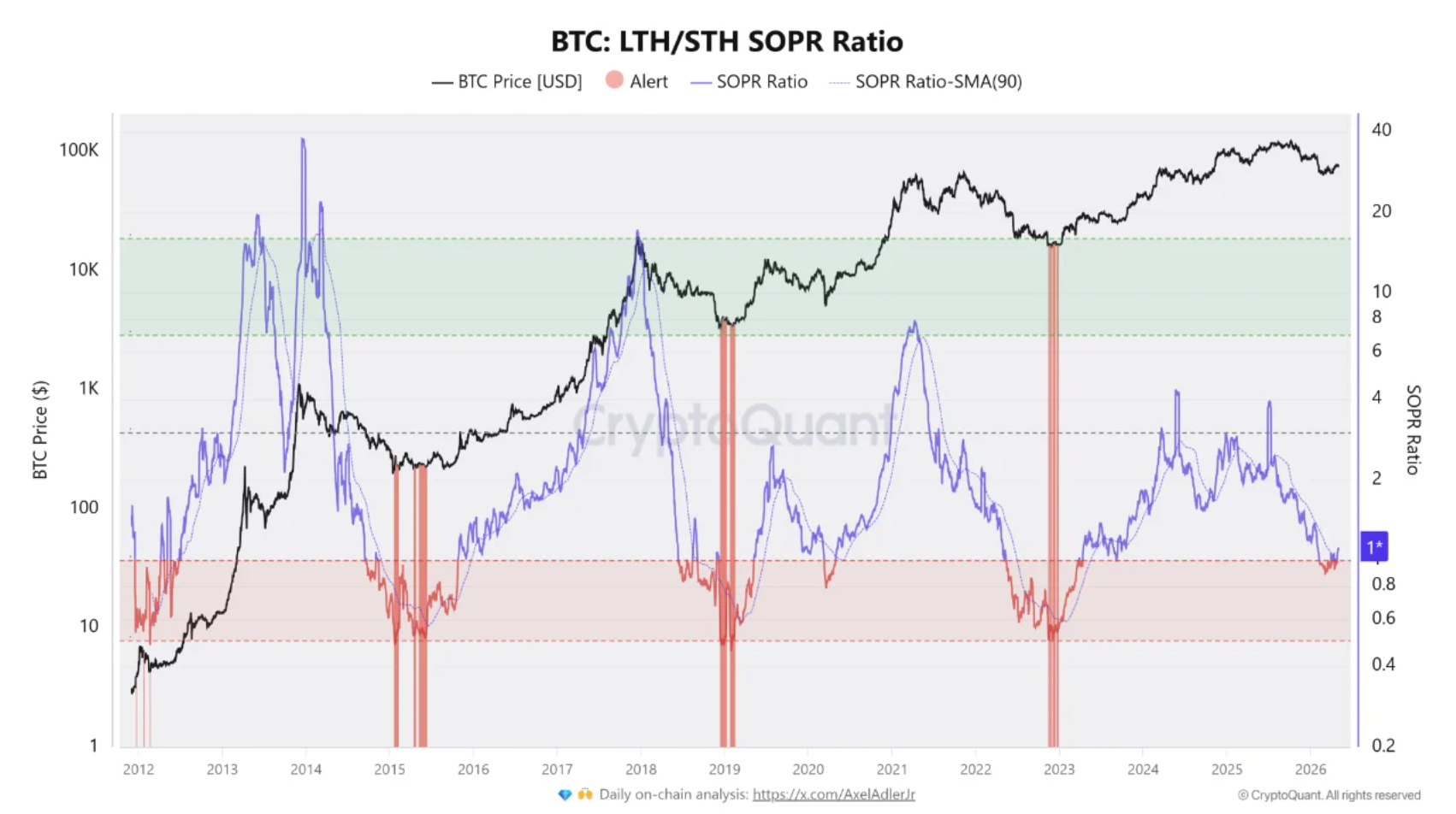
With short-term holder losses narrowing to around -2%, the market is approaching a breakeven reset.
A daily close above $81,500 would flip this level into support and open the door toward the $87,000–$92,000 range. Failure to reclaim it risks another pullback toward the $76,500 zone, where newer investors’ cost basis sits.
4. Strategy Pauses Bitcoin Buys Before Q1 Earnings
Strategy (MSTR) paused its weekly Bitcoin purchases ahead of its Q1 earnings report, temporarily removing one of BTC’s most consistent corporate demand sources.
Michael Saylor said there were “no buys this week,” adding that the company would return to work next week. Strategy still holds 818,334 BTC, nearly 3.9% of Bitcoin’s maximum supply, after buying 3,273 BTC last week.
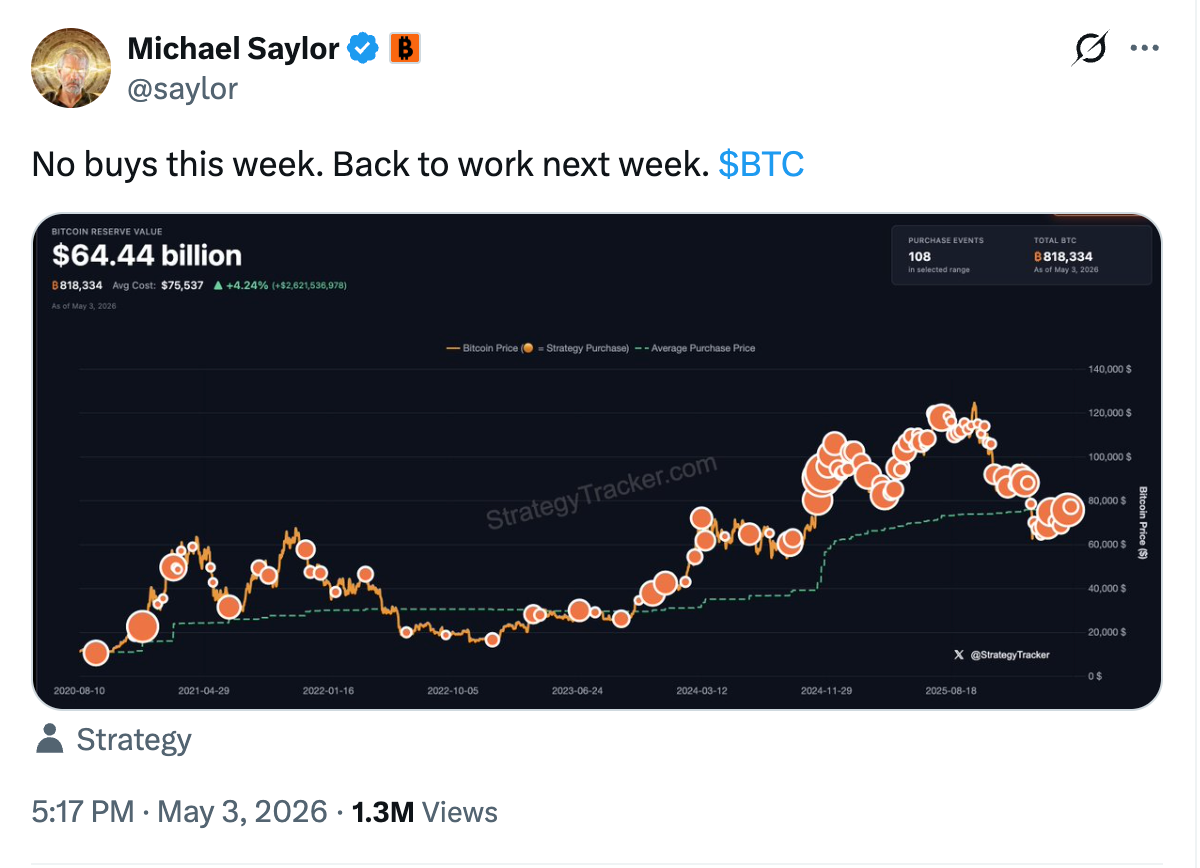
Without Strategy’s regular bid, Bitcoin becomes more exposed to ETF flows, macro shocks, and short-term holder selling. Renewed US–Iran tensions, therefore, may weight on BTC prices this week.
Over the past 30 days, institutions absorbed more than 500% of Bitcoin’s newly mined supply, with Strategy accounting for a significant share of that demand. This steady accumulation has helped offset sell pressure from short-term holders.
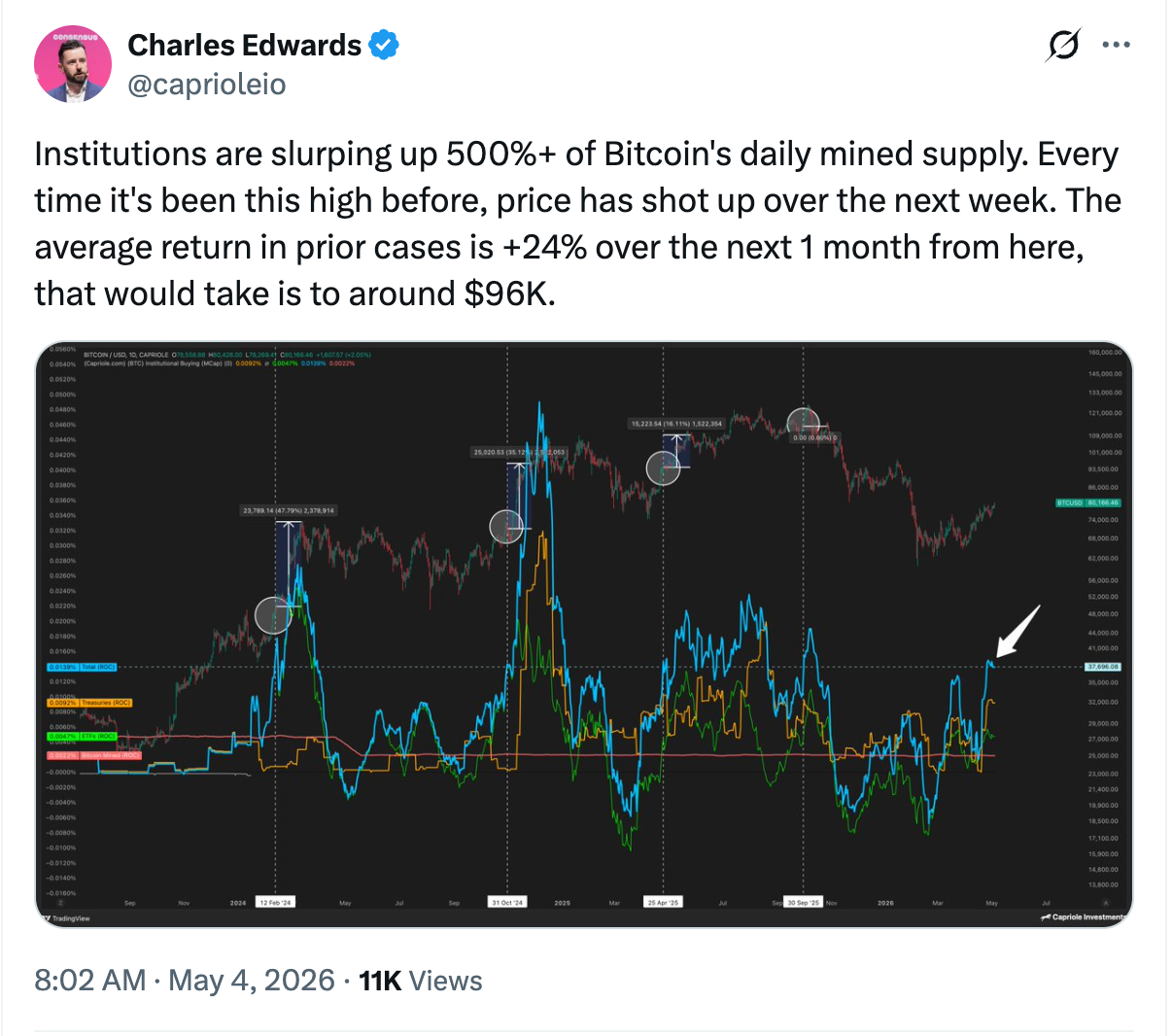
Charles Edwards, the founder of Capriole Investments, said BTC may rally to $96,000 in a month, citing historical price actions that follow a spike in institutional absorption of Bitcoin’s daily mining supply.
5. Rising Wedge Breakdown Risks Drop Toward $70,000
Bitcoin is forming a rising wedge on the daily chart, a bearish continuation pattern following its broader downtrend from the $120K region. Price is compressing between converging trendlines while trading below the 200-day EMA, signaling weakening upside momentum.
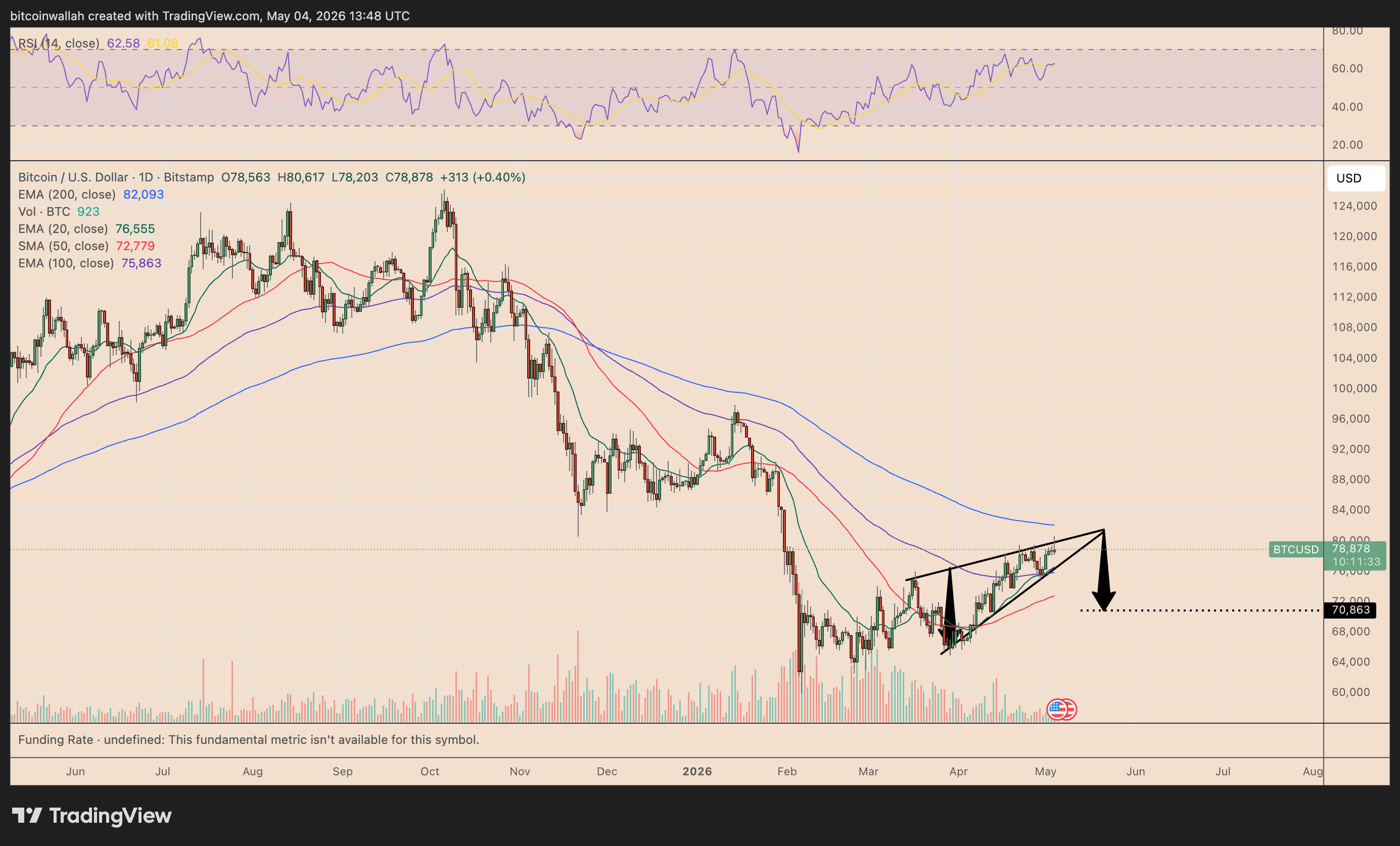
A breakdown below the wedge’s lower trendline near $76,500 could confirm the pattern, exposing a measured move toward the $70,800 area. This aligns with prior support and a key liquidity zone.
Failure to hold that level may extend losses further, while a breakout above resistance would invalidate the bearish setup.