
The global markets are at new point of pressure as trade tensions and energy threats move together. The 25% tariff that Trump proposed on European cars and trucks has put the European car manufacturers under new strains. Meanwhile, the U.S.-Iran conflict continues to keep the oil markets unstable and increases the chances of another inflation wave. This combination can damage the consumer demand, increase Treasury yields and question the power of the stock market surge.
The auto tariff tale is no longer a car thing. It has now been integrated into a broader market test in oil, inflation, bonds, equities and world trade confidence. This article discusses the effects of the threat of Trump imposing auto tariffs on the EU and the U.S.-Iran oil shock on crude oil, U.S. stocks, Treasury yields and European auto shares.

Trump’s EU Auto Tariff Threat Raises U.S.-EU Trade Risk
President Trump has stated that he would increase tariffs on cars and trucks from the EU to 25% because the EU had decided not to follow its trade agreement with Washington. He stated that the increased tariff would compel the European car manufacturers to shift production to the U.S. plants more quickly. This renders the policy a trade instrument and an industrial policy. The message is clear. U.S. manufactured cars are not subject to the tariff and imported cars have a higher price.
The conflict follows 25% tariff on imported automotive products worldwide by the Trump administration on its national security regulations. A compromise was made between the U.S. and the EU to reduce the effective tariff to 15%. In return, the EU offered to cut duties on the U.S. industrial products and to adopt U.S. standards of automobile safety and emissions. But the implementation process in Europe has been slow. EU legislators made progress with legislation in March but the procedure might not be completed until June.
This delay was not liked by the US. The EU officials were greatly critical of the move which they called unreliable. This response is significant because it increases the prospects of more severe political warfare. This can now be viewed in the markets as a problem bigger than the auto sector. It can be further expanded to transatlantic trade risk if Europe responds with countermeasures.
Tariffs and Iran Oil Shock Add Pressure to Global Markets
The tariff decision also appears to have some general geopolitical tensions. Some reports by the officials indicate that Trump’s decision may be affected by the U.S.-Israel war against Iran. This is an important relationship.
Brent Oil Price Forecast
Every new Brent Oil analysis as it publishes, today's technical signal and key levels, live price — on one page.
See all Brent Oil forecastsThis adds to uncertainty in the market since investors have to now price two risks simultaneously. The former is the direct cost of tariffs on imported automobiles and trucks. The second is the threat that geopolitical tensions continue to drive energy markets in unstable states. The market reaction may be more acute when these pressures increase simultaneously. An increase in the cost of imports can push up prices and an increase in oil prices can squeeze consumer and corporate margins.
Timing is also a big problem with Federal Reserve. The Fed maintained the interest rates at a range of 3.5% to 3.75% but there were internal conflicts. Inflation pressure may be high as a result of high oil prices. This inflationary wave will be transferred to consumer goods which will cause further inflation in the system. On the other hand, the tariffs will further increase the prices of goods and introduce inflation. This mix complicates the Fed’s decision to reduce rates promptly as the growth may slow down.
Impact on Crude Oil: Hormuz Risk Keeps Prices Elevated
Crude oil is the primary market that is affected by the US-Iran conflict. Trump also said that he turned down an offer by Iran to reopen the Strait of Hormuz and talked about the possibility of extending the U.S. naval blockade. His encounter with energy executives focused on oil production, futures, shipping and natural gas. This indicates that White House is making preparations in case the blockade lasts for months.
The market has responded. Brent crude oil surged to over $120 as traders factored in longer disruptions and declining inventories in the US. On the other hand, WTI oil surged above $110. The chart below shows that the Strategic Petroleum Reserve inventories continue to decline which is another concern. When risk of supply increases and inventories decline, the market tends to demand a higher risk premium.
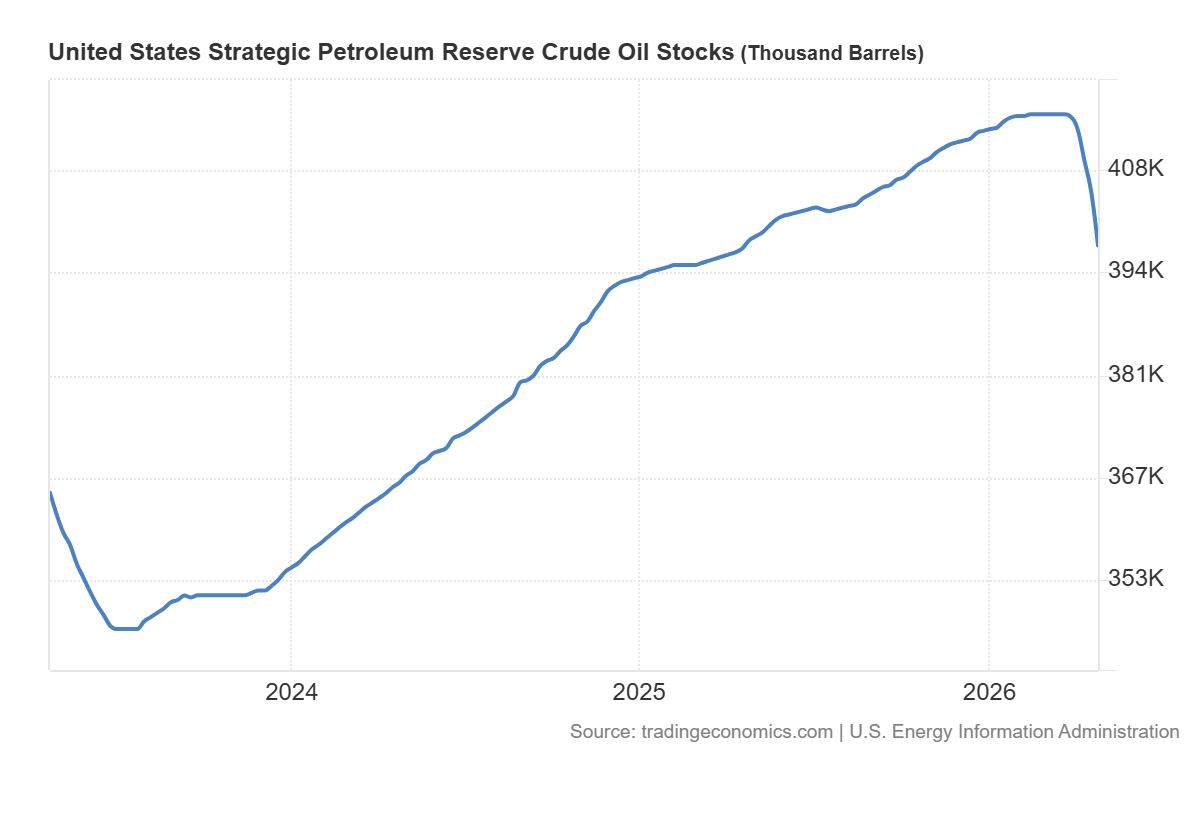
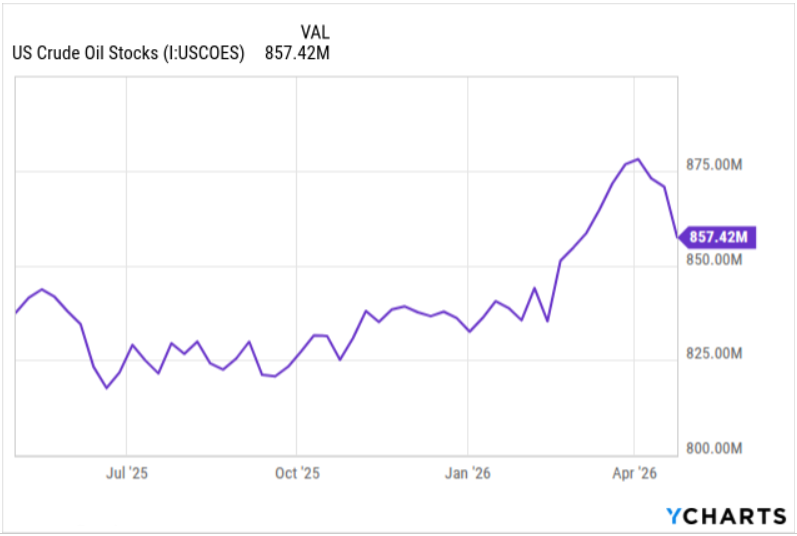
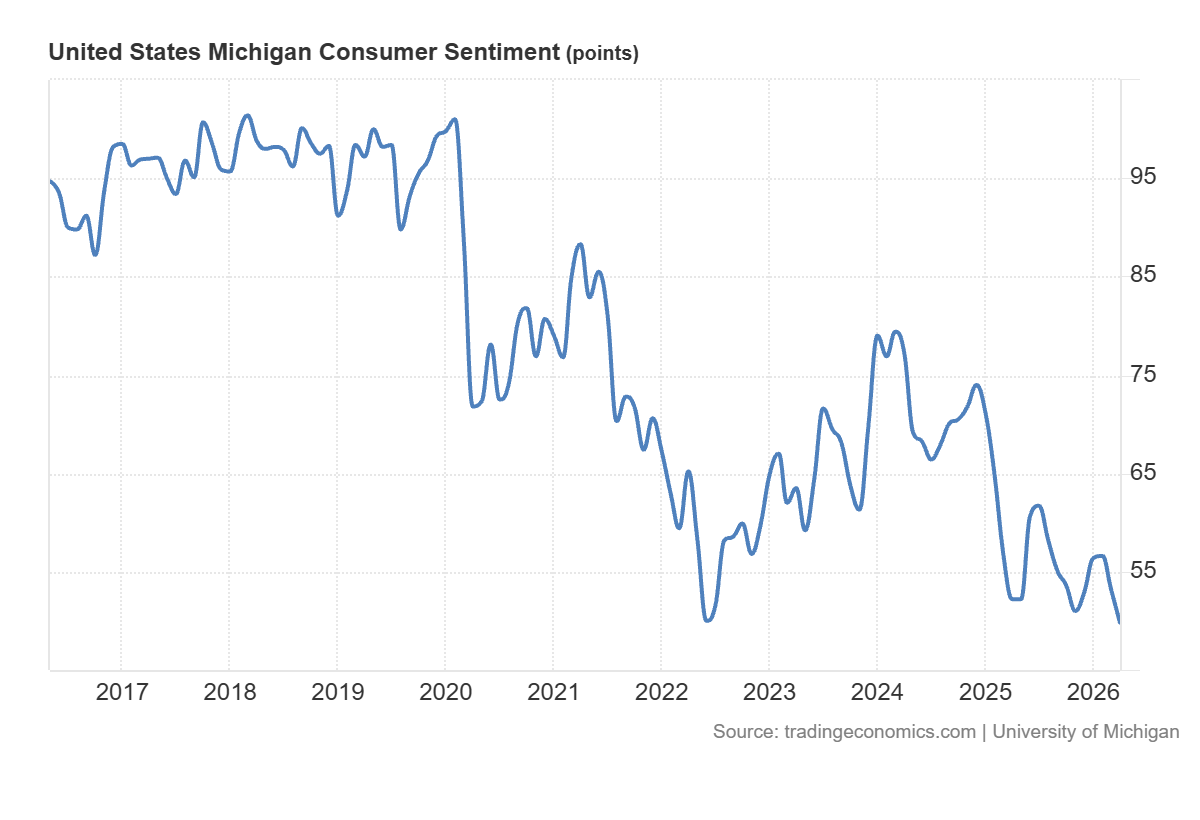
This places upward pressure on oil prices. With a long term shutdown of the Strait of Hormuz, the price of crude may approach the $140 to $150 range in May. If the conflict persists, the prices may reach the $200 in the May/June time frame. That would further increase the inflation pressure and the chances of low consumer demand. It would also cause more damage to the importing economies as compared to the oil producing economies. The chart below shows that the consumer sentiment has already dropped to 49.8% which is the lowest since 2022.
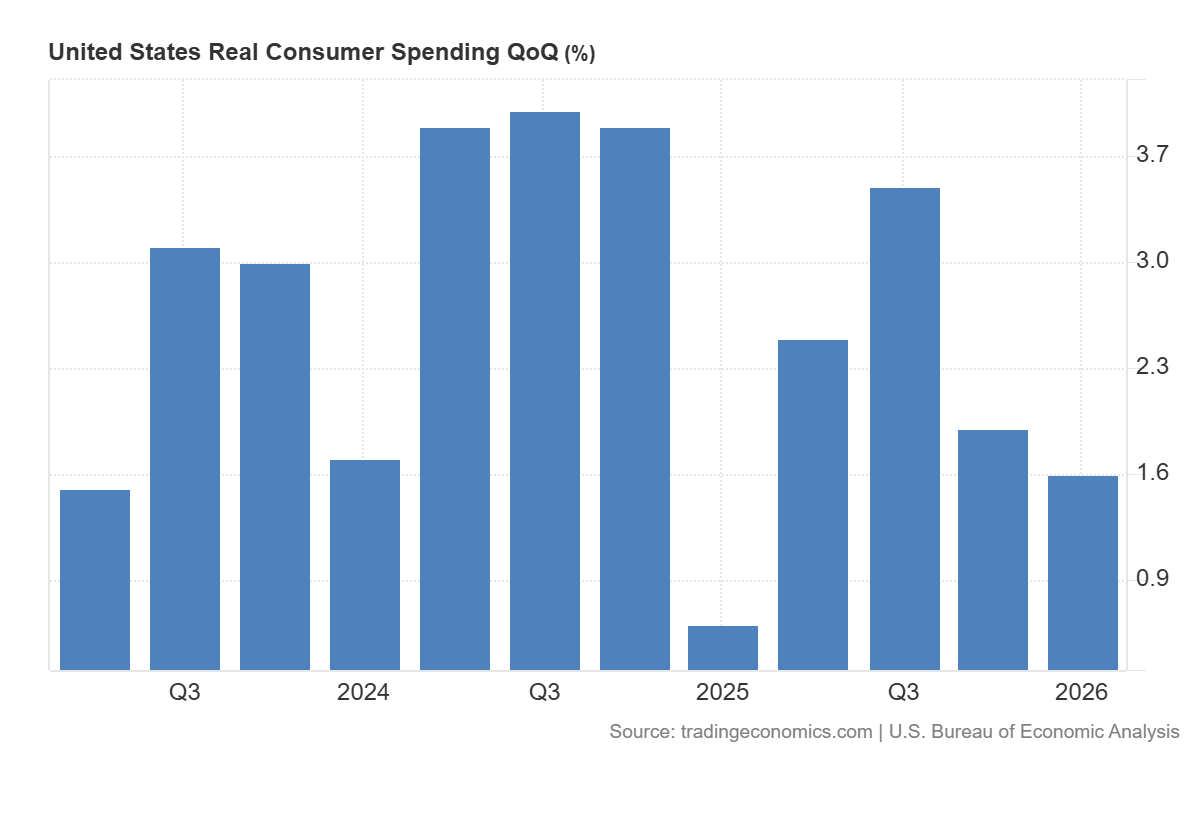
On the other hand, consumer spending fell to 1.6% in Q1 2026 and has remained in a negative trend since Q3 2025.
Impact on U.S. Stock Market: Oil and Tariffs Challenge Earnings Strength
The U.S. stock market has a more complex arrangement. Good quarterly earnings can keep sentiment strong but an increased oil price can erode the prospects. An increase in the price of crude will raise transport, manufacturing and consumer business costs. They also decrease household purchasing power. That may put risk on future profits when the present performance seems good.
S&P 500 Shows Bullish Breakout Potential
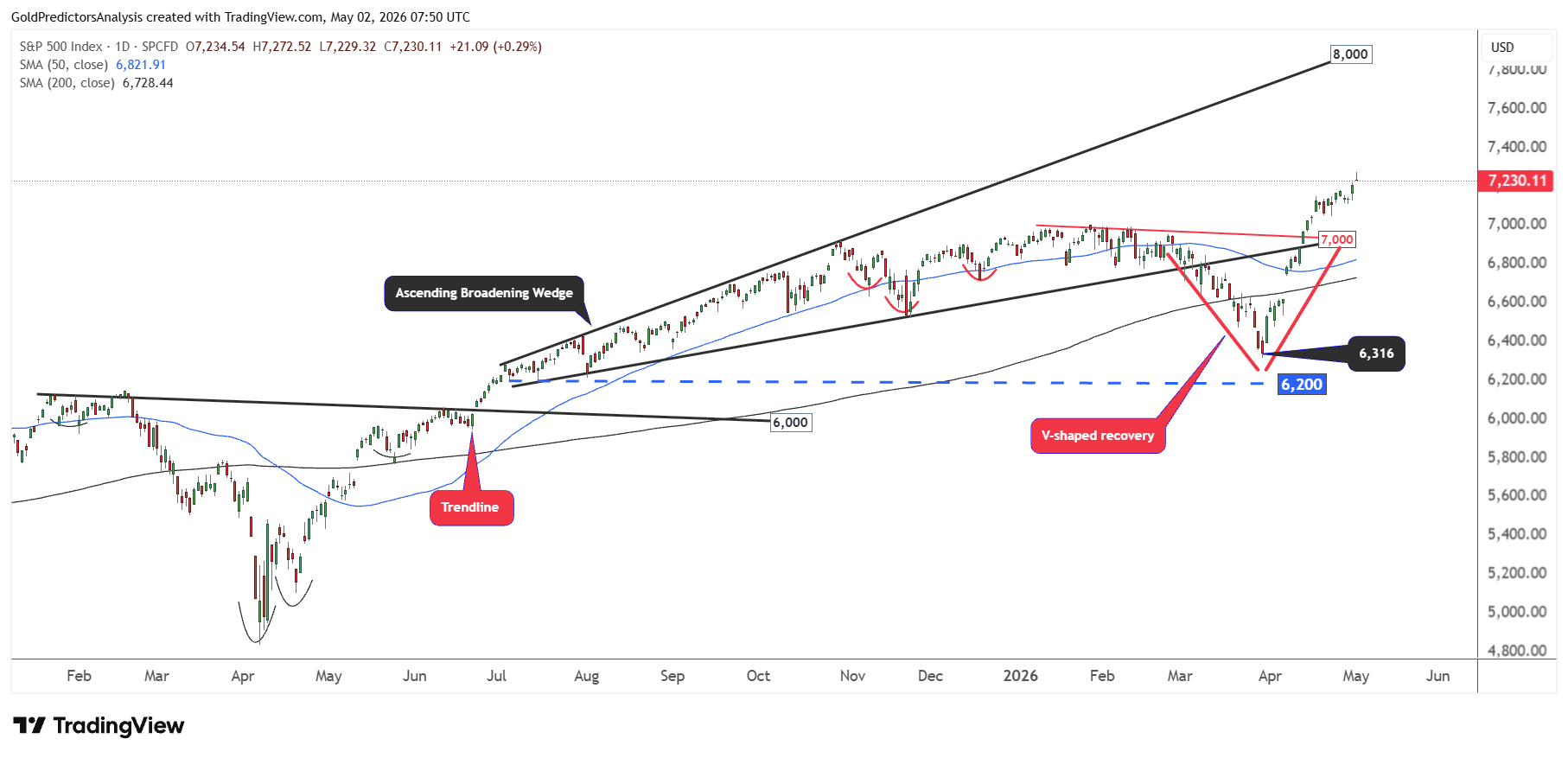
The chart below presents a constructive price action in the S&P 500 which indicates a bullish price action to target 8,000. The V-shaped recovery from the long term support zone of 6,200 and then the breakout above 7,000 indicates that the correction back to the 7,000 will offer a buying opportunity to target the 8,000 zone.
Dow Jones Needs a Break Above 50,000 to Confirm Rally
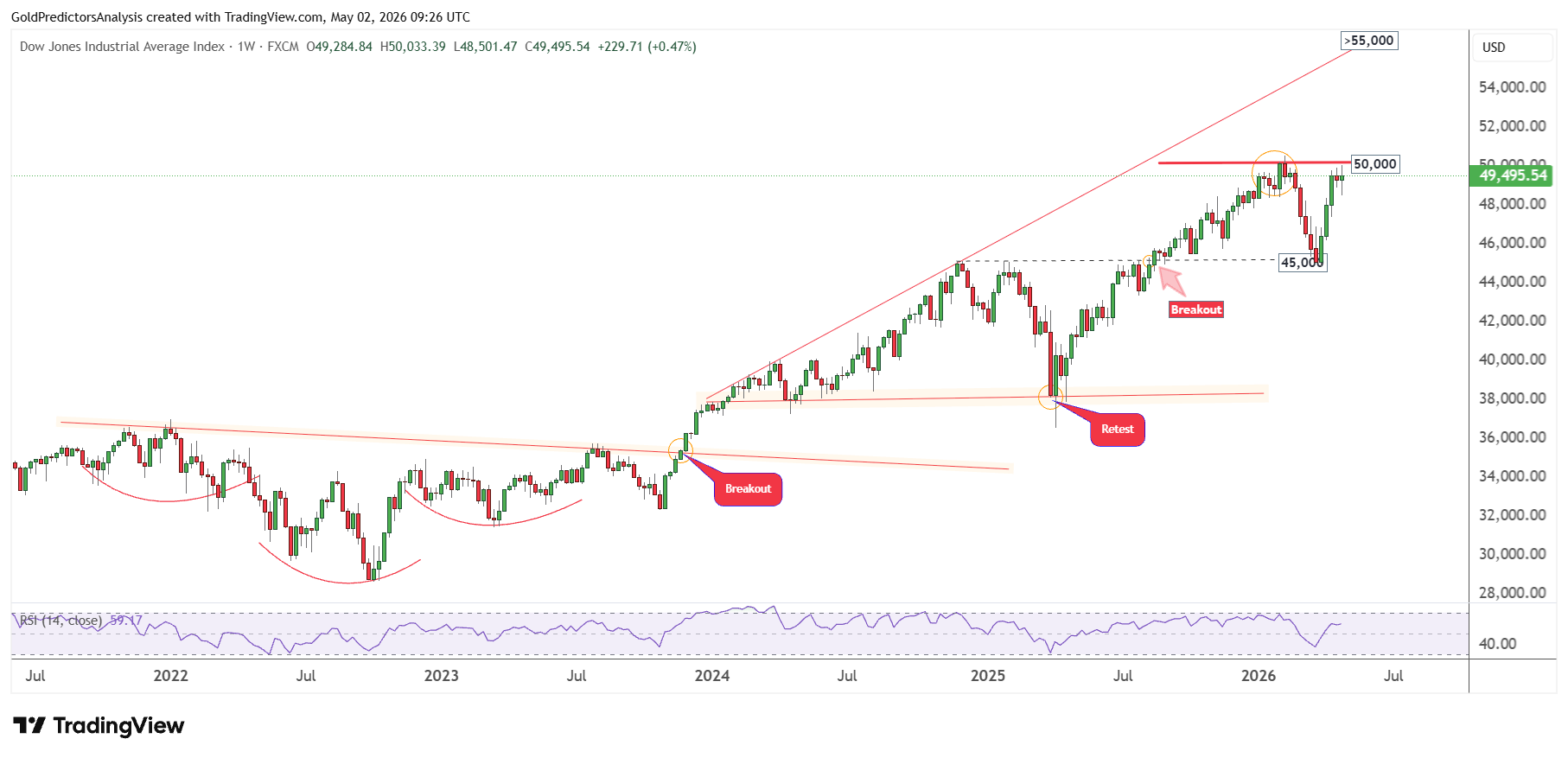
Despite the surge in S&P 500, the bullish trend can not be confirmed until the Dow Jones Industrial Average breaks the 50,000. The chart below shows that the Dow Jones 30 is consolidating below 50,000 and is looking for a breakout. A break above this level will indicate a sustained rally in the US stock market where the Dow Jones will target the upper end of the ascending broadening wedge above 55,000. Until the Dow Jones 30 breaks the 50,000, the correction may develop in both indexes.
The emergence of the inverted head and shoulder pattern in 2022 and 2023 provides the base patterns.
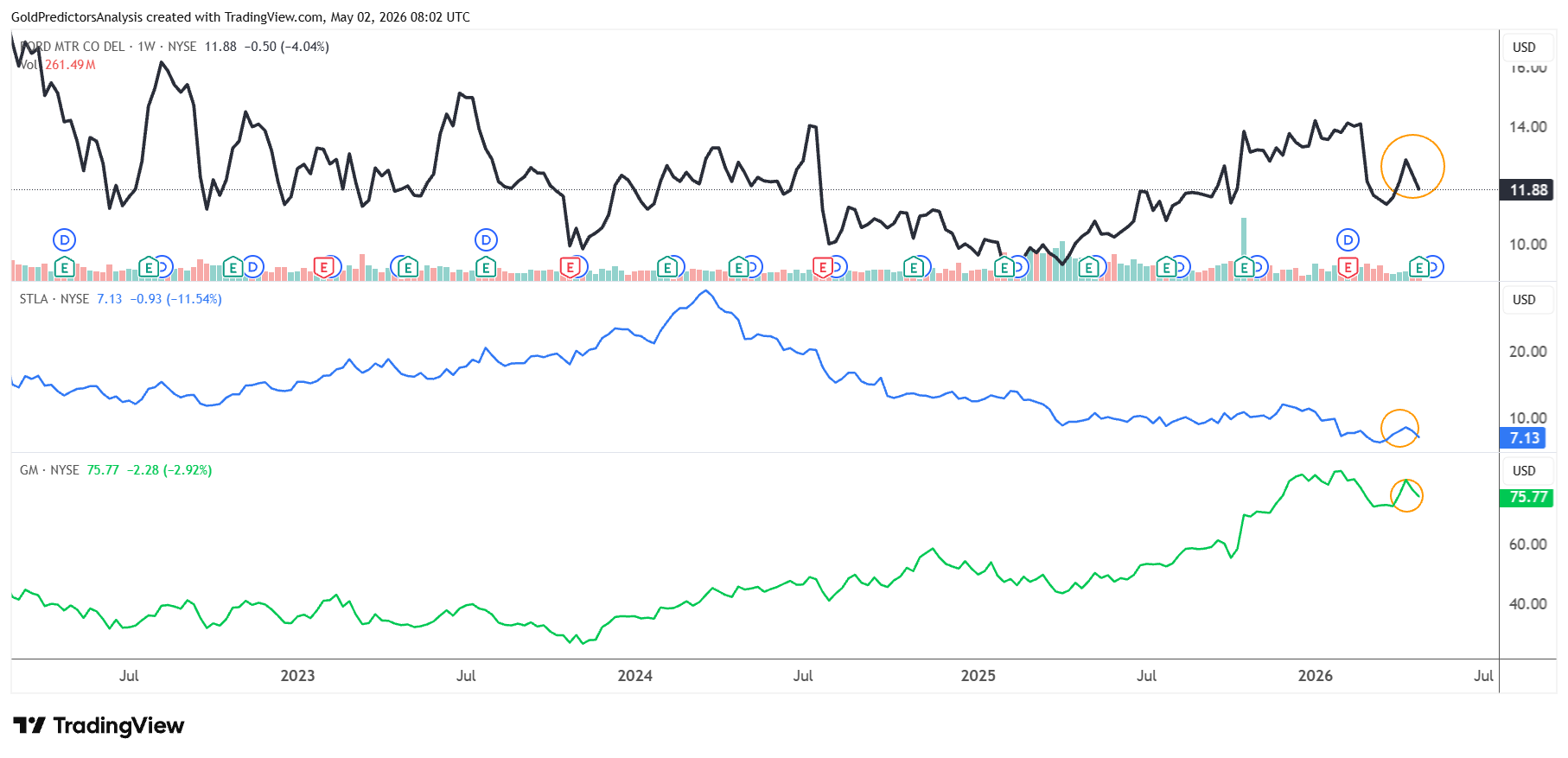
The auto stocks were also adversely affected by the announcement of tariffs by Trump. The chart below shows that Ford, Stellantis and General Motors dropped on Friday. This demonstrates that increased tariffs might not be a clean benefit to even U.S. automakers. Supply chains are international and increased trade tensions can still damage the bottom line, prices and investor confidence.
Impact on 10-Year Treasury Yields: Oil Inflation Pushes Yields Higher
The 10-year Treasury yield will likely be under upward pressure. The unexpected surge in oil prices can increase the inflation expectations. The tariffs may also exert pressure on the goods prices. Collectively, these forces complicate the process of falling long-term yields, regardless of whether the Fed decides to keep rates constant.
The future of Fed independence is also of concern. The Powell’s decision to stay on the governing board of the Federal Reserve might reduce the effects of politics on monetary policy. That can help build market confidence in the Fed’s inflation fight. However, it can also maintain yields strong when investors suspect that Fed will not succumb to rapid rate reductions.
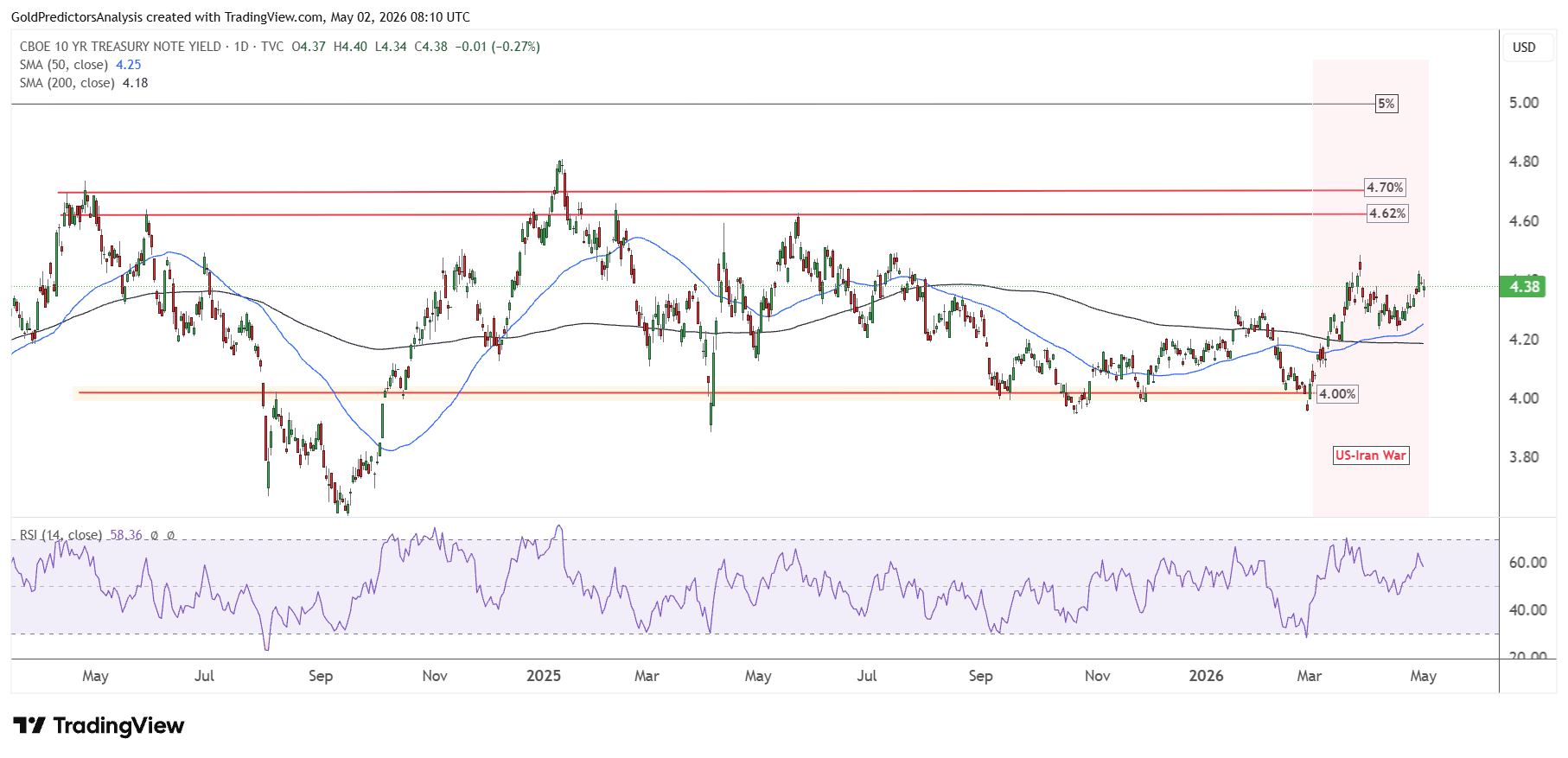
The chart below shows that the 10-year US Treasury yields have continued to increase since the US-Iran war. The yields have tested the 4.5% and this will likely continue to increase to 4.65% as the oil prices continue to increase. That would be a bearish signal to the real value of stocks since an increase in yields lowers the equity values. It would also increase the cost of borrowing money for companies and consumers. The bond market serves as a risk indicator in this setting.
Impact on European Auto Stocks: Tariff Risk Hits Margins and Sentiment
The proposed 25% tariff has a direct impact on European auto stocks. Auto parts companies that export cars and trucks to the U.S. might be charged higher or their profit margins reduced. They might transfer part of the cost to consumers, but this might decrease demand. They could also absorb the cost which would damage profitability.
The tariff threat also puts the European automakers under pressure to increase U.S. production. That can reduce the exposure of tariffs in the long run, but it needs money and time. In the short run, investors can be concerned about earnings risk, the disruption of the supply chain and uncertainty about policy.
Stellantis shares fell immediately after the announcement. The chart below shows that the Volkswagen, BMW and Mercedes-Benz have remained in a downtrend since 2026.
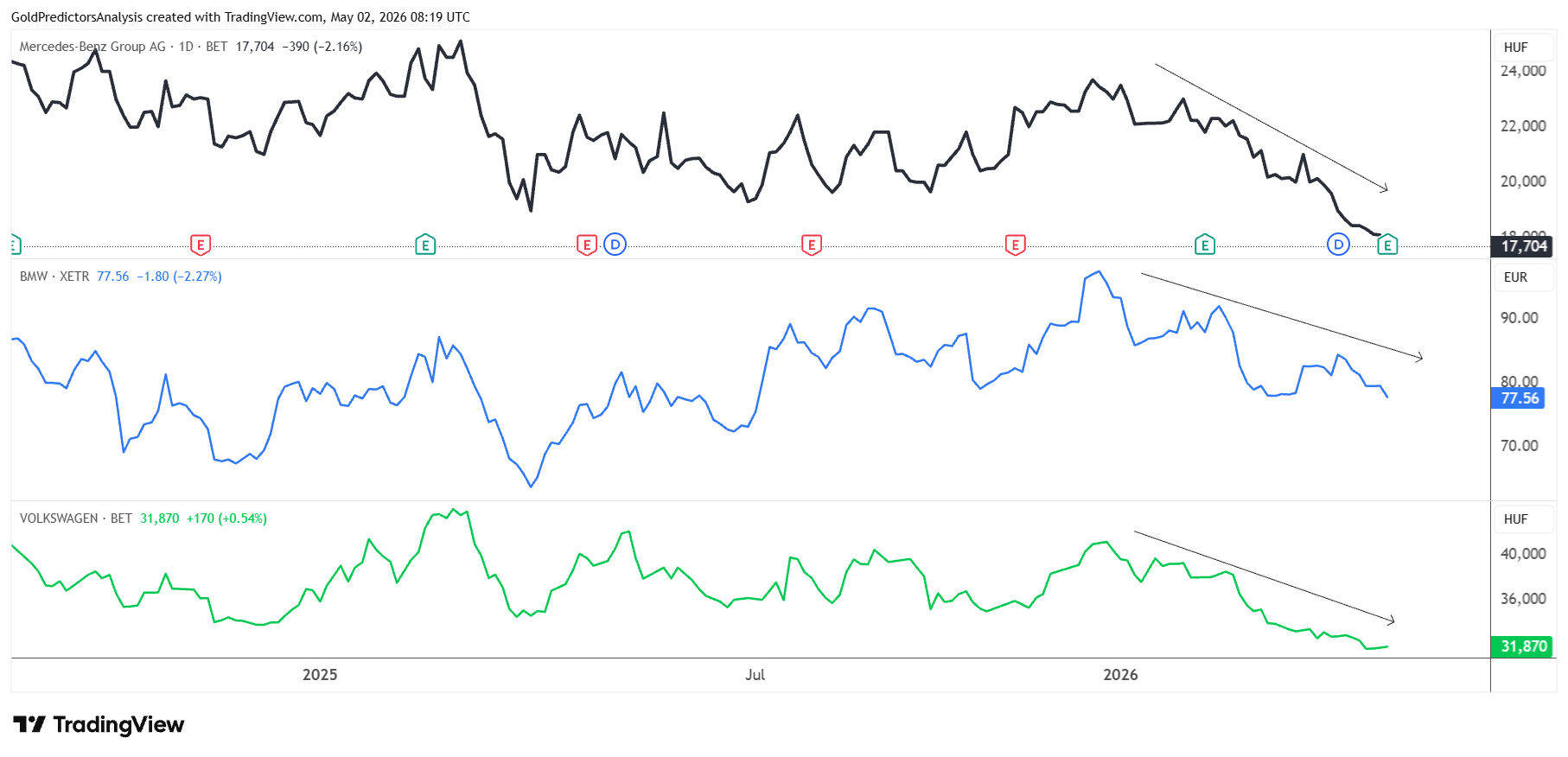
Other car makers in Europe might suffer the same fate should the tariff threat become policy. Confidence is the greater problem. Investors are not fond of abrupt changes in policy, particularly when it comes to large international sectors. This is why European equities outside the car industry can be influenced by the story of auto tariff.
Final Thoughts
The tariff threat by President Trump has turned the EU auto sector into key market risk. A 25% tariff on EU cars may pressure margins, raise vehicle costs and weaken investor confidence in automakers. Volkswagen, BMW, Mercedes Benz and Stellantis may remain under pressure if the dispute escalates. The bigger risk is that this policy does not stay limited to autos. It could become another trade shock for global markets at time when investors are already dealing with the U.S.-Iran war, higher oil prices and rising inflation pressure.
The market impact now depends on three signals. The first is whether U.S. and EU can restore the trade agreement. The second is whether oil prices keep rising because of the Hormuz risk. The third is whether Treasury yields continue to move higher as inflation expectations rise. Stocks may still find support from strong earnings, but rally looks more fragile if tariffs, oil and yields rise together. In this environment, investors may stay cautious toward auto stocks. While oil, bonds and major equity indexes become the main indicators to watch.