
Ever said to yourself “I could see it was trending, it’s so clear!” only to find you were looking at it after the trend already ran? That happens. Analyzing trends is one of the most challenging and valuable part of technical analysis.
What separates a winning trader from the pack is an ability to identify trends early and get on the ride. We will go over what a trend is, the indicators used to identify trends, and, most importantly, real-world examples on the charts of ASAN, NET, AMD, and SWKS.

Why Trends Exist (And Why They Persist)
Everything we do in technical analysis is based on the assumption that prices are more likely to continue moving in the same direction they’re currently heading.
This concept is known as price persistency, and it’s governed by momentum, or the speed of price change. As buying pressure grows, an asset’s upward path is more likely to persist. And vice versa with selling pressure. It’s not rocket science. It’s just supply and demand, influenced by human behavior.
The important point is that trends are a function of herd behavior. They form in all time frames, from intraday to multi-year secular trends. If you get this, you’re already ahead of the game because you’re not just reacting, you’re anticipating.
Key Insight: Because trends exist, the sooner you can spot one, the more favorable your risk-to-reward ratio. It’s really that simple.
The Three Trend Directions
Now, this is straightforward. There are three directions that prices can go:
- Uptrend: Prices make higher highs and higher lows. The buyers have the upper hand and the price bounces off a higher level on each retrace.
- Downtrend: Prices make lower highs and lower lows. The sellers have the upper hand and the price fails at a lower level on each retrace.
- Sideways (Range-Bound): Price oscillates within a range. Neither buyers nor sellers are getting the better of the other.
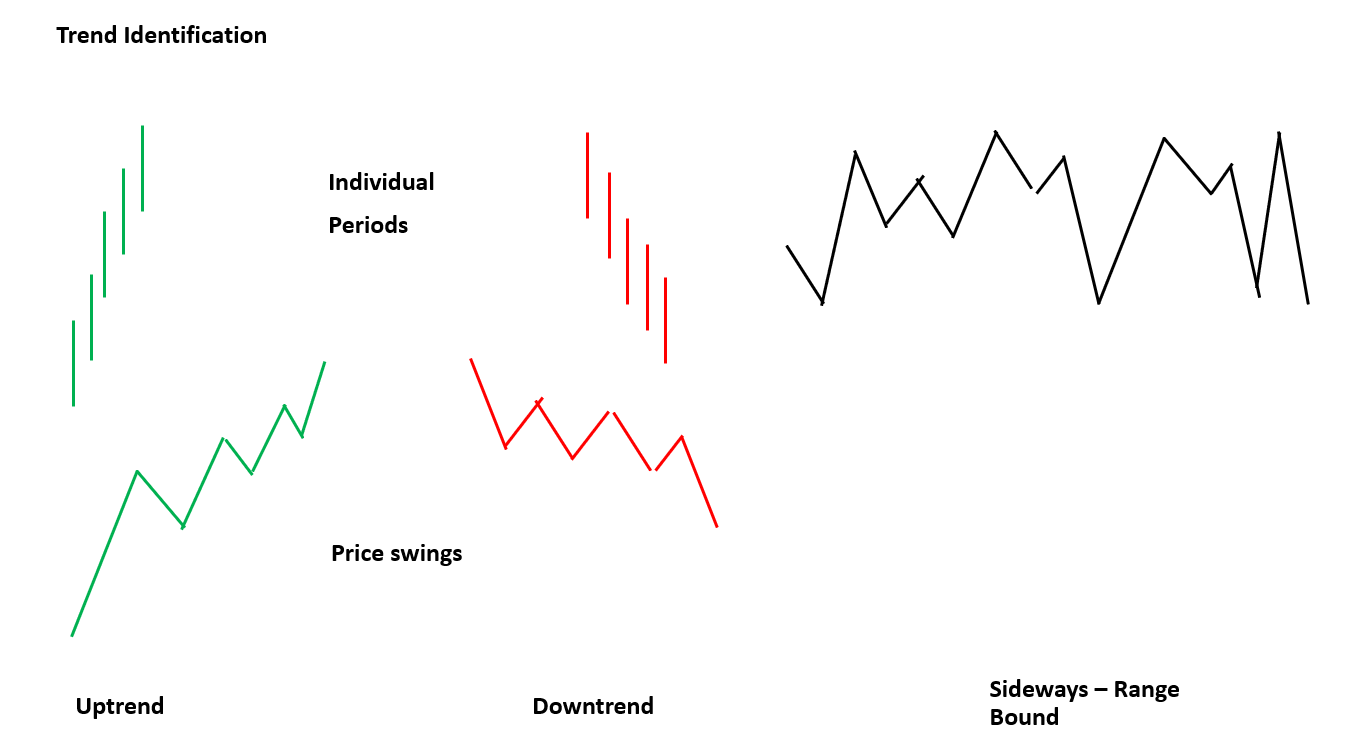
Figure 1: The three trend types – uptrend, downtrend, and sideways (range-bound).
Now, I know what you’re thinking: “What about volume?” Good question. Volume usually increases when the market moves in the direction of the prevailing trend. The market is telling you, “Yes, this is a legitimate move.”
Horizon: Trends within Trends
One of the key insights I’ve gained is that trends are fractal; that is, they’re nested inside each other. A pullback on the daily chart may be a full-fledged downtrend on the 15-minute chart. It helps to know where you are on the ladder.
Here are the time horizons that most analysts use:
- Secular Trend – 10-25+ years. Example: the ongoing bull market in U.S. stocks that began in 2009.
- Primary Trend – 1-3 years. Example: bull and bear markets.
- Secondary Trend – 1-6 months. Example: countertrend corrections. That nasty pullback in a bull market that cleanses the weak hands.
- Intermediate Trend – 3-12 weeks. Example: shorter-term trend reversals that are driven by changes in sentiment.
- Minor Trend – 1-3 weeks. Example: shorter-term noise and trading activity.
A great habit to get into before every trade: define your primary time horizon. If you’re trading off the daily chart, then use the weekly chart to help confirm your view and an intraday chart (like the hourly) to refine your entries and risk management.
Key Concepts for Determining Trend
Price Action – Your Indispensable Information
Price action is, was, and always will be the best indicator to consult when considering a trade. Everything else is lagging – even a moving average. Price tells you what is happening; moving averages simply confirm price action.
Higher highs and higher lows form an uptrend; conversely, lower highs and lower lows are a downtrend. Use this method to gauge the trend on a number of time frames. If the daily, weekly, and hourly charts are all showing the same thing, that is a strong indication of the trend direction and quality.
Trendlines – The Visual Aid
Two points determine a trend line; three points confirm a trend line.
The low points of an uptrend should form a line; the high points of a downtrend should form a line. The line in an uptrend acts as a dynamic support; in a downtrend it is a dynamic resistance. Price staying below or above the line with volume acting as a confirmation suggests the trend is valid and strong.
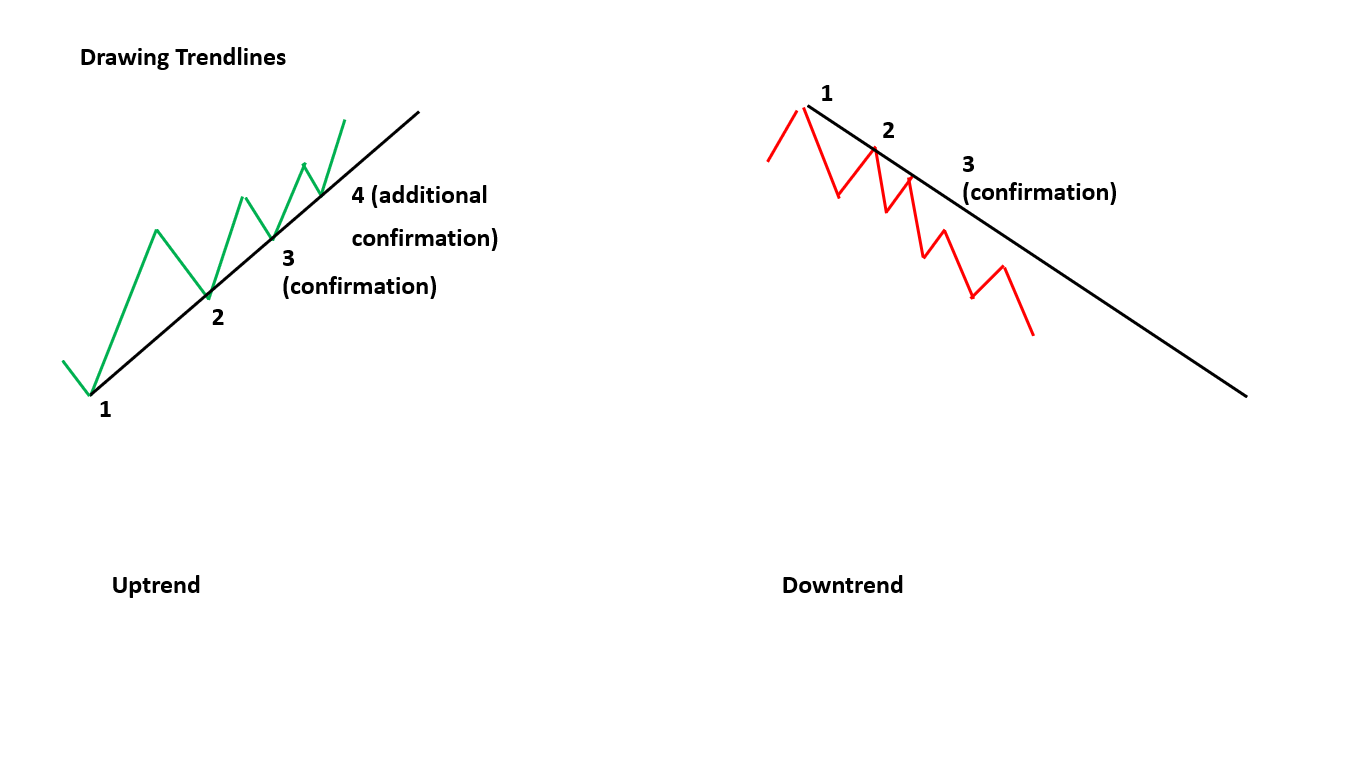
Figure 2: Drawing and validating trendlines – two points to create, three to confirm.
Important Visual Cues
Couple of things I’m always looking out for:
- Staircase pattern – The step pattern of higher highs and higher lows. The pulse of the trend.
- Market structure – The big picture. The overall structure of price on a chart. Trends, trend reversals, ranges. When you can recognize structure, you can recognize the markets’ intentions.
If you can’t define the trend, don’t trade it. The clearer it is, the better.
Key Indicators to Watch
Moving Averages
Moving averages help to show the overall trend. They can act as support in an uptrend and resistance in a downtrend. When short-term moving averages cross over long-term moving averages, that can be an early sign that a new trend is forming.
Volume
Volume confirms the price action. If price is increasing, it should be on increasing volume. If it’s decreasing, volume should also be increasing; otherwise, it’d be a false signal.
Momentum
Indicators such as RSI, MACD, and Stochastics can help you understand if the market is overbought or oversold and if there are any divergences from the price action.
Other Helpful Indicators
Bollinger Bands, Ichimoku Cloud, and Parabolic SAR. These can be useful for measuring volatility and trend as well as where to place your stop.
Trend Following: The Strategy Framework
A trend-following strategy is designed to capture the longer time frame move in either direction, long or short, as discussed in your time frame analysis. Trend following excels in a trending environment and fails in a range bound environment (mean reversion is much better in that case).
My approach is as follows:
- Determine the direction of the trend by using swing highs and lows, trend lines, channels and moving averages.
- Determine the longer time frame trend context. The market environment in which the trend is occurring.
- Look for trade setups where the price is approaching a key level on a pull back and prepare for either a breakout or reversal depending on your analysis. Use confluence as the key factor here.
- If you don’t have confluence, place a price alert and walk away. A waiting game!
For the key signals we are looking for:
- The break of a trend line confirmed by volume and momentum.
- Reversals at moving average support and resistance confirmed by a bullish or bearish engulfing pattern.
- The crossover of a moving average confirmed by a second form of confirmation.
- Confluence signals. Where two or more signals are all suggesting the same thing. The ideal trade.
Trend Analysis in Action: 4 Examples
Alright, enough theory. Time to look at some charts. Here are 4 examples: 2 trend reversals out of a downtrend, 1 continuation of an uptrend, and 1 trend reversal from a downtrend into an uptrend.
*If you are new to spotting trends, make sure to use a line chart that only plots closing prices. It can be easier to spot the trend this way.
Downtrend Reversal – Asana, Inc. (ASAN)
A perfect downtrend: lower highs and lower lows. Price was also getting rejected by a downtrend line and the 100-period moving average.
Where is the confluence in this example? It’s where the resistance offered by the downtrend line and the moving average overlap. When the price broke above both, a strong bullish reversal was formed.
Even the MACD confirmed the strength of the breakout as it came above the zero line. Also, if you observe the histogram in the MACD, you can notice that it’s getting bigger with each histogram bar, indicating the building strength of the bulls.
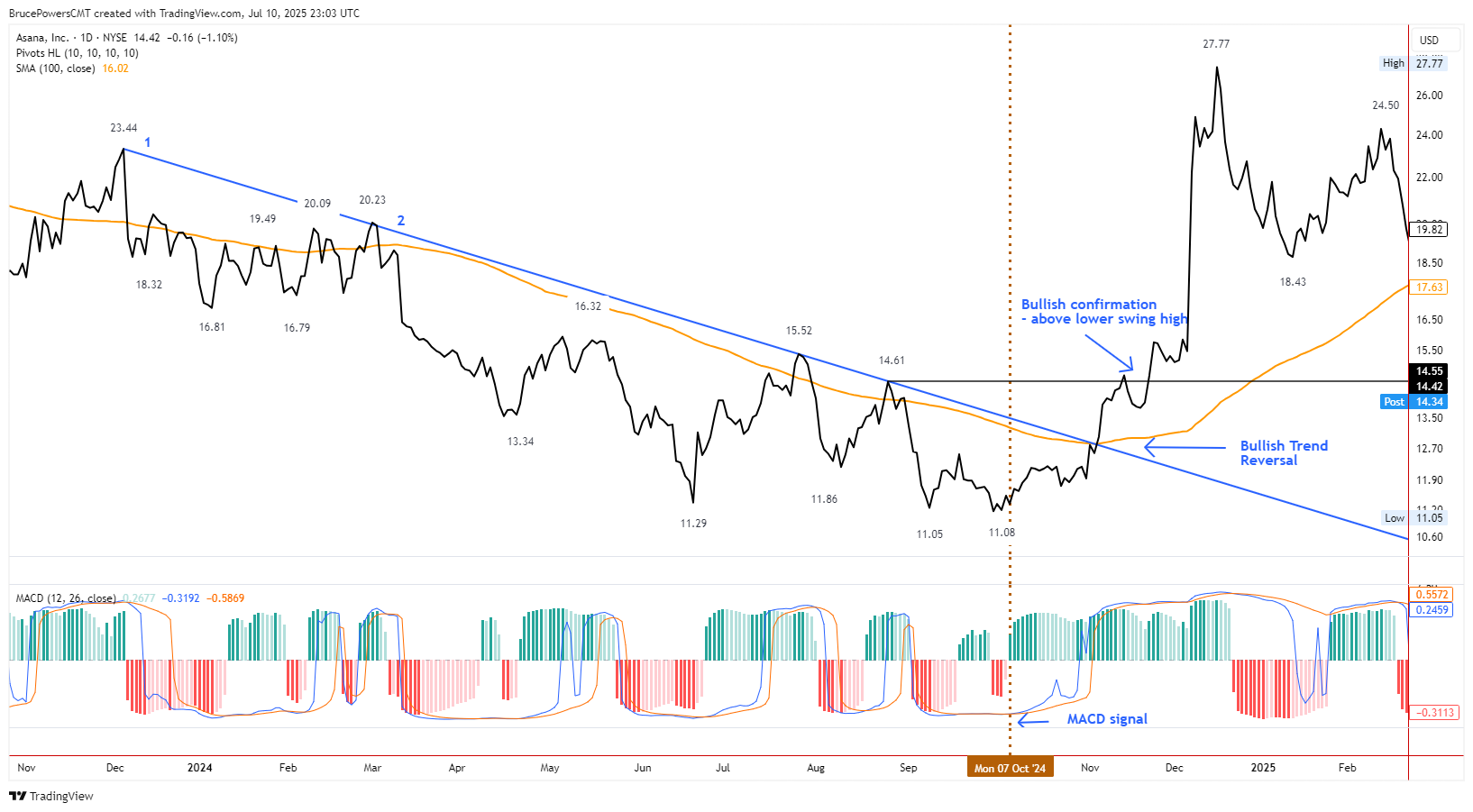
Figure 3: ASAN daily chart – downtrend reversal with trendline/MA confluence and MACD confirmation.
Tip: When a trendline and a moving average come together at the same price, stop whatever you’re doing. Such confluence often precedes a big move.
Trendline Break – Cloudflare, Inc. (NET)
Much like the previous example, NET’s trendline break wasn’t a true break, but rather a series of events that occurred to break the trendline. Here are the key points to take away:
- A well-defined trendline with at least three points of contact was defined off the February highs.
- The price found a low in April at $89.42.
- The stock rallied to the 20-day moving average and tested it for a few days before putting in a higher swing low. The first sign of strength, but the trendline was still intact.
- The stock eventually broke out above the trendline, concurrently breaking above the 20-day moving average.
- On the day of the break, the stock broke above the highs from the previous swing high at $115.42. The daily close was above this mark, negating the lower highs that the trendline had produced.
- The strength was further confirmed as the stock broke back above its 50-day moving average and closed above it.
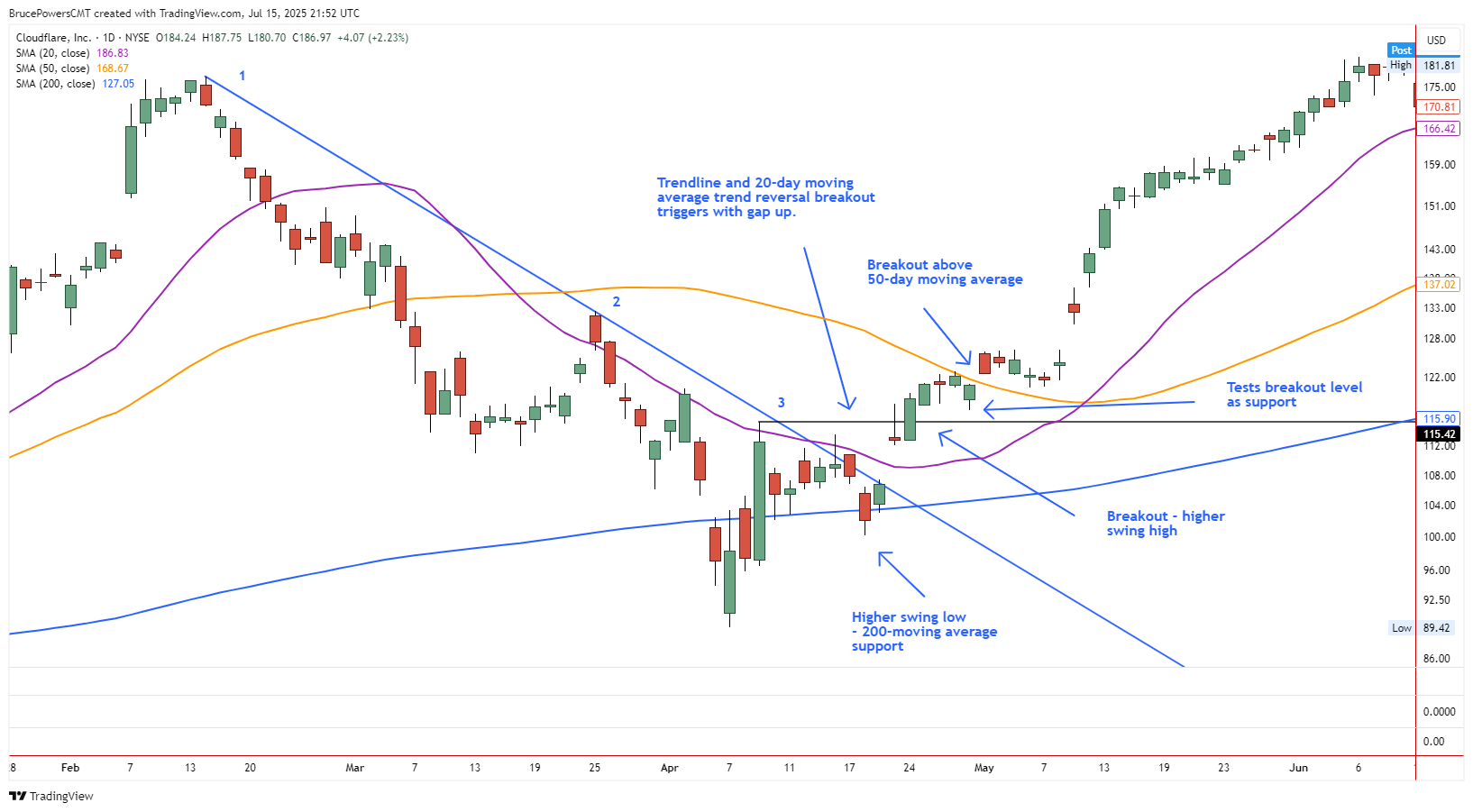
Figure 4: NET daily chart – how a downtrend reversal unfolds step by step.
The ideal reversal – each step layers on top of the previous one until the 50-day MA is taken and the former downtrend is officially history.
Uptrend Continuation – Advanced Micro Devices (AMD)
All about continuation – can the trend withstand a pullback?
What started with a bull breakout of a falling trendline in November, continued higher when AMD ultimately cleared a previous trend high from June 2023 with a same-day daily close above the breakout level.
After setting a new high at $151.05, AMD pulled back. The 20-day MA and uptrend line both failed to hold as support which would have shaken out many a trader.
The point here is that price levels are areas, not lines. A two-day bull reversal got the price back above both the MA and trendline and the uptrend resumed.
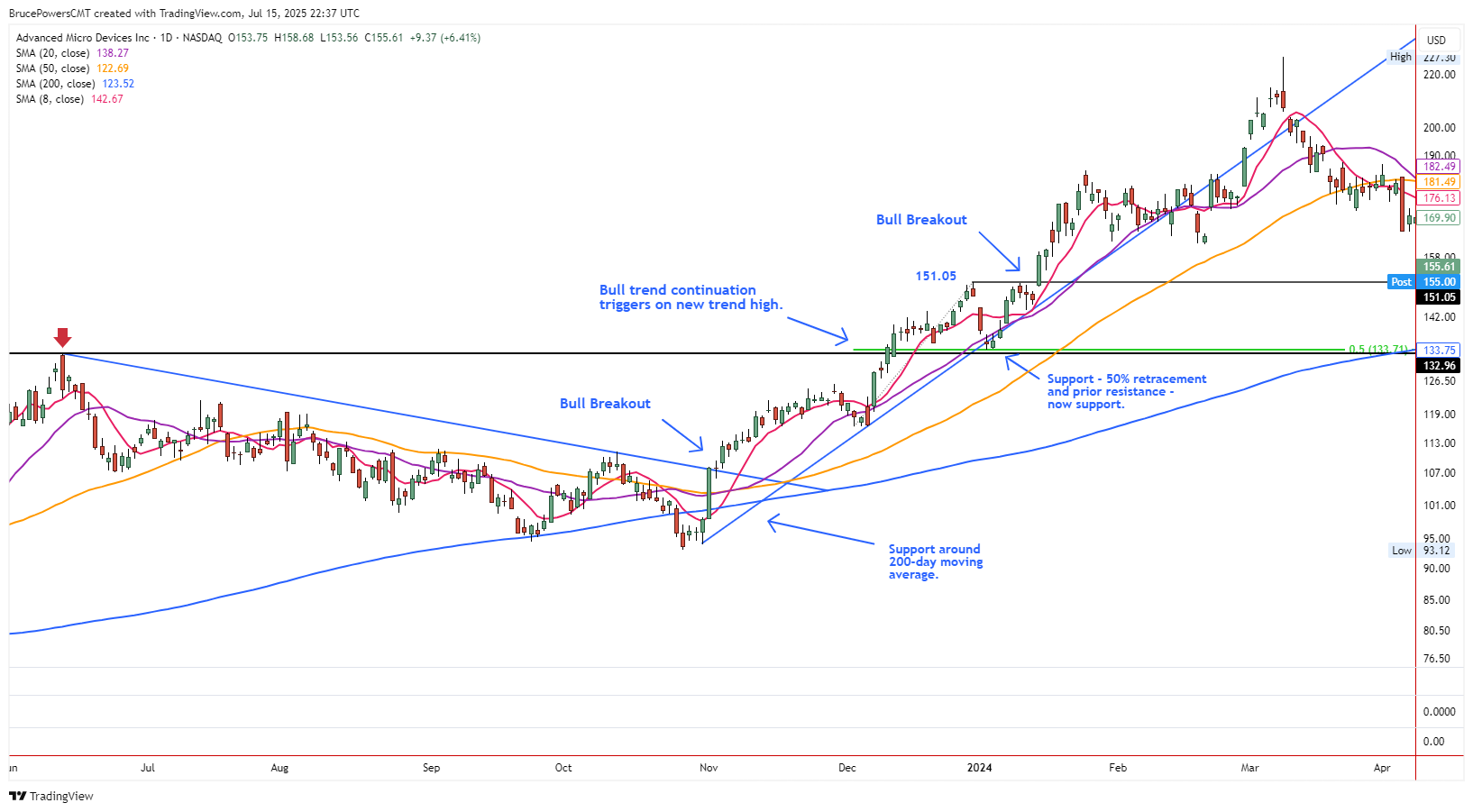
Figure 5: AMD daily chart – uptrend continuation with support zone recovery.
Tip: Support and resistance are zones, not laser beams. A slight penetration is not necessarily a trend killer – look for recovery.
Downtrend to Uptrend – Skyworks Solutions, Inc. (SWKS)
SWKS is a textbook example of a full trend transition. Here’s how it went down:
- SWKS was in a long-term downtrend that was accelerating (the second, steeper trendline) when it bottomed out at $85.06.
- It broke out above a triple confluence of levels – downtrend line, 20-day MA, and an inside-day pattern. Triple confluence – that’s strong.
- A reversal into strength was confirmed as the stock cleared the 50-day MA, pulled back to test it as support, and continued to hold.
- An upside breakout above the higher trendline indicated improving demand.
- A breakout above the 200-day MA served as a continuation signal, and new bull breakout. An inside-day breakout then became a short-term bull setup.
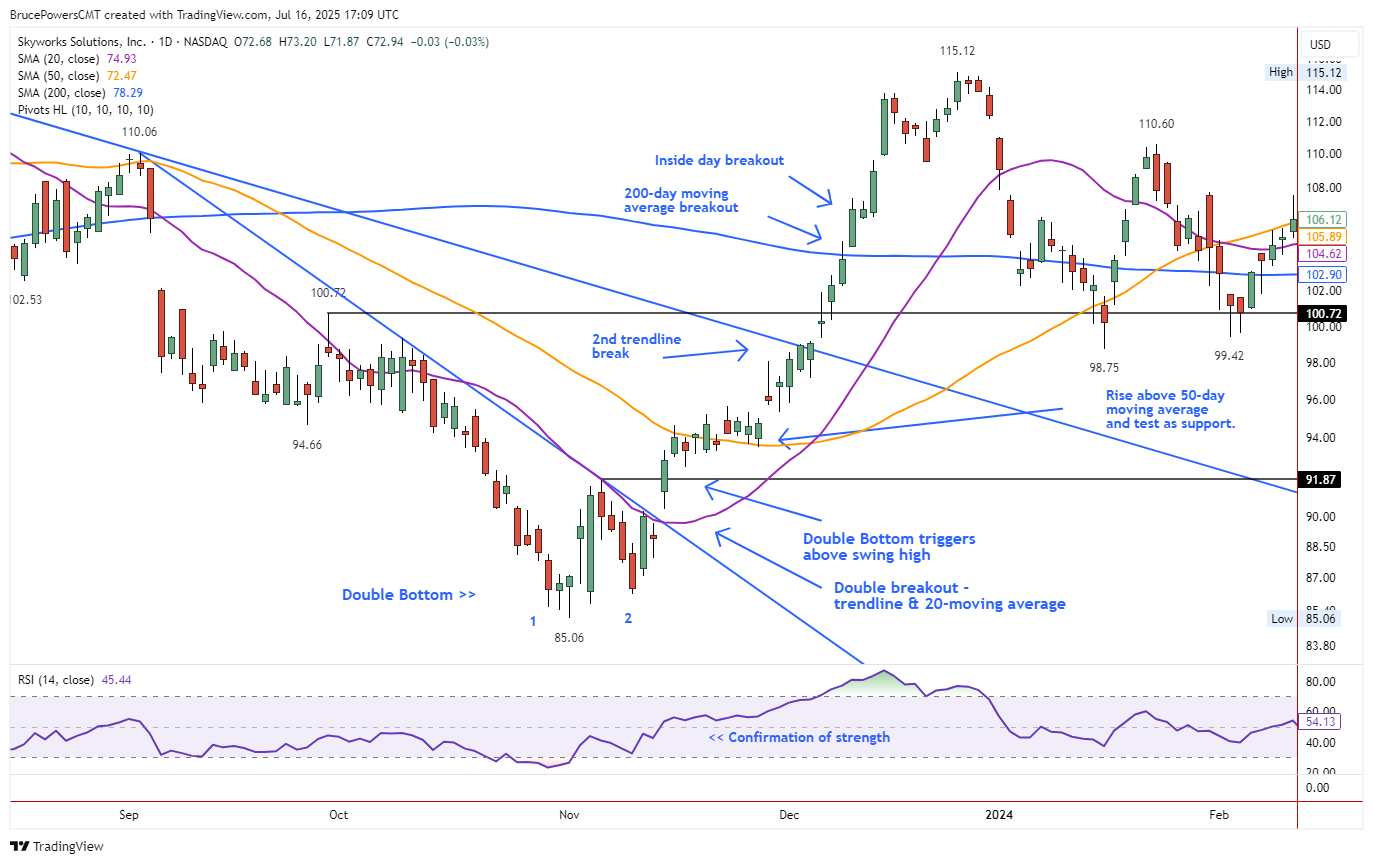
Figure 6: SWKS daily chart – full transition from accelerating downtrend to confirmed uptrend.
Here you see a staircase of higher highs and higher lows. Each breakout level provides the support for the next impulse. How a trend evolves.
The Bad News: Complications and Limitations
Alright, I can keep the fantasy going. But there are some real problems with trend following, and you might as well be aware of them now:
False Signals and Whipsaws
Price breaks through a line, you get excited, you trade, and then price quickly moves back through the line again. Oh well. False signals and whipsaws happen. The most common solutions involve pairing a lagging indicator (like moving averages) with a leading indicator (like the RSI). Helps smooth out the noise.
Cycling Market Conditions
The market cycles between trend and range. If you have a system that works great in a trending market, it will fail miserably in a ranging market. You can use tools like Bollinger Bands to determine the type of market you’re in, but you need to be flexible to survive.
Psychological Demands
Finally, psychology might be the biggest complication of all. Trend following demands discipline. You have to ignore emotional urges to trade when the market is making huge waves. You have to ignore the FOMO. You have to ignore the losses you take when you get false signals. Strict risk management and a daily trading journal come in handy. They’re not the sexy part of trading, but they’re necessary.
The Bottom Line: Key Takeaways
Trend identification is the essence of technical analysis and the more you practice, the better you will get at it. Using price action, moving averages, trendlines, and confluence, you have a solid foundation for analysis.
However, I want you to walk away with these key principles:
- Price action comes first. The rest is secondary.
- Use confluence. When your indicators are all pointing to the same level, the odds of a move increase.
- Observe the trend hierarchy. Know what your base timeframe is and use the timeframes above and below to give you a clearer picture.
- Don’t be in a hurry to trade a sloppy trend. The best trends have a good reward-to-risk ratio. If it’s complicated, move on.
- Understand risk management. Always. You won’t have a system without it.
So the next time you’re looking at a chart, you need to ask yourself: “What is the trend telling me?” and “Am I hearing it early enough to do something about it?”