Nikkei 225 investors will return from the public holiday with a more balanced setup. The Project Freedom plan by Trump has alleviated some pressure in oil markets as the U.S. seeks to assist stranded civilian ships to clear the Strait of Hormuz. This is important to Japan because Japan relies on imported energy. Brent oil (BCO) and WTI oil (CL) fell to $112 and $100 levels, respectively. The lower Brent and WTI prices may reduce inflation pressure and boost sentiment in Japanese equities.
The effect on the Nikkei 225 might be favourable in the short term. The oil prices drop from the key resistance levels that benefit transport, manufacturing, airlines and consumer related stocks. It may also alleviate fears that higher energy prices will reduce margins. Nevertheless, the circumstances are still dangerous because the operation is supported by massive U.S. military assistance. Any conflict in the Strait of Hormuz would soon turn the decline in oil prices around and put the pressure back on Japanese stocks.
The mood of the global market is also favourable. The U.S. stock futures were largely flat following the S&P 500 and Nasdaq recording new record highs on Friday. This provides the Nikkei 225 with a superior external backdrop, particularly with technology and semiconductor stocks.
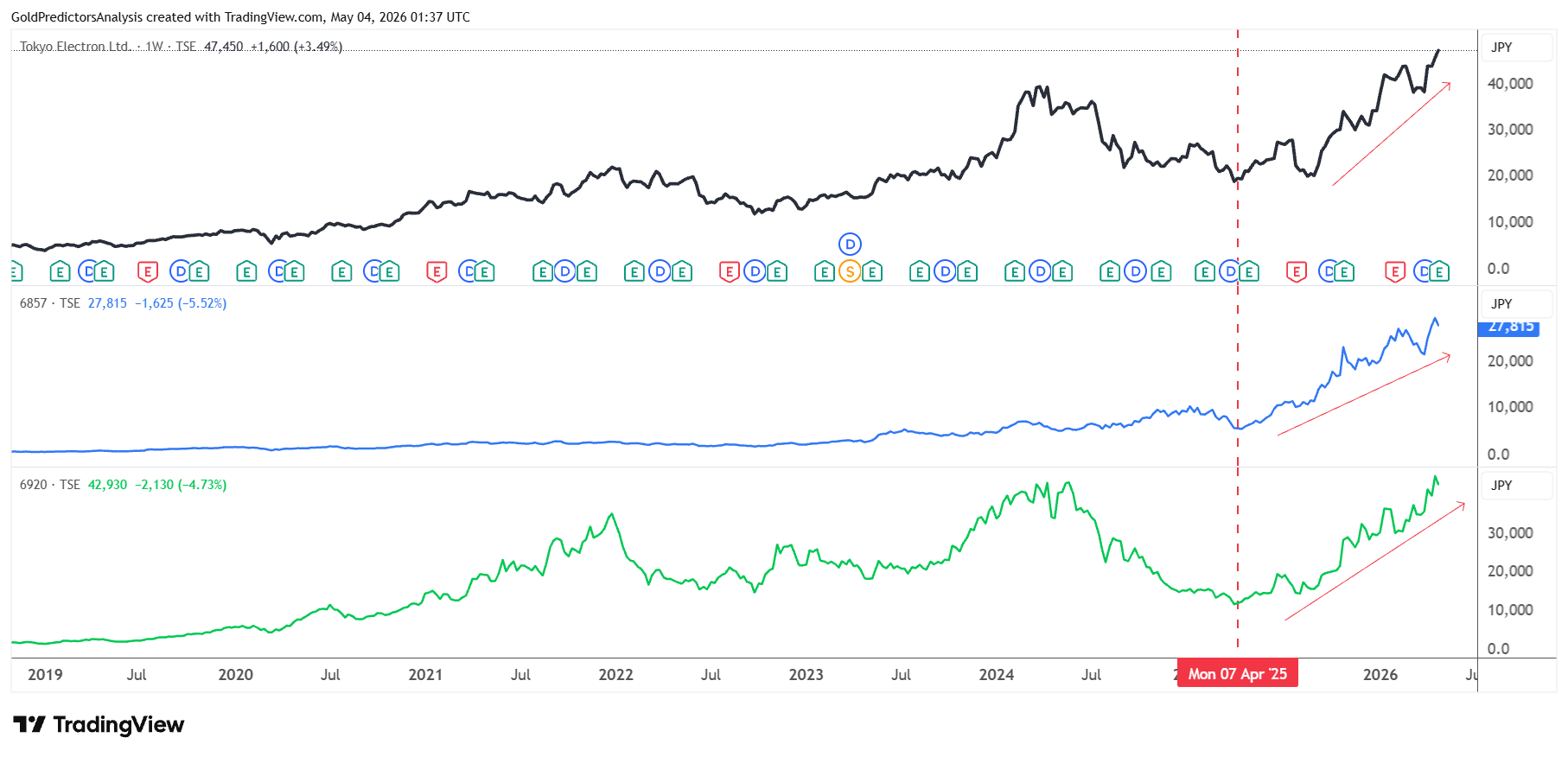
The chart below shows that major Japanese semiconductor stocks remain in a strong bull market and are on the verge of producing new record highs.
Nevertheless, the index could open cautiously when the market in Japan opens, as investors will need to determine whether Project Freedom reduces the risk of shipping or triggers a new stage of military confrontation in the Gulf.

Nikkei 225 Technical Analysis: Bullish Pattern Points Toward 65,000
From a technical perspective, the Nikkei 225 remains in a strong bullish trend. The index has been consolidating below the key 60,000 level for the past two weeks. However, the consolidation below 60,000 is now indicating the possibility of an upward breakout.
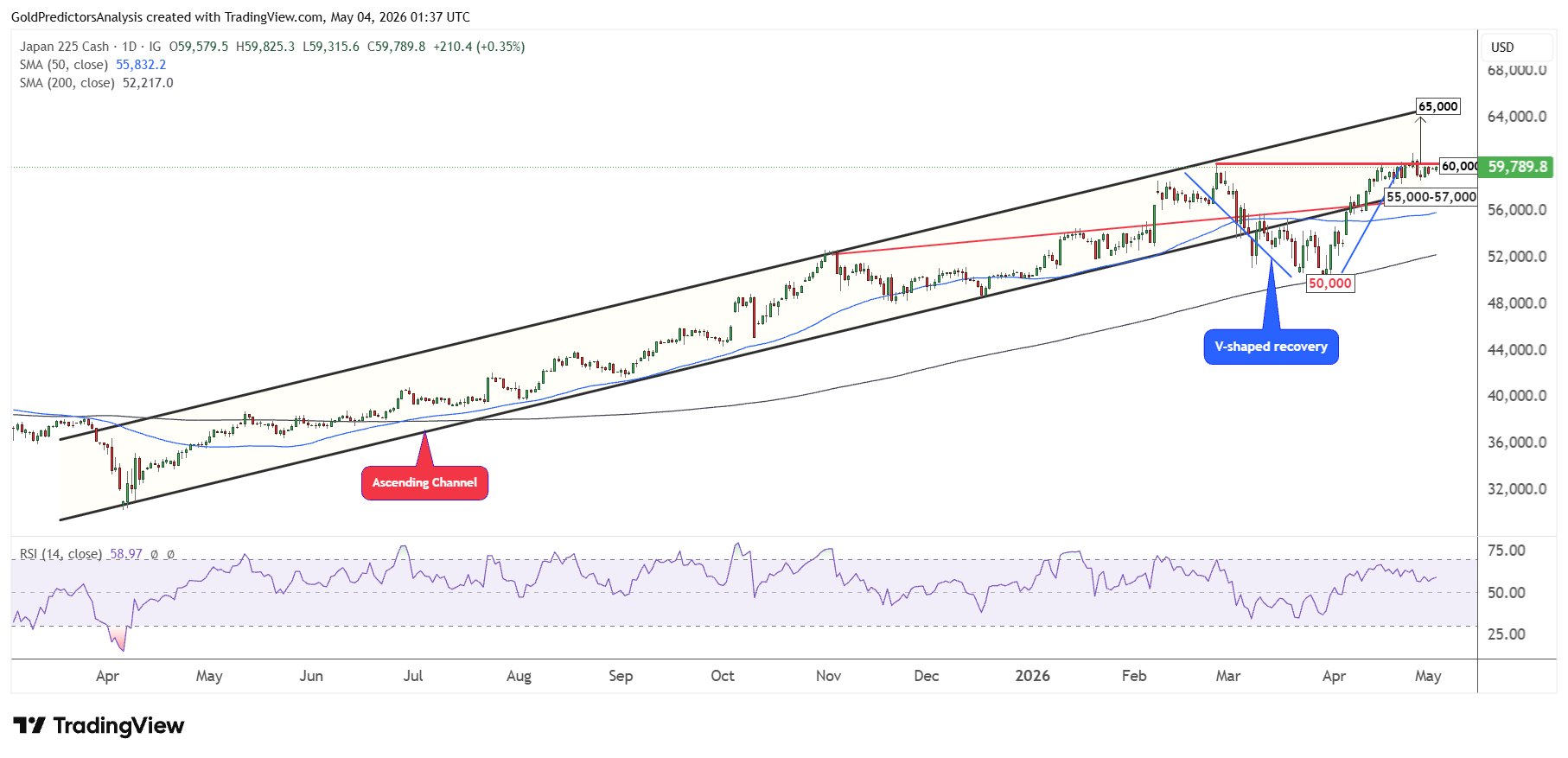
A break above 60,000 will push the index toward 65,000. The V-shaped recovery from the 200-day SMA at 50,000 and then the consolidation below 60,000 indicates bullish price action.
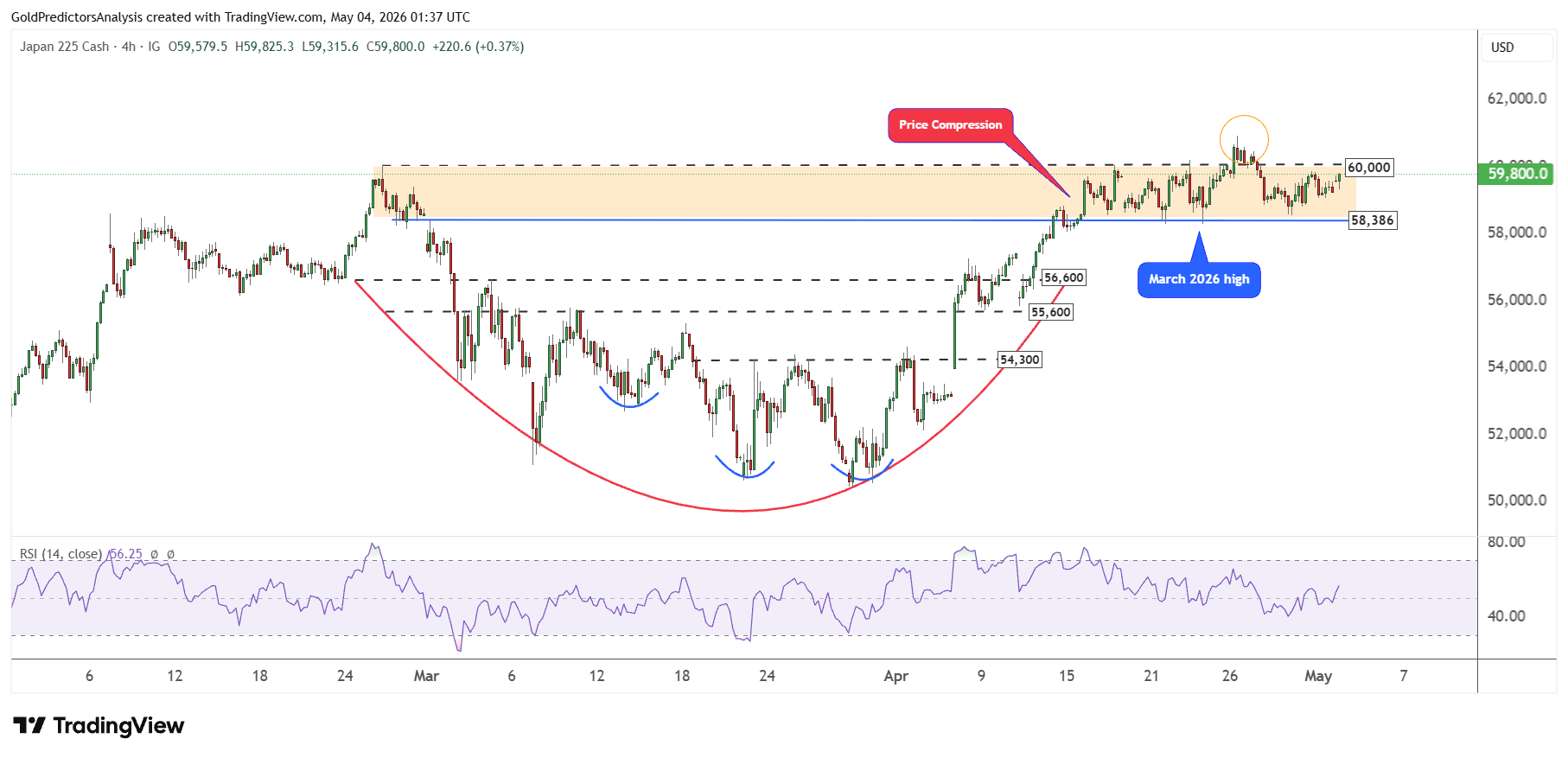
The 4-hour chart for the Nikkei 225 also shows a bullish trend. The index is consolidating between 58,000 and 60,000 and looking for the next direction. A break above 60,000 will take the index to 62,000 as the immediate resistance.
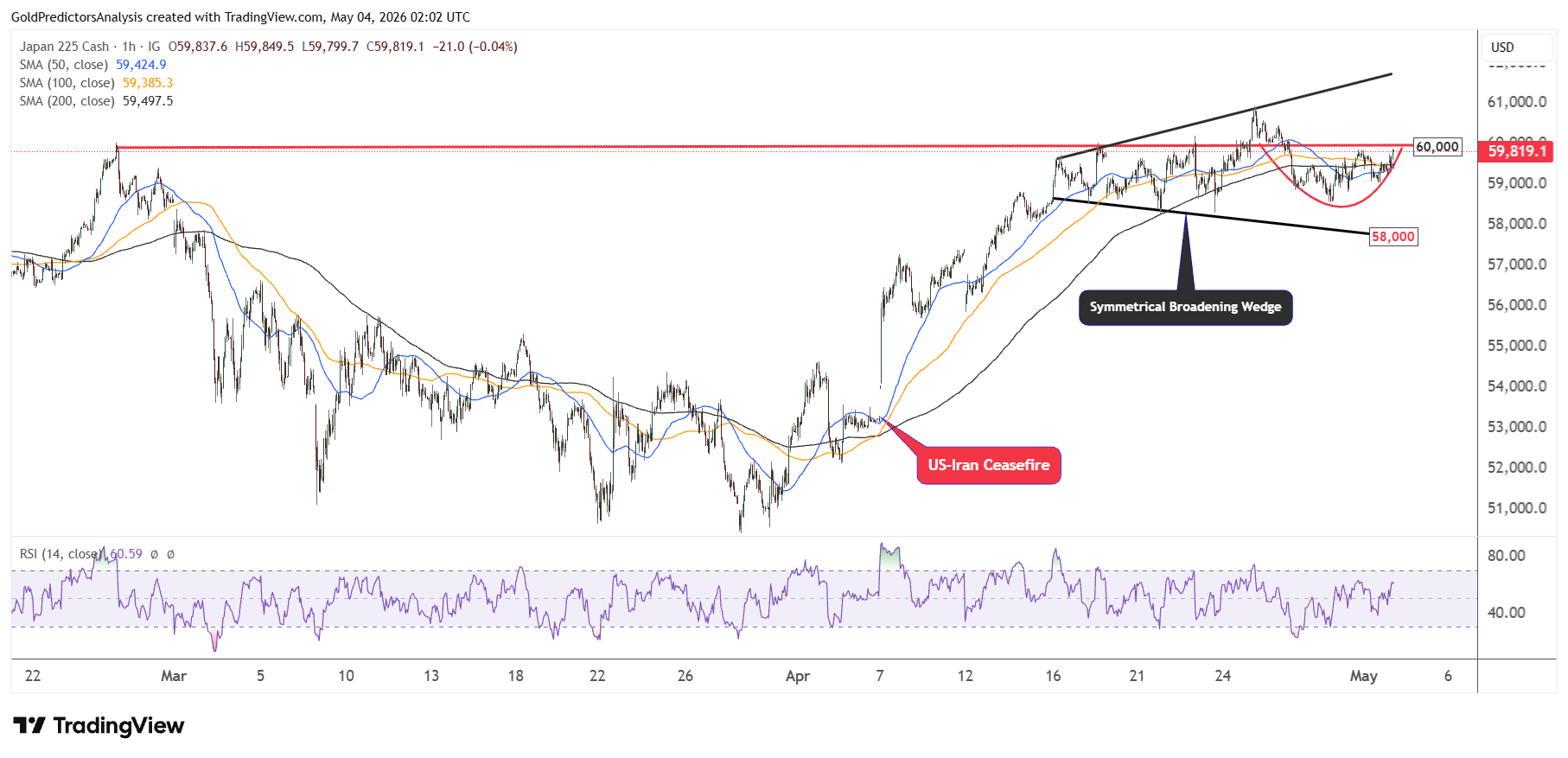
The hourly chart for the Nikkei 225 also shows the formation of a broadening wedge pattern at the $60,000 level. This broadening wedge pattern indicates that the price will likely rally toward $62,000 in the short term. This level is defined by the wedge pattern.
Nikkei Price Forecast
Every new Nikkei analysis as it publishes, today's technical signal and key levels, live price — on one page.
See all Nikkei forecastsBottom Line
In conclusion, the Nikkei 225 remains in strong position as lower oil prices, firm global sentiment and strength in semiconductor stocks support the bullish outlook. Project Freedom has relieved part of the pressure on the energy markets which could benefit Japanese transport and manufacturing stocks as well as consumer stocks. However, the risk has not disappeared. Any escalation in the Strait of Hormuz would push oil prices higher and undermine market confidence. Technically, the index is bullish as long as it trades above 58,000. Any visible break above 60,000 could open the way to 62,000 first, then 65,000 if the momentum improves.