



Ever been in the situation where you were sure that the stock was going to squeeze out and you enter your trade, only to have it immediately go against you? Yeah, me too. Anyway, the point is, the trade looked fine on the 5 minute chart, but on the daily or weekly chart you were pushing against a wall of resistance, or even worse, against the trend. That’s what Multi-Timeframe Analysis (MTFA) fixes. And honestly, it is one of those things that once you start using it, you’ll be wondering how you managed to trade without it.

So What Exactly Is Multi-Timeframe Analysis?
First and foremost, MTFA is very simple. You analyze the same instrument across multiple timeframes (1hr, 1d, 1w), in order to get a more accurate picture of what is going on. In this sense, it’s a lot like Google Maps. When you zoom out you can see the road and the direction you’re going. When you zoom in you can see the next turn, where the traffic jam is and where you need to stop and fill up for gas. Neither of these two extremes are useful by themselves, you need both. The traditional use of this strategy is to look at the highest level of time that you need (weekly/daily) to gauge the overall trend and then drill down to the shorter timeframes (4hr, 1hr) to look for your entry and exit points.
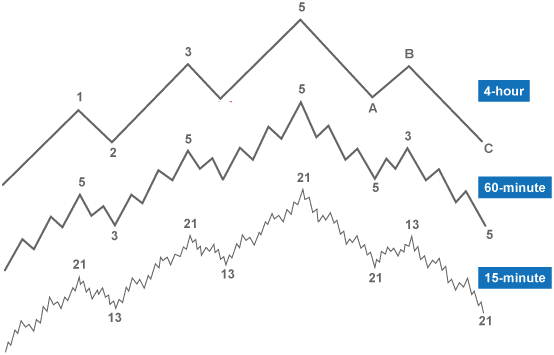
Multi-Timeframe Concept: Weekly to Daily to Hourly
See the Forest and the Trees
In summary, this means that you can look at both the forest and the trees, and therefore will not get caught up in the minutiae of short term price action. If you have been following this series, you will note that MTFA will make everything that we have talked about so far more powerful. MTFA will strengthen your trend identification, because it will confirm whether or not trends are holding across different timeframes. MTFA will enhance your understanding of support and resistance, because it will help you identify whether or not levels are holding on both your daily and weekly charts. MTFA will help you identify more valid chart patterns, because patterns on the daily chart that are confirmed with an uptrend on the weekly chart are far more meaningful, than a bull breakout on the daily chart.
Why Bother? The Real-World Benefits
I can hear your brains already going “Great, something new to add to my analysis process. I’m already trying to use indicators, patterns, news.” Yes, I get it. But here is why this fits into your process.
It Filters the Noise
Trading on a single time frame, a 1hr chart for example, is like going outside in the rain, putting your hand out of the window for 2 seconds and then assuming you know what the weather is like. A bullish engulfing pattern on a 15 minute chart means absolutely nothing if the trend on the daily chart is bearish. MTFA filters this noise out of your process, and only allows signals through that are confirmed across multiple timeframes.
It Sharpens Risk Management
When you see that a pullback is actually a pullback within a trend, you can more accurately set your stop-losses and profit targets.
It Keeps You in Trend
MTFA allows you to see that a stock is in a strong weekly uptrend even if it’s pulling back on a daily basis. You realize this is a buying opportunity, not a time to hit the panic sell button.
It Saves You Time
This one is HUGE. For all the part time traders out there (that’s most of us), using multiple time frames can really speed things up. Instead of spending hours at the computer screen watching every tick, you now use higher time frames to find high probability trading situations and only start drilling down to the lower time frames once the trade is setup. It’s like a filter for your time.
It Will Help You to be More Confident in Your Trading
Once you have the validation of multiple time frames, you’re less likely to second guess your trading decision. This is one of the main keys to being a successful trader. What are some of the ways you can use multiple time frames? You can use it to help with your trade entry. You can use it to help you filter out which stocks to trade. You can even use it to help you filter out which time of day to trade. Of course, there are many other ways that you can implement this strategy, but you get the idea. Using Multiple Time Frames can be overwhelming for some traders. I recommend that you start with just two time frames and progress to three once you get more comfortable.
How to Choose Which Time Frames to Use
The use of multiple time frames can be pretty straightforward once you know which time frames to use. This is where most traders get hung up. The idea behind multiple time frames is to use time frames that match your trading style. For example, if you are a day trader, you will be using shorter time frames. A swing trader will use longer time frames. So, how do you choose which time frames to use? One way to do this is to use the 4-6x rule. Each time frame should be 4-6 times larger or smaller than the other. If your working time frame is a 1-hour chart, you would use a 4-6 hour chart as your higher time frame and a 15 minute as your lower time frame.
Timeframe Combinations by Trading Style
Here’s a rough breakdown of which time frames to use for each trading style:
| Trading Style | Higher TF | Medium TF | Lower TF |
|---|---|---|---|
| Day Trader | Daily | 1-Hour | 15-Min |
| Swing Trader | Weekly | Daily | 4-Hour |
| Position/LT | Monthly | Weekly | Daily |
This is just a rough guideline and can vary depending on what type of security you are trading, the volatility of the security, and even how much time you have to trade. You also need to take into consideration what your broker offers as well. For example, some brokers do not offer 3 or 6 minute charts. I recommend that you practice using different time frames in a practice account to see which ones work best for you. For example, if you have a day job and can only check the markets during your lunch break, you may want to consider using a daily and weekly chart. You would not need to use a 5-minute chart.
Multiple Time Frame Analysis in Action
Now that we have discussed multiple time frames, let’s go through an example.
The 3-Step MTFA Process
Here’s how to use MTFA in three steps:
Step 1: Find the Trend on the Higher Timeframe
Identify your timeframes (e.g., monthly, weekly, 4-hour). Check for the trend on the highest one (monthly in this case). If it’s bullish (or bearish), that’s your first clue.
Step 2: Look for a Pullback on the Higher Lower Timeframe
Move to the next lower timeframe (weekly here). If you find a pullback to a key level (support, moving average, etc.), that’s your second clue.
Step 3: Enter on the Lower Timeframe
Use the lowest timeframe (4-hour in our example) to pinpoint your entry. You could enter based on a specific pattern (like a bullish engulfing or a hammer), an indicator signal (such as RSI oversold or MACD crossover), or even a breakout at this micro level. Set your stop and your target here. The two higher timeframes told you what to trade; the lowest timeframe tells you when.
| A key point: If these timeframes aren’t aligned, don’t trade. There’s always another day. This is how you protect your capital. |
|---|
Example of How to Trade with MTFA
Let’s go through an actual trade example using AMD (Advanced Micro Devices) and see this process in action.
AMD Monthly Chart: Bullish Hammer Reversal
On the monthly chart, in May 2025, we got a bullish hammer reversal after a bounce off of the 100-month moving average. This is a long-term bullish signal.
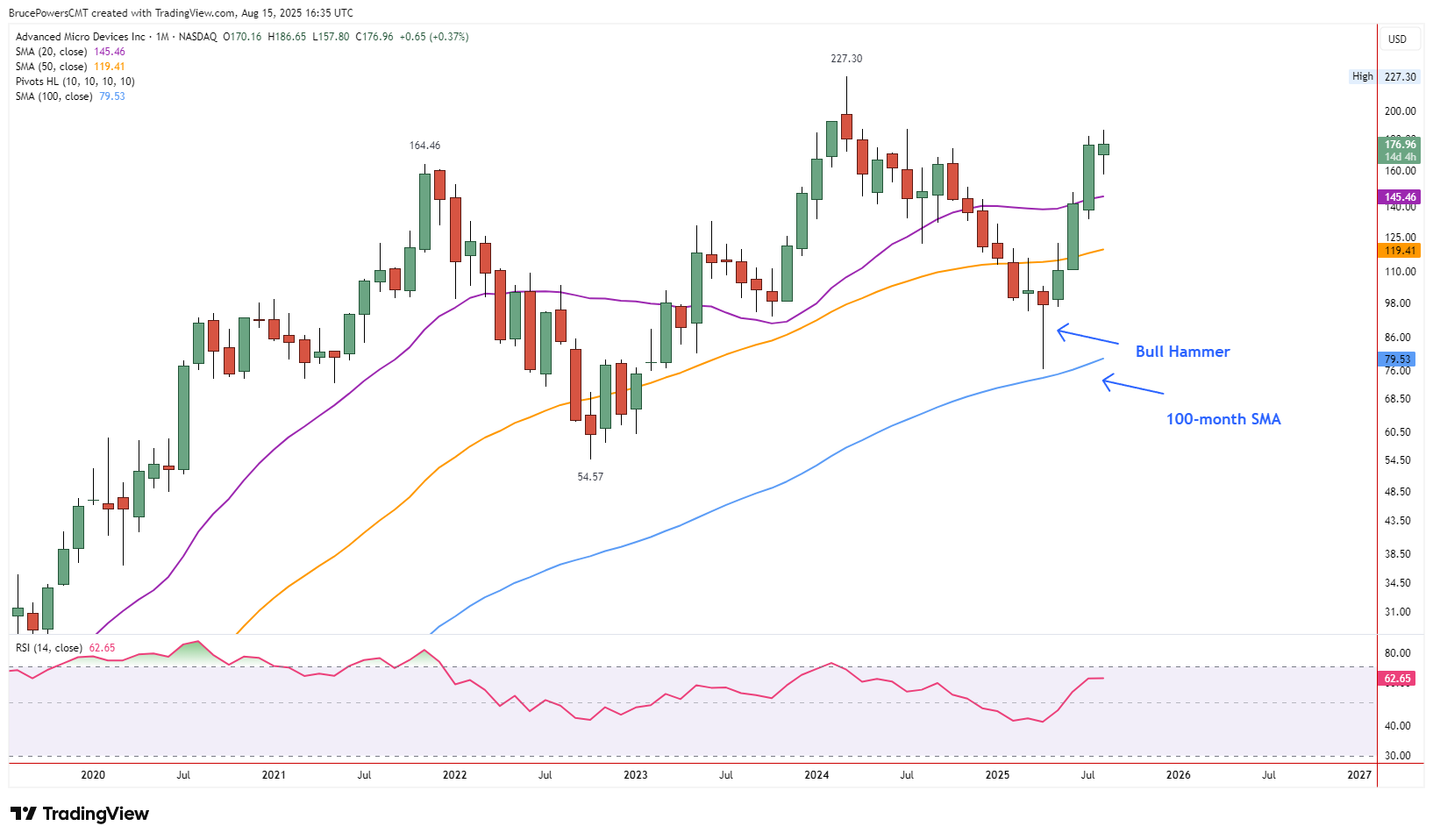
AMD — Monthly Chart
AMD Weekly Chart: Double Inside Week Consolidation
On the weekly chart, we see a double inside week that has formed between the 20-week moving average (support) and the 200-week moving average (resistance). The stock is consolidating, gathering energy.
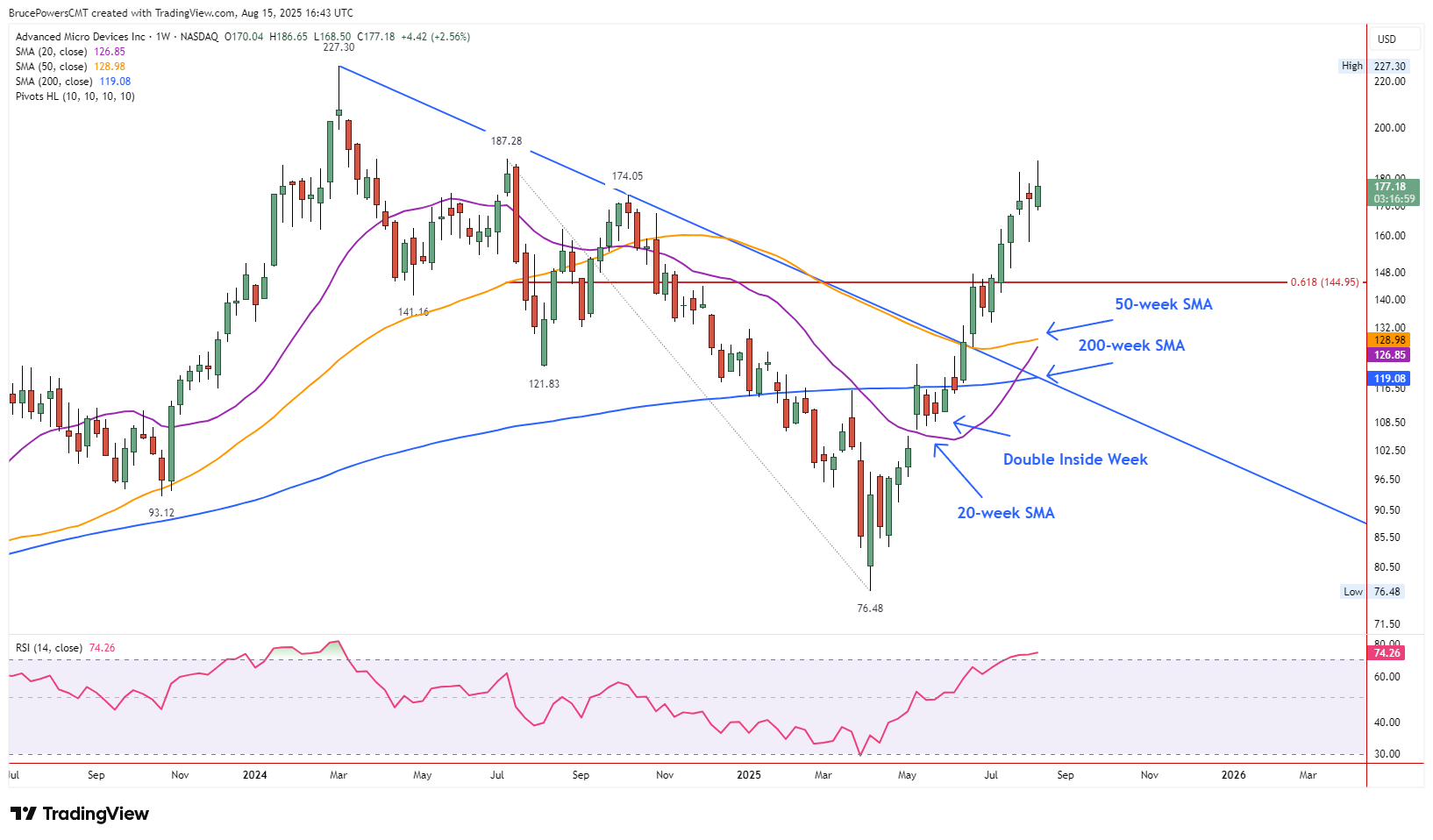
AMD — Weekly Chart
AMD Daily Chart: Double Bottom Breakout Entry
On the daily chart, we have a small double bottom that has formed at the support of the 20-day moving average, with a breakout above $115.40.
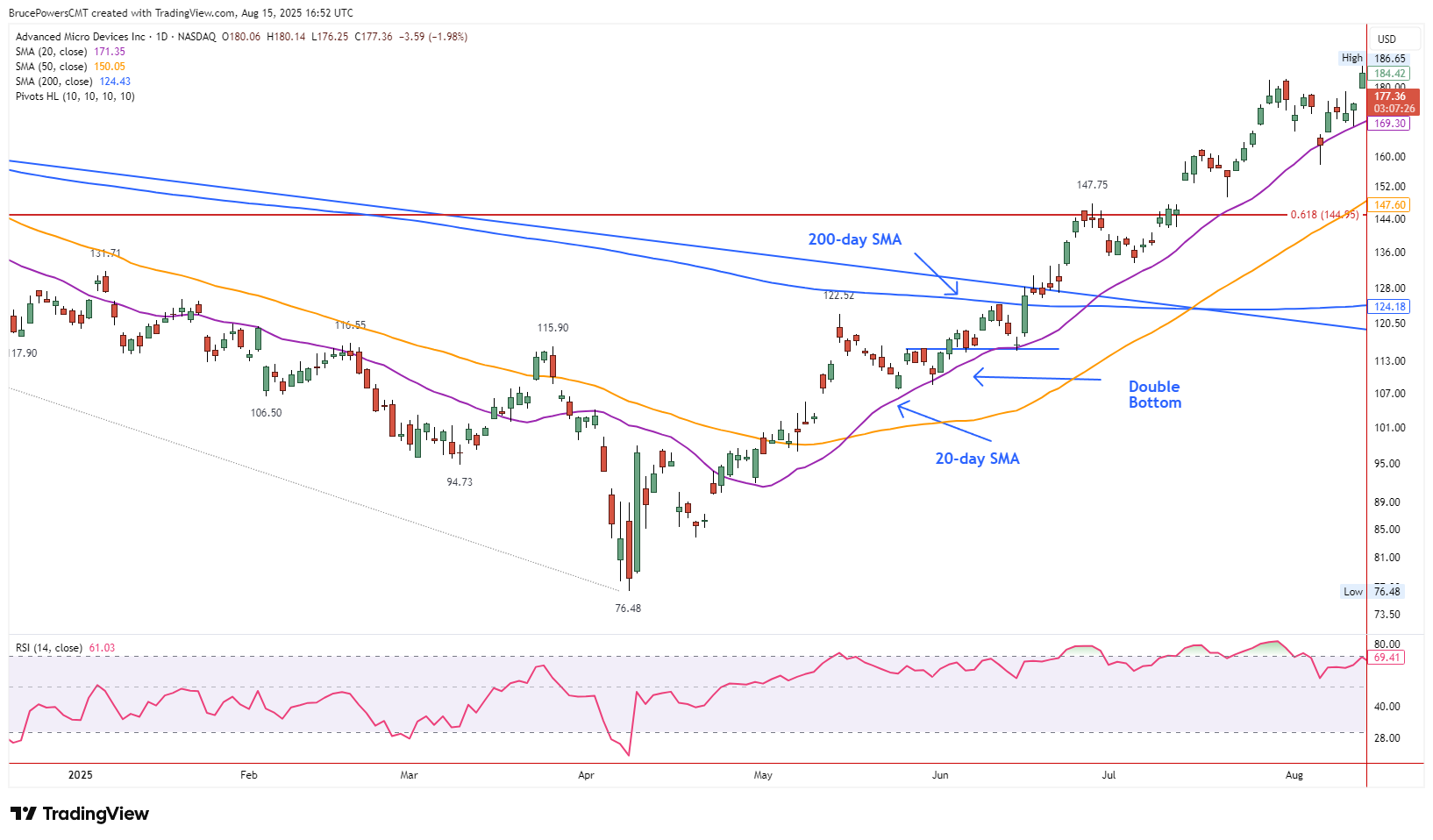
AMD — Daily Chart
Trade Setup and Outcome
Long entry: $115.74 (above the high of the second inside week at $115.54). Stop loss: Below the low of that inside week at $111.01. Price target: The 61.8% Fibonacci retracement at $145.
The breakout confirms a reclaim of the 200-period moving average on the weekly chart. Further strength is confirmed with a trend high and a monthly breakout above $122.52, with a reclaim of the 50-week moving average. Three timeframes, one solid trade idea. This is a basic overview of how to trade with multiple time frame analysis.
MTFA and Other Technical Analysis Tools
MTFA is great on its own, but when combined with other technical analysis tools, it becomes even more powerful.
Indicators Across Multiple Timeframes
An EMA crossover on a 1-hour chart is more significant if the daily EMA trend is in the same direction. If you add the RSI indicator on the 1-hour chart to check for overbought or oversold conditions, you now have a two-timeframe confirmation.
Chart Patterns and Support/Resistance
A head-and-shoulders pattern on a daily chart is more reliable if the weekly chart shows the same price level as being significant. A breakout above resistance on a 4-hour chart is more important if at the same time, we’re breaking out above resistance on the daily or weekly chart.
Volume Confirmation
It’s crucial to always check for volume on the higher time frame. A daily breakout with high volume and a weekly uptrend is more important than a daily breakout with low volume. Combine this with bullish candlestick patterns on the lower time frame for the exact entry timing. (This is for advanced traders.)
Fibonacci Confluence: Where Multiple Levels Align
Here’s another one to add to your toolkit: stacking Fibonacci retracements across timeframes. If you’ve got a 50% retracement on the daily chart and it’s sitting right on a 61.8% level on the weekly chart, you’ve just found yourself a confluence zone, which is a high-probability area to focus on.
More Real-World MTFA Trade Examples
Bearish Example: Microchip Technology (MCHP), Monthly/Weekly
MCHP (Microchip Technology) broke below long-term trend support in Nov 2024. Then it rallied up to test prior trend support as resistance. On the weekly chart, it also ran right into the 200-week moving average.
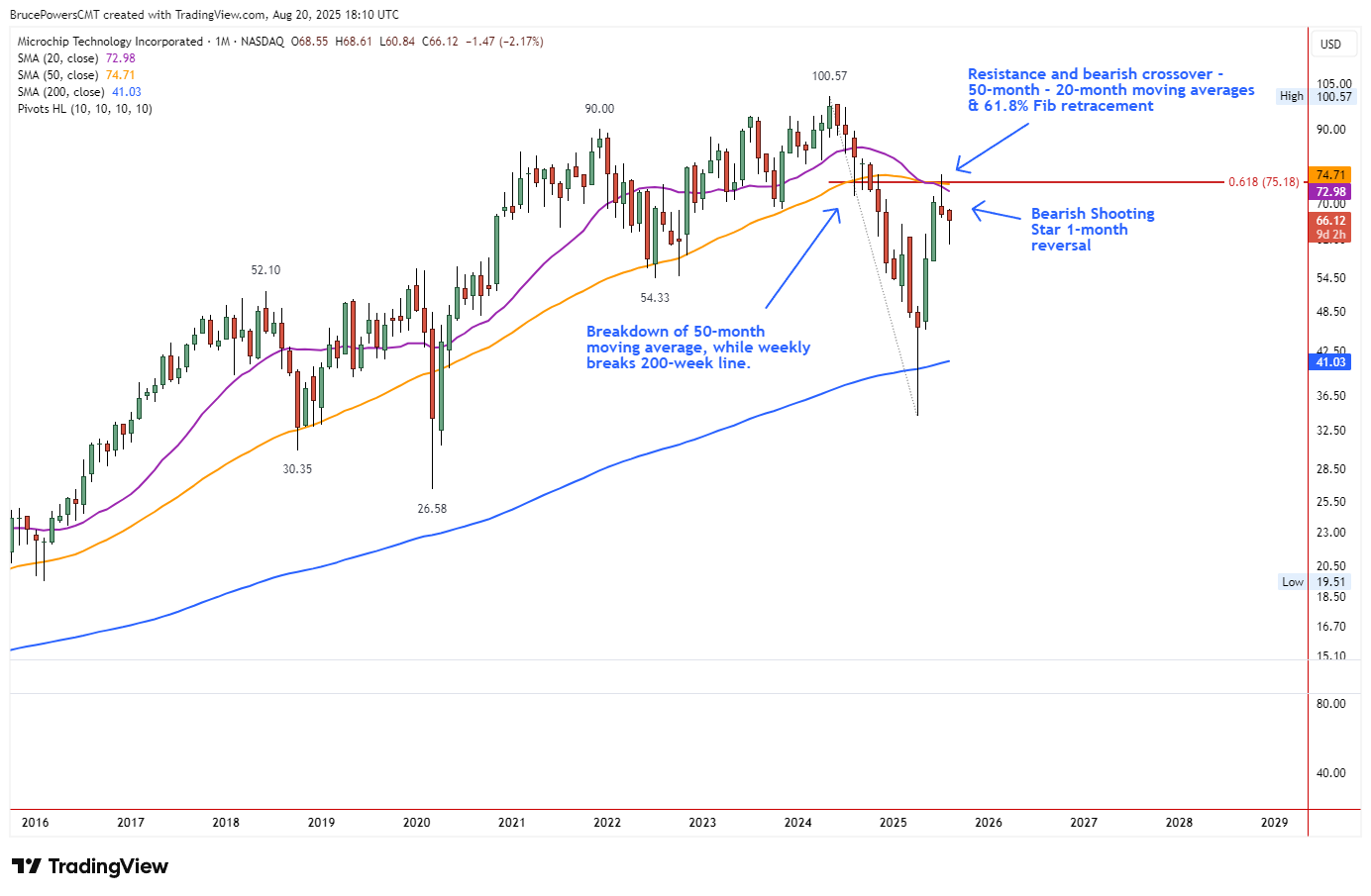
MCHP — Monthly Chart
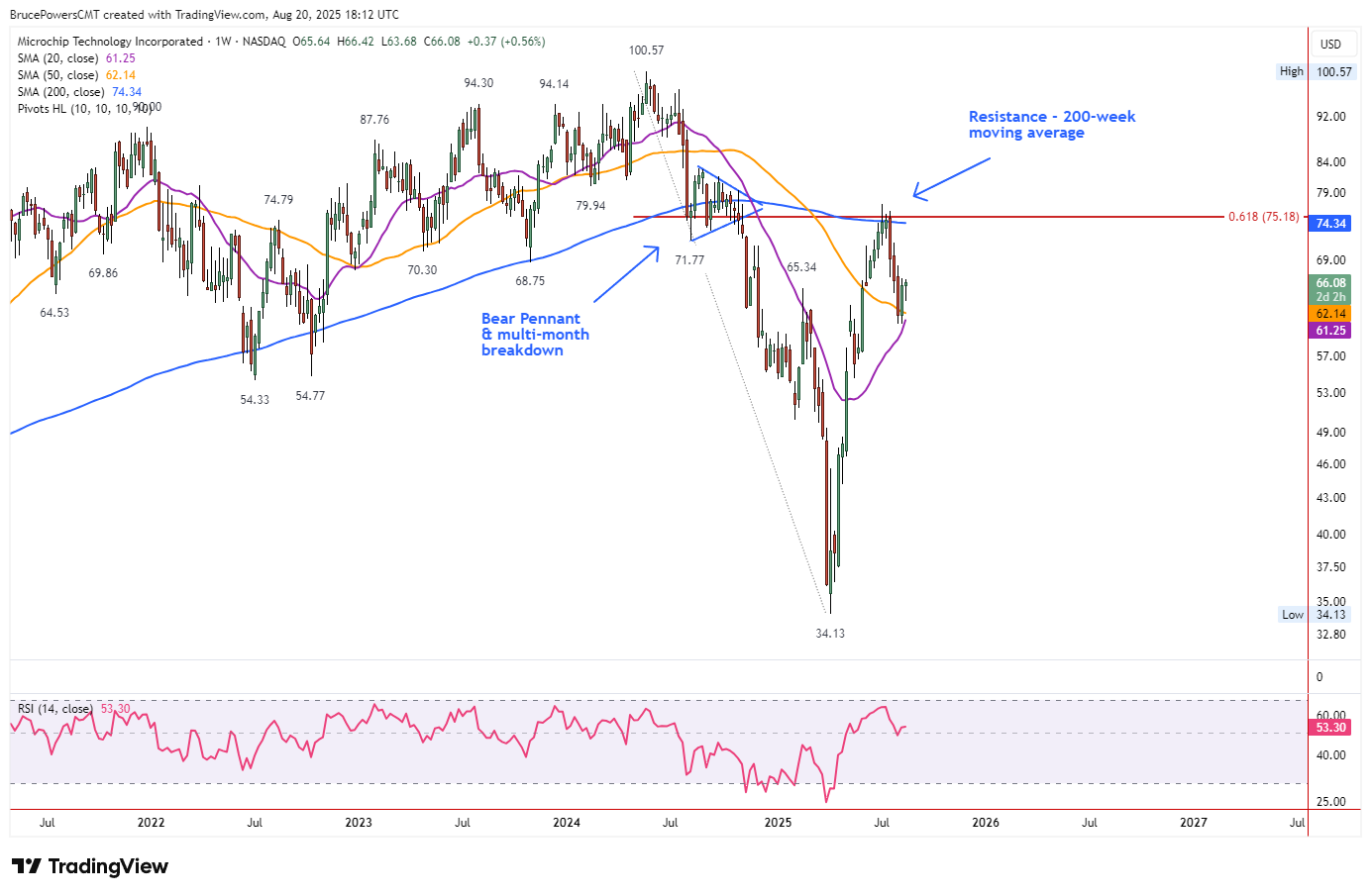
MCHP — Weekly Chart
Trade: Short on an inside week breakdown below $72.06, with a stop above the July high at $77.20 and a target of the 38.2% Fib at $60.75. The play lined up across both timeframes.
Bullish Example: NIO, Inc. (NIO), Weekly/Daily
On the weekly chart, NIO (NIO, Inc.) broke out above a descending wedge at $4.28 and reclaimed both the 20-week and 50-week moving averages. It also broke above a long-term downtrend line. On the daily chart, it formed a bull flag right at trendline resistance.
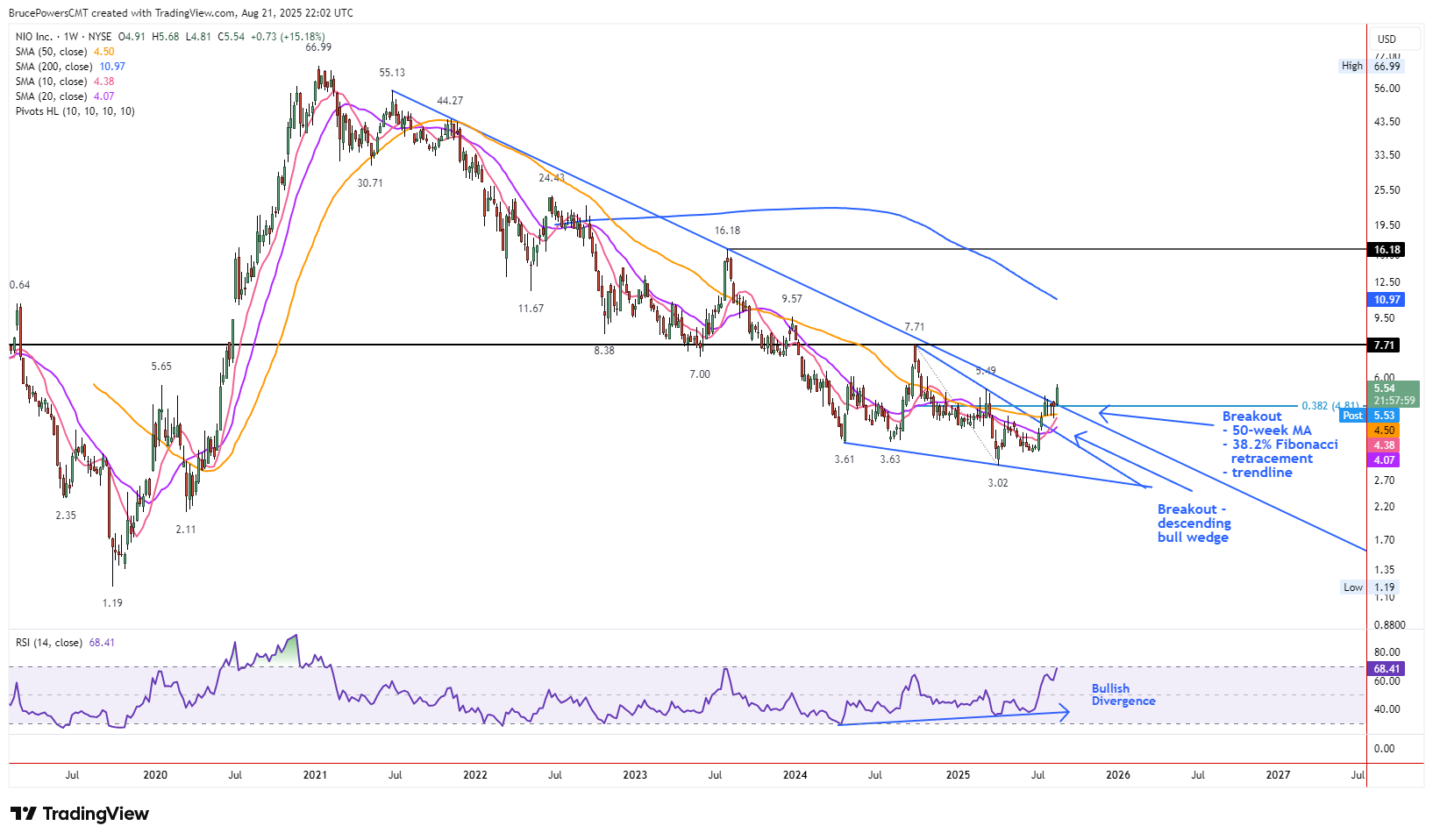
NIO — Weekly Chart
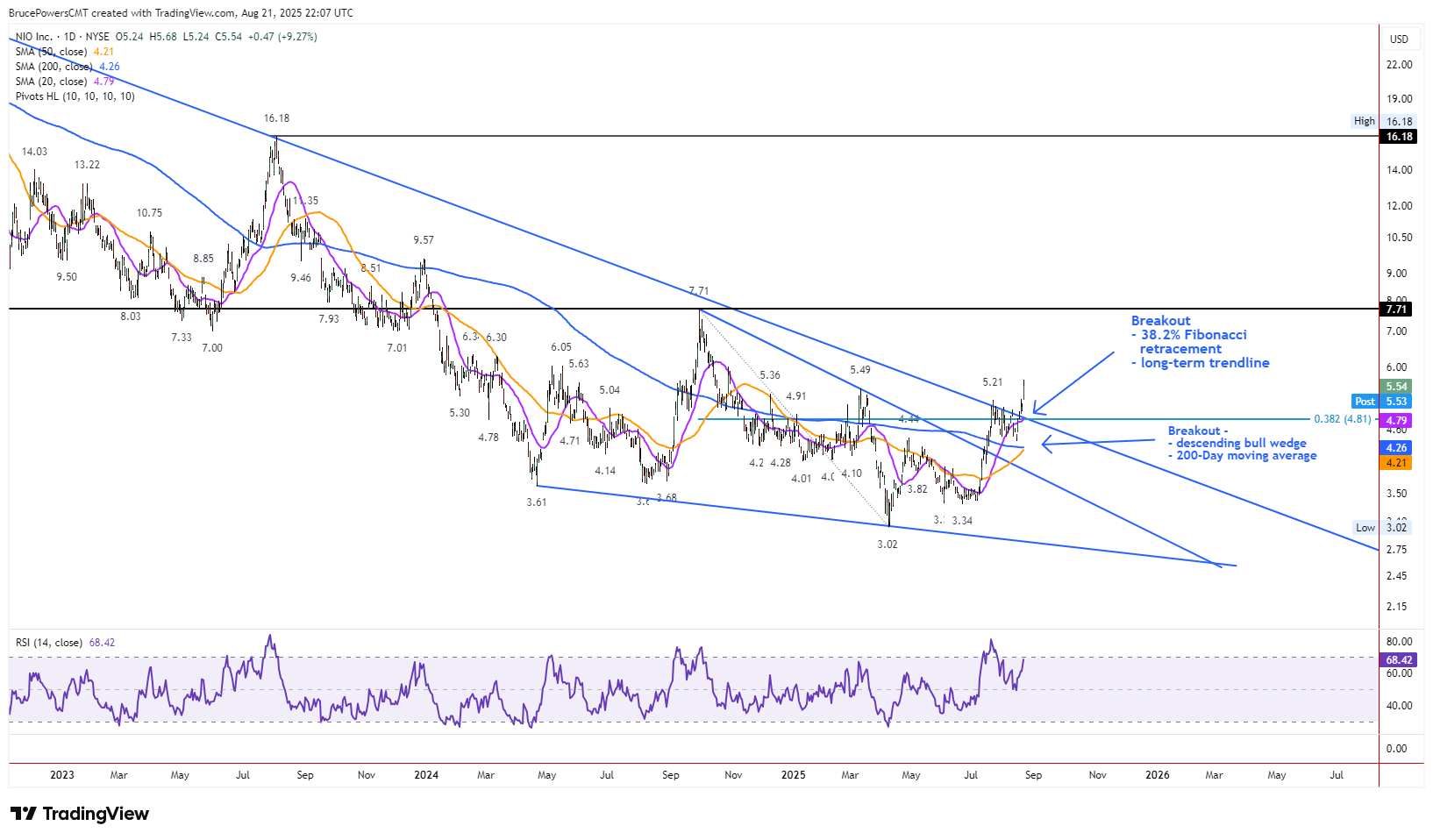
NIO — Daily Chart
Trade: Buy on a flag breakout above $5.01 (which was also a trendline break). You’ve got a bull sign on multiple timeframes. That’s what we mean by convergence.
Fail Example: Lemonade, Inc. (LMND), Daily/Intraday
I know what you’re thinking… “Does this always work?” Of course not. Let me show you what I mean. You see LMND (Lemonade, Inc.) as potentially overbought after breaking out of a rising trend channel and its prior swing high of $53.85 up to $60.41. When it falls back into the channel, it sets up for a potential pullback down toward the mid-channel area.
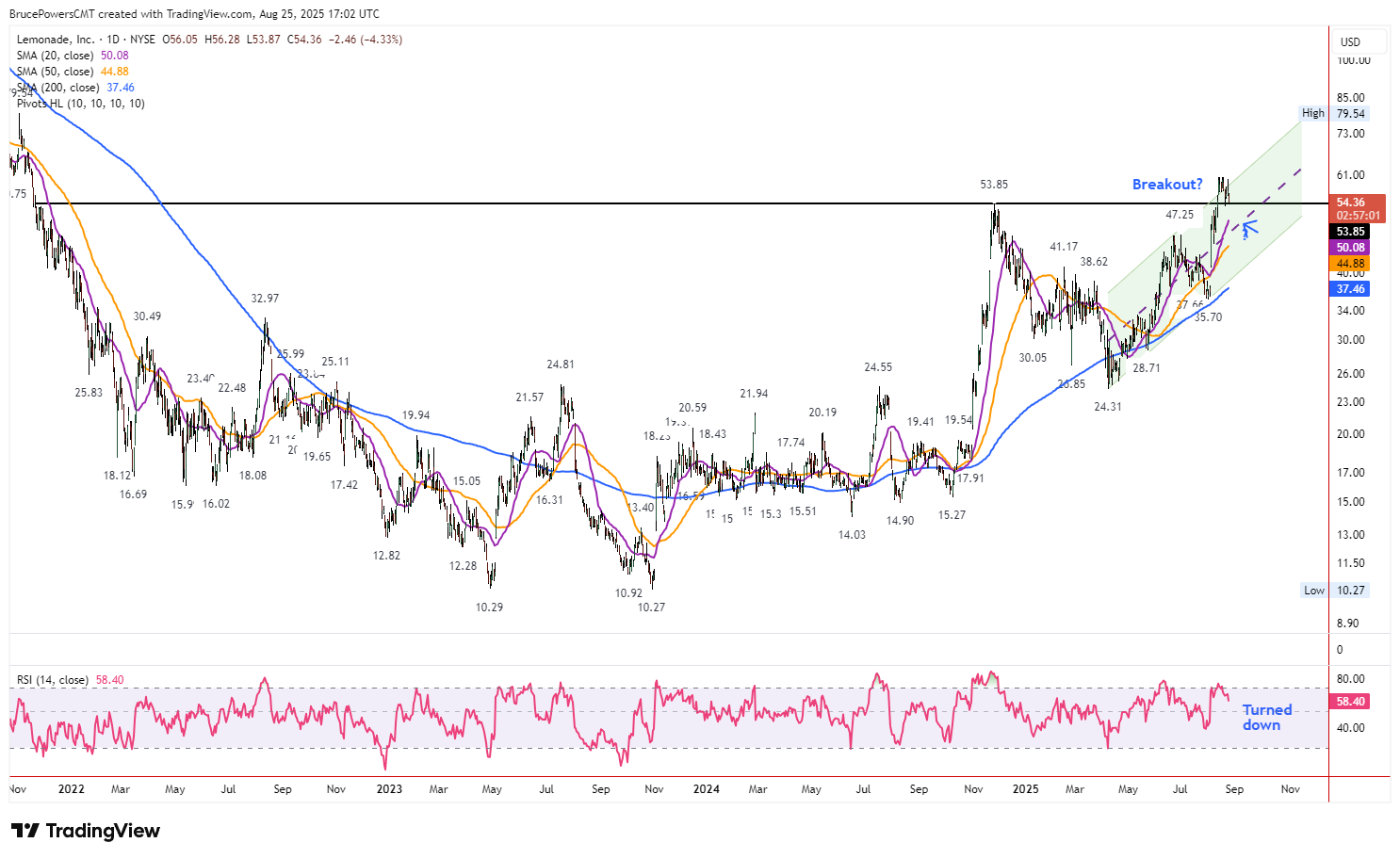
LMND — Daily Chart
On the 30-minute chart, you get a double top, which then triggers to the downside. This is an example of MTFA in reverse, using the daily chart to spot a shorting opportunity and the intraday chart to enter the trade.
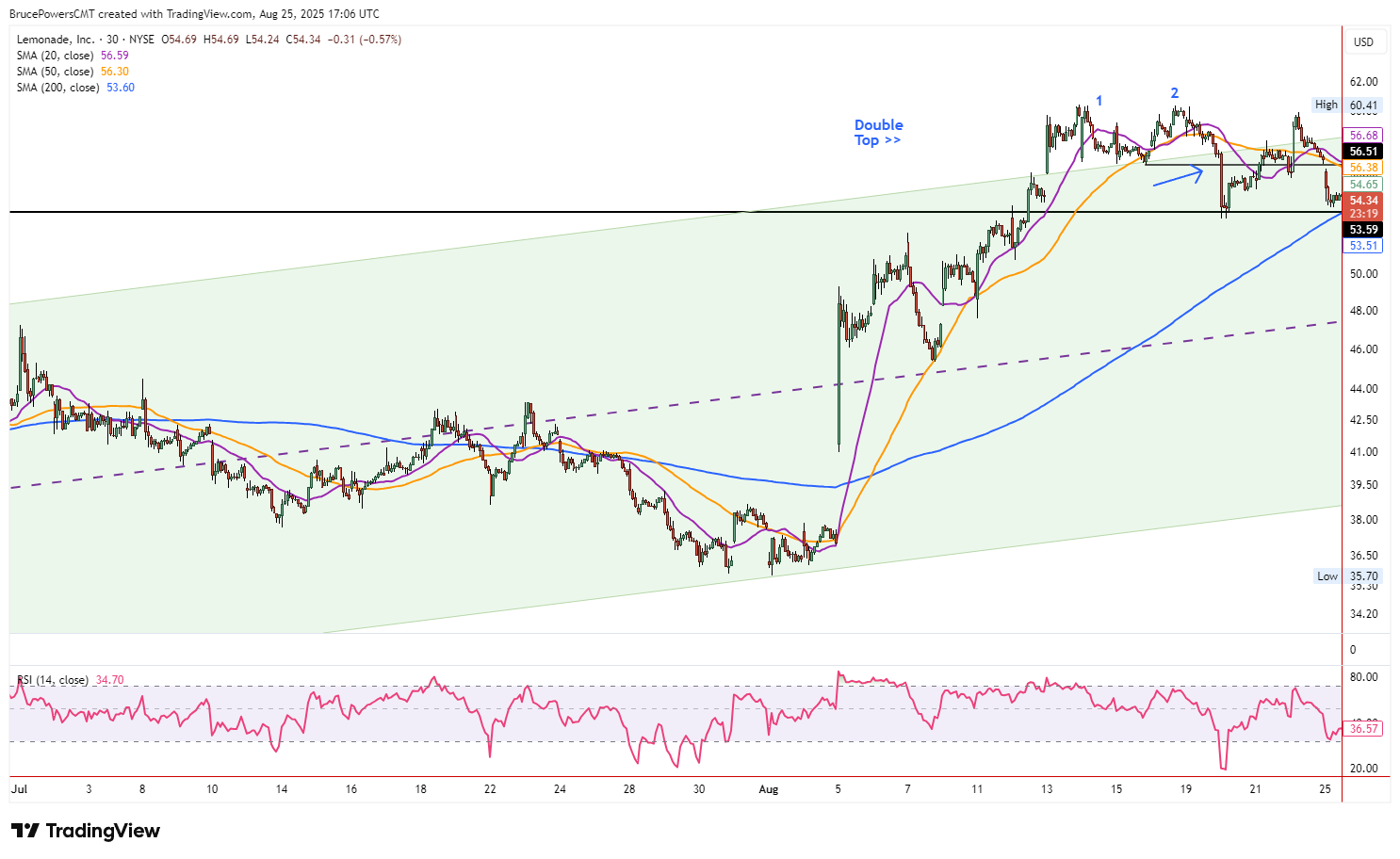
LMND — 30-Minute Chart
MTFA Works in Both Directions
The takeaway here? MTFA isn’t just for longs. It works on both sides of the market. And being able to spot a loss of strength is just as important as being able to spot the building of strength.
Common MTFA Errors and How to Avoid Them
Even with a logical framework in place, MTFA can be hazardous to your wealth. I’ve seen traders repeatedly make the following errors:
Mistake #1: Failing to Consider the Bigger Picture
Ignoring the higher time frame is the most common mistake you can make. If you only look at the 5-minute chart, you have no idea if you’re with the trend or not. Always start with at least a weekly or daily chart to set the context.
Mistake #2: Trading Too Frequently on Intraday Charts
Trading every signal on a 1-minute chart is a great way to blow through your capital. Establish a minimum alignment rule (for example, never trade unless you have at least two time frames aligned).
Mistake #3: Confirmation Bias
We’ve all been guilty of this. You want the trade to work so you see what you want to see on one timeframe but ignore the other two. The solution is to pre-commit to rules. Write it down. “I only enter when three timeframes agree.” Period.
Mistake #4: Indicator Overload
Having 6 indicators on three charts is a sure way to paralyze yourself. Limit yourself to 1 or 2 indicators per timeframe. MA’s and RSI go a long way.
Mistake #5: Ignoring Fundamentals
TA is just one tool. There’s a reason earnings, FOMC, and sector rotation can trump even the best looking setups. Check the economic calendar before every trade.
Where Do You Go From Here?
Multi-Timeframe Analysis is the glue that holds everything we’ve learned so far together, trend lines, support/resistance, chart patterns, into one cohesive framework for making trading decisions. There is no holy grail but having context is something that most traders lack and that’s what separates the mindless clickers from the thoughtful executors.
Your Action Plan for This Week
Here’s what you need to do this week:
1. Open a demo account.
2. Choose one instrument that you like to trade.
3. Bring up the weekly, daily, and hourly charts side-by-side.
4. Try to identify where the trends match and where they disagree.
| This simple exercise will hone your gut instincts more than any single indicator you can use. |
|---|
Review the first 4 articles to brush up on the basics. Do the examples in this article. And most importantly, be disciplined. Only trade when you have confirmation across multiple timeframes. The market punishes those who guess and rewards those who plan.


