



The Japanese yen has moved back into the spotlight as central banks enter more difficult phase. The Federal Reserve (Fed), the European Central Bank (ECB)
and the Bank of England (BOE) are no longer in the easy policy race as inflation risk is again on the rise. The U.S.-Iran war has altered market sentiment due to higher oil prices. They can increase transport and food costs and slow the pace of rate cuts.
Meanwhile, Japan has another issue. The yen is weak, import costs are rising and the Bank of Japan (BOJ) might have to do more. This presents challenging setup for USDJPY, EURJPY and GBPJPY, where rate differences, intervention risk and energy inflation all come into play. This article presents the central bank perspective, the weakness of the yen and the key technical levels for the USDJPY, EURJPY, and GBPJPY.

Central Banks Hold Rates as Oil-Driven Inflation Delays Easing
Fed Rate-Cut Bets Fade as Inflation Risk Returns
The Federal Reserve maintained interest rate unchanged. But the move demonstrated more division within the central bank. Three officials doubted the bias of easing and one official favored a cut in the rate. This is important because markets had expected that the Fed was nearing a rate cut. Fed is now seen to be more cautious since the price of oil and the risk of inflation are high.
This transformation reduces the chances of easing in the near term. The FedWatch tool shows that there will be no rate cuts in 2026. The chances of rate hikes increase from Q1 2027.
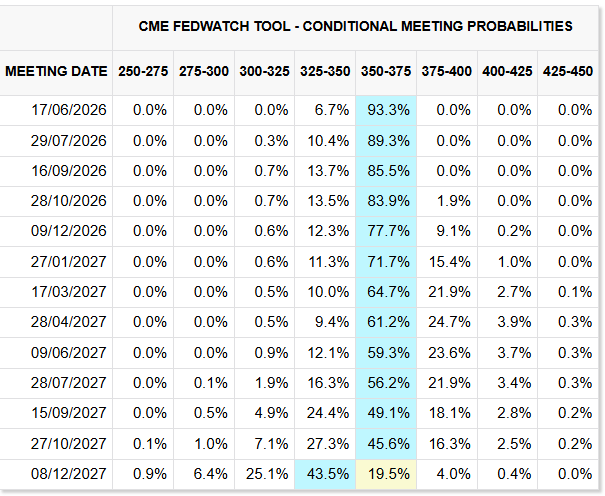
That is a significant shift in market expectations. This suggests that the U.S. dollar may find support in case inflation remains strong and the Fed maintains tight policy.
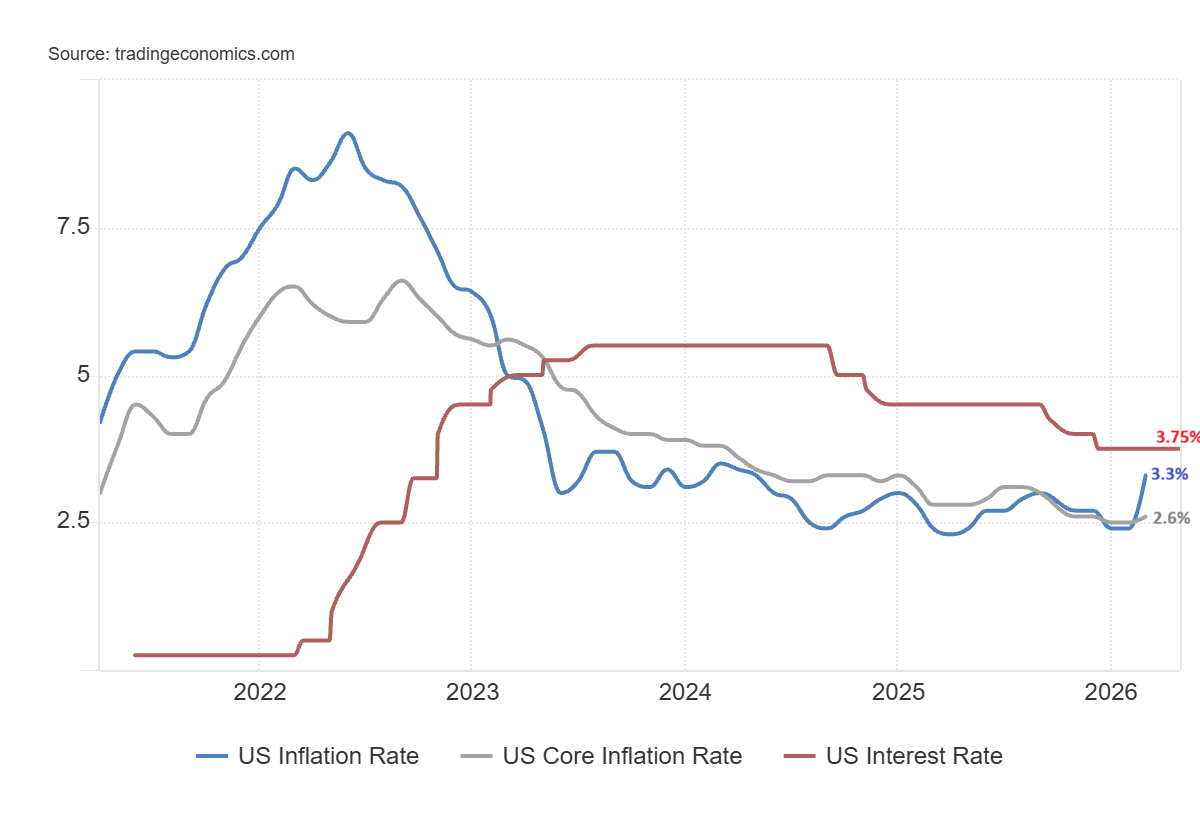
The chart below shows that the US inflation is picking up in March as the US-Iran war is fuelling inflation risks. The CPI surged to 3.3% while the core CPI rose to 2.6%. These indicators are likely to continue higher in April and May.
US Dollar Index Price Forecast
Every new US Dollar Index analysis as it publishes, today's technical signal and key levels, live price — on one page.
See all US Dollar Index forecastsECB, BOE and BOJ Face Different Inflation Pressures
The rates were also kept steady by the ECB and BOE. But the ECB gave indications that it would hike the rates as early as June if imported energy prices keep on increasing. This indicates that central banks eye oil prices which may impact the interest rates soon. Higher crude prices may increase transport, food and business costs. If this pressure is diffused into the broader inflation, central banks may keep interest rates high.
The chart below shows a distinct policy divide between Japan and the big central banks in the West. This was because the BOJ began to increase the rates in March 2024 after abandoning its negative rate policy. This decision was taken because wages were increasing, inflation was more stable and the BOJ was better placed to achieve its goal of 2% inflation sustainably. It raised rates again later when the weakness of the yen raised the cost of imports and pressured inflation.
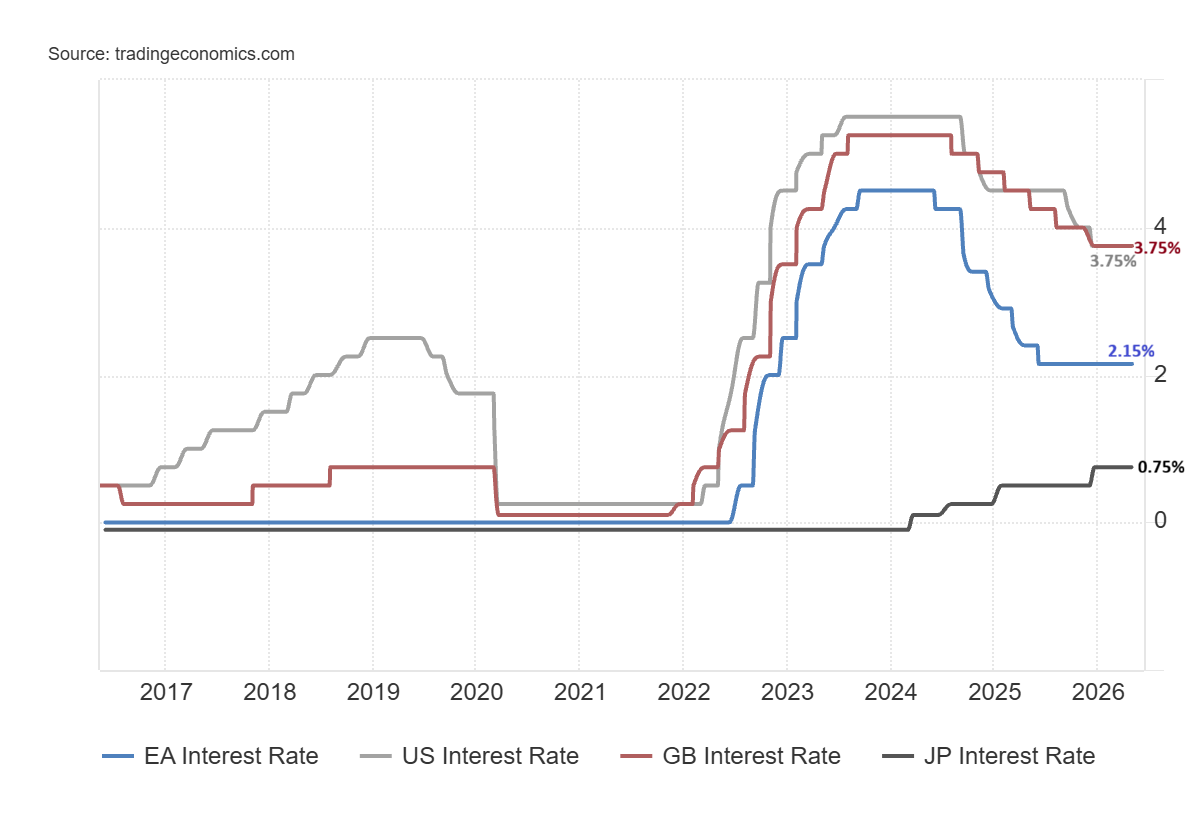
Conversely ECB began to reduce rates in June 2024 since eurozone inflation had slowed and was moving toward its 2% target after a long period of tight policy. In August 2024, the Bank of England began reducing this, following a sharp decline in the inflation rate in the UK and a reduction in price pressures.
In September 2024, the U.S. Federal Reserve began to reduce with greater cut of 50 basis points since inflation had made some inroads and the risks were more about slower growth and a cooler labour market.
This implies that the U.S-Iran war can delay the rate cut cycle since higher oil prices can make inflation sticky. The increased inflation pressures the Fed, ECB and BOE to remain cautious and more pressure may be exerted on Japan to tighten up as the inflation pressures continue to push inflation higher.
Bank of Japan Rate Decision Puts Yen Under Pressure
The Bank of Japan maintained a rate of 0.75%, but the tone became more hawkish. Three dissenters favored an increase in the rate. This is significant since Japan has maintained rates much lower than other leading economies over the years. This policy gap has weakened the yen and increased the price of imported goods.
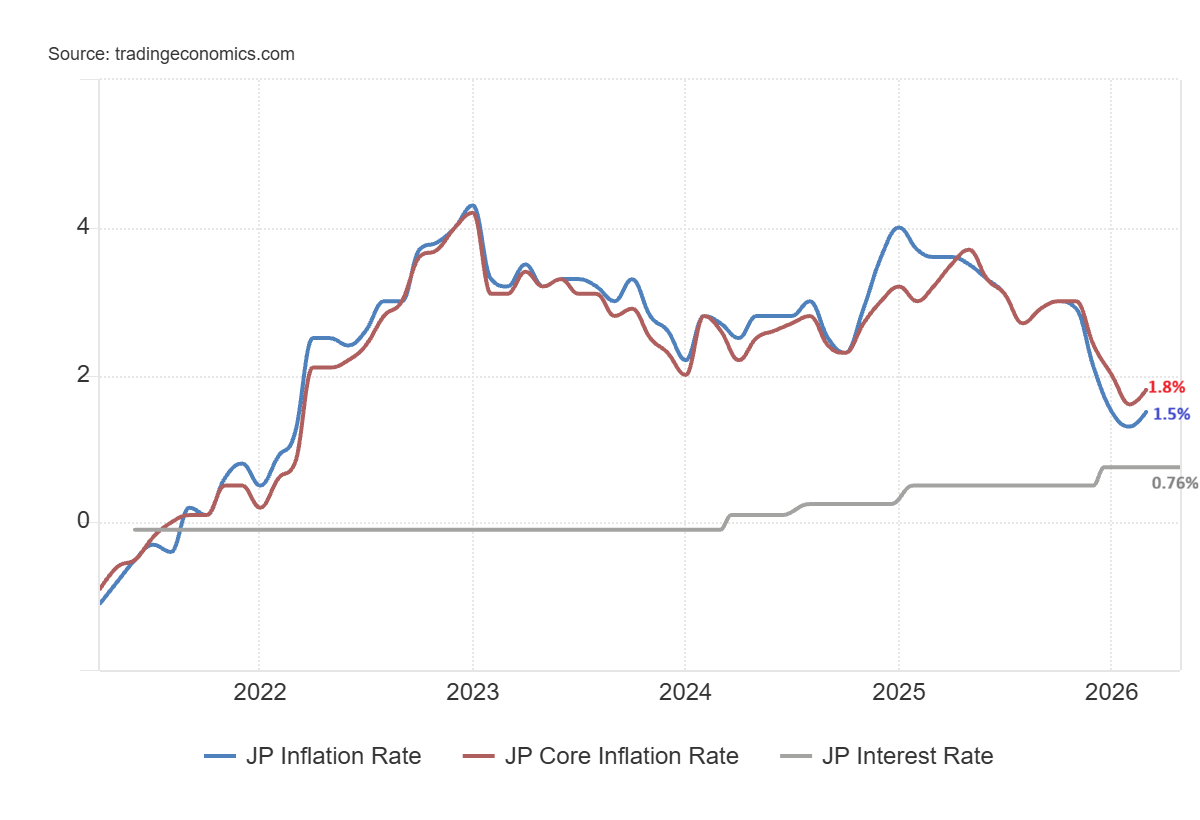
The weakness of the Yen poses a grave challenge to Japan. The weak yen increases the prices of oil, food and raw materials. This can raise inflation even in cases where domestic demand is not very high. The chart below shows that the Japanese inflation rate increased to 1.5% in March. On the other hand, the core inflation increased to 1.8%. The escalating tensions between the US and Iran and the blockade of Iranian ports will fuel further inflation in May and June.
The BOJ must now determine whether it should defend the growth or the price stability. The pressure has been increasing as Japanese government bond yields are highest in decades.
The currency intervention in Japan also demonstrates the severity of the situation. The authority reportedly intervened and purchased the yen when USDJPY hit 160. According to BOJ data, it was possible that the authorities used as much as 5.48 trillion yen, or approximately $35 billion in the process. However, intervention may not be sufficient. The effect can be short-lived without raising the rates or concerted policy intervention.
USDJPY Forecast: Yen Intervention May Slow the Rally Despite Rate Gaps
The weakness of the yen is due to the fact that U.S. rates are significantly higher than Japanese rates. After the intervention, the pair returned to the area around 155. This is an indication that the policy differences between the Fed and the BOJ are wide in the market.
The threat of a second intervention is extremely high in case USDJPY returns to 160. Japan has intervened in holidays in the past, such as Golden Week in 2024. Traders are wary of history. But the intervention can only cause short term pullbacks unless the BOJ proceeds with a rate hike.
The primary trend is now based on two forces. A hike in BOJ would favor the yen and drive USDJPY down. However, a hawkish Fed may limit this move. If U.S. inflation remains strong and the oil prices are high, the USDJPY can continue to move rather than initiate a downward trend.
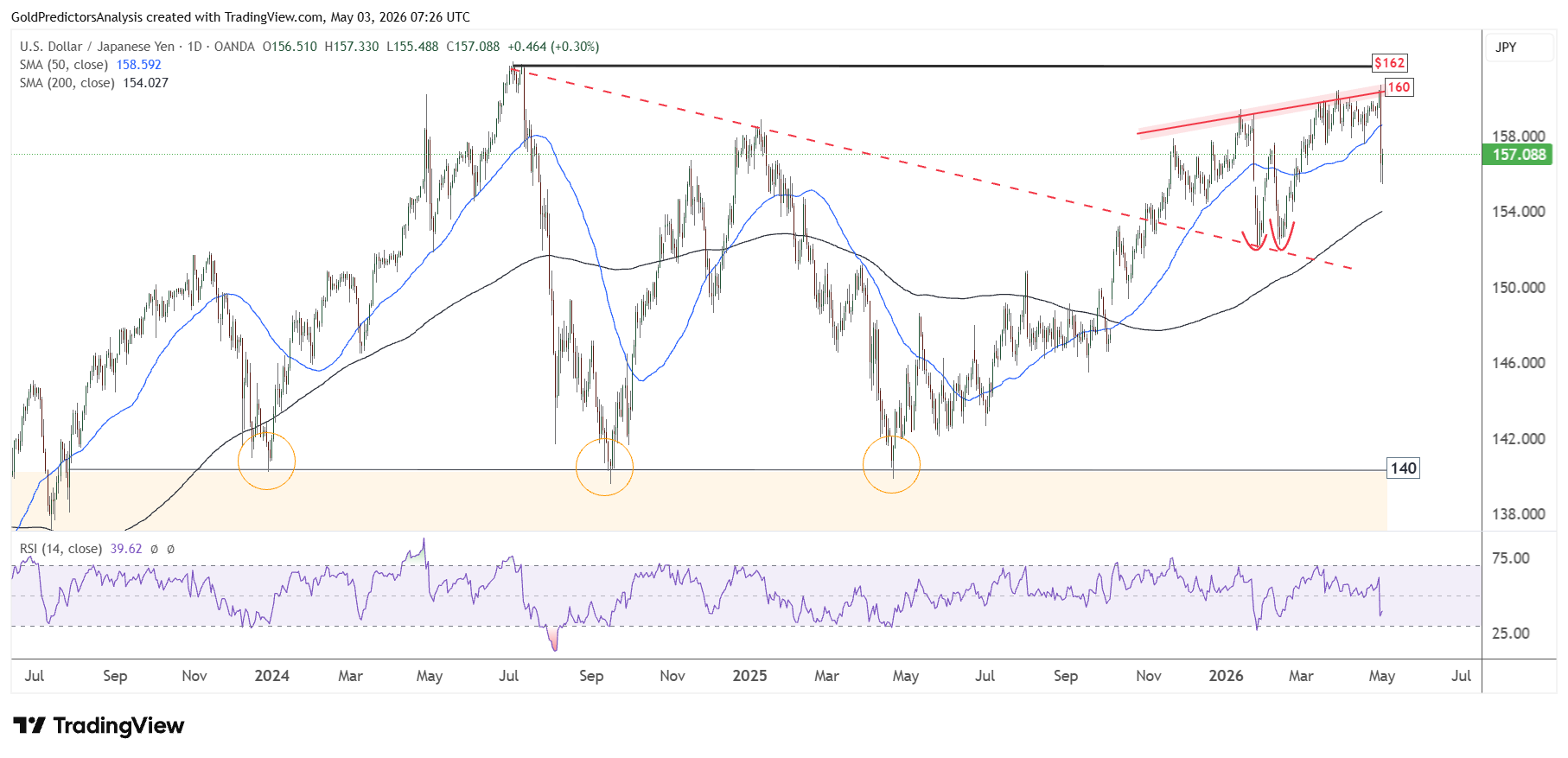
The daily chart for USDJPY shows constructive bullish price action during the past two years. However, the pair rejected the strong resistance at the 160 level due to intervention.
Despite this failure at 160, the pair only dropped to 155.50, which keeps the bullish trend active. As long as the pair remains above the 150 level, the overall price structure will still remain positive.
The pair can drop further during the next week, but the immediate support remains at the 154 level at the 200-day SMA. However, a recovery above 162 will indicate a strong rally in the pair, with further weakness in the Japanese yen.
EURJPY Forecast: ECB and BOJ Signals Create a Two-Sided Trade
EURJPY has become a more balanced pair as both ECB and the BOJ are cautioning of the risks of inflation. Higher energy prices are passed on to higher inflation, and the ECB can raise the rates. This would aid the euro. Nevertheless, the BOJ has a more immediate issue since the yen is becoming weak, which increases the cost of imported energy and food.
This implies that it does not necessarily matter whether the two banks are both hawks. The question is which of the central banks should move more quickly. The BOJ might be under increased pressure as the yen has already depreciated sharply. The Japanese authorities have stepped in to defend it. If markets anticipate an increase in the BOJ rate or further intervention, the yen could gain and curtail the upward trend of EURJPY.
Thus, EURJPY can fluctuate instead of going towards a single direction. The euro can be supported by a hawkish ECB, and the yen can be supported by stronger signals from the BOJ at the same time. Unless oil prices come down, the two economies will be under pressure from inflation. But, Japanese currency issue causes the reaction of the BOJ to be acute which can continue to press EURJPY up to higher levels.
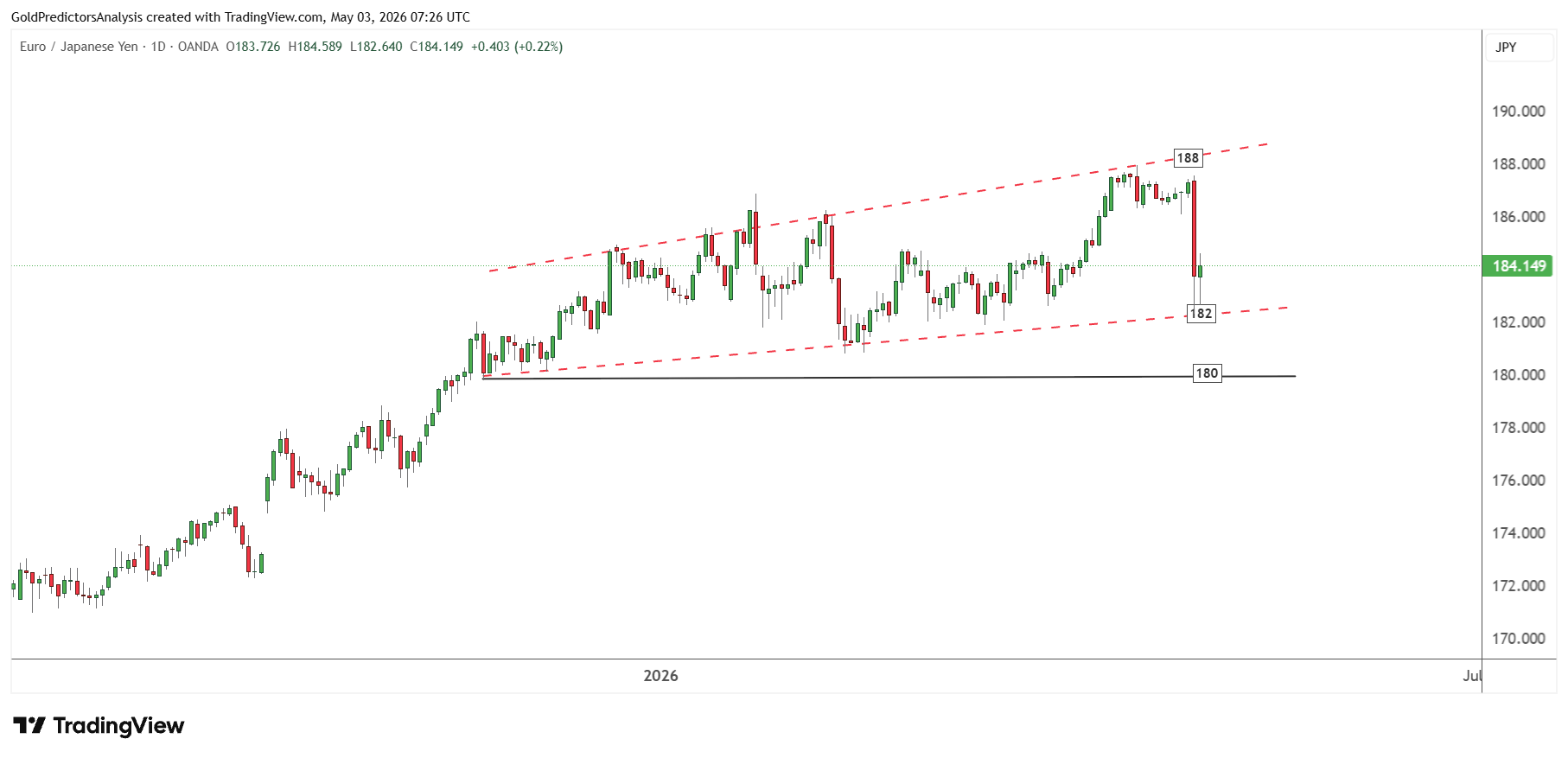
The daily chart for EURJPY shows that the pair is trading within the rising trend lines between 188 and 182. The pair rejected the resistance at 188 after consolidating for the past 4 months. However, the drop last week held 182 as support.
A break below 182 will drop the pair toward 180 . A break below 180 will open the door for further downside toward 176 . To keep the bullish momentum in EURJPY, the pair must break above 188 to initiate a strong surge.
GBPJPY Forecast: Bank of England Pause Keeps Sterling Vulnerable
GBPJPY is also affected by the fluctuations in rate expectations. The Bank of England maintained a steady rate which was anticipated. But sterling has already given up some of the ground gained in four weeks. This implies that traders may not be that optimistic about additional upside.
The pound will be able to maintain itself provided that the UK inflation is sticky. However, the BOE has not been as bellicose in this recent round of policies as the BOJ. In the case that Japan approaches a rate increase, GBPJPY will be at a disadvantage as a result of strong yen.
Nevertheless, the two can be unstable. The pound is mainly sensitive to risk sentiment, inflation and global growth issues. In case of continued increase in oil prices, the markets might be concerned with sluggish consumption and diminished growth. That may put a strain on sterling and help the yen in times of risk-off.
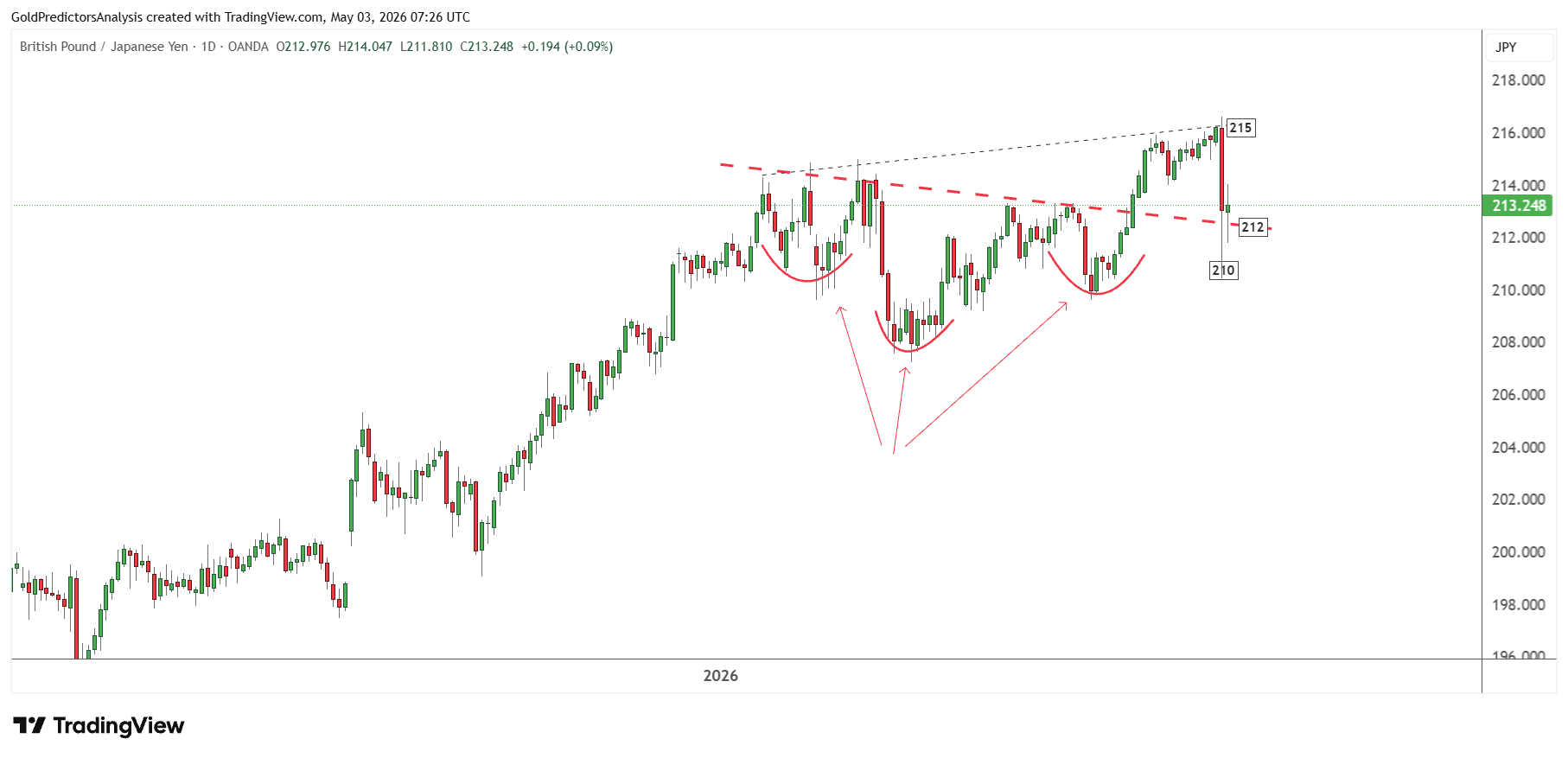
GBP/JPY rejected the resistance of the 215 level and found support at the 210 level. However, the pair failed to break below the 212 level and closed above this level on Friday.
The 212 level is the neckline of the inverted head and shoulders pattern, which keeps the bullish momentum in the pair alive. A daily close below 210 will damage the bullish pattern and indicate further downside in the pair toward 200.
However, a recovery above 215 will keep the bullish momentum alive in the pair and open the door for further upside.
Final Thoughts
In conclusion, the yen pairs now rely on balance between the inflation pressure, central bank caution and Japan’s response to currency weakness. The Fed, ECB and BOE might postpone the reduction of the interest rate as the U.S.-Iran war remains at high price and inflation is sticky. That underpins higher interest rates worldwide and is able to put strain on the yen. But there is more pressing concern for the BOJ at this point. A devalued yen will increase import costs, raise energy and food prices and put pressure on policymakers to act. This makes the next action of Japan crucial for USDJPY, EURJPY and GBPJPY.
The technical picture suggests that the yen’s weakness has not been completely reversed. USDJPY is above 150, EURJPY is above 180 and GBPJPY is above 210. Any more BOJ intervention can lead to severe yen recoveries. Simultaneously, the downside in these pairs can be mitigated by high oil prices and the restraint of Western central banks. It implies that USDJPY, EURJPY and GBPJPY can remain unstable. The next significant movement will depend on expectations of the interest rates and the inflation risks posed by the war.
If you’d like to know more about how interest rates drive currency moves, please visit our educational area.


