
U.S. Dollar Tested New Lows
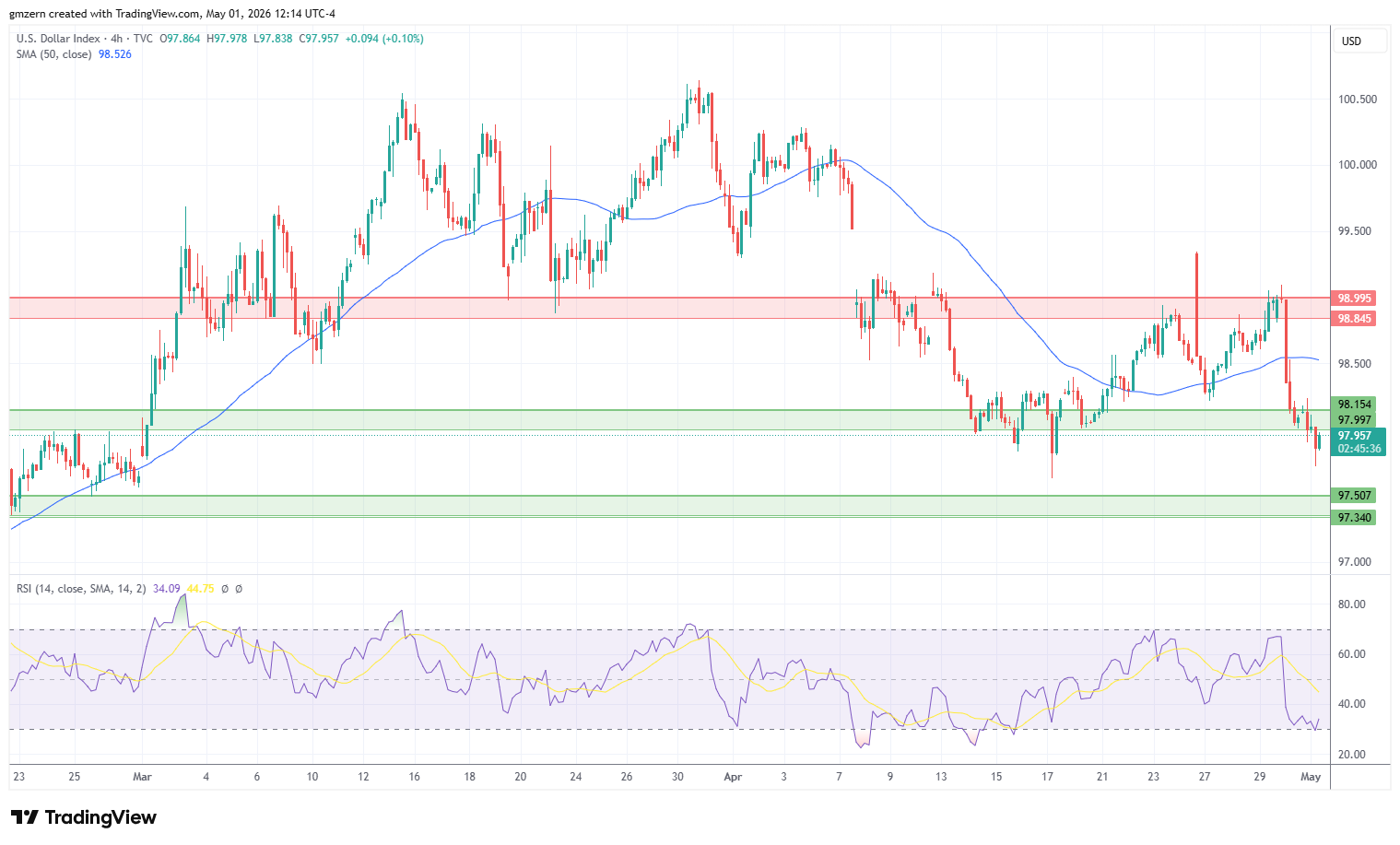
U.S. Dollar Index is losing some ground as traders react to the weaker-than-expected ISM Manufacturing PMI report. The report indicated that ISM Manufacturing PMI remained unchanged at 52.7, compared to analyst forecast of 53. Numbers above 50 show expansion.
ISM Manufacturing Employment decreased from 48.7 in March to 46.4 in April, while analysts expected that it would increase to 49.
Currently, U.S. Dollar Index is trying to settle below the support at 98.00 – 98.15. In case this attempt is successful, U.S. Dollar Index will move towards the next resistance level, which is located in the 97.35 – 97.50 range.

EUR/USD Tests Resistance At 1.1765 – 1.1780
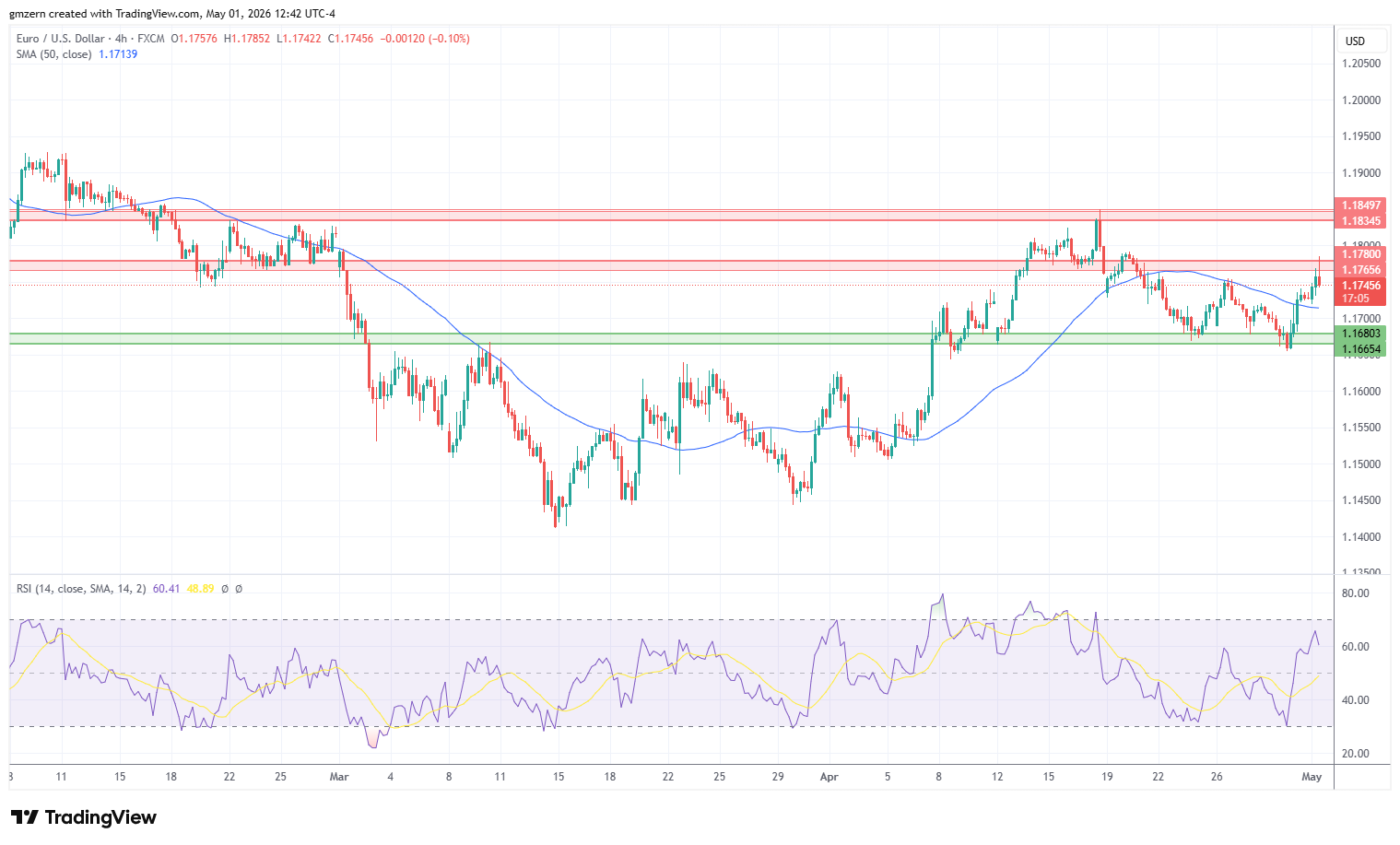
EUR/USD is moving higher as traders stay focused on recent ECB decision and focus on the pullback in the oil markets.
From the technical point of view, EUR/USD attempts to settle above the resistance at 1.1765 – 1.1780. In case EUR/USD manages to settle above 1.1780, it will move towards the next resistance level at 1.1835 – 1.1850. RSI remains in the moderate territory, so there is plenty of room to gain momentum in case the right catalysts emerge.
GBP/USD Gains Ground As Traders Stay Focused On Yesterday’s BoE Decision
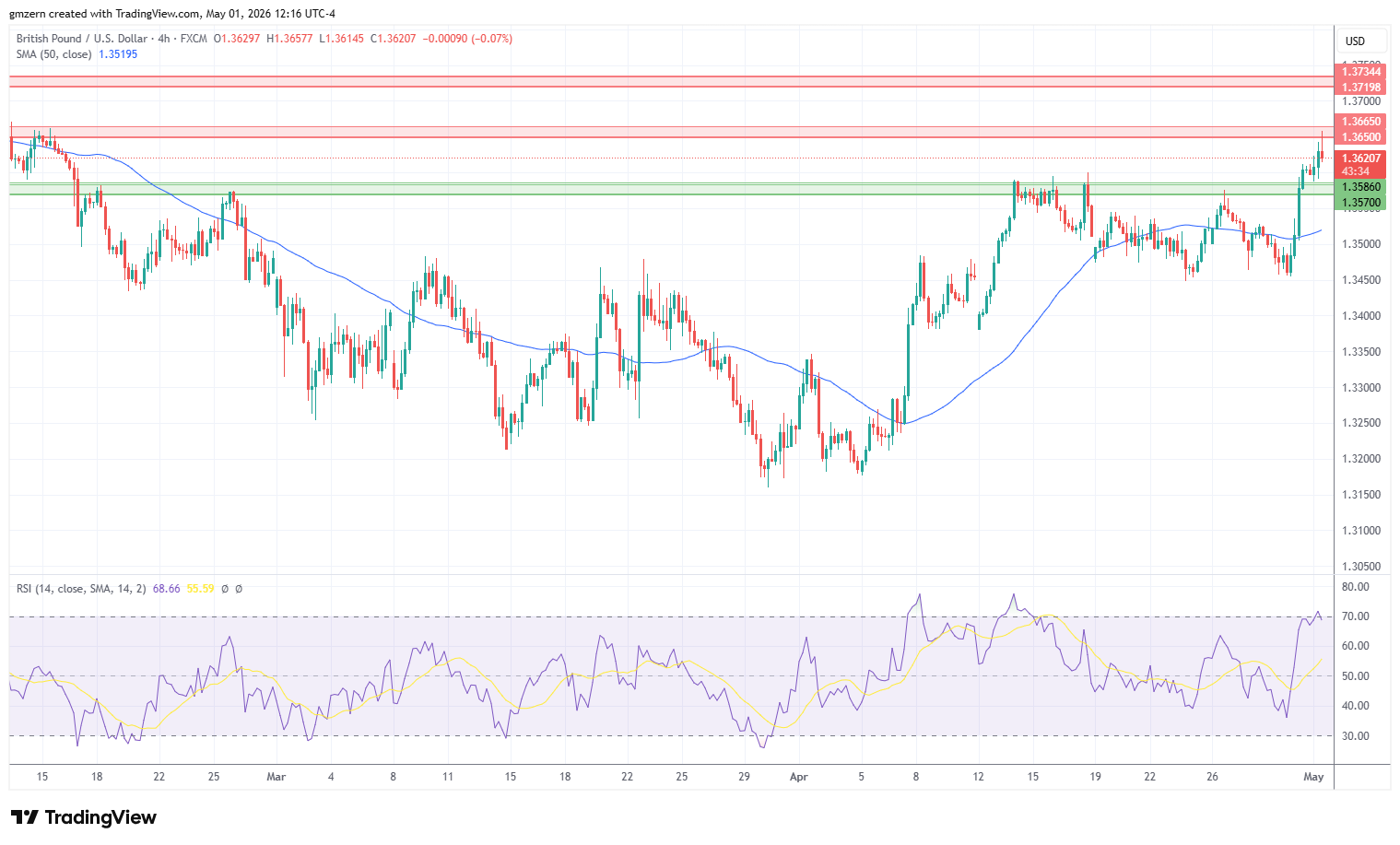
GBP/USD tested new highs as traders reacted to Nationwide Housing Prices report from the UK. The report showed that housing prices increased by +0.4% month-over-month in April, compared to analyst forecast of -0.3%. On a year-over-year basis, housing prices grew by +3%, compared to analyst consensus of +2.2%.
The nearest resistance level for GBP/USD is located in the 1.3650 – 1.3665 range. A successful test of this level will open the way to the test of the next resistance at 1.3720 – 1.3735.
EUR/USD Price Forecast
Every new EUR/USD analysis as it publishes, today's technical signal and key levels, live price — on one page.
See all EUR/USD forecastsUSD/CAD Tests Support At 1.3535 – 1.3550
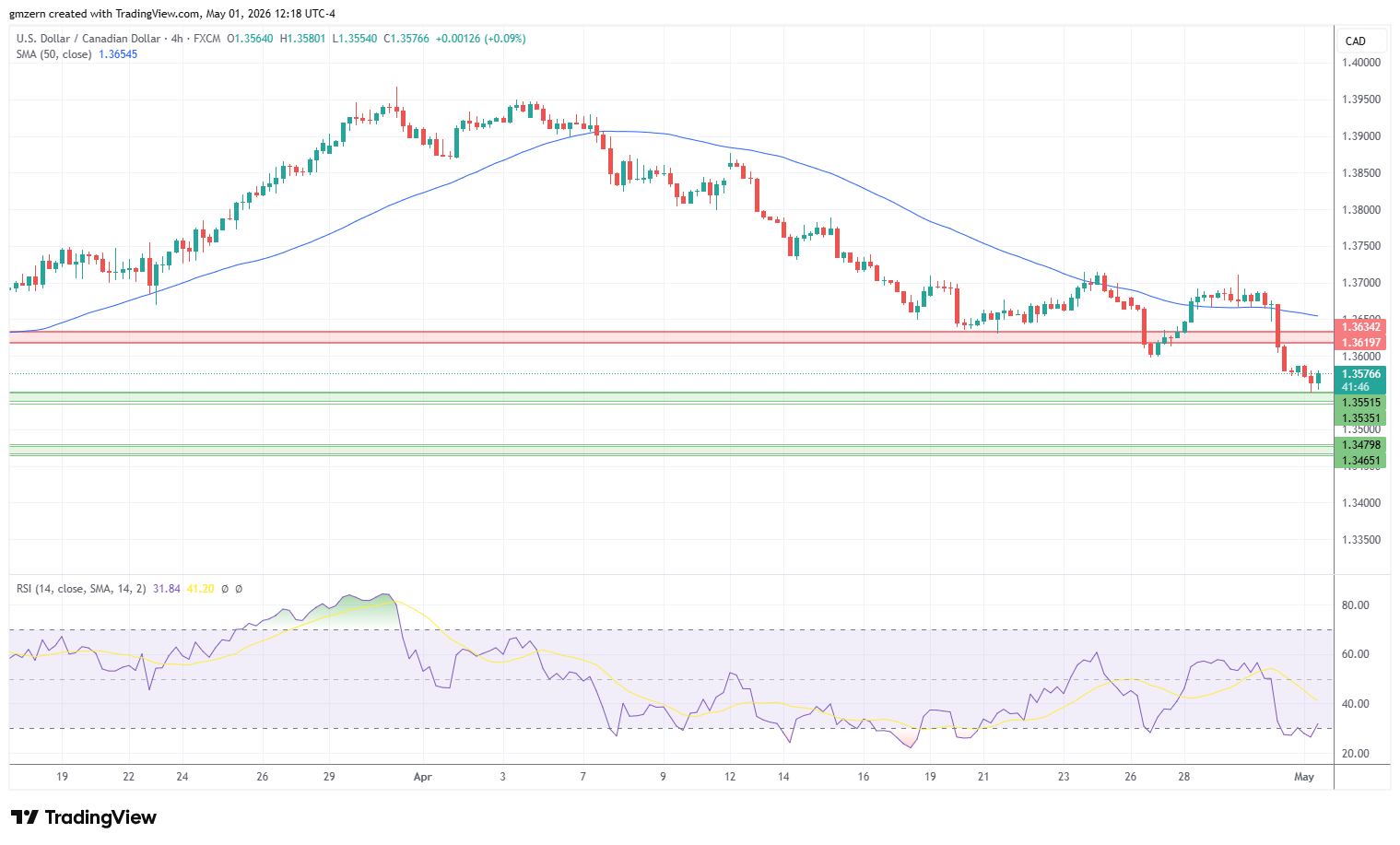
USD/CAD tested new lows as traders focused on rising precious metals markets. Falling oil prices continue to serve as a positive catalyst for the Canadian dollar as traders are worried that high energy prices will hurt demand for commodities. Other commodity-related currencies are moving higher in today’s trading session.
Currently, USD/CAD attempts to settle below the support level at 1.3535 – 1.3550. In case this attempt is successful, USD/CAD will move towards the next support, which is located in the 1.3465 – 1.3480 range.
USD/JPY Jumps Back And Forth After BoJ Intervention
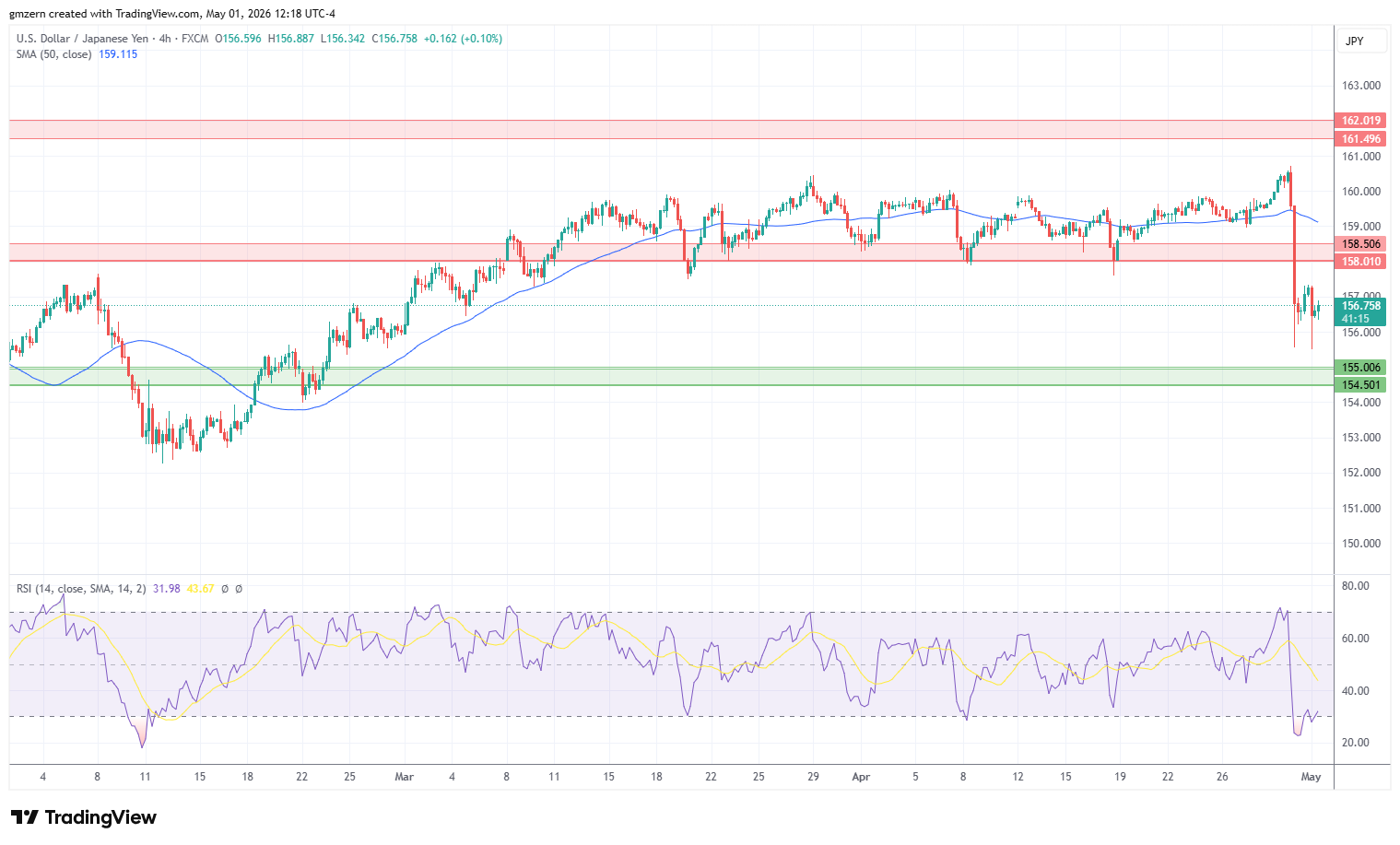
USD/JPY is stabilizing after the strong sell-off, which was caused by BoJ intervention. At this point, the key question is whether Bank of Japan is ready to continue interventions next week.
While yesterday’s price action has surely hurt some speculators, major funds playing against the yen have likely maintained their positions. The difference in yields between U.S. and Japan is a strong bearish catalyst for the yen, so Bank of Japan has more work to do if it wants to break the bullish trend in USD/JPY.
In case USD/JPY settles above the 157.00 level, it will head towards the nearest resistance at 158.00 – 158.50. A move above 158.50 will push USD/JPY towards the 50 MA at 159.11.
On the support side, USD/JPY needs to settle below the strong support level at 154.50 – 155.00 to gain additional downside momentum in the near term.
If you’d like to know more about how to trade forex, please visit our educational area.