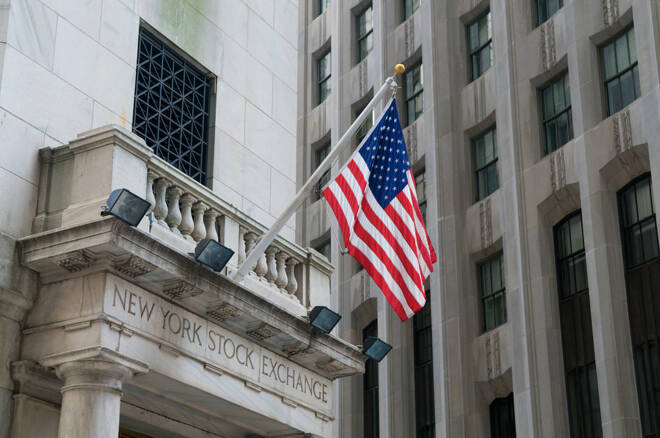
Investor sentiment also remains high with the S&P 500 going up by 0.2% to 4,776.65 and the Nasdaq Composite advancing 0.6% to 15,743.52. With the Dow Jones Industrial Average also climbing by 0.2% to 36,410.63, it is evident that optimism prevails in the broader market.
At the same time the Vanguard Total Bond Market ETF (BND), trading at $84.17 and shown in the green chart above has lost 0.7% of its value. This brings further misery to fixed income holders with more portfolio managers now opting for a 70:30 equity to bond ratio instead of a 60:40 one as was a norm for several years before the advent of the current bull market.
For this matter, yields on treasury bills or the government and corporate bonds in BND’s portfolio move in the opposite direction of their price. Thus, when demand for these securities is strong, their prices go up and their interest rates go down. Conversely, if their rates go up, this signifies that there is less demand for bonds as is the case actually.
Looking in the rear mirror, it’s more than one year now since rates approached the symbolic 1% mark, which had not been reached since March of 2020. Subsequently, on March 21, the 10-year rate, which influences the cost of business and mortgage loans, was at a record 1.73%, before falling to 1.23% at the end of July.
Looking forward, jobless claims for the 4-week Average came out less than previously expected, and the IHS Markit U.S. Manufacturing PMI despite being revised slightly lower (to 57.7 from 57.8), still pointed to a strong expansion in factory activity. Still, with companies recording the “softest rise in new orders for a year” amid supply chain bottlenecks which signifies more cost burdens, against a backdrop of inflationary concerns, there may be some short-term pain for stocks.
Source: cnbc.com
In this case, BND was able to rapidly overcome the March-2020 market crash and has delivered a 14% growth since inception. Looking at the industry, the iShares Core U.S. Aggregate Bond ETF (AGG) has delivered a better performance (16% as shown in the pale blue chart above) though and may also constitute another option for those looking for diversified high-quality holdings as a market hedge against downturns. Still, the iShares fund comes at a slightly higher expense ratio of 0.04% compared with 0.035% for BND. The latter also comes with a higher dividend yield of 1.92% compared to 1.78% for its peer.
Now, unless you are a dividend seeker, these under-2% yields are appropriate for those who think that 10 year rates going up do not necessarily mean a better tomorrow, especially in a richly-valued market. Hence, it may be time to seek refuge in safe assets as made possible by investing in either BND or AGG for the longer term. Ending on a cautionary note, the Federal Reserve tapering (throttling back economic stimulus by slowing the pace of asset purchases) is likely to sustain the rise in real yields, which would be bearish for bond prices throughout 2022.