S&P 500 Hits the Retracement Zone That Decides the Next Move
The S&P 500 is edging higher early Tuesday and trading inside the short-term retracement zone that separates another run at the record from a second leg down. The Dow posted a new record high close on Monday. The Nasdaq outperformed with a gain of more than 1%.
The market is heading into the final sessions of the best quarter in six years for the S&P 500 and the Nasdaq and the strongest quarterly gain for the Dow since 2022. Trading volumes are light in the holiday-shortened week and most of the positioning is about closing the quarter, not opening new risk.
Monday’s session closed with the Dow up about 0.2%, the S&P adding roughly 0.5%, and the Nasdaq leading at more than 1%. Seven of eleven S&P 500 sectors traded lower despite the index finishing positive. That tells you the gains were concentrated in the names that matter most by weight. Real estate fell 1.7% and led the losers.

Best Quarter in Six Years and June Still Ended the Winning Streak
The S&P 500 and Nasdaq are on pace for their strongest quarterly gains in six years. The Dow is delivering its best quarter since 2022. Those numbers are real and they survived a war, an oil shock, a Fed transition, and a June selloff in the biggest tech names on the board. Investors have been buying every pullback this quarter and that pattern has been the defining characteristic of the rally.
June is going to break the S&P and Nasdaq’s two-month winning streaks despite the quarterly strength. The Dow held its monthly gains and is heading for a third consecutive positive month. The divergence between the quarter and the final month of it tells the story of what happened in tech. The sector that powered the advance all year gave back ground in the last four weeks and the rest of the market held steady enough to keep the quarterly numbers intact.
Tech Needs Earnings Season to Find Its Next Catalyst
Semiconductor and large-cap technology stocks cooled in June after leading the market for most of 2026. Last week’s selling pressure in the chip sector was the sharpest since April. The pullback has left the Nasdaq trailing for the month even while leading for the quarter.
Earnings season starting in July is the next event that can reignite the tech bid. The market has been rewarding AI spending for two years. June was the first month where it started questioning the returns on that spending. The reports coming in July will tell traders whether the companies doing the spending can show revenue and margins that justify the capital commitments. The stocks that deliver will recover. The ones that cannot will face the same selling pressure that defined the last two weeks.
NASDAQ 100 Price Forecast
Every new NASDAQ 100 analysis as it publishes, today's technical signal and key levels, live price — on one page.
See all NASDAQ 100 forecastsWarsh Speaks Wednesday and Rate Expectations Have Already Shifted
Fed Chair Kevin Warsh appears at an economic conference in Portugal on Wednesday. Traders are also reviewing Tuesday’s job openings and consumer confidence data. The calendar is light but the rate picture has changed substantially over the past several months.
LSEG data shows traders now pricing in at least one Fed rate hike by the end of 2026. That is a complete reversal from earlier expectations that the Fed would be cutting. Warsh’s June press conference started that repricing and Wednesday’s speech determines whether it continues. Every word carries extra weight because Warsh has eliminated traditional forward guidance. The market has fewer signals and reacts harder to the ones it gets.
Stocks in the News
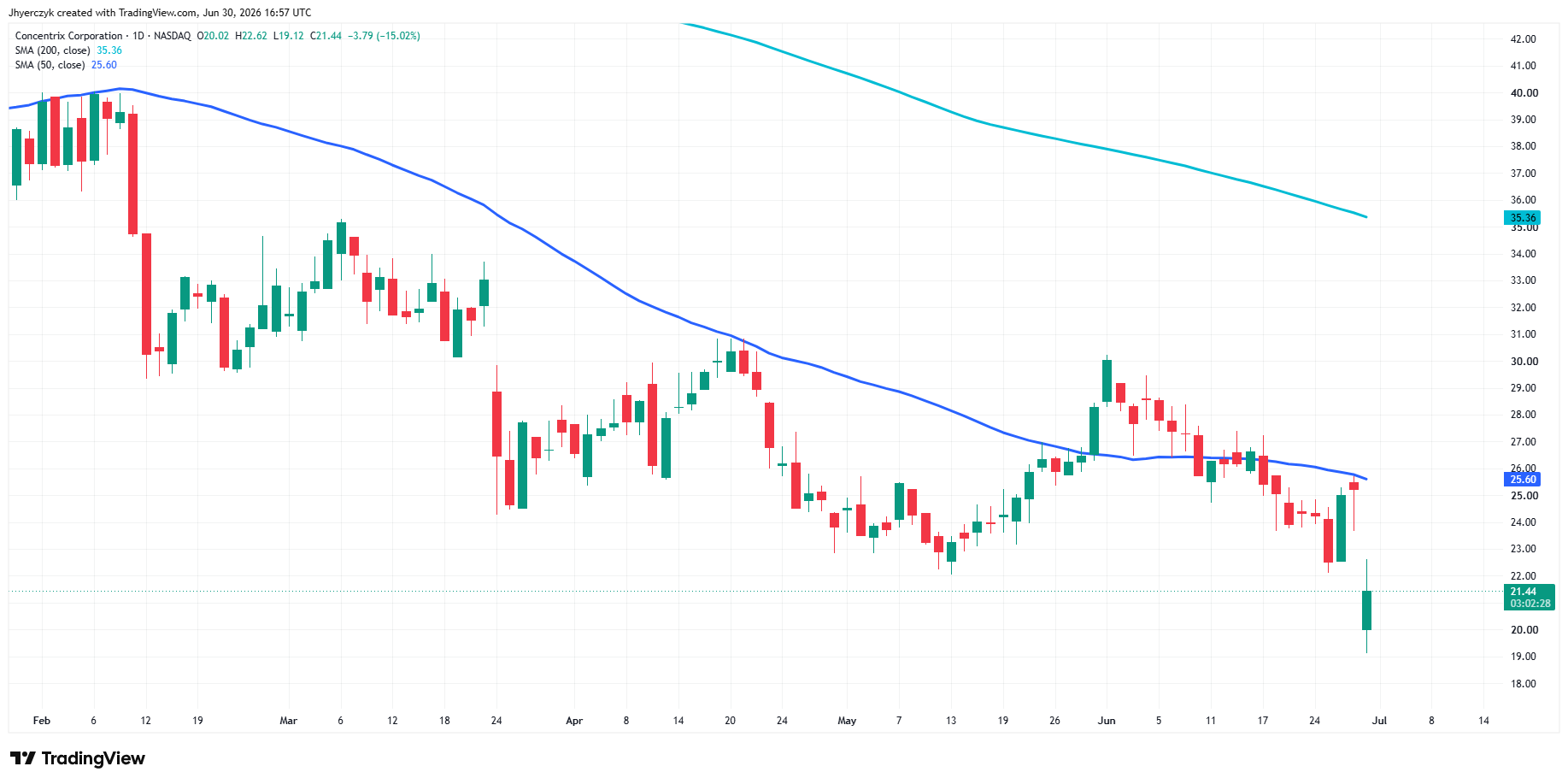
Concentrix plunged more than 20% after cutting its full-year revenue and adjusted profit forecasts. The stock hit a record low. When a company lowers guidance going into earnings season, the market does not give it the benefit of the doubt.
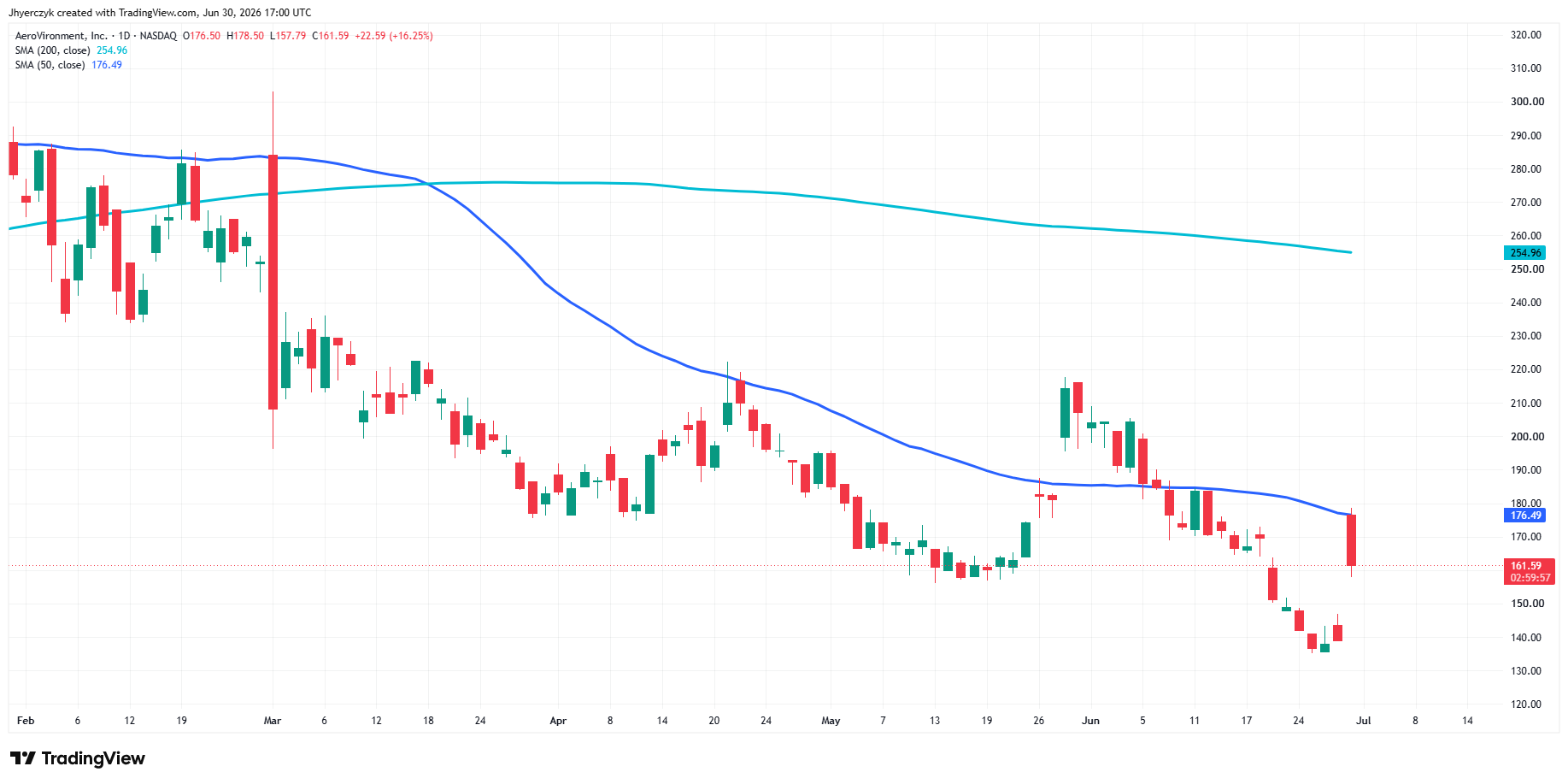
AeroVironment surged 22% on a sharp increase in quarterly revenue. Defense names continue to attract buying with the U.S.-Iran conflict unresolved and military spending expectations elevated.
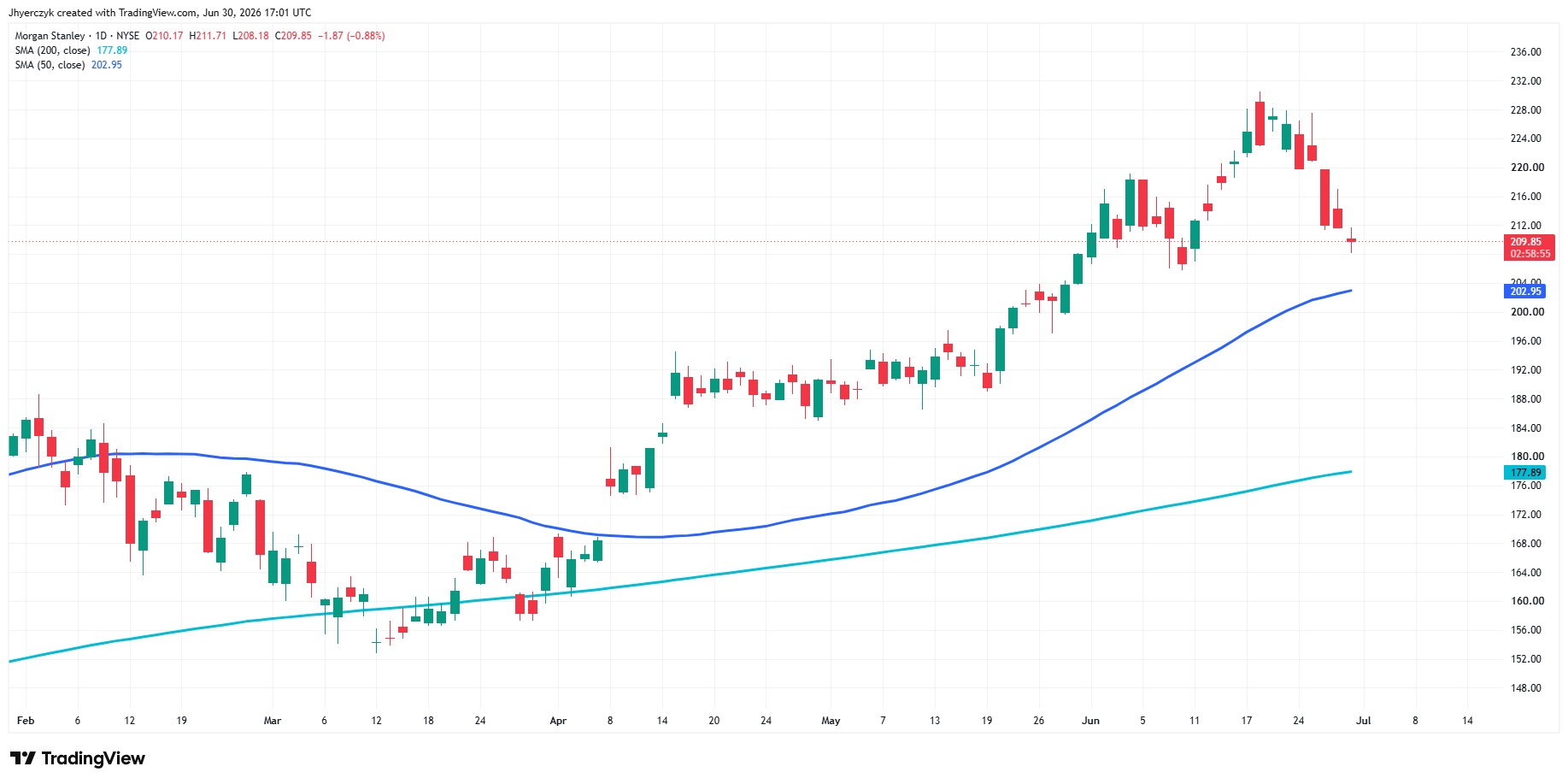
Morgan Stanley slipped about 1% after Oppenheimer downgraded several major Wall Street investment banks and recommended shifting capital toward alternative asset managers. The call reflects a view that traditional banking revenue models are under pressure relative to private capital.
Daily S&P 500 Index (SPX) Technical Analysis
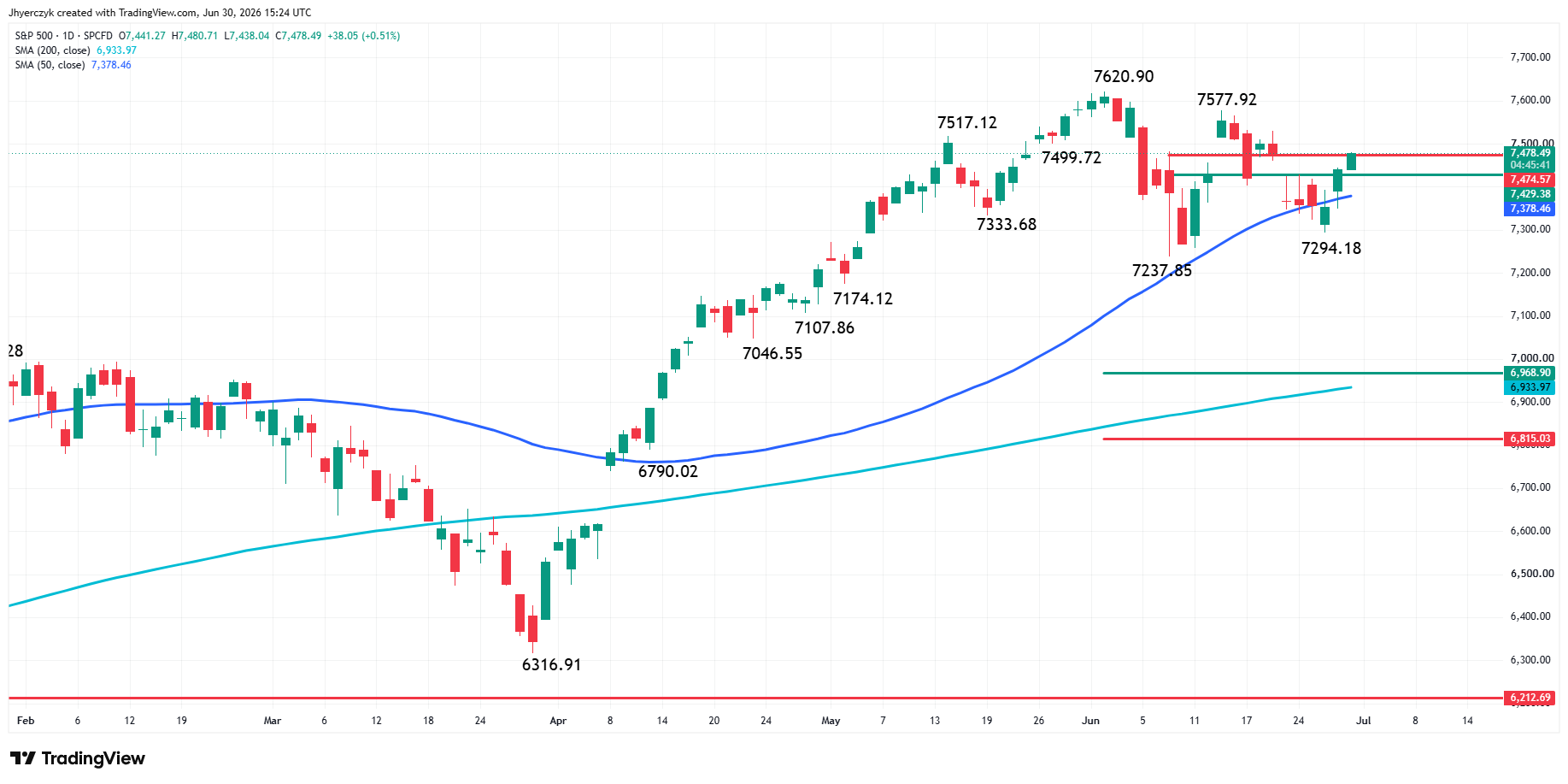
The S&P 500 Index is edging higher on Tuesday. After overtaking the 50-day moving average at 7378.33 on Monday, the benchmark index is now trading inside a short-term retracement zone that should determine whether the market challenges the record high, or begins another leg down.
The short-term range is 7620.90 to 7237.85. The index is currently testing its retracement zone at 7429.38 to 7474.57. If this area stops the current two-day rally then another lower top could form, setting up the market for a breakdown under 7294.18 then 7237.85.
Taking out 7237.85 could trigger an acceleration to the downside with the long-term retracement zone at 6968.90 to 6815.03 the next major target along with the 200-day moving average at 6933.95.
A sustained move over 7477.39 will signal the presence of buyers. This could trigger a breakout to the upside with the first target the secondary lower top at 7577.92 and the all-time high at 7620.90.
Trader reaction to 7474.57 sets the tone into the close.
Daily Dow Jones Industrial Average (DJI) Technical Analysis
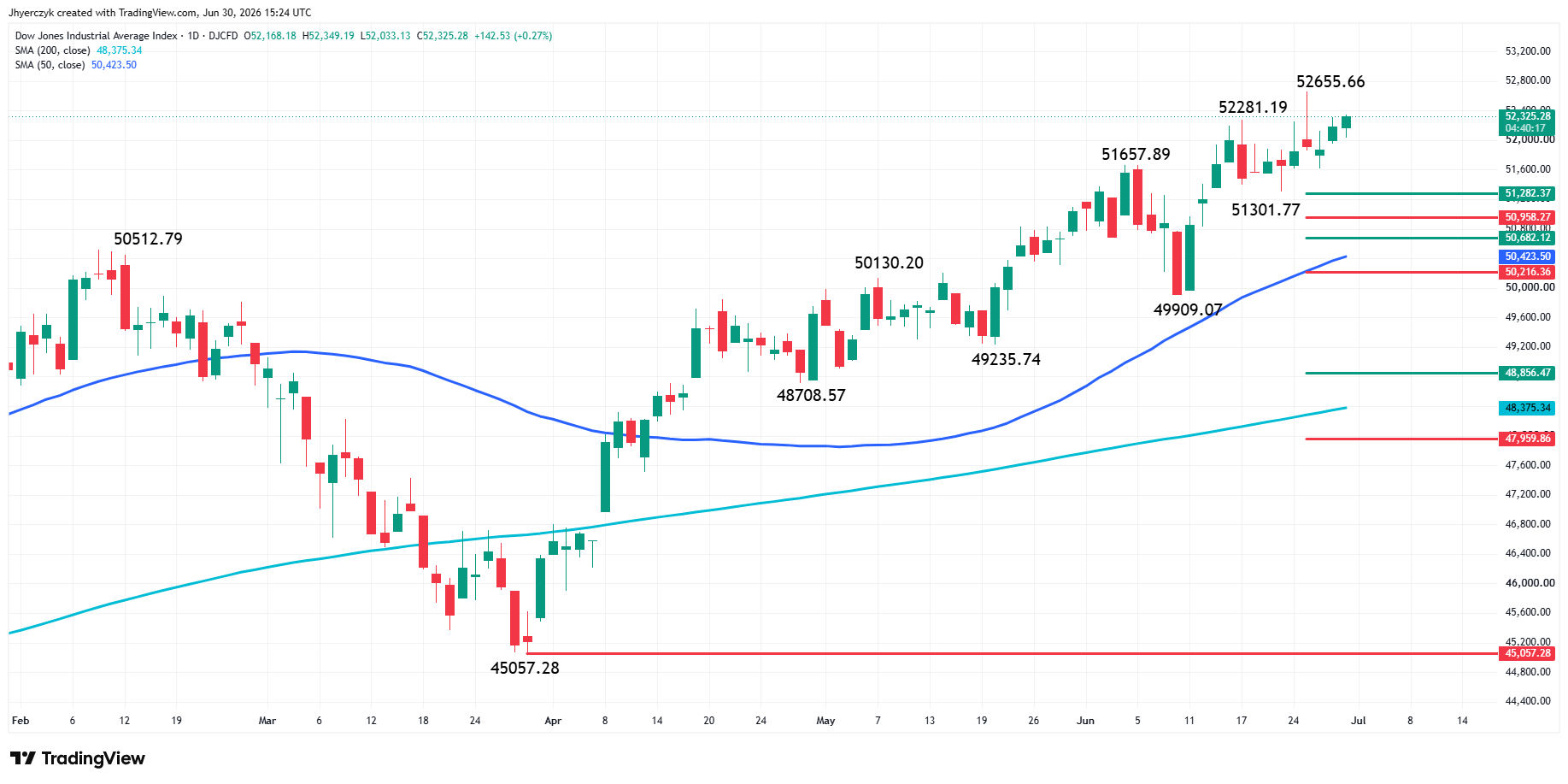
The Dow Jones Industrial Average is still in a strong uptrend despite not posting a record high in four sessions. On Monday, it closed at a new record high.
A trade through 52655.66 will reaffirm the uptrend. The minor trend will change to down on a move through 51301.77. This could shift momentum to the downside, but retracement levels at 51282.37, 50958.27 and 50682.12 could slow the selling pressure.
The 50-day moving average at 50423.75 is the first major support. This is followed by a Fibonacci level at 50216.36 and the main bottom at 49909.07.
Unless there is a dramatic closing price reversal top, the Dow appears to be well-supported at current levels.
What to Watch
The S&P 500 is inside the retracement zone that determines the second half’s starting posture. A push through the upper boundary opens the path back to the record. A rejection at this level forms another lower top and the downside targets come back into play. The Dow is at a record and well-supported. The divergence between the two indexes reflects the tech question that earnings season has to answer.
Warsh in Portugal Wednesday is the next macro catalyst. The rate hike repricing that started at his June meeting has room to extend if his tone stays firm. Job openings and consumer confidence Tuesday give the market a preview of the demand picture before Thursday’s payrolls. The quarter closes with the strongest gains in years and the question going into July is whether the companies that drove those gains can prove they deserve the valuations the rally gave them.
More Information in our Economic Calendar.