
US stock futures edged higher in early trading on Friday, January 16, consolidating their previous day’s gains. Crucially, US equity futures snapped their three-day losing streak, signaling improved sentiment.
Reports of the US lowering tariffs on Taiwanese goods and easing geopolitical tensions drove demand for risk assets. Optimism toward upcoming tech earnings added to the positive sentiment after TSMC announced record quarterly profits and signaled a strong outlook.
Improved risk appetite, driven by optimism about AI-related earnings, the expectation of multiple Fed rate cuts in 2026, and strong US economic data, supports a bullish medium-term outlook for US stock futures.
Below, I’ll outline the key market drivers, the medium-term outlook, and the key technical levels traders should watch.

US Cuts Tariffs on Taiwanese Goods
The US cut tariffs on Taiwanese goods. CN Wire reported:
“The US and Taiwan agreed to a trade deal lowering tariffs on Taiwanese goods from 20% to 15% and committing $500 billion to American operations, including $250 billion in direct semiconductor, energy, and AI investment and $250 billion in credit guarantees.”
The Taiwan TAIEX Index rallied 1.30% in morning trading in response to the trade deal.
Dow Jones Price Forecast
Every new Dow Jones analysis as it publishes, today's technical signal and key levels, live price — on one page.
See all Dow Jones forecastsUS Economic Data and the Fed in Focus
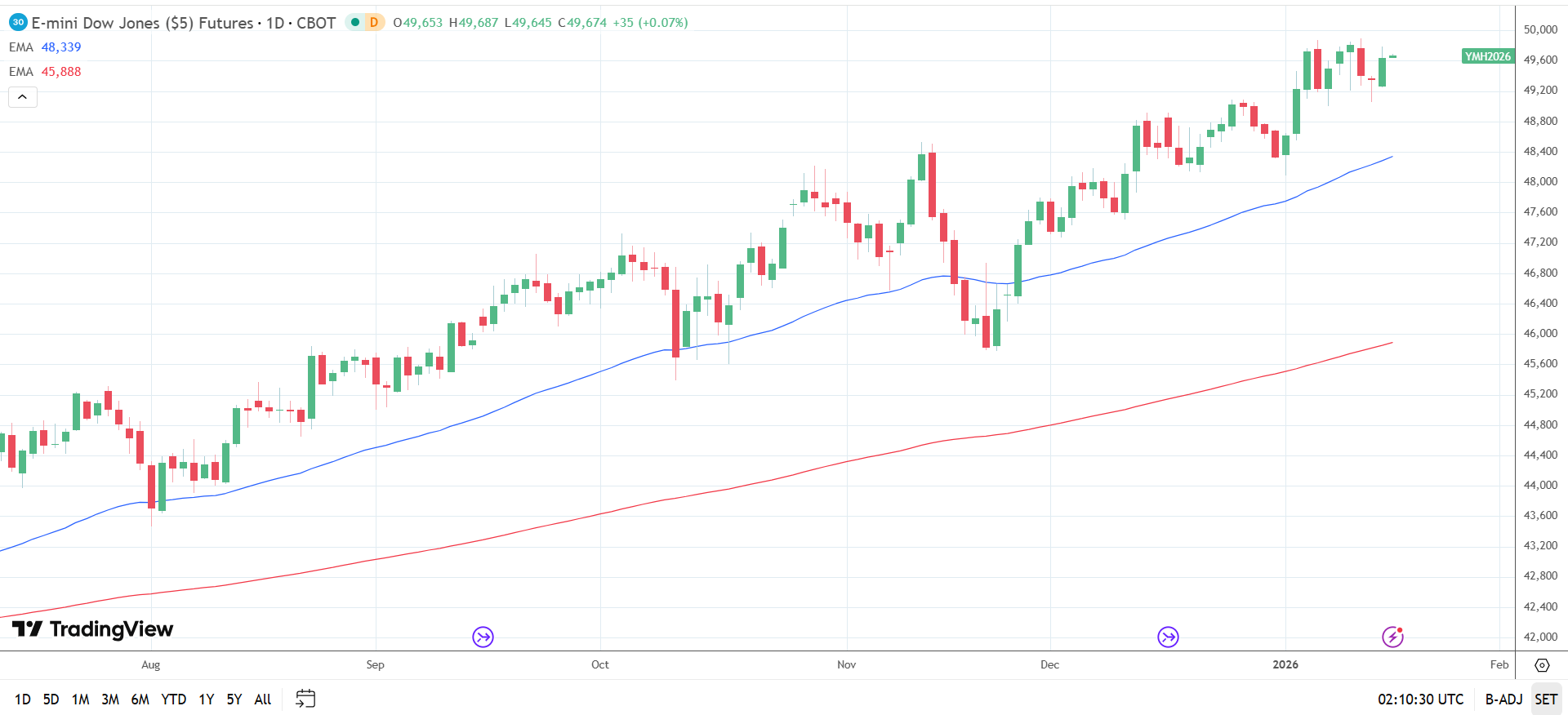
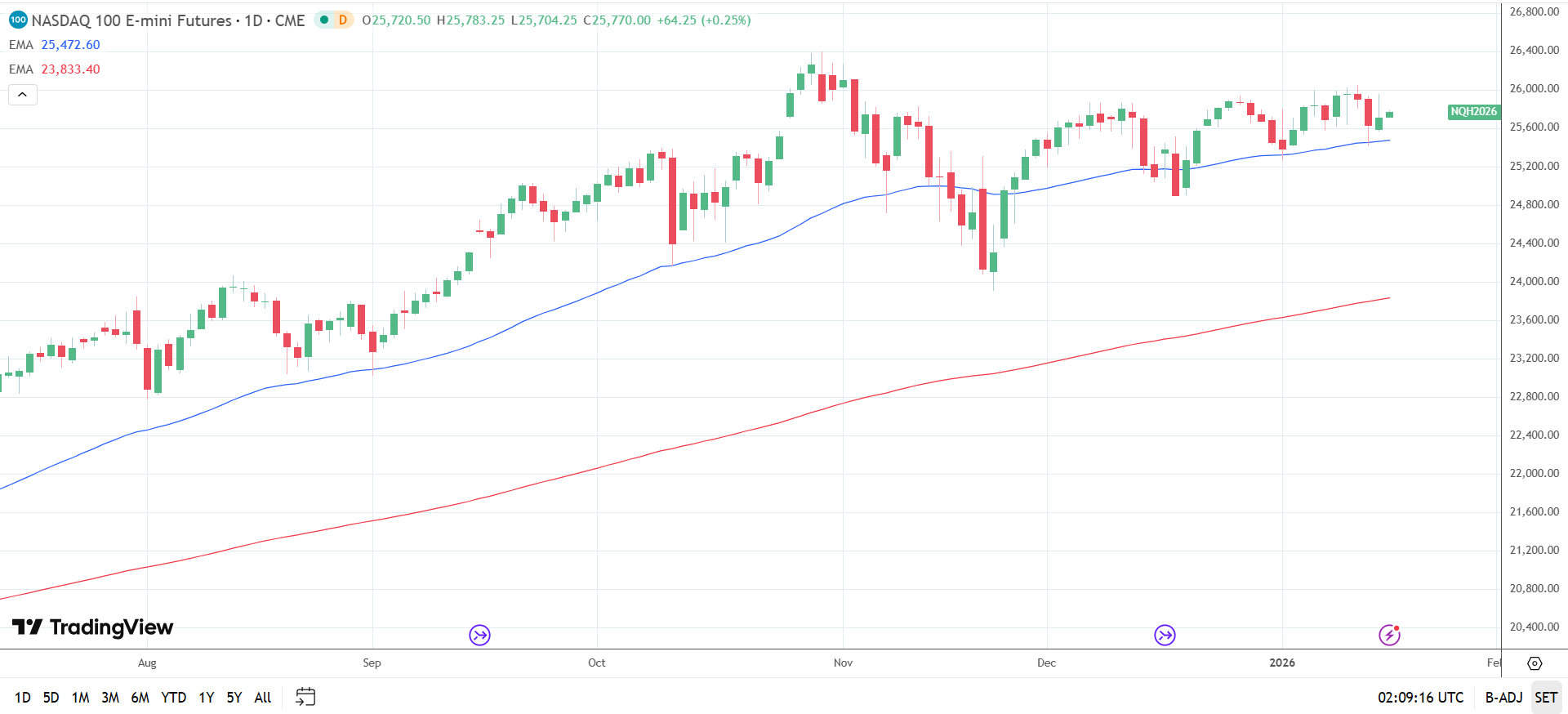
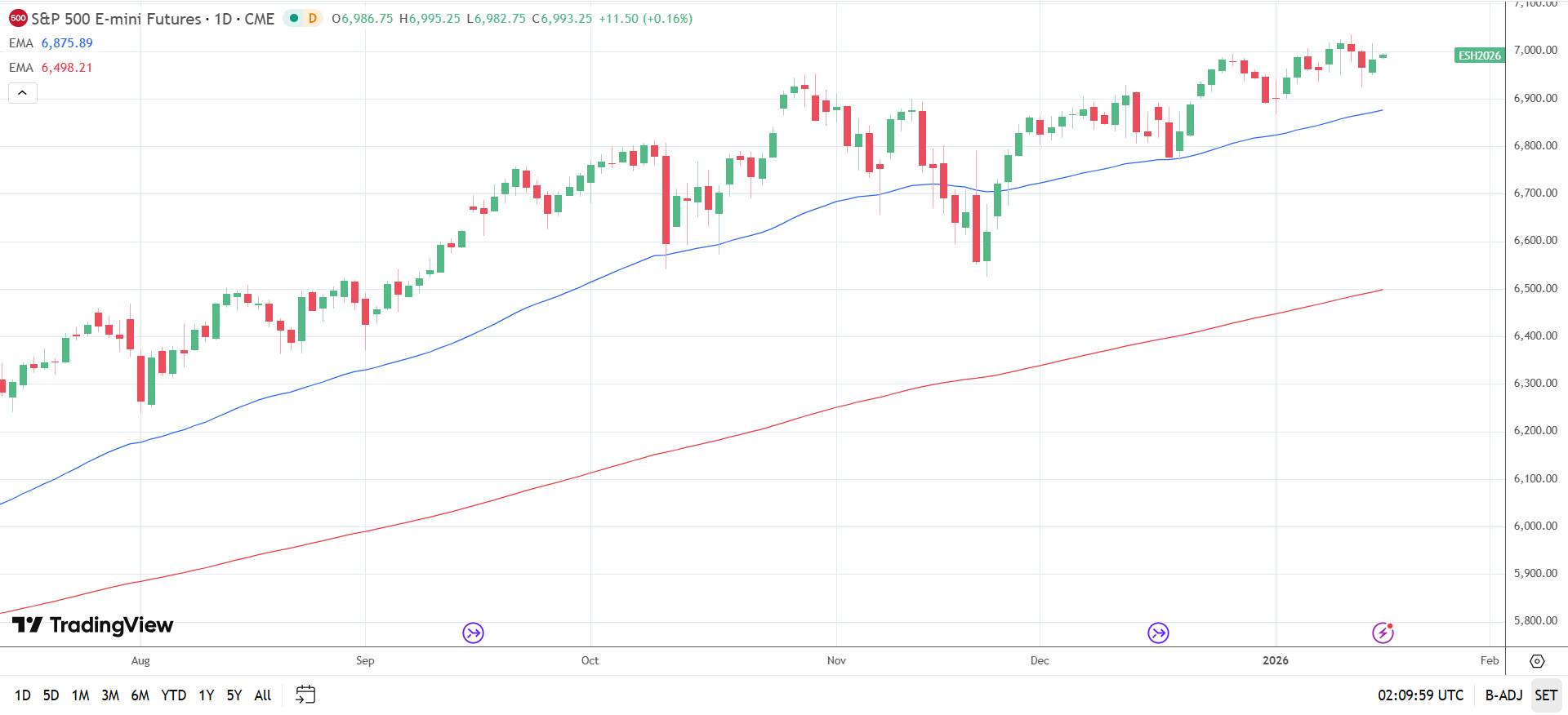
US futures advanced during the Asian morning session on January 16. The Dow Jones E-mini and the Nasdaq 100 E-mini gained 35 points and 64 points, respectively, while the S&P 500 E-mini climbed 12 points.
Later Friday, US industrial production and Fed speakers will influence buying demand for risk assets. Economists forecast industrial production to rise 2.7% year-on-year in December after increasing 2.5% in November. Robust industrial sector activity would signal a strong US economy, aligning with an upswing in service sector activity. For context, the ISM Services PMI increased from 52.6 in November to 54.4 in December.
Beyond the data, traders should closely monitor Fed speakers for views on the economy, inflation, and monetary policy. Expectations for a March Fed rate cut have fallen sharply, following the Services PMI and jobs report. According to the CME FedWatch Tool, the probability of a March cut dropped from 42.5% on January 8 to 20.6% on January 15. Meanwhile, market bets on a June rate cut remain alive. The CME FedWatch Tool gives a 62.5% chance of a June cut.
The current dynamics, including market optimism over AI-related corporate earnings and market bets on an H1 2026 Fed rate cut, affirm a cautiously bullish near-term and positive medium-term price outlook. However, corporate earnings and outlooks are likely to be key for the shorter-term projection.
Key Technical Levels for Dow Jones, Nasdaq 100, and S&P 500
Following the morning gains, the Dow Jones E-mini, the Nasdaq 100 E-mini, and the S&P 500 E-mini traded comfortably above their 50-day and 200-day EMAs. The EMAs signaled bullish momentum, aligning with positive fundamentals.
Near-term trends will depend on corporate earnings, US economic data, and Fed commentary. Key levels to monitor include:
Dow Jones
- Resistance: the January 13 record high of 49,901, and then 50,000.
- Support: 49,000 followed by the 50-day EMA (48,339).
Nasdaq 100
- Resistance: 26,000 followed by the October 30 record high of 26,399.
- Support: the 50-day EMA (25,473) and then 24,500.
S&P 500
- Resistance: the January 13 high of 7,036, followed by 7,500.
- Support: the 50-day EMA (6,876) and then 6,500.
US Stock Futures Outlook: Fed Expectations and Earnings Keep Bias Positive
In my opinion, the short-term price outlook remains cautiously bullish. Optimism about upcoming earnings and expectations of an H1 2026 Fed rate cut support the positive outlook. These fundamentals align with constructive technicals.
Additionally, increased speculation about an incoming Fed Chair favoring lower interest rates in an elevated inflation backdrop reinforces the constructive medium-term bias.
However, several events would derail the bullish medium-term outlook, including:
- The Bank of Japan announces a hawkish neutral interest rate (potentially 1.5%-2.5%). A narrower US-Japan rate differential may trigger a yen carry trade unwind, unraveling the short-term outlook.
- Strong US economic indicators and hawkish Fed rhetoric would reduce bets on multiple Fed rate cuts.
- Corporate earnings and outlooks disappoint.
- Geopolitical tensions escalate.
- If the US Supreme Court rules tariffs illegal, it will likely raise concerns over US debt.
Conclusion: Cautiously Bullish Bias
In summary, a robust US economy, a dovish Fed rate path, earnings expectations, and a less hawkish BoJ reaffirm a cautiously positive short-term and a bullish medium-term outlook for US stock futures.
Nevertheless, traders should monitor 10-year JGB yields, USD/JPY trends, and the Nikkei 225, given the short-term effects of yen carry trades on market liquidity. Yen intervention threats and hawkish BoJ signals may fuel concerns about a yen carry trade unwind, weighing on US risk assets.
Key levels to watch include a USD/JPY drop below 150, 10-year JGB yields climbing to new highs, and a sharp Nikkei sell-off. These would be early signs of an unwind, weighing on buyer appetite for US risk assets.
Despite speculation about BoJ rate hikes, US stock futures are likely to visit new highs, with earnings and the Fed the key drivers.
Follow our live coverage and consult the economic calendar for real-time market updates.