US stock futures edged lower in early trading on Monday, January 26, as USD/JPY slides below key support levels amid increased warnings of intervention.
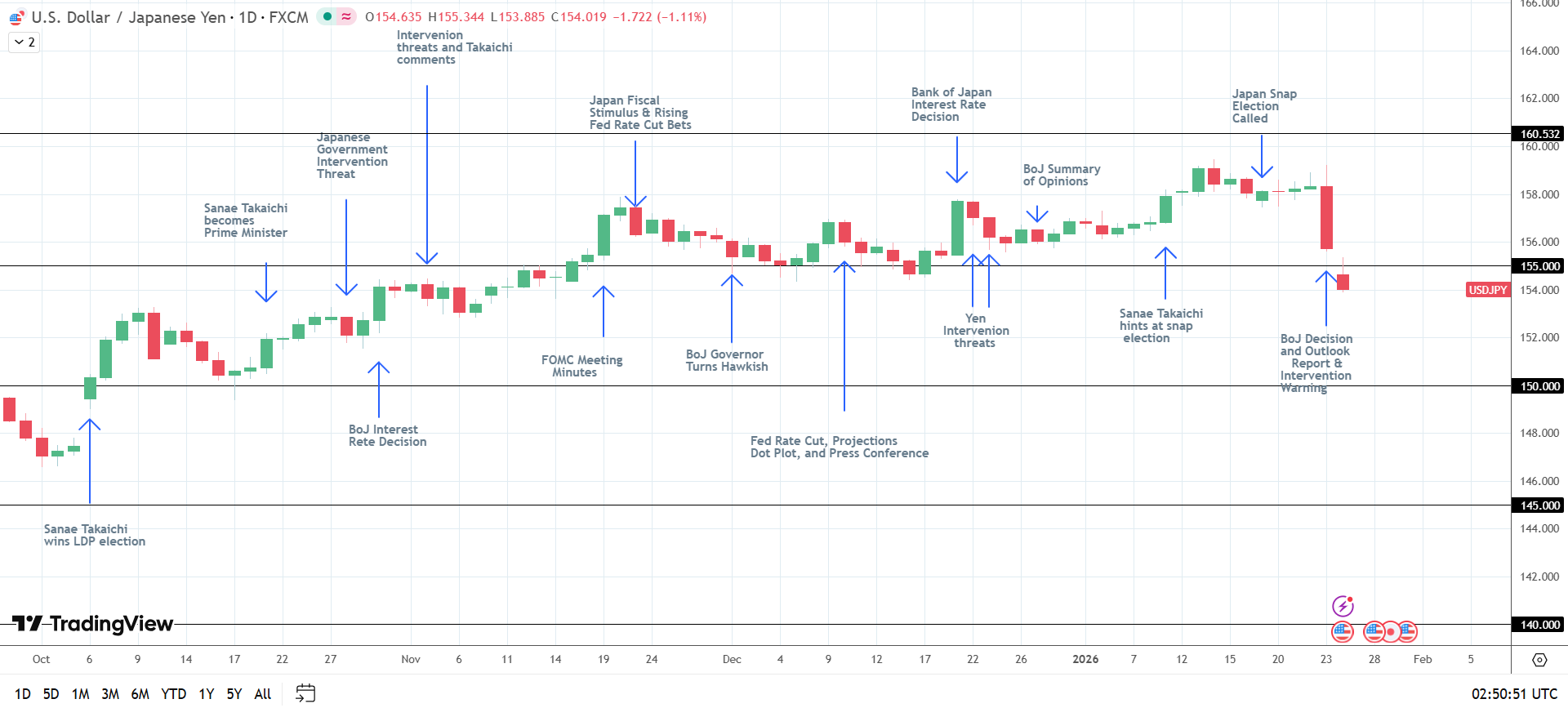
Last week, Japanese Prime Minister Sanae Takaichi warned of yen interventions in the forex market, coinciding with hawkish Bank of Japan forecasts, leaving USD/JPY down 1.64% on Friday, January 23. The USD/JPY pair extended its losses on January 26, dropping below the crucial 155 support level to a low of 153.885, its lowest level since mid-November. The stronger yen left the Nikkei 225 down 1.7% in morning trading, weighing on risk sentiment.
Meanwhile, fears of another US government shutdown and a potential US-Canada trade war added to the gloomy mood.
Despite the morning losses, bets on a Fed rate cut in H1 2026, a resilient US economy, and optimism toward Q4 earnings continue to support a bullish medium-term outlook for US stock futures.
Below, I’ll outline the key market drivers, the medium-term outlook, and the technical levels traders should watch.

Speculation About US Intervention to Bolster Yen Spooks Markets
Speculation about yen interventions in the forex markets intensified on January 26, cooling yen carry trades into risk assets. Over the weekend, reports circulated of the US Federal Reserve considering yen intervention in the forex markets.
The Japanese government warned of a potential intervention on Friday, coinciding with hawkish BoJ GDP and inflation forecasts, sending USD/JPY to key support. Crucially, sharp USD/JPY movements increase the risk of an unwind in yen carry trades, weighing on demand for risk assets.
In 2024, the BoJ raised interest rates and cut Japanese Government Bond (JGB) purchases, leading to an unwind in yen carry trades. Notably, the Nasdaq 100 tumbled 11.7% during a three-day sell-off. USD/JPY dropped from 153.889 to 141.684 over the same period, underscoring market sensitivity to USD/JPY trends.
A US Fed yen intervention may send USD/JPY sharply lower, given the rarity of US involvement in the markets.
Dow Jones Price Forecast
Every new Dow Jones analysis as it publishes, today's technical signal and key levels, live price — on one page.
See all Dow Jones forecasts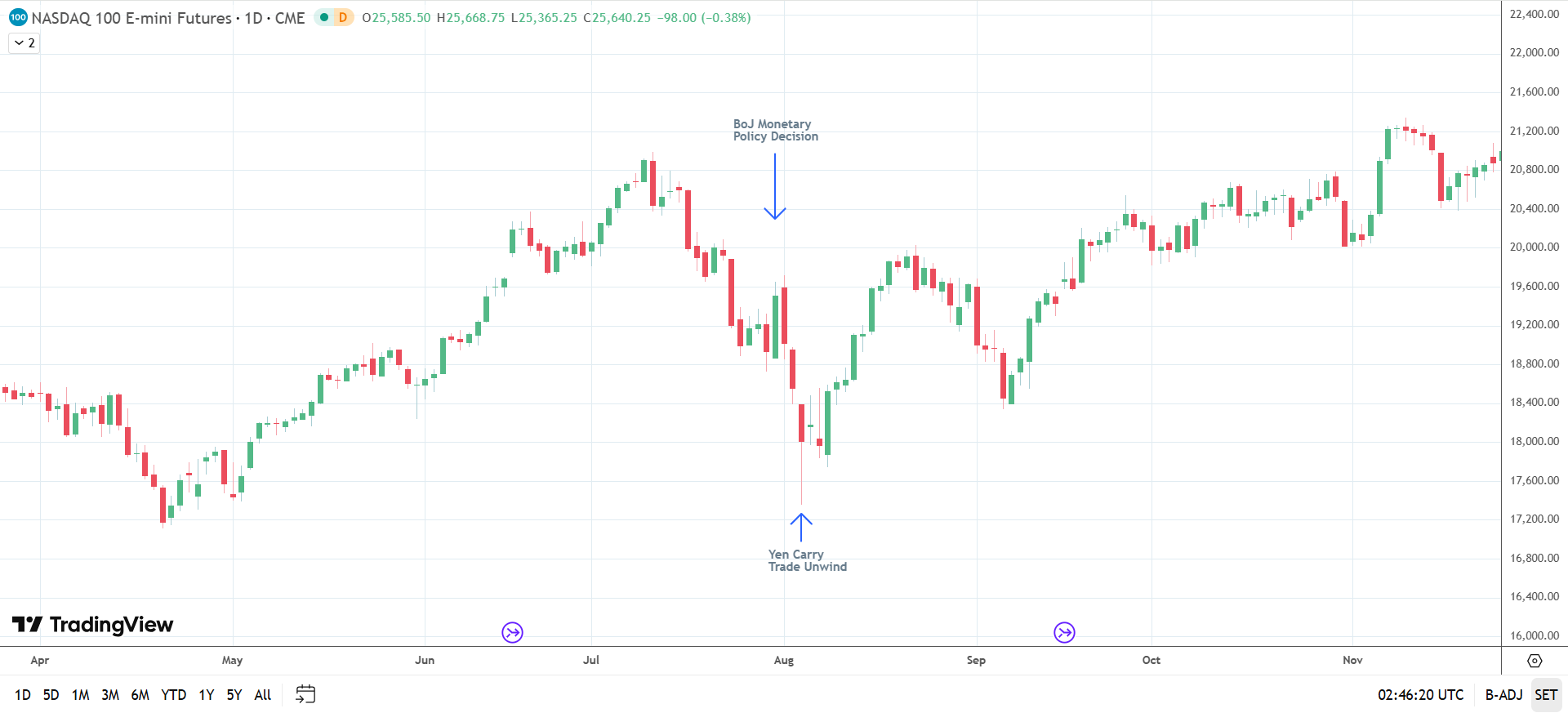
Prime Minister Carney Cools Fears of a US-Canada Trade War
Over the weekend, US President Trump threatened Canada with a 100% tariff if Prime Minister Mark Carney signed a trade deal with China. The risk of a US-Canada trade war increased demand for safe-haven assets, leaving US stock futures in the red. Notably, gold broke above $5,000 for the first time.
Despite concerns over a US-Canada trade war, Canadian Prime Minister Mark Carney downplayed speculation about a Canada-China trade deal. The Kobeissi Letter reported:
“Canada’s Prime Minister Carney says he does NOT plan to sign a ‘free trade agreement’ with China after President Trump threatened 100% tariffs.”
Easing risks of a US-Canada trade war cushioned the downside this morning, with US index futures rebounding from heavier losses.
Rising geopolitical tensions and increased risks of a US-Canada trade war collided with expectations of a lengthy US government shutdown. According to Polymarket, the chances of another US government shutdown increased to 78% over the weekend, up sharply from just 9% on January 23. Notably, US stock futures advanced during and beyond the 2025 shutdown.
US Durable Goods Orders and Earnings in Focus
US futures were under selling pressure in the Asian morning session on January 26. The Dow Jones E-mini and the Nasdaq 100 E-mini fell 119 points and 89 points, respectively, while the S&P 500 E-mini declined 16 points.
Later Monday, US durable goods orders will influence speculation about a June Fed rate cut. Economists expected durable goods orders to increase 0.5% month-on-month in November after sliding 2.2% in October. A rebound in orders would align with the recent pickup in economic momentum, lifting demand for US stock futures.
Other economic data on Monday includes the Dallas Fed Manufacturing Index and the Chicago Fed National Activity Index. However, durable goods orders will likely be the key driver.
Key Technical Levels for Dow Jones, Nasdaq 100, and S&P 500
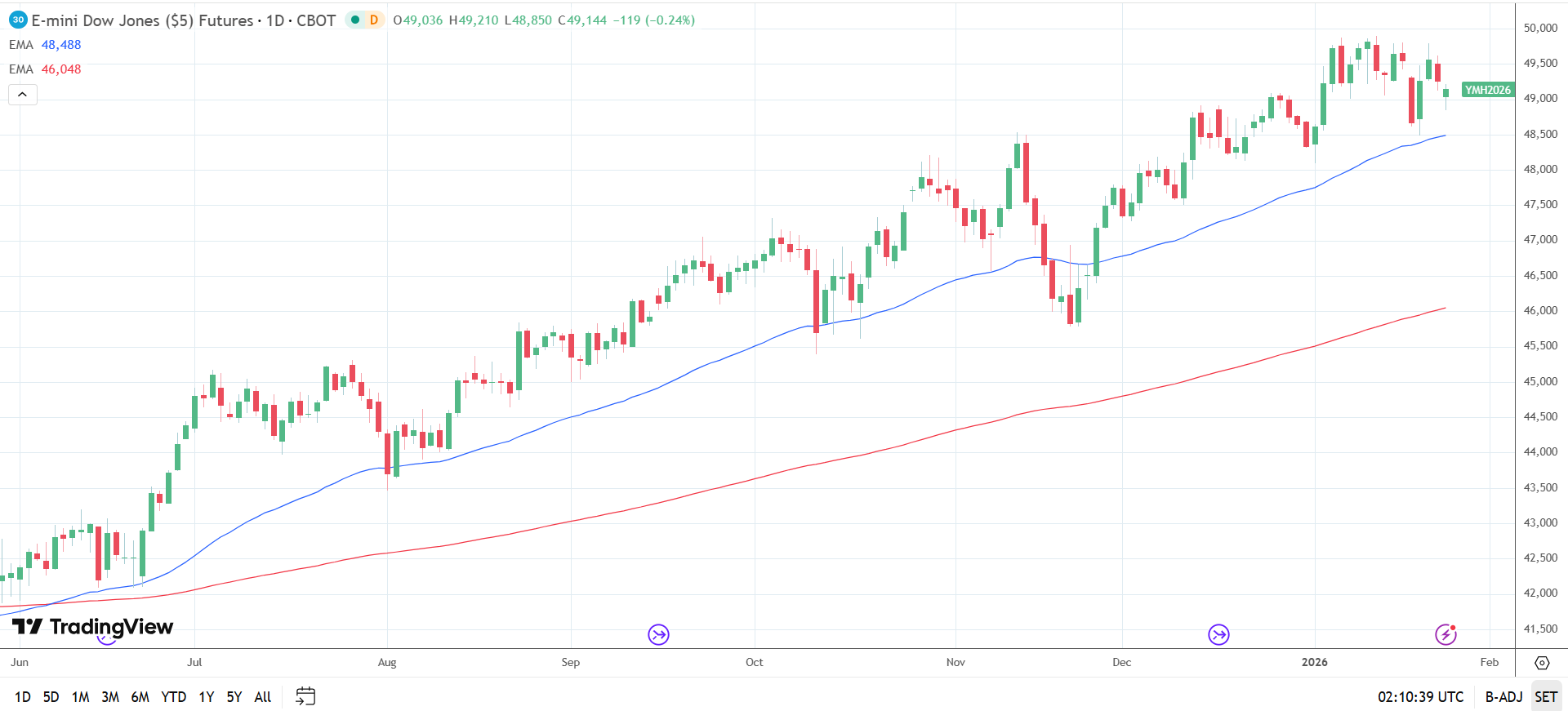
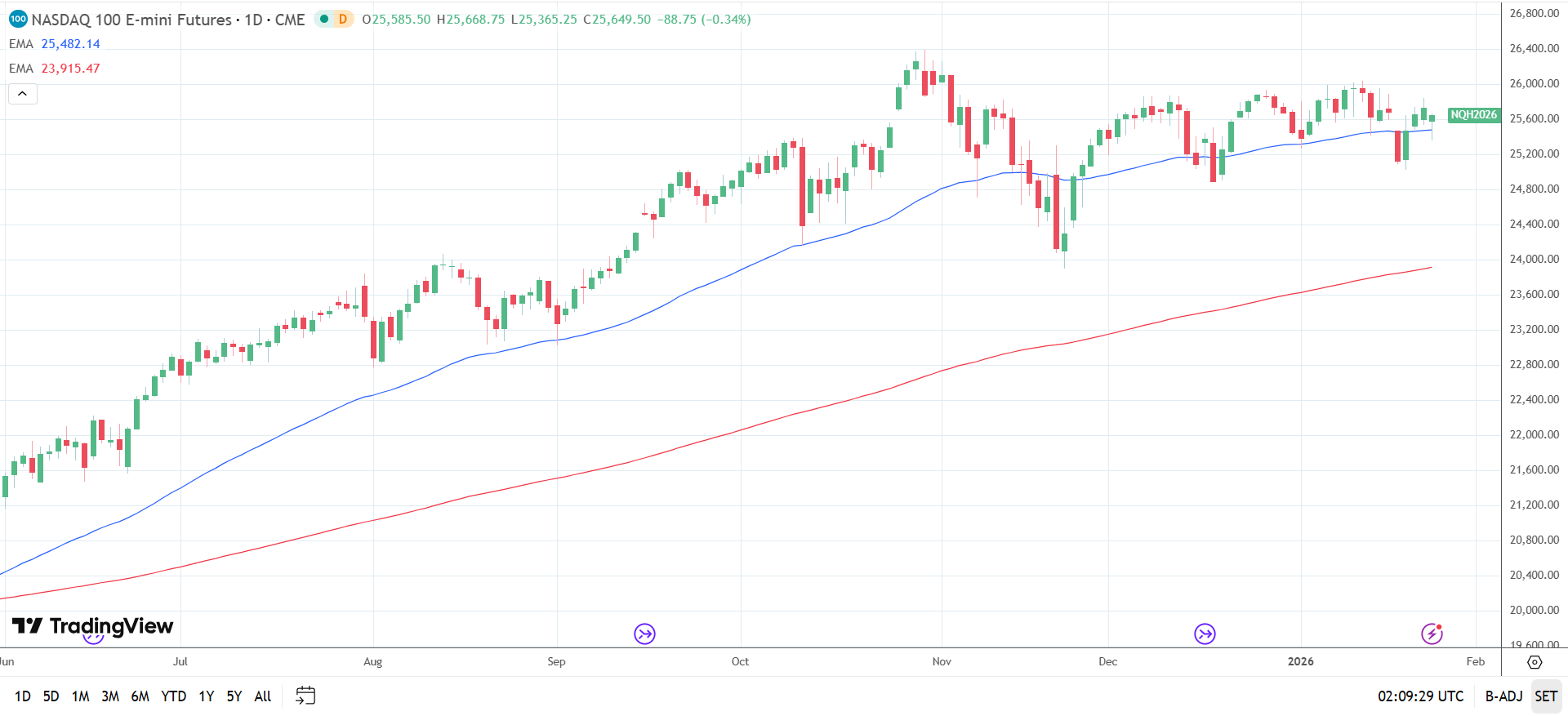
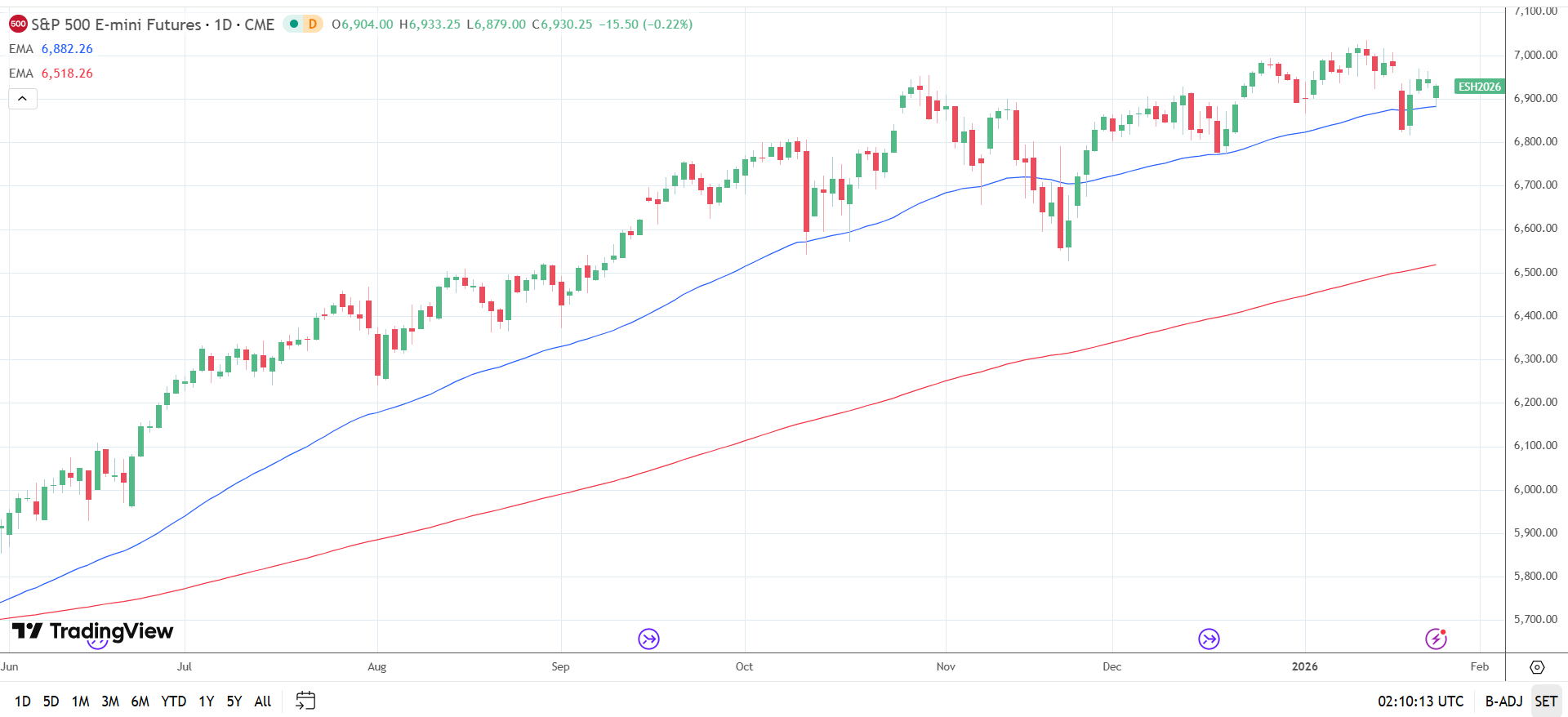
Despite the morning losses, the Dow Jones E-mini, the Nasdaq 100 E-mini, and the S&P 500 E-mini remained above their 50-day and 200-day EMAs. The EMAs indicated a bullish bias, aligning with favorable fundamentals.
Near-term trends will hinge on geopolitical developments, USD/JPY trends, earnings, and US economic indicators. Key levels to monitor include:
Dow Jones
- Resistance: the January 13 record high of 49,901, and then 50,000.
- Support: 49,000 followed by the 50-day EMA (48,488).
Nasdaq 100
- Resistance: 26,000, followed by the October 30 record high of 26,399.
- Support: the 50-day EMA (25,482), 25,000, and then 24,500.
S&P 500
- Resistance: the January 13 high of 7,036, followed by 7,500.
- Support: the 50-day EMA (6,882) and then 6,500.
Outlook: Fed Rate Cut Bets, Economic Strength, and Earnings Maintain Bullish Outlook
In my opinion, the short-term price outlook remains bullish. Market bets on a Fed rate cut in H1 2026, and continued optimism over Q4 earnings, reinforce the constructive bias. These fundamentals align with bullish technicals for US equity futures.
However, several factors would challenge the bullish medium-term outlook, including:
- Increased geopolitical tensions.
- The Bank of Japan declares a hawkish neutral interest rate (potentially 1.5%-2.5%). A narrower US-Japan rate differential would trigger an unwind of yen carry trades, as seen in mid-2024. Such an event would invalidate the short-term outlook.
- Robust US indicators and hawkish Fed monetary policy stance would temper expectations of multiple Fed rate cuts in 2026.
- Corporate earnings and outlooks disappoint.
Conclusion: Bullish Outlook Intact
In summary, the robust US economy, a dovish Fed policy stance, upbeat earnings, and a cautiously hawkish BoJ reaffirm a bullish short- and medium-term outlook for US stock futures.
However, traders should closely monitor intervention warnings, BoJ rhetoric, and USD/JPY moves. Yen interventions by the Fed and Japanese government, alongside hawkish BoJ chatter, could trigger a yen carry trade unwind, impacting demand for risk assets.
Despite risks of an unwind of yen carry trades, US stock futures remain on target for new highs if US economic data boosts bets on a June Fed rate cut. Fed rate cuts would have a more lasting effect on company earnings and equity valuations than narrowing US-Japan rate differentials.
Follow our live coverage and consult the economic calendar for real-time market updates.