The S&P 500 is near record highs heading into second-quarter earnings season with analysts projecting roughly 22% earnings growth from a year ago. That 22% is already in the price. The calls over the next several weeks are where the real information comes out, and this quarter has an unusually crowded set of unresolved questions sitting behind the headline number. AI spending that has not produced revenue yet, consumer demand running into higher prices, margins getting squeezed by crude oil and tariffs at the same time, and bank credit quality after five years of rising rates are all waiting on answers. Corporate America either confirms that the first half of 2026 was earned, or the calls start revealing that the market got ahead of itself.
Ahmed Yousre, Global Market Strategist at PU Prime commented:
While artificial intelligence remains one of the most powerful structural growth themes in global markets, investors may be overlooking several emerging risks that could challenge the sector’s momentum in the months ahead.
Recent market performance has been largely driven by optimism surrounding AI infrastructure spending, with major technology companies continuing to invest heavily in data centers, semiconductors, cloud computing, and next-generation AI models. However, these investments require substantial capital commitments and long development cycles before meaningful revenue can be generated.
From PU Prime’s perspective, the biggest challenge facing the AI sector may not be demand, but rather the broader macroeconomic environment. Recent inflation data has remained relatively resilient, while Treasury yields have moved higher as investors reassess the outlook for Federal Reserve policy under new Fed Chair Kevin Warsh. Markets are increasingly pricing in the possibility that interest rates could remain elevated for longer than previously expected.
This could create significant pressure on high-growth technology companies. Higher yields increase the cost of capital, raise borrowing expenses, and reduce the present value of future earnings, which disproportionately affects companies whose valuations depend heavily on long-term growth expectations. At the same time, rising financing costs may force some firms to become more selective with AI-related capital expenditure and research spending.
Investors should also monitor geopolitical developments and energy markets closely. Any renewed escalation in global conflicts could push oil prices higher, reigniting inflation concerns and further reducing the likelihood of near-term monetary easing.
While the long-term AI story remains intact, PU Prime believes the next phase of the market may be driven less by AI excitement and more by the ability of companies to deliver earnings growth in an environment of elevated yields, persistent inflation risks, and tighter financial conditions.
Before Big Tech Speaks, Banks Set the Tone
Credit Quality Is the First Stress Test
JPMorgan Chase (JPM), Bank of America (BAC), Citigroup (C), and Wells Fargo (WFC) report before most other industries. Loan growth, credit card performance, commercial lending trends, and management’s read on business confidence during the quarter come out on these calls first. Credit quality is the one that concerns me this cycle. Five years of rates at these levels has to be showing up somewhere, and the banks are going to be the first ones to tell you whether the cracks are forming in consumer credit, in commercial real estate, or whether the whole system held together for another quarter. Any deterioration on that front changes the tone for the entire season before Microsoft or Nvidia even report.
Billions Spent. Where Are the Profits?
AI Capex Needs Revenue Behind It
Microsoft (MSFT), Alphabet (GOOGL), Meta Platforms (META), Amazon (AMZN), and Nvidia (NVDA) have collectively poured tens of billions into data centers, chips, and networking gear over the past twelve months. Capital spending at these levels only makes sense if revenue follows it, and I think this is the quarter where the market stops being patient about the timeline. Executives who walk into the call with another round of heavy capex numbers and vague language about monetization timelines are going to get pressed harder than they have been at any point since the AI trade started.
Micron Technology (MU) reports on the semiconductor side, and the high-bandwidth memory numbers will tell you quickly whether the infrastructure buildout is still gaining speed or whether the orders are starting to flatten out. I think the AI trade still has room to run, but only for the companies that can show real customer revenue attached to the spending. The rest are going to start hearing tougher questions from analysts who have been giving them the benefit of the doubt for over a year now.
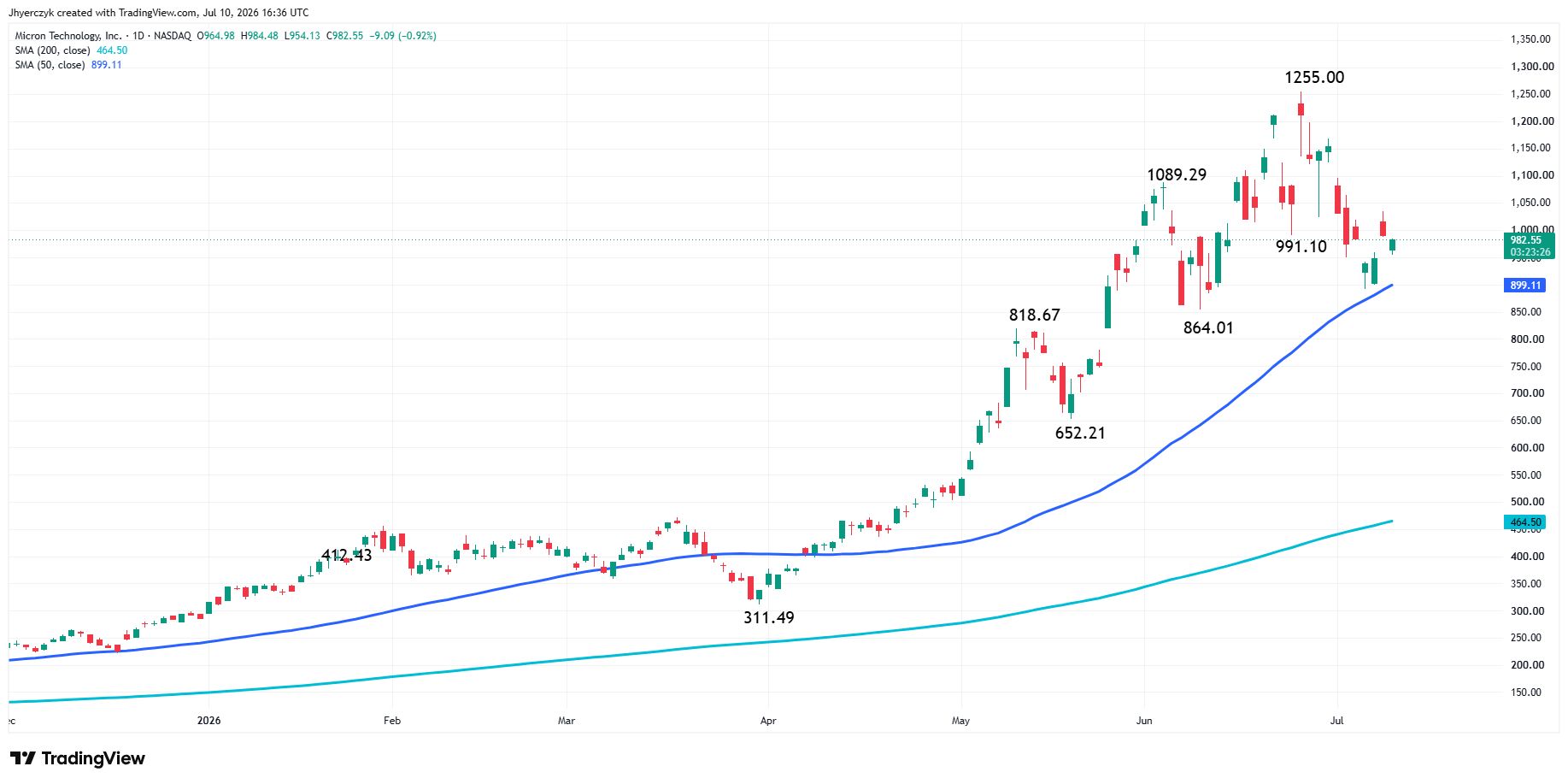
Micron Technology (MU) chart. Source: TradingView.
The Rally Still Depends on Main Street
Main Street Demand Still Carries the Rally
PepsiCo (PEP) reports early and gives one of the first reads on everyday purchasing patterns across grocery, convenience, and food service channels. Walmart (WMT) fills in the rest on necessities and discretionary. Airlines, restaurants, and travel companies will show whether people kept booking vacations and eating out even with prices running as high as they were from April through June.
Consumer spending has kept the bearish case from working for two straight years now. I do not think most investors appreciate how much of the current rally depends on that continuing. A crack does not have to be dramatic. A subtle downgrade buried three pages into the guidance document is enough to change the narrative from resilient growth to deceleration, and that repricing happens fast across the entire equity market when it starts.
Revenue Gets Headlines. Margins Move Stocks.
Oil and Tariffs Put Margins Under Pressure
Crude oil ran hot for the entire second quarter because of the Middle East conflict. The cost pressure was broad. Airlines saw it in fuel. Manufacturers saw it on the factory floor. Shippers passed it through in freight rates. Delta Air Lines (DAL) and ExxonMobil (XOM) report early and will give the first indication of how the quarter actually played out on the cost side.
Companies with pricing power probably came through it fine. The ones I am more interested in are the companies without pricing power, because I think some of them are sitting on margin compression they have not disclosed yet and the damage is likely wider than consensus expects. Tariffs add a second layer of cost pressure on top of the oil. Retailers, manufacturers, and technology firms that source globally will have to address whether tariffs forced them to change suppliers, relocate production lines, or adjust capital spending plans they had not anticipated six months ago. Oil costs and tariff costs hitting margins at the same time is a combination that could catch investors off guard once enough calls start laying out the actual numbers instead of the estimates.
What the Calls Will Tell You That the Numbers Won’t
Guidance Will Decide Whether Record Highs Hold
By the end of July, the market will know whether these record highs were justified or premature. AI capex needs revenue behind it. Consumer spending needs to hold up through higher prices. Margins need to come through the oil spike and the tariff costs without collapsing in the back half of the year. Management needs to keep full-year guidance intact through December, and quiet downgrades buried in the supplemental materials count as failures even when they do not make the headline.
I think AI monetization and consumer demand are the two themes with the most potential to disappoint this season, and either one of them cracking turns this into the kind of stress test that a market sitting at record highs has been managing to avoid since January. The S&P 500 either earned its way here or it did not. The press releases will get the attention. The conference calls, particularly the Q&A sections where analysts push back on the prepared remarks, will deliver the answers that actually move stocks over the following days and weeks.