I’ve covered a lot of volatile weeks in this market but the week of April 3 to April 10 stands out. Rate cut expectations jumped from 14% to 43% and then fell right back to where they started, all in five trading days. One ceasefire headline moved markets more than months of economic data had. That kind of volatility in rate pricing tells you the market doesn’t have conviction right now. It’s trading on headlines and the headlines are changing fast.
Ahmed Yousre, Global Market Strategist at PU Prime commented:

Crude oil prices have entered a corrective phase as easing tensions between the United States and Iran triggered a rapid shift in market sentiment, prompting a partial unwind of the geopolitical risk premium that had previously supported prices.
Earlier in the week, concerns over tighter U.S. enforcement around the Strait of Hormuz and the potential disruption of Iranian oil flows had driven prices higher. However, sentiment reversed as both sides signaled a willingness to resume diplomatic negotiations, with talks potentially returning to Pakistan. This shift has reduced the perceived probability of a sustained supply shock, leading markets to reassess positioning.
From a macro perspective, the move reflects a transition from “disruption pricing” toward “stabilization pricing,” as near-term supply risks begin to moderate. The easing in oil prices may also help soften inflation expectations, potentially reducing upward pressure on global yields and the U.S. dollar.
However, the outlook remains highly headline-sensitive. Given the fragile nature of ongoing negotiations and unresolved tensions surrounding the Strait of Hormuz, oil markets are likely to remain volatile, with any setback in diplomatic progress capable of quickly reintroducing upside risks.
The Ceasefire Sparked the Initial Move
The U.S.-Iran ceasefire was the trigger. Before the announcement traders had been cutting rate cut expectations because the Iran conflict was pushing oil higher and inflation risk was building. The ceasefire knocked oil lower and the math changed immediately. Market implied odds of at least one rate cut by the end of 2026 jumped from roughly 14% to about 43% in a matter of days.
The reasoning was simple. Energy costs run through the entire economy. When oil drops, transportation costs ease, production costs ease and consumer prices follow. Traders know that transmission mechanism well and they repositioned fast when oil started falling. The Fed suddenly had more room to move and the market priced that in before the week was half over.
Fed Minutes Complicated the Picture
That optimistic view didn’t last. The Federal Reserve meeting minutes released on April 8 reminded markets that policymakers are not ready to pivot. Officials acknowledged that rising energy prices could push inflation higher and make it more persistent. Some members indicated rates may need to stay elevated for longer. A few left the door open to further rate hikes if inflation doesn’t improve. At the same time the Fed acknowledged that higher energy costs could slow economic growth, which would eventually support rate cuts. That created a mixed message and the market had to digest it.
The minutes were not a surprise to anyone paying attention to the Fed’s recent communications but they were a clear signal that the central bank is not going to react to a single week of lower oil prices. Policymakers want to see sustained improvement in the inflation data before they change course and the minutes made that position explicit.
WTI Crude Oil Price Forecast
Every new WTI Crude Oil analysis as it publishes, today's technical signal and key levels, live price — on one page.
See all WTI Crude Oil forecastsMarch CPI Added More Pressure
The March Consumer Price Index landed two days after the Fed minutes and the headline was ugly. Inflation rose 0.9% for the month and 3.3% year over year. That’s the highest annual reading since April 2024 and it handed the hawks exactly what they needed. Energy drove the whole thing. Up 10.9% on the month with gasoline surging more than 20%. That’s the war showing up in the data exactly the way I expected it to.
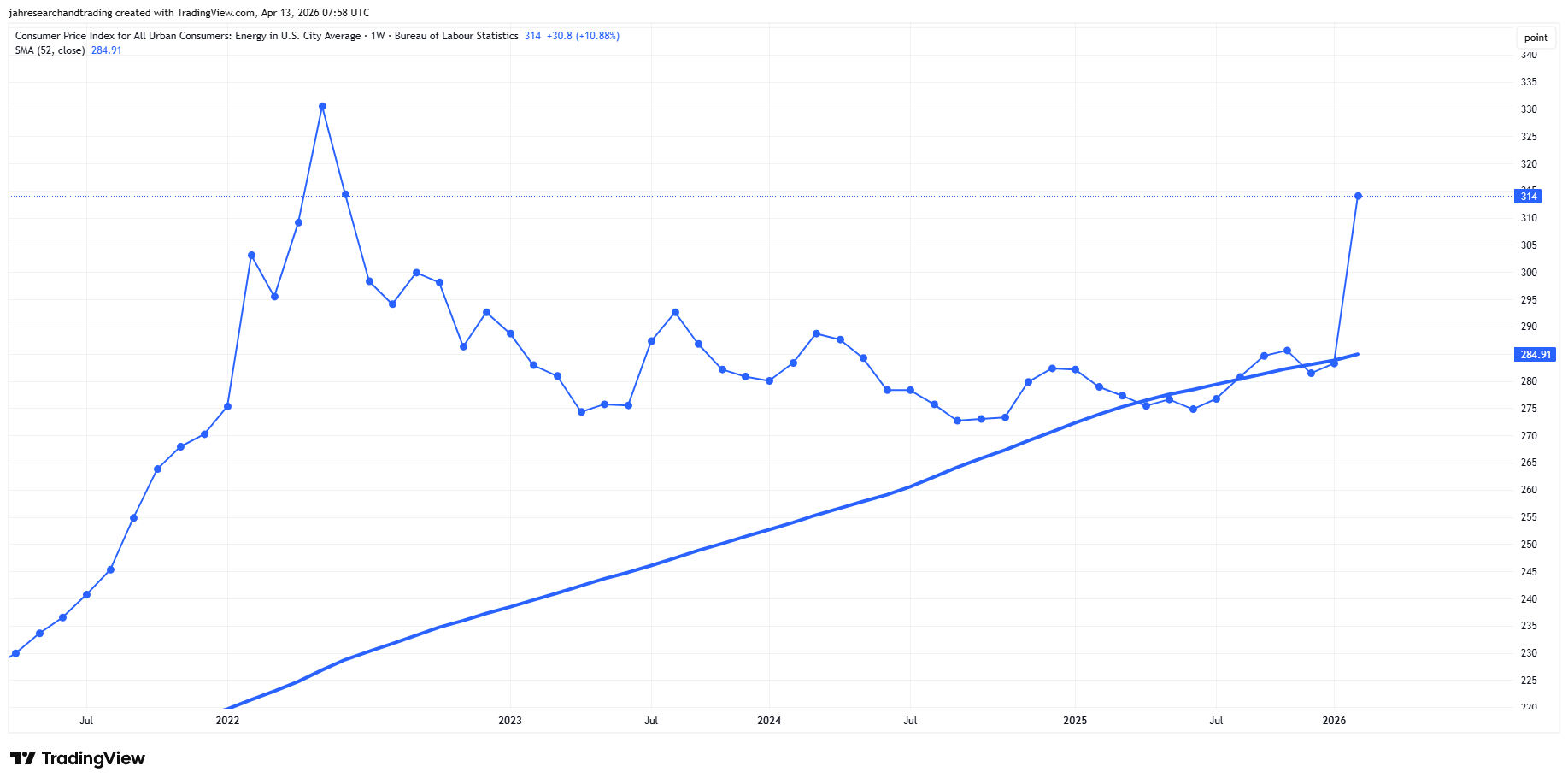
CPI Energy index for All Urban Consumers — the latest print spikes 10.88% to 314. Source: TradingView
The details were more reassuring. Core inflation came in at 0.2% for the month and 2.6% year over year, both below expectations. Medical care prices fell. Used vehicle prices fell. The underlying inflation trend was intact. The problem wasn’t broad price acceleration. It was one category running hot because of a geopolitical supply shock. Traders tried to look past the headline and treat the spike as temporary. That worked for about two days.
Oil Moving Back Up Killed That Narrative
Then oil started moving higher again. After the initial post-ceasefire drop, crude began stabilizing and pushing back toward $100. That raised a critical question. If energy prices don’t stay lower, the inflation spike won’t fade and the Fed will have no reason to cut. The temporary narrative stopped working when the commodity that drove the temporary inflation spike started rising again.
The Personal Consumption Expenditures index, which is the Fed’s preferred inflation measure, added more context. The February PCE data released during the week showed inflation running above target but not accelerating. That supported the Fed’s cautious stance and reinforced the idea that policymakers need more data before making any moves. February data predates the oil surge so it was more of a baseline read than a current signal.
Where Expectations Ended Up
By the end of the week rate cut expectations had retreated almost entirely. The latest FedWatch data showed roughly 14% to 15% probability of a cut by December with a small chance of a rate hike still on the table. That’s almost exactly where expectations were before the ceasefire. The market gave back everything it priced in during the optimistic phase of the week.
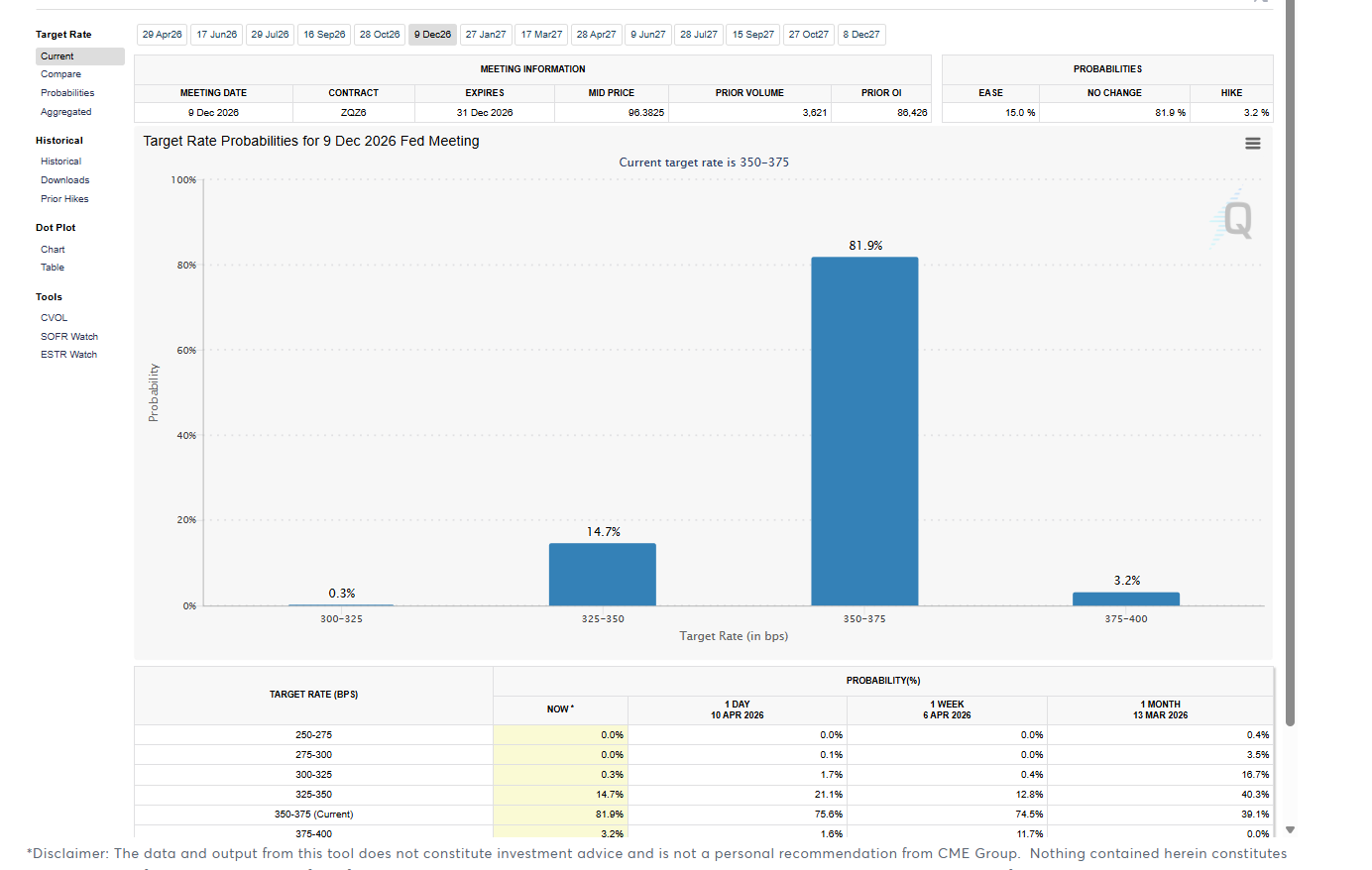
CME FedWatch Tool target rate probabilities for the December 9, 2026 FOMC meeting as of April 13, 2026. Source: CME FedWatch Tool
What Drives the Outlook From Here
I keep coming back to the same two variables. Energy prices and core inflation. Everything else is noise. Oil comes down and core stays contained, the rate cut case builds and traders start pricing in easing again. Oil stays above $100 or moves higher, inflation stays sticky, the Fed doesn’t move and the rate cut conversation slides further out on the calendar. It really is that simple right now and the week of April 3 to April 10 proved it.
The Fed has been explicit that it is not going to act on short-term data. Policymakers want to see sustained progress toward the 2% target before they move. That means the back-and-forth in rate expectations is likely to continue as long as oil prices remain volatile and the geopolitical situation stays unresolved.
The Federal Reserve isn’t moving anytime soon and the market knows it. Rate cuts are still possible later in the year but the inflation trend has to cooperate first and right now it isn’t. Energy is running hot, core is stable but above target and the geopolitical situation can flip the whole picture overnight. Until something breaks clearly in one direction, rate expectations are going to keep swinging every time a headline crosses. That’s the environment we’re in and it isn’t changing until the Middle East does.
Technical Outlook
Looking at the movement in the Nearby WTI crude oil market and the Fed rate cut expectations, I’ll even take it a step further and say, conditions stay where they are inside $117.63 to $91.05 with $103.15 our key pivot price.
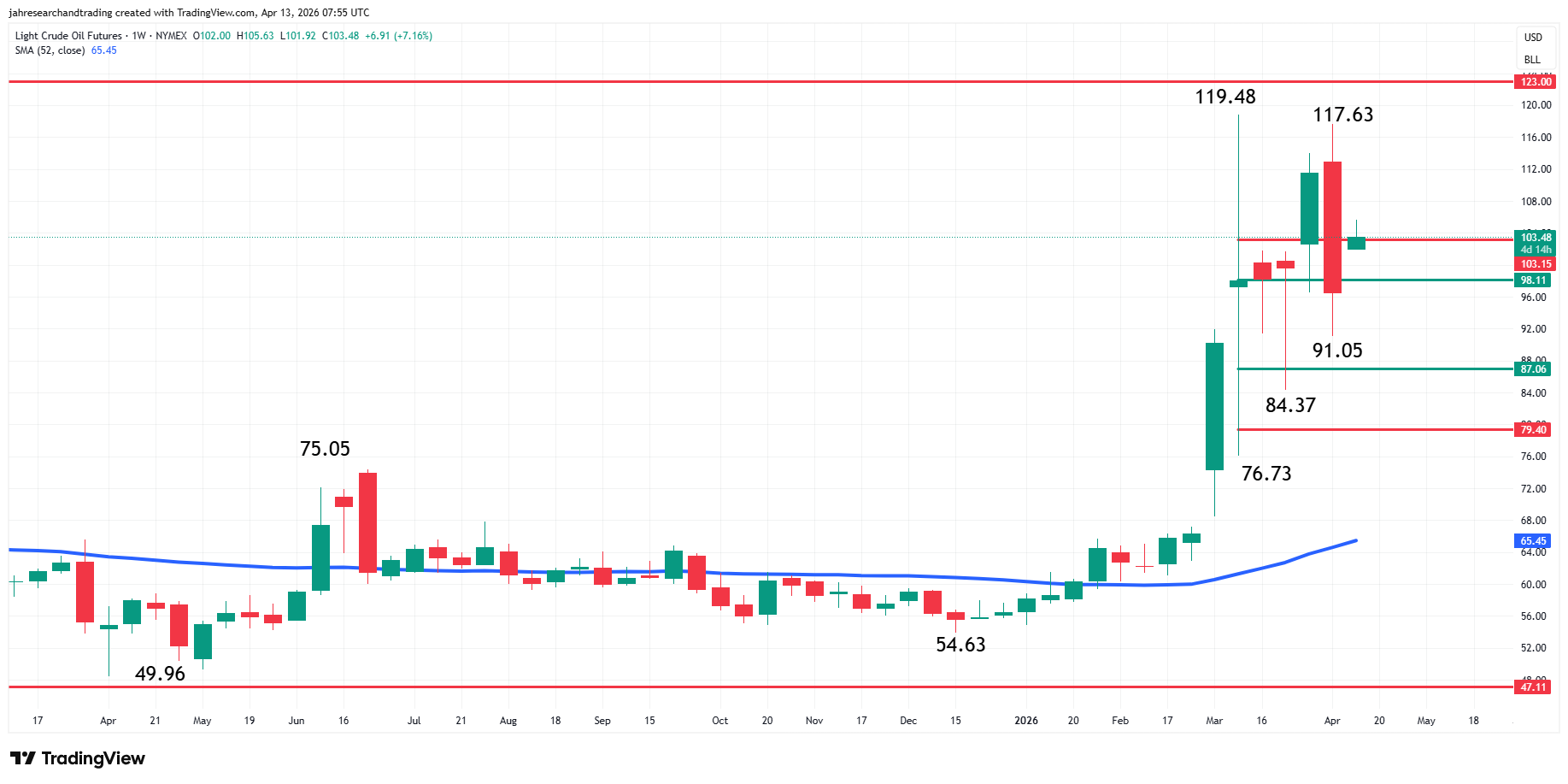
Weekly Nearby WTI Crude Oil Futures with the $117.63 resistance, $103.15 pivot and $91.05 support marked. Source: TradingView
A breakout over $117.63 per barrel may even increase the chances of a Fed rate hike and a breakdown under $91.05 likely raises the chances of a rate cut by the end of the year or early 2027.