Gold (XAU) began the week on a weaker note due to stronger U.S. dollar and rising oil prices. The fresh market inflation fears were reignited by news that the Strait of Hormuz is closed again. This news boosted the US dollar and Treasury yields which made gold less appealing in the short run. Thus, despite the tense geopolitical backdrop, gold has fallen since the market again focuses on the risk of higher interest rates over a longer period.

Oil Shock Brings Inflation Fears Back
Gold is primarily driven by the reentry of the war and inflation. The U.S.-Iran ceasefire remains fragile following the latest conflict over the seizure of Iranian cargo ship. That raised fears that the Strait of Hormuz could be disrupted for longer. This caused oil prices to rise sharply. Investors are increasingly concerned with inflation when oil prices increase.
The inflation fear will drive U.S. Treasury yields and the dollar higher. The upside momentum in US dollar pressure on gold. The chart below shows that the US dollar produced a reversal candle on Friday but this candle was very short, which does not confirm the bullish momentum. A break above 99 is required to push the US dollar index to 100.50.
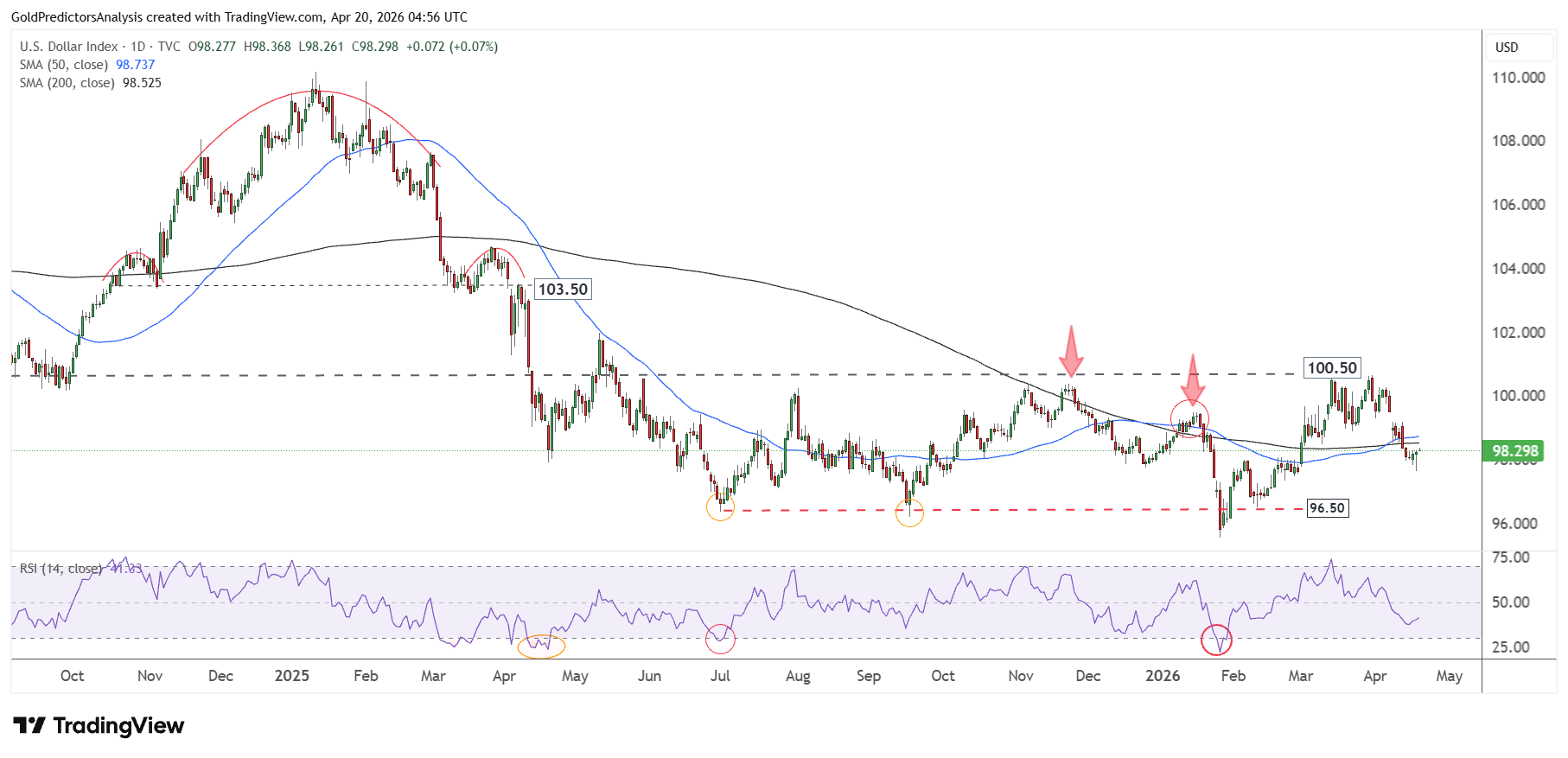
This is the reason why gold dropped even though the broader geopolitical narrative usually favors safe-haven demand. At this point, the market views gold as an asset that is between inflation support and rate pressure.
Silver (XAG) tends to follow gold, but it possesses a more industrial aspect. Once oil prices rise due to conflict and shipping disruptions, markets begin to be concerned about global growth and inflation. That weighs more on silver than on gold. Then, as both metals slumped, silver is more vulnerable if investor panic sets in over the possibility of increasing energy prices dragging down the economy. Gold and silver will be susceptible to the same factors in the short term: oil, the dollar, yields and any new headlines surrounding the U.S.-Iran ceasefire.
Gold Price Forecast
Every new Gold analysis as it publishes, today's technical signal and key levels, live price — on one page.
See all Gold forecastsGold Technical Analysis – Key Levels to Watch
The daily chart for spot gold shows the price is stuck between the 50- and 100-day SMAs. The price hit the 50-day SMA at $4,891 but opened with a gap lower on Monday. On the expectations of a ceasefire failure, the gold price hit the 100-day SMA at the $4,735 area before rebounding higher.
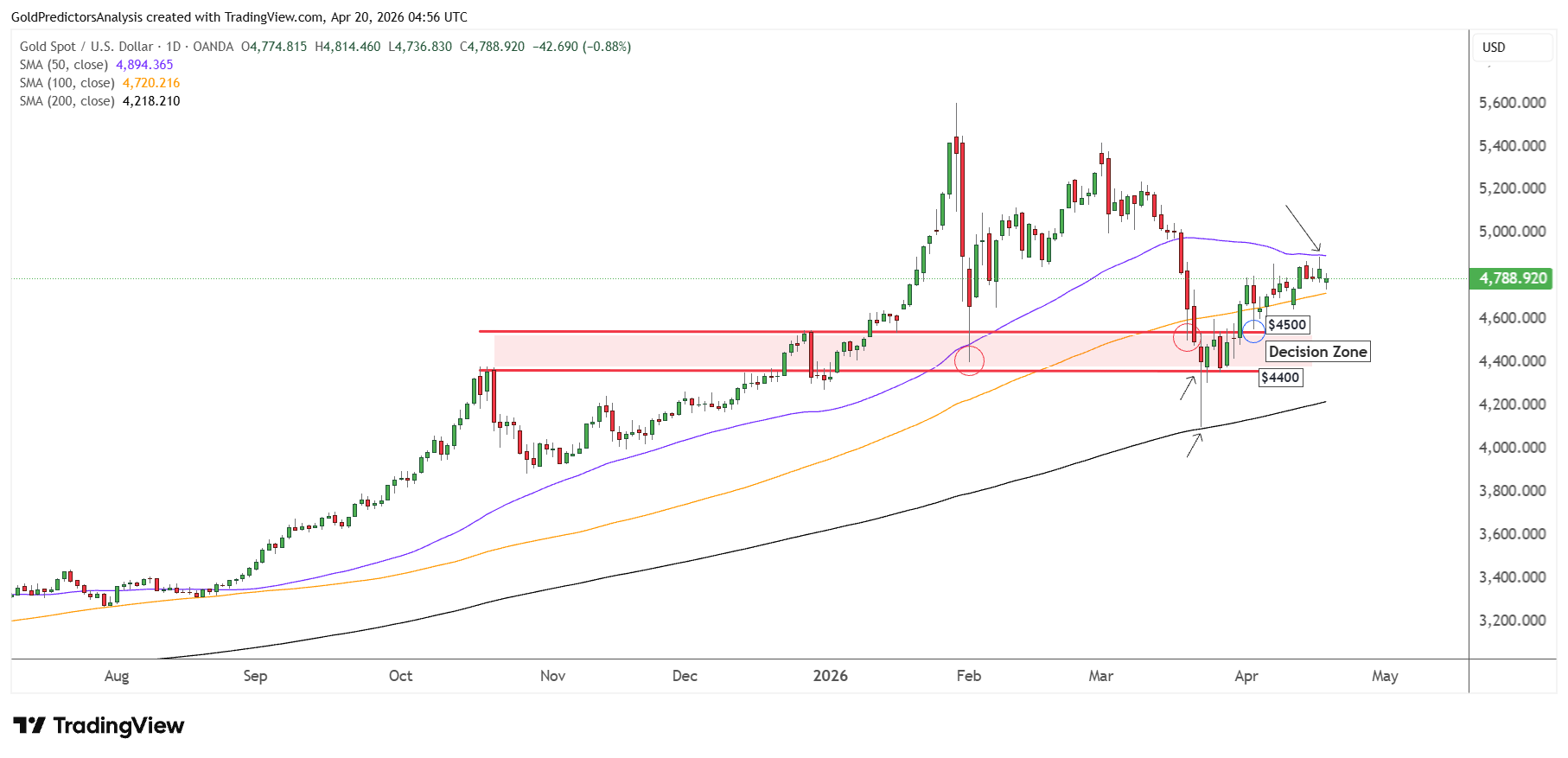
The strong consolidation is due to the strong uncertainty from the US-Iran war. A failure of the ceasefire will likely push the gold price lower towards the decision zone again at the $4,400 area. A peaceful deal will boost the gold price towards $5,000. The global tensions are tied to the closure of the Strait of Hormuz. If traffic in the Strait of Hormuz returns to normal, markets will start to stabilize.
The 4-hour chart for spot gold also shows strong consolidation within tight range, as seen by the triangle pattern. A break below $4,750 will likely signal further drop. However, a break above $4,900 will push the gold price towards $5,000.
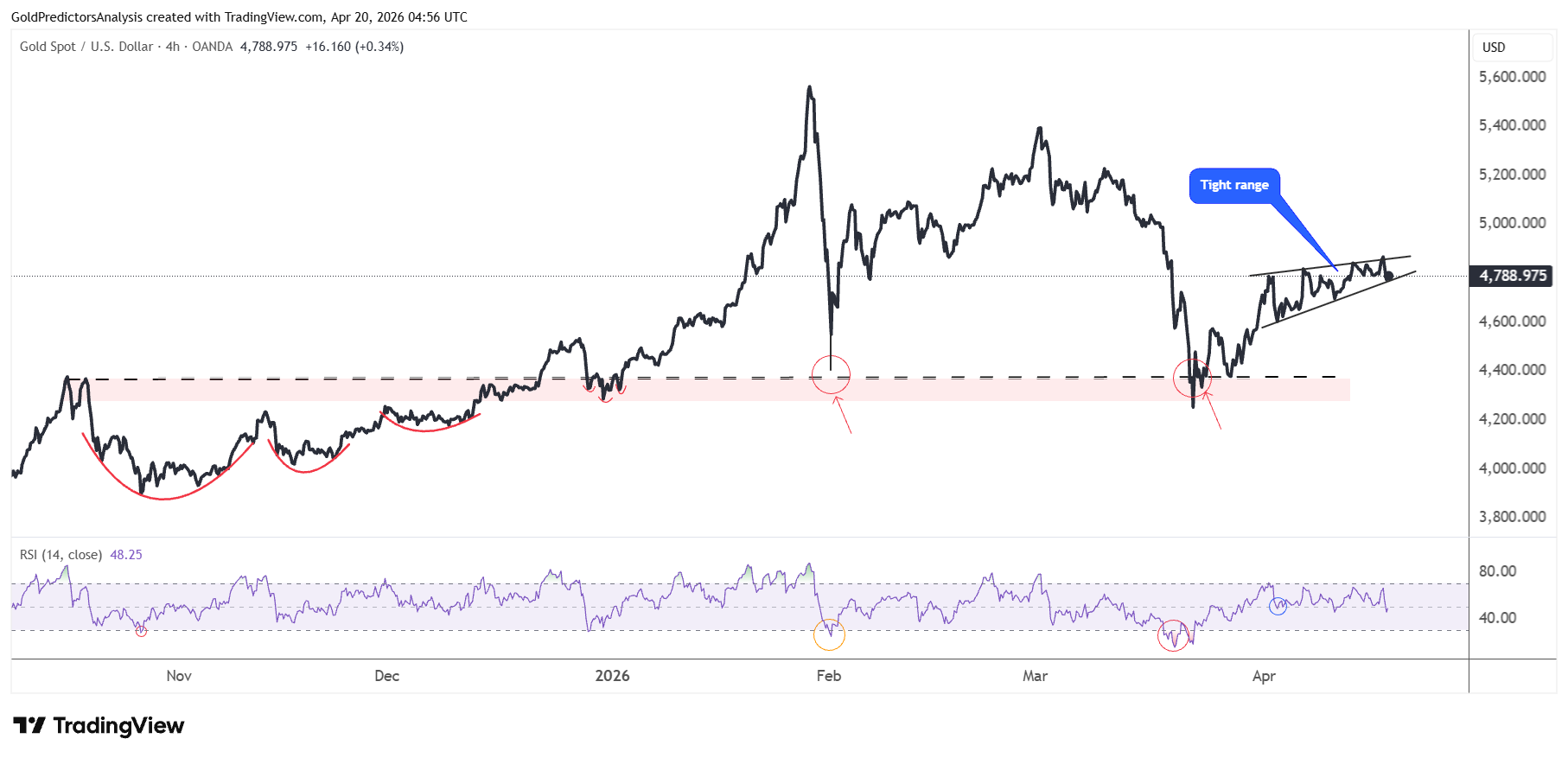
The prices are likely to remain in a tight range until a decision is reached between the U.S. and Iran. However, the RSI is now below the midline, indicating bearish price action in the short term.
Due to the strong consolidation, there may be many false signals in gold as the price consolidates in a tight range.
Silver Technical Analysis – Key Levels to Watch
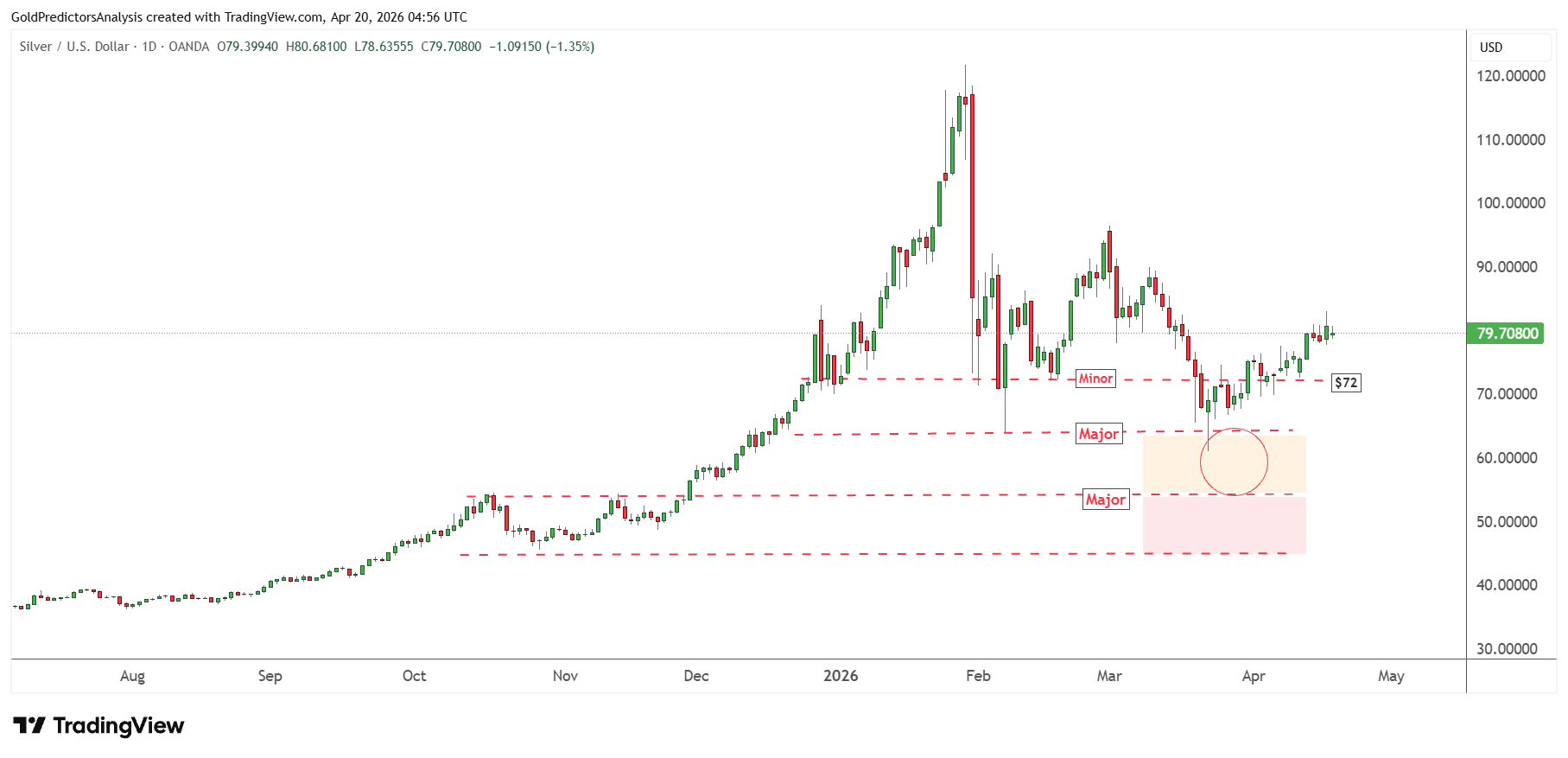
The daily chart for silver shows positive consolidation above $72 within a bullish structure. The price is looking for developments in the Middle East to make the next move. A break above $82 will push the silver higher to $90. However, a break below $72 will push silver back to the long-term support zone of $50-$60. As long as silver remains above $50, the next move in the market will likely be higher.
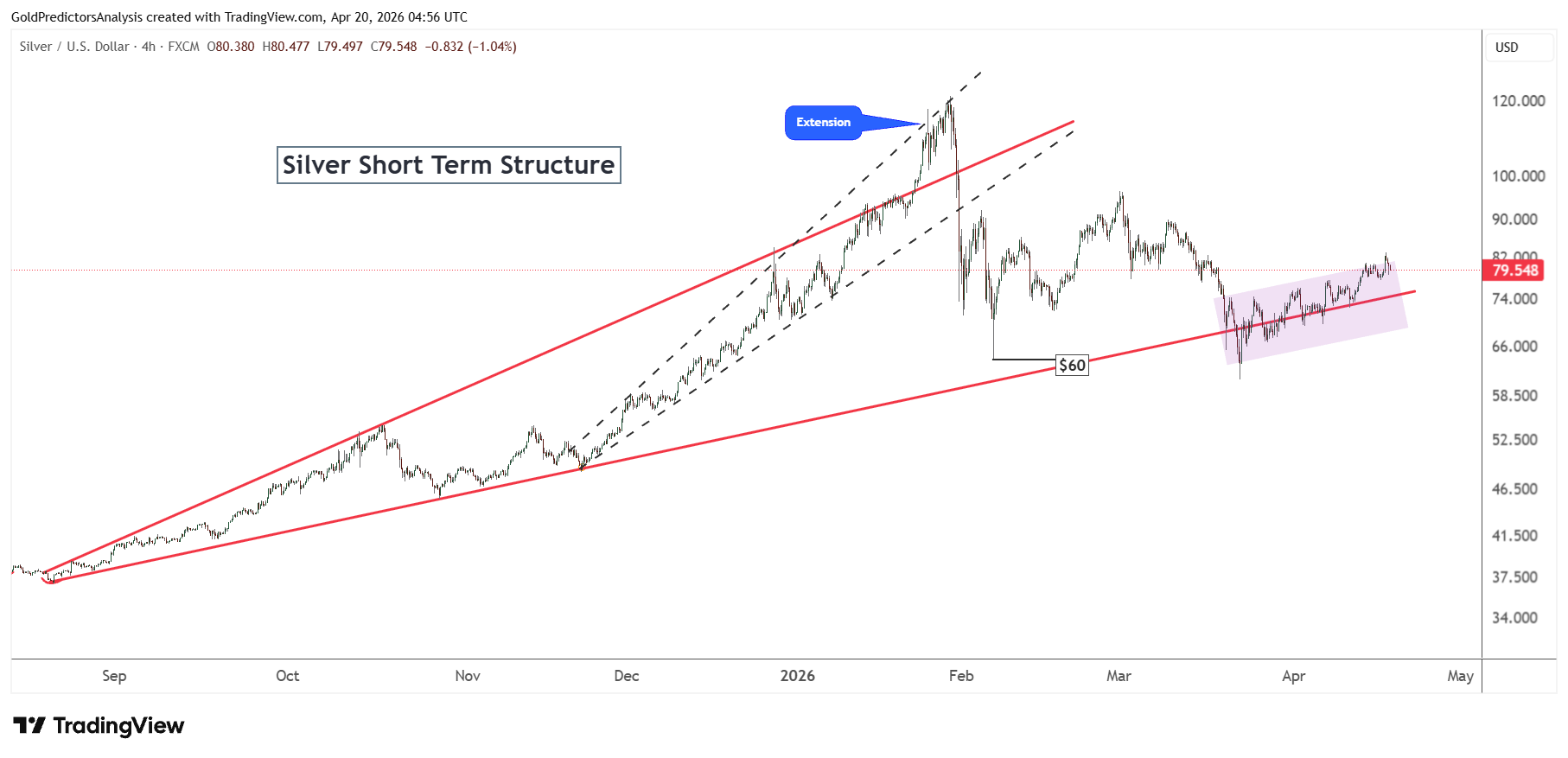
The 4-hour chart for silver shows the formation of an ascending broadening wedge pattern in which the price is consolidating at the borderline of the ascending broadening wedge support. The red-highlighted area at this support indicates possible consolidation. The structure in silver price remains constructive as prices remain above $60.
In Closing
Gold and silver will continue to be caught between geopolitical backing and macro pressure. Inflation fears are alive due to rising oil prices and new tensions around the Strait of Hormuz, but the stronger dollar and rising yields are curbing gains in gold. That is the reason why the two metals will be moving in range and responding swiftly to each emerging headline. Gold remains exposed below significant resistance and silver remains in a more positive long-term pattern. The second significant action in both markets will be based on the development of the U.S.-Iran situation toward a permanent peace agreement or further deterioration.
If you’d like to know more about how to trade gold and silver, please visit our educational area.