Breakdown Signals Shift in Structure
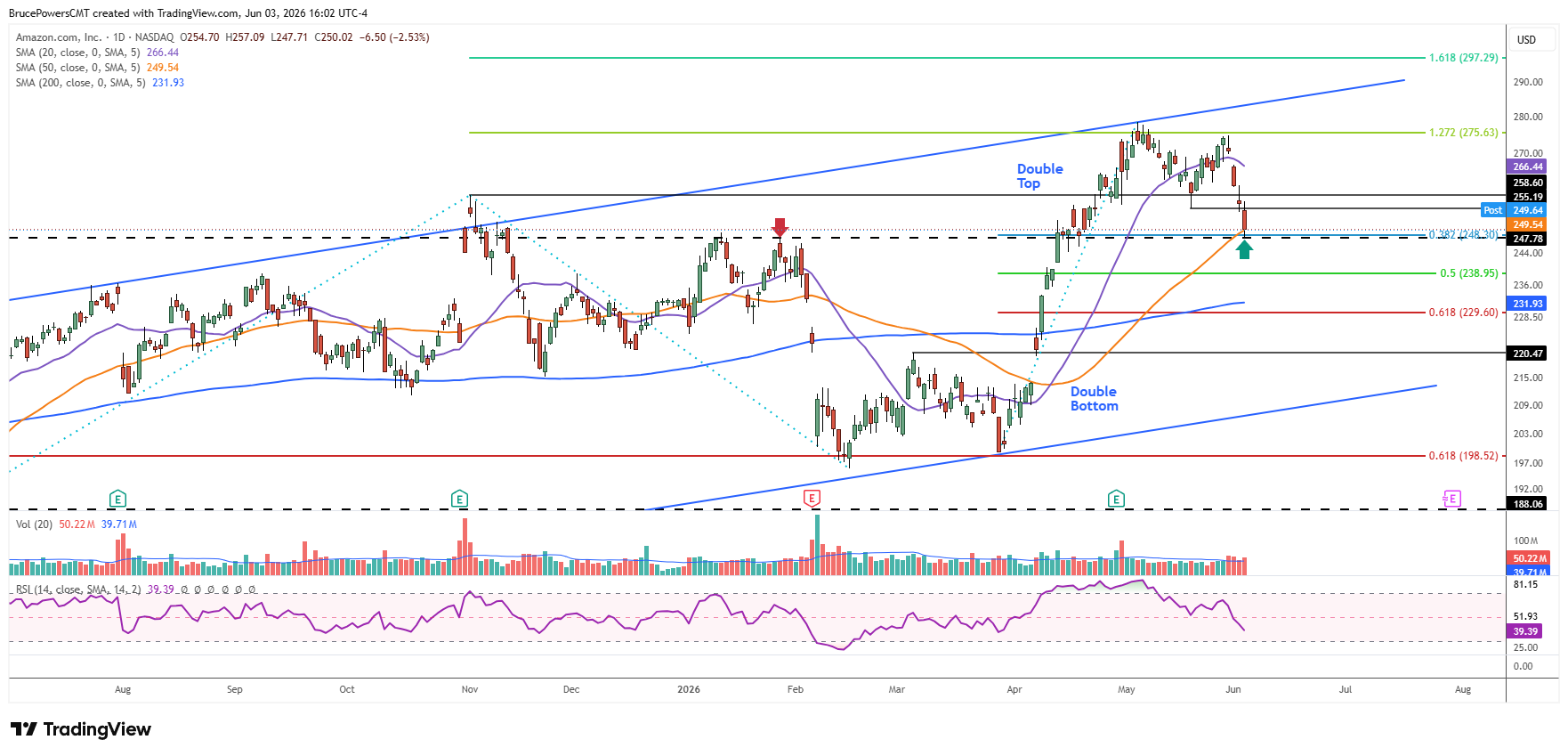
Amazon.com, Inc. (AMZN) broke down from a double top pattern on Wednesday, falling to a low of $247.71. That decline reached the first decision zone, as the confluence of several indicators suggests that support may be seen near the lows. The decline completed a 38.2% Fibonacci retracement of the prior advance and tested support near the 50-day moving average and prior resistance from January. However, the day ended weak, near the lows, and there were no signs of strength indicated.

First Support Zone Within Broader Uptrend
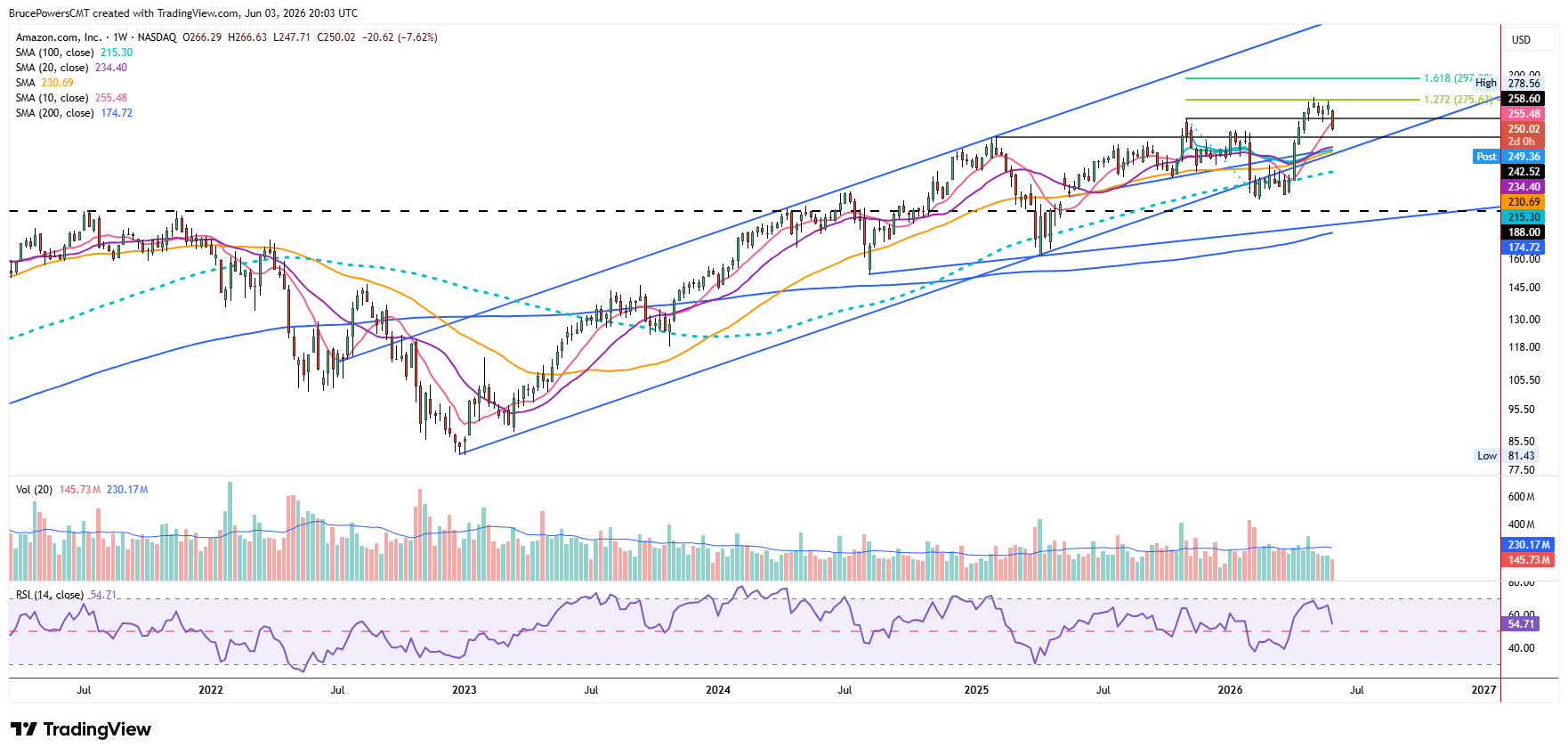
Although a deeper retracement may occur, AMZN is in the first area where support could hold and lead to bullish signs. AMZN reached a record high of $278.56 in early-May, confirming the continuation of the long-term bull trend. A subsequent pullback to test prior structure resistance as support is a healthy development within the broader trend. Since the 50-day moving average is a key trend indicator and it has not been tested as support since it was reclaimed in early-April, it could hold.
Resistance Signals After Double Top Confirmation
Nonetheless, since a bearish double top triggered, it suggests that a deeper retracement is possible. If a bounce off Wednesday’s low follows before new lows, the reaction near the neckline of the double top at $255.19 and the prior peak from November at $258.60 should provide clues about demand. Those are areas of potential resistance, while the 20-day moving average near $266.49 and now declining may represent a more significant short-term resistance level to watch.
Short-Term Trend Weakness Emerges
Since it was reclaimed in early-April, the 20-day average represented dynamic support for the near-term trend until it broke on May 15. It became clear on June 1 that the 20-day average was failing, as support gave way during a sharp gap lower accompanied by increased selling pressure that followed.
Deeper Support Risk if Breakdown Extends
If instead, AMZN continues to fall below $247.71, the 50-day moving average would have failed as support, opening the door to the long-term 200-day moving average. It is now at $321.92 and rising, though price would first need to stabilize before any move toward that level becomes relevant. The 61.8% Fibonacci retracement at $229.60 is not too far away from the average and can be watched in conjunction with the area of the 200-day moving average.