The US interest rate outlook remains uncertain despite the softer inflation report for June. Strong credit growth and rising energy prices could keep inflation risks elevated and the Fed hawkish. The central bank may keep rates unchanged in the near term and use other tools to limit the liquidity. This cautious policy outlook could support the US dollar index in the short term while keeping EURUSD under pressure.

Credit Growth Raises US Inflation and Fed Rate Risks
Credit Growth Points to Longer-Term Inflation Risks
The drop in US CPI in June does not eliminate the broader inflation risk. Consumer price data is volatile and can change monthly due to the instability of energy prices. Inflation may again turn positive in the near future due to the recent increase in oil and fuel prices. This makes it difficult for Fed to view pricing pressures as under control based on one soft inflation report.
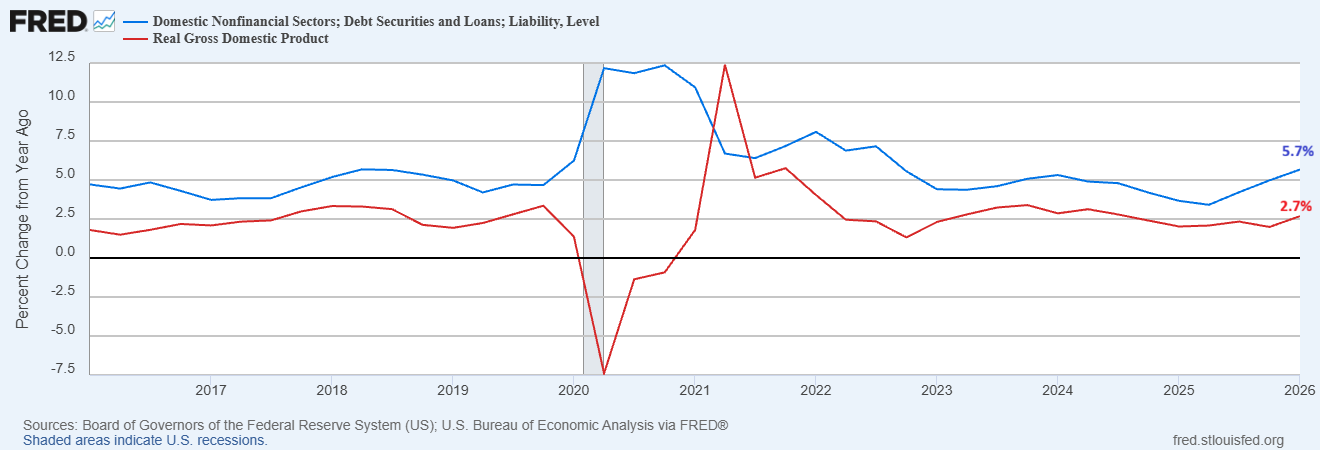
Credit growth gives a better picture of the long term inflation risks. The 12-month change in domestic debt was 5.7% as compared to the 2.7% increase in real GDP over the same period. This 3% gap indicates that the credit grew at a higher rate than the real economy. This implies that the additional borrowing could be a source of persistent inflationary pressure if the increase in spending is not matched by an increase in output of goods and services.
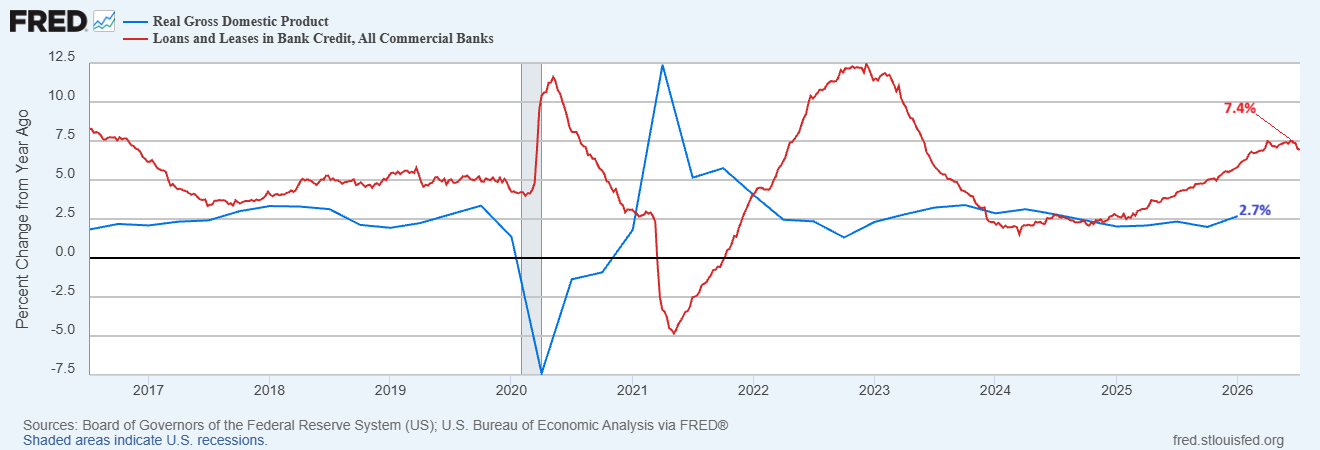
The inflation may be growing beneath the surface in the second quarter. Bank credit growth picked up to 7.4% for the 12 months ending in June before a drop to 7.0%. But the real GDP growth was at 2.7%. This means that the credit was growing 4.7 percentage point faster than the real output. This would make it more difficult for the Fed to get inflation down to the 2% target, despite more stable energy prices.
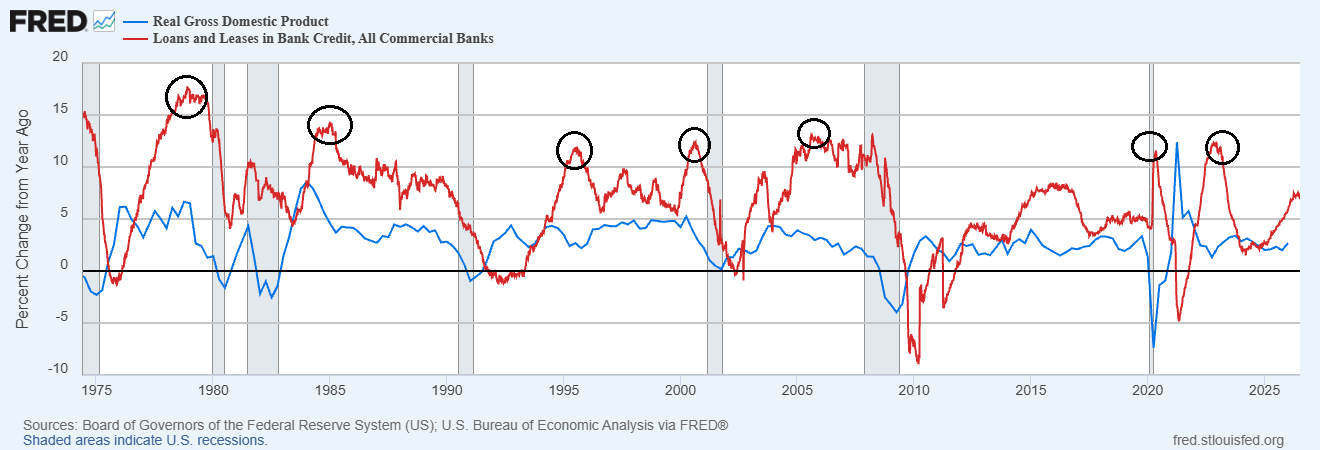
The chart below shows the historical data for credit growth and real GDP. It is found that bank credit has often grown faster than the economy. This does not always lead to higher inflation but it can raise inflation risks when extra borrowing increases spending faster than the production.
EUR/USD Price Forecast
Every new EUR/USD analysis as it publishes, today's technical signal and key levels, live price — on one page.
See all EUR/USD forecastsFed May Keep Rates Steady for Now
Federal Reserve Vice Chair Philip Jefferson said that the current policy rate is suitable for the time being. He also said that the Fed may have to change its stance if inflationary pressure does not cool down soon. That means the Fed may not hike rates at its July 28-29 meeting but will leave the door open. Higher energy prices, tariff impacts and higher demand associated with AI investments may make a case for tighter policy later.
Fed Could Tighten Liquidity Without Raising Its Main Rate
Chair Kevin Warsh may also prefer to keep rates unchanged over the coming months while he assesses inflation, economic growth and the effects of earlier policy decisions. This means that the Fed could resort to other policy measures to reduce credit growth without raising its primary rate.
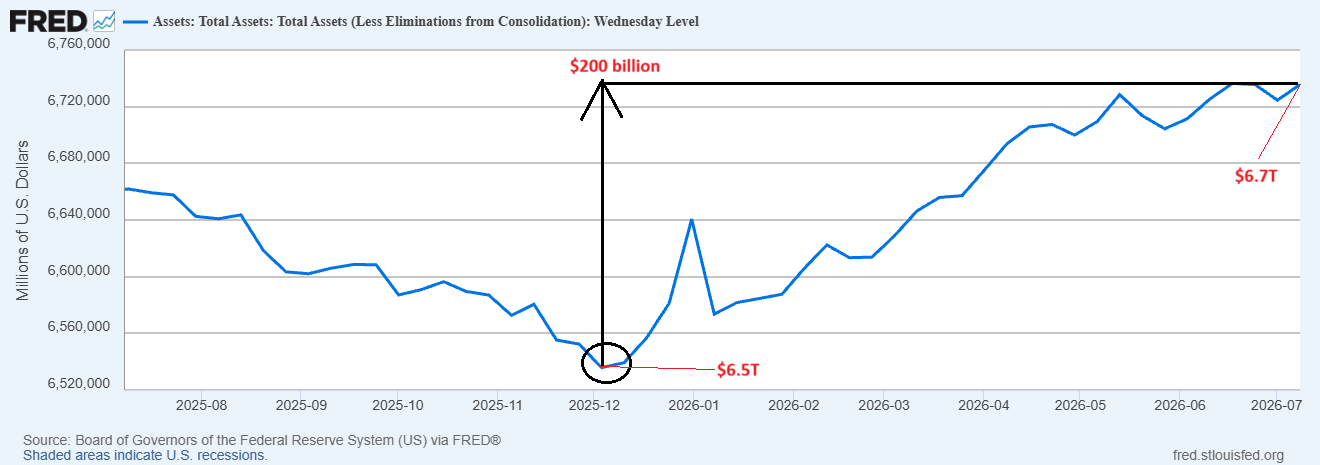
One possibility would be to shrink the Fed’s balance sheet. The central bank could allow more Treasury securities to mature without replacing them. It may also be able to reverse some of the $200 billion that it added to its balance sheet since December. This would drain liquidity out of the financial system and reduce the reserves of commercial banks.
But there would be significant risks if the balance sheets were reduced aggressively. Bank reserves might drop below US$3 trillion and stress short term funding markets.
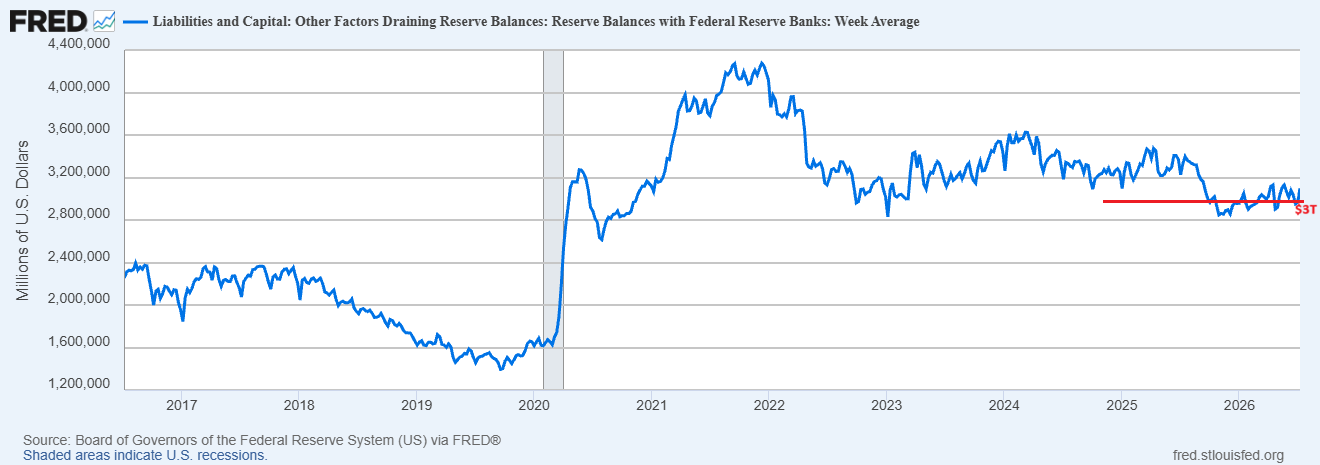
This issue took the form of a spike in the Repo rates in 2019 which necessitated the Fed to alter its course. Hedge funds also hold large leveraged Treasury positions funded through the repo market. A sharp increase in repo rates could force them to sell bonds and increase volatility in Treasury market.
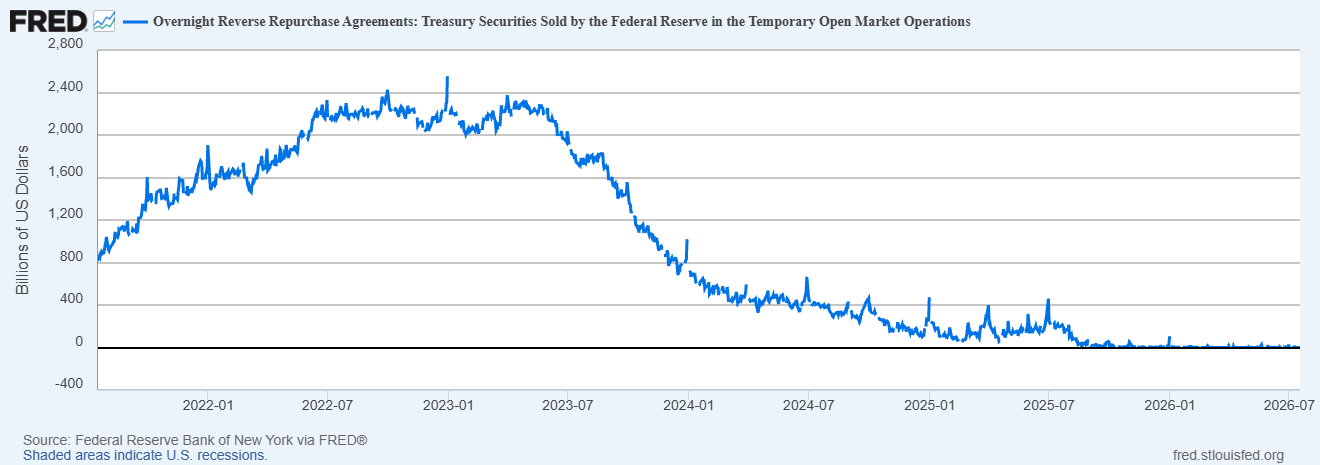
The Fed’s reverse repo balance is now almost back to zero. The Fed might offer a higher rate in order to draw some cash back from money market funds. This may reduce liquidity in private markets. But the effect could be small as facility now holds very little money.
US Dollar Index Forecast: Fed Rate Risks Support the Dollar
Fed Policy and Inflation Risks Support the US Dollar
The US Dollar Index could still find some support in the short term as investors are looking for the Fed to maintain its restrictive policy stance. The prospect of a future rate hike could also drive Treasury yields and demand for the dollar. Meanwhile, markets will likely continue to graze on the notion that the higher interest rates could persist for longer as U.S. credit growth strengthened and energy inflation increased.
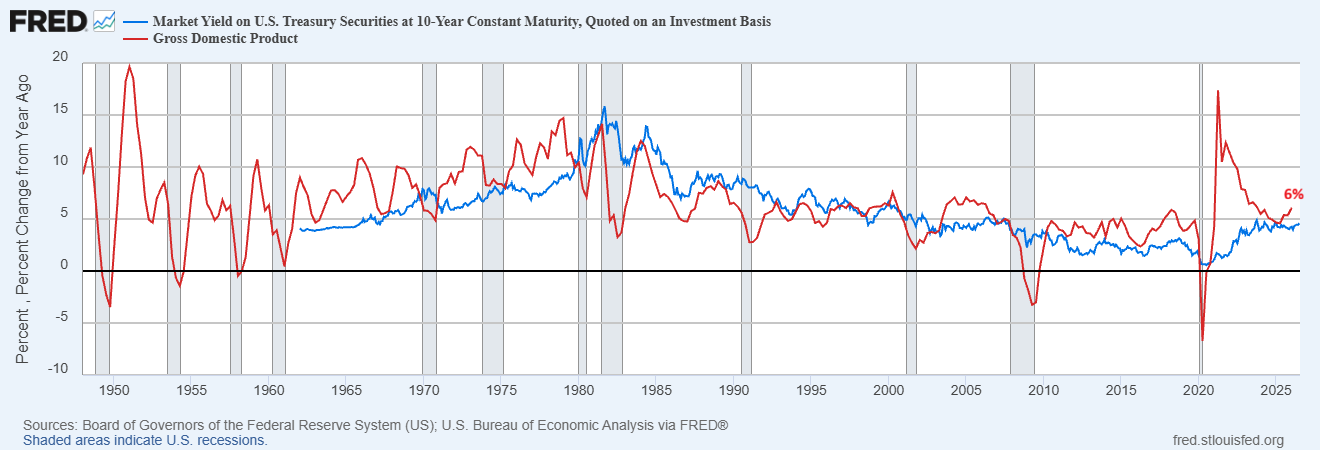
But the long term outlook for the dollar is less positive if the Fed hikes yields to protect the Treasury market. In the first quarter, nominal GDP expanded at an annual rate of 6.1%. This is well above the 10-year Treasury yield. If the bond yield is lower than nominal growth, it could result in negative interest rates. This may make the dollar less valuable and force investors to turn to gold, stocks and other tangible assets.
US Dollar Index Technical Outlook Points to 104
The weekly chart for the US dollar index shows that the index broke the key 100.50 level in June 2026 and triggered a rally to a high of 101.80. After encountering short-term resistance at 101.80, the US dollar Index corrected back toward the 100.50 level last week and marked a low.
The formation of a rounding bottom since June 2025 and the breakout above 100.50 indicate that the short-term direction for the US dollar is higher. A break above 101.80 may push the US dollar Index toward 104 in the short term.
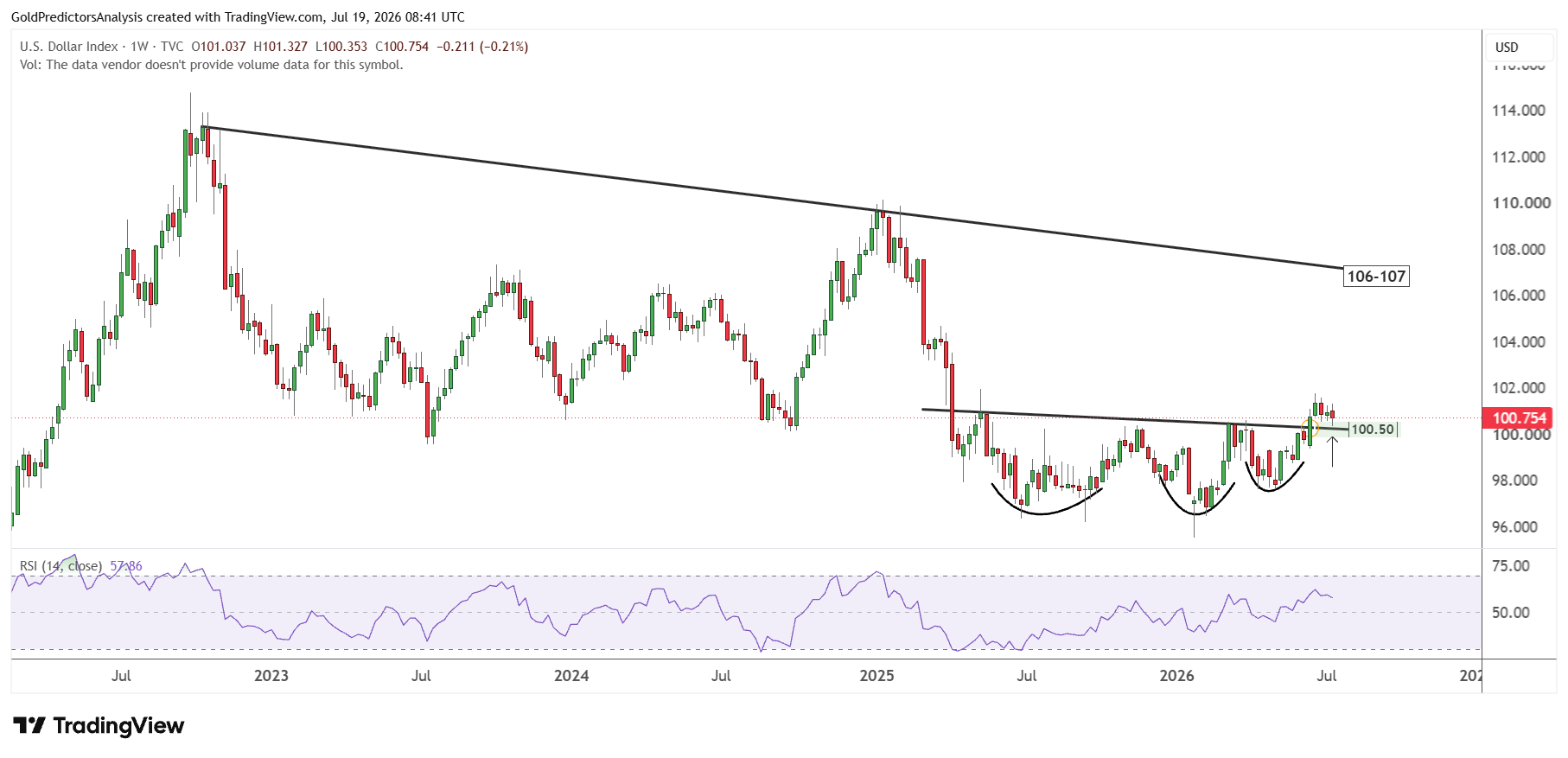
But a break above the 104 level may push the index toward the 106–107 zone, which is the overall resistance marked by the descending trendline extending from the October 2022 highs. But the overall long term trend for the US dollar Index remains bearish.
The importance of the current support zone is also seen on the monthly chart which shows that June closed above the key resistance level of 100.50. This suggests that a break above June highs may push the index toward the resistance levels of 104 and 106 in the short term.
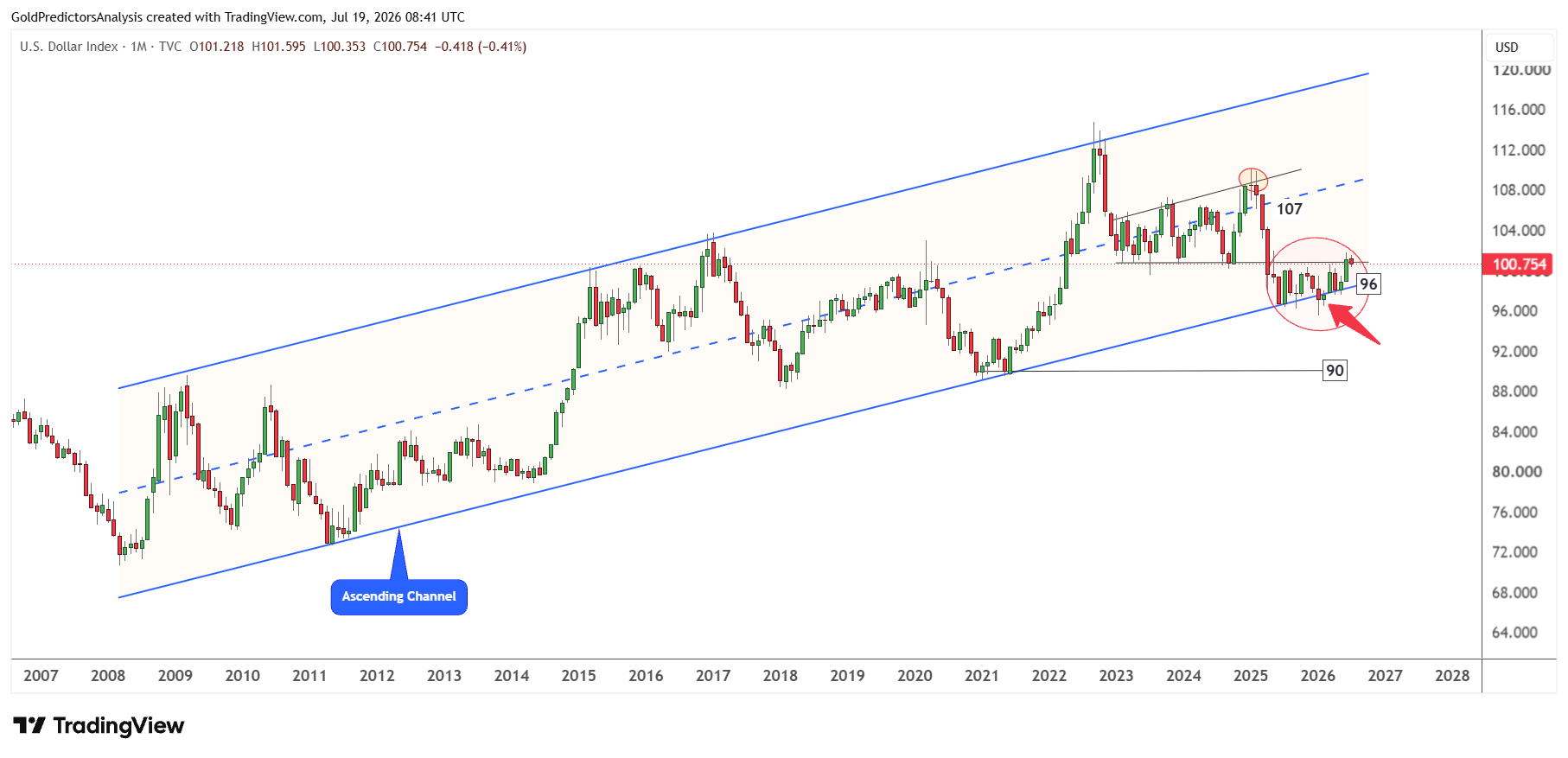
But a break below the 96 level may break the ascending channel pattern and push the index toward the 90 level.
EURUSD Forecast: Fed and ECB Policies Drive the Next Move
Fed and ECB Rate Outlook Keeps EURUSD Under Pressure
EURUSD may remain under pressure in the near term as the ECB expects to hold rates on July 23 and the Fed continues to signal a hawkish stance on rate hikes in September.
Eurozone inflation slowed to 2.8% in June, but still remains above the ECB’s 2% target rate. The chances of an imminent rate hike could be low due to weak economic growth, but rising oil, gas and electricity prices could keep eurozone inflation prospects high.
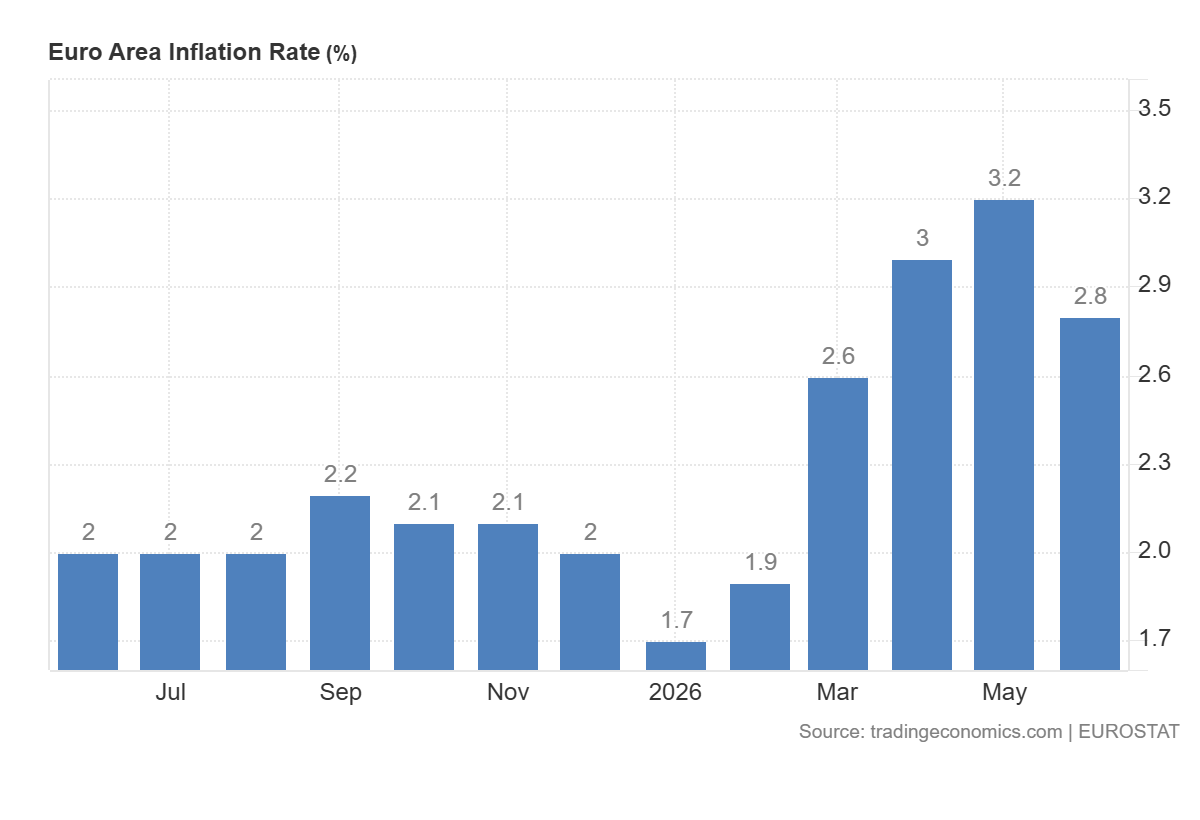
The pair could recover from the grounds if the ECB hikes rates in September, while the Fed holds. The latest surge in energy prices has led markets to factor in two more rate hikes by the ECB this year. The ECB would have to deliver a more robust policy response to move the eurozone closer towards the U.S. interest rate. But if eurozone growth is weak, EURUSD may struggle to rally significantly.
EURUSD Technical Outlook Points to 1.12 Support
The strong rally in the US dollar index since January 2026 has pushed EURUSD down toward support at 1.1375. EURUSD has been consolidating around this support level since the June 2026 lows and is looking for its next direction.
If EURUSD breaks below this support level, it may put further pressure on the pair and push it toward 1.1260. The 1.1260 level remains the key support, defined by support line of the broadening wedge pattern. This support line extends from the May 2025 low.
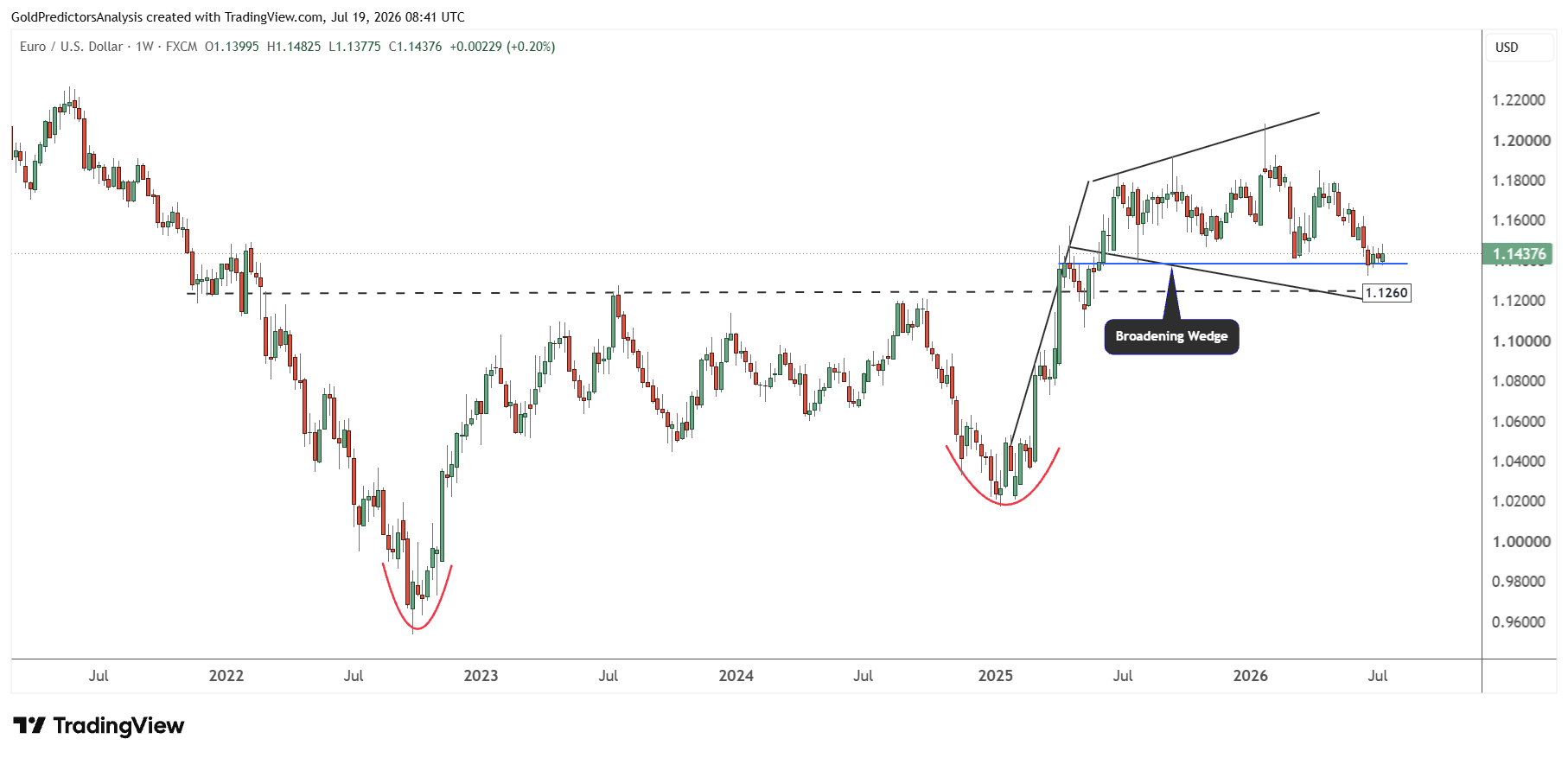
The EURUSD direction remains bullish in the long term as the US dollar Index remains bearish. A break below 96 in the US dollar Index will likely push EURUSD higher in the long term.
The importance of the current support zone in EURUSD is also highlighted on the daily chart. The chart shows that 1.1360 to 1.1470 remains the critical support zone where the pair is currently consolidating. The 50-day and 200-day SMAs also remain in negative territory.
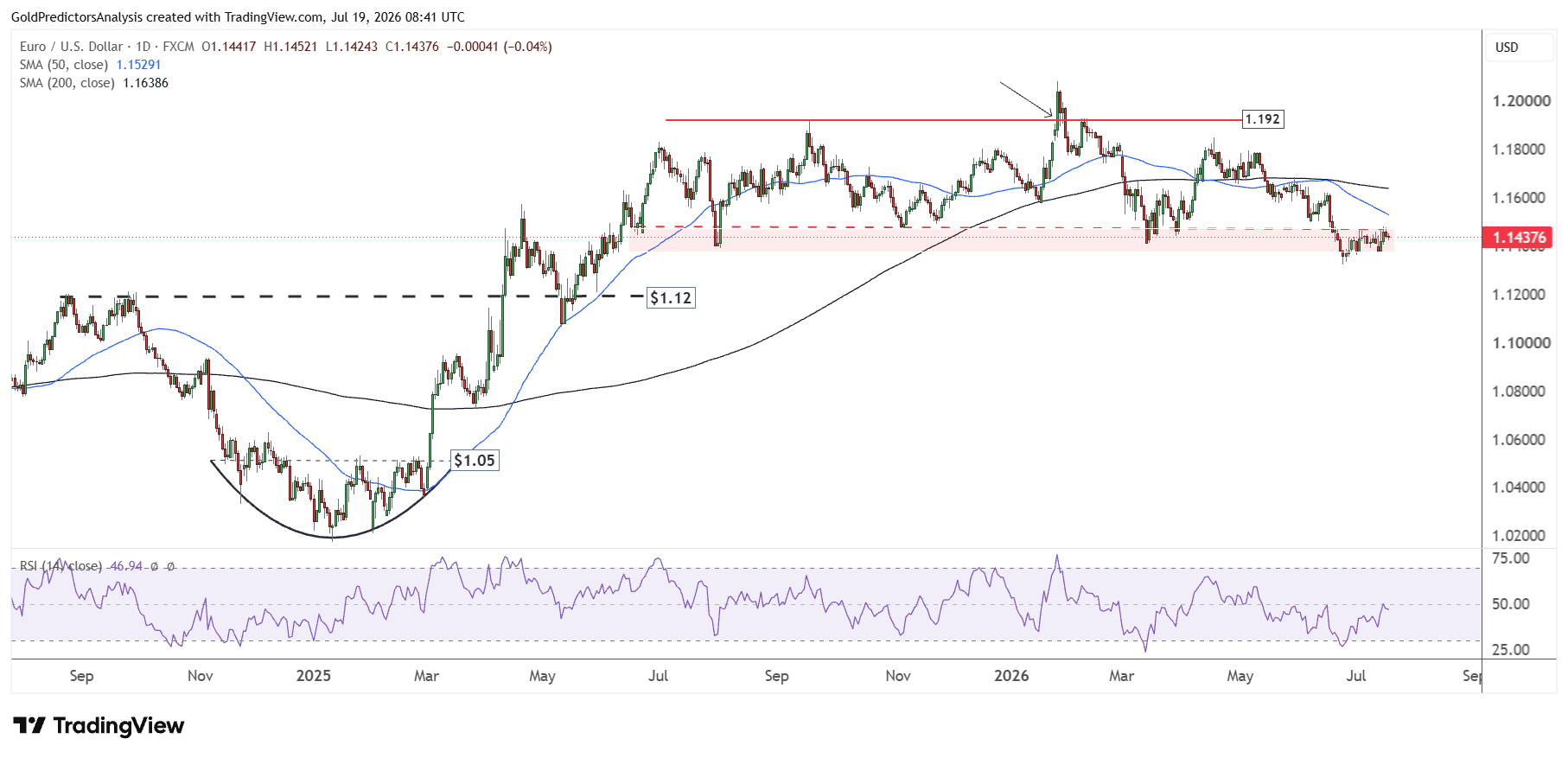
But the RSI has rebounded from oversold levels and moved toward the midpoint. This indicates that a break below 1.1350 may push EURUSD further down to the 1.12 zone.
Bottom Line
Credit growth and higher energy prices may keep US inflation risks elevated in the short term. The Fed may leave rates unchanged in the near term but it is unlikely to turn dovish while the inflation risks persist. It may instead use its balance sheet or other liquidity tools to slow credit growth. But the Fed must avoid tightening too quickly because stress in funding markets could raise bond volatility.
The US Dollar Index may stay strong above 100.50 and could test 101.80 and 104 if rate expectations remain high. EURUSD may remain weak as long as it remains below the 1.1645. A break below 1.1320 could push the pair toward 1.12. But the long term outlook for EURUSD may improve if the dollar breaks the long term support of the 96 level.
Read more: BOJ Rate Hike Risk Builds as USDJPY Eyes 175