
The interest rate outlook for Japan remains uncertain as inflationary pressure continues to build. The producer prices are rising, import costs remain high and government bond yields have moved to multi-decade highs. These trends support the case for another Bank of Japan (BOJ) rate hike later this year. But the BOJ may still wait for stronger wage growth and increase in consumer inflation. This leaves the yen sensitive to policy signals, while USDJPY, GBPJPY and EURJPY remain technically strong.

BOJ Rate Hike Outlook Strengthens as Japan Inflation Rises
Japan’s producer price index (PPI) increased by 7.1% YoY in June. This beat the market expectation of 6.8% and exceeded the upwardly revised 6.6% gain in May. The increase indicates that businesses are passing their increased input costs to customers faster than in the past. The trend could increase the consumer inflation and lead the BOJ to tighten again.
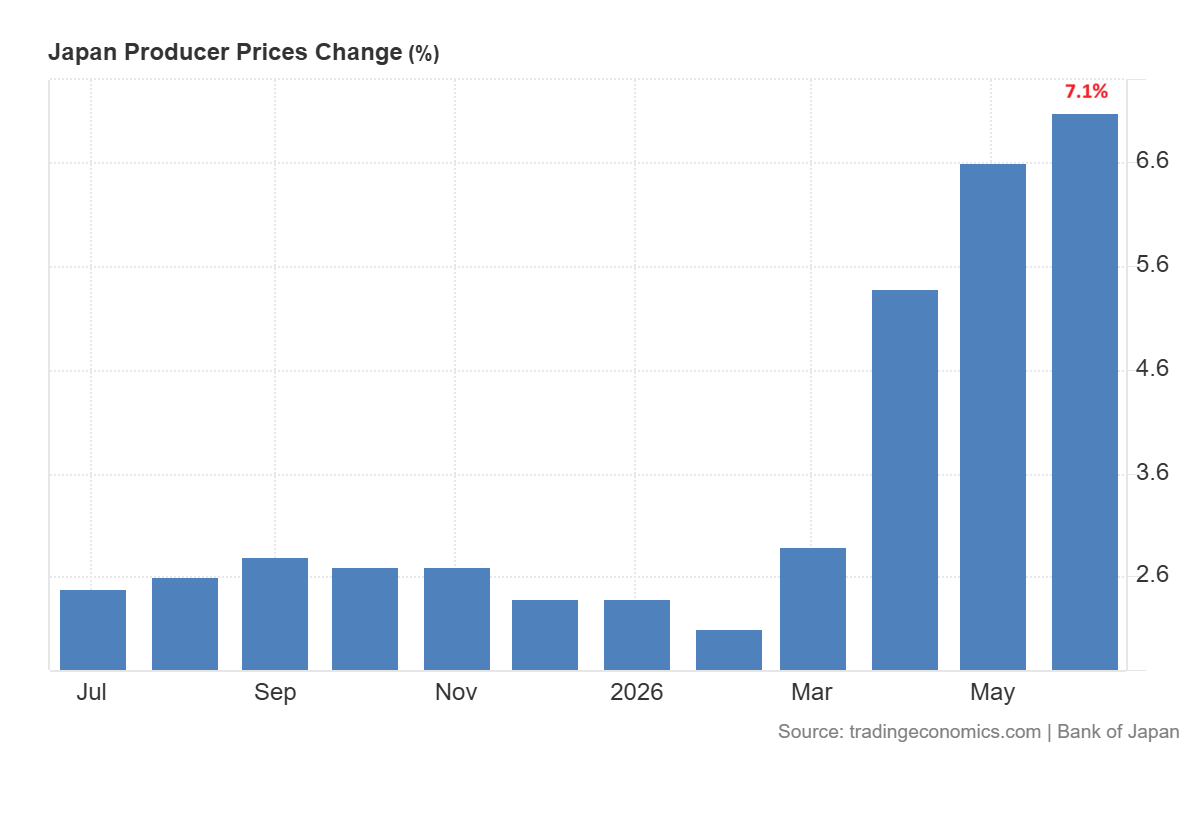
According to the data, the fuel prices increased by 22.8% while non-ferrous metal prices jumped by 39.2%. Energy prices were pushed up by the Middle East conflict while the AI material demand has lifted the metal prices. These pressures may remain high if tensions continue and supply conditions remain tight. This suggests that the BOJ may hike the interest rate in October.
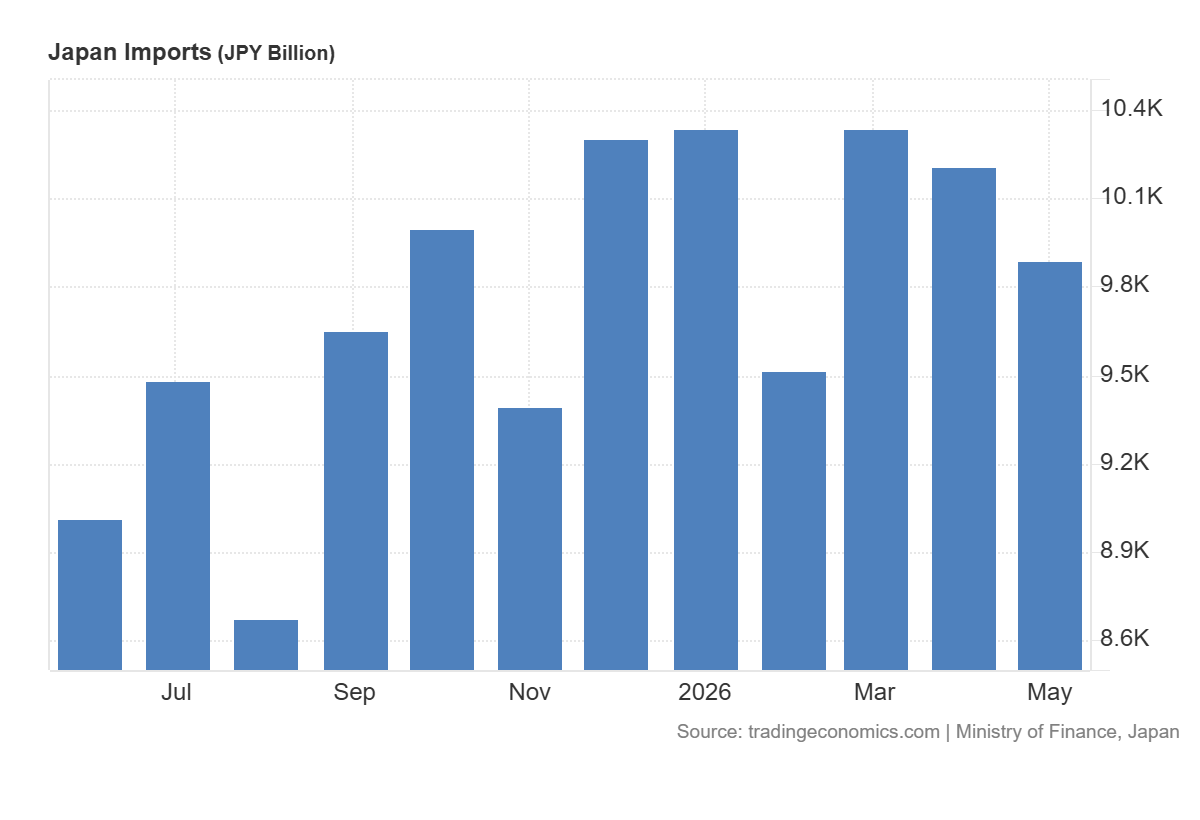
A low yen is putting on a new layer of inflation. The import prices continued to rise as weak yen and higher energy costs raised the cost of imported goods. The chart below shows that Japan’s imports increased 12.5% to JPY 9,890.2 billion in May 2026. Now the BOJ must decide whether the higher import prices will spread into wages and consumer prices or remain at the wholesale level.
Japan Bond Yields Hit Multi-Decade Highs on Inflation Fears
Japanese government bond yields are also pointing toward a higher interest rate environment. The 10-year JGB bond yield rose to a 2.90%, the highest rate since September 1996. It rose during nine consecutive sessions since 26 June, in response to rising oil prices, higher inflation and concerns about Japan’s fiscal health.
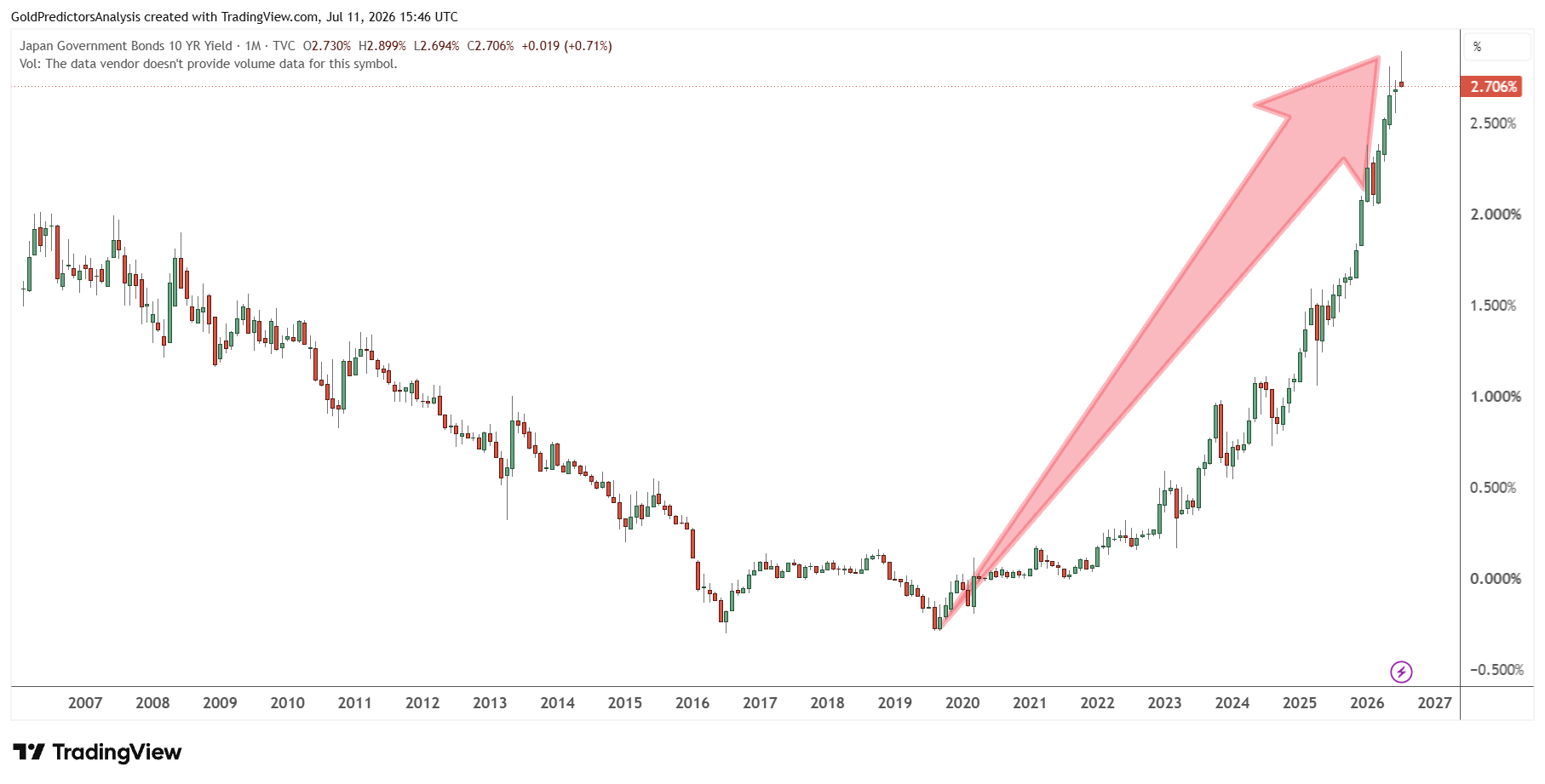
The strong drop in yields on Friday does not change the bullish trend. Rising yields suggest that the bond investors want greater compensation for the long term inflation risks.
The long term bond yields have increased with bigger momentum. The 20-year yield rose to 3.89%, while the 30-year yield reached 4.03%. The 40-year yield advanced to 4.055%. These moves indicate that investors are worried about the big government spending plans and that the policy may stay too loose and inflation will continue to rise.
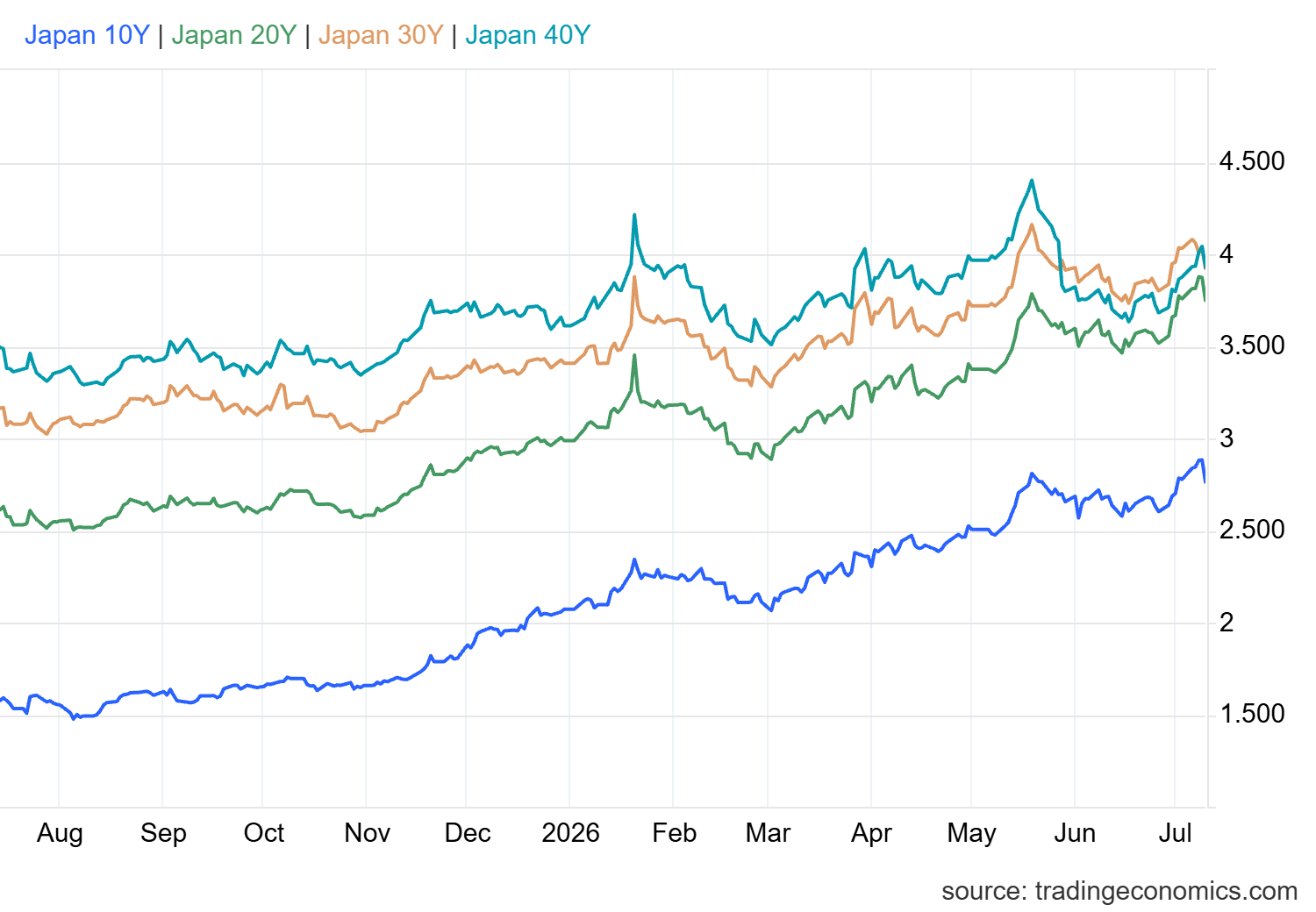
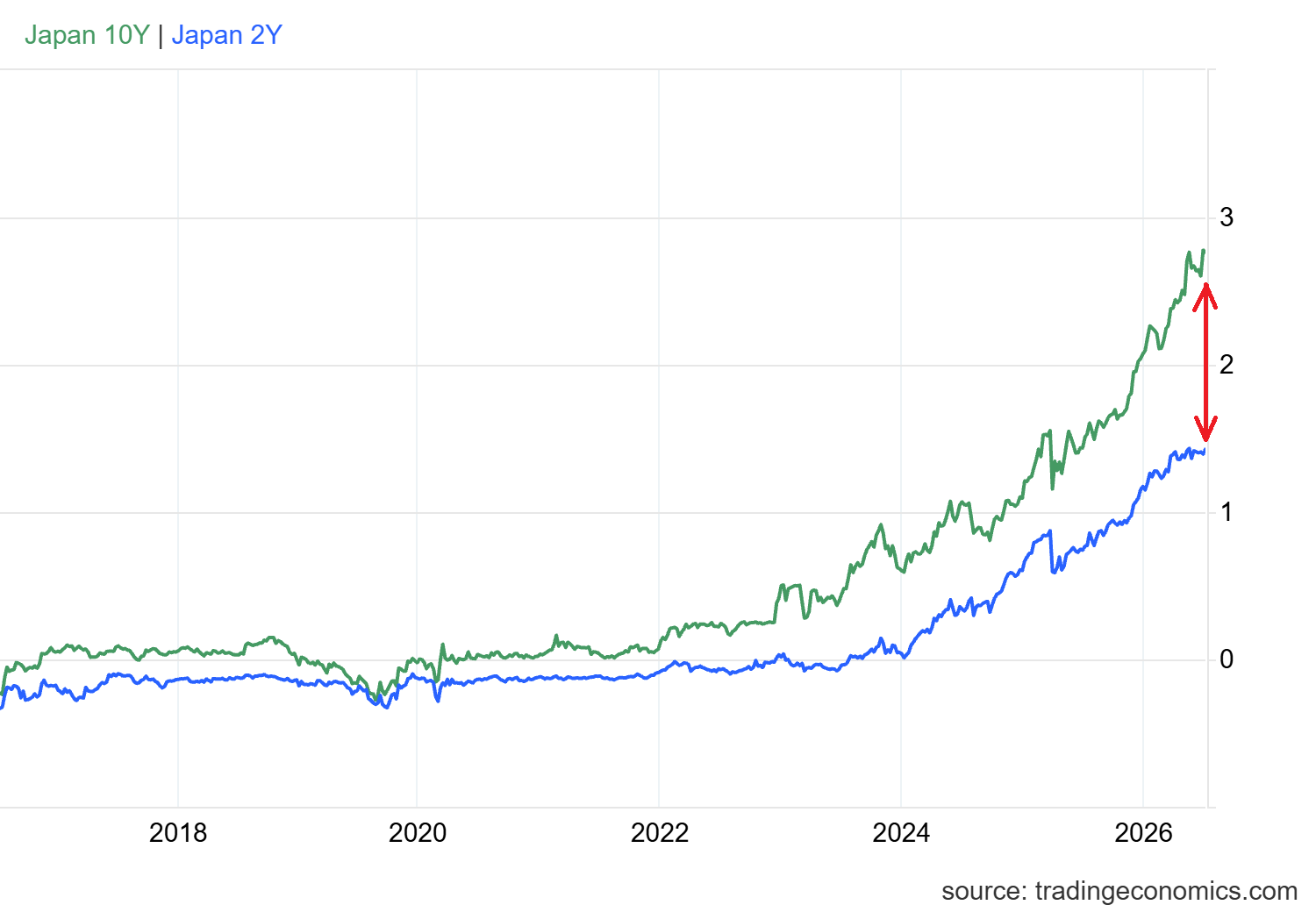
But the shorter end of the yield curve is sending a more cautious signal. The 2-year yield reached to 1.445% and the 5-year yield reached to 1.99%. The yield gap between the 10-year and 2-year yields has increased significantly as seen in the chart below.
The steepening reflects a greater sense of inflation risk in the long end, and less confidence that the BOJ will hike soon. This suggests that BOJ may wait for stronger consumer prices and wages to increase its policy rate from 1% to 1.25%.
USDJPY Forecast: BOJ Rate Hike Risk Challenges Dollar Strength
US–Japan Yield Gap Narrows as Japanese Yields Rise
The interest rate outlook creates mixed environment for USDJPY. The yen should find support with higher Japanese yields and the prospect of another BOJ rate hike. A more hawkish BOJ could reduce the yield gap between Japan and the U.S. This would detract from any yen funded carry trades and may potentially lead to a lower USDJPY.
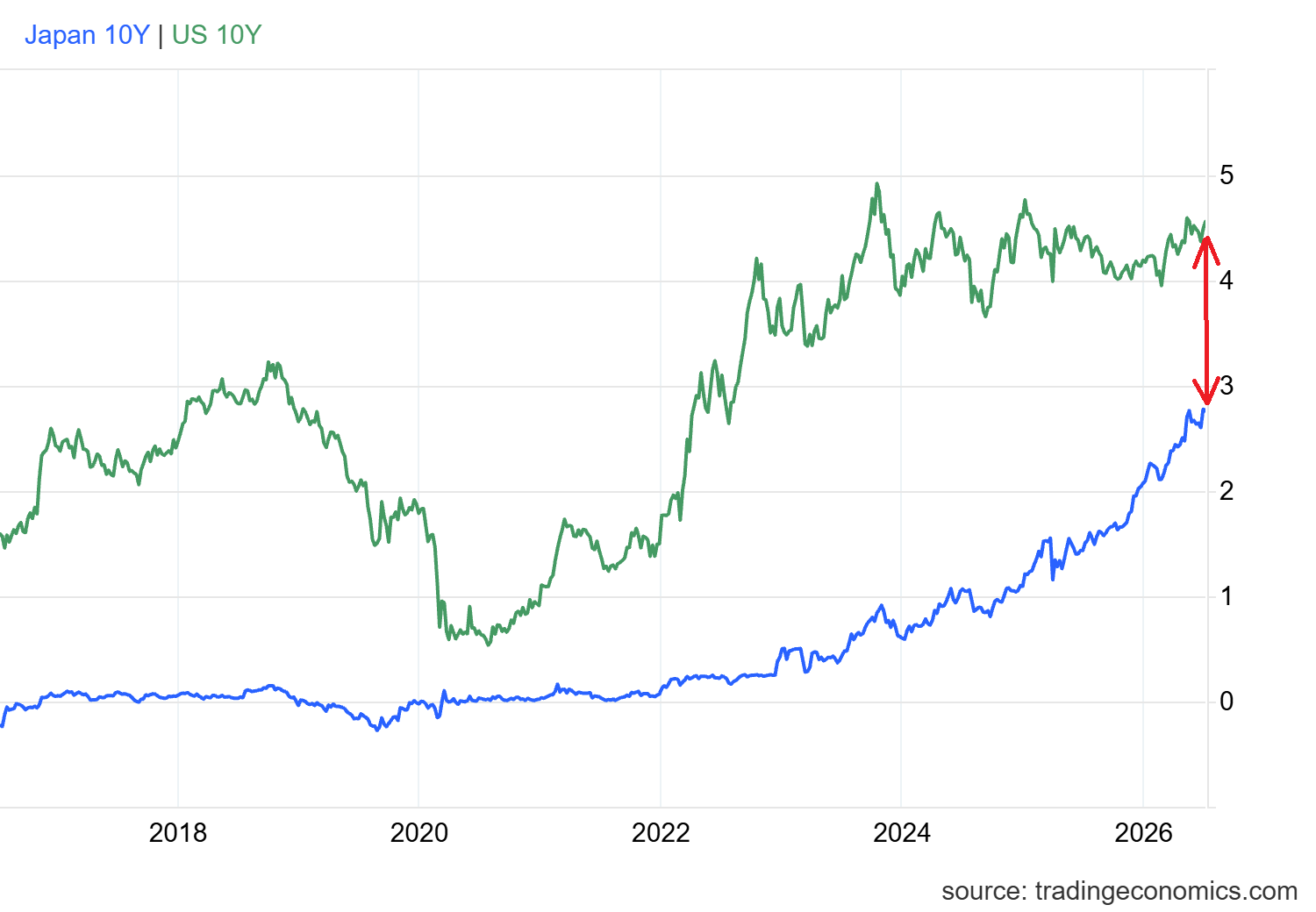
The chart below shows that the Japanese yields have increased much faster since 2022. But the U.S. yields have remained relatively high. As a result, the yield gap between the two countries has narrowed. This trend reduces the interest rate advantage of holding dollars over the yen. This may provide support for the Japanese currency. But the U.S. yields remain higher so the dollar still retains an important yield advantage.
But the low yen value still plays a crucial role in Japan’s inflation issues. As energy import prices go up, the demand for foreign currencies and the pressure on the yen increase. This might keep USDJPY high until the BOJ gives more clear indication of what it will do next. Any delay of the next rate hike would be positive for USDJPY while guidance of an October increase could trigger an import yen recovery.
USDJPY Break Above 163.70 Opens the Door to 175
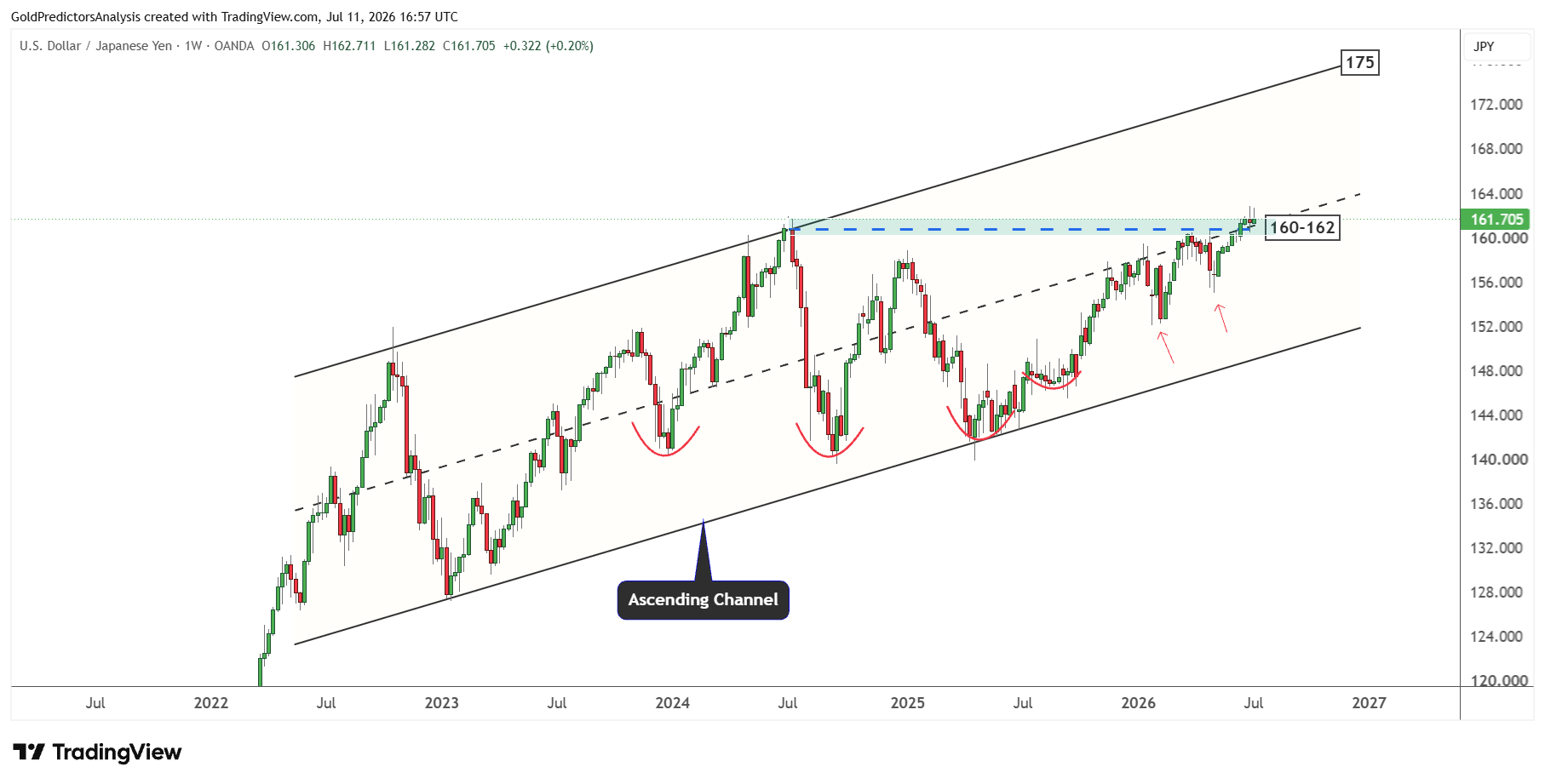
From technical perspective, USDJPY is consolidating at the pivotal area of 160 to 162. The price is compressing within this region before an upside breakout. A break above this zone would likely open the door for strong surge in USDJPY toward the 175 target. This target is defined by the ascending channel pattern that extends from the 2023 lows.
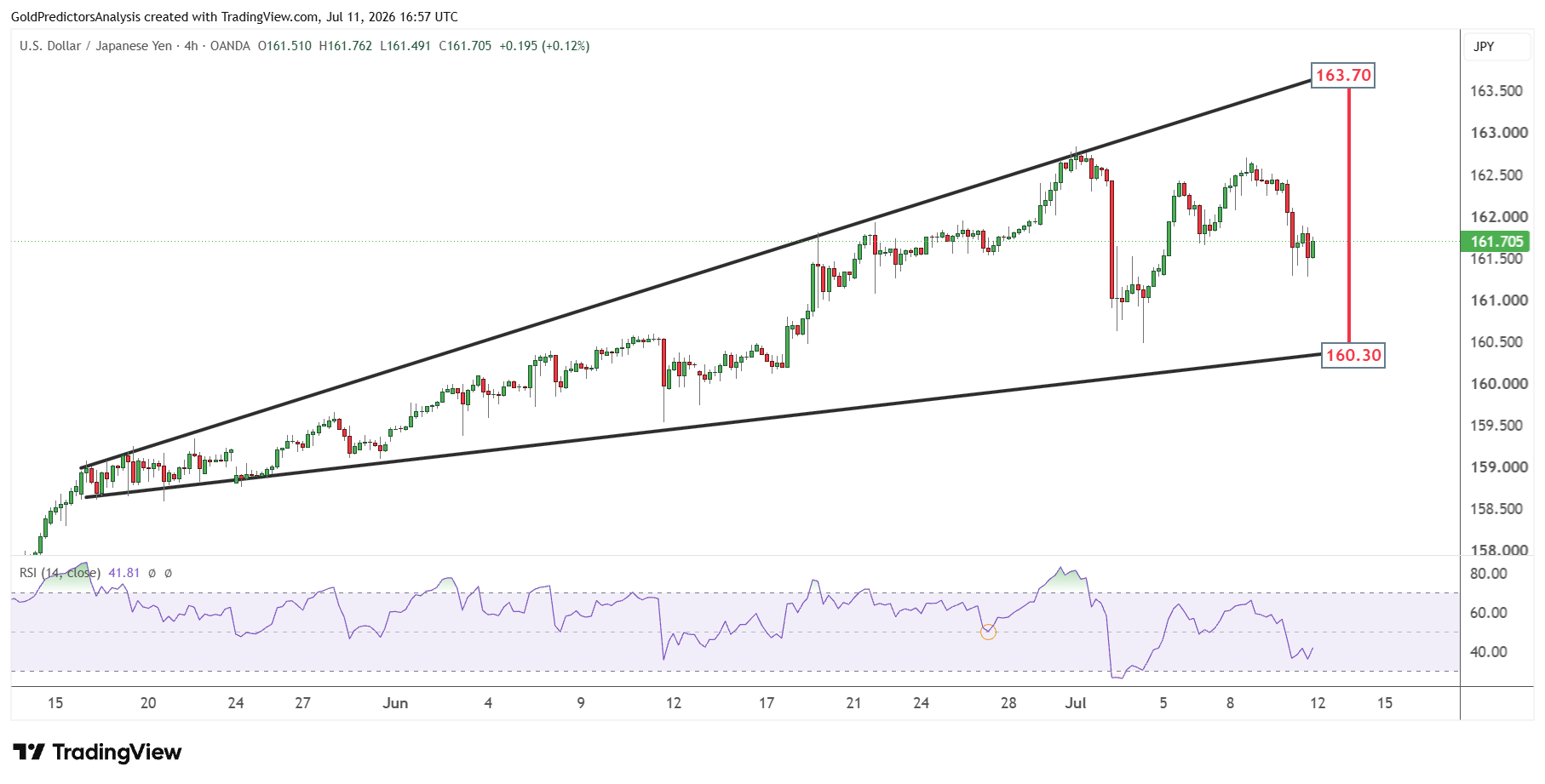
The consolidation around this important region is also visible on the short term 4-hour chart. It shows that the pair is now consolidating between 160.30 and 163.70. The range is widening and prices are compressing within an ascending broadening wedge pattern. A break above 163.70 would indicate a stronger rally in USDJPY toward 166. But 160.30 remains strong support in the short term. Any correction is considered a buying opportunity for traders to push the pair higher.
GBPJPY Forecast: 218 Breakout Opens the Door to 220
Higher Japan rate expectations may also put pressure on GBPJPY. The very large interest rate differential between the United Kingdom and Japan has been good for the pound. But this advantage may weaken if the BOJ hikes the rates again to 1.25%. The higher Japanese bond yields could encourage investors to reduce carry trades and move capital back to yen.
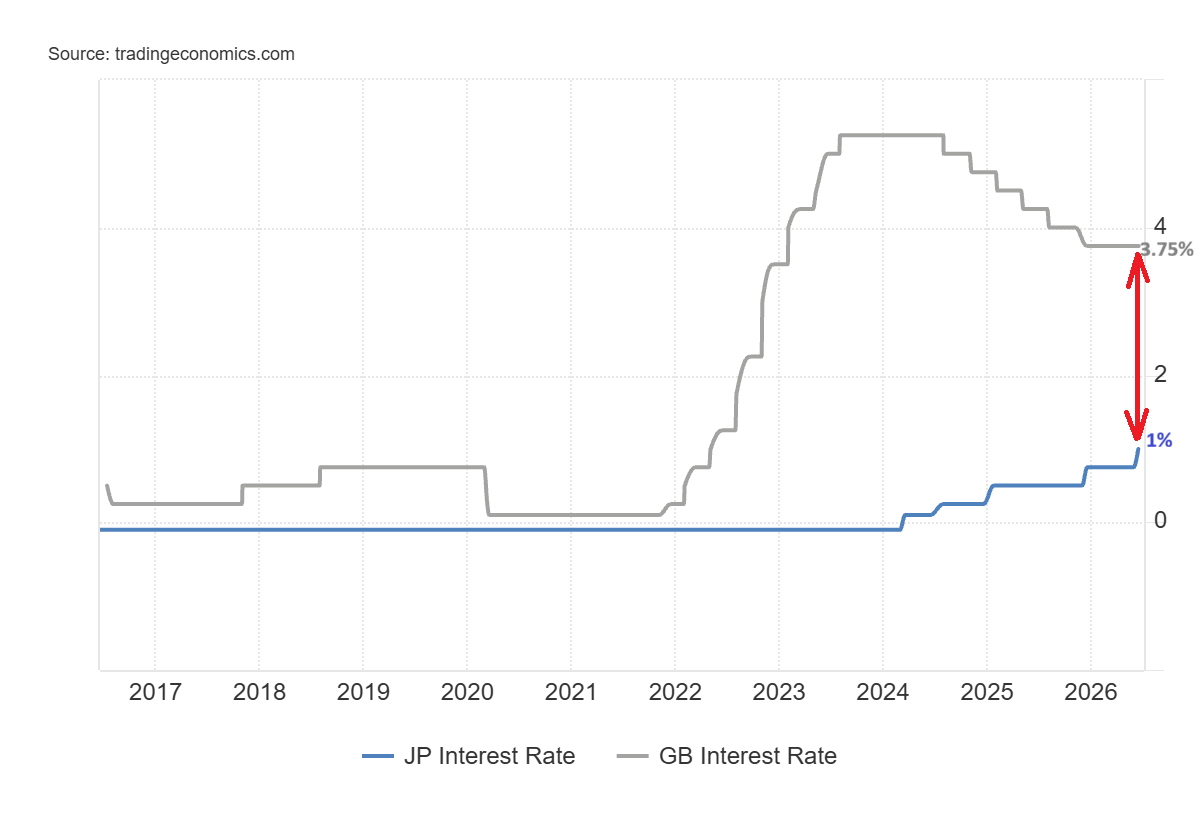
But the pair may still be supported if Bank of England maintains higher rates or takes a conservative approach to rate cuts. Thus, GBPJPY will be reliant on both central banks’ relative directionality. The most bearish risk would be a hawkish BOJ and a softer Bank of England outlook.
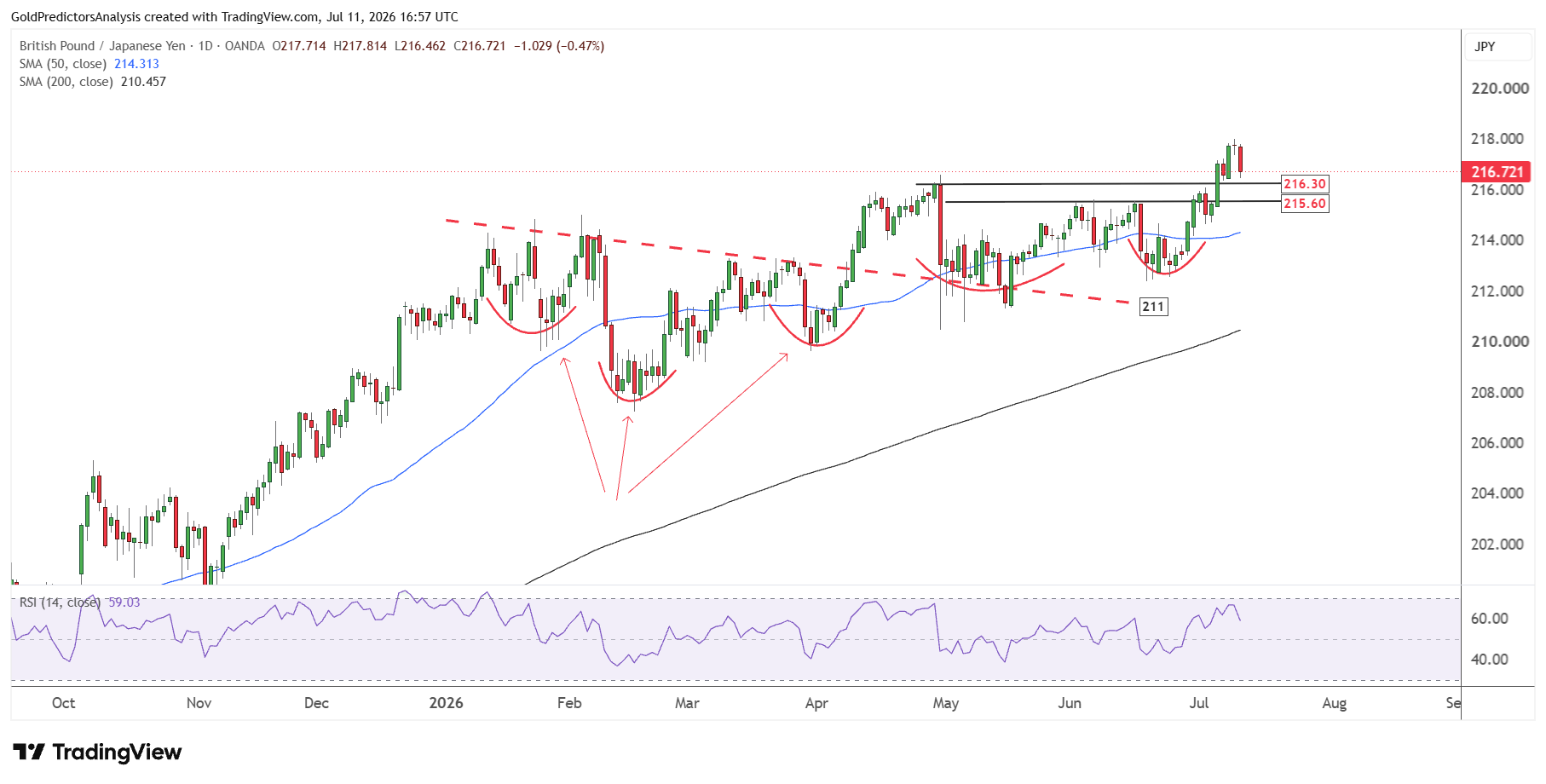
GBPJPY also shows strong positive price action. This positive price action is reflected in the formation of inverted head and shoulders pattern from January 2026 to April 2026.
This bullish consolidation pattern broke higher in April 2026. After the breakout, the pair continued to rally on the strength of the pound and the weakness of the Japanese yen. The pair has already broken 216.30 and is now dropping back toward support to attract buyers. The 215.60 to 216.30 area remains strong support. A break above the 218 level would likely push the pair to further highs.
EURJPY Forecast: Bullish Trend Targets 190.50
Eurozone rate expectations are not that aggressive. Therefore, EURJPY could be more responsive to BOJ communication. If the European Central Bank pivots towards easier policy ahead of the BOJ’s next rate increase, the interest rate spread between Europe and Japan will narrow. This would provide support for the yen and increase the risk of a drop in EURJPY.
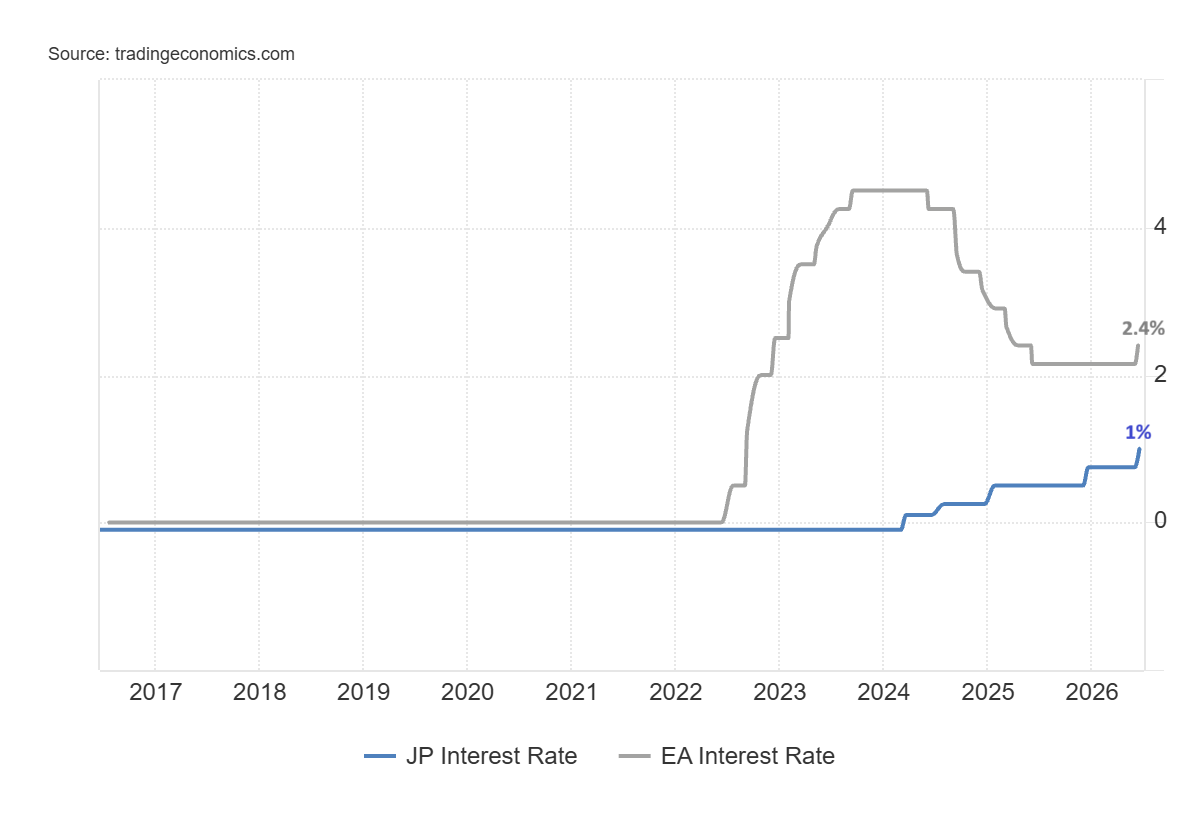
The outlook also depends on the global risk sentiments. The escalation in the conflict in the Middle East would drive up energy costs for Japan and Europe. But imported fuel needs could exert pressure on the yen in the near term for Japan. The EURJPY could hold steady ahead of the BOJ. But a clear sign that the bank will hike rates in October or at year’s end could generate a deeper pullback.
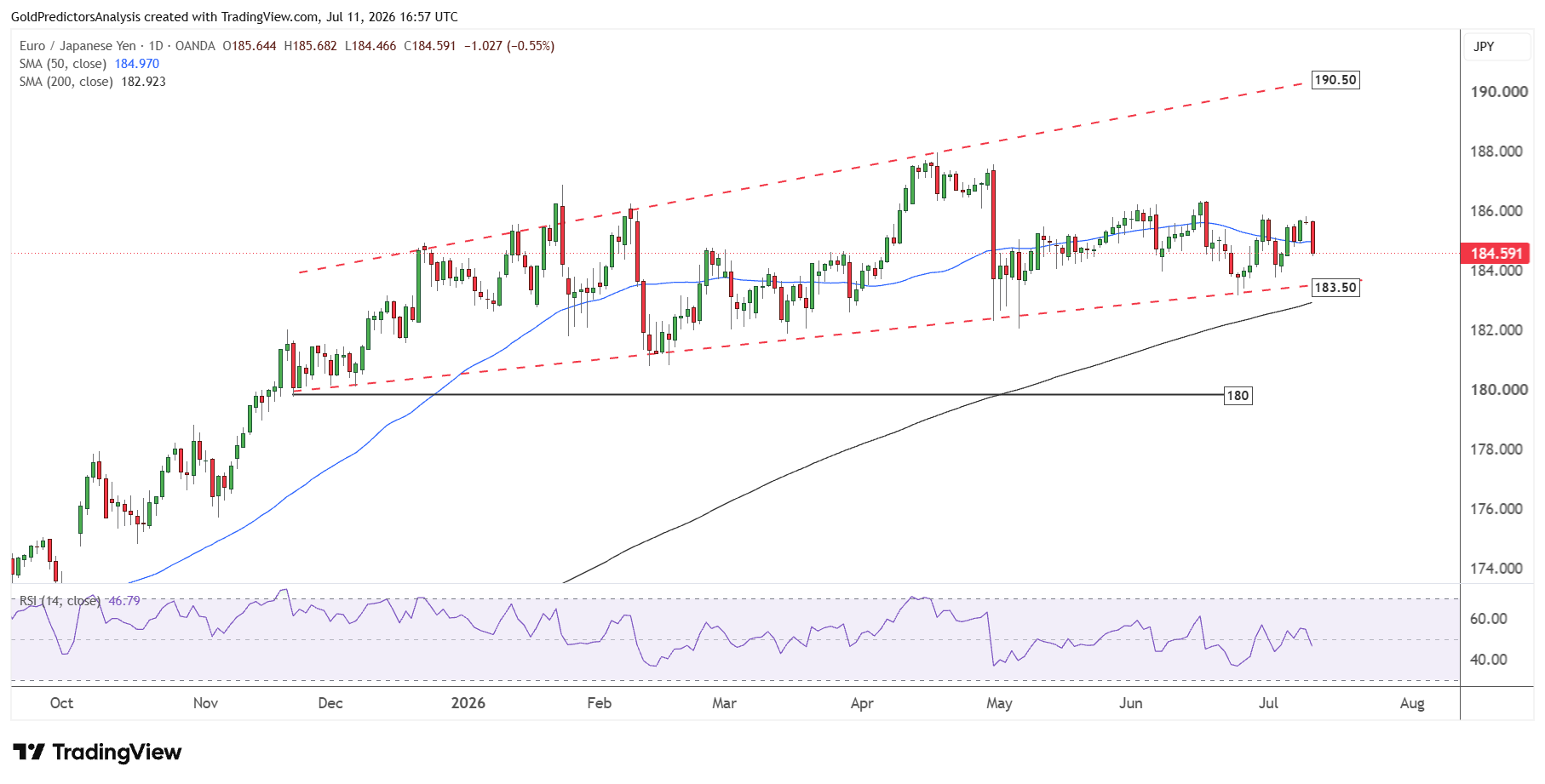
EURJPY also remains strong and is consolidating within rising trend lines. The immediate support remains at 183.50. The pair is also supported by the 200-day SMA at 182.80. If EURJPY continues higher, the immediate target remains 190.50. As long as the 180 level holds in EURJPY, the next move in the pair will likely be higher. The 50-day and 200-day SMAs are rising which indicates that any correction may attract new buyers.
Final Words
The interest rate outlook in Japan remains tilted towards further tightening. The producer prices are high, import costs are increasing and bond yields are rising. These factors suggest another BOJ rate hike. But the central bank might still wait for the clear signals from wages and consumer inflation. A rate hike from 1% to 1.25% could be on the cards later this year if energy prices remain elevated and the yen remains weak.
If BOJ hints at a rate hike in October or at the end of the year, the yen could get some support. But the technical picture of USDJPY, GBPJPY and EURJPY remains bullish. A break above 163.70 in USDJPY would open the door for a rally to 175. GBPJPY might push higher towards 220 and EURJPY could head to 190.50.
Read more: Weak Jobs Data Hits Fed Hike Odds as Dollar Tests Support