
The latest jobs report has changed the interest rate outlook. The US economy created fewer jobs than expected in June, which reduces the pressure on Federal Reserve (Fed) to hike rates this month. But the data is not fully weak. The overtime hours are rising, temporary jobs are improving and wage growth has not collapsed. This creates challenging conditions for the Fed. It can wait until July but it may still keep the door open for another rate hike later this year. This uncertainty keeps the US dollar supported near key levels and makes EURUSD sensitive to every change in Fed and European Central Bank (ECB) expectations.

Weak Jobs Data Lowers July Fed Rate Hike Odds
The US economy created only 57,000 new jobs in June. This is well below the revised estimate of 129,000 new jobs in May. The weaker payroll numbers suggest that the labor market is slowing. This is important for interest rates as the Fed will likely raise rates when economy looks good and inflationary pressures are elevated.
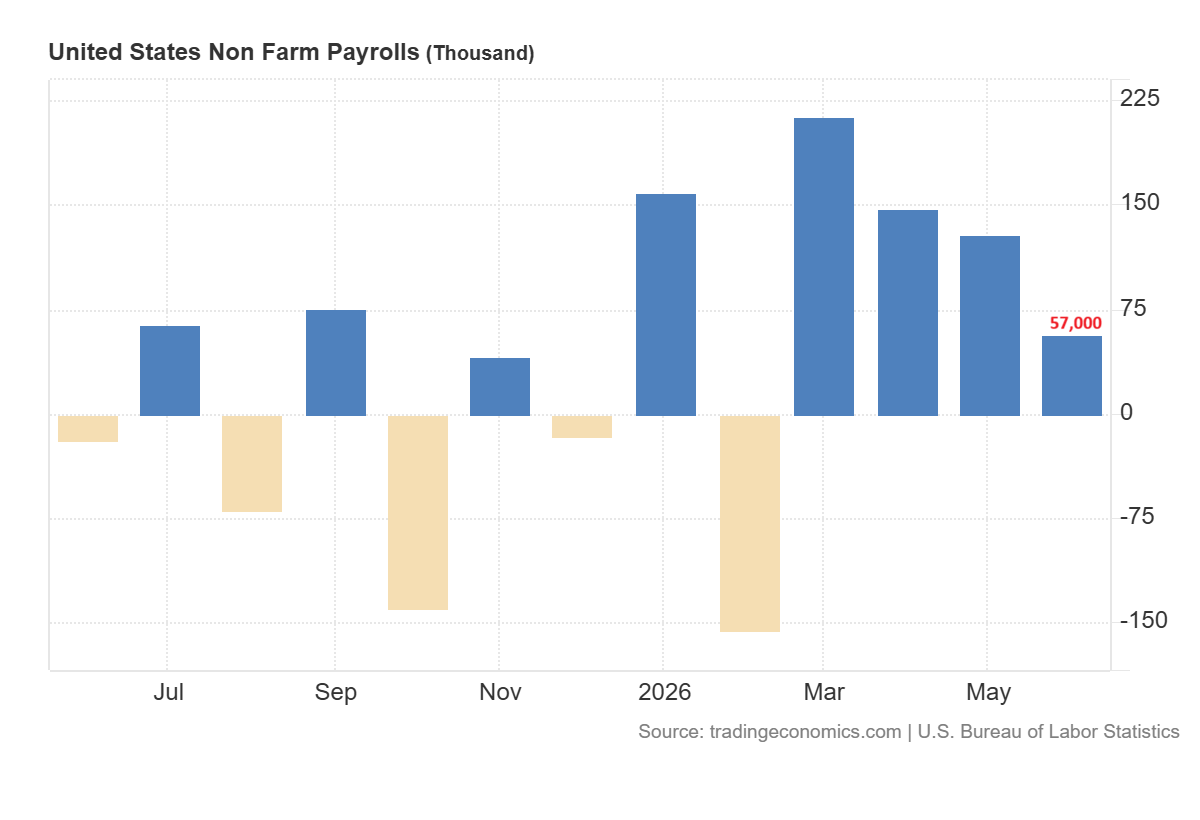
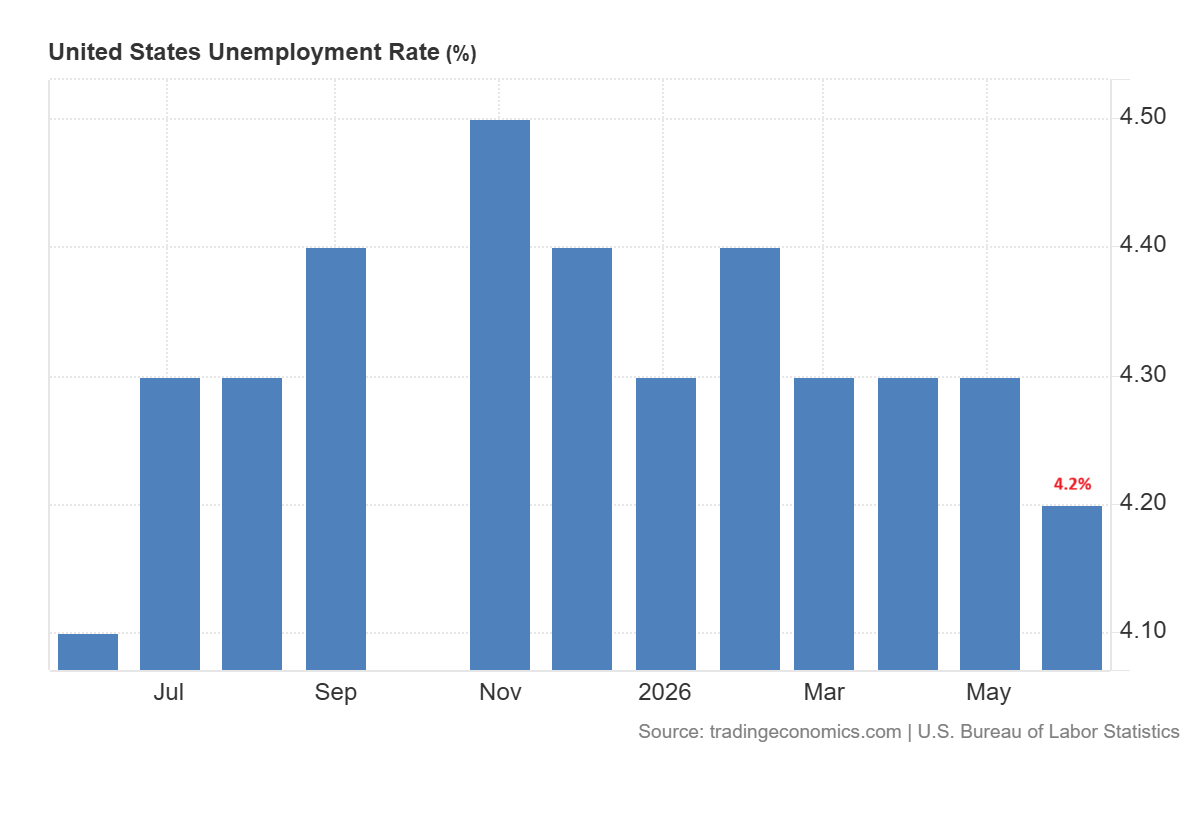
But the unemployment rate dropped to 4.2%.
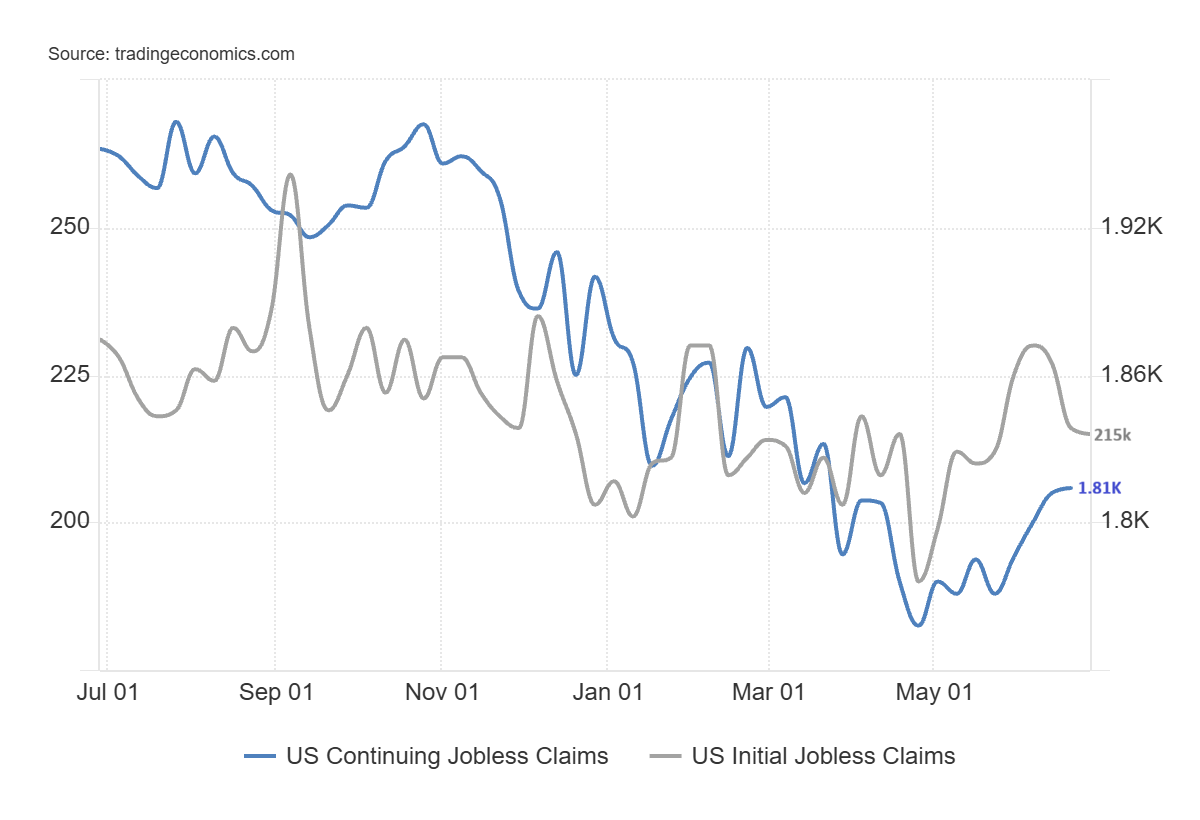
Initial claims are low but continued jobless claims have increased. This translates into less immediate job loss but a longer wait for those who lose their jobs to find new ones. This indicates an underlying weakness of the job market.
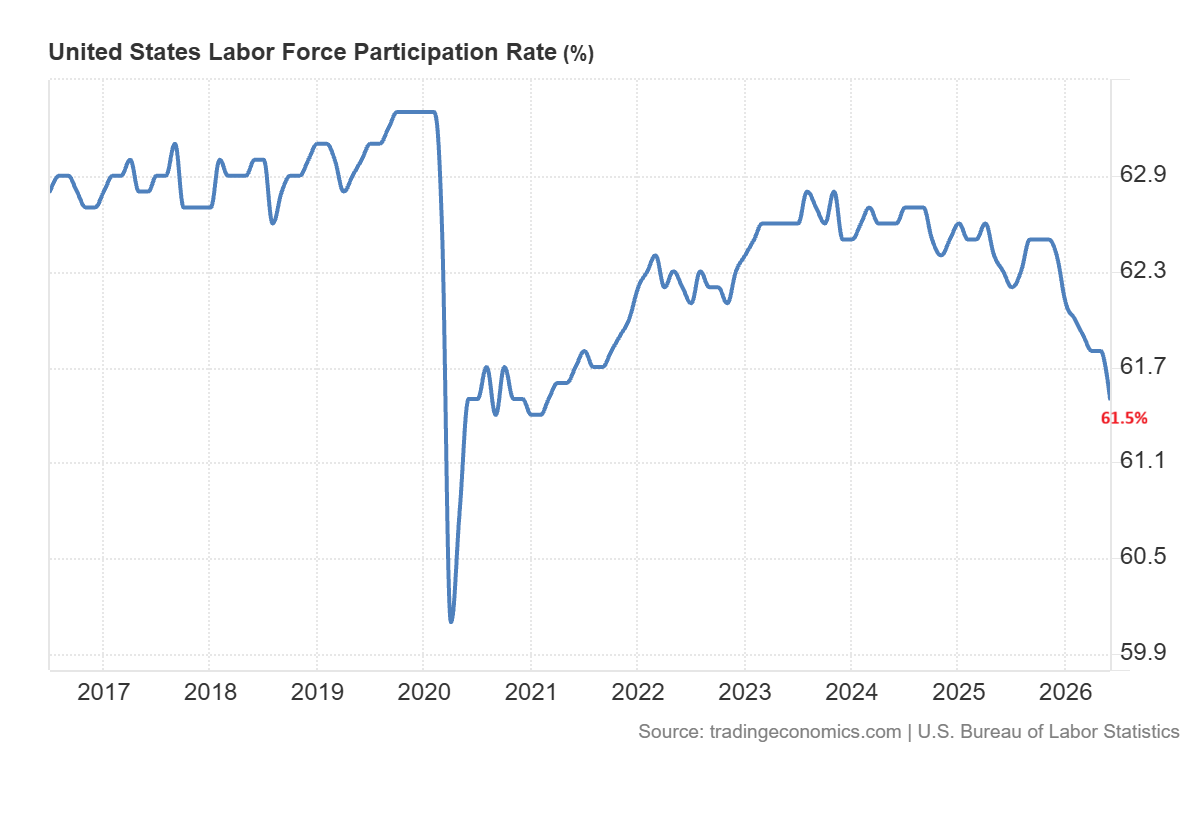
The labor force participation rate also dropped to the lowest level in 50 years except during the 2020 pandemic. This is significant because the drop in labor force can lead to an incorrect perception of the unemployment rate. The unemployment rate drops even when the job market is not that strong if fewer individuals are seeking employment. That gives the Fed an excuse to pay no attention to the headline unemployment rate.
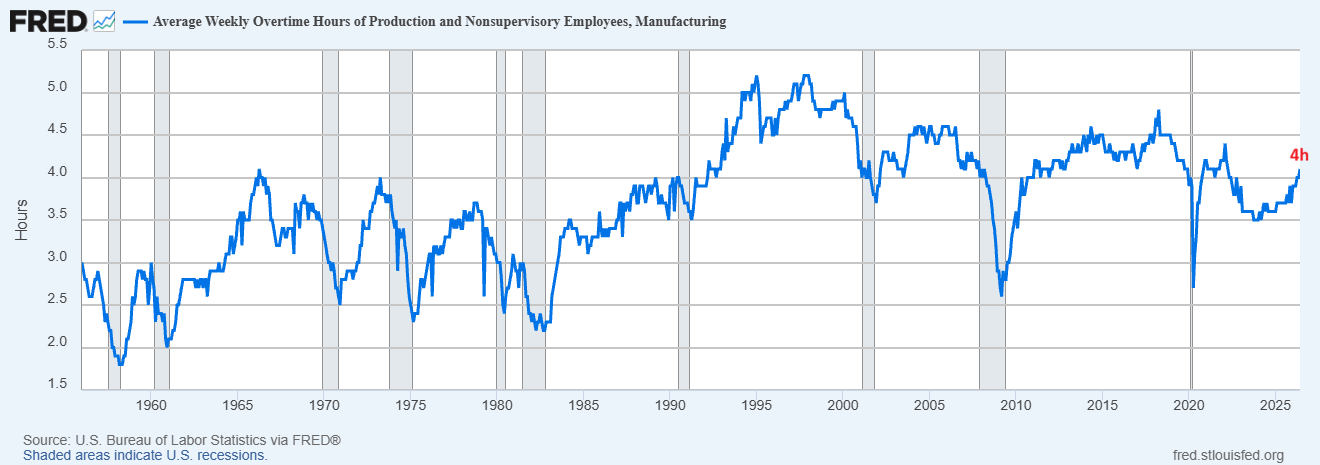
But the jobs data also has some positive aspects. The average weekly overtime hours and temporary help jobs grew after a prolonged downturn. The chart below shows that the average weekly overtime hours of production and nonsupervisory employees increased to 4.1 hours.
On the other hand, the temporary help services are also increasing from the base.
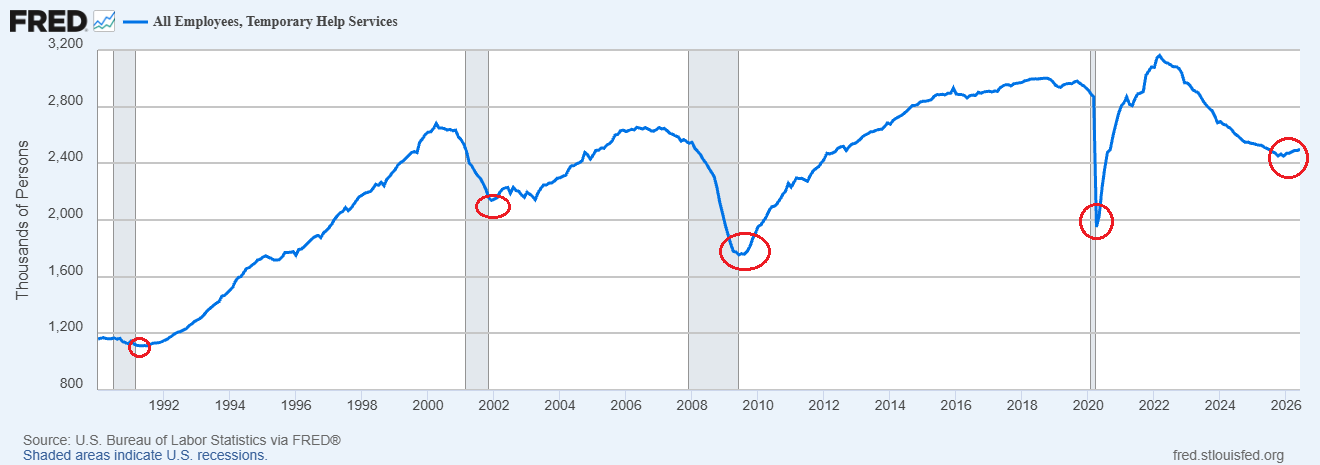
This indicates that employers still need employees but are hesitant to replace full time staff. Businesses are forced to use overtime and temporary jobs due to higher uncertainty. That supports the idea that the labor market is not weak enough to warrant a rate cut, but it also makes it less likely that the Fed will hike rates this month.
EUR/USD Price Forecast
Every new EUR/USD analysis as it publishes, today's technical signal and key levels, live price — on one page.
See all EUR/USD forecastsJobs, Wages and Inflation Keep the Fed Cautious
The weaker jobs data eases the Fed’s pressure to hike rates in July. Traders now expect only 21.9% chance of rate hike in July as per the FedWatch tool. This indicates that the market expects the Fed to sit tight and wait for additional data. The current policy rate is between 3.50% and 3.75%. If the job growth remains sluggish, the Fed does not need to move quickly.
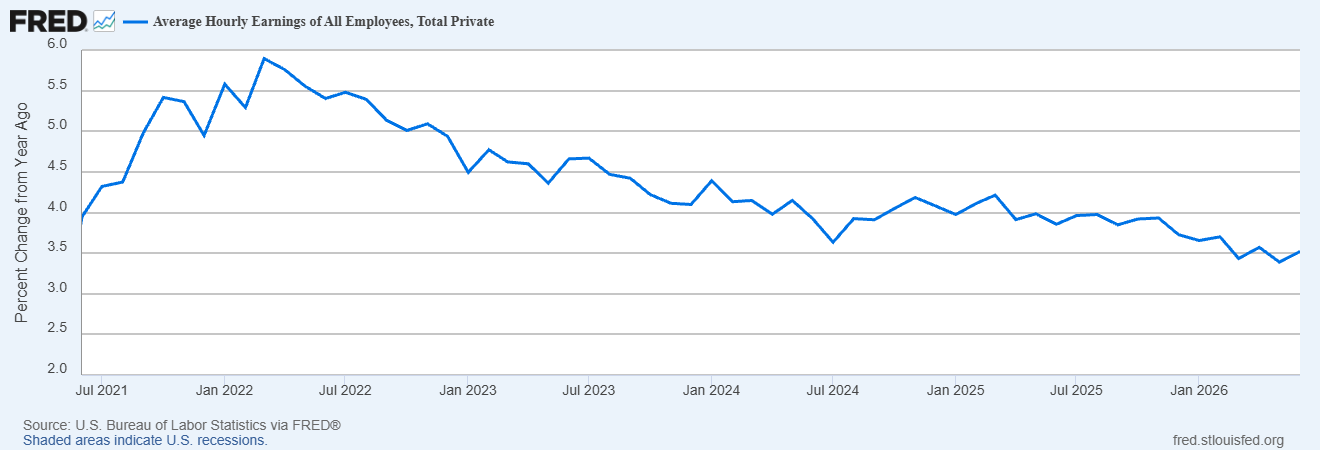
The biggest concern for Fed is whether deceleration in employment will lead to a decline in inflation pressures. The chart below shows that the average hourly earnings are declining which indicates that wages are contributing less to inflation than before. This is relevant as wage pressures can continue to make service inflation high. If the wages continue to cool, it could make the Fed more comfortable keeping rates steady.
But the Fed may not shut the door to another rate increase. The chart below confirms that the earnings growth of all employees has turned positive in June.
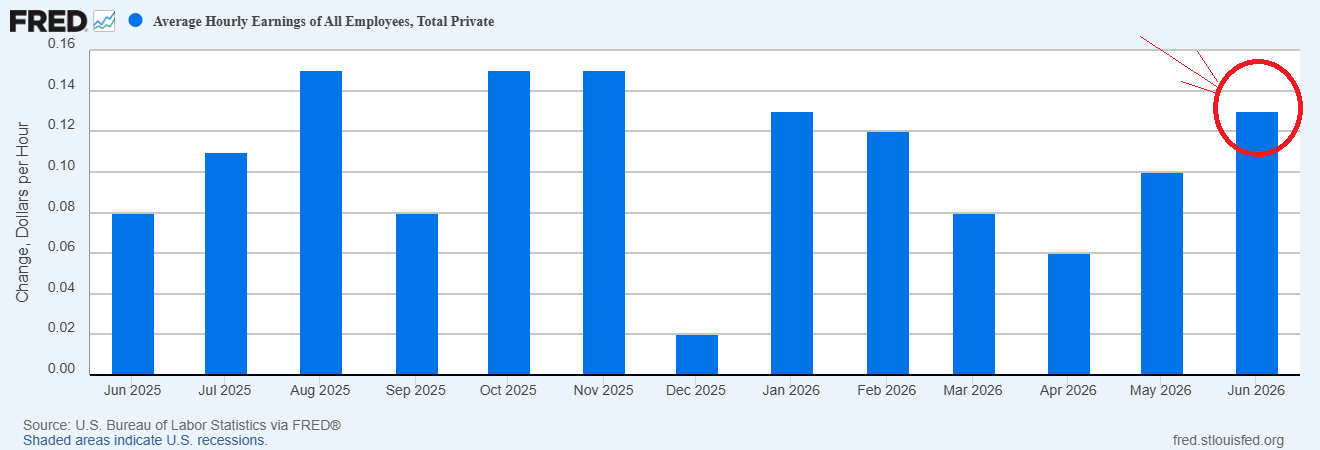
That is enough to keep policymakers alert. There is still a 45.4% probability of a September rate hike. Thus, traders expect that the Fed might not act in July but it could raise rates later if inflation or wages remain strong.
Fed Pause Bets Put Short-Term Pressure on the US Dollar
Lower July Rate Hike Odds Weigh on the Dollar
The US dollar faces the short term pressure as the market reduces the expectations of a July rate hike. A lower chance of higher interest rates makes the dollar less attractive. This is because the investors receive less support from the expected yield gains. The dollar could weaken versus major currencies if the Treasury yields decline following the jobs report.
But the downside of the US dollar might be capped as there is the risk of September rate hikes. These expectations keep the US dollar supported above the key support of the 100 level. As long as the Fed keeps the door open for a rate hike in September, the US dollar may be supported.
The next inflation and labor data will now be the most important factors for the US dollar. If the inflation decelerates due to the lower oil prices, the US dollar could lose additional support. But the solid wage growth or persistent inflation could introduce the dollar recovery. Thus, the jobs data reduces the near term dollar outlook but it is not yet a clear bearish trend.
U Dollar Holds Key Support Despite Weak Jobs Data
The weekly chart for the US dollar index shows that the index has formed strong bottom patterns above the 96 level and broken the 100.50 level. This was an important breakout, which pushed the index towards the resistance of 101.80.
After hitting this resistance, the index dropped back towards the breakout area of 100.50. It is important to note that, despite the weaker jobs data, the US dollar index holds the 100 level as technical support. As long as the US dollar index holds this level, the next move in the US dollar index might be towards 103.
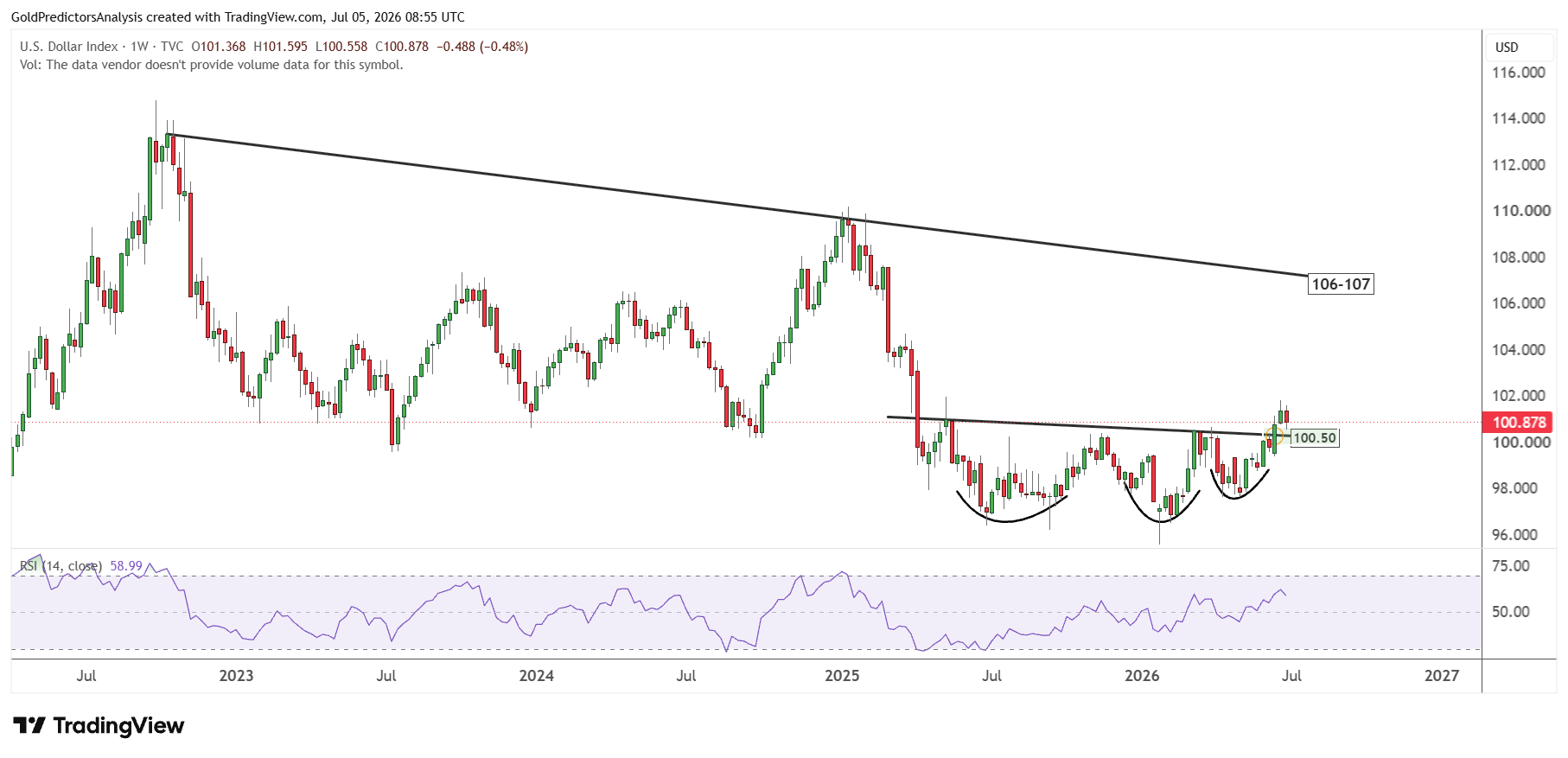
But a break below 99.50 will likely push the index back towards the lower levels.
The strength in the index is also evident on the monthly chart, which shows the consolidation within the strong support of the ascending channel since June 2025.
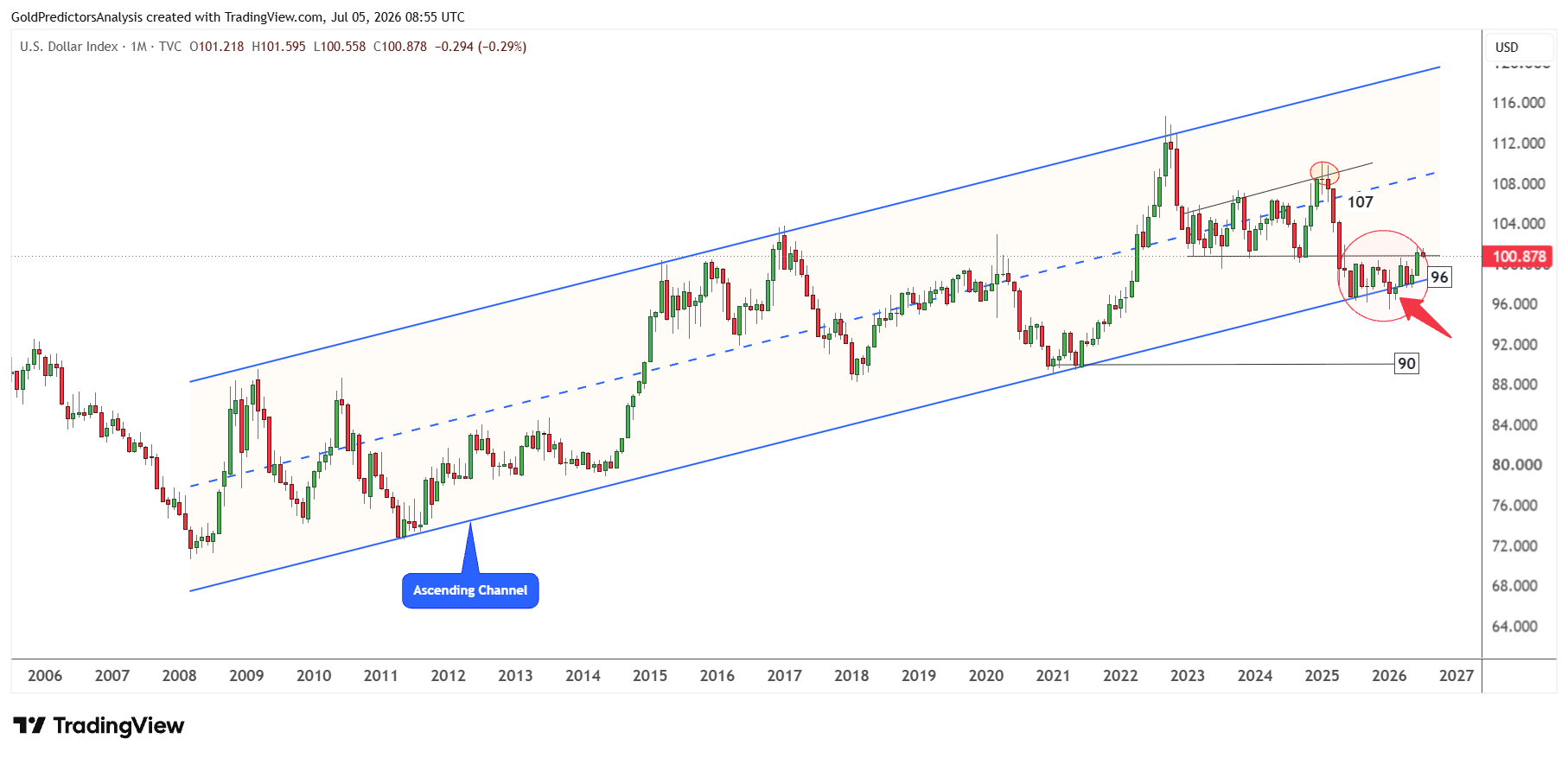
This one year consolidation broke in June 2026. Therefore, the next move in the index will likely depend on the breakout of 101.80 on the upside. But any break below the 96 level will likely trigger a strong drop towards the 90 level.
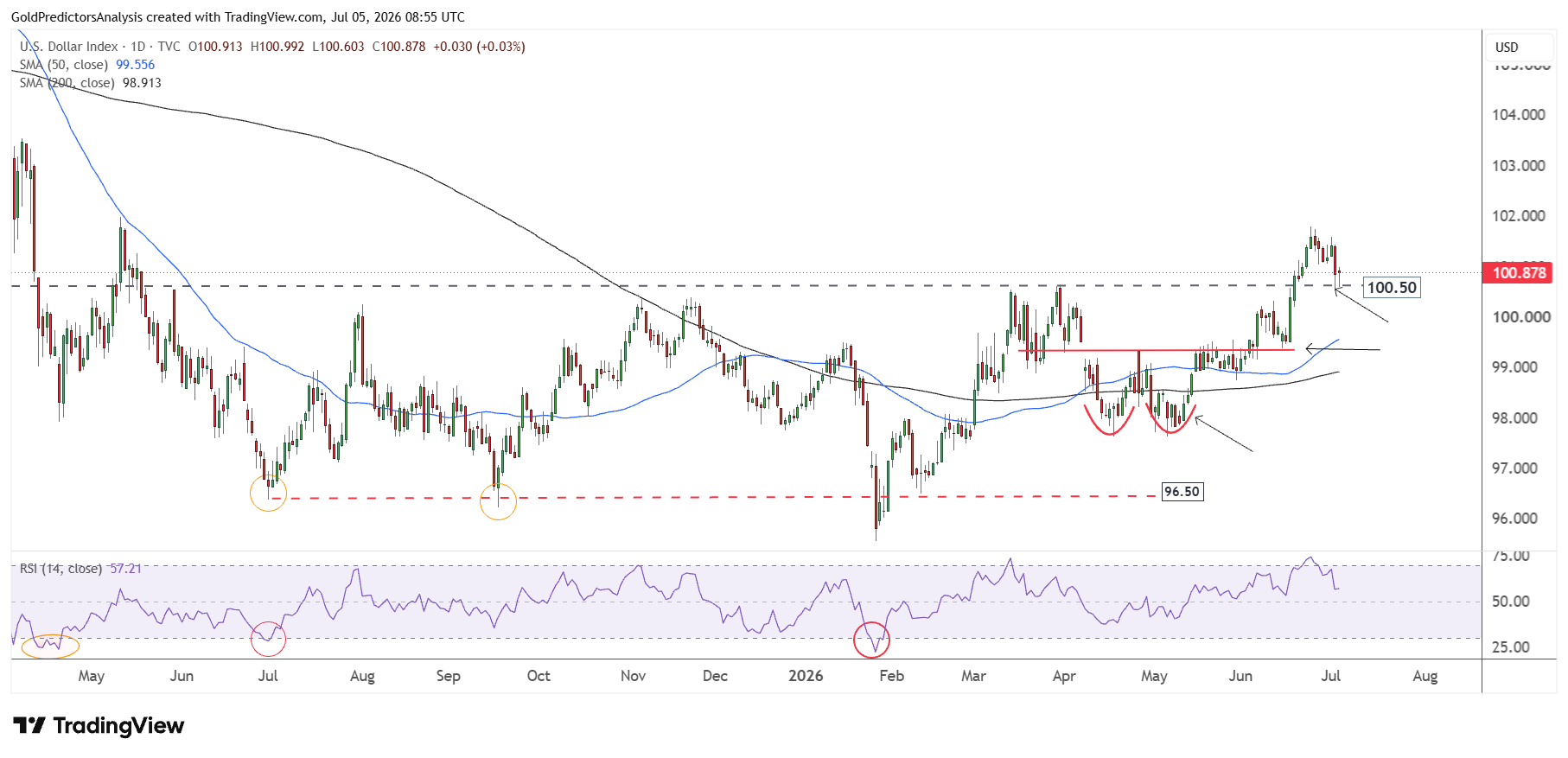
The importance of 100.50 is also observed on the daily chart, which shows that the index has been consolidating over the past year between 96.50 and 100.50.
Before breaking above this level, the USD index also formed a double bottom pattern above 97.60. This indicates strength and continued momentum in the next few weeks. But any break below 96.50 will likely trigger a strong drop towards the 90 level.
Fed and ECB Rate Outlook Drives EURUSD
Fed Pause Bets Support EURUSD but ECB Caution Limits Gains
The interest rate differential between the US and the eurozone could be less favorable for the dollar if traders expect that the Fed will pause in July. This can create a short term rally in the EURUSD. The weaker US jobs data give euro buyers a reason to return.
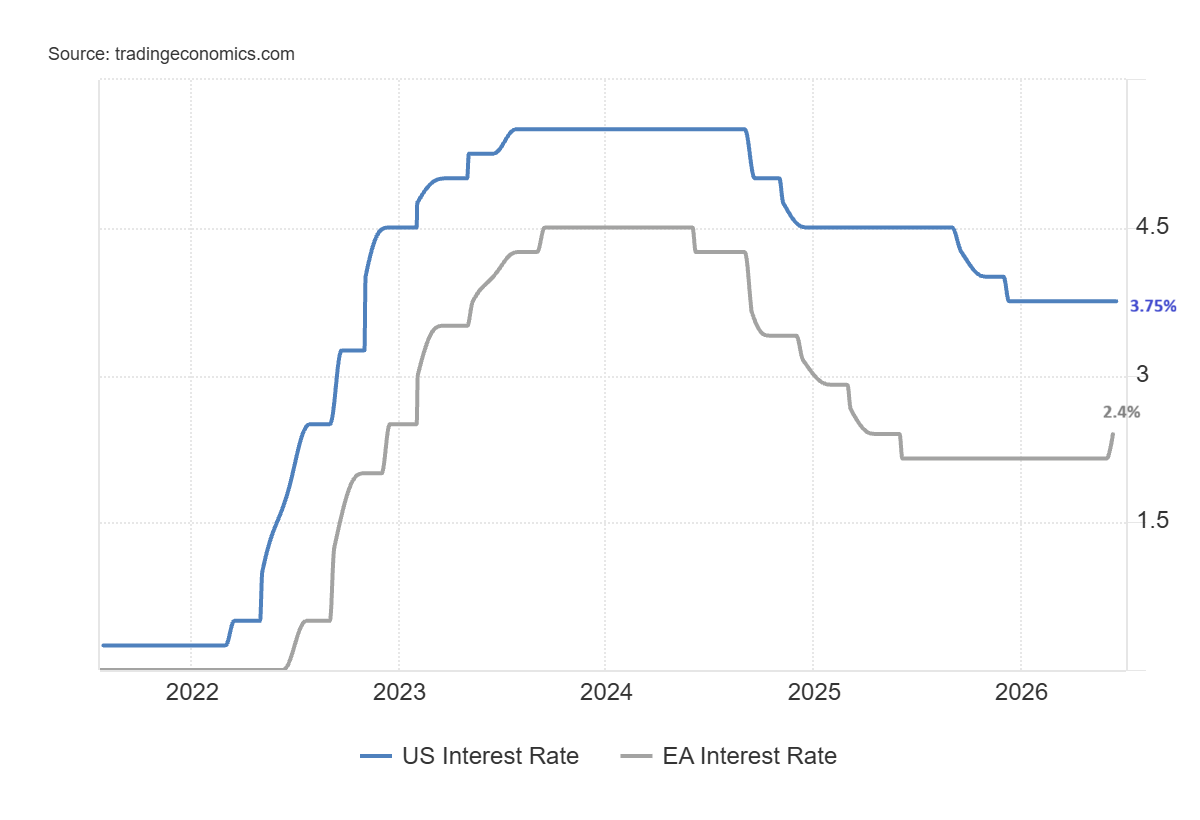
But the headline inflation in the Eurozone dipped to 2.8% in June from 3.2% the previous month. On the other hand, the core inflation also dropped to 2.4% from the 2.6%. This takes the pressure off the ECB, which was under pressure to hike rates again this month. The ECB could also take another break in July as the inflation is decelerating and wage pressure is not accelerating.
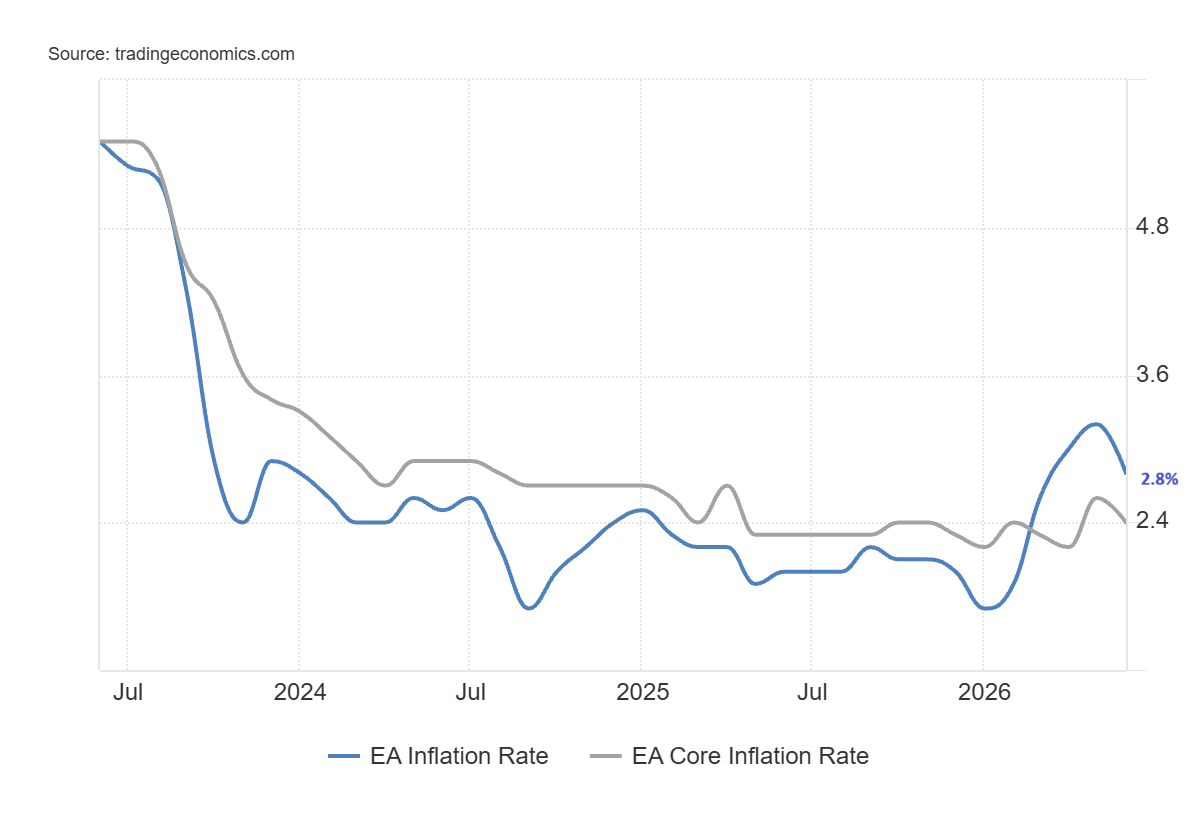
This suggests that the EURUSD may remain in narrow range until one central bank becomes more hawkish than the other. If the Fed pauses and the ECB once again hints at the possibility of the rate hike in September or October, EURUSD could continue to rally. But if the ECB also becomes cautious, euro could lose its momentum.
EURUSD Holds Support as Bulls Target 1.18
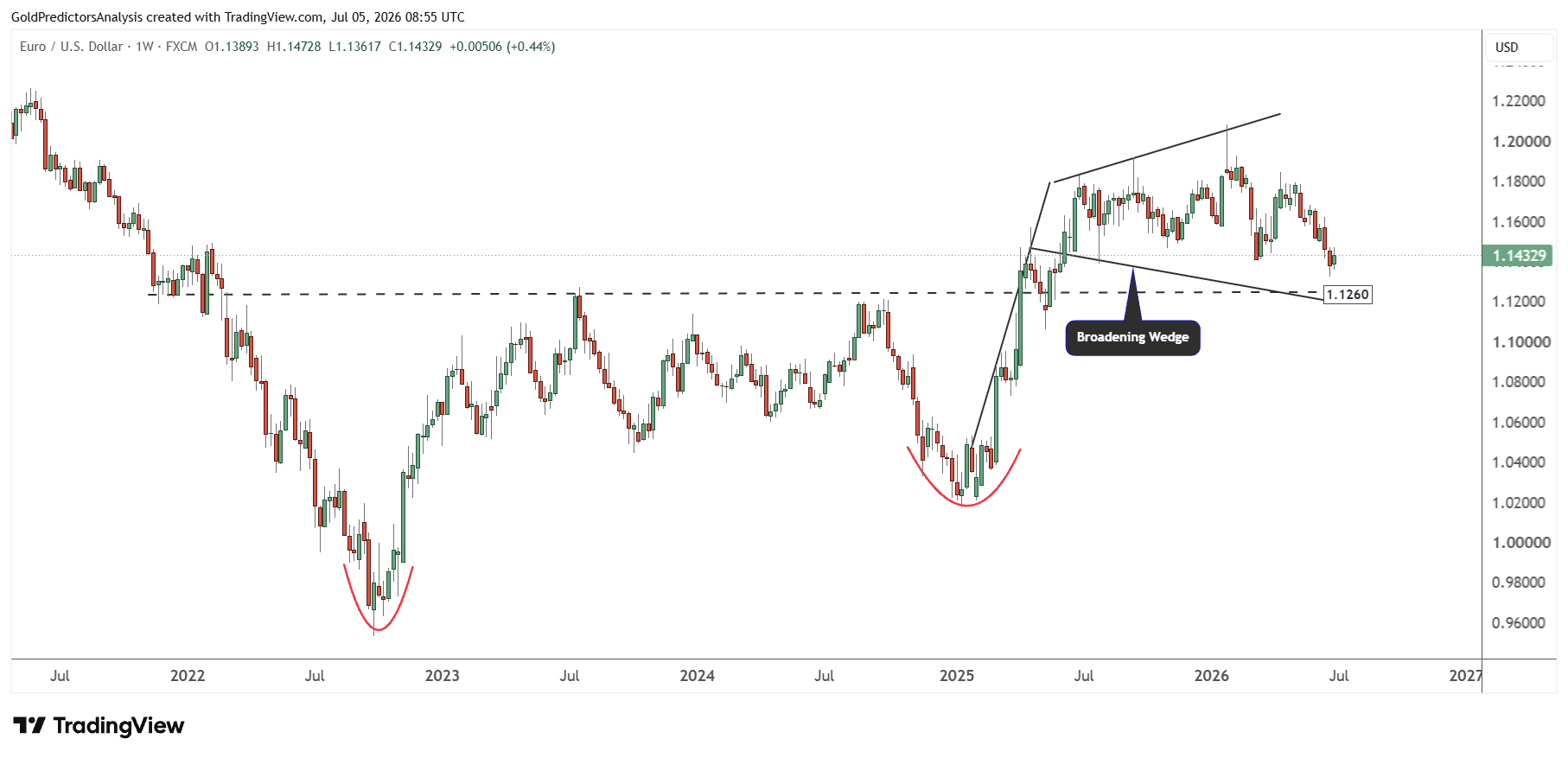
The breakout above the 100.50 level in the US dollar index has pushed the EURUSD back towards the long-term support of 1.1260. The pair hit a low of 1.1327 last week and initiated a rebound as the US dollar index corrected lower after forming a high.
But the EURUSD is showing strong bullish momentum and forming a bull flag pattern as the pair remains above the 1.1260 area.
If the EURUSD drops back towards 1.1260, it may trigger another buying signal for traders to push the pair towards 1.18.
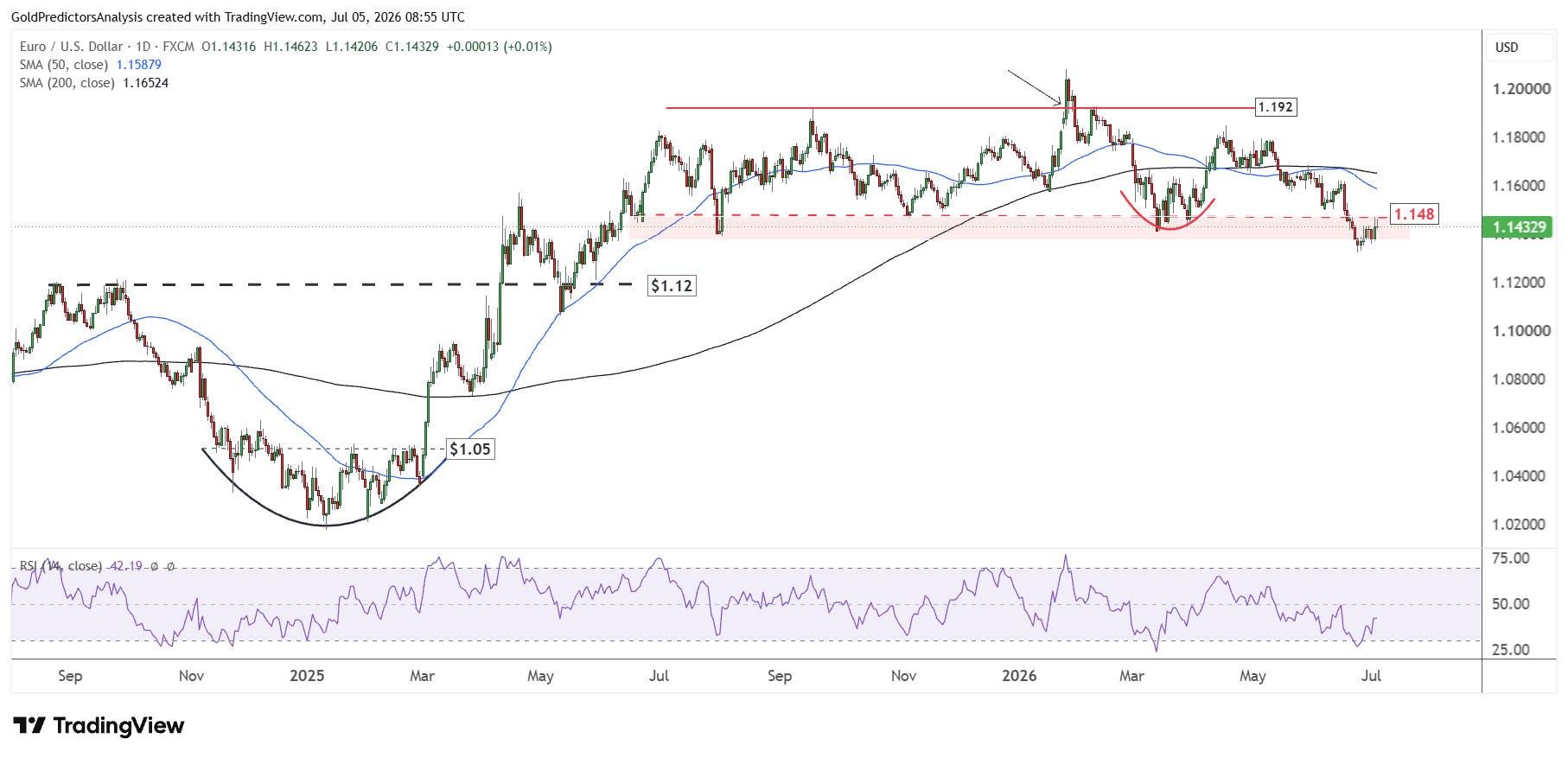
The daily chart for EURUSD also shows that the pair remains within the red highlighted area, which is important support in EURUSD. A break above 1.148 next week will likely push the pair towards the 1.1580 level as the initial resistance. But the 50-day SMA has already broken below the 200-day SMA, which keeps the short-term trend negative.
A break above 1.17 will likely convert the short-term trend to bullish and target the 1.192 level.
Final Words
The weak jobs data reduces the pressure on Fed to hike rates in July. But the report does not remove the possibility of rate hikes in September. There are still signs of strength in the economy related to overtime, temporary employment and wages. This leaves the Fed in a “wait and see” situation. The next inflation and labor reports will likely determine whether the Fed keeps rates steady or moves towards further hikes later this year.
The US dollar is in a mixed situation. The weaker jobs data limited the upside but the possibility of rate hike in September helps to keep the dollar supported around key levels. The EURUSD pair could gain from the possibility of a Fed pause though the lack of strength in euro is also a factor. The next big move in EURUSD will most likely depend on which central bank sounds more hawkish in the coming weeks.