Weak Payrolls Drove the Dow to a Record and the Rotation Into Blue Chips Accelerated
The Dow Jones Industrial Average closed at 52,900.07 Thursday, up 1,023.96 points or 1.97% for the holiday-shortened week. The weekly range ran 51,949.54 to 52,903.85 and every pullback during four sessions found bids underneath.
Employers added 57,000 jobs in June against estimates near 110,000 and the Dow’s response was to run 594.83 points to an all-time closing high with 24 of 30 components finishing higher. Markets are shut Friday for Independence Day and traders are carrying the best weekly gain in months into the long weekend.
The bid did not start Thursday. It showed up Monday morning and never faded. Monday gave the Dow its first close above 52,000. Tuesday added to it on the final session of the first half. Wednesday was the only red day and it was a 13.96-point dip that amounted to nothing more than positioning ahead of the jobs data. Thursday’s payrolls miss removed the last overhang and the buying accelerated into the close. Four sessions, one direction.

Weekly Dow Jones Industrial Average Technical Analysis
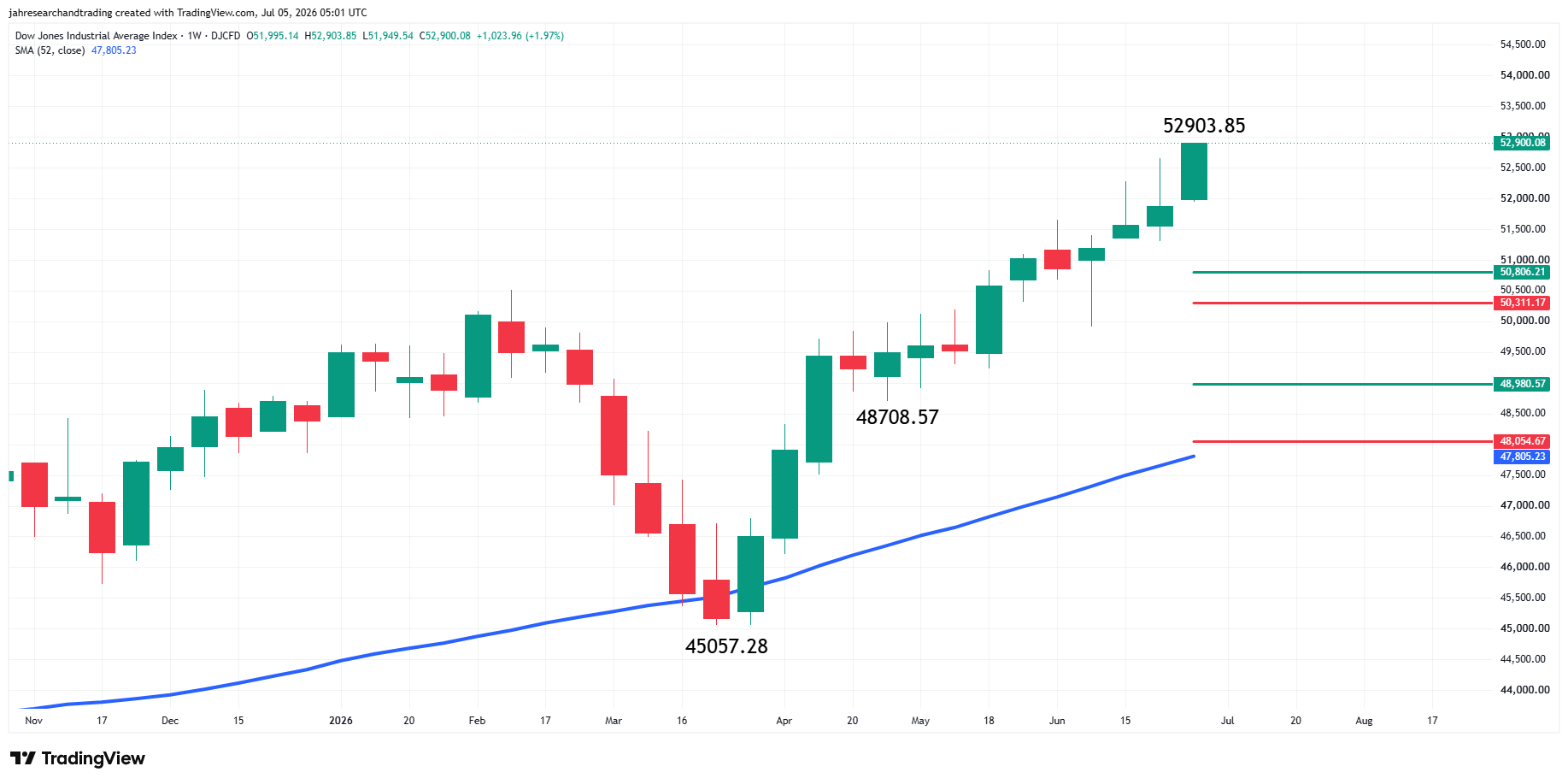
The main trend is up according to the weekly swing chart. The trend is safe at this time with the last main swing bottom coming in at 45057.28. A trade through 52903.85 will signal a resumption of the uptrend.
The first minor range is 48708.57 to 52903.85. Its retracement zone at 50806.21 to 50311.17 is the support area.
The main range is 45057.28 to 52903.85. Its retracement zone support is 48980.57 to 48054.67.
The 52-week moving average at 47805.23 may be holding the entire market together. It’s definitely one of our long-term trend indicators.
Dow Jones Price Forecast
Every new Dow Jones analysis as it publishes, today's technical signal and key levels, live price — on one page.
See all Dow Jones forecasts57,000 Jobs Changed the Rate Conversation Overnight
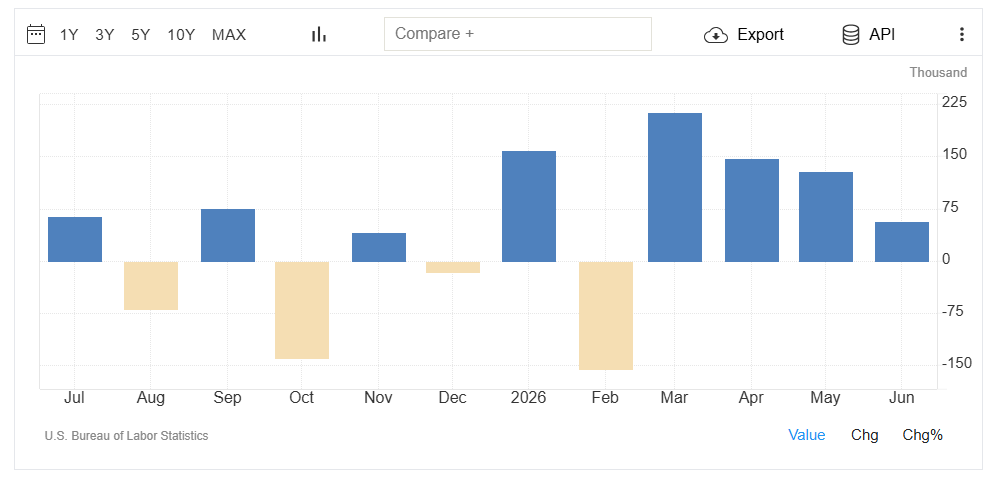
The June payrolls report printed 57,000 against expectations near 110,000. Earlier months were revised lower on top of that. Three months of decelerating job growth followed by a number that missed by nearly half is not a one-report anomaly. The labor market has been cooling and June made it impossible to argue otherwise.
Wall Street read the miss as bullish. The logic is straightforward. An economy that is slowing enough to take rate hike pressure off the Fed without collapsing into recession is the best possible backdrop for equities. The Dow went straight to 52,900 on that interpretation. As long as slower hiring translates to the Fed staying on hold rather than tightening further, softer jobs data works for stocks. If the next round of reports starts suggesting something worse than a gradual cooldown, that interpretation gets tested.
The rate hike threat that had been hanging over the market since Warsh’s first press conference in June lost its teeth Thursday morning. Warsh told the ECB Forum on Wednesday that inflation risks have declined. Then 57,000 jobs hit the tape the next day. The committee can still talk hawkish but the data is no longer backing it up the way it was a month ago.
Apple, McDonald’s, Disney, Visa, Walmart Led the Dow and That Tells You Everything
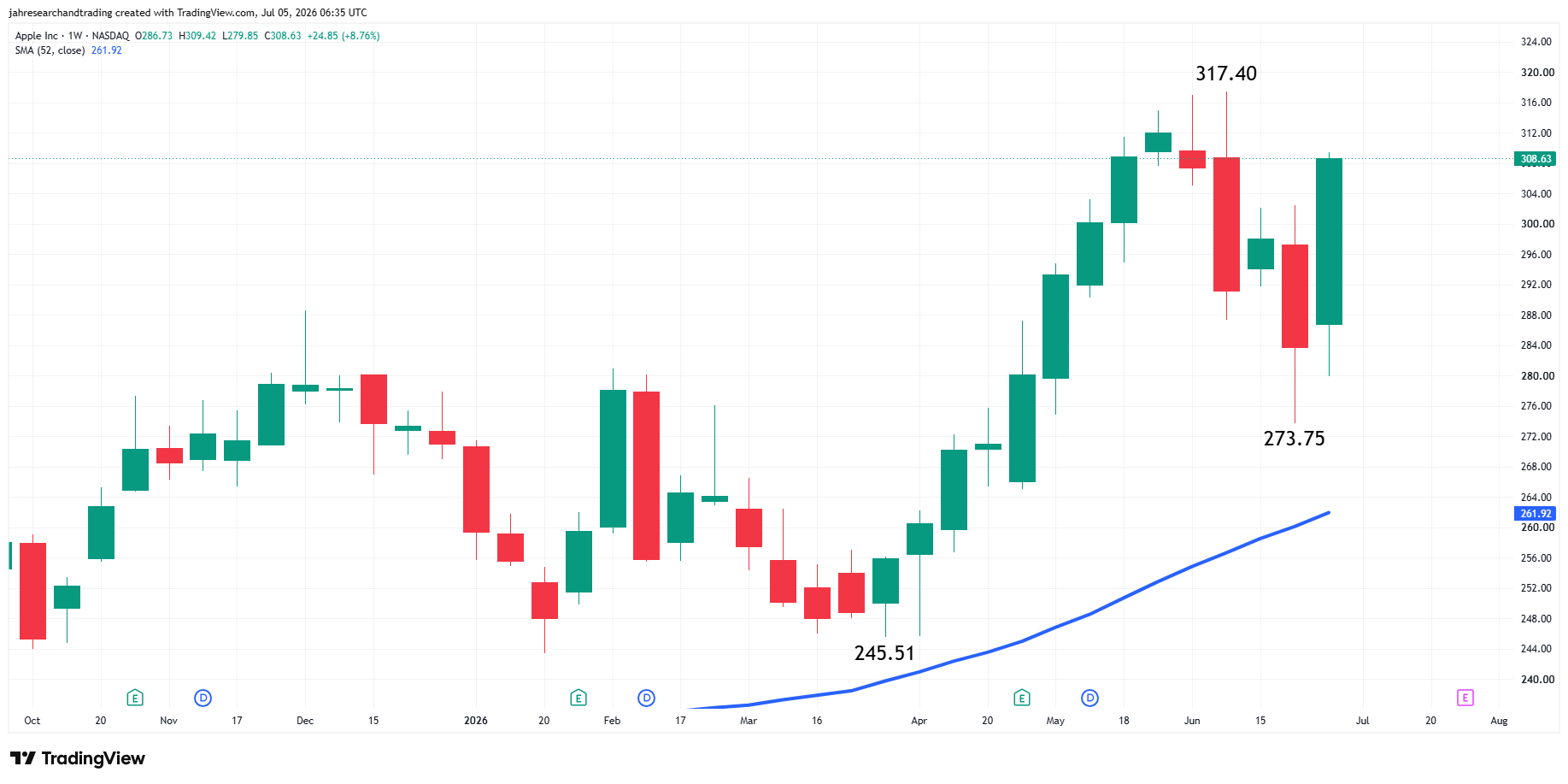
Apple gained roughly 8% for the week, the strongest Dow component. McDonald’s added about 4%. Walt Disney climbed about 4%. Visa and Walmart posted solid weekly advances. Caterpillar gave back ground late in the week. UnitedHealth Group finished slightly lower. Winners easily outpaced losers across the 30-stock index.
Every name that led generates cash in a slower economy and every one of them benefits when rate expectations come down. Apple sells products consumers buy regardless of GDP growth. McDonald’s and Walmart serve the value-conscious customer that shows up when spending tightens. Disney and Visa are tied to consumer activity that holds up even in a decelerating environment.
That is the money making a statement about where it wants to be. Thursday’s jobs report accelerated a rotation into blue chips that had been building for weeks and the Dow’s composition puts it directly in the path of that flow. The Nasdaq has been struggling with semiconductor profit-taking and Magnificent Seven repricing all month. The Dow is hitting records because its components are the names investors buy when they want earnings they can count on instead of earnings they have to project.
What to Watch
The main trend is up with the swing bottom well below the market and the 52-week moving average anchoring the long-term structure. The first retracement zone is the area where any real pullback gets tested. A trade through the record at 52,903.85 signals the advance is resuming.
Markets reopen Monday to economic data, Fed commentary, and the start of second-quarter earnings season. The payrolls miss gave the Dow a record going into the holiday. The next round of reports determines whether Thursday’s surge was the start of a larger move or a holiday-week rally that needs another catalyst.
Earnings season is the test. If the blue chip names that led this week deliver results that match the confidence the market just placed in them, the Dow keeps going. If they miss, the record becomes a ceiling instead of a floor. Volume coming off a long weekend starts light and builds through the week. Thinner trade early creates bigger swings if an unexpected number hits.
More Information in our Economic Calendar.