Interest rate expectations have changed again as inflation remains sticky in the U.S. and Japan makes progress toward policy normalization. The Federal Reserve will likely keep interest rates steady in July but still has a strong probability of a September hike. Meanwhile, the Bank of Japan has raised the interest rate to 31-year high. These policy tensions may shape the next big move in USDJPY.

Fed Rate Outlook Points to September Hike as Inflation Stays Sticky
The Fed is not moving to raise interest rates at the July meeting. Traders now expect only 30% chance of a rate increase in July as per the FedWatch tool. This indicates that the market expects the Fed to have some time to wait before the tightening. But the Fed will likely hike in the September meeting with probability of 80%.
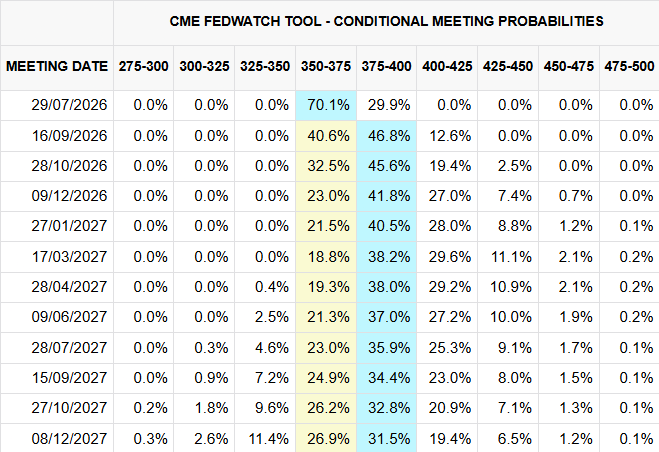
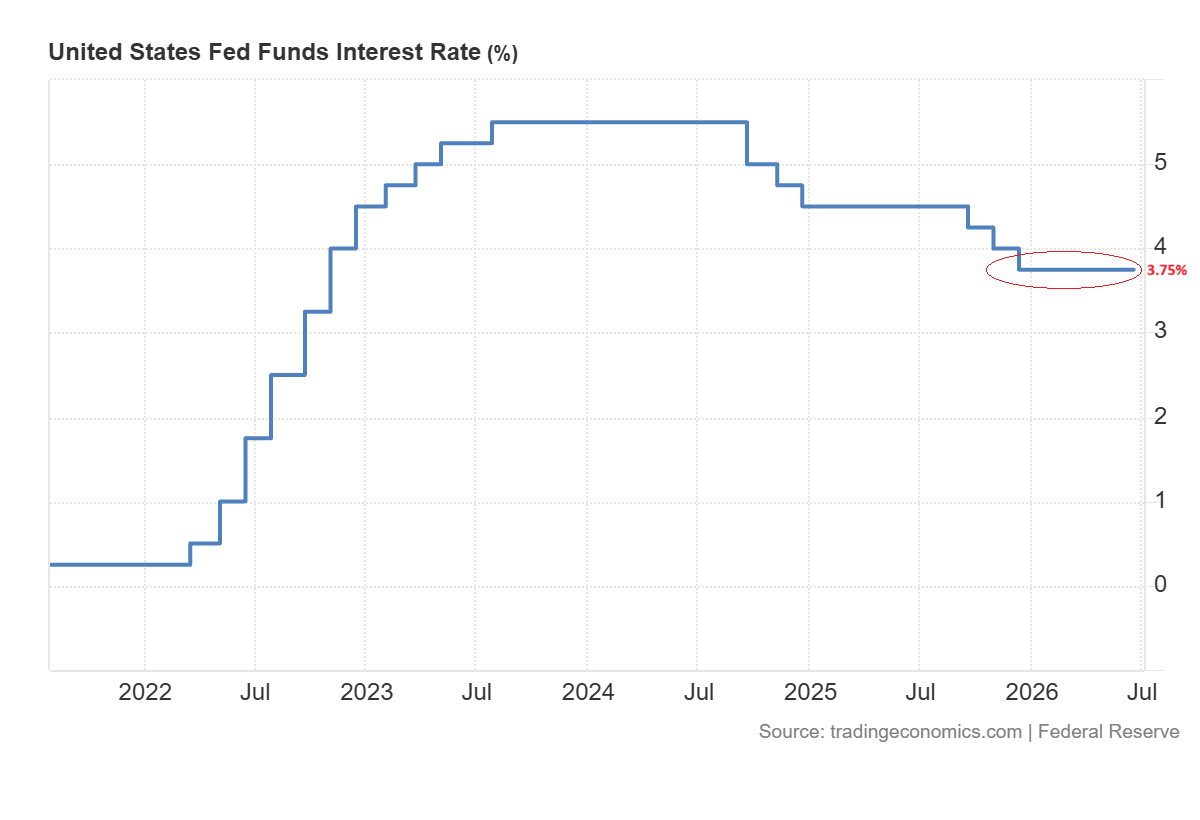
The current benchmark rate has been in the 3.5-3.75% range since December 2025.
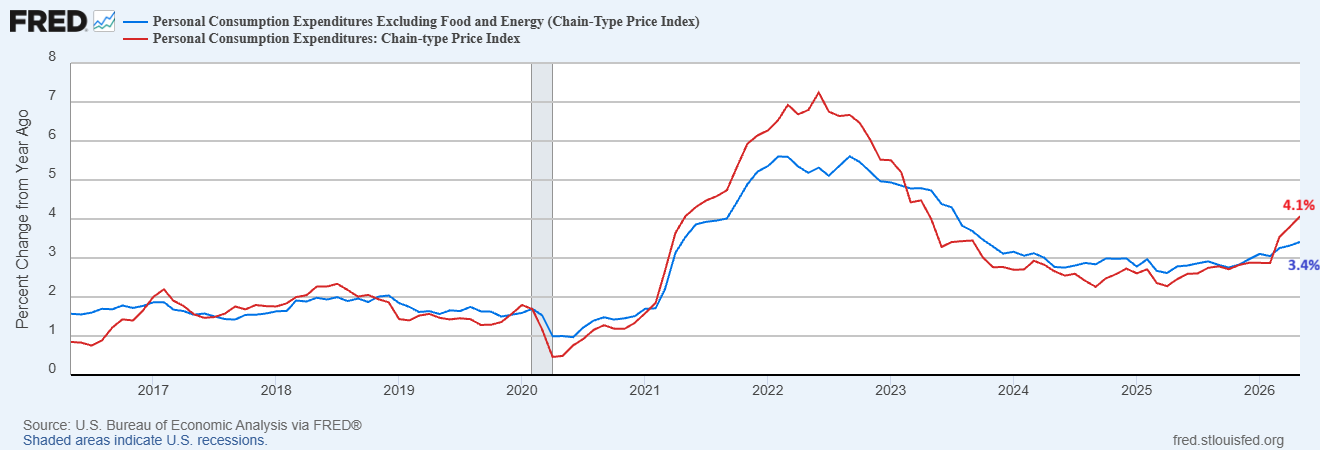
The main reason is inflation. The PCE price index increased 4.1% over the past year ending in May. This was the highest in three years. It is also well above the Fed’s 2% target. This is putting pressure on policymakers and strengthening the case for higher rates later this year.
The core PCE price index also increased 3.4% year over year in May. This suggests that the price pressures are not just emerging from food and energy. But the monthly core inflation rate did not accelerate. That provides the Fed with some flexibility to remain patient in July.
The Fed’s next move is also dependent on oil prices. Fuel prices contributed to the uptick in the headline inflation in May. But the oil prices have reverted to the pre-war levels. This reduces the risk of a new energy shock. It also supports the arguments that the Fed does not have to hit the panic button.
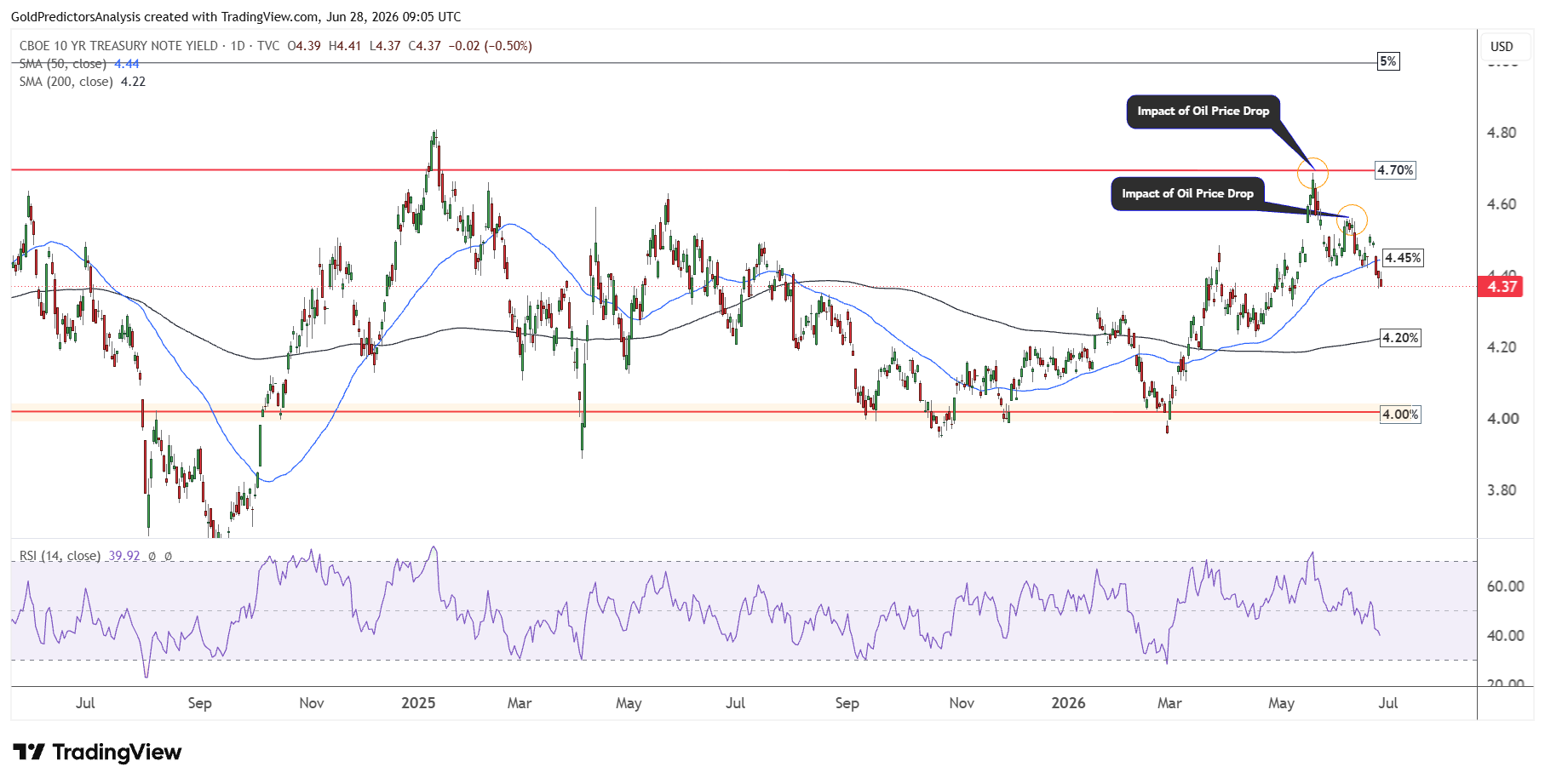
The drop in oil prices has impacted the rally in 10-year US Treasury yields. The yields continued to drop after breaking the 50-day SMA. This drop may push the Treasury yield to 4.2% at the 200-day SMA. Despite this drop, the US dollar remains strong above the 100 level.
US Dollar Index Price Forecast
Every new US Dollar Index analysis as it publishes, today's technical signal and key levels, live price — on one page.
See all US Dollar Index forecastsBank of Japan Rate Hike Signals Shift Toward Policy Normalization
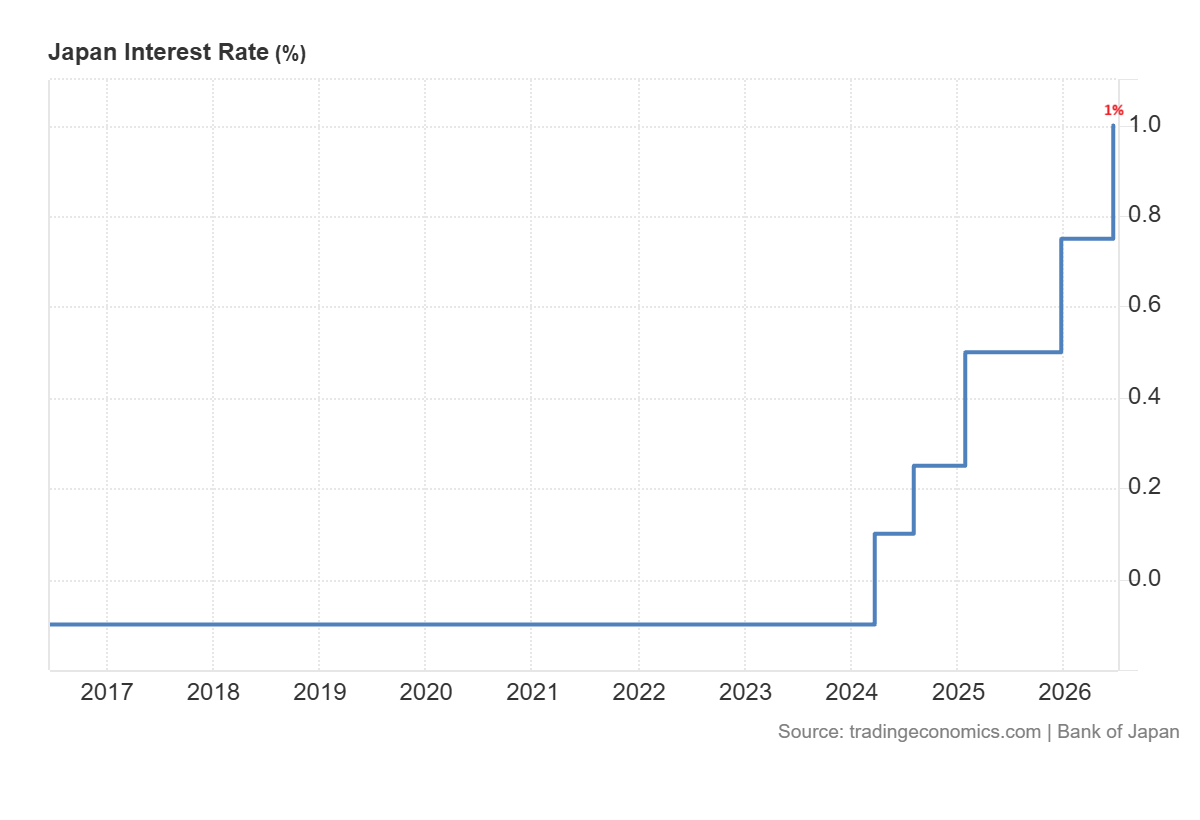
The Bank of Japan is now moving more clearly towards higher interest rates. The BOJ raised its rates to 1% at the June meeting, the highest level in 31 years. This was an important move towards Japan’s policy normalization. It also indicates that the central bank is taking inflation risks seriously.
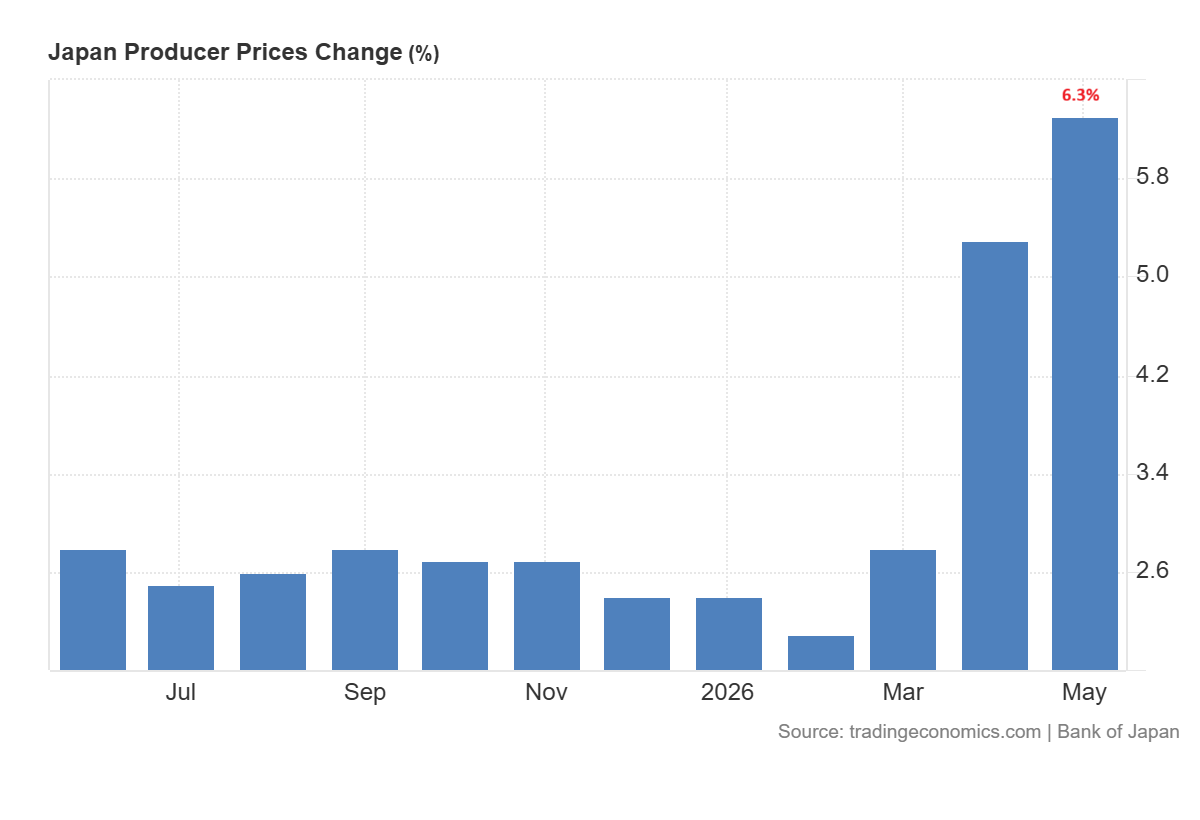
The inflationary pressure is spreading across the Japanese economy and is a concern for BOJ policymakers. The chart below shows that the wholesale inflation of Japan increased to 6.3% in May. This indicates that companies are facing higher costs due to the energy shock.
Moreover, the services producer prices also increased to 3.3% as the Middle East energy shock increased the prices of fuel, freight and transportation. This has made the BOJ more willing to tighten the policy.
Some policymakers think that the policy rate in Japan is still low. This indicates that the BOJ could be forced to hike interest rates again in the near future.
But there is still some risk. One policymaker opposed the June increase due to downside risks to output and jobs. The government also wants BOJ to avoid excessive pressure on the economy. This creates uncertainty. But the strong wholesale inflation and the pressure from the weak yen could compel the BOJ to continue tightening.
USDJPY Forecast: Breakout Risk Builds Above 162 Resistance
Fed and BOJ Policy Gap Keeps USDJPY in Focus
The USDJPY now hinges on the spread between the interest rates of the United States and Japan. The Fed funds rate will likely not change until September. But the BOJ has already tightened rates and may raise rates again later this year. This means that both central banks are tightening at different speeds and times.
The dollar could remain strong if markets continue to price a September rate hike by the Federal Reserve. The sticky inflation provides the Fed with a rationale to maintain the hawkish stance. Currently, the 10-year US Treasury yield is dropping to 4.2% due to the lower oil prices. If yields start to rise again after this support, then USDJPY could maintain its strength. This is because the stronger US rates continue to make the dollar attractive against the yen.
But if the BOJ hints at faster rate hikes, the yen could begin to rally. The inflation pressure in Japan is intensifying and being exacerbated by the weak yen. Japanese yields may go up further if the BOJ takes any steps towards the neutral rate. This would narrow the rate spread and may limit upside in USDJPY.
Technical Analysis Points to Breakout Risk Above 162
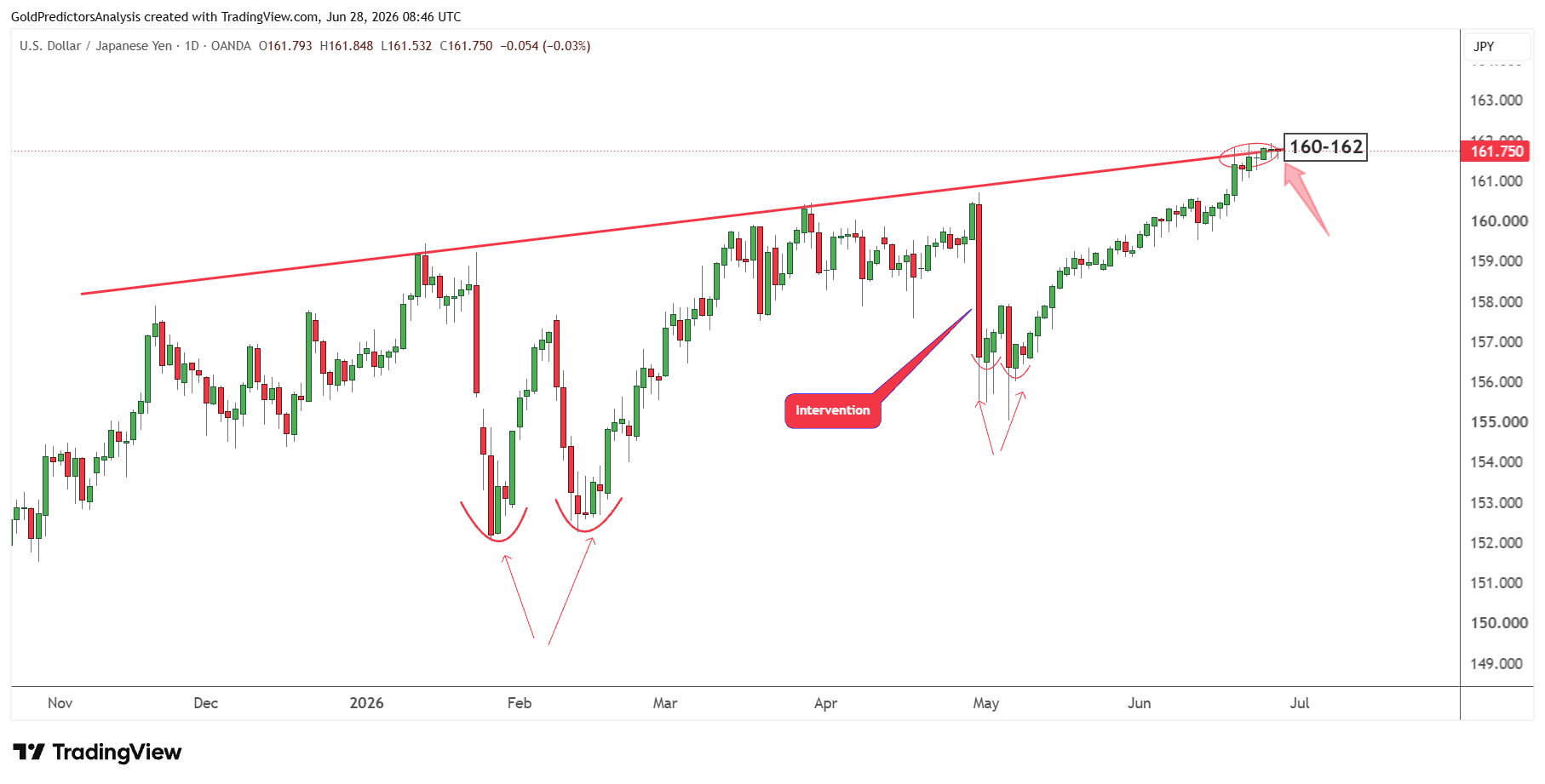
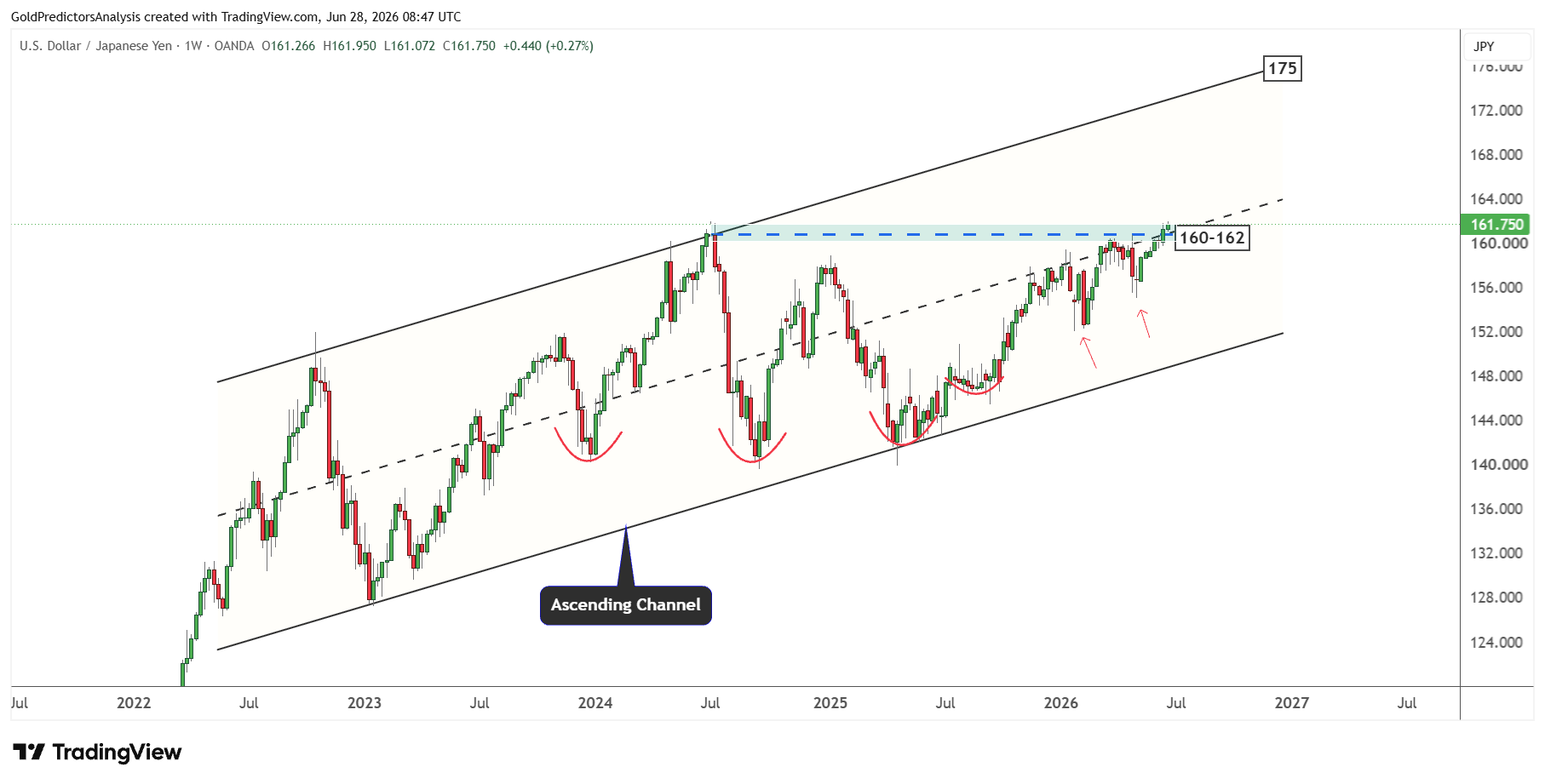
The daily chart for USDJPY shows that the pair is consolidating at the strong pivotal resistance zone of 160 to 162 in the short term. However, the strong consolidation at the resistance line indicates bullish price action. Therefore, a break above the 162 level will likely trigger a strong move to the upside.
The formation of double bottom pattern in January and February 2026 and then in May 2026 indicates strong bullish price action and supports a bullish rally. But if the pair corrects back towards the 158 to 157 level, it will likely attract a fresh buying opportunity.
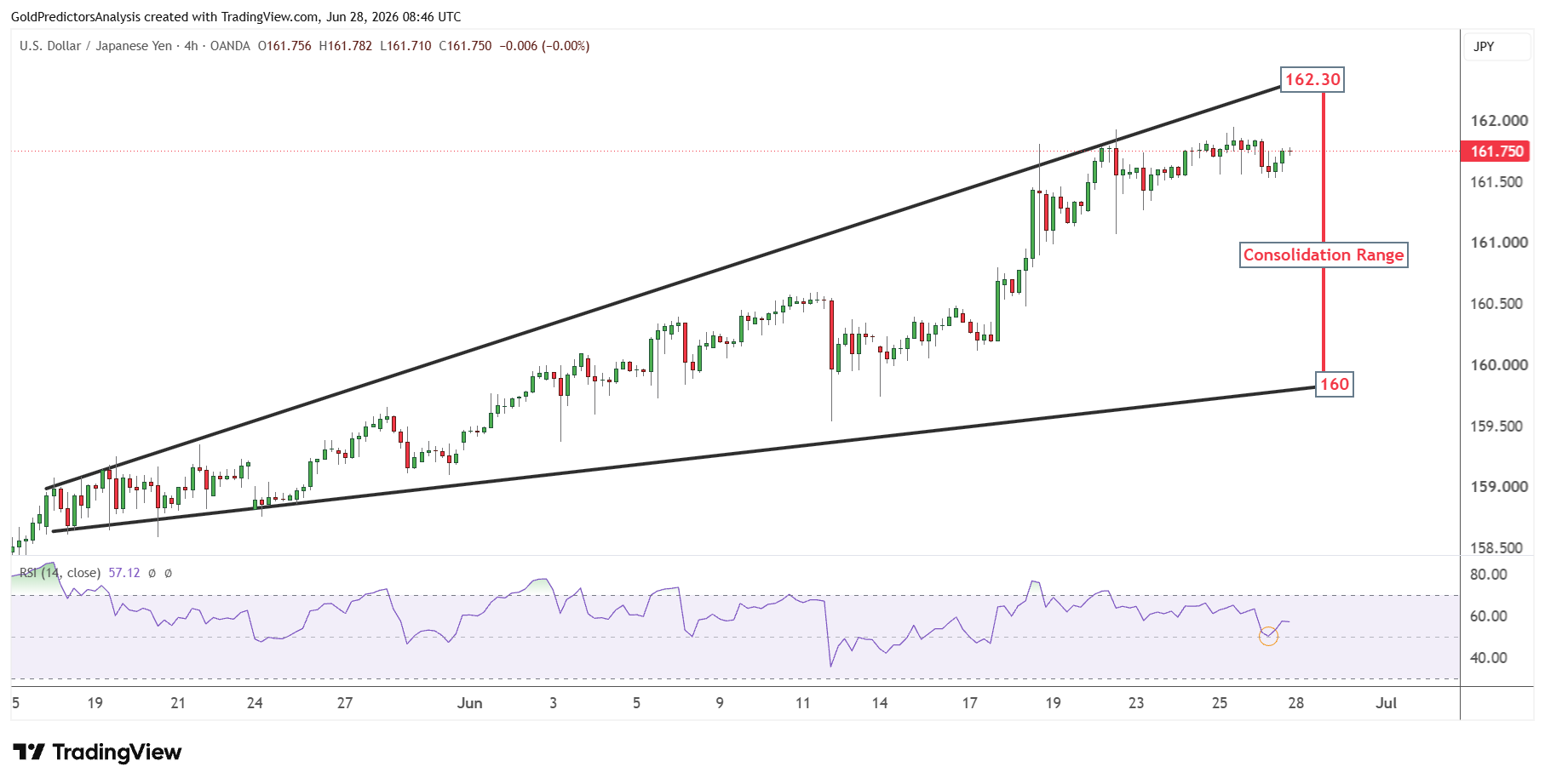
The strong consolidation range between 160 and 162.30 is also observed on the 4-hour chart. The chart below shows the formation of an ascending broadening wedge pattern since May 2026. This consolidation range highlights strong volatility around this long-term resistance of the 160 to 162 level. Therefore, any correction from 162.30 may likely form support at 160 again. But any break above 162.30 will likely confirm the next strong move. The RSI is also finding support at the midline, which indicates an upside move towards 162.30 early next week.
The 160-162 zone is highlighted in blue on the long-term weekly chart. This shows that a break above this zone will likely trigger a strong move towards 175 target. This target is measured from the ascending channel pattern that is drawn from the January 2023 lows.
Bottom Line
The interest rate remains the key driver for USD/JPY. While the Fed could remain on hold in July, the September rate hike is still on the table due to sticky inflation. That is positive for the U.S. dollar as traders continue to price the higher interest rates later this year.
The Bank of Japan is also shifting towards a tighter policy. The inflation pressure in Japan is spreading through wholesale prices, service prices and import costs. The weak yen is making this pressure worse. This could lead the BOJ to make another rate increase despite the growth risks.
Overall, USDJPY remains bullish as long as the pair trades above the 155 support zone. A break above 162 can confirm the next big rally towards the 175 target. But a quicker BOJ tightening may cap the upside in yen and support the yen. Therefore, the next move in USDJPY will depend on the inflation data, Treasury yields and the central bank’s guidance.
Read more: USDJPY, EURJPY and GBPJPY Face Yen Weakness