
Natural Gas Moves Higher Ahead Of EIA Report
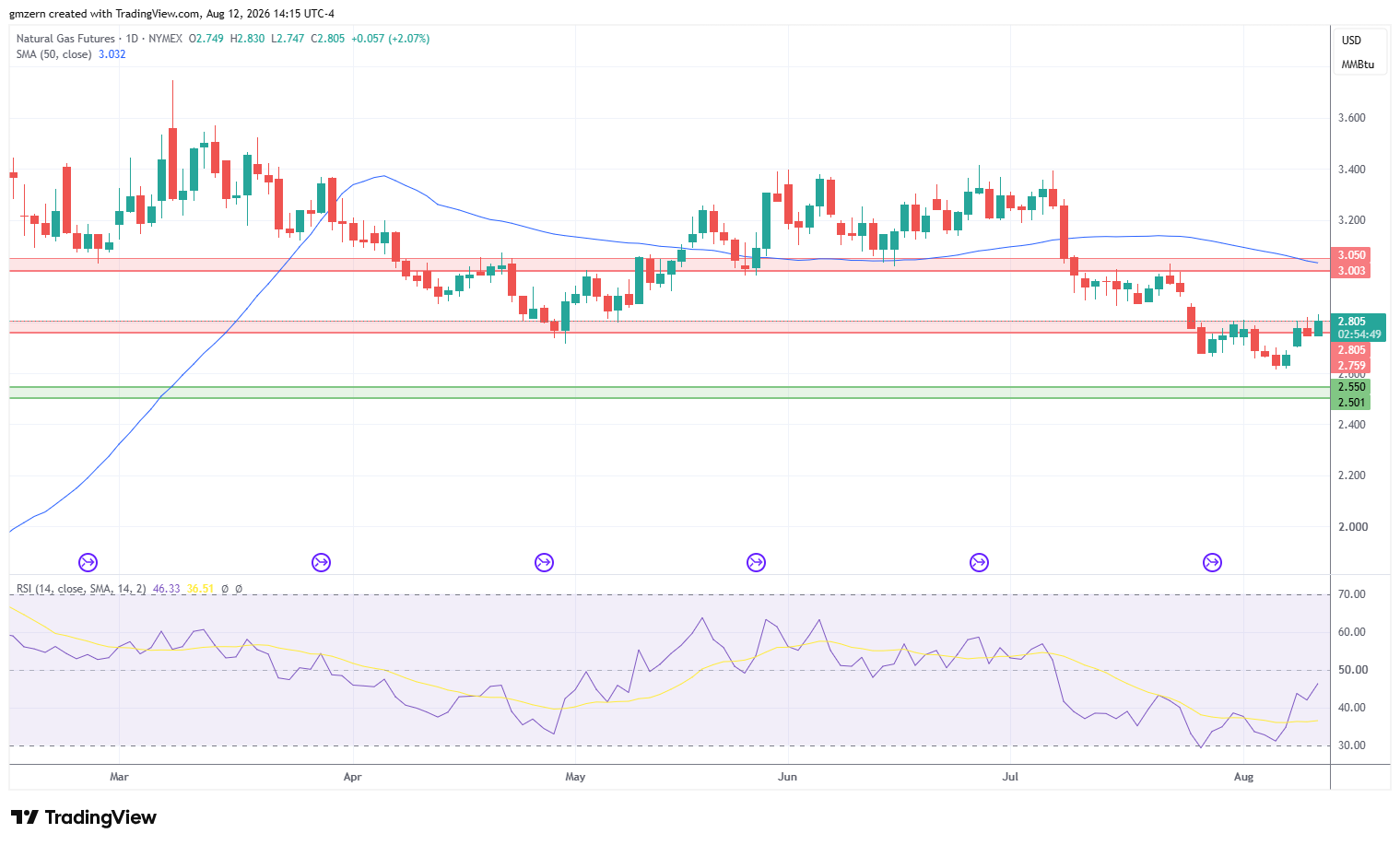
Natural gas gains ground as traders focus on high demand and prepare for tomorrow’s EIA report. The report is expected to show that working gas in storage increased by +31 Bcf from the previous week.
From the technical point of view, natural gas continues its attempts to settle above the resistance level at $2.75 – $2.80. If natural gas manages to settle above the $2.80 level, it will move towards the next resistance level at $3.00 – $3.05. RSI is in the moderate territory, so there is plenty of room to gain momentum in case the right catalysts emerge.
On the support side, a move below the $2.75 level will push natural gas towards the $2.70 level. If natural gas declines below $2.70, it will head towards the $2.62 level.

WTI Oil Is Mostly Flat As Crude Inventories Rise
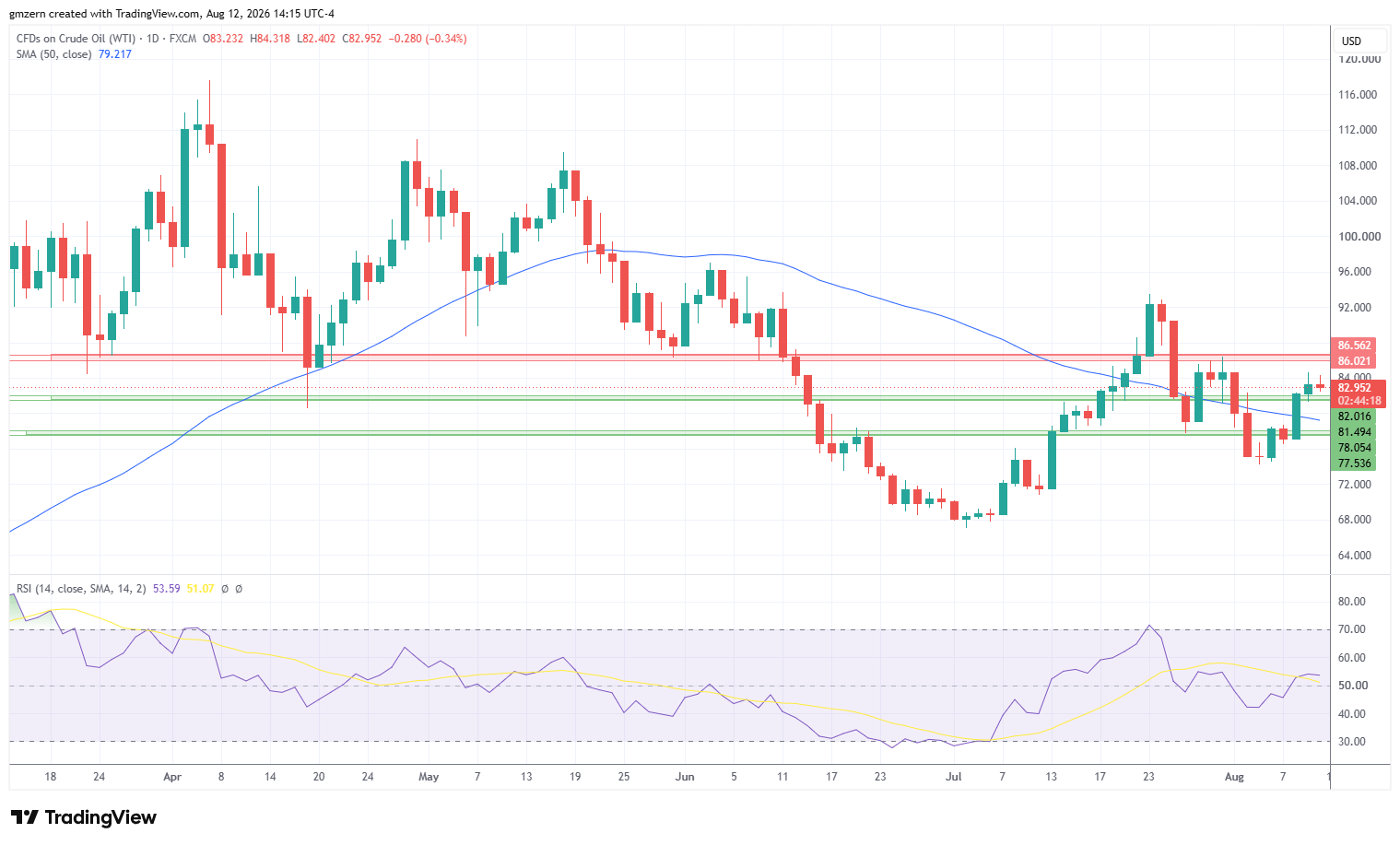
WTI oil is swinging between gains and losses as traders focus on geopolitical news and react to the EIA report. The Strait of Hormuz remains closed, and there are no signs indicating that U.S. and Iran are ready for a temporary deal.
The EIA Weekly Petroleum Status Report indicated that crude inventories increased by +17.4 million barrels from the previous week, compared to analyst forecast of -1.4 million barrels. At current levels, crude inventories are about 2% below the five-year average for this time of the year.
Total motor gasoline inventories decreased by -1.0 million barrels, compared to analyst consensus of -1.2 million barrels. Distillate fuel inventories declined by -0.1 million barrels from the previous week.
U.S. crude oil imports increased by +1.14 million bpd from the previous week, averaging 7.3 million bpd. Over the past four weeks, crude oil imports averaged 6.3 million bpd.
Strategic Petroleum Reserve declined from 304.8 million barrels to 298.7 million barrels as U.S. continued to sell oil from strategic reserves. It should be noted that SPR is at multi-decade lows, which is bullish for oil markets.
Domestic oil production increased from 13.804 million bpd to 13.805 million bpd. From a big picture point of view, domestic oil production remains stuck near the 13.8 million bpd level.
In case WTI oil climbs above the $84.00 level, it will head towards the nearest resistance, which is located in the $86.00 – $86.50 range. A successful test of the resistance at $86.00 – $86.50 will push WTI oil towards the psychologically important $90.00 level.
On the support side, a move below the support at $81.50 – $82.00 will open the way to the test of the 50 MA at $79.22. If WTI oil declines below the 50 MA, it will head towards the support level at $77.50 – $78.00.
Natural Gas Price Forecast
Every new Natural Gas analysis as it publishes, today's technical signal and key levels, live price — on one page.
See all Natural Gas forecastsBrent Oil Attempts To Settle Above $89.00
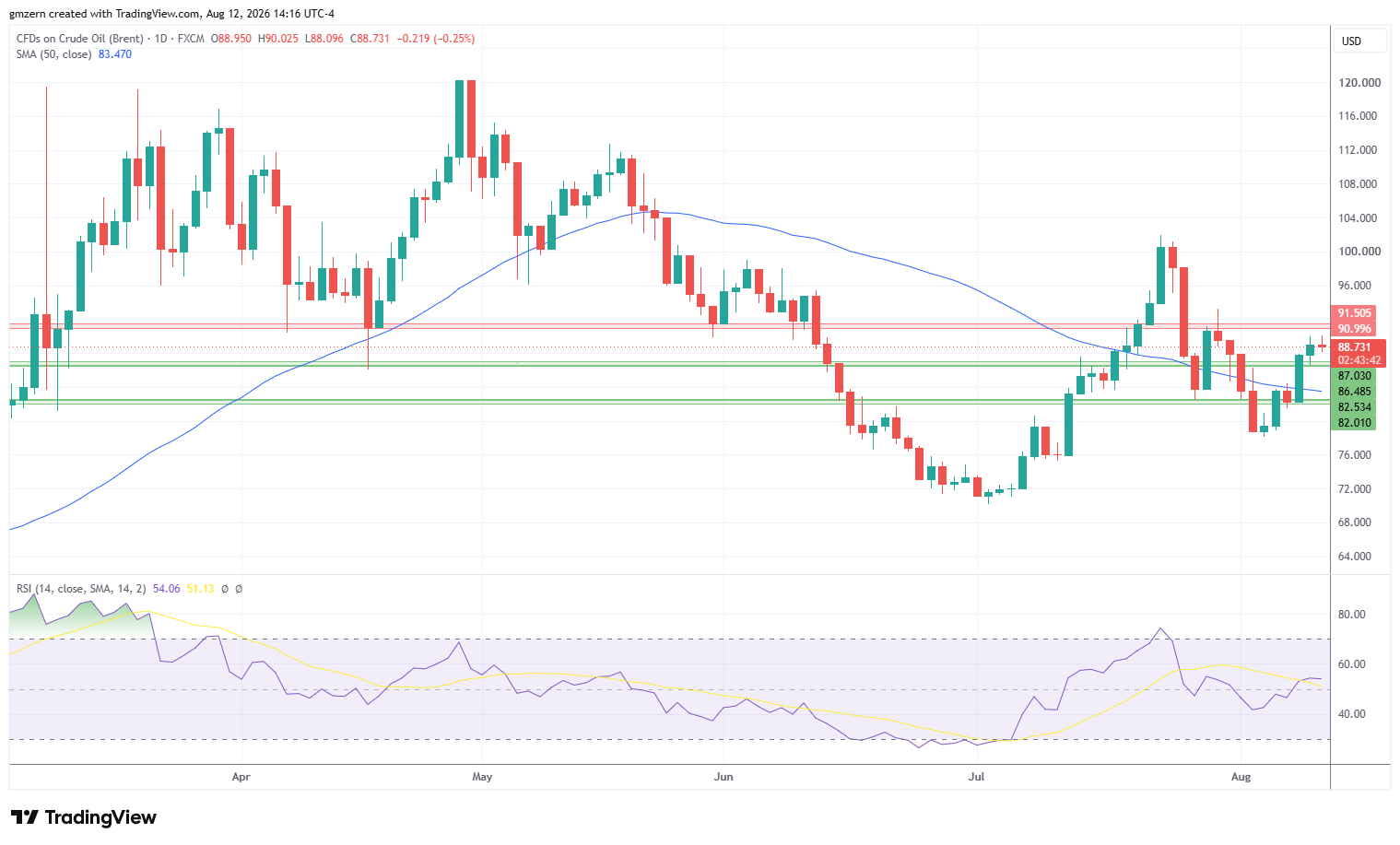
Brent oil is mostly flat amid geopolitical uncertainty. Traders are not sure whether U.S. and Iran will try to negotiate a deal or they prepare for a months-long waiting game.
If Brent oil climbs above the $90.00 level, it will move towards the resistance level at $91.00 – $91.50. On the support side, a move below the support level at $86.50 – $87.00 will push Brent oil towards the 50 MA at $83.47. If Brent oil declines below the 50 MA, it will head towards the support level at $82.00 – $82.50.
If you’d like to know more about how commodity markets work, please visit our educational area.