
The yen is back under pressure as global interest rate policy shifts in different directions. The Bank of Japan (BOJ) has raised interest rates but the move still looks too small compared with inflation pressure and the wide gap with other central banks. The Federal Reserve (Fed) remains hawkish, the European Central Bank (ECB) may tighten again, and the Bank of England (BoE) continues to leave its door open for a further rate hike. This leaves USDJPY, EURJPY and GBPJPY exposed to greater volatility as market participants question whether the BOJ can maintain the yen without putting pressure on the bond market in Japan.

BOJ Rate Hike Fails to Save Yen as Inflation Pressure Builds
The Bank of Japan raised its policy rate to 1.0% after the 6 months pause, following the earlier move to 0.75% in December. The hike shows that the BOJ is trying to control inflation and limit further yen weakness. But the policy rate is still low compared with inflation pressure, which means the yen may remain vulnerable.
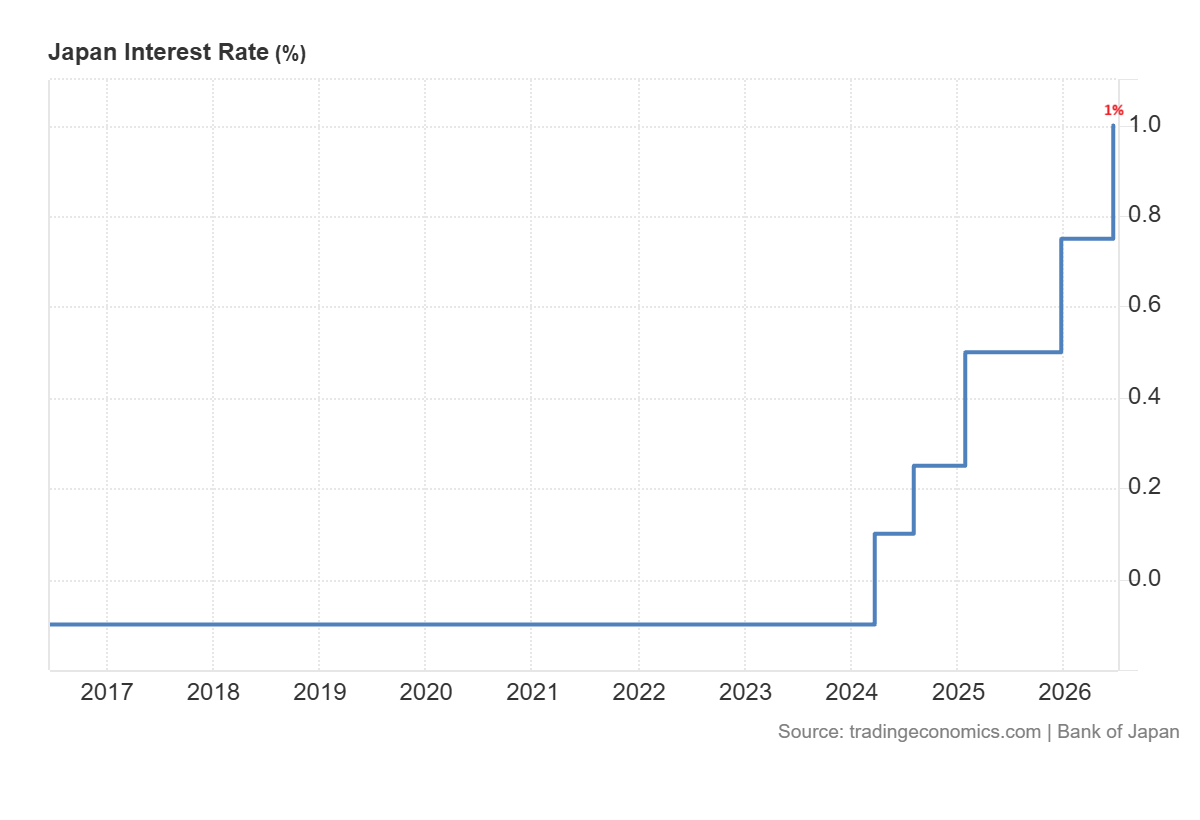
The CPI growth in Japan slowed to 1.5% year-on-year in May, while the real policy rate is still negative.
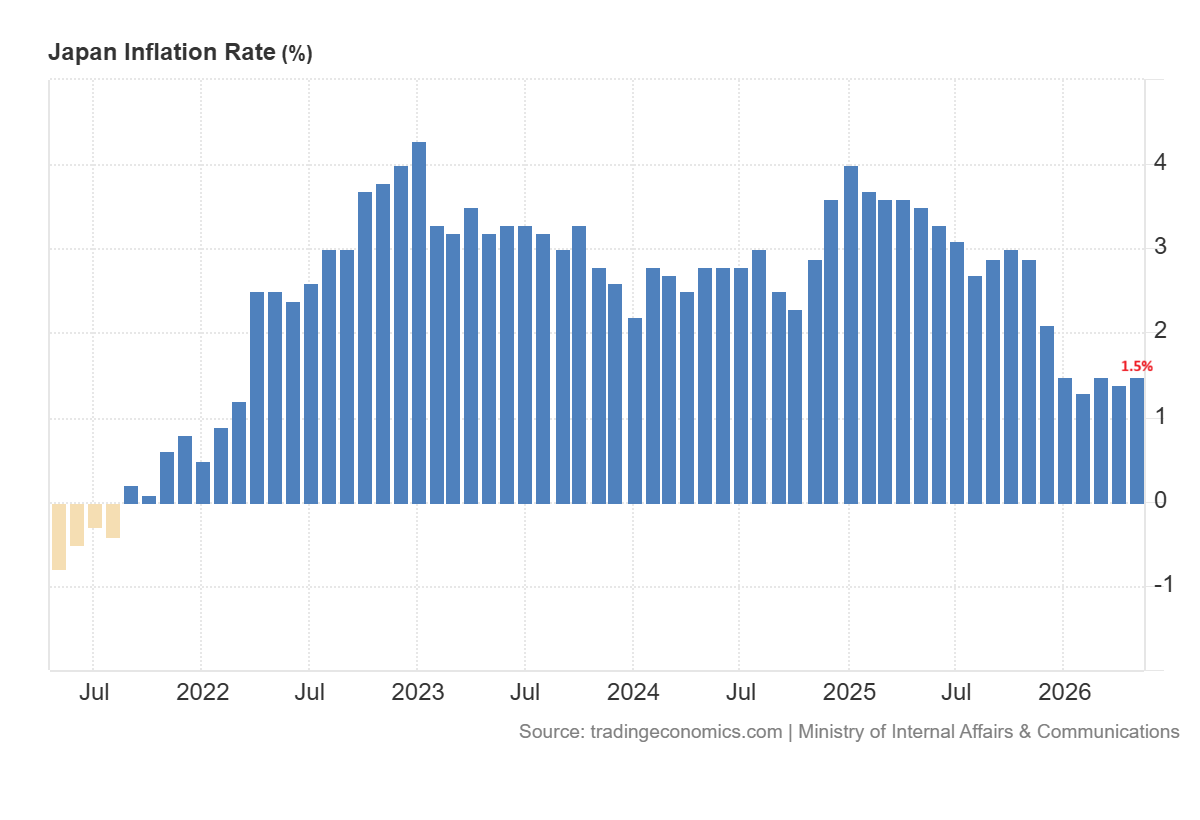
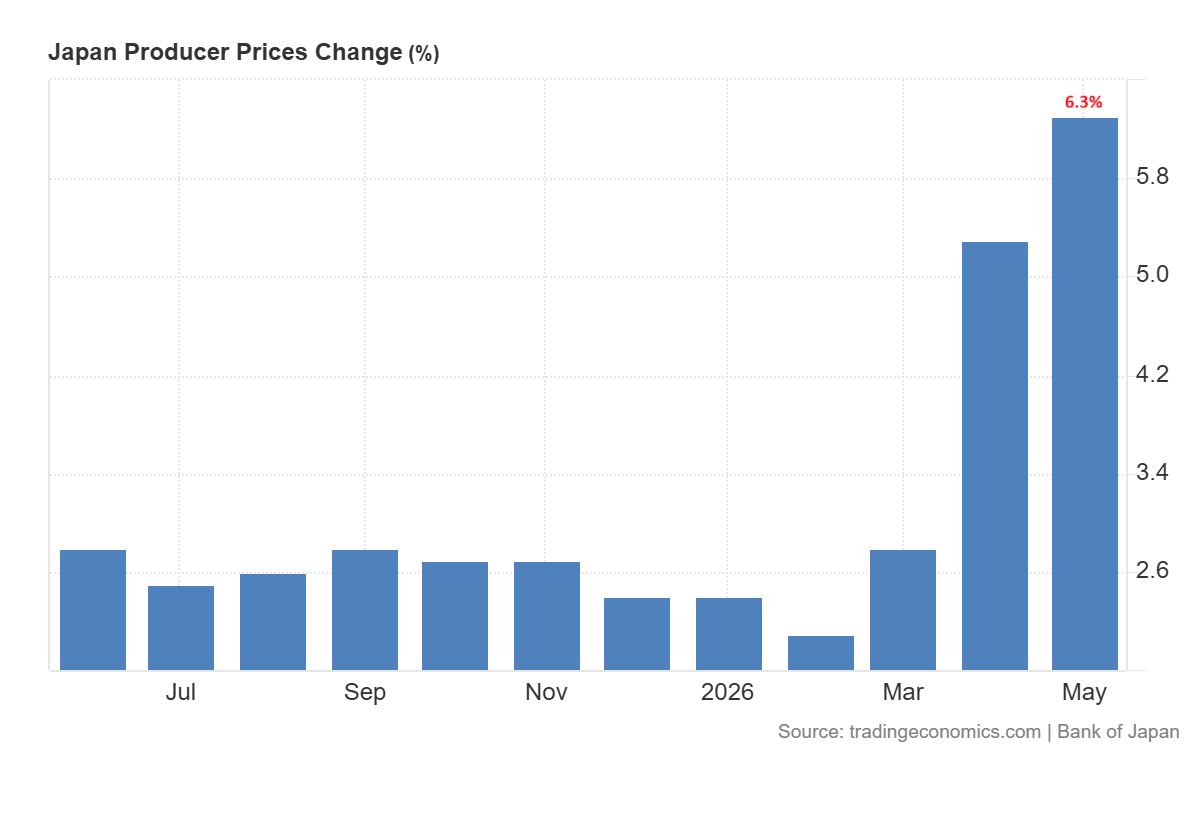
Producer prices also signal a higher risk of inflation as PPI increased by 6.3% over the past year to May.
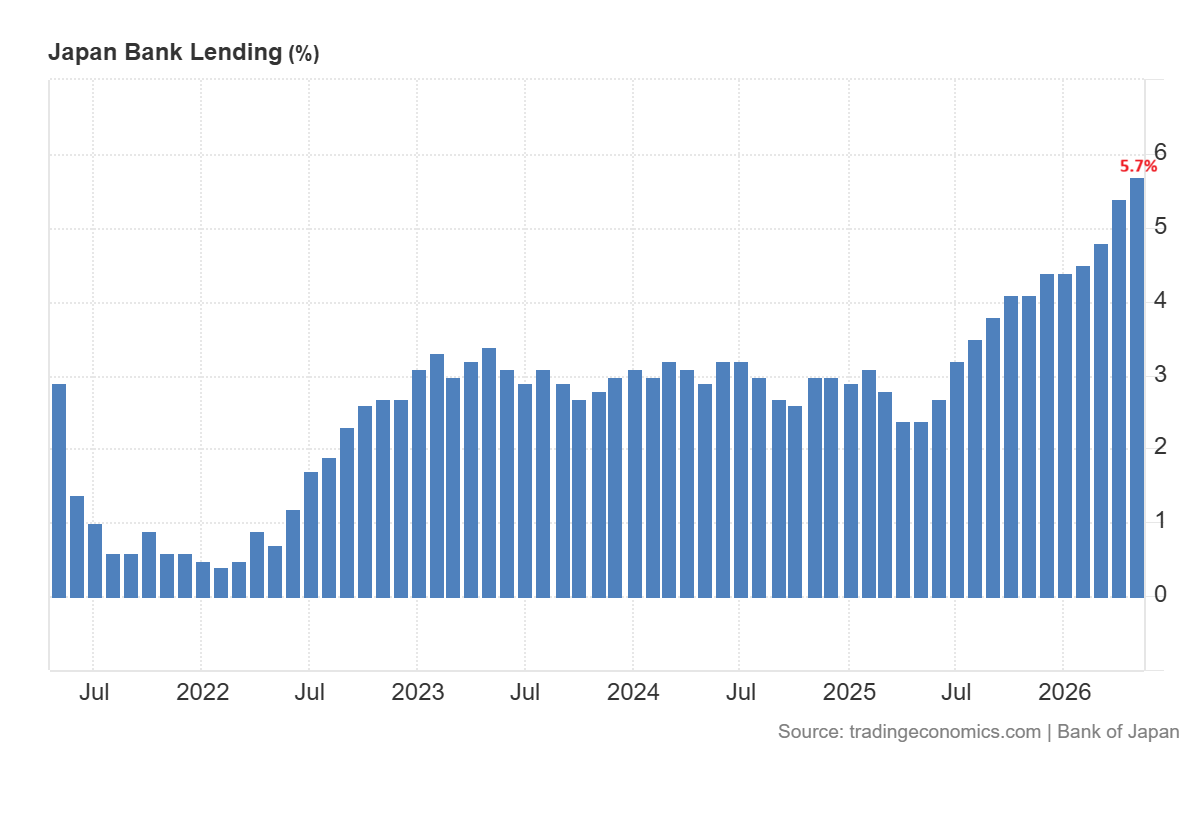
The bank credit also grew by 5.7% which also indicates high monetary inflation. If the credit growth exceeds the real GDP growth, it puts pressure on prices.
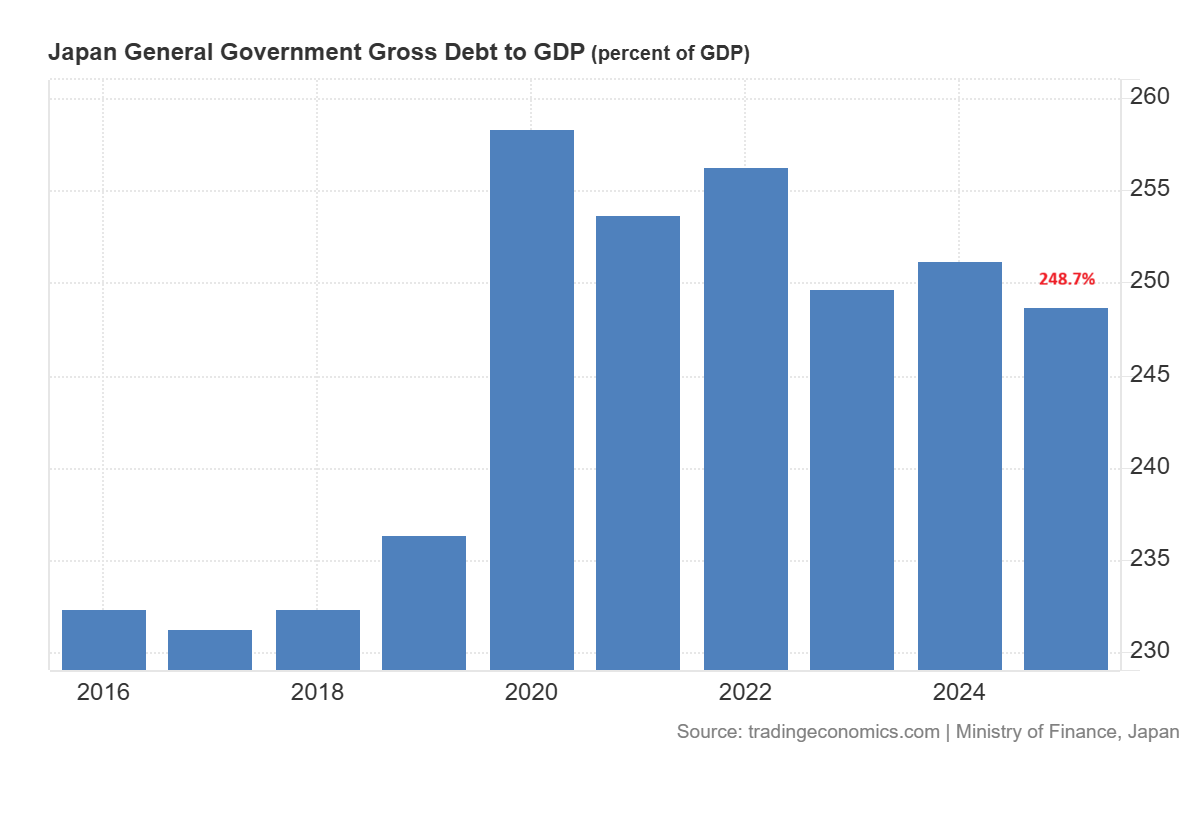
The BOJ is in a tricky policy trap. Japan is still carrying a very high amount of debt as seen by the debt-to-GDP ratio in the chart below. Japan’s debt-to-GDP ratio has crossed the 245% in 2025, which can place fiscal strains on the government amid rising interest rates over the long term. The central bank remains a buyer of government bonds to keep yields down and to absorb debt issuance. This makes the yen weaker as it keeps liquidity high and inflationary pressures strong.
Fed, ECB and BoE Keep Rate Gap Wide Against Japan
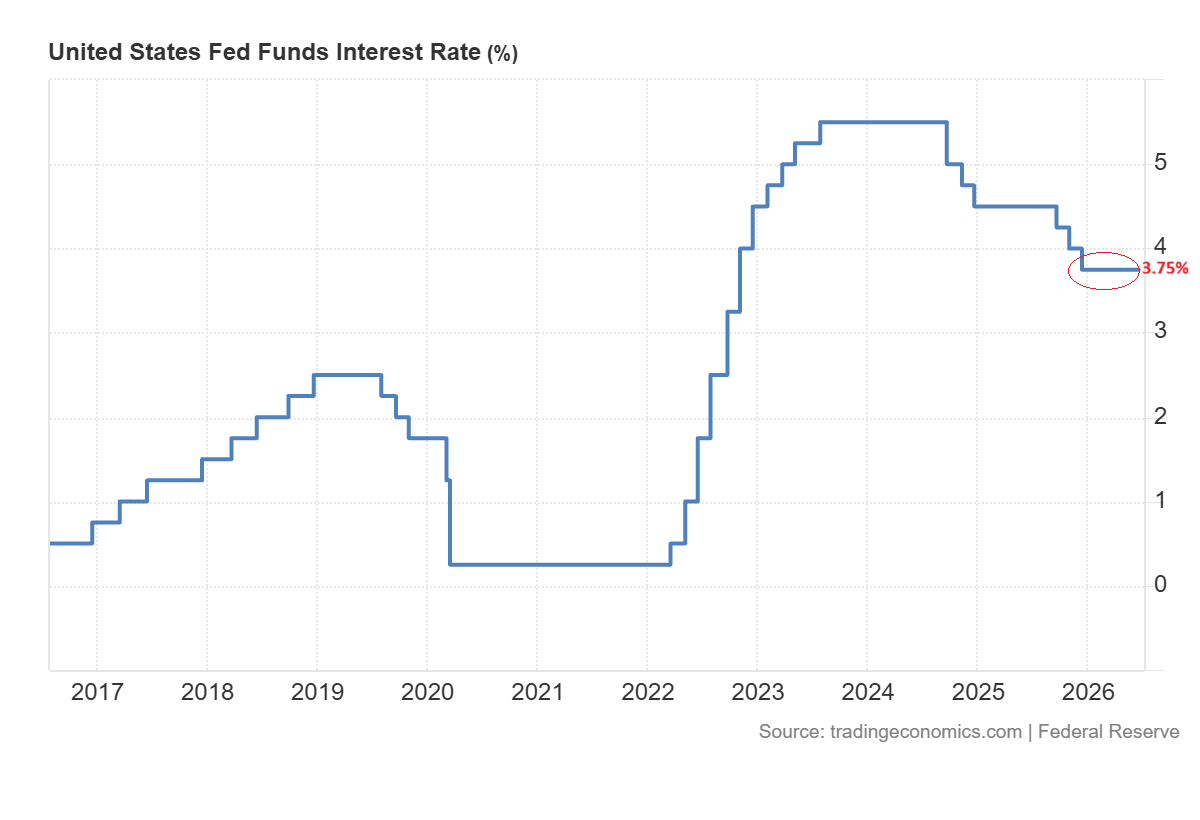
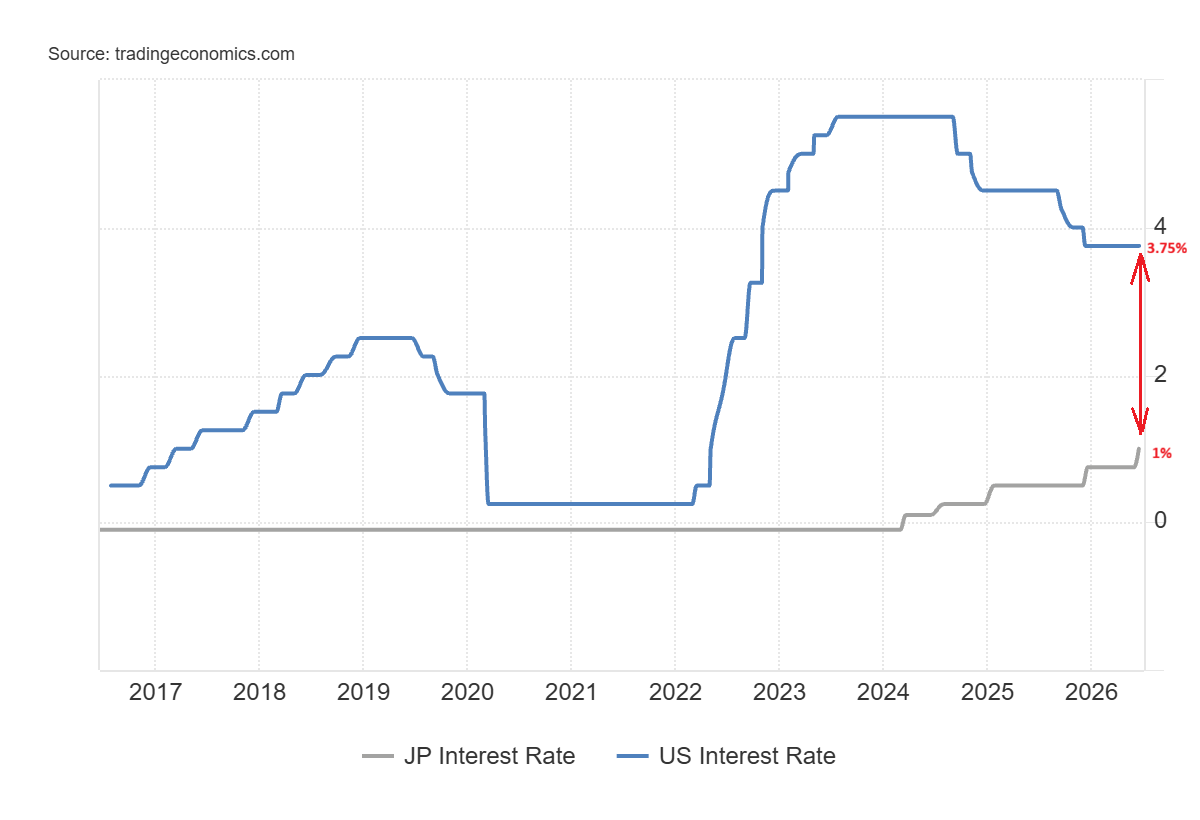
Kevin Warsh kept the Fed funds rate unchanged at 3.5% to 3.75% at his first meeting as chair of the Fed. The move was not unexpected but hawkish comments by Kevin Warsh surprised the markets.
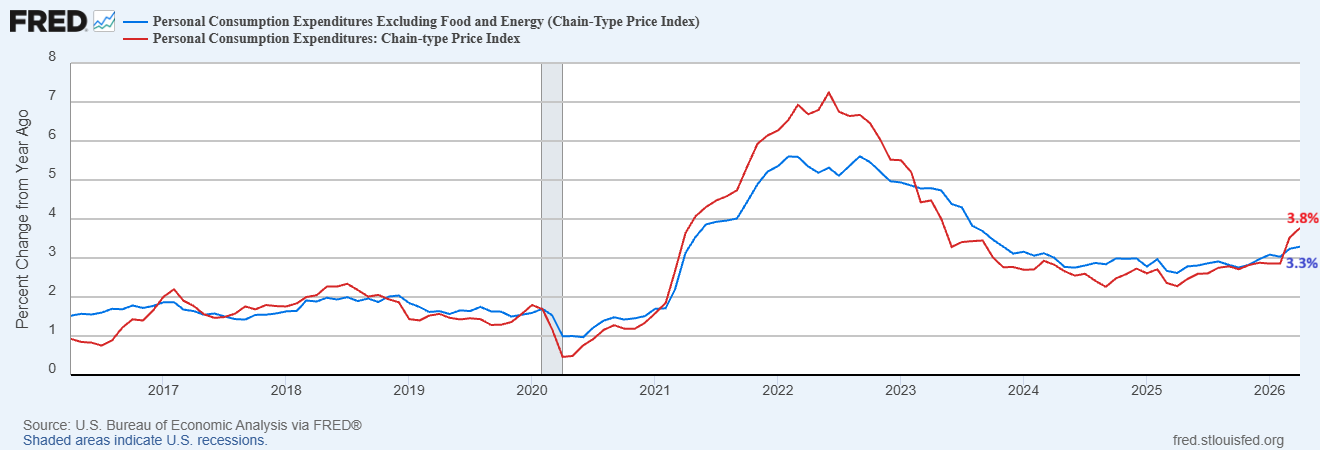
The core PCE inflation rate remains above the Fed’s 2% target and continues to exert inflationary pressure. This makes rate cuts unlikely in the near term.
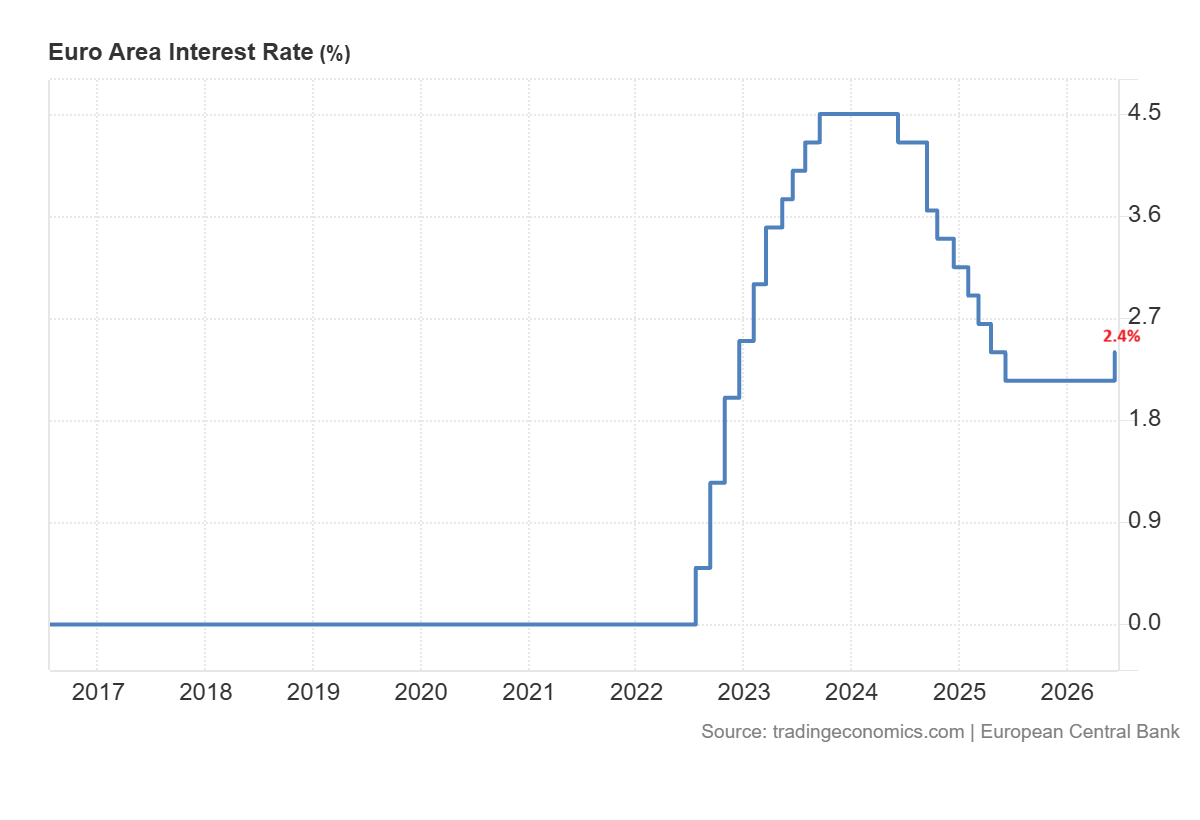
The ECB has lifted the rates to 2.4% and a further increase is possible if service inflation fails to abate.
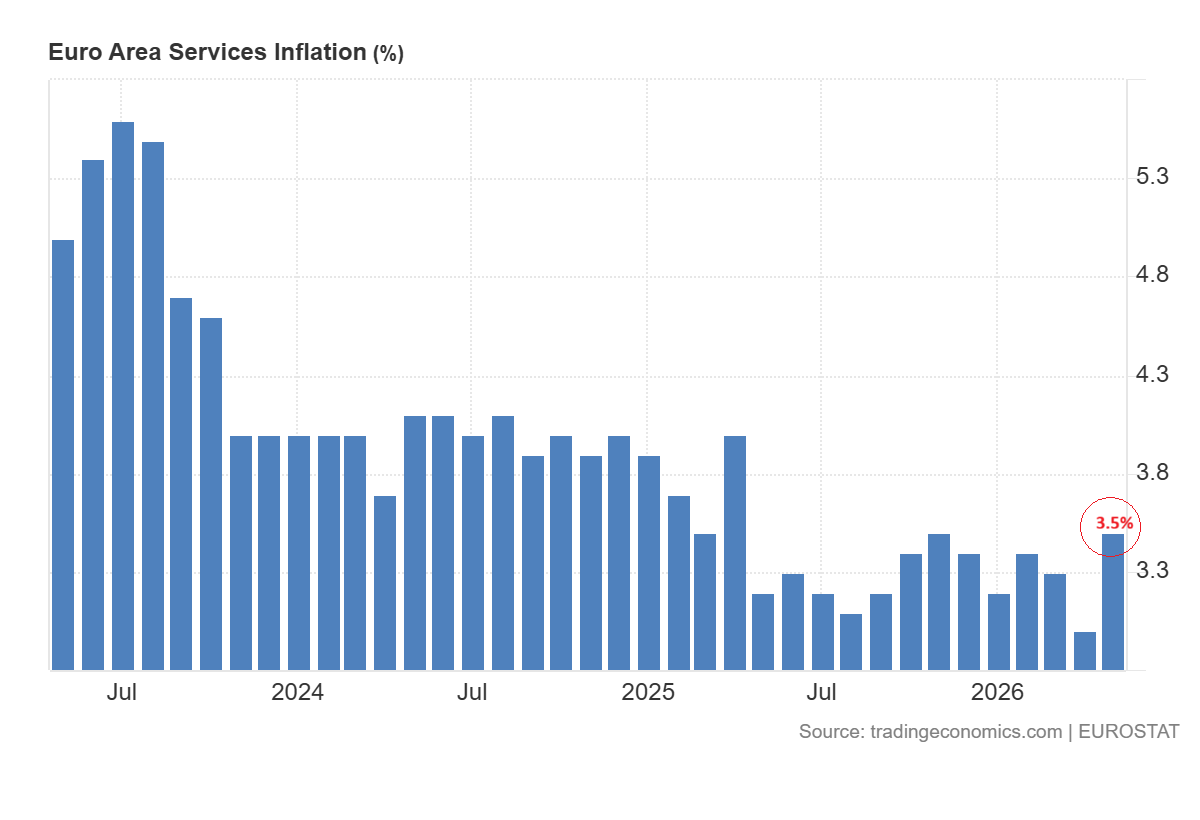
Services inflation in the eurozone rose to 3.5% in May from 3.0% as seen in the chart below. This is important as services inflation is more difficult to reverse than energy inflation. Despite a possible drop in oil prices after the U.S.-Iran deal, the ECB might take action if inflation spreads to wages and services.
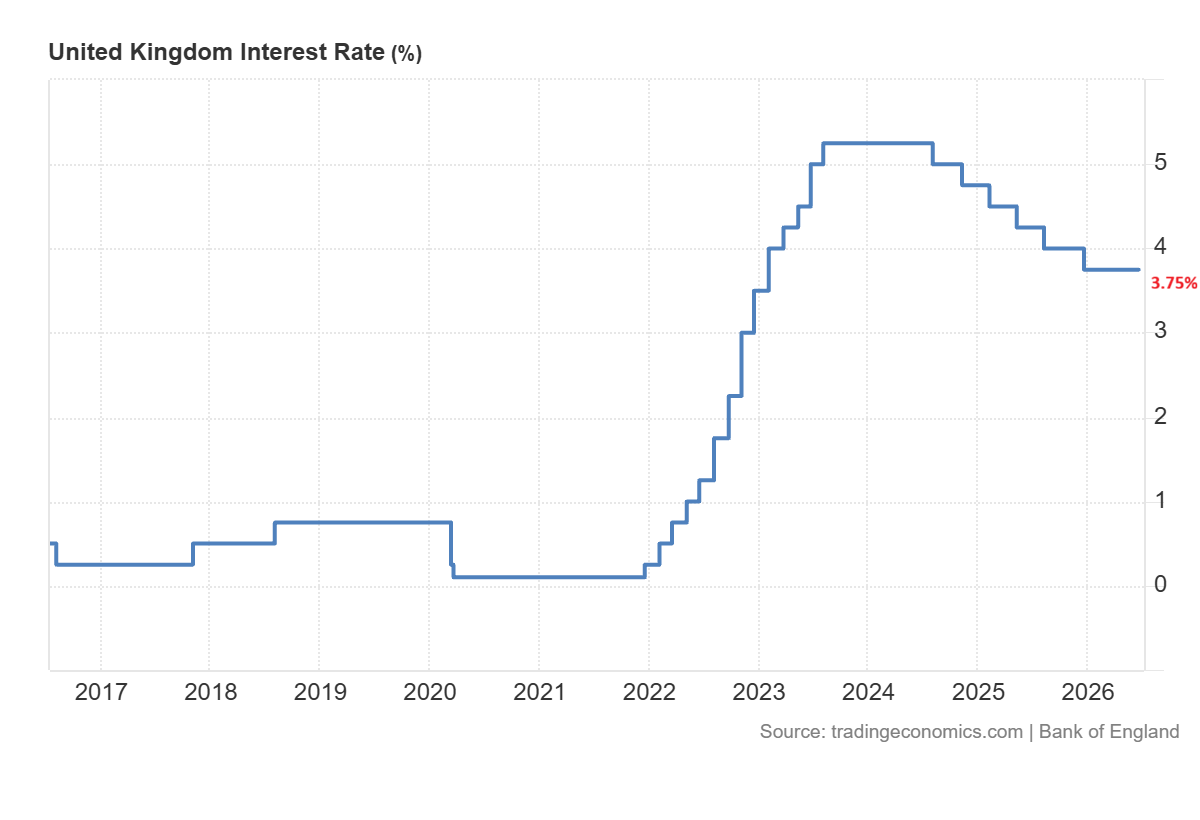
The BoE maintained the interest rate at 3.75% in June. The BoE requires more time as the labour market is weaker and the wage growth decelerates.
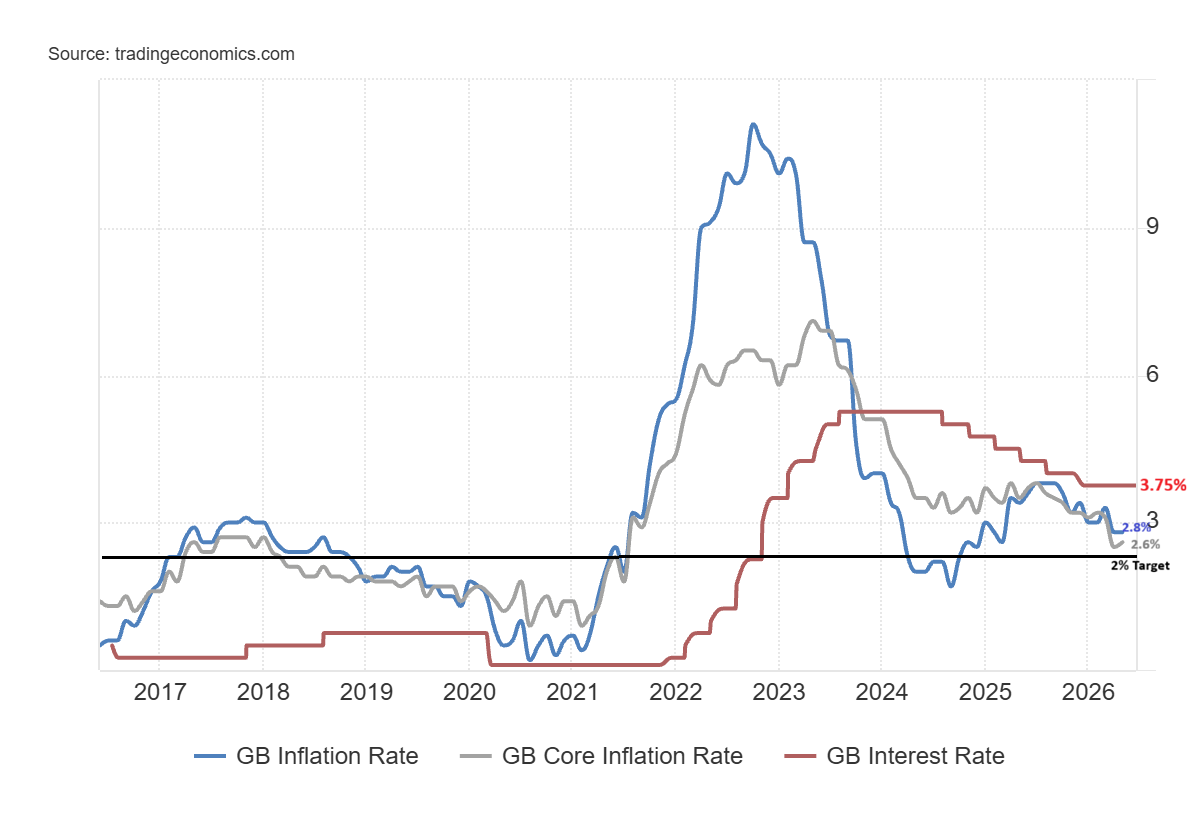
The inflation in the United Kingdom remains above the target range of 2% as seen in the chart below. Inflation is forecast to remain higher. This leaves the door open for a future rate rise but it appears the BoE are less aggressive than the Fed and ECB at the moment.
USDJPY Forecast: 162 Breakout Could Put 175 in Focus
USDJPY remains the key yen cross as the US dollar enjoys solid interest rate support. The Fed is not easing and inflation is sticky. This keeps U.S. yields steady and supports the US dollar against the yen. As long as the Fed maintains its hawkish stance, it is possible that USDJPY may test higher levels. The main problem is that the BOJ is raising too slowly relative to the inflationary pressures.
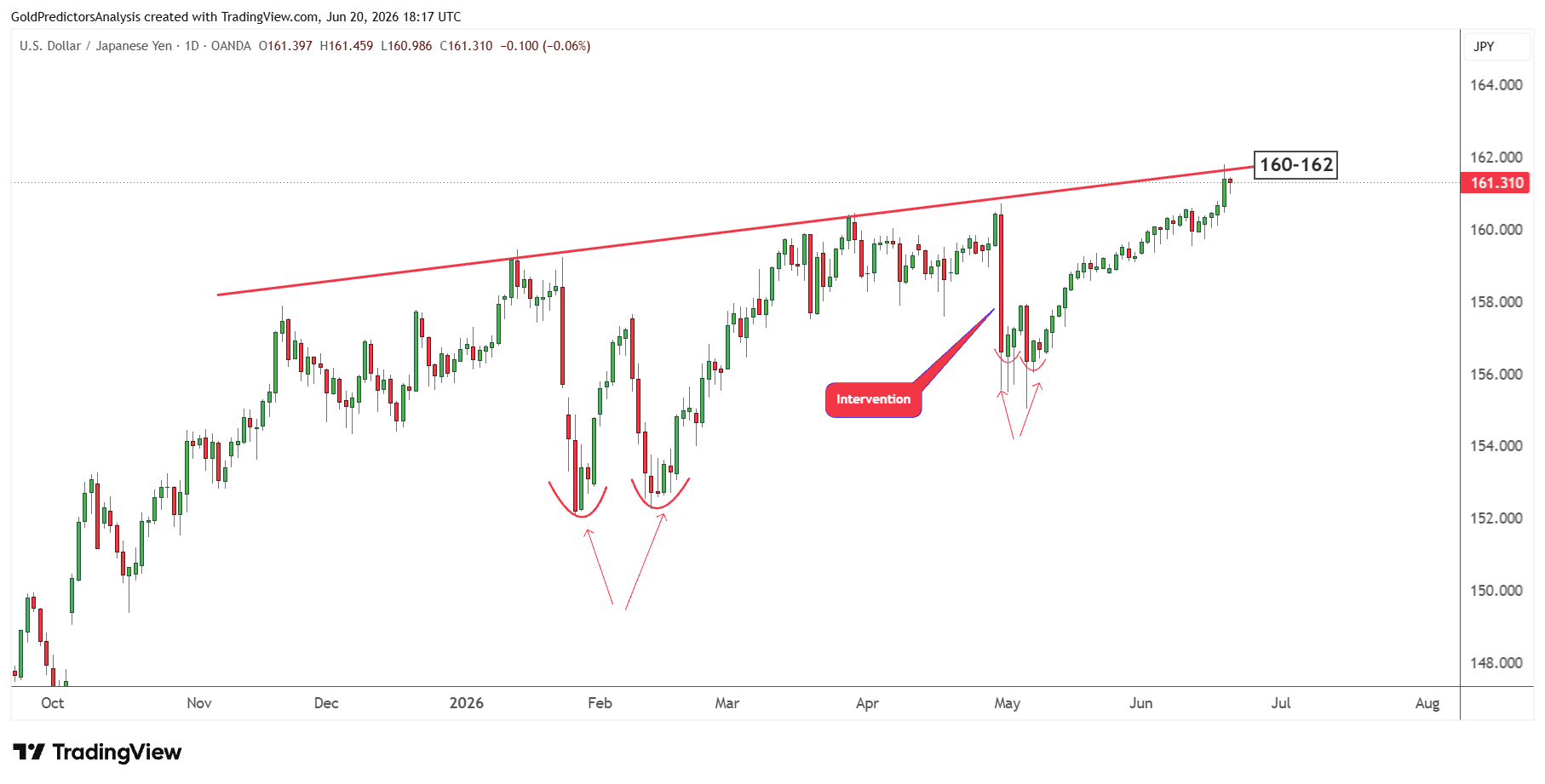
USDJPY is also at risk of intervention at key resistance. The authorities in Japan may intervene if the pair moves quickly. But if Japan’s real rates are not improved, intervention could only lead to short term pullbacks. The overall picture is still linked to the difference between Fed and BOJ rates and the stress in the Japanese bond market.
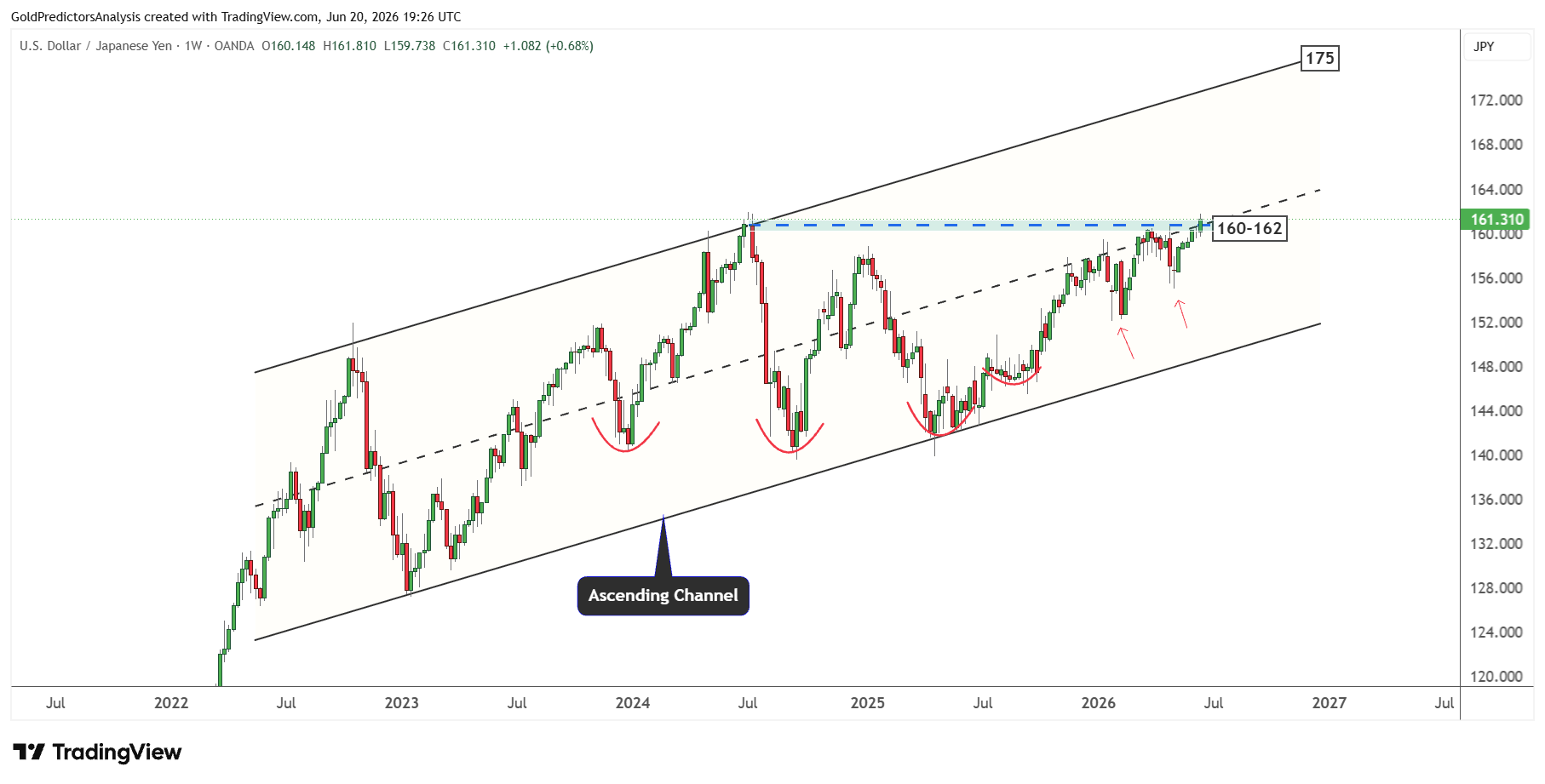
From a technical perspective, USDJPY is consolidating at the key zone of 160-162 and looks to break higher. A successful break above 162 will open the door for a strong rally higher. The emergence of double bottom patterns in January and February and then in May 2026 indicates constructive price action. This suggests that a break above 162 will open the door for the long-term target of 175.
The target of 175 in USDJPY is confirmed by the long-term ascending channel since 2023. A break above 162 will also break the long-term structure and accelerate the pair to the resistance of the ascending channel at 175.
EURJPY Forecast: ECB Rate Hike Risk Supports 190 Test
EURJPY is also still supported as the ECB has a more hawkish stance than the BOJ. The ECB has already hiked rates and could be tempted to do so again if service inflation remains strong. This helps to prevent the euro from depreciating against the yen if markets expect further tightening in the eurozone.
The euro could be another winner if the U.S.-Iran deal helps ease energy risk and boost eurozone growth. Reduced oil prices are good news for Europe, which is heavily reliant on imported energy. But services inflation and wages still remain on the ECB’s radar screen. The ECB might not ease up so soon if inflation spreads beyond energy.
EURJPY could continue to trend higher as long as BOJ is behind the inflation curve. The major risk is that if the eurozone economy slows down, there will be less need for the ECB to raise interest rates. But the policy differential is still in favour of the euro. This supports the EURJPY on pullbacks.
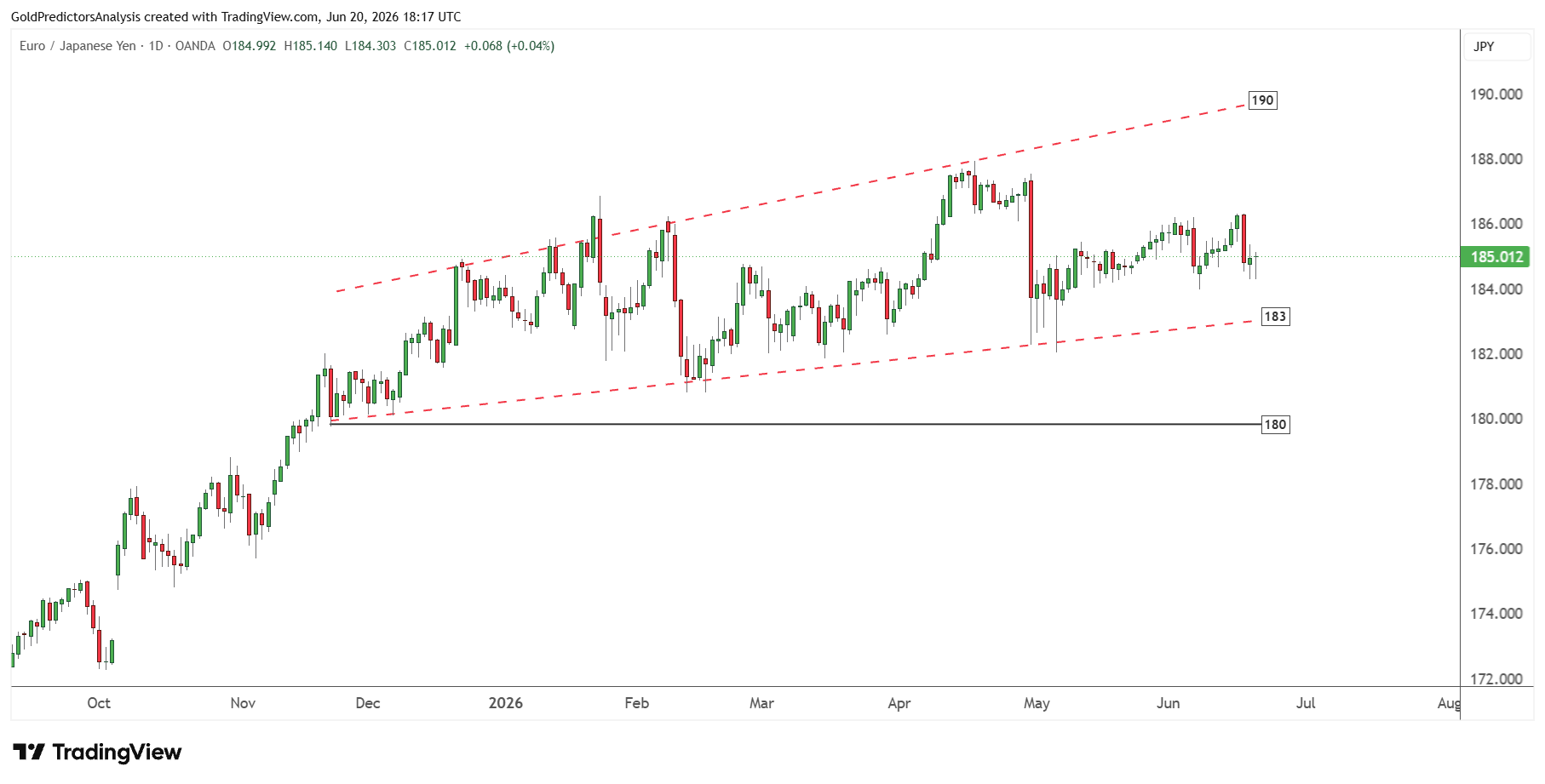
From a technical perspective, EURJPY has been consolidating in a broader range between 180 and 190 since December 2025. The immediate support for EURJPY remains the 183 level. A break below 183 will open the door for a drop to 180. On the other hand, EURJPY faces strong resistance at the black trend line at the 190 level.
GBPJPY Forecast: BoE Caution Keeps 217 Breakout in Focus
The outlook for GBPJPY is more mixed as the BoE is not as aggressive as the Fed and ECB. The BoE also left interest rates at 3.75% and stated the position as an active hold. That is a wait-and-see for the BoE but it has not completely eliminated the risk of further rate hikes.
Sterling could struggle if markets think the BoE will delay tightening until later this year. If the inflation increases, the BoE may focus on further rate hikes which may further strengthen the sterling.
If sterling is under pressure in the near term due to a cautious BoE, then a weaker yen can still help to hold GBPJPY higher.
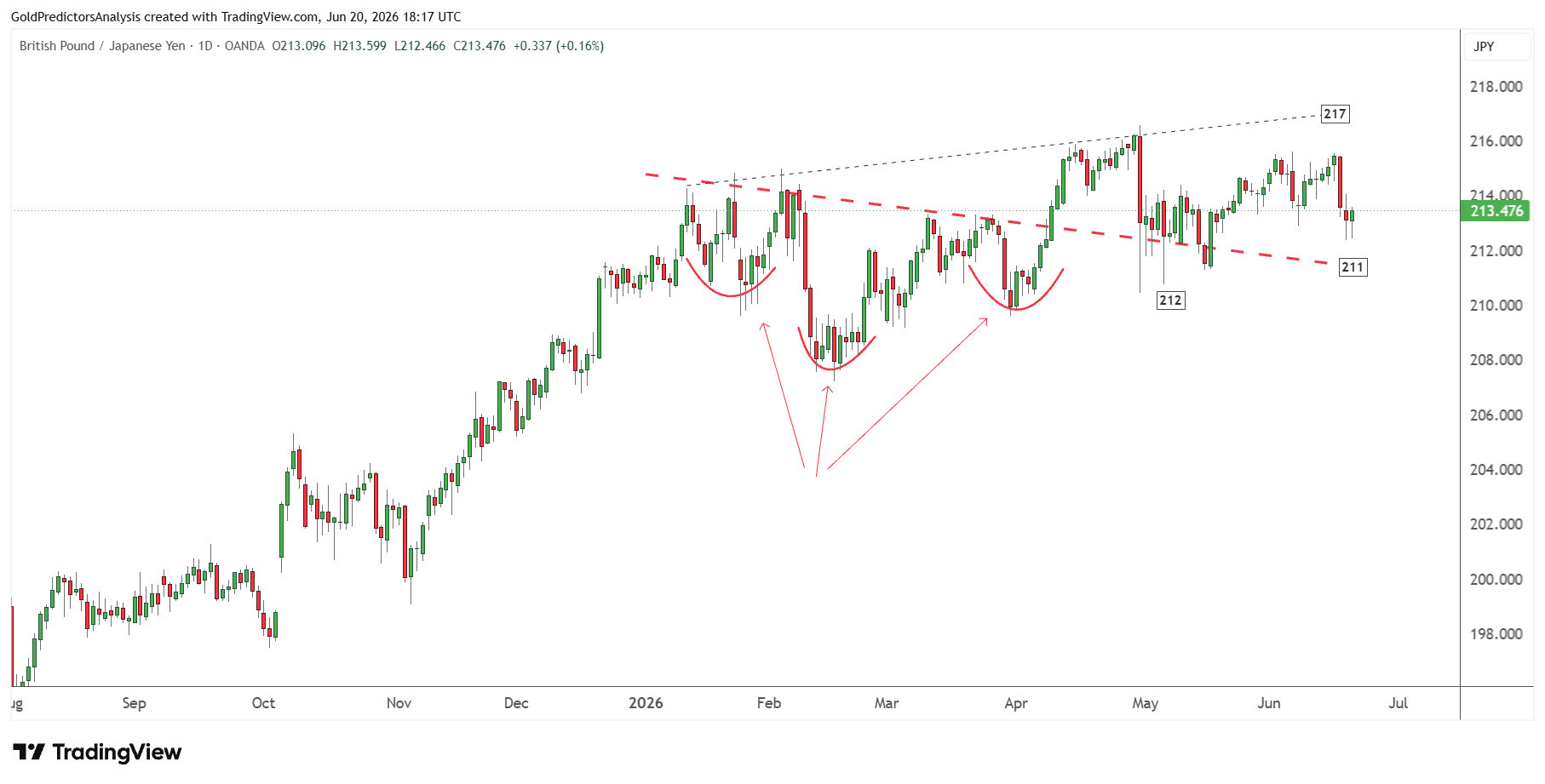
From a technical perspective, GBPJPY shows constructive price action by forming an inverted head and shoulders pattern from January to April 2026. But the pair is now consolidating in a wide range between the 211 and 217 levels and is looking for the next move. A break below 211 will push the pair to 208. However, a break above 217 will signal strong constructive bullish price action and open the door for a strong surge in the coming weeks.
What is Next for USDJPY, EURJPY and GBPJPY?
The yen remains under pressure as BOJ’s policy still lags behind inflation and the rest of the world’s central banks. Though the BOJ has raised its policy rate, continued bond purchases have helped limit the rise in Japanese government bond yields. This will maintain a wide interest rate spread and help sustain volatility in USDJPY, EURJPY and GBPJPY.
The Fed showed a hawkish stance and the dollar continues to offer support, making USDJPY the best pair to monitor. Moreover, EURJPY continues to get support as the ECB may hike rates again if service inflation remains strong. It is mixed for GBPJPY as the BoE is not as hawkish but yen weakness will continue to push the pair higher. The overall picture depends on whether the BOJ can tighten sufficiently to support the yen without causing stress in Japan’s bond market. USDJPY, EURJPY and GBPJPY require breaks above 162, 190 and 217, respectively, to open the door for strong rallies in the yen pairs.
Read more: Treasury Yield Surge Drives USDJPY, EURUSD and GBPUSD