Gold (XAU) entered a powerful breakout phase in 2025 as monetary conditions shifted and global risks intensified. Liquidity injections, sticky inflation, and labour market weakness renewed demand for safe-haven assets. Technical structures across long-term charts now confirm a decisive change in trend. This article presents an examination of the 2025 gold market trends and macro drivers to identify the key forces likely to shape the next major move in 2026.

Gold’s 2025 Breakout: Liquidity, Inflation, and Safe-Haven Flows
Fed Liquidity Surge Sparks Gold Rally
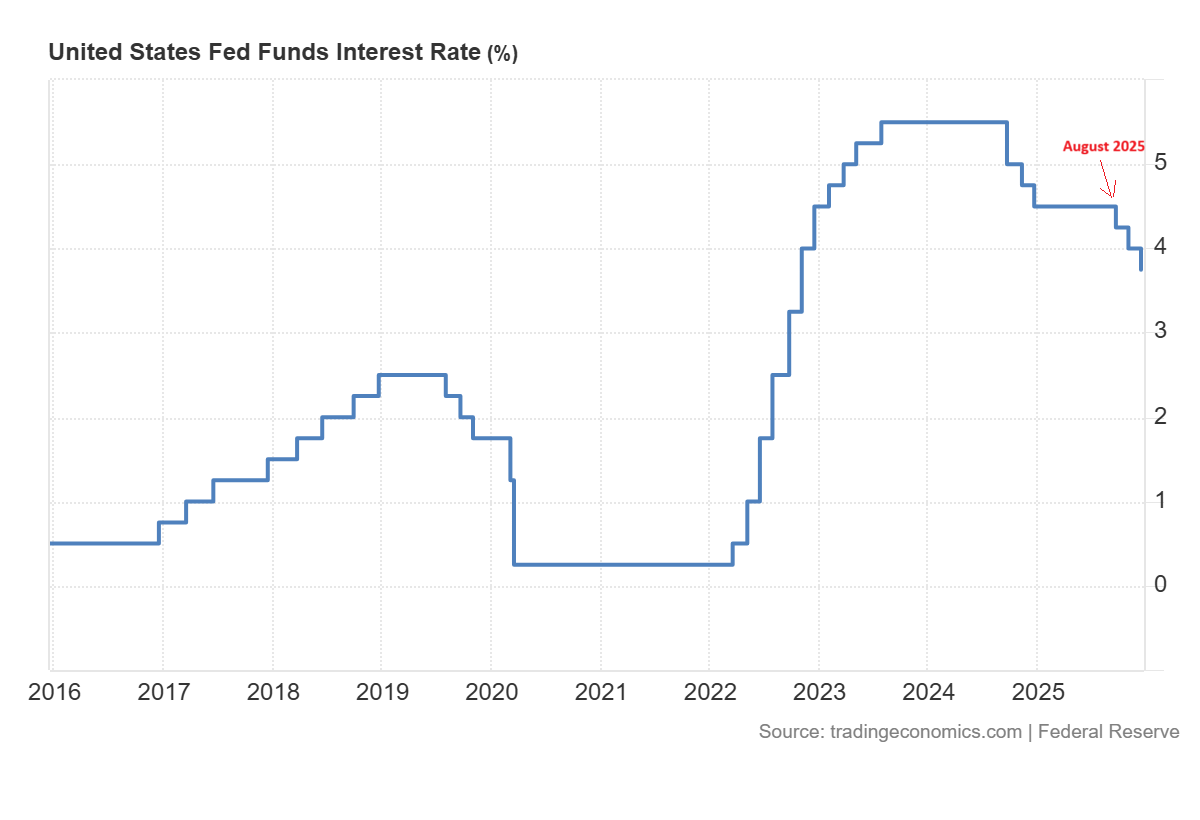
A decisive shift in U.S. monetary policy contributed to the surge in gold prices in 2025. The chart below shows that the Federal Reserve maintained stable interest rates until August 2024. A new easing cycle began in August 2024 and resumed again in August 2025, reinforcing the bullish momentum in gold prices.
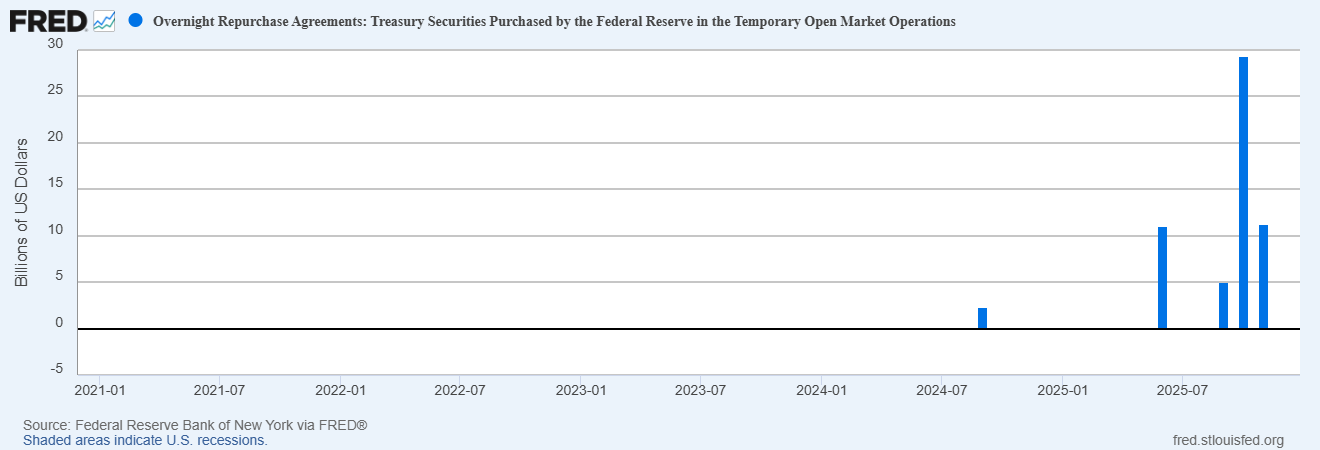
While the rate cut was widely expected, the more significant signal came from the central bank’s liquidity policy. The Federal Reserve resumed purchases of short-term Treasuries at a pace of $40 billion per month and removed the cap on its standing repo facility. These moves injected liquidity into the system, easing short-term funding stress.
These liquidity injections are evident in the sharp increase in Overnight Repurchase Agreements conducted by the Federal Reserve since mid-2025. This trend carries significant bullish implications for gold. Rising repo activity signals underlying financial fragility and liquidity tightening, which support safe-haven demand.
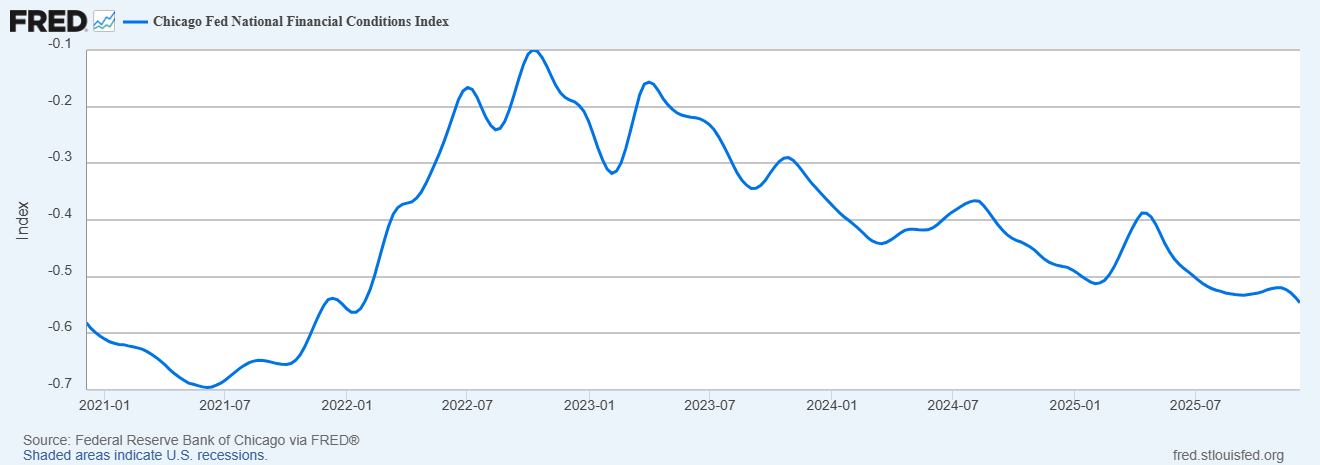
Additionally, the Chicago Fed National Financial Conditions Index declined to –0.546 in early December, indicating highly accommodative financial conditions. This environment supported risk assets and weakened confidence in fiat currencies, providing direct support for gold prices.
Gold Price Forecast
Every new Gold analysis as it publishes, today's technical signal and key levels, live price — on one page.
See all Gold forecastsLabour Market Weakness Reinforces Safe-Haven Demand
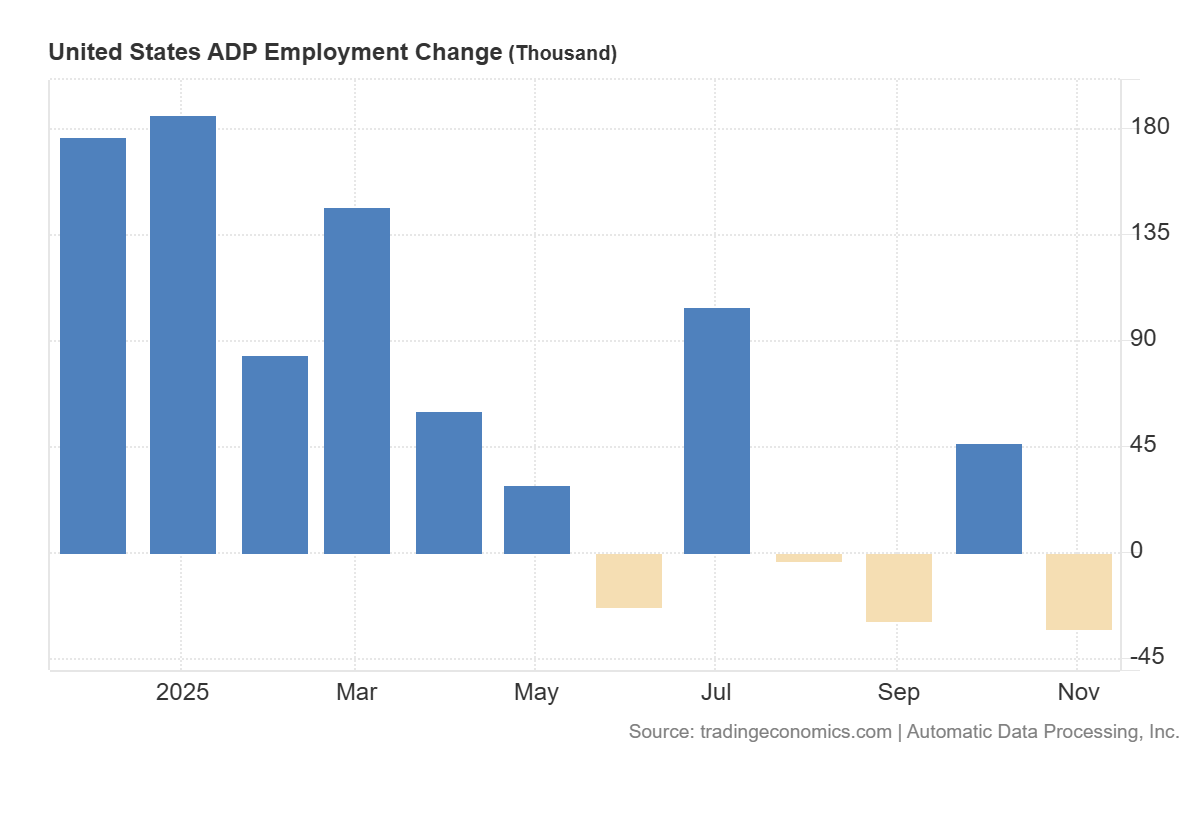
The interest rate cut in December 2025 was backed by signs of softening in the U.S. labour market. The ADP National Employment Report estimated a loss of 32,000 jobs in November, as shown in the chart below. The job losses were concentrated in small firms, which shed 120,000 positions due to tariff pressures and rising costs.
Meanwhile, continued unemployment claims dropped to 1.838 million, but unadjusted data showed a year-on-year increase. The drop likely reflected seasonal distortions.
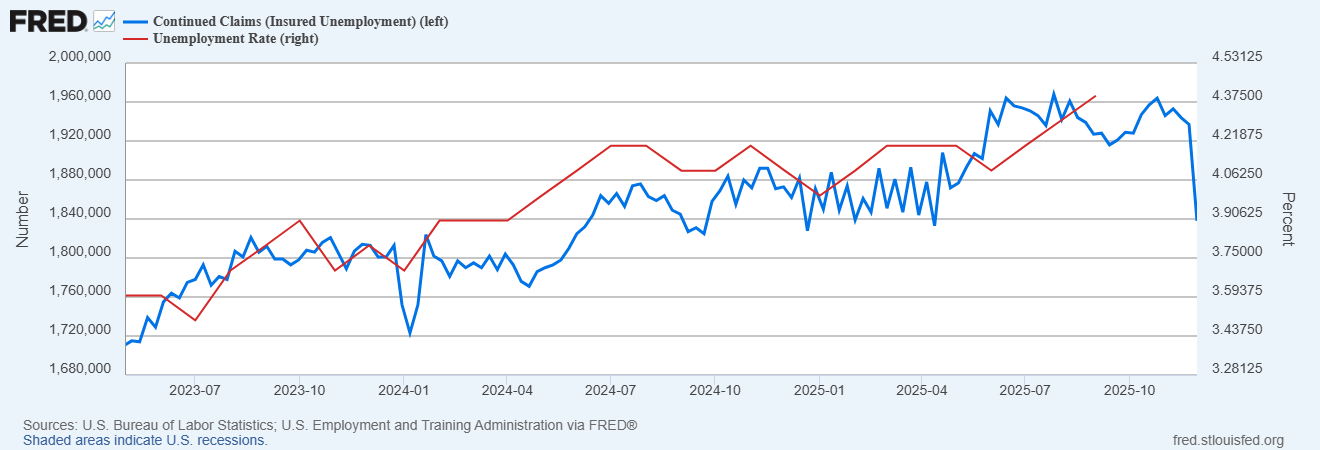
This combination of weak hiring and data uncertainty reinforced expectations of further Fed support. It also strengthened gold’s appeal as a hedge against policy-driven instability.
Sticky Inflation Fuels Gold as Policy Trade-Offs Intensify
Moreover, inflation fears resurfaced as economic growth remained resilient. The chart below shows that the ISM Services PMI increased to 52.6 in November, signalling continued expansion.
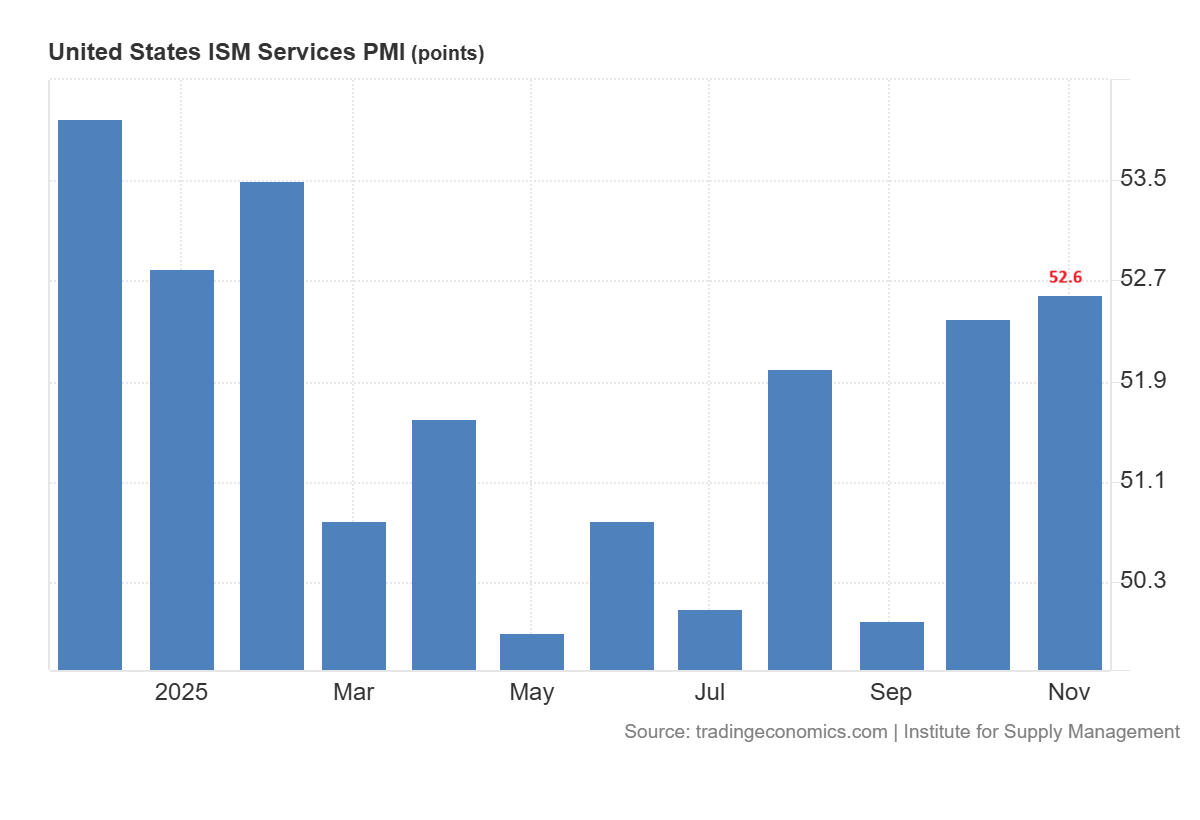
New orders continued to grow, reflecting strong demand. However, employment remained in contraction, suggesting that firms are struggling to meet demand without increasing headcount. This situation can intensify cost pressures despite mixed labour market conditions.
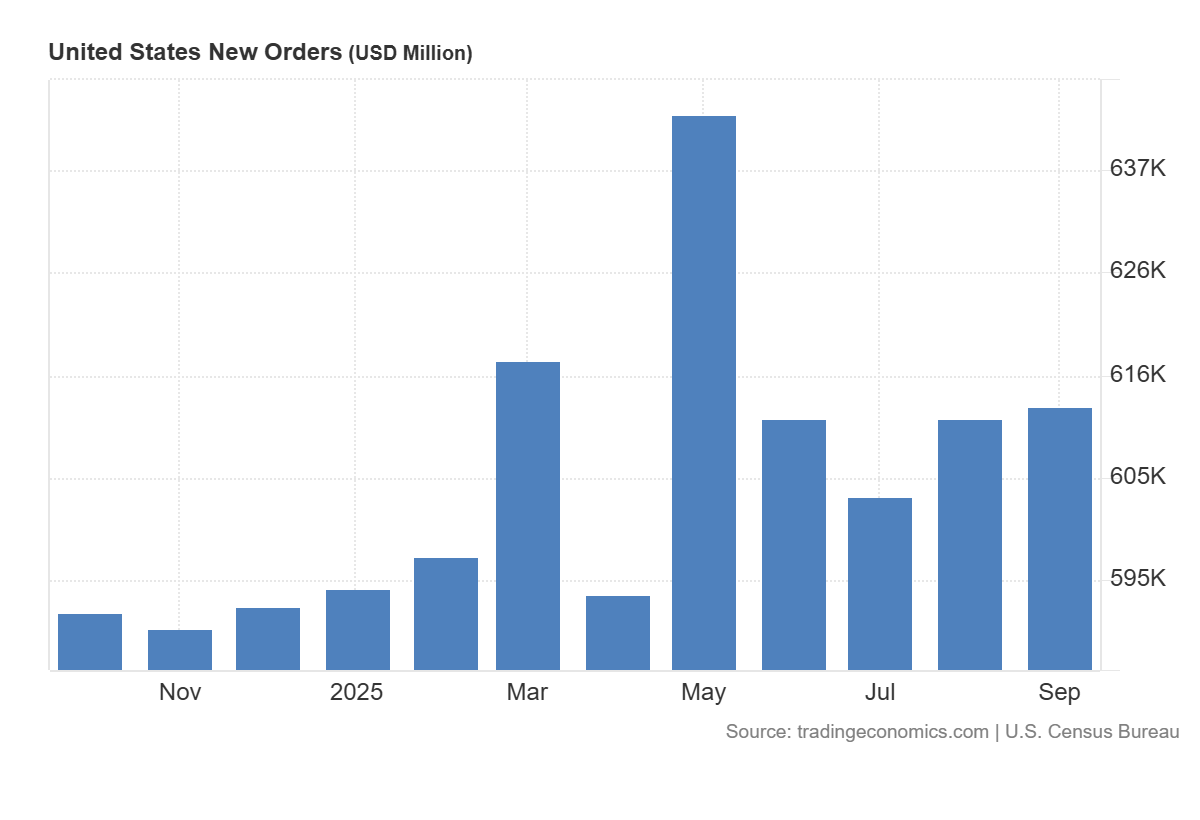
On the other hand, manufacturing data shows the same concern. This situation creates a policy dilemma. The cutting rates despite signs of labour market weakness risks fueling inflation if growth remains resilient.
Currency Volatility and Carry Trade Risks Add Tailwind for Gold
On the other hand, the currency markets added another layer of bullishness. The U.S. Dollar Index remains under pressure following the Fed’s rate cut. At the same time, the Bank of Japan prepared for a 25-basis-point rate hike, a move that could narrow the U.S.–Japan rate spread by around 50 basis points. This shift increases the risk of a carry trade unwind, which could boost demand for gold and further weaken the dollar.
Technical Breakout Confirms Super-Cycle Momentum
Yearly Chart Shows Super-Cycle Breakout from 1980s Wedge
The yearly chart for spot gold below shows that 2025 marked a transition year. The price broke in 2024 from a rising wedge pattern that had been forming since the 1980s. This breakout signalled the start of a new super-cycle in gold.
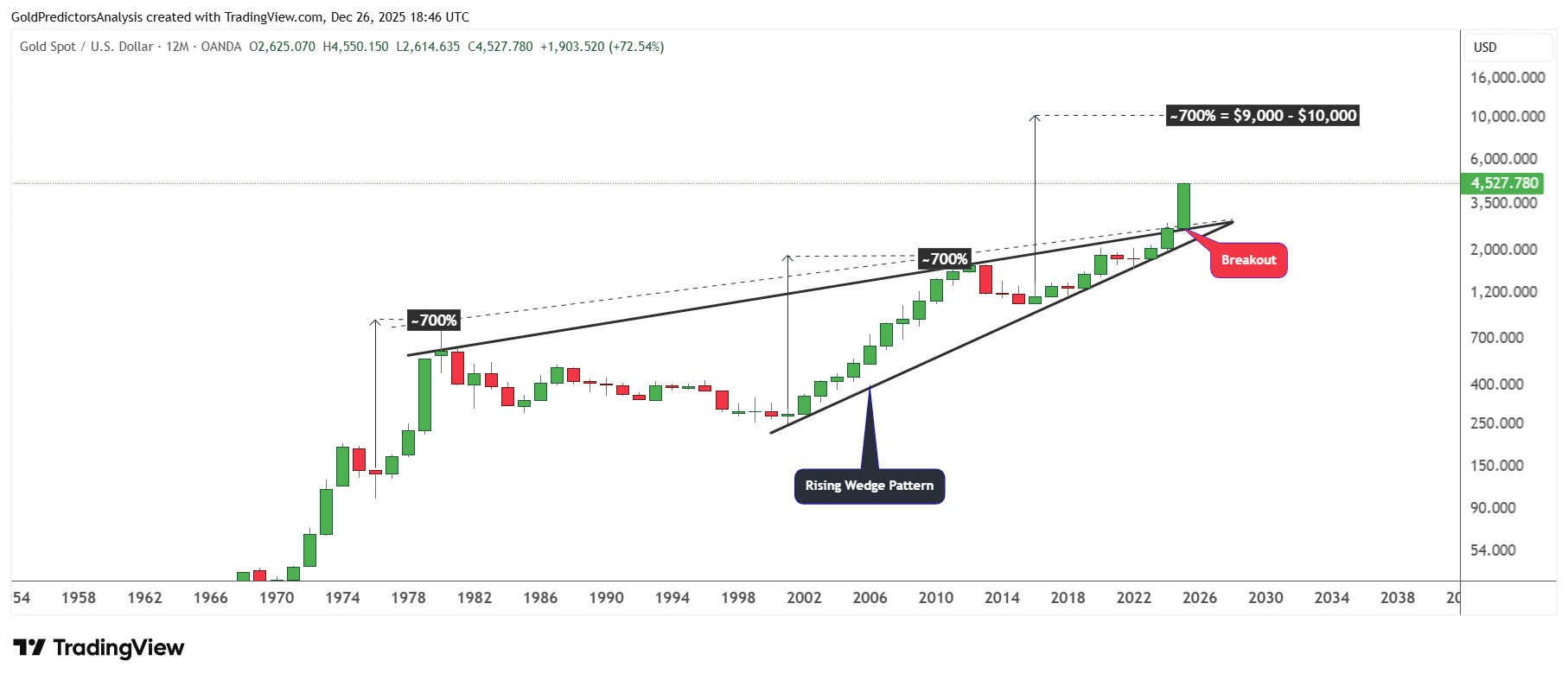
Gold has moved in three major bull cycles over the past four decades.
- The first surge began in 1976 and peaked in 1980, with a nearly 700% gain.
- The second surge began in 2001 and peaked in 2011, with a nearly 700% gain.
- The third surge began in 2015, and the price remains within this cycle.
A 700% increase from the 2015 bottom points to a long-term target between $9,000 and $10,000 per ounce. The breakout in 2024 supports this projection. Despite the decisive move in 2025, the chart suggests this rally is still in its early stages.
Therefore, prices could still increase by more than 50% from current levels in the coming years. This surge in the gold market is further supported by the 2025 global trade crisis and 2023 geopolitical tensions.
Quarterly Chart Confirms Breakout with Strong Structural Base
To better understand the ongoing surge in the gold market, the quarterly chart below provides further confirmation. The chart indicates that the bottom was formed using an inverted head-and-shoulders pattern, with the head in Q3 2015 and the shoulders in 2014 and 2018.
The breakout above this formation occurred in 2019, pushing gold to a peak in 2020. From 2020 to late 2023, the price consolidated within a symmetrical broadening wedge. This pattern broke to the upside in Q1 2024, triggering a powerful rally.
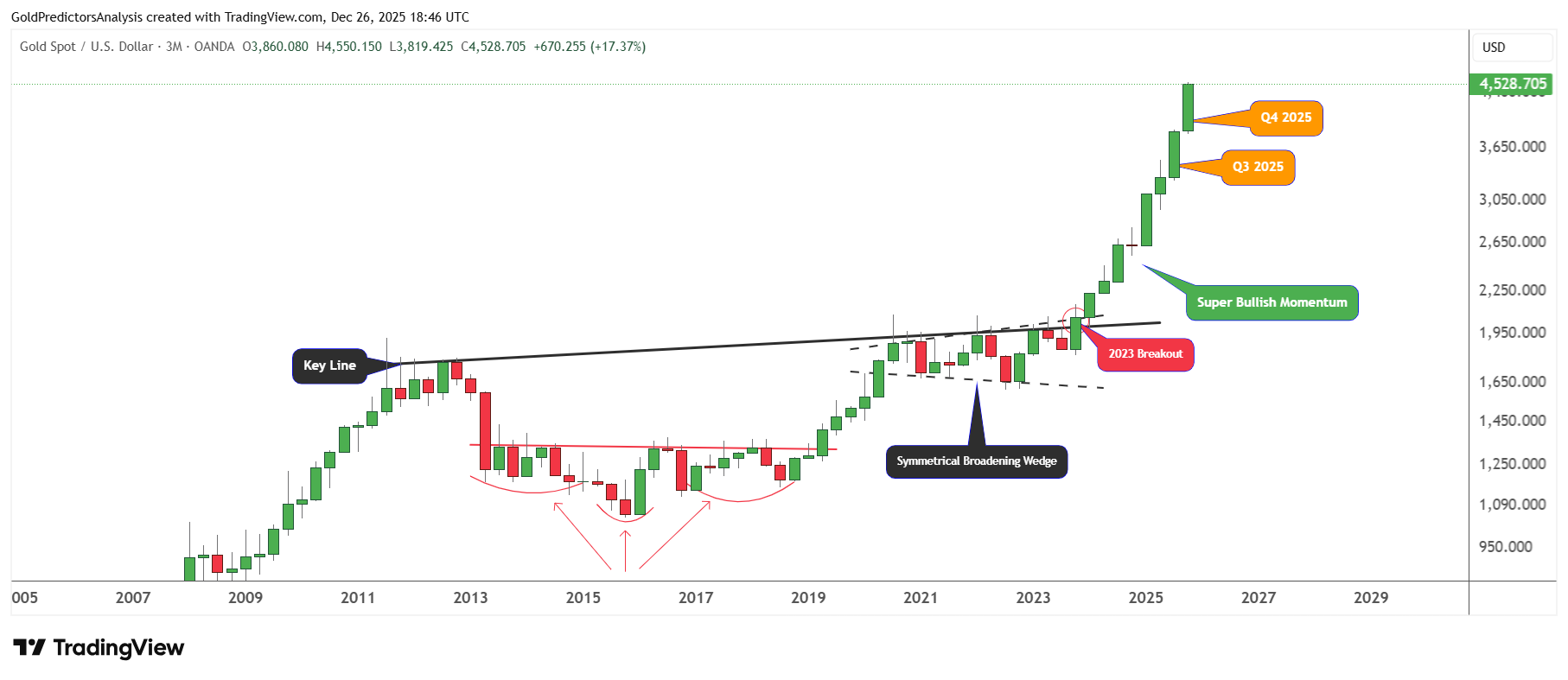
The price broke the strong pivot of $2,075 and continues to strengthen without showing any signs of weakness. The strong consolidation from 2011 to 2021 provided a solid base for the gold market. A breakout from this range has now triggered a strong parabolic move. The candlestick patterns in Q3 and Q4 of 2025 indicate strong momentum into the first half of 2026.
Monthly Chart Projects Acceleration Toward $5,000–$6,000
The monthly chart below further defines the medium‑term targets of this rally. The gold is trading within a well‑defined ascending channel, with momentum now entering the extension zone. This indicates an acceleration in price bullish momentum.
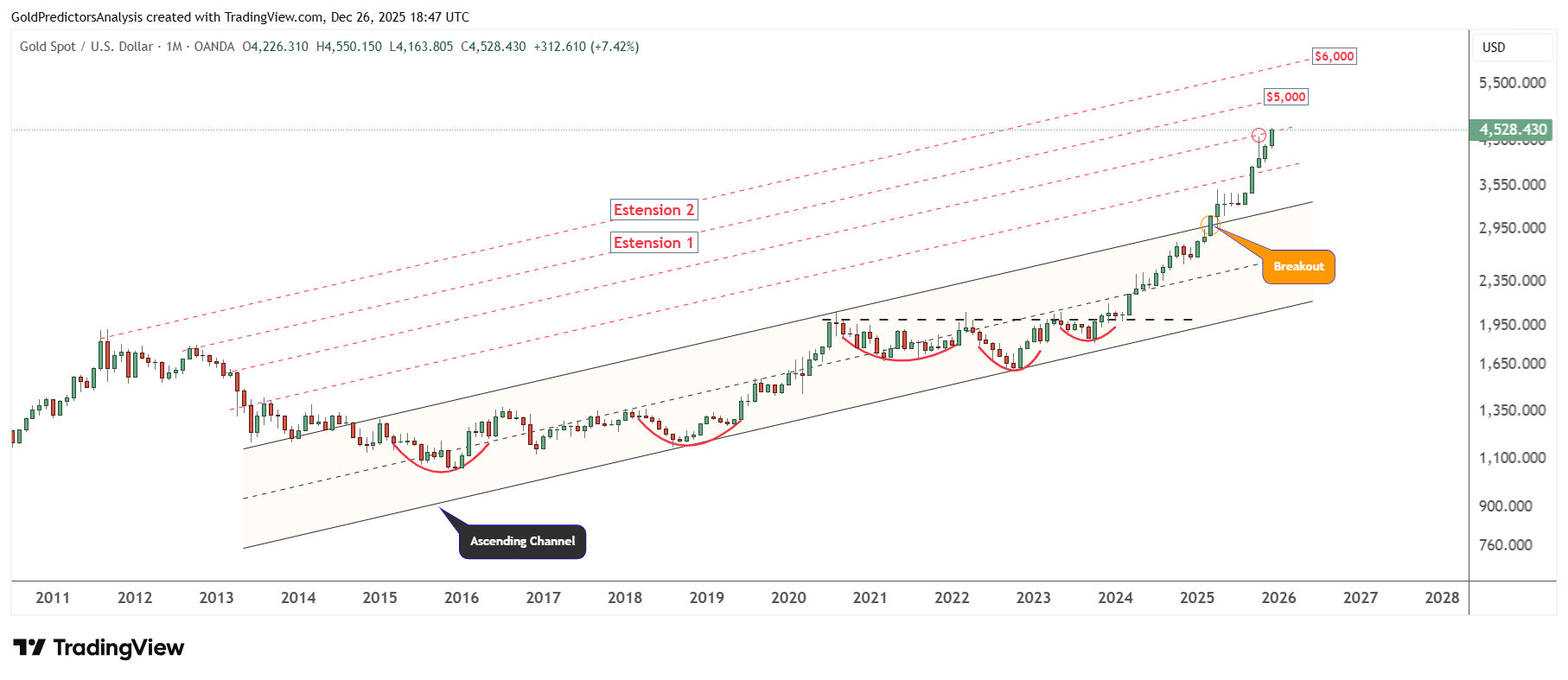
The primary target of this move lies near the upper boundary of the extension channel, marked by the red dotted trendline around the $5,000 level. A sustained break above $5,000 would likely open the door for a further advance toward the $6,000 region. Therefore, the medium‑term price target for gold remains in the $5,000–$6,000 range.
Gold’s 2026 Outlook: Momentum, Macro Forces, and Supporting Factors
Parabolic Momentum and Recession Scenarios
The gold market enters 2026 with most bullish macro factors already priced in. The market has digested expectations for moderate U.S. rate cuts and a broadly weaker dollar. However, the market has entered a parabolic move, which typically lasts longer and yields substantial gains. Moreover, the fundamental factors persist and remain unresolved.
There are possibly two paths where gold could outperform:
- Shallow Economic Slip: If global growth slows modestly and the Fed delivers more cuts, gold could gain strongly as investors rotate into defensive assets and volatility increases.
- Doom Loop Recession: In a deeper downturn, where economic activity contracts sharply and central banks resume aggressive easing, gold could even perform more, as a flight to safety would fuel renewed demand.
The above scenarios remain valid based on the fragility of the U.S. labour market and persistent trade tensions. Moreover, the central banks remain in a difficult position as cutting too little risks stagnation, while cutting too much risks inflation. However, any path will strengthen gold’s role as a hedge in 2026.
Supporting Factors for Gold Surge in 2026
The structural tailwinds are expected to continue supporting gold in 2026. Central bank purchases remain strong, with emerging markets actively diversifying away from the U.S. dollar and increasing their gold reserves beyond pre-pandemic norms.
At the same time, institutional investors remain underexposed to gold, creating the potential for rebalancing flows to further support prices. As market volatility persists, gold’s role as a portfolio hedge remains highly attractive. It offers protection without credit or yield risk.
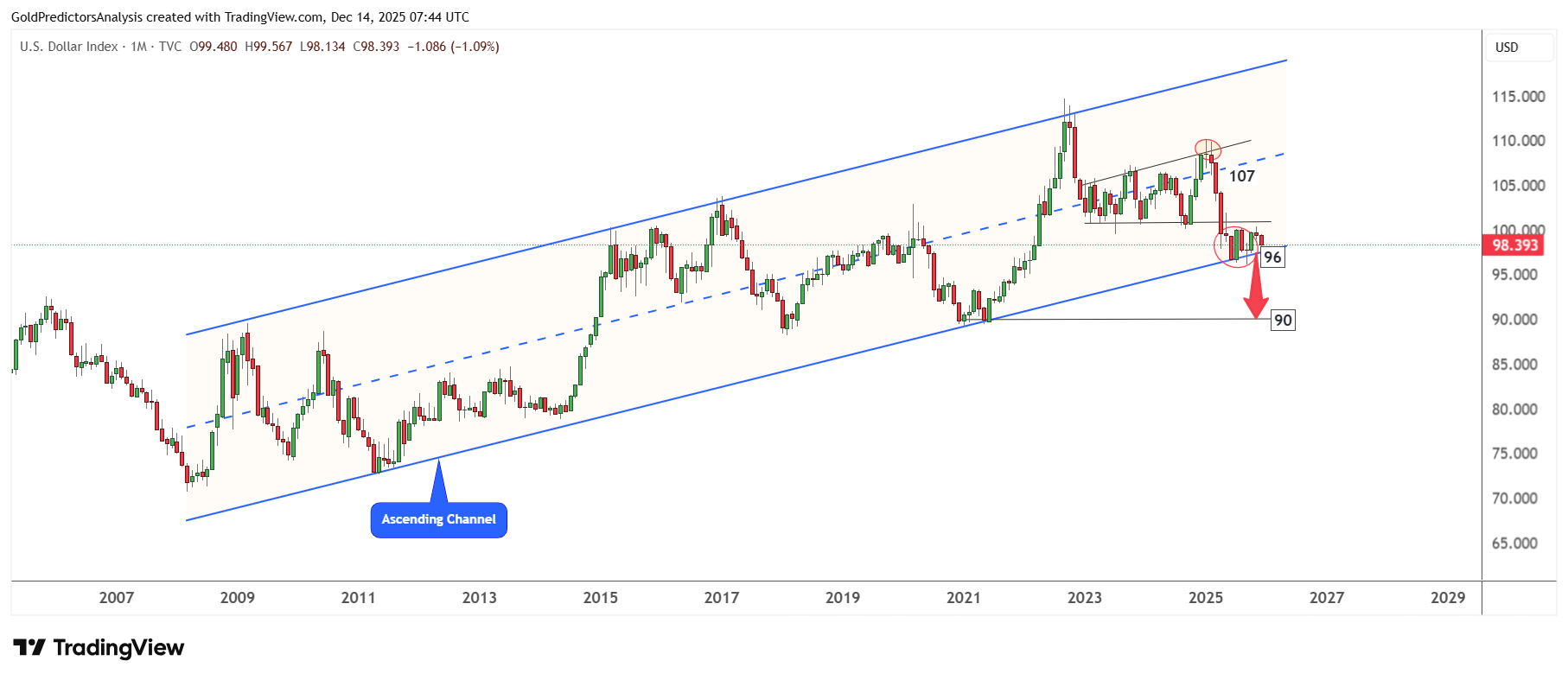
Another supporting factor for gold is the breakdown in the US dollar index from the long-term pivotal area. It is observed that the U.S. dollar is trading near a long-term pivotal zone. A decisive breakdown from this area could trigger a significant drop toward the 90 level, which would likely support the ongoing gold rally and accelerate momentum toward the $6,000 mark.
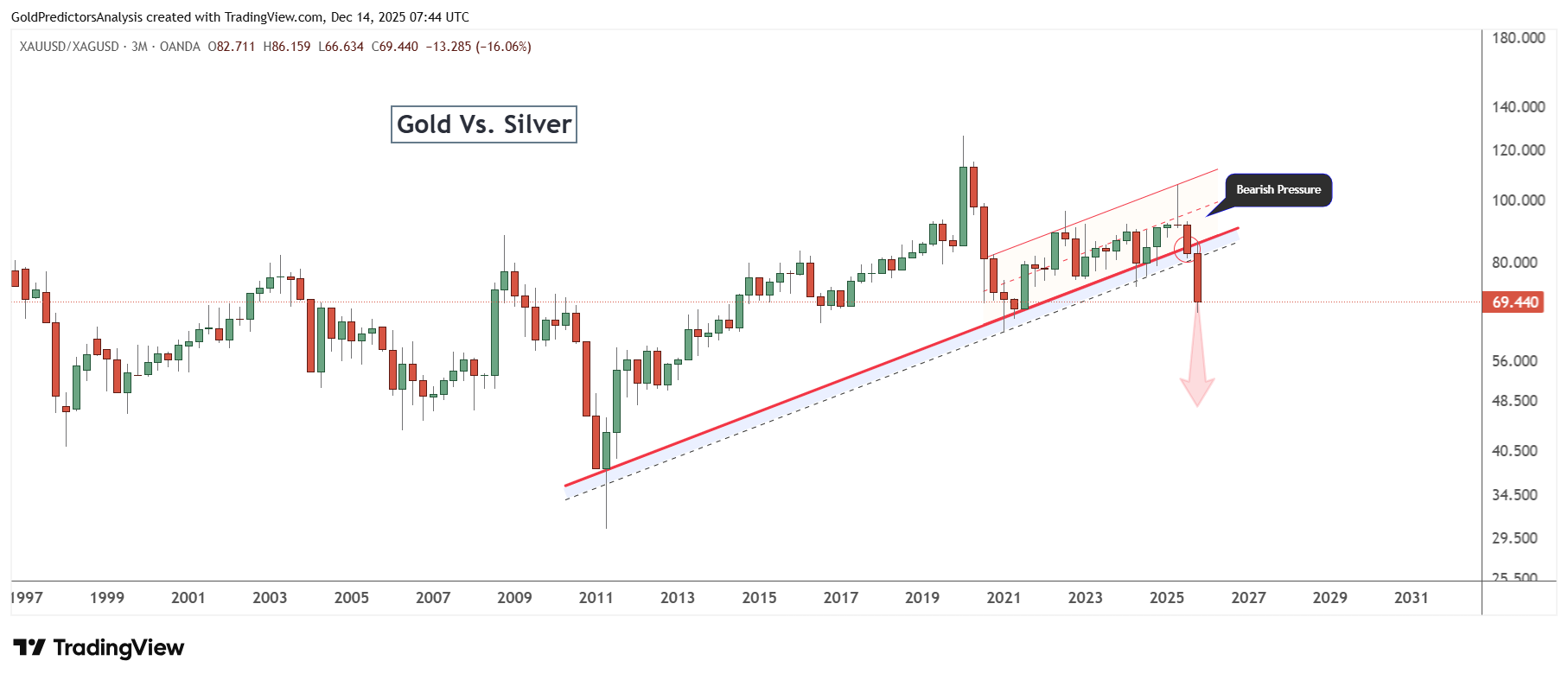
The gold-to-silver ratio has broken its long-term support line, signalling sustained weakness in the ratio. This decline suggests silver (XAG) is now leading gold, a dynamic historically associated with strong gold rallies. When silver outpaces gold, it often reflects broad investor confidence in the precious metals sector. The ratio also confirms that silver leadership is associated with significant uptrends in gold.
Key Risks and Potential Pullback Scenarios
Despite strong momentum, several risks could trigger sharp pullbacks in the gold market. A sudden rebound in the U.S. dollar would likely pressure gold prices, particularly if driven by hawkish Federal Reserve signals or stronger-than-expected labour market data.
Moreover, geopolitical de-escalation or trade breakthroughs could reduce demand for safe havens. A slower pace of Fed rate cuts or a reversal in liquidity policy may tighten financial conditions and stall gold’s rally.
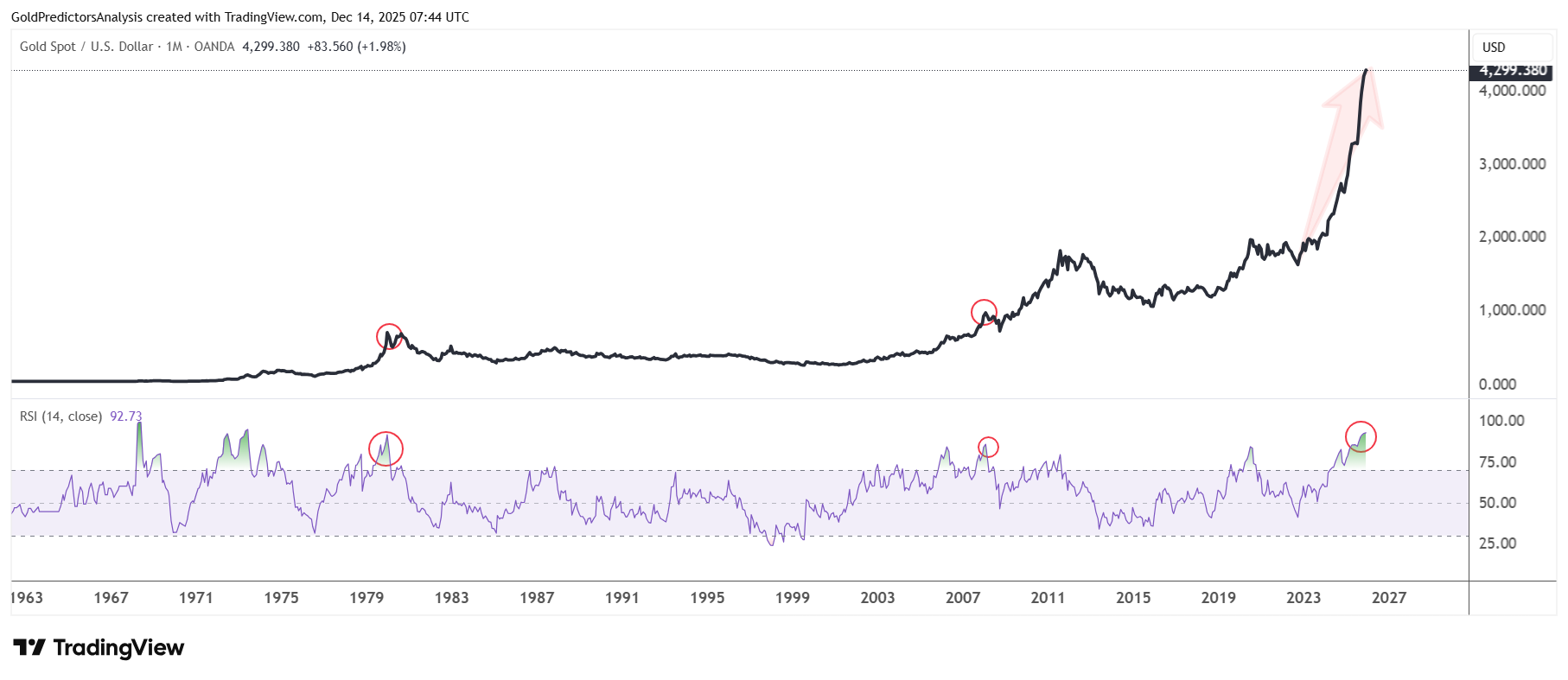
From a technical perspective, the gold price has reached overbought levels not seen since the 1980 surge. The chart below shows that the RSI has climbed above 92, indicating a strong overbought condition. If the market recognises this extreme reading, it may trigger a consolidation for a few months, which may delay the targets of the gold market.
Final Thoughts: Sustained Breakout Points to $6,000 Target
Gold enters 2026 with strong momentum and supportive macro conditions. Liquidity injections, labour market weakness, and renewed inflation risks have fueled the rally. Moreover, the technical patterns confirm the breakout is still in its early phase, with targets of $6,000 in sight.
On the other hand, central bank demand and institutional rebalancing continue to support prices. Meanwhile, volatility in currency markets and carry trade risks add bullish tailwinds. A break above $4,380 would likely trigger a strong move toward the $6,000 target.