Gold (XAU) prices hit a record high of $5,600 earlier this year. The slower economic growth in the United States and geopolitical tensions in the Middle East created this bullish environment. In my opinion, these conditions favor a further bullish trend of gold despite short term corrections. This analysis discusses the macro drivers, technical structure and key market signals that could be decisive in taking the next move in gold towards $6,500.

Why Slowing U.S. Growth Is Supporting Gold Prices
U.S. Economic Data Signals Rising Recession Risks
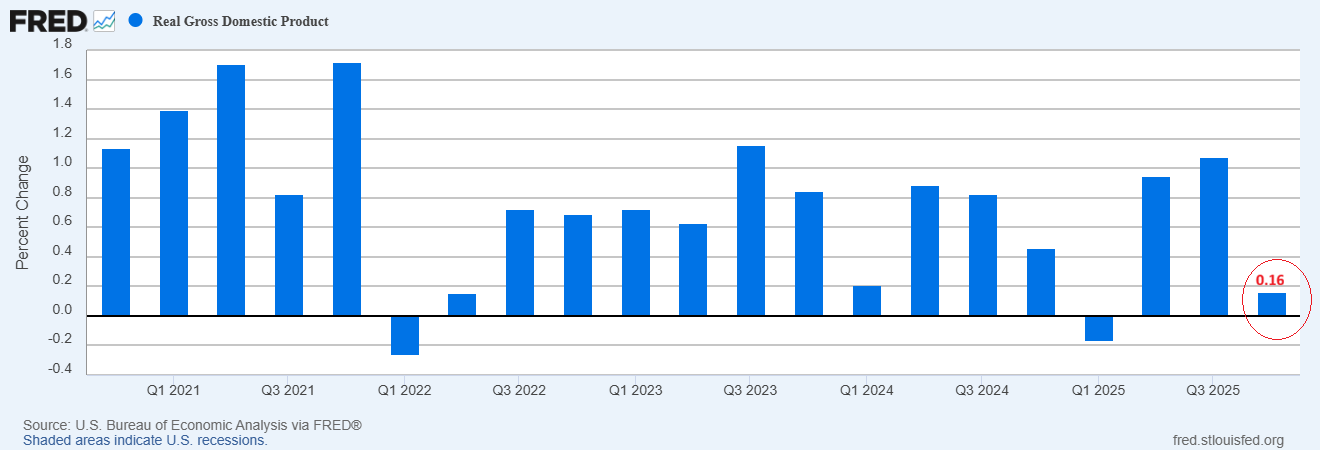
The latest economic data indicate that economic growth in the United States is weakening. The chart below shows that real GDP grew by 0.16% in Q4 2025. This growth is equivalent to annualized growth of less than 0.7% according to the Bureau of Economic Analysis. This revision reduced previous estimate of 1.4% growth by over half.
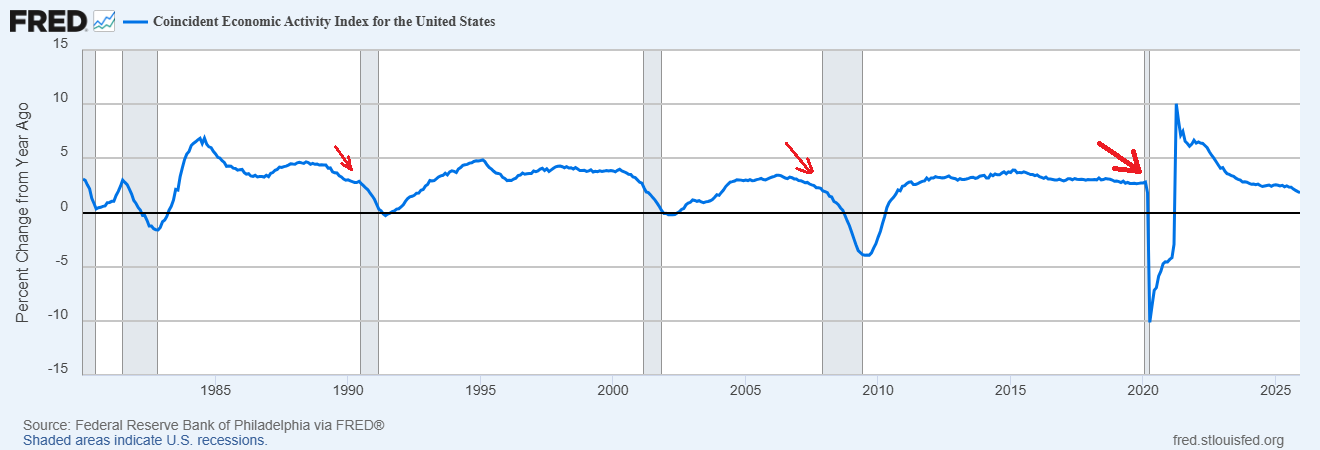
Other indicators also provide evidence of the slowdown. The Philadelphia Fed Coincident Economic Activity Index only increased by 1.84% in December. The readings below 2.5% have historically been reported before recessions.
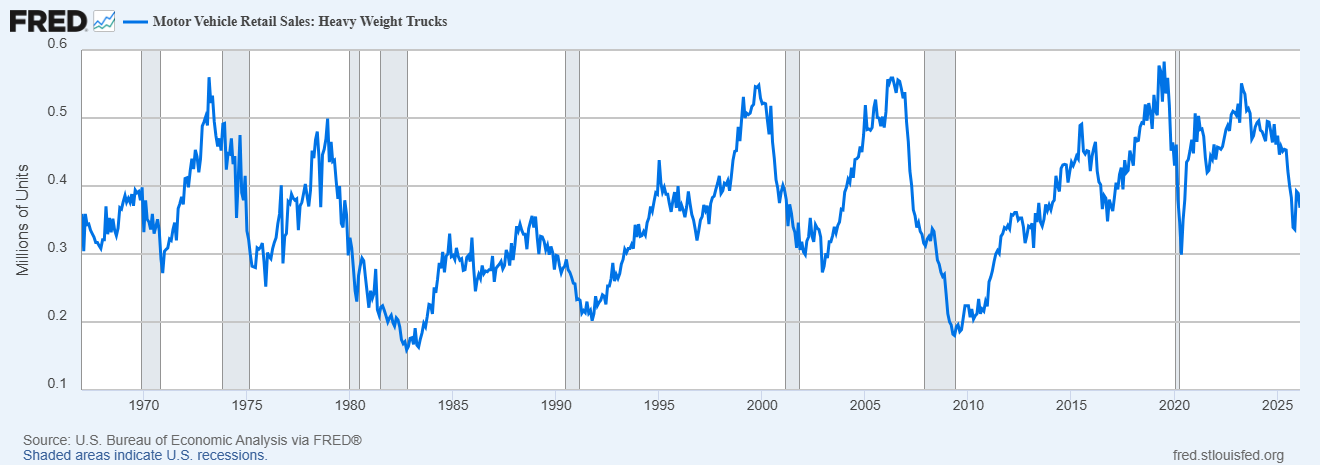
Transport and logistics data also tell a similar story. Heavy truck sales are falling, which is a reflection of weaker goods demand and lower industrial activity.
The Cass Freight Shipments Index is also declining which indicates declining shipping volumes for the economy.
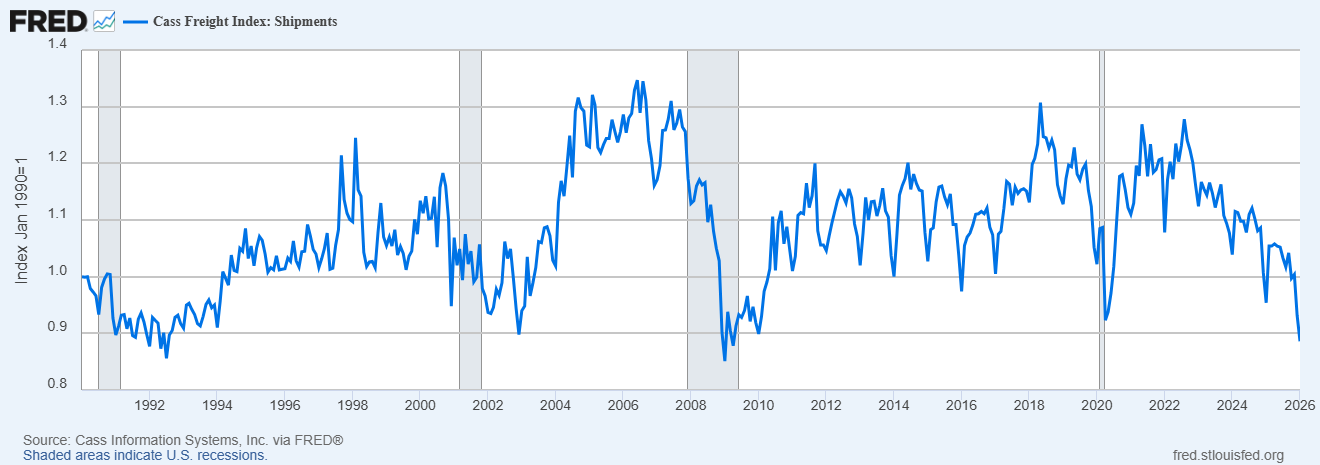
These indicators point to weakening of economic momentum and the fact that the United States may enter a recession during 2026. The lower growth support safe haven demand for gold as investors start to anticipate weaker corporate earnings and stress in financial markets.
Gold Price Forecast
Every new Gold analysis as it publishes, today's technical signal and key levels, live price — on one page.
See all Gold forecastsMiddle East Tensions and Rising Oil Prices Increase Inflation Risks
At the same time, energy markets are posing another threat to the economic outlook. The emergence of tensions between the United States and Iran has heightened uncertainty in the Middle East. Military strikes and threats of disrupting shipping routes near the Strait of Hormuz have led to fears of disruptions of the world’s oil supply.
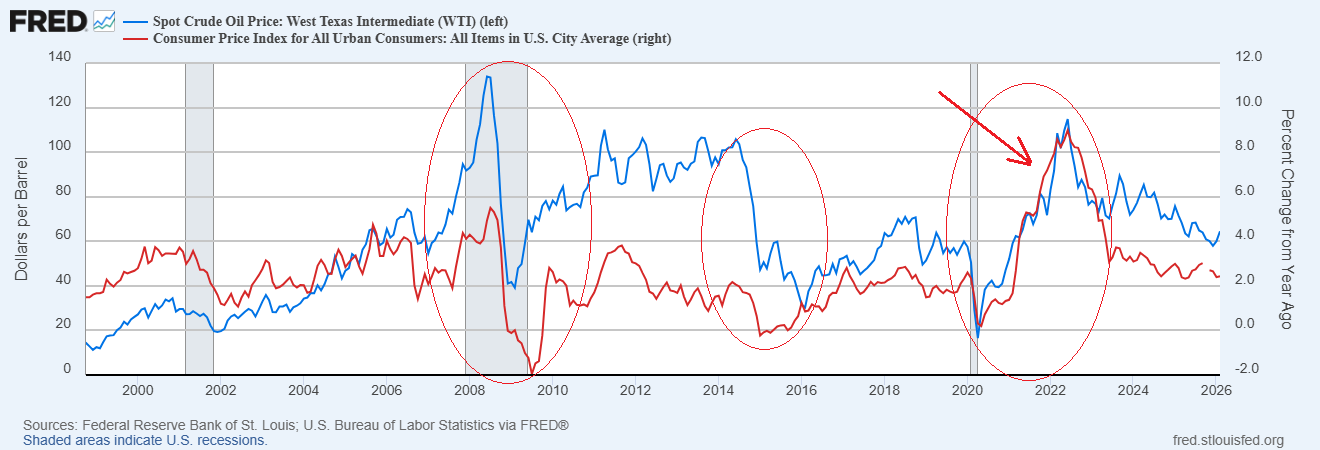
Higher oil prices threaten to send inflation back on the rise as tensions in the Middle East disrupt supply routes. Historically, the increase in energy prices has increased inflation figures as shown in the chart below. When Russia invaded Ukraine in 2022, the WTI Crude jumped to $115 per barrel. This surge in oil prices carried the CPI to around 9%.
According to the latest official data, recent inflation is low, but figures may be understating true pressure in the economy. Core CPI increased 2.5% during the last 12 months while headline CPI was 2.4%. However, these figures were influenced by data gap that was caused by the government shutdown between October and November in which statisticians were unable to collect price data.
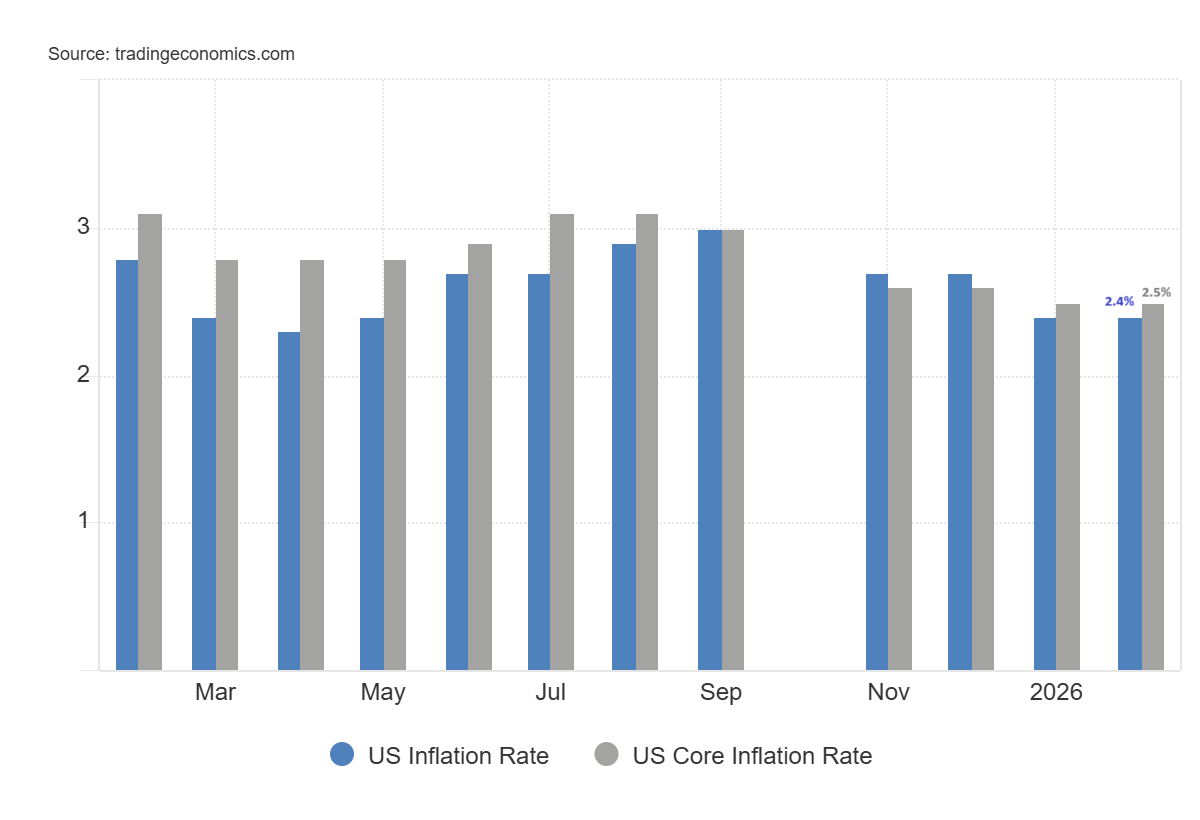
Because of this missing information, the Bureau of Labor Statistics assumed that there were no price increases at all for many categories during that period. This artificially reduced the inflation reading. However, the actually CPI inflation is likely to be much higher than these numbers.
If oil prices remain high, inflation pressures may return and make the situation more difficult for the economy and monetary policy. This scenario would raise concerns of stagflation which is defined by the combination of slow growth and rising prices. This situation will lead to higher demand for gold as an investment instrument to protect against inflation and economic instability.
Gold Chart Patterns Show Strong Momentum Toward Higher Prices
From a technical perspective, the gold price has broken the key level of $2,075 in 2024. This level was defined by the neckline of the cup and handle pattern. This cup and handle pattern formed from the highs of 2011 through the last quarter of 2023.
The breakout from $2,075 has opened the door for a strong surge to mark record highs at $2,800. This target of $2,800 was the resistance of the long-term ascending trend line. This trend line appears from the 1980s high and meets the resistance of 2011. This resistance area was also broken which fuelled the rally. This built accelerated momentum in the gold market and pushed prices to new record high at $5,600.
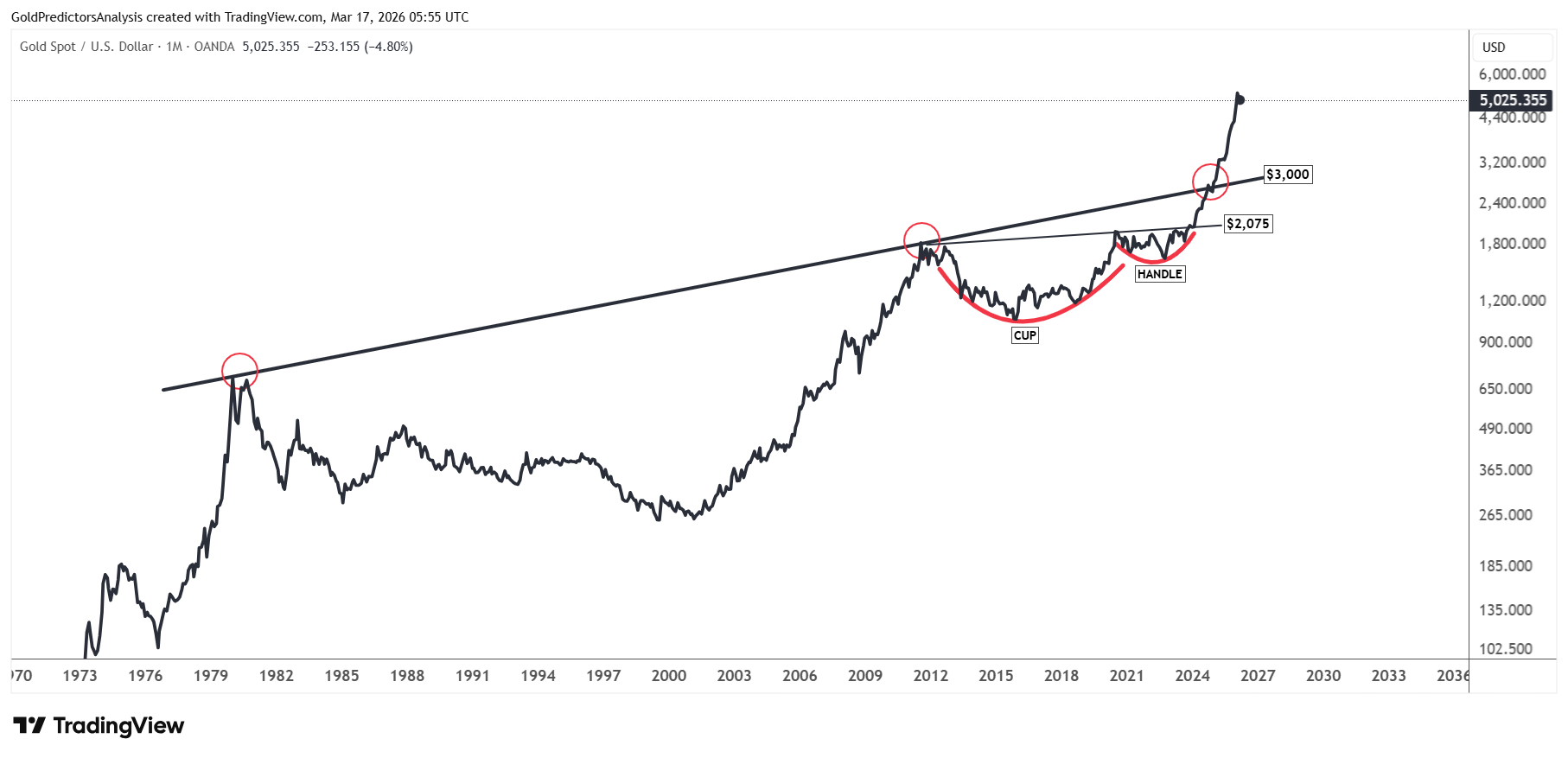
The formation of cup and handle pattern and breakout from $2,800 indicate that the gold market remains in a healthy uptrend.
This bullish momentum is also observed on the weekly chart, which shows that the gold market broke symmetrical triangle and took prices to a high of $4,380 in October 2025.
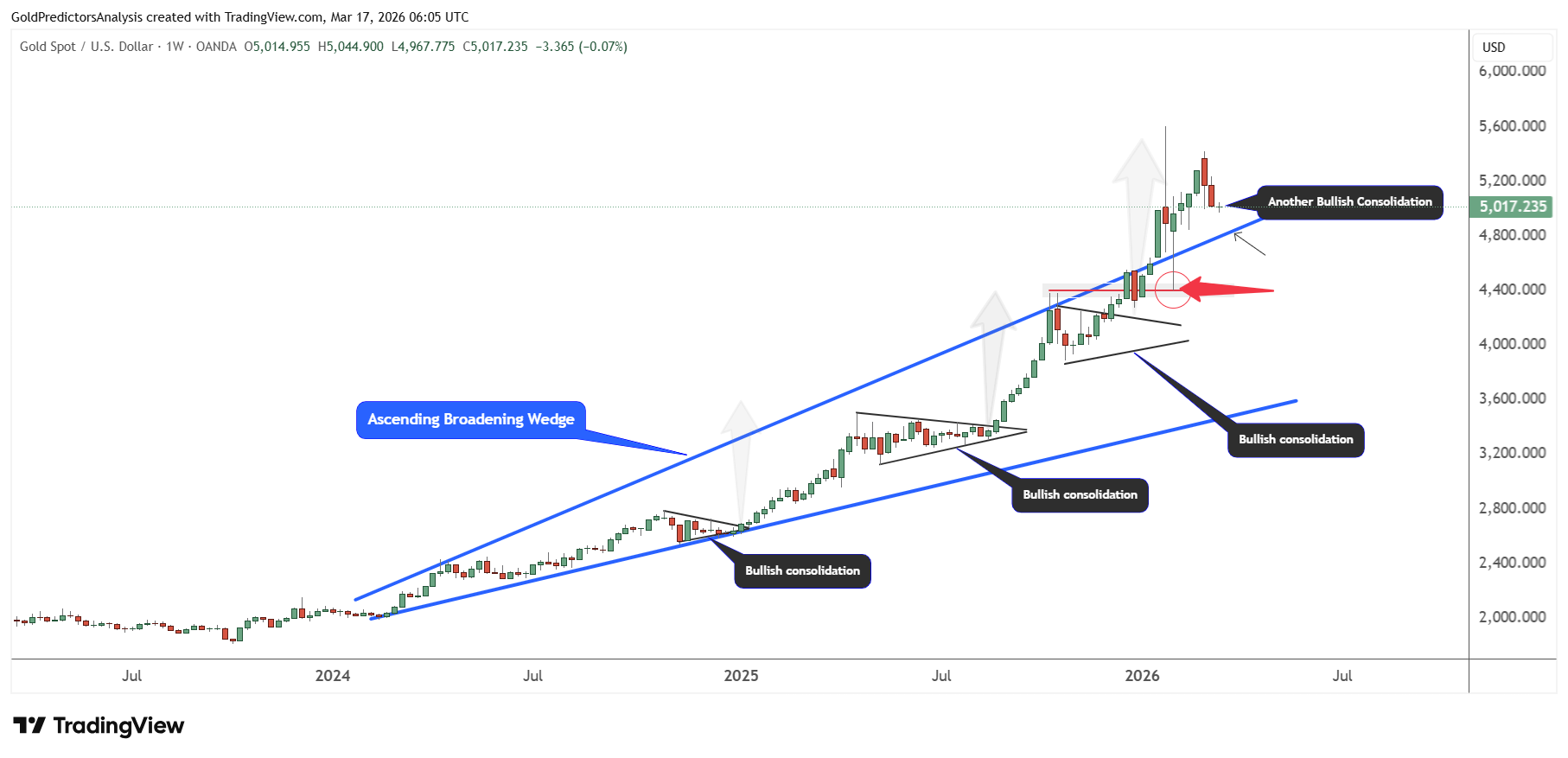
However, the formation of another symmetrical triangle pattern has taken prices towards $5,600, which is considered an extension level as the price broke above the ascending broadening wedge pattern.
The formation of multiple symmetrical triangle patterns and then the breakout above $4,400 from the ascending broadening wedge indicates that the gold market remains in a strong surge mode. However, the price is now again pulling back towards the support of the ascending broadening wedge at $4,800.
If the $5,000 key level is broken, then $4,800 remains another support. A break below $4,800 would indicate a deeper pullback to $4,400.
U.S. Dollar Outlook and Its Impact on Gold Prices
The chart below illustrates the movement of the U.S. Dollar Index which is one of the most important markets for gold. The dollar has been trading within a long term ascending channel for many years. The index dropped from the 110 resistance zone and fell back to the 96 support zone, located near the lower edge of the channel.
The index is now rebounding from this support zone towards the resistance of 100.50 which is putting short term pressure on the gold price. Gold and US dollar tend to move in opposite directions. When the US dollar devalued, investors would capitalize on the move and allocate money into gold as an alternative store of value. However, the recent war between the United States and Iran has sparked safe haven rally in the US dollar which is creating uncertainty in the global markets.
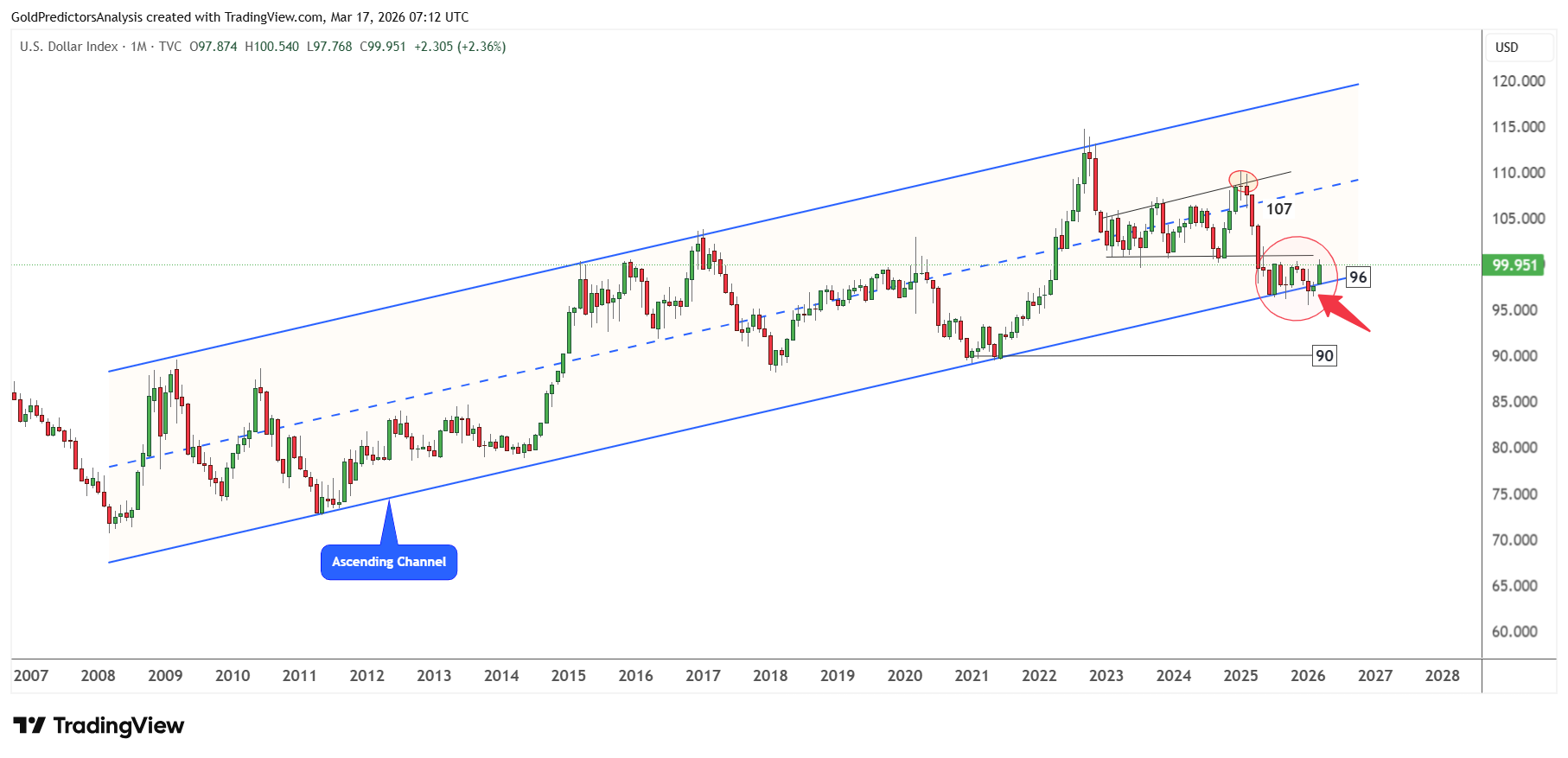
A break above 100.50 in US dollar index will put further pressure in the gold market. However, a break below 96 will target the 90 level and take the gold prices towards $6,500.
Gold Price Faces Risk from Strong Dollar and Overbought Signals
Despite the strong long term trend, there are a number of risks that may slow the gold rally in the short term. The U.S. dollar is one of the primary risks for the gold market. The Dollar Index is now rebounding from the 96 support level and heading for the 100.50 resistance zone. A stronger dollar tends to put pressure on gold as assets tend to move in opposite directions.
At the same time, the gold market has already moved sharply higher since the break above the $2,700-$2,800, which means prices are stretched in the short-term. Markets do not move in a straight line and periods of consolidation often follow good rallies. If gold breaks through the $5,000 level, prices will drop to $4,800. Moreover, any easing of geopolitical tensions and a decline in oil prices will result in a cooling of gold prices.
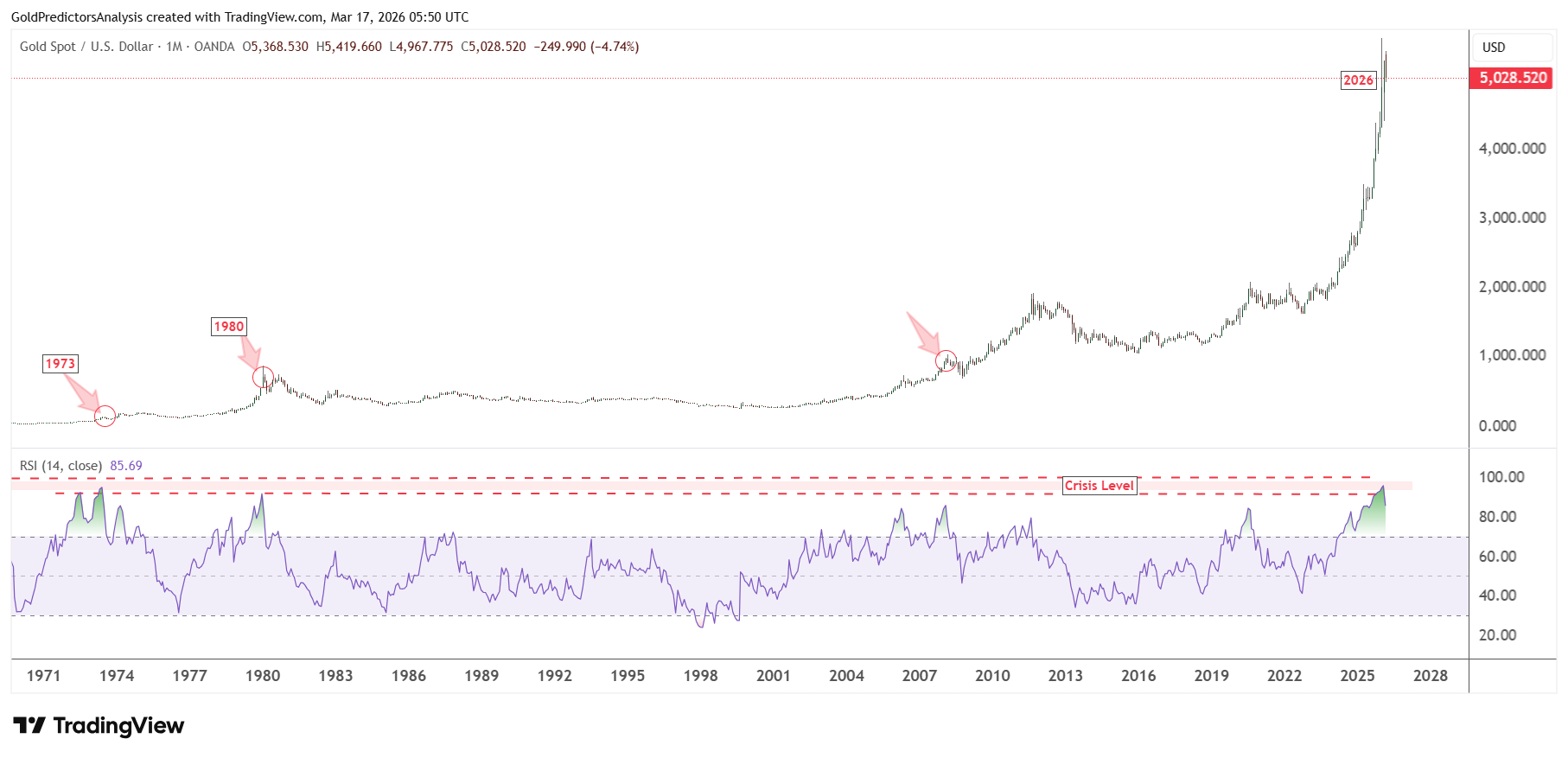
Despite the strong and healthy bullish trend in the gold market, the chart below shows an important signal. The gold price has approached the crisis level indicated by the RSI. It is observed that the RSI has reached levels that were last seen in 1973, 1980 and 2008. During those periods gold price marked a high and produced a strong correction.
In 2026, the gold price has again approached overbought levels, indicating a correction. Despite these overbought conditions, the geopolitical and economic uncertainty indicates further upside towards $6,500 once this correction is over.
Gold Price Outlook: Can Gold Reach $6,500 Next?
The overall picture for gold is still very good. Economic data indicate that growth in the United States is slowing down, while geopolitical tensions are making the global market more uncertain. At the same time, the higher oil prices increase the risk of a return of inflation. This combination of weak growth and rising prices heightens concerns of stagflation. In such an environment, investors tend to increase their investment in gold as safe haven asset. These macro conditions still favor long term demand for gold.
From a technical viewpoint the market is in a strong uptrend despite short term consolidation. Gold is currently holding above the key support level of $5,000, which is important area for the bullish structure. The short term volatility could persist as the dollar tries to recover, and momentum indicators are overbought.
However, as long as these support levels hold, any pullback will likely see buyers. The strong support remains $4,000-$4,400. As long as this support holds, the next move in the gold price will likely be towards $6,500 in the coming months.
If you’d like to know more about how to trade gold and silver, please visit our educational area.