Resistance Zone Reasserts Control
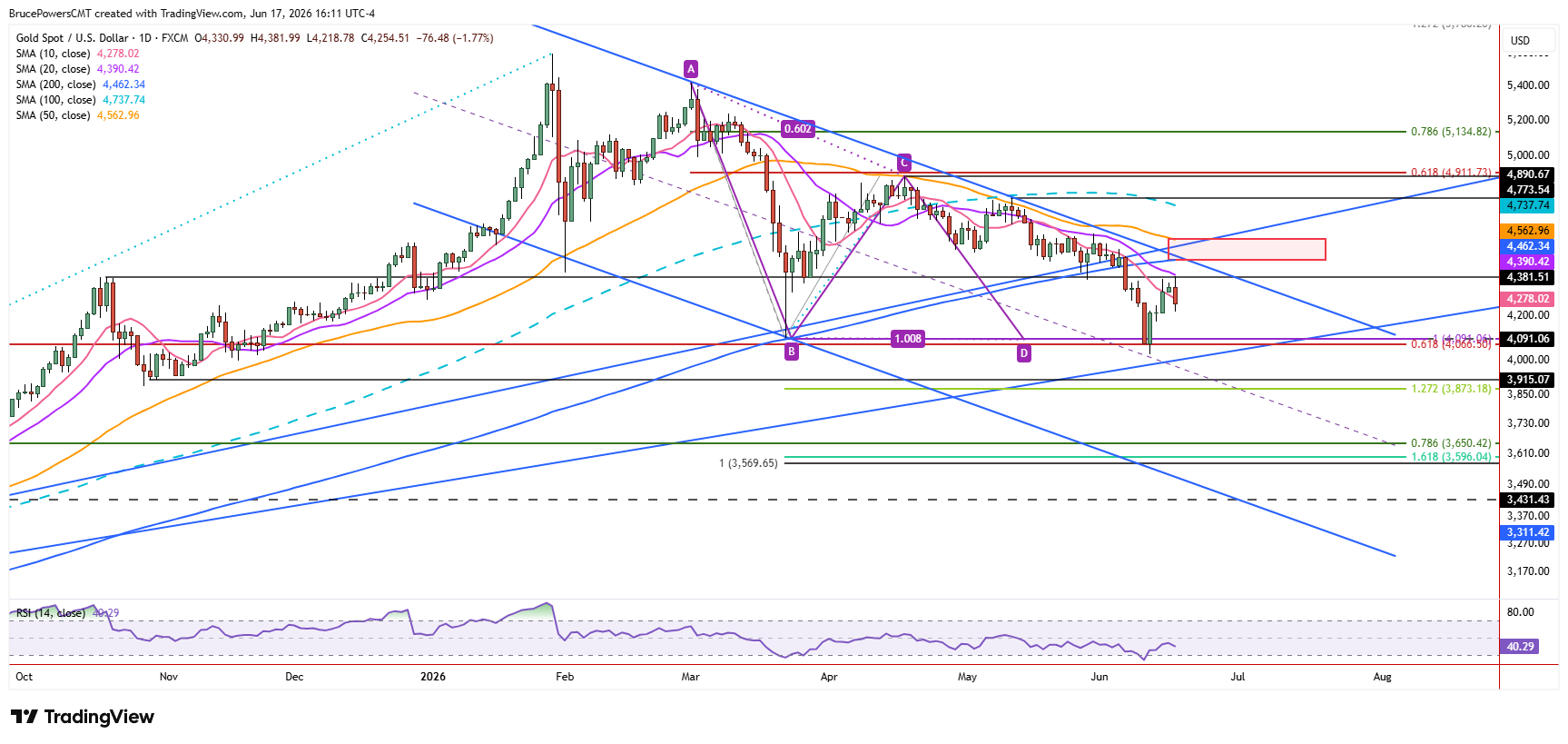
Gold rallied into resistance earlier in Wednesday’s session, reaching a new bounce high of $4,382 before encountering nearby resistance. The advance followed a test of prior support areas as resistance and ultimately reaffirmed overhead supply rather than confirming a breakout. Specifically, the move higher stalled near the prior swing low of $4,366, which now acts as resistance, along with the 20-day moving average at $4,390. This was the second time recently that a short-term advance has failed near the 20-day average, suggesting that the downtrend continues to dominate price action. If correct, another test of support near recent lows may be forthcoming.

Bearish Outside Day in Progress
A bearish outside-day reversal pattern was generated on Wednesday, with a low of $4,227 reached at the time of writing, though price action remains near the session lows and may extend to a fresh low before the close. However, trading continues near lows, and a new low may be reached before the session ends. Resistance was seen near the first more significant price zone, therefore preserving the broader integrity of the decline. It establishes a key resistance level that must be recovered before higher prices can be approached. Since the 20-day moving average is falling, it will represent a progressively lower dynamic resistance zone over time, reinforcing the bearish structure as it develops.
Gold Price Forecast
Every new Gold analysis as it publishes, today's technical signal and key levels, live price — on one page.
See all Gold forecastsSupport Under Pressure, Trendline in Focus
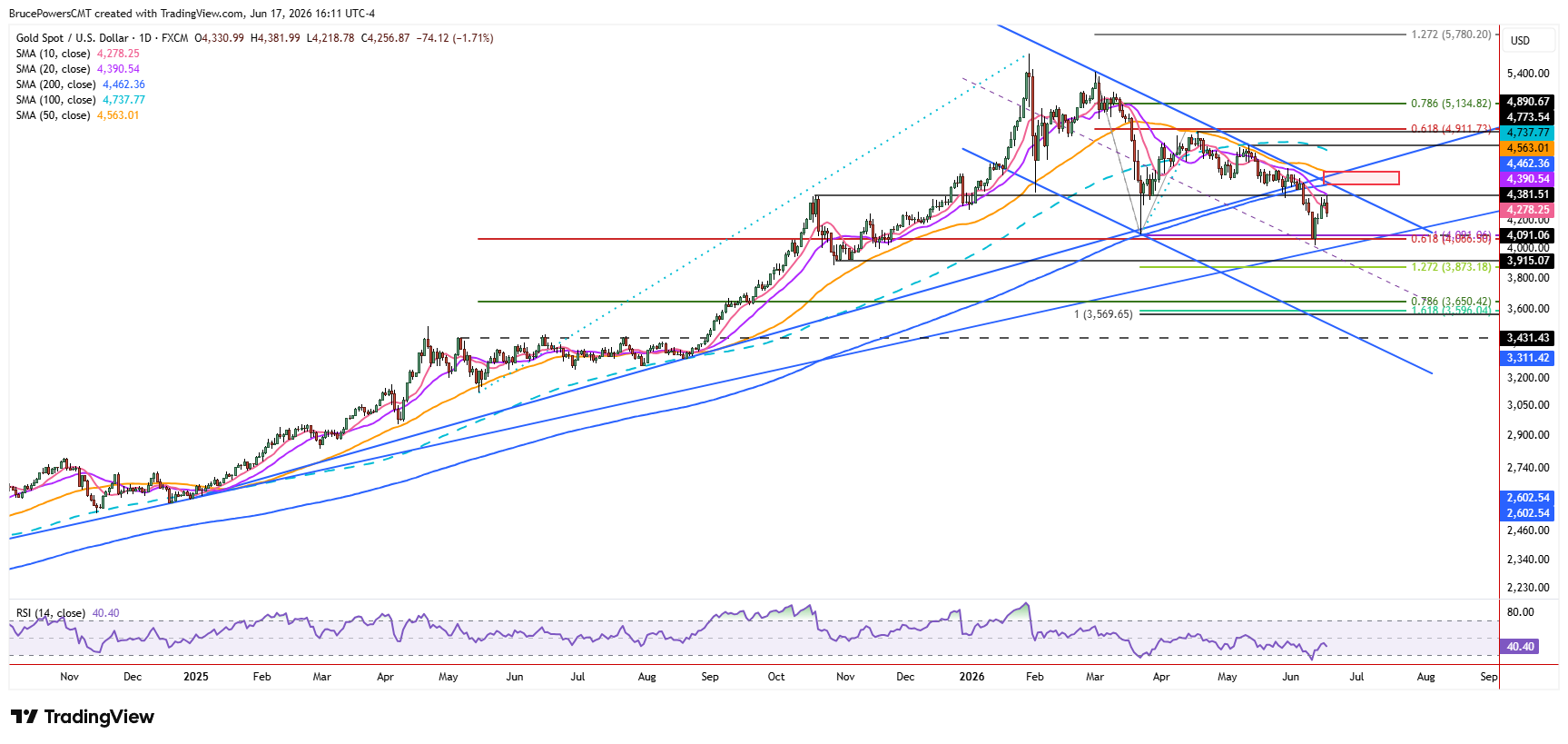
The corrective low was $4,023 from last week and it represents the low of an initial support range. Therefore, signs of support should be seen, followed by clear evidence of strong demand emerging above that level before any meaningful bullish shift can be confirmed. If it does not, that would be a bearish sign. Otherwise, the long-term uptrend line defines a potential support zone. Since the long-term 200-day moving average broke as support on the way down, the lower uptrend line becomes the next lower dynamic trend indicator.
Broader Resistance Cluster Defines Upside Ceiling
If gold can eventually reclaim the 20-day moving average, followed by Wednesday’s high, there is a potentially significant resistance zone a little higher, starting around the 200-day moving average near $4,462, and rising to the 50-day moving average around $4,563. Both an uptrend line and downtrend line cross within that price zone as well, adding to its potential significance. Notably, this confluence of resistance levels aligns with the broader bearish context outlined initially, where rallies continue to stall beneath key moving averages and prior structural support turned resistance.
If you’d like to know more about how to trade gold and silver, please visit our educational area.