



Gold (XAU) and silver (XAG) prices have corrected from resistance as long-term Treasury yields rebound from support, reflecting stress across global bond markets. At the same time, U.S. manufacturing continues to contract, reinforcing recession risks and supporting the long-term bullish trend in precious metals. This article examines how macroeconomic shifts and technical patterns are shaping the next move in gold and silver.
Rising Yields and Weak Manufacturing Weigh on Precious Metals
Gold and silver prices corrected from resistance as long-term Treasury yields rebounded from their support levels. The rebound in U.S. Treasury yields puts pressure on non-yielding assets, such as gold, as investors seek higher returns elsewhere.
At the same time, U.S. manufacturing data continues to weaken. The ISM Manufacturing PMI dropped to 48.2%, marking the ninth straight month below 50.
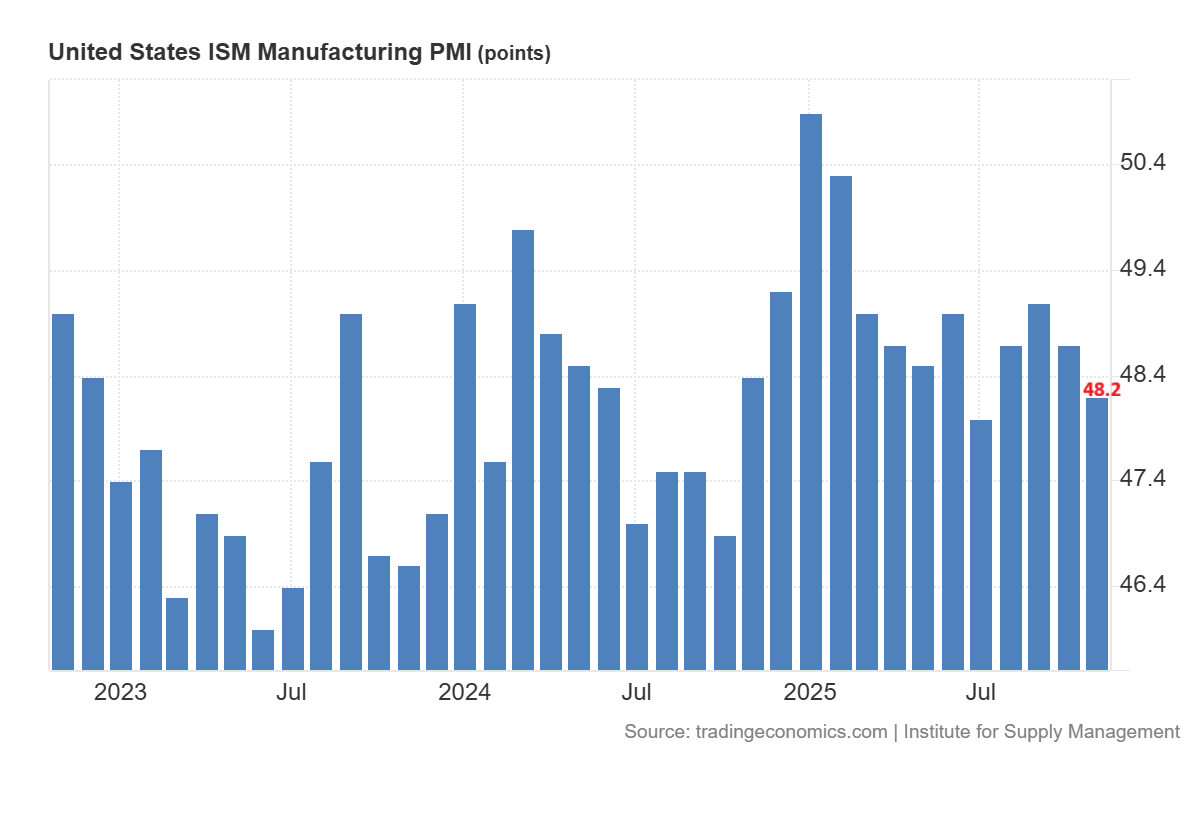
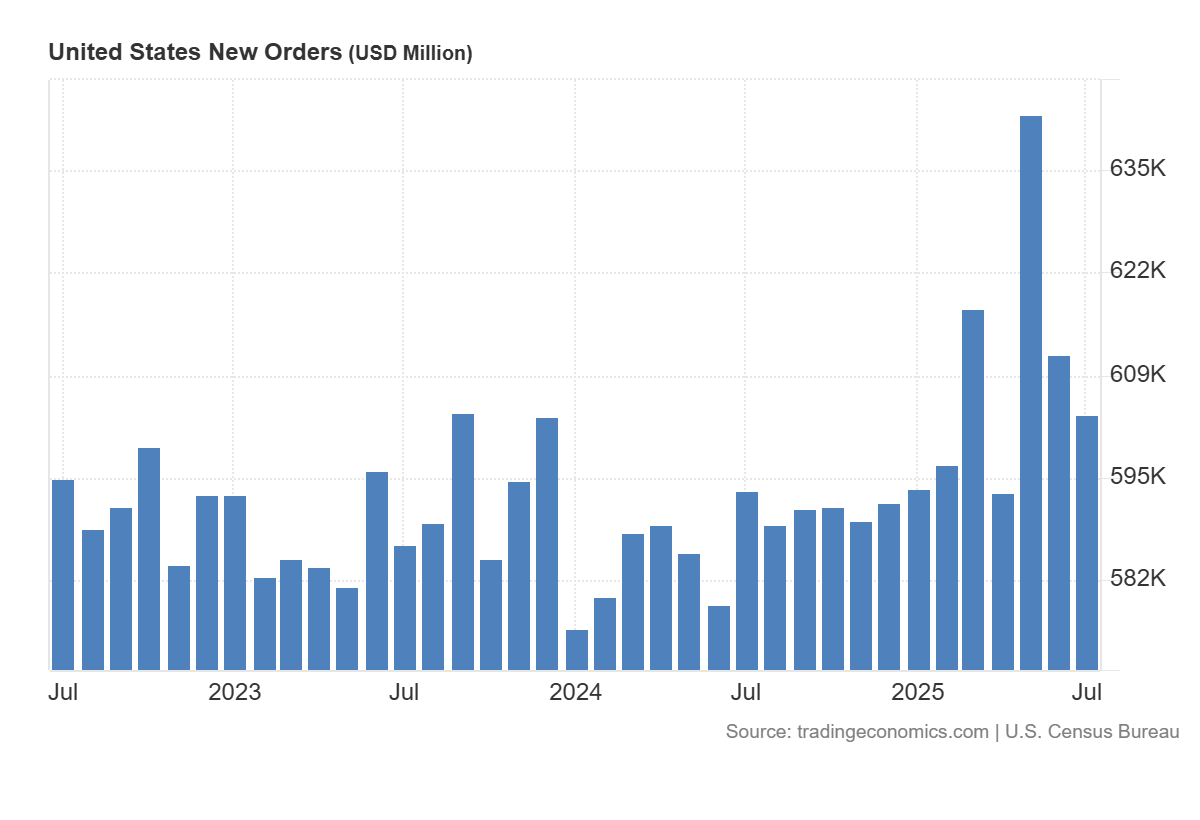
Moreover, the new orders are slowing, and employment remains in contraction. While inflation pressures are easing, the broader economic signals remain concerning. The underlying data suggest recession risks are growing, which supports a long-term bullish case for precious metals.
Gold rebounds from the support of $4,200, while silver consolidates at record levels and looks for another breakout. The macroeconomic backdrop of an economic slowdown and central bank easing maintains the long-term uptrend intact for both metals.
Gold Price Forecast
Every new Gold analysis as it publishes, today's technical signal and key levels, live price — on one page.
See all Gold forecastsGold and Silver Technical Analysis
XAUUSD Technical Analysis – Ascending Broadening Wedge
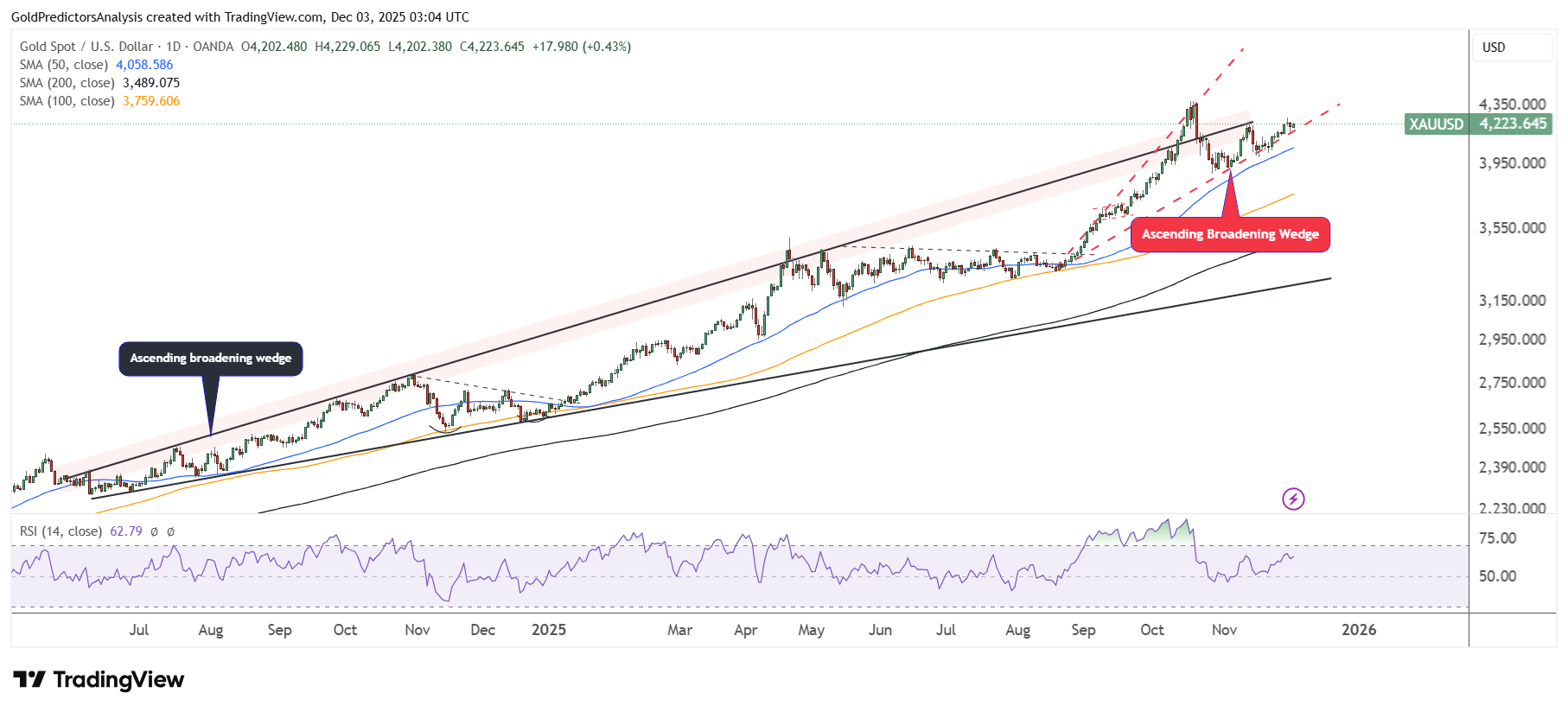
The chart below indicates that the spot gold market is forming an ascending broadening wedge pattern, setting up for a strong move to the upside. As long as the key support at $4,000 holds, the next leg in gold is likely to be higher.
A break above $4,400 would initiate a strong move toward the $5,000 region. Moreover, the RSI is also rebounding from the mid-level, which indicates renewed bullish strength in the gold market.
XAGUSD Technical Analysis – Cup and Handle Breakout
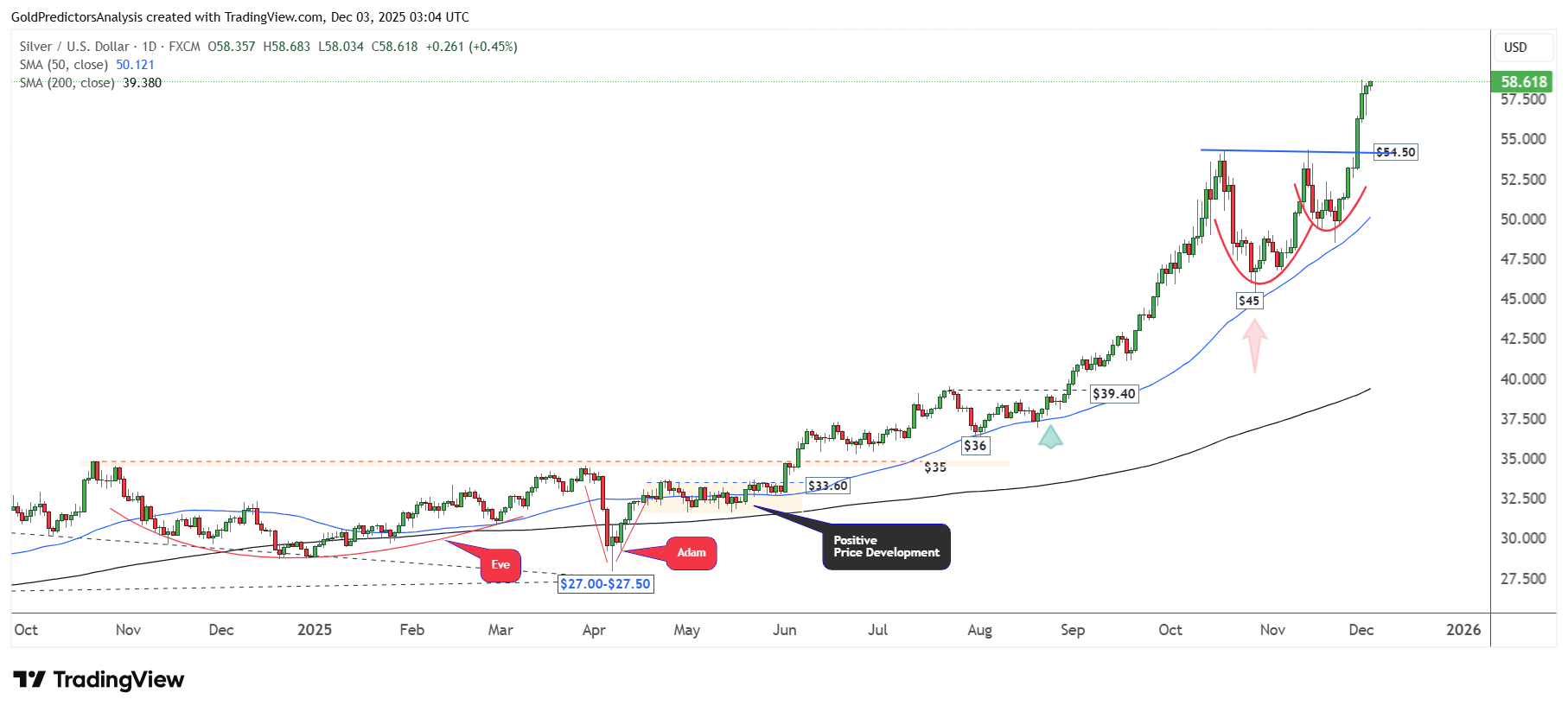
The chart below shows that the spot silver market has broken above the neckline of the cup-and-handle pattern at the $54.50 level. This breakout opens the possibility of a strong surge in silver prices to much higher levels. The immediate resistance remains at the $60 area. However, a breakout above $60 would extend the momentum toward the $65 region in the silver market.
US Dollar Technical Analysis – Cup and Handle Breakout
The daily chart for the U.S. Dollar Index shows that the price failed to break above the 100.50 level and has continued to move lower. The index is now consolidating between the 50-day and 200-day SMA, awaiting its next directional move. The repeated failure to reclaim 100.50 signals underlying weakness in the dollar.
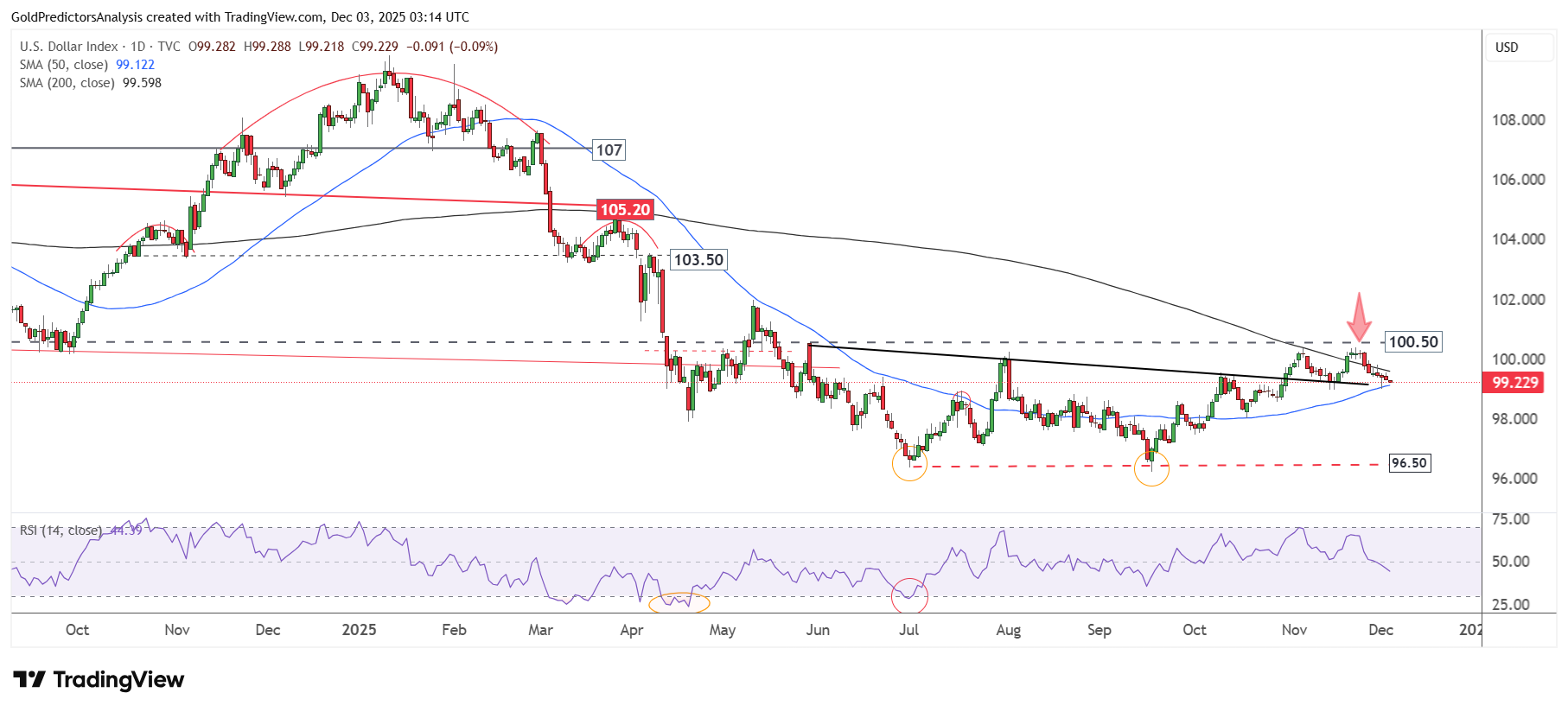
A break below the 99.00 area would likely trigger a sharper drop toward the 98.00 level. If the price falls below 98.00, the decline may accelerate toward 96.50. A further breakdown below 96.50 would indicate a strong bearish trend, opening the path toward the 90.00 zone.
This move would reinforce the bullish momentum in gold and silver prices, supporting further upside in the precious metals market.
Conclusion
Gold and silver remain strong despite short-term pullbacks. The rebound in Treasury yields is a temporary headwind. However, broader macro conditions, including weak manufacturing, slowing growth, and easing inflation, continue to support precious metals over the long term.
It is observed that the silver price has already broken above a key pattern and is poised to rally toward the $65 zone. This breakout in silver prices increases the chance of a gold breakout at $4,380 level. As the global economy slows and central banks pivot toward easing, gold and silver are well-positioned to benefit.