
Gold Price Slips as Traders Fade Post-Fed Bounce
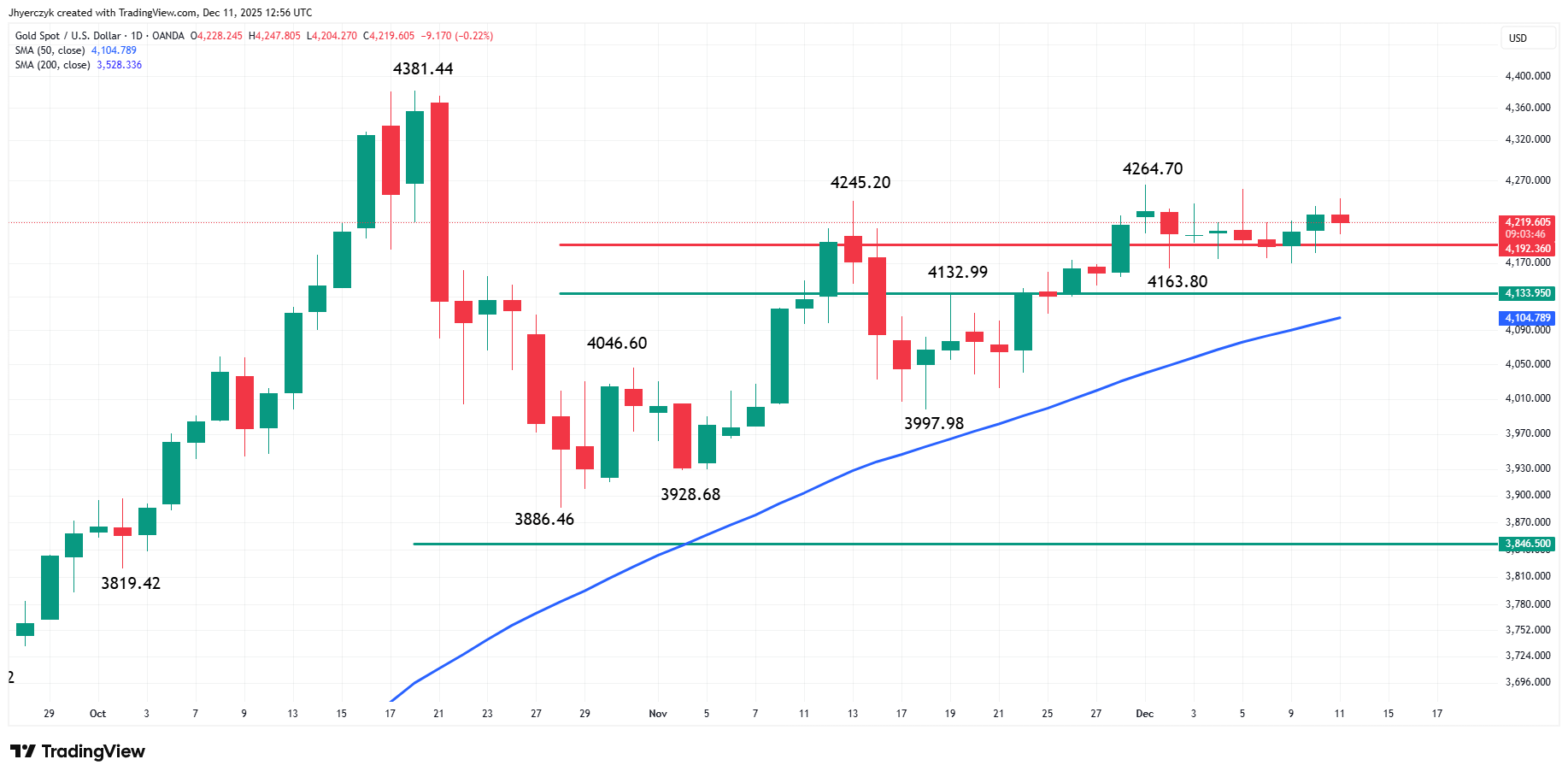
Spot Gold (XAUUSD) eased on Thursday, slipping after two days of firm gains as buyers failed to push through the $4264.70 main top. That level continues to cap the market, but after two weeks of consolidation it also sits as a potential trigger for an upside acceleration toward the $4381.44 record high if bulls finally force a breakout.
At 13:21 GMT, XAUUSD is trading $4208.59, down $20.18 or -0.48%.
The market continues to lean on $4192.36 as key short-term support. Bulls have defended this level for two weeks, and a breakdown would likely pressure prices into the 50% retracement at $4133.95, with the 50-day moving average at $4104.71 standing as the final line of support before a deeper correction. The 50-day MA has not been breached since August 22, making its next test an important signal for trend conviction.

Gold Market Reaction After Divided Fed Cut
Gold’s pullback caught a few traders by surprise given Thursday’s drop in Treasury yields and a sharp slide in the U.S. Dollar. The hesitation followed the Federal Reserve’s rare divided vote on a quarter-point rate cut. While lower rates normally support non-yielding assets, traders noted that positioning had leaned too heavily into the cut beforehand.
Independent analyst Ross Norman said the move reflected “overpositioning” rather than a fundamental shift, adding that gold’s broader backdrop remains intact. Fed officials signaled they intend to pause before considering further easing, with projections showing only one rate cut in 2026. Chair Jerome Powell declined to offer any timing for the next move, keeping the market focused on upcoming labor data, especially November non-farm payrolls on December 16.
President Donald Trump said the Fed should have cut more aggressively and is expected to select a new Fed chair early next year, with Kevin Hassett viewed as a frontrunner.
Treasury Yields Extend Decline After Fed Decision
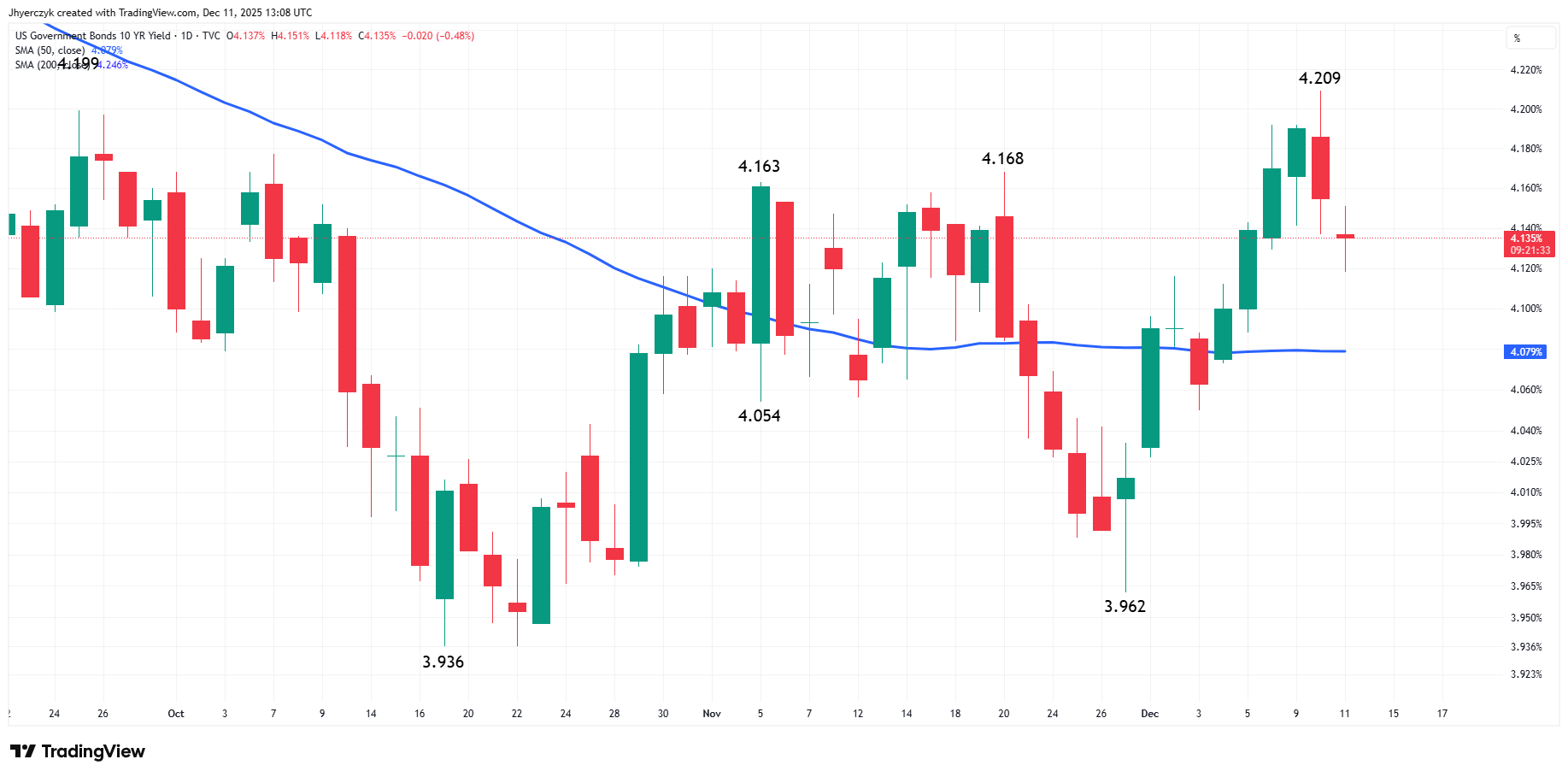
U.S. Treasury yields moved lower for a second session as traders worked through the Fed’s cut and the extent of dissent inside the FOMC. The 10-year yield dipped to 4.129%, while the 2-year fell to 3.532%, with other benchmarks posting similar moves. Analysts viewed the three dissenting votes as a hawkish signal relative to September’s decision, while emphasizing that further policy action remains data-dependent.
Gold Price Forecast
Every new Gold analysis as it publishes, today's technical signal and key levels, live price — on one page.
See all Gold forecastsDollar Drops as Market Prices in More Easing
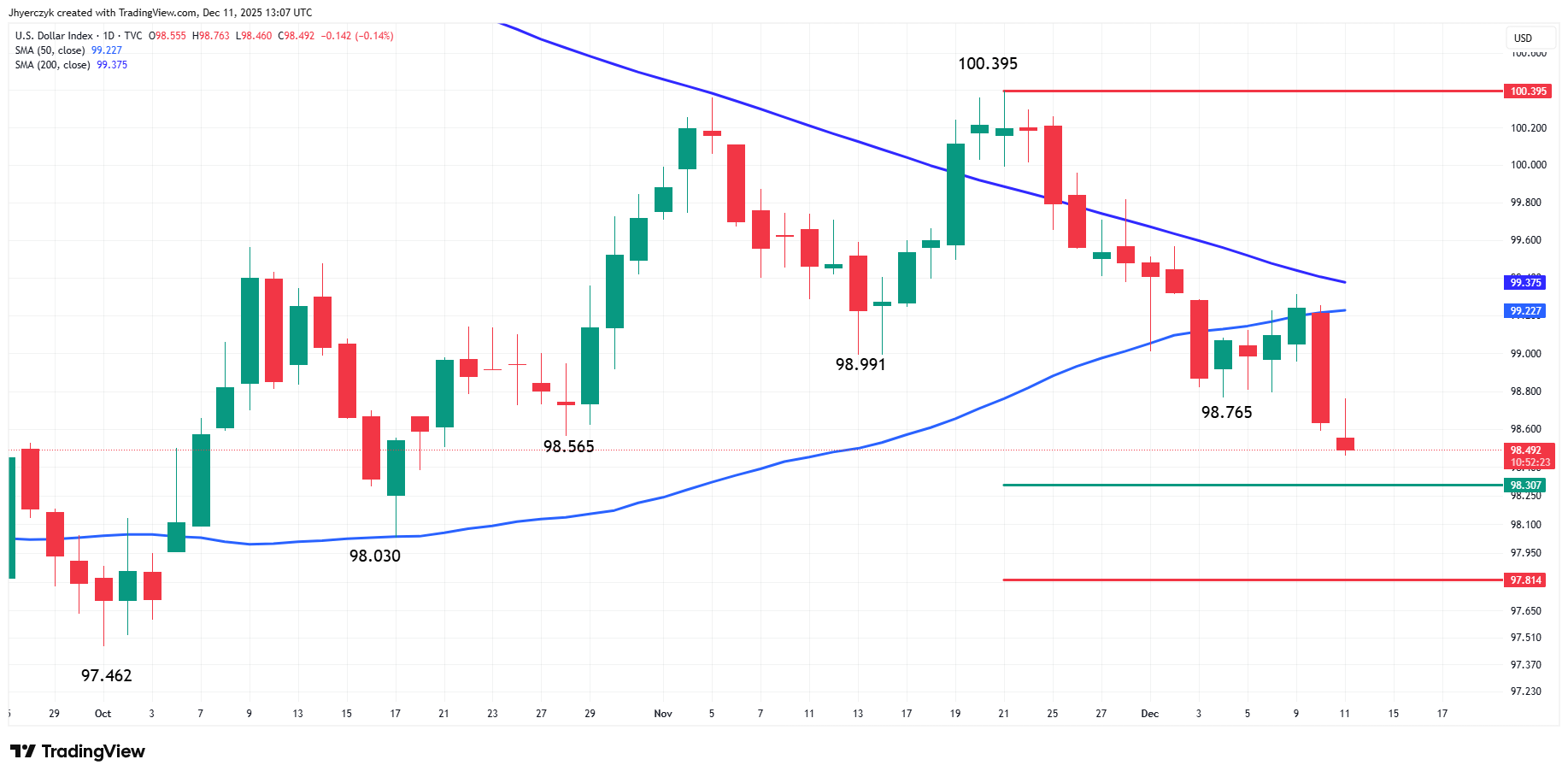
The dollar weakened sharply after investors judged the Fed’s tone as less restrictive than expected. The euro pushed above $1.17, sterling reached $1.3391, and the yen firmed to 155.79 per dollar. Markets now expect two additional rate cuts next year, diverging from the Fed’s guidance for one.
Gold Price Forecast: Bias Holds Firm Above $4192.36
For now, the short-term bias stays constructive as long as gold holds $4192.36. A breakout above $4264.70 would put $4381.44 back in play, but a close below support exposes a slide into $4133.95 and potentially the $4104.71 50-day MA. Bulls still control the tape, but the next move hinges on labor data and whether dollar softness persists.
More Information in our Economic Calendar.