
Bitcoin Tests $70K as Bulls Build Momentum Above Monday’s Lows
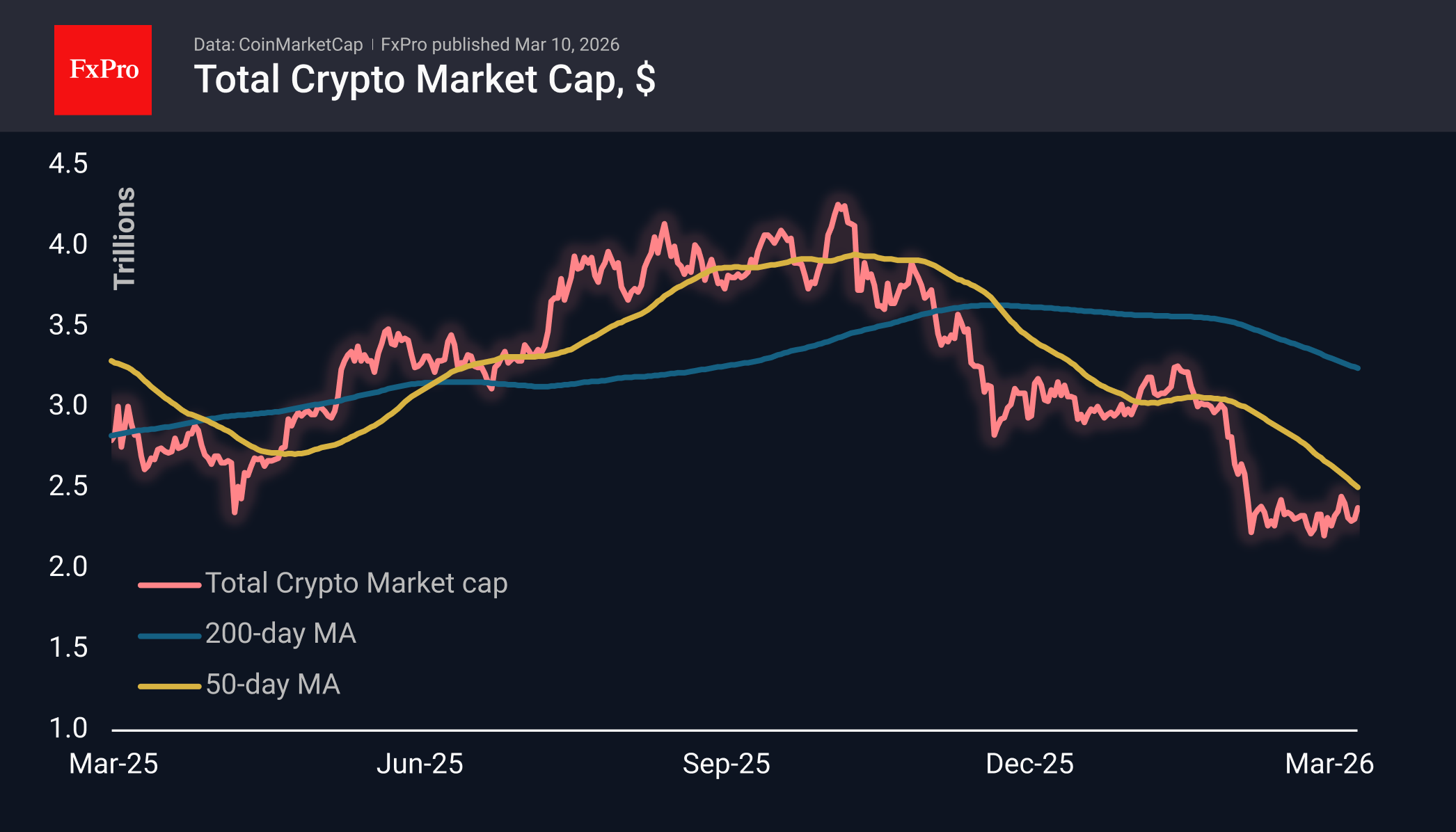
The crypto market cap increased by 3% over 24 hours to $2.38 trillion, supported by the impressive stock market rebound. Officially, the market is moving within a relatively narrow range after the collapse in the second half of January. Often in such situations, a new downward trend is expected around the corner, which remains the baseline scenario for now. However, it would be unwise to overlook the early signs of the crypto market’s growing interest in good news from outside, which was not the case a few months ago.
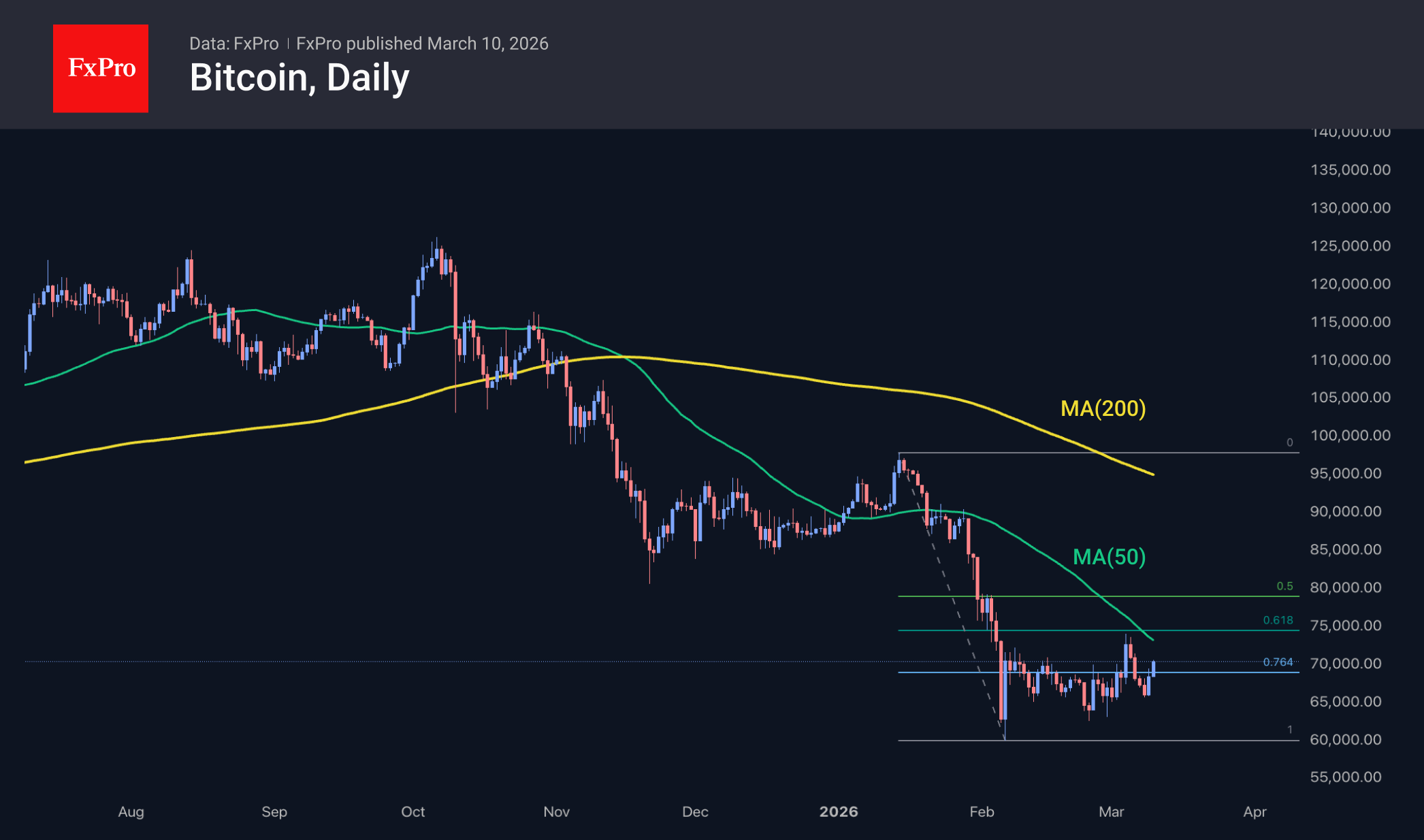
Bitcoin is testing the $70K level, gaining over 7% from the lows at the start of Monday. Buyers are becoming more confident, creating a series of higher local lows since the end of last month. The first cryptocurrency reached an important local resistance level in February. Still, bulls will need to sustain the price above the last peak at 73, where the 50-day moving average also resides, to confirm the development of a medium-term uptrend.

Crypto News
According to CoinShares, global investment in crypto funds increased by $619 million last week, marking the second consecutive week of growth after five weeks of outflows. Investments in Bitcoin rose by $521 million, in Ethereum by $89 million, in Solana by $15 million, and in Chainlink by $1 million. Investments in XRP decreased by $30 million.
Strategy purchased 17,994 BTC ($1.28 billion) last week at an average price of $70,946 per coin. Strategy now holds 738,731 BTC, acquired for $56.04 billion at an average price of $75,862 per Bitcoin.
BitMine acquired an additional 60,000 ETH over the past week. The company’s reserves now total 4.53 million ETH, representing 3.76% of Ethereum’s total supply. BitMine aims to accumulate 5% of all Ether supply.
Overall data on inflows into global crypto ETFs indicate generally positive sentiment towards this asset class amid a period of geopolitical tension stemming from events surrounding Iran, CoinShares notes. The surge in oil prices is an unfavourable factor for Bitcoin, according to CryptoQuant.
An energy shock could push inflation higher and complicate the Fed’s task of lowering interest rates. Additionally, it increases miners’ costs, reducing the attractiveness of the business and potentially creating an overhang of sales for already-mined coins.
Bitcoin Price Forecast
Every new Bitcoin analysis as it publishes, today's technical signal and key levels, live price — on one page.
See all Bitcoin forecastsThe FxPro Analyst Team