


June Jobs Shock: Why Did Markets Abandon Rate Cut Dreams?
Thursday’s employment bombshell delivered 147,000 new jobs versus the expected 110,000, sending shockwaves through financial markets and fundamentally reshaping Federal Reserve expectations. The 37,000-job beat came alongside unemployment unexpectedly dropping to 4.1% from 4.2%, defying economist forecasts of a rise to 4.3%.
Is the Fed Now Trapped in Higher-for-Longer Mode?
Market pricing shifted dramatically, with July rate cut odds collapsing to just 4.7% from 23.8% the previous day. Jeff Schulze from ClearBridge Investments declared the report “slams the door shut on a July rate cut”, while traders now see September as the earliest possibility for monetary easing.
Goldman Sachs’ Lindsay Rosner emphasized that “today’s stronger than expected jobs report will do little to alter [the Fed’s] patient approach”, suggesting the central bank remains laser-focused on inflation risks rather than employment concerns.
What’s Hidden Beneath the Headline Numbers?
While topline figures impressed, the composition tells a more complex story. Government hiring provided 73,000 of the total increase, with private sector gains of just 74,000 representing the weakest reading since October. This government-heavy mix raises questions about sustainable momentum.
Federal employment fell by 7,000 jobs due to Elon Musk’s Department of Government Efficiency cuts, while state and local governments added 40,000 education-related positions. Healthcare remained robust with 39,000 additions.
US Dollar Index Price Forecast
Every new US Dollar Index analysis as it publishes, today's technical signal and key levels, live price — on one page.
See all US Dollar Index forecastsAre Wage Pressures Finally Cooling Off?
A silver lining emerged in wage data, with average hourly earnings rising just 0.2% monthly and 3.7% annually, indicating little upward pressure on wage-related inflation. This moderation could provide the Fed breathing room despite employment strength.
How Are Investors Repositioning for Reality?
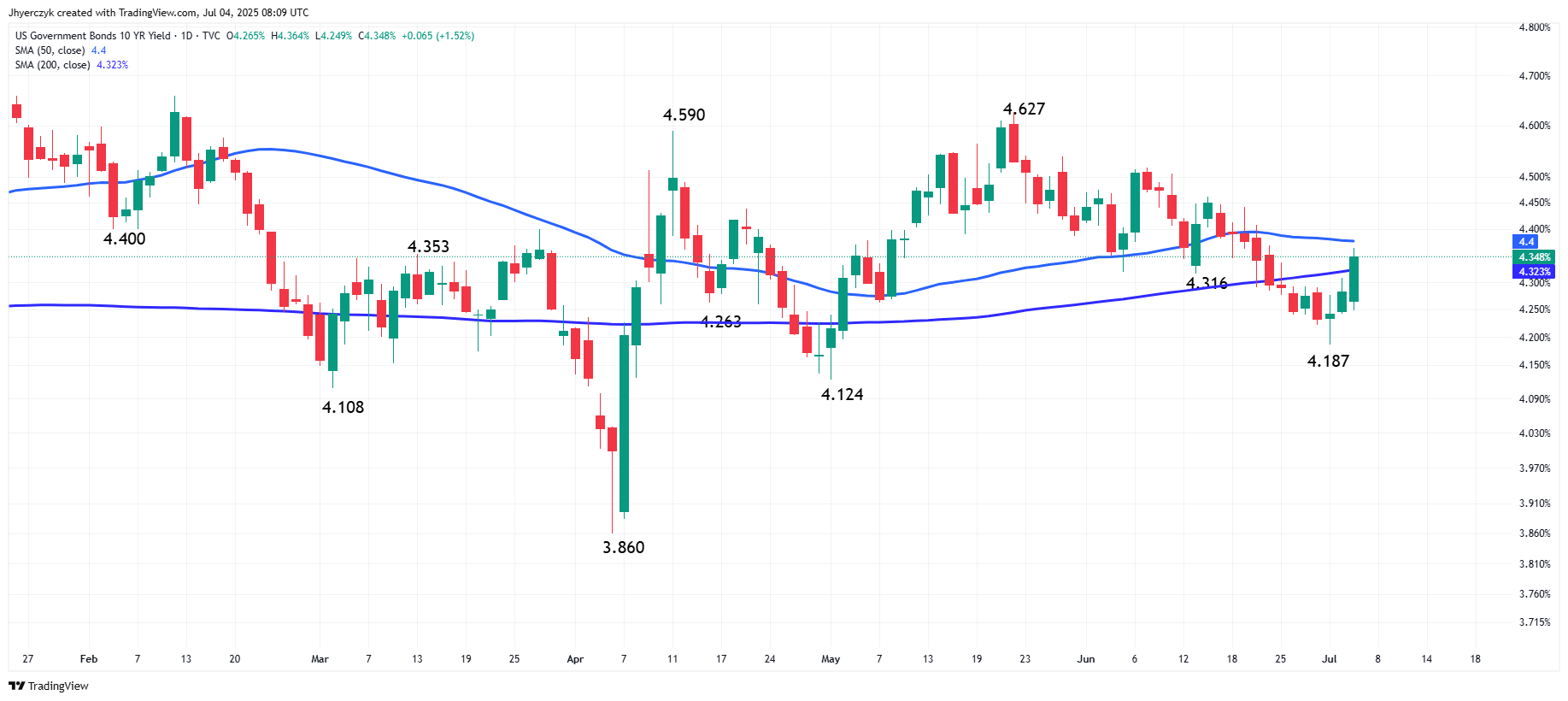
Treasury bonds tumbled with two-year yields jumping 8 basis points as investors abandoned rate cut bets. Financial stocks surged on higher-for-longer expectations, while growth companies face headwinds from sustained elevated borrowing costs.
The dollar strengthened against major currencies as reduced easing prospects made U.S. assets more attractive globally.
What’s the Bottom Line for Your Portfolio?
This jobs surprise represents a fundamental shift from Fed-driven to fundamentals-driven markets. As Reuters noted, nearly half the job increase came from government rather than private industry, suggesting investors should focus on corporate earnings and economic resilience rather than monetary accommodation.
The message is clear: economic strength now matters more than central bank support, requiring portfolio strategies built for a world where growth drives returns instead of rate cuts.
More Information in our Economic Calendar.