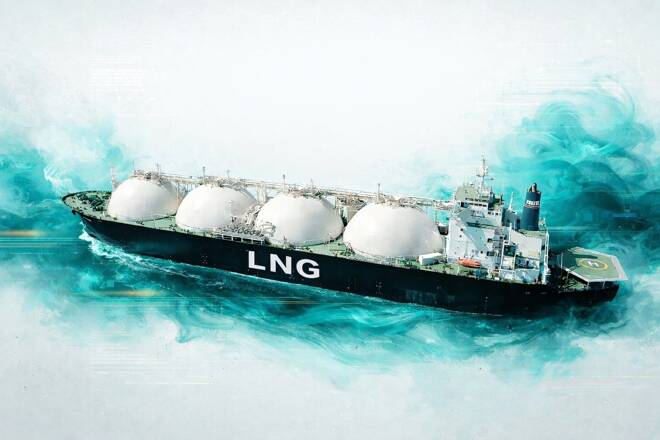
Natural gas futures just climbed nearly 4% earlier this week to their highest close in 19 weeks and the rally has less to do with weather than most traders think. Hot temperatures across the Midwest and Northeast are getting the headlines but the structural story underneath the price action is LNG. Export terminals are pulling approximately 17.3 Bcf per day out of the domestic market in June, up from 17.1 Bcf per day in May, and that demand does not turn off when the weather cools for a few days. It runs year-round on long-term contracts and it is growing.
Ahmed Yousre, Global Market Strategist at PU Prime commented:
Natural gas prices may face a more mixed trading environment as markets assess the potential reopening of the Strait of Hormuz and possible U.S.–Iran discussions in Doha. From PU Prime’s perspective, the key impact is not only on LNG flows, but also on the broader pricing sentiment across global natural gas markets.
The Strait of Hormuz remains one of the most important routes for global LNG trade. Any disruption can quickly lift Asian and European gas prices as buyers price in supply risks. However, if shipping activity continues to normalize and geopolitical tensions ease, part of the risk premium that supported LNG prices may fade. Reuters reported that markets are already pricing in hopes of de-escalation, although real normalization of flows through Hormuz is not yet fully visible.
For natural gas prices, this creates short-term downside pressure. A smoother reopening of Hormuz would improve supply visibility, reduce panic buying from Asian and European buyers, and may drag global LNG benchmarks lower. This could also indirectly weigh on U.S. Henry Hub sentiment, as weaker global LNG prices reduce the urgency for international buyers to compete aggressively for U.S. cargoes.
However, downside may remain limited. U.S. LNG feedgas demand remains an important structural support, while summer cooling demand continues to lift power-sector consumption. At the same time, U.S. storage is still comfortable, with EIA data showing working gas in storage at 2,835 Bcf as of June 19, 152 Bcf above the five-year average. This suggests the market still has enough supply cushion, limiting aggressive upside unless demand tightens further.
Overall, the reopening of Hormuz is likely to be mildly bearish for natural gas prices in the short term, as geopolitical risk premium eases. However, strong LNG export demand, summer heat, and resilient power-sector consumption may continue to provide a price floor.
Natural Gas Futures daily chart. Source: TradingView
The U.S. built the export infrastructure and the world showed up to buy. June feedgas flows are up from May and the facilities are not seasonal. They run on long-term contracts that require near-capacity operations year-round. That baseline demand did not exist five years ago and it is still growing.
Golden Pass LNG in Texas has been setting new records for feedgas intake as the facility ramps toward full operation. Production has held relatively steady around 109.7 Bcf per day in June. Total demand including exports is projected by LSEG to climb from 102.9 Bcf per day this week to 105.3 Bcf per day next week. When consumption is approaching production levels, the gap between what comes out of the ground and what gets used narrows fast. That is the setup right now.
Two LNG tankers are sailing directly from the United States to China right now. One loaded at a facility in Maryland in mid-May and is expected to arrive around June 26. Another is on track for mid-July delivery. These are the first direct U.S.-to-China LNG shipments during the current presidential term and they are significant.
China is the world’s largest importer of natural gas. During periods of trade tension, Chinese buyers had been routing U.S. cargoes through intermediary countries rather than purchasing directly. Direct shipments signal a thaw in that trade and every tanker that loads at a U.S. facility and sails for China removes gas from the domestic supply pool.
If direct U.S.-China flows pick back up at scale, the second half of 2026 looks different than what the market has been pricing. China’s buying power on top of European competition for the same cargoes is the kind of demand squeeze that tightens the global LNG market fast. U.S. exporters are sitting in the middle of it.
European storage entered the second half of the year at roughly 47% full against a five-year average of 62%. That 15-point gap has to close before the heating season arrives and the traditional sources are not available. Qatar’s Ras Laffan complex, the world’s largest facility of its kind, has suffered damage that officials estimate will take years to repair. Strait of Hormuz disruptions continue to create uncertainty for deliveries from the broader Middle East region. U.S. facilities are the most reliable alternative available right now and the competition for those cargoes between European and Asian buyers is intensifying.
The EIA reported a 76 Bcf injection for the week ending June 19, roughly in line with the five-year average of 75 Bcf. Total storage sits about 5.7% above the five-year seasonal average. On paper that is a comfortable cushion.
I think the trend matters more than the current level. Storage is 2.2% below where it was at this time last year. The year-over-year surplus that defined the bear case in the first quarter has flipped to a deficit. If LNG exports hold near 17 Bcf per day or higher and summer heat drives power burn above normal for consecutive weeks, the 5.7% cushion above the five-year average could narrow significantly before September.
A storage surplus that is shrinking week by week with export demand climbing and summer heat building is not the same market that was sitting with excess supply in March. The numbers still say comfortable. The direction says tightening.
Cheniere Energy (LNG) is the largest pure U.S. LNG exporter, operating two major liquefaction facilities in Texas and Louisiana with most production sold under long-term contracts that provide steady revenue.
Cheniere Energy (LNG) daily chart. Source: TradingView
Golar LNG (GLNG) uses floating liquefaction technology that can develop gas fields faster and more flexibly than land-based plants. The stock is testing a support zone at $50.24 to $48.50 as traders eye the 50-day moving average at $52.75 and the 200-day moving average at $44.61.
Golar LNG (GLNG) daily chart. Source: TradingView
Shell (SHEL) runs one of the world’s largest LNG trading operations with global reach that lets it direct cargoes wherever prices are strongest. The drop in crude oil prices is currently weighing on Shell. Stable crude and stronger demand for natural gas could help this stock recover the 200-day moving average at $2963.20. The key retracement zone to watch is $3073.00 to $2950.50. Overtaking this area and the 50-day moving average at $3181.00 is the move bullish traders want to see.
Shell (SHEL) daily chart. Source: TradingView
Chevron (CVX) holds major stakes in world-class LNG projects in Australia that export to Asia and maintains the financial strength to keep investing through commodity cycles. Like Shell, the drop in crude oil prices are weighing heavily on shares of Chevron. The selling pressure has been strong enough to drive the stock to the weak side of both the short-term retracement zone at $180.60 to $172.55. The share price is also on the bearish side of the 200-day moving average at $172.23. Oil prices will have to stabilize and demand for LNG increase in order to recover the previous support and create the upside momentum needed to overcome the 50-day MA.
Chevron (CVX) daily chart. Source: TradingView
All four are connected to the same thesis. Rising LNG demand pulls more U.S. natural gas into the global export market, supports domestic prices, and gives these companies growing volumes and long-term opportunity.
Five forces are lined up on the same side of this market right now: Chinese buyers coming back to the table, European storage 15 points below the seasonal average, Qatar’s largest export complex offline for years, summer heat building across the major demand regions, and feedgas flows climbing at U.S. terminals. Take any one of those away and natural gas still has support. Stack all five together with nearby futures already at their highest close in 19 weeks and the question is not whether the floor holds. It is how much higher the ceiling moves if the heat forecasts verify through July.
James Hyerczyk is a U.S. based seasoned technical analyst and educator with over 40 years of experience in market analysis and trading, specializing in chart patterns and price movement. He is the author of two books on technical analysis and has a background in both futures and stock markets.