


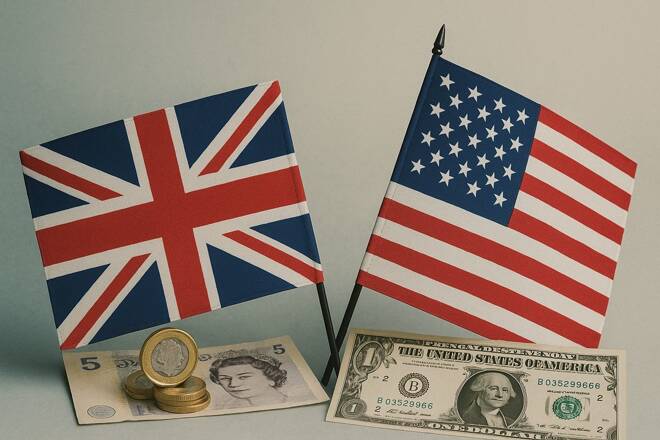
Conflicting statements from the USA and Iran around 25 March gave some hope of a negotiated peace being within reach. However, this might be distant given that the two sides’ plans seem fairly directly opposed. The US dollar has been among the main beneficiaries in markets of recent news, up in most of its pairs, while gold’s decline continued.
As widely expected, the USA didn’t proceed with destroying Iran’s energy infrastructure on 23 March as threatened by Donald Trump. However, reports from Egyptian intermediaries of backchannel negotiations between the USA and Iran gave markets some hope that there might be serious discussion of a ceasefire within the next few weeks. The American plan was essentially a copy and paste of items already rejected by Iran last year, while Iranian demands included control over the Strait of Hormuz, which the USA and Gulf countries are also very unlikely to accept.
That the process seems to have started is basically positive, though. Participants seem to be pricing out the most hawkish scenarios for the Federal Reserve (Fed) by the end of the year, with the probability of two hikes by December now less than 6%. Previous inflation data don’t suggest any uptrend and current pricing of futures indicates a return to about $75-80 a barrel by the end of the year. If this impression holds, the shock to prices, although significant, probably wouldn’t have deep ongoing effects.
The Fed’s next meeting isn’t until around a month from now, on 29 April. The statement and subsequent press conference will probably give traders more idea on what to expect for the rest of the year, but until then, it seems likely that the Fed and possibly other major central banks too will stick to ‘wait and see’. Traders are looking ahead, most importantly, in early April to the NFP in the context of March’s disappointing figures.
Cable’s Still Stuck Below $1.34
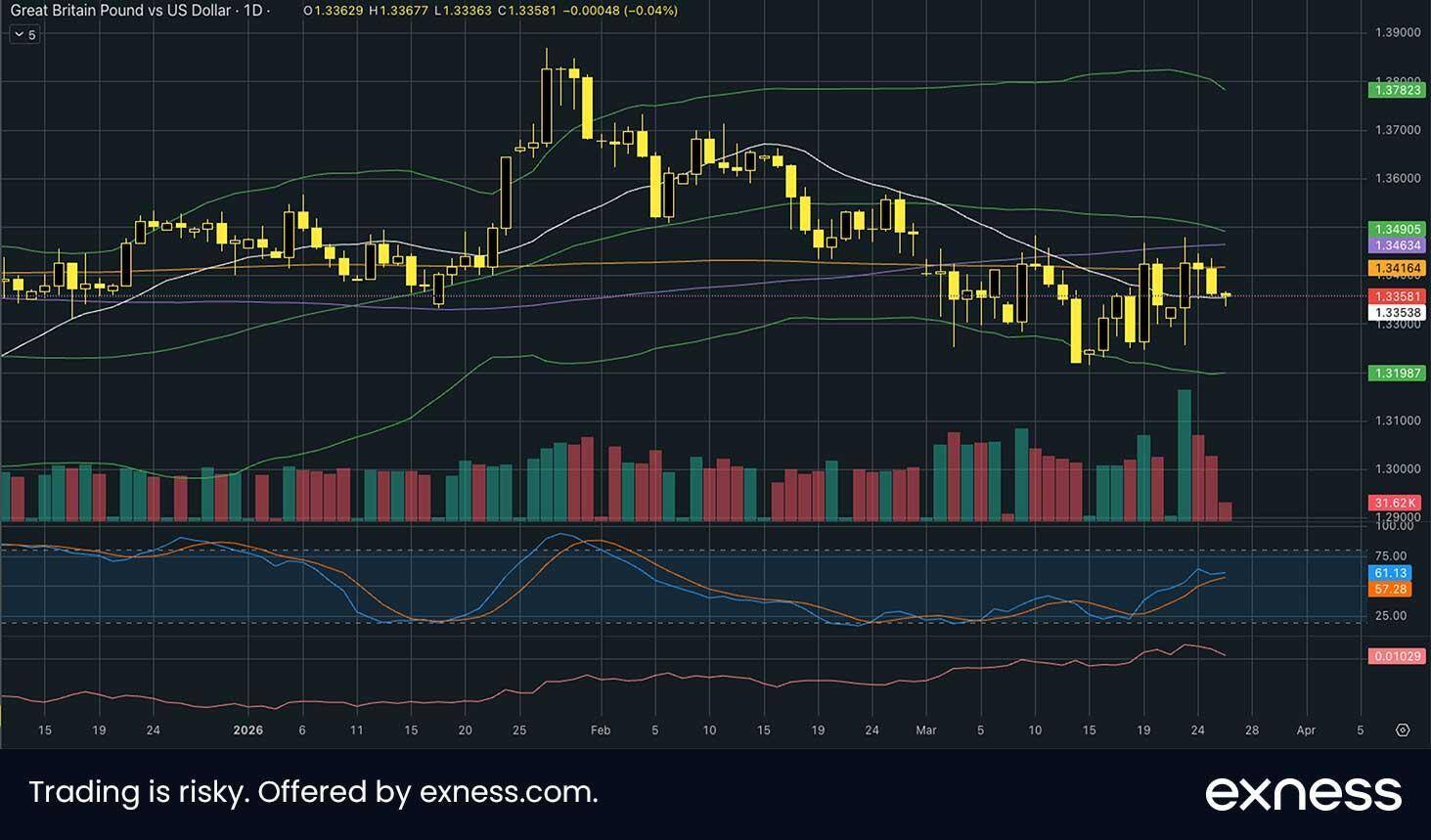
British annual headline held as expected at 3% in February, supporting the impression that the BoE is likely to hike rates within the next few months and completely removing for now expectations of more cuts in 2026. The probability of a hike in April is around 70% and another is fully priced in for July, so a total of three hikes this year seems likely. That would take the bank rate back to 4.5%.
However, cable hasn’t moved in a clear directional trend since the start of the Gulf conflict. The range in March has been between about $1.32 and $1.345. Buying volume spiked significantly with 23 March’s up candle, which might suggest another attempt to test the top of the range. There’s currently no signal of saturation from either Bollinger Bands or the slow stochastic.
A breakout in either direction would probably need a strong driver from news or economic data. Obvious possibilities include significant developments in the Gulf and a surprise from 3 April’s NFP. However, in the absence of clear new information, the price might settle into a sideways trend within more-or-less the same range as previously.
GBP/USD Price Forecast
Every new GBP/USD analysis as it publishes, today's technical signal and key levels, live price — on one page.
See all GBP/USD forecastsDollar-loonie at Two-month Highs Despite Oil’s Gains
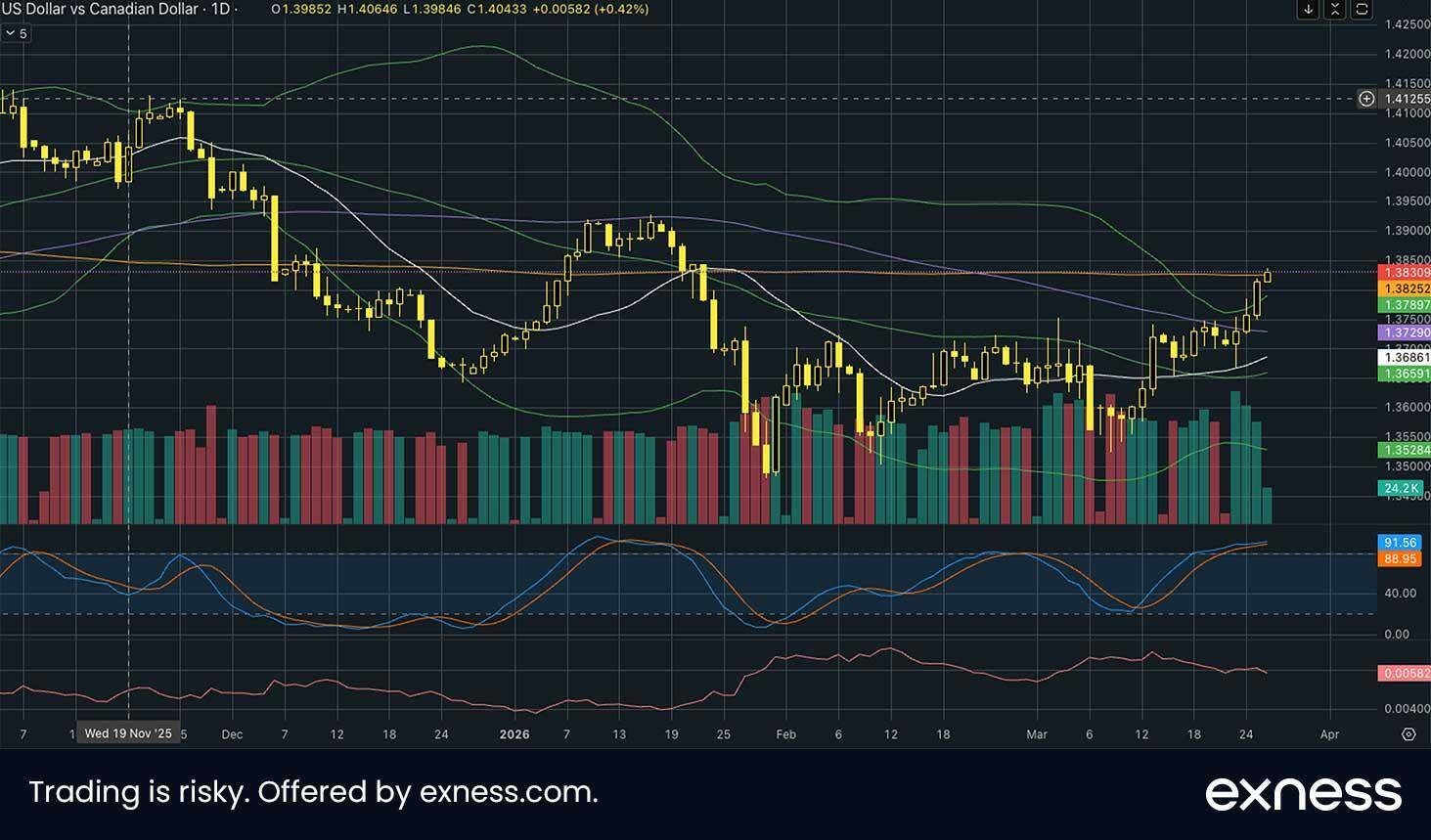
The Canadian dollar’s traditional correlation with crude oil hasn’t been evident at all in recent weeks amid the latter’s large gains due to supply issues. Recent rumours of possible first steps to a negotiated peace in the Gulf continue to swirl, but traders of forex in particular seem to be concentrating on the likelihood of significant divergences in monetary policy remaining for some time. One of these is between Canada and the USA, with the BoC having limited rationale and scope to hike rates as inflation is below target and employment clearly weaker in recent months.
Current prices above $1.38 are the highest since late January, with the next possible resistance around $1.39. However, the price is currently testing the 200 SMA and is clearly overbought based on the slow stochastic and Bollinger Bands. The golden cross of the 20 SMA over the 50 from Bands combined with generally high recent volume of buying signal an incipient uptrend but this depends very much on news of the conflict and monetary policy.
$1.355 is a possible support, being the area of lows from last summer, as well as February, and this month. It’d be unlikely to see the price decline sharply to there in only a few periods, though, given the three moving averages in the way, barring some major development in the news or sentiment.
This article was submitted by Michael Stark, an analyst at Exness.
For the latest analysis, ideas for trading and more, follow Michael on X: @MStarkExness.
The opinions in this article are personal to the writer; they do not represent those of Exness. This is not a recommendation to trade.