
In the aftermath of a generally weaker job report for November-December and higher inflation in Britain, the pound has gained against the dollar and yen while declining somewhat against most other major currencies. Traders continue to price in about two cuts by the Bank of England (‘the BoE’) in 2026. This article summarises recent major data from Britain, then looks briefly at the charts of EURGBP and GBPJPY.
The British job report for November-December came out on Tuesday, 20 January, with mostly negative numbers; HMRC payroll change in particular reached its lowest monthly figure in more than five years:
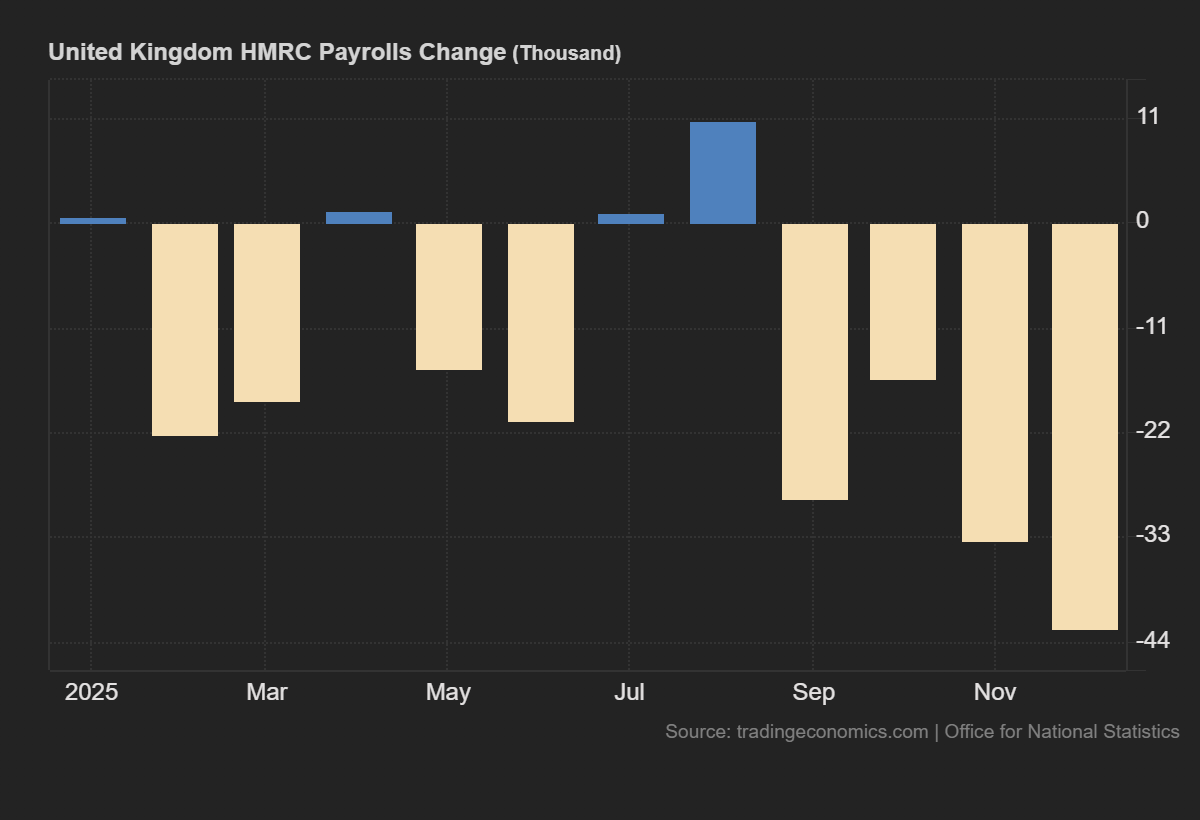
Payroll change in itself was consistently negative for most of 2025 and definitely contributes to the idea that the job market in Britain is slowing down significantly. However, it’s probably too early to call a clear acceleration in this trend from December’s release. While some of the decline is certainly related to overall economic conditions, lower employment in particular sectors, such as wholesale and retail, has a clear impact from automation.
British unemployment meanwhile, remained at its highest in more than four years in November 2025:
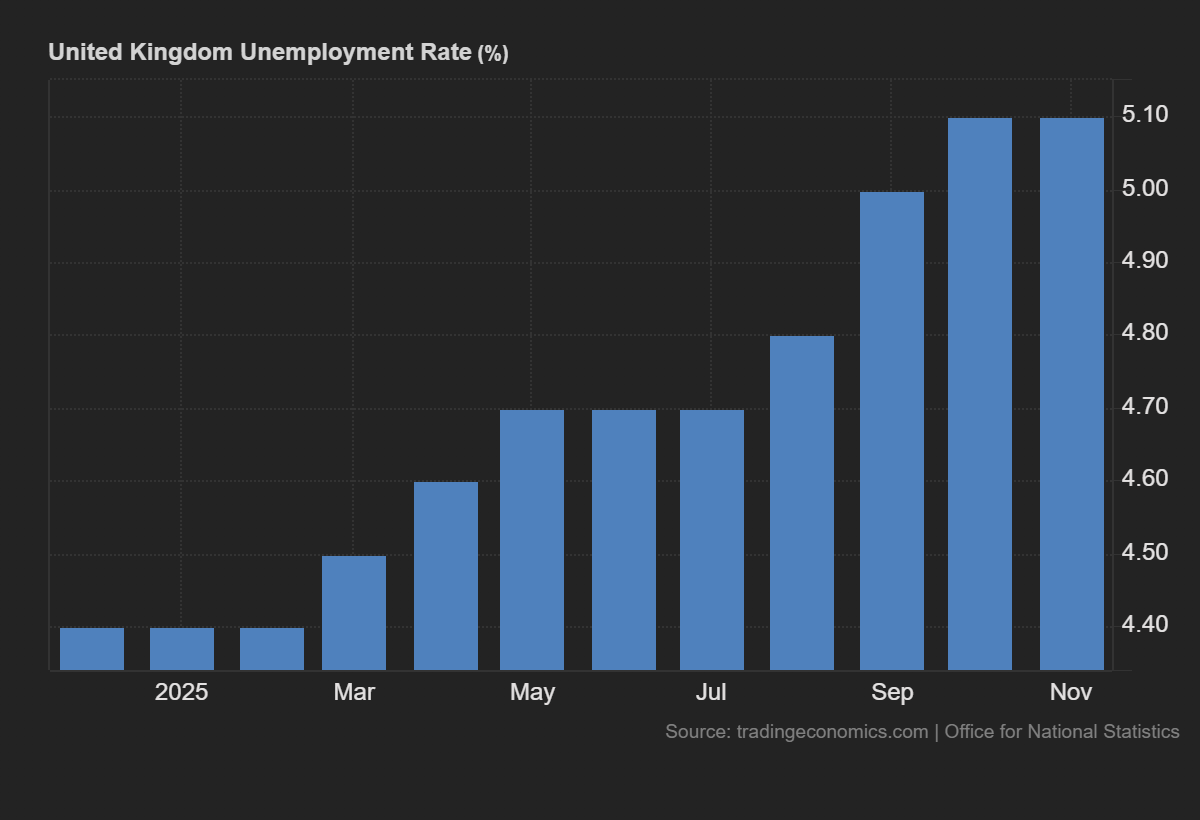
Again, it’s not totally clear yet whether the trend of rising unemployment is gaining pace, but it certainly seems to be. 5.1% is only slightly below the post-COVID high of 5.3% from December 2020-January 2021 and is driven significantly by longer-term unemployment, i.e., more than six months. The overall picture from the job report is negative, but not much more so than the average in 2025.
Contrary to some expectations, annual headline inflation in Britain rose slightly more than the consensus in December to 3.4%:
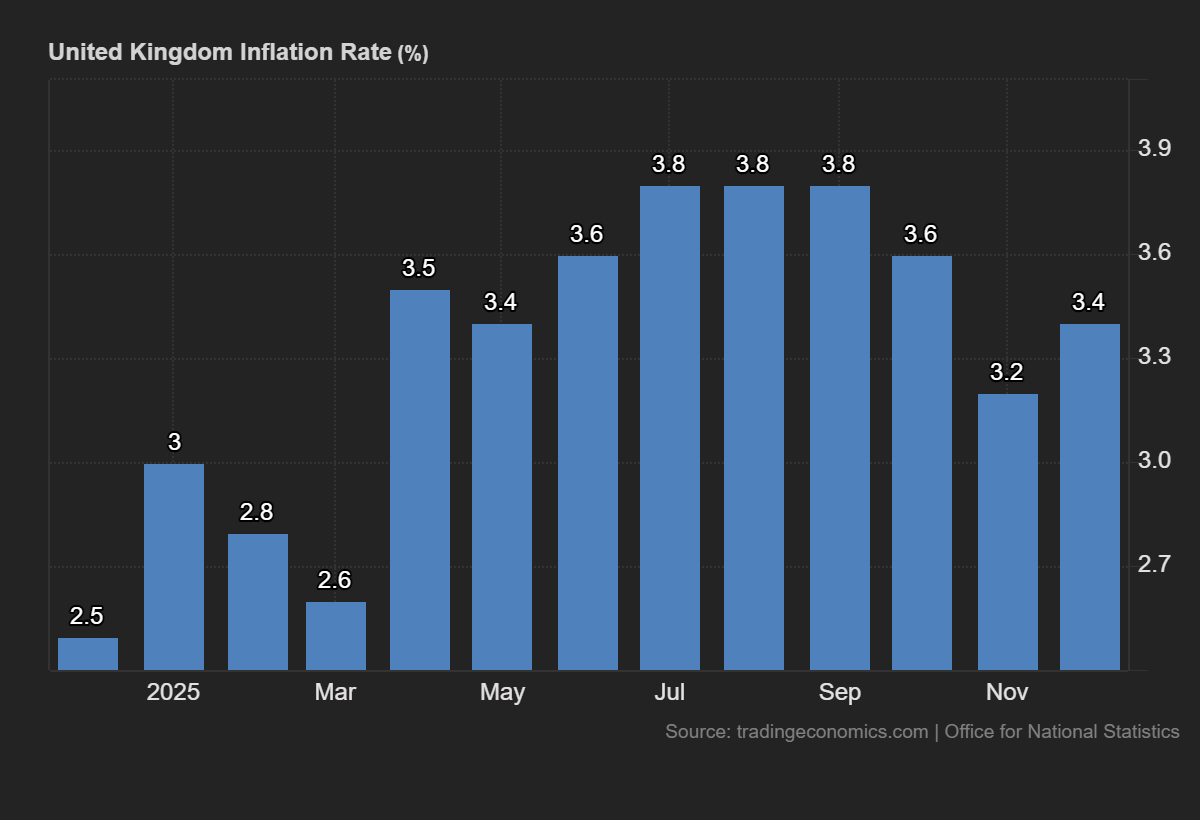
Alcoholic drinks, tobacco, and transport were important drivers of the rate of inflation increase, so some analysis points to governmental action as driving the rise and expects it to be temporary. Even so, inflation remaining clearly above 3% for three quarters complicates the outlook for loosening by the BoE. The majority of participants expect the bank to hold rates in February but cut to 3.5% on 19 March.

Euro-pound Bounces Back Above 87p
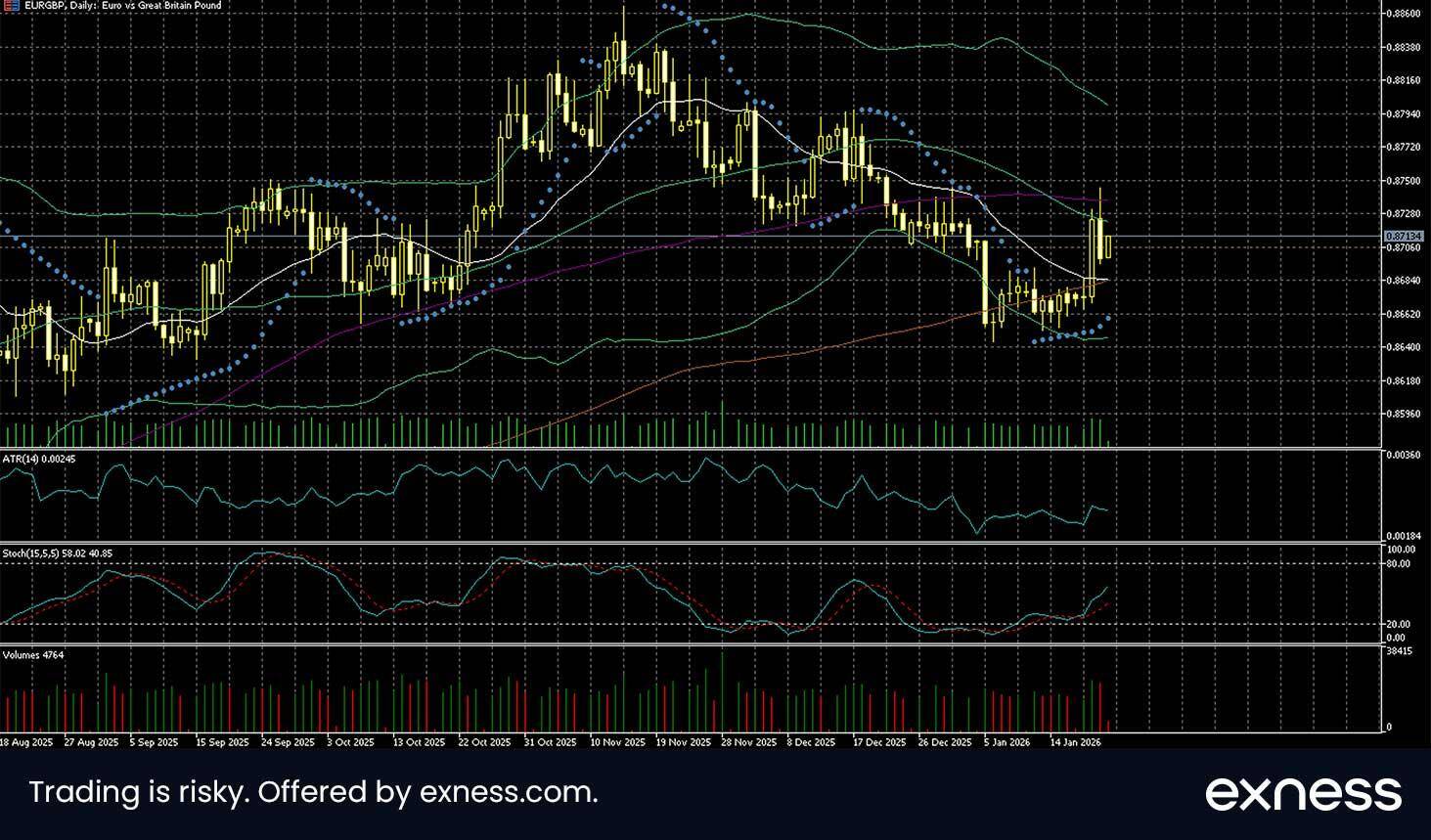
A pause in tension between the USA and EU around 22-23 January and continuing high expectations that the ECB has finished cutting rates for the foreseeable future have given the euro some strength. The common currency is holding or gaining in most of its pairs, while the pound suffered somewhat from a weaker job report, although inflation came in slightly higher.
The downtrend on lower timeframes since November seems to have paused for now amid a particularly strong gain on 20 January and an upward crossover of the slow stochastic in oversold. The value area around 87.3p between the 50 SMA from Bands and the 100 is a clear potential dynamic resistance that the price is currently testing. Above there, 88p is a potential static zone of resistance.
86.5p is a potentially strong area of support given the doji there on 6 January but the price might also find support around the confluence of the 20 and 200 SMAs just below 86.9p. The death cross of these two isn’t important for the time being, given that most other sources suggest buy signals; however, traders will monitor upcoming German consumer data and GDP from various countries of the eurozone.
Pound-yen Likely to Reach Fresh Highs
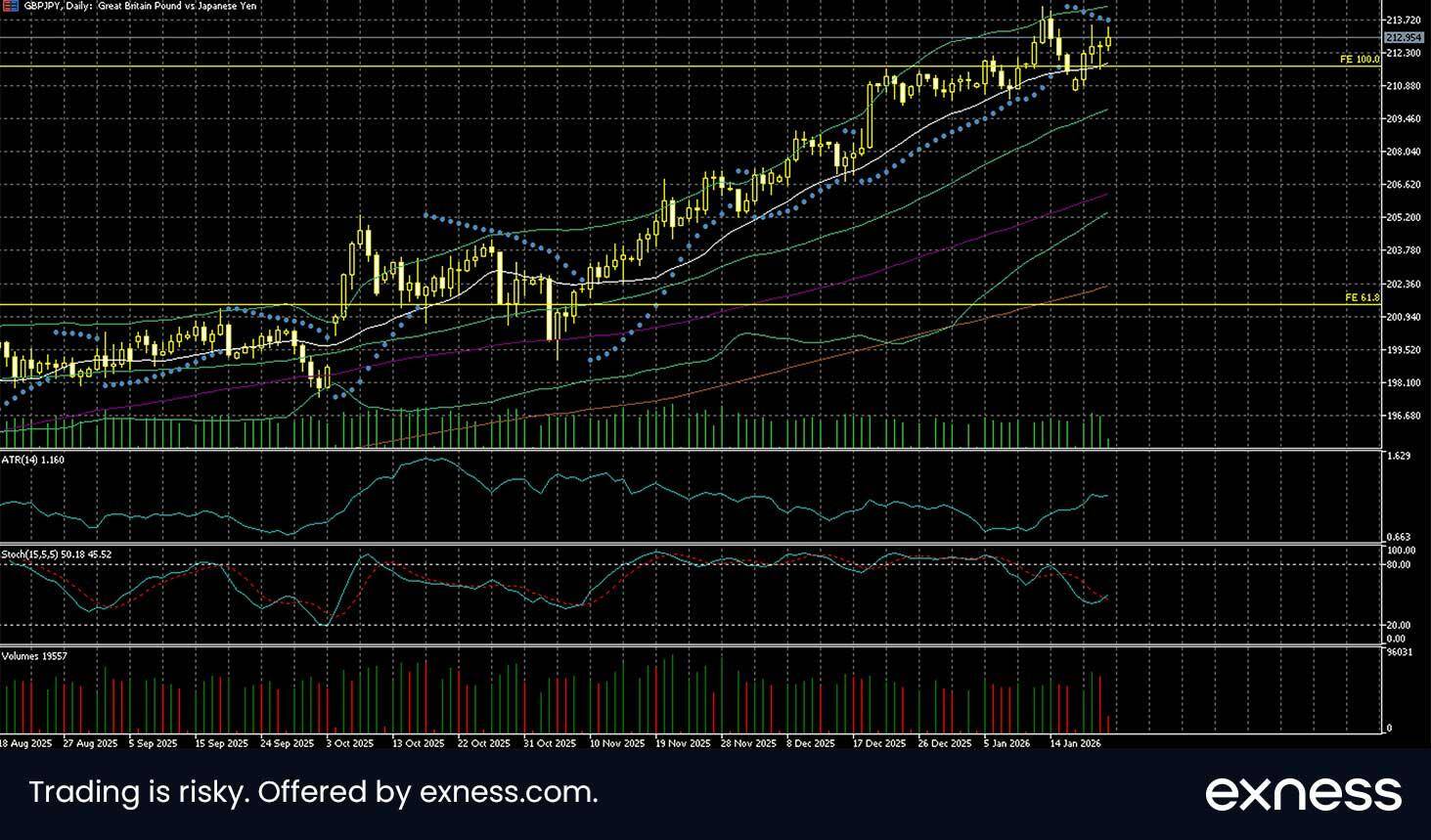
Having raised rates to the 30-year high of 0.75% in late 2025, the Bank of Japan kept them on hold in January and signalled the possibility of more hikes, having raised overall projections for inflation. The Japanese government is preparing to dissolve the National Diet for a snap election, which focuses on proposals for higher governmental spending, so traders are concentrating on any cracks in the BoJ’s moderately hawkish signalling and the ongoing likelihood of intervention if the dollar breaches ¥160.
The long-running uptrend for pound-yen, though mature, is still clearly active with ATR increasing somewhat in recent weeks while volume hasn’t declined overall. The slow stochastic being fairly close to neutral suggests that another upward wave is quite likely in the near future, but the possible target of this isn’t clear. Equally, buying at the top is usually much riskier than waiting to enter at a lower price.
The 100% weekly Fibonacci extension around ¥211.70 might flip to being a support if the price holds above it for a few more periods. It certainly looks like the 20 SMA is a dynamic support, having been tested several times since the middle of November 2025 without success. With no key data coming out in the next few days, traders are likely to focus on political news from Japan.
This article was submitted by Michael Stark, an analyst at Exness.
For the latest analysis, ideas for trading and more, follow Michael on X: @MStarkExness.
The opinions in this article are personal to the writer; they do not represent those of Exness. This is not a recommendation to trade.