
Energy Markets Hold Steady – but not quite – Amid Geopolitical Stress and a Changing of the Seasons
Crude oil benchmarks had a pretty mixed bag of things going on on Monday with the Strait of Hormuz still a major source of uncertainty – even though there are hints of diplomatic efforts to ease things a little. The OPEC+ crowd has kept up their good work on cutting back on production, with their voluntary cuts now running all the way to the end of the first quarter – although US oil production has been keeping pace at a pretty high level – hovering just shy of a record 13.5 million barrels a day. A 6.2 million-barrel drop in inventories, reported in the latest EIA numbers, is adding to the sense that there’s a tighter balance in the market – but what with the Americas and other places churning out even more oil it looks like there’s a pretty big counterweight waiting in the wings come the end of the year.
The price of Brent crude – which we all know is the global oil price benchmark – has been particularly sensitive to news out of the key shipping lanes in the past few weeks – and with all the recent incidents of ships and infrastructure getting damaged in the region it’s no surprise that people are getting a bit spooked about the risk of disruption hitting Middle Eastern exports. The US has being doing what it can to try and keep the passage of ships through the Strait of Hormuz as safe as possible – but all this tension is keeping prices up in the short term. WTI – our North American price benchmark – on the other hand is being driven by the strength of US production and exports – and has seen its spread to Brent get a bit narrower during all this as well.
Natural gas (NG) Takes a Beating
Natural gas markets are taking a bit of a beating as the shoulder season gets underway – bearish fundamentals are having the upper hand right now. US dry production is chugging along at a pretty healthy clip – average of over 106 billion cubic feet a day – far outstripping demand which isn’t getting much of a boost from spring temperatures that are staying remarkably mild.
As a result storage injections are looking pretty robust, beating seasonal norms with ease. LNG export feedgas has dropped back a bit from where it was a few weeks ago – but that longer term global demand which is being driven by all sorts of disruptions over in other places is still giving the US a pretty good reason to keep on exporting its gas. Traders are all looking to see what happens next with summer cooling demand – with the forecast calling for above average temperatures which could eventually start to tighten things up a notch.
Summing Up
In the end, oil markets remain pretty tied to what’s happening in the Middle East – not to mention how well the producers are keeping to their discipline. Meanwhile natural gas markets are busy dealing with a whole lot of oil coming out of the US just at a time when everyone is waiting to see what happens next as we go into summer.
Natural Gas Futures Break $2.84 – Bearish Channel Pressure
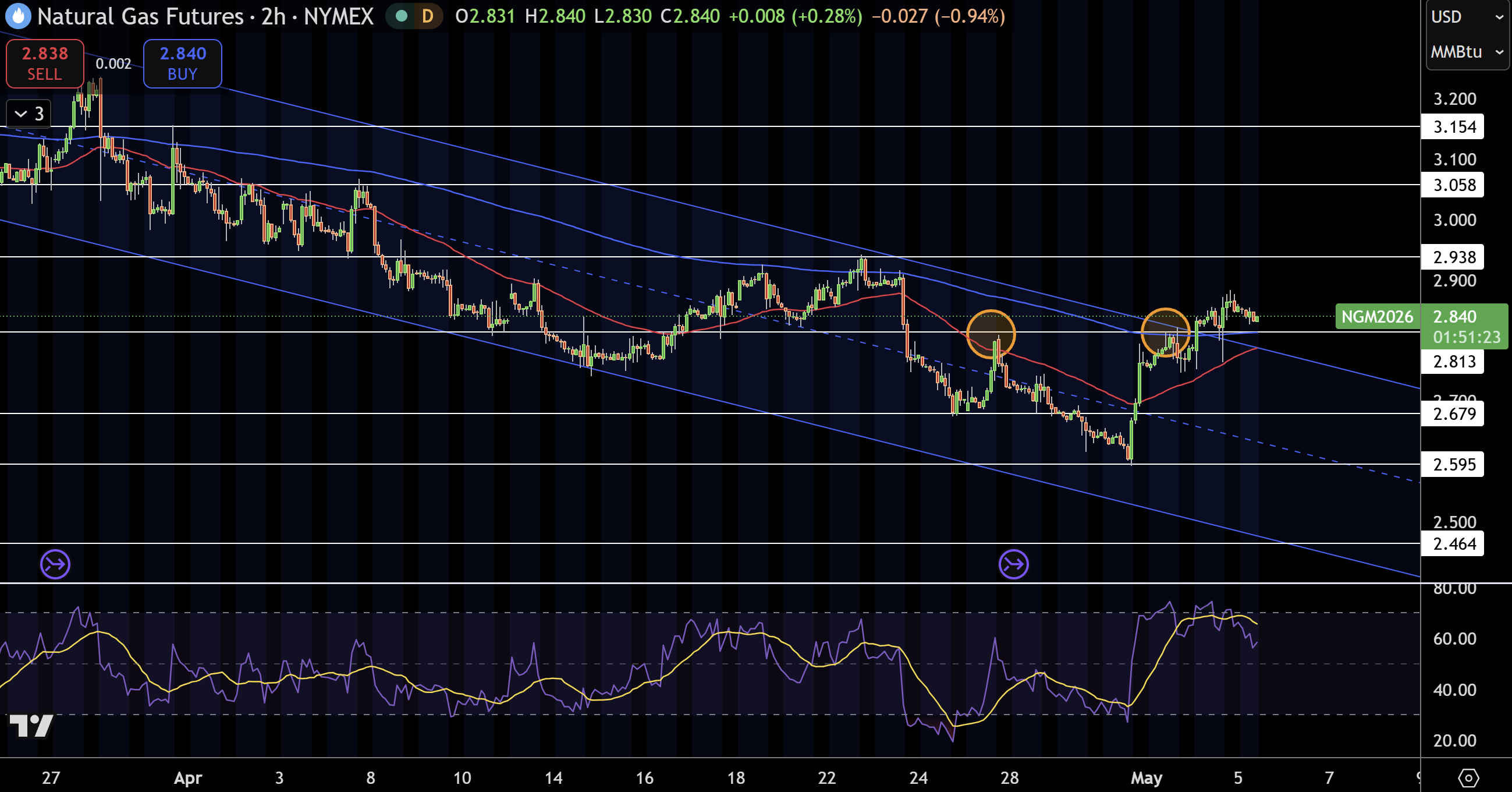
NG is currently sitting at $2.84 on the 2h NYMEX and has just managed to break down below that red moving average and lower blue channel line. Over the two highlighted orange candles at $2.84 the bulls just got proper rejected – and now the price is hugging that descending trend line from April highs – and the RSI is below 45 so that’s definitely a signal of weakness in the air.
Natural Gas Price Forecast
Every new Natural Gas analysis as it publishes, today's technical signal and key levels, live price — on one page.
See all Natural Gas forecastsDown at $2.68-$2.59 we have a big fib level acting as support. The recent failed rallies have left future price direction looking pretty bearish still.
Trade Idea: Sell at $2.84 with a target of $2.68, and keep your stop loss at $2.88
WTI Crude Oil Holds $104 Channel Support – Next Leg to $109?
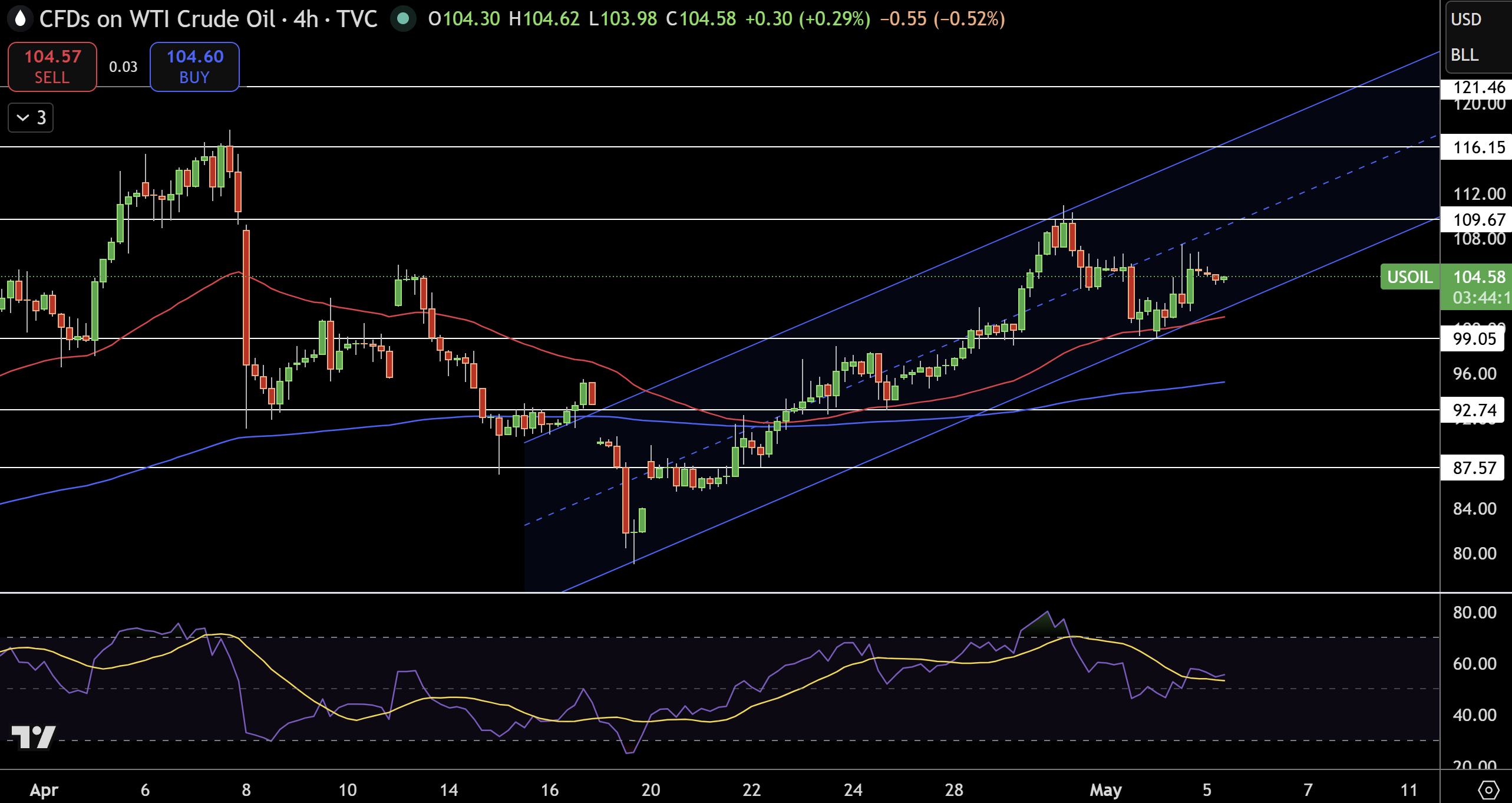
WTI crude is sitting comfortably at $104.61 on the 4h – and for now at least – still within the bounds of the upper blue ascending channel line it started forming back in April. And it’s staying well respecting that red 50-period moving average as a kind of makeshift support zone at around $102. Look at those price bars – they’re showing some really strong green bodies pushing back against the $100 zone, and consistently making higher lows into the bargain.
Meanwhile, the RSI is still happily above 55 and not showing any sort of divergence – and a fibonacci retracement from that big swing low in March is projecting a price resistance cluster in the $108-$109.67 zone. Don’t forget that big blue trend line down at $99 – its the kind of crucial floor that if it ever gets tested, is likely to suck the air out of the market.
Trade Idea: Go long at $104.50 with a target of $108.50, and set your stop loss at $102.80.
Brent Crude Oil Tests $114 Resistance in Strong Up-Channel
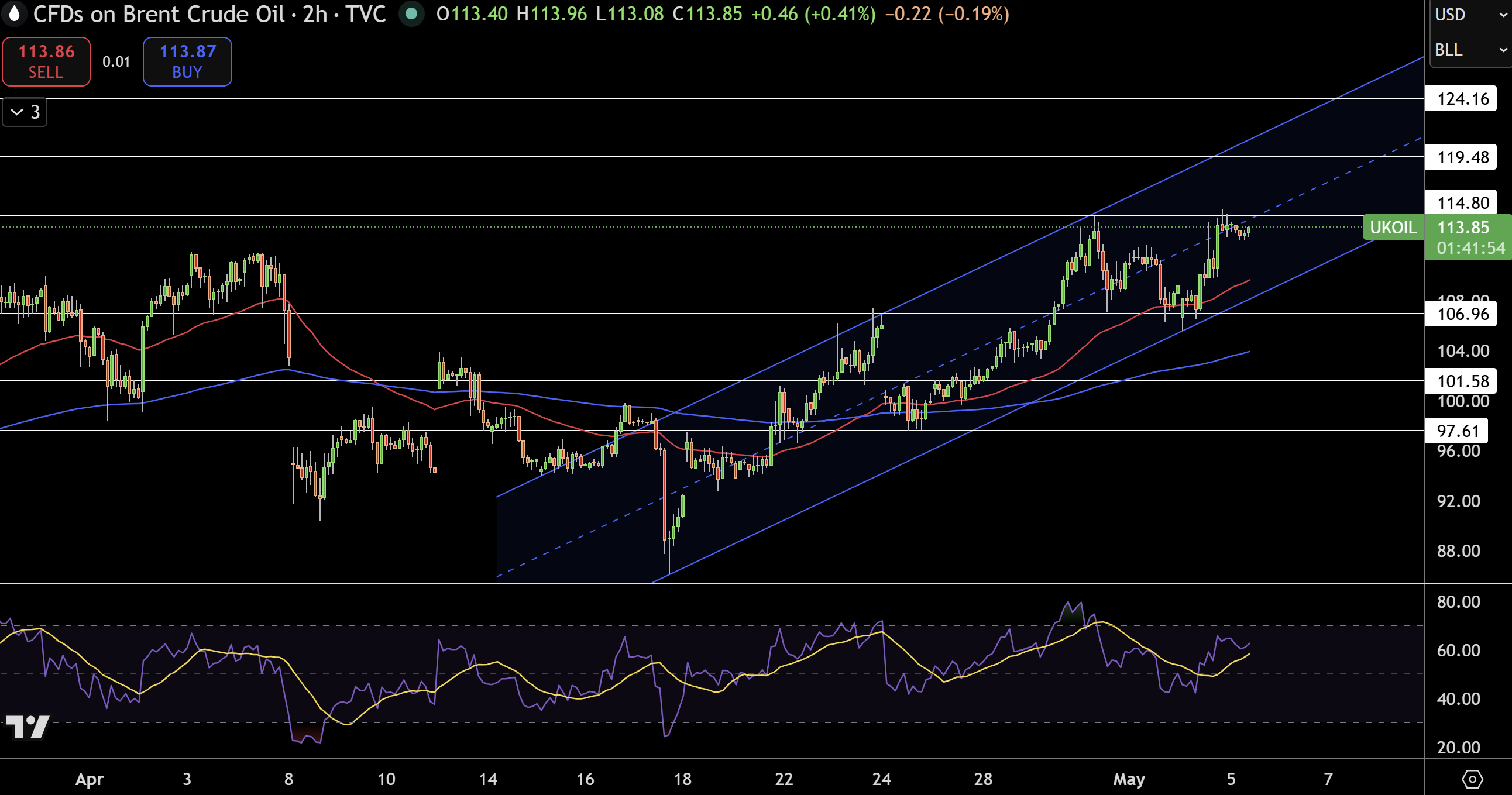
In the Brent oil docket, we find ourselves looking at $113.85 on the 2h timeframe where it continues to play nice inside that really steep blue ascending channel. Brent just recently printed a good-looking bullish engulfsion up at $112 – and support looks rock solid at the $109.67 channel floor with a clear run of higher lows since mid April. RSI is tickling the top end of its range and not yet triggering any overbought signals – and a fib extension from that base back in April is pointing up at the $116-$119 zone.
Price action is sitting pretty above all the major MAs – that’s a big part of why the run is looking so strong.
Trade Idea: On the dips, go long at $113.20 and take your target at $116.50 – and set your stop loss below $111.80.