Nikkei 225 Technical Analysis
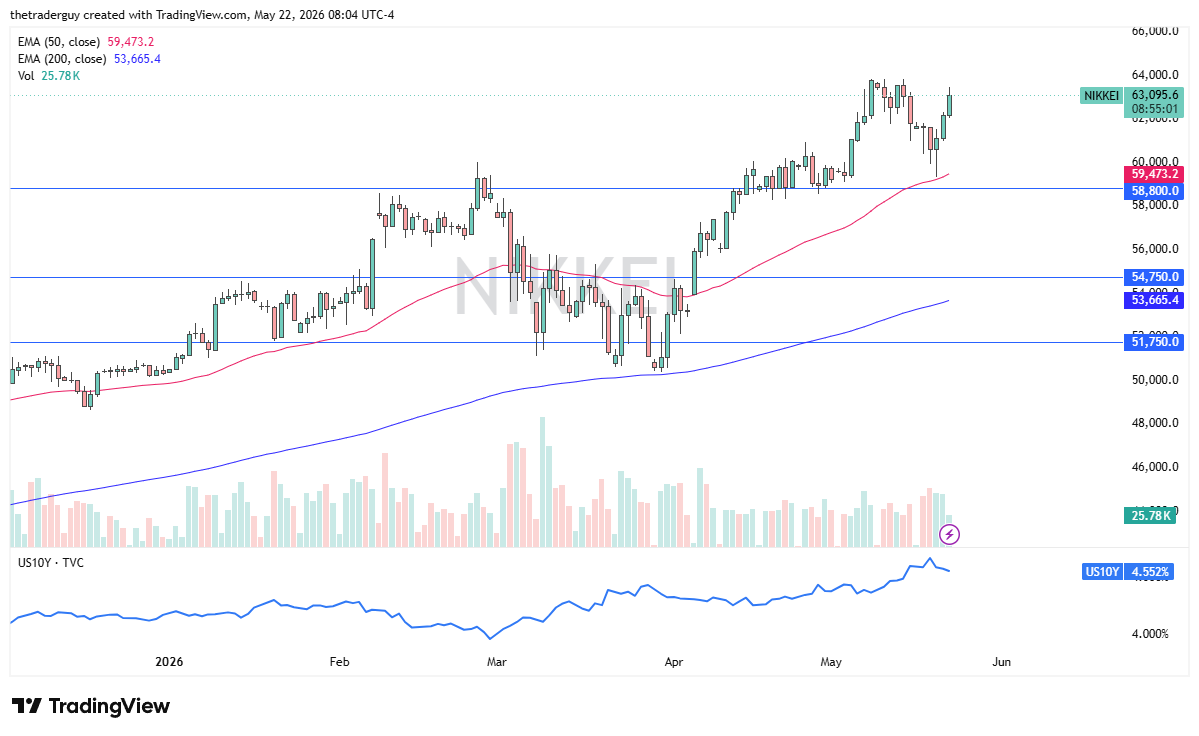
The Nikkei 225 has rallied again on Friday to head into the weekend near the recent historic highs. That being said, this is a market that sees a lot of different things going on. To begin with, we see easing inflation pressure; the Japanese annual inflation rate fell to a 4-year low of 1.4% in April. This cool-down in inflation has given the Bank of Japan a little bit of breathing room and eased immediate fears of aggressive interest rate hikes coming out of Tokyo, as they had just recently ended their negative interest rate era.
There is a little bit of optimism around the diplomatic resolutions in the Middle East, and it has some people jumping into Japanese large caps due to exports, and the weak yen, of course, continues to help. At this point, I think short-term pullbacks are buying opportunities.

Hang Seng 50 Technical Analysis
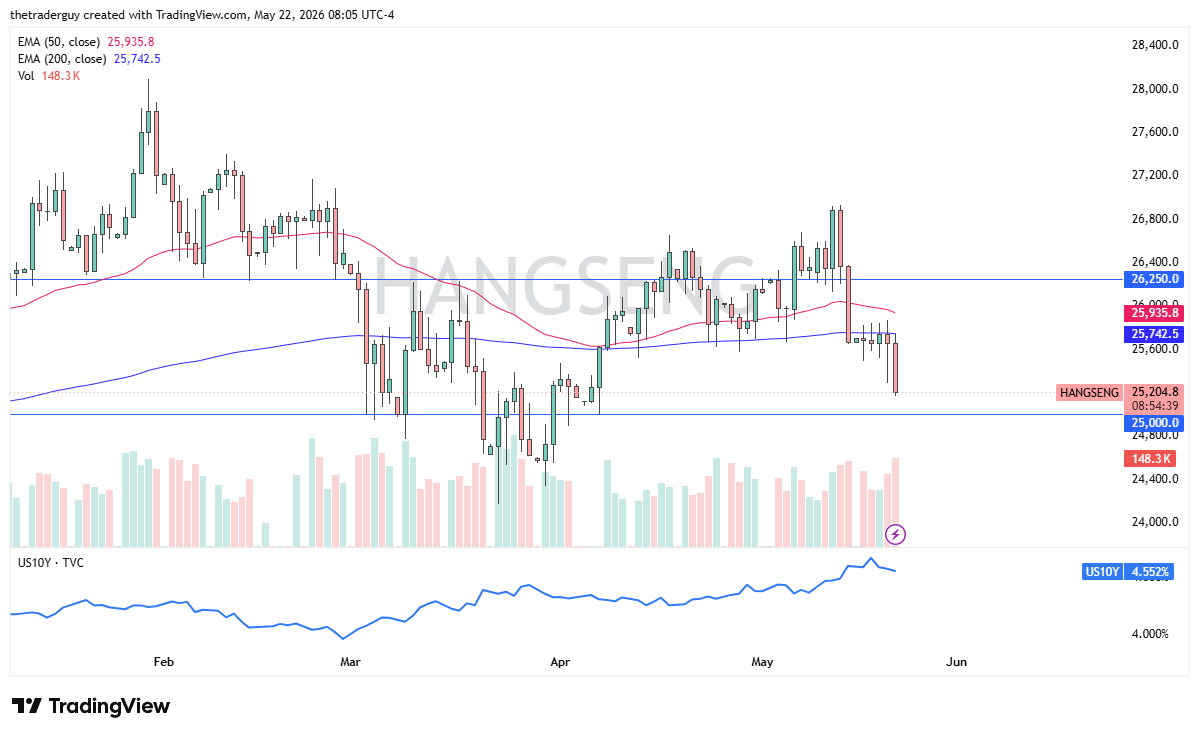
The Hang Seng is really struggling. The market is plunging towards the 25,000 level. It does have a major problem in the property sector, and the US Federal Reserve keeping interest rates tight has had an influence on the Hang Seng as well. Remember, the Hong Kong dollar is pegged to the US monetary policy, so that is one problem. AI earnings, of course, have been part of the story from time to time, but in general, the Hang Seng looks really bad at the moment.
Nifty 50 Technical Analysis
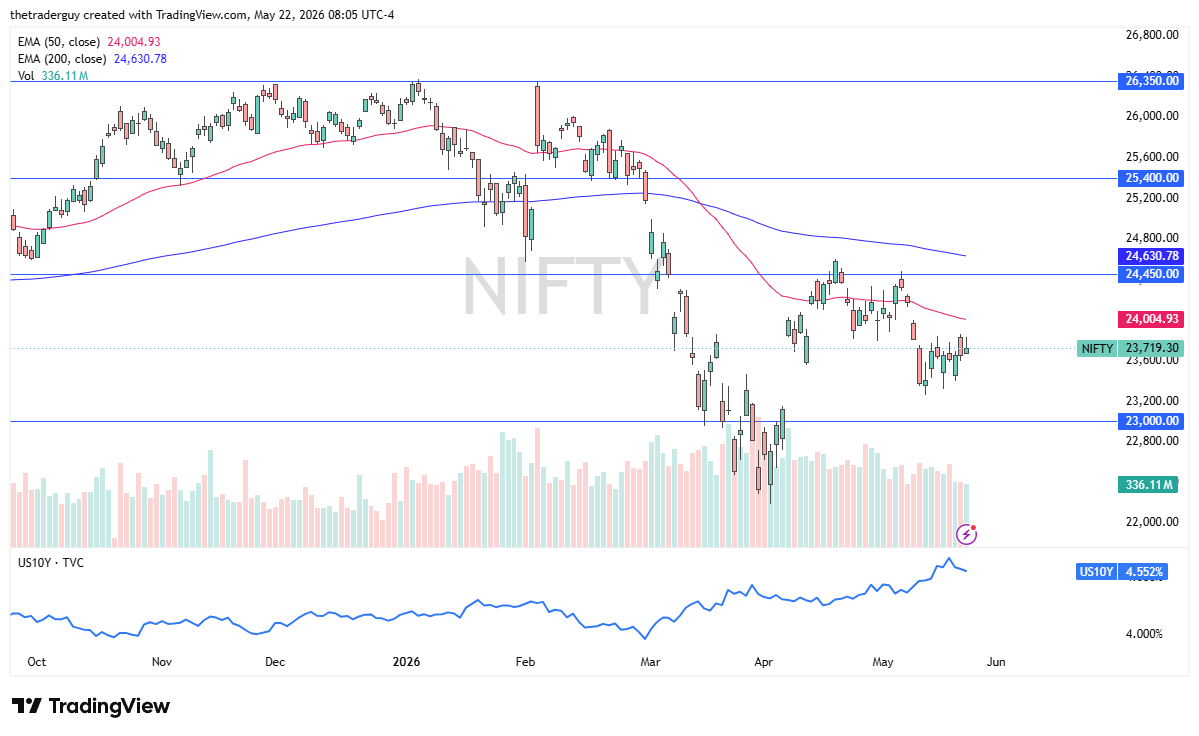
And finally, in India, we have the Nifty 50. It’s more or less an institutional tug of war here as a lot of foreign institutional investors and domestic institutional investors are conflicted in what they think about Indian equities. Foreign institutional investors have been net sellers in May, while local investors have completely absorbed the pressure.
Nikkei Price Forecast
Every new Nikkei analysis as it publishes, today's technical signal and key levels, live price — on one page.
See all Nikkei forecastsSo really, at this point, I think you have to look at it as a market that has a bit of support here, but there are some sector realignments you have to worry about. The IT sector is acting as a major defensive catalyst. That being said, global hawkishness strengthens the USD, which directly inflates dollar-denominated export revenues for all of these massive IT companies in India, giving it a little bit of stability. I still think breaking above the 50-day EMA is what we really need to see to perhaps get aggressively long towards the 200-day EMA.
If you’d like to know more about technical analysis and how traders use it, please visit our educational area.