Despite uncertainty in key oil producing nations, oil prices still remain low. Venezuela, Iran and Russia have political problems or sanctions. However, markets are not responding as they used to in the past. This is because traders are not concerned with total reserves as they are concerned with actual barrels available now.
The oil market has changed. Strong demand used to force prices upward a decade ago. But now, electric vehicles, fuel efficiency and energy policies have slowed demand. Traders are wondering whether demand will weaken before supply tightens – that question is keeping prices from rising.
On the other hand, strategic reserves and OPEC production buffers make supply shocks minimal. If one supplier fails, others can take over. This safety net makes the market more relaxed. Oil is still important but renewables and gas are growing rapidly. Moreover, the electricity has substituted the oil in many places. This change makes the market less reactionary and oil prices have become a more balanced and diversified energy world.
Crude Oil Technical Analysis
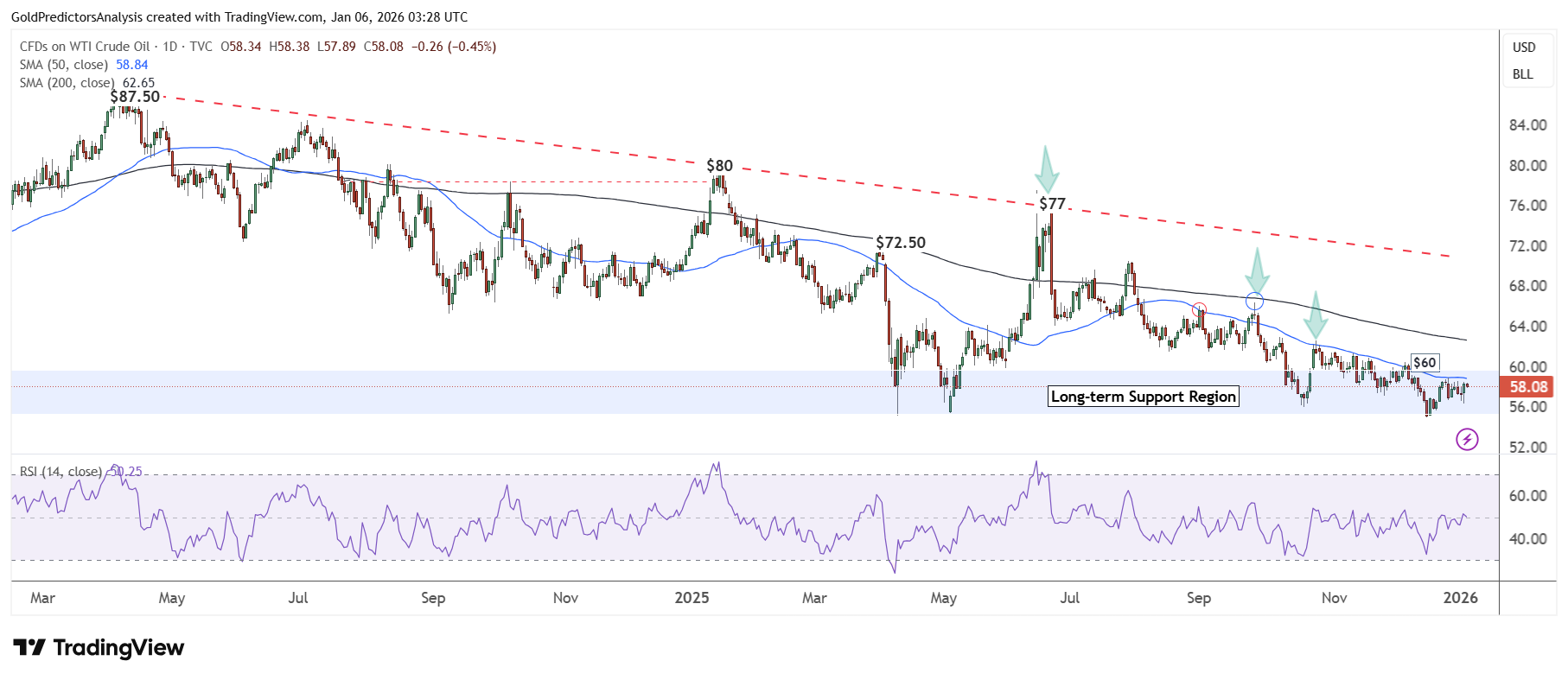
The daily chart of WTI crude oil (CL) shows that the price rebounded on Monday but is still below the 50-day SMA and still in consolidation. These rebounds are part of a good consolidation within the blue zone, which marks the position of long-term support.
A break below the $55 level will signal further downside to the $50 area. However, a break above the $60 level will point to further upside towards $65 area. As long as the price is below the $65 region, the trend is negative.
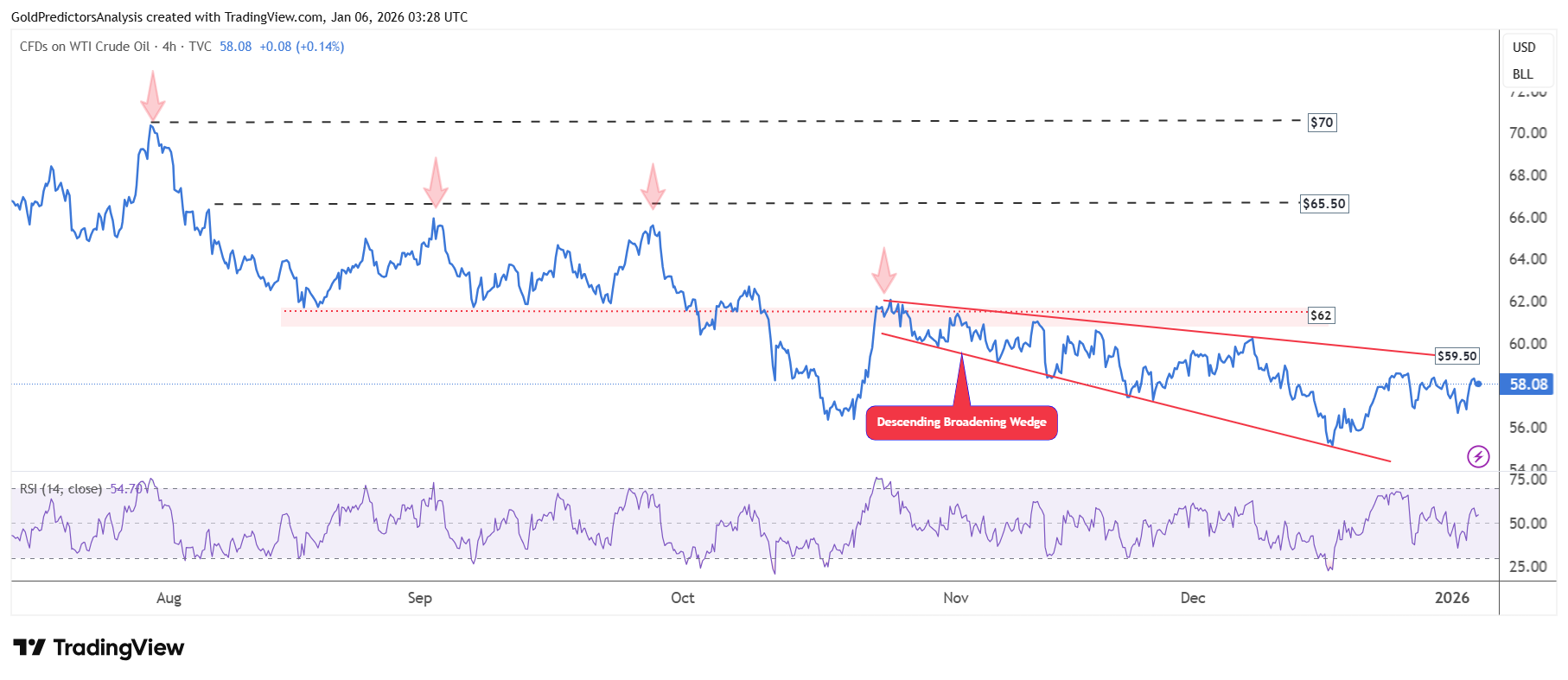
The 4-hour chart for WTI crude oil shows that the price is consolidating within the descending broadening wedge pattern and is looking for the next move. A break above $59.50 will indicate further upside towards the $62 area. However, a break above the $62 area will indicate further upside towards the $65.50 level.
Natural Gas Price Forecast
Every new Natural Gas analysis as it publishes, today's technical signal and key levels, live price — on one page.
See all Natural Gas forecastsNatural Gas Technical Analysis
The daily chart for natural gas shows that the natural gas price hit the strong resistance at the $5.50 level and continued to drop lower. The correction from the $5.50 level also broke the strong support at the $3.80 level, which indicates continued downside momentum in the next few days. The price is now breaking below the 200-day SMA, which suggests that bearish pressure may likely continue.
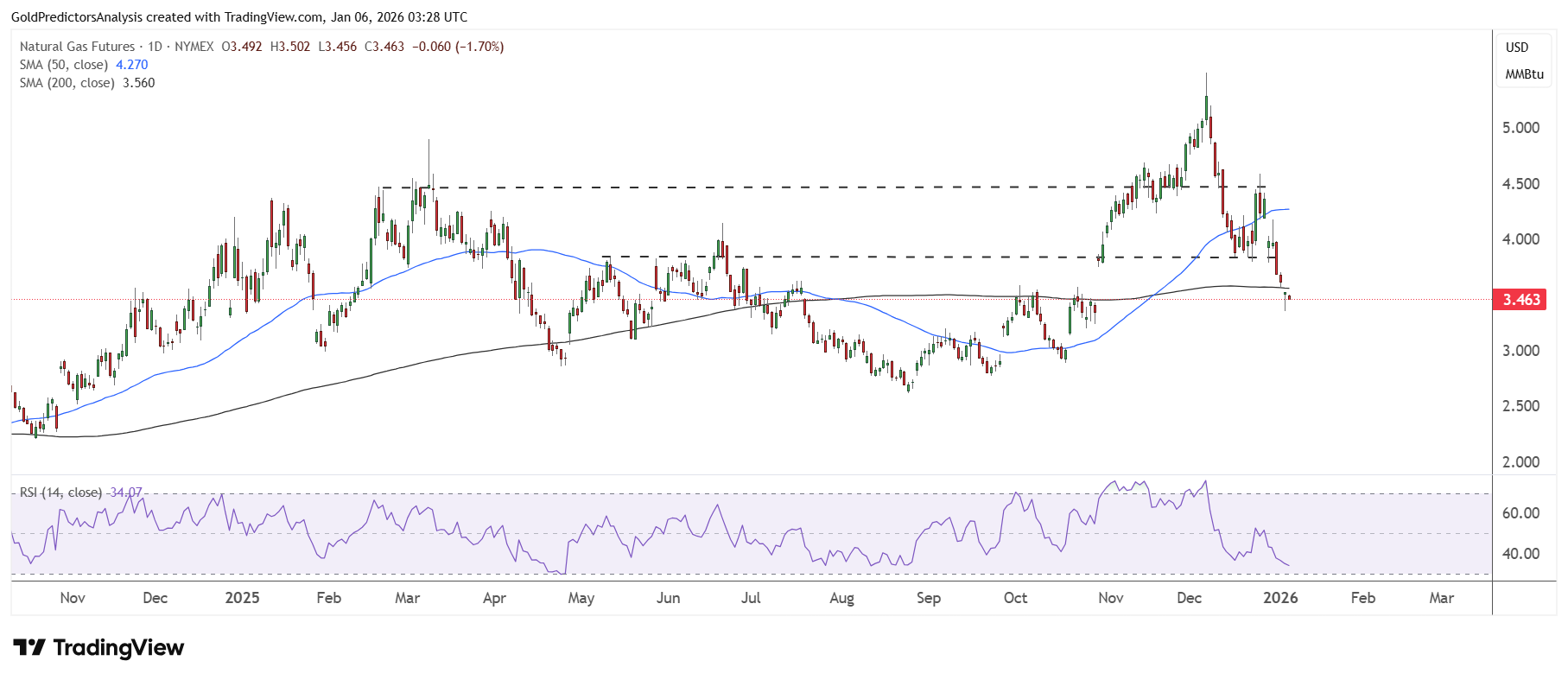
The key level of $5.50 was an important resistance area, and the significant drop from this level indicates that natural gas prices may continue to decline toward the long-term support at the $2.50 level.
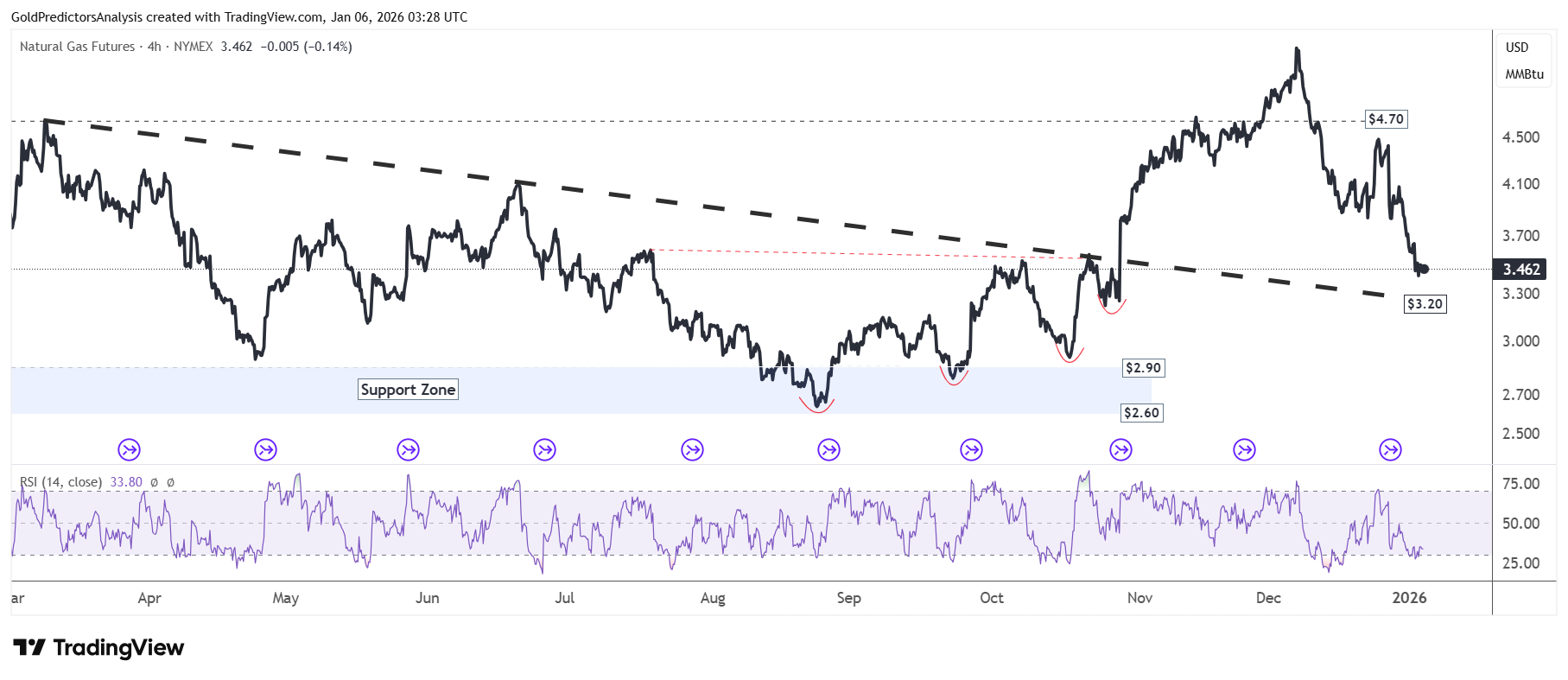
The 4-hour chart for natural gas shows that the immediate support in the natural gas market remains around the $3.20 level. A break below $3.20 will indicate further downside toward the $2.90 level. A breakdown from the $3.80 level has changed the short-term trend to negative.
US Dollar Technical Analysis
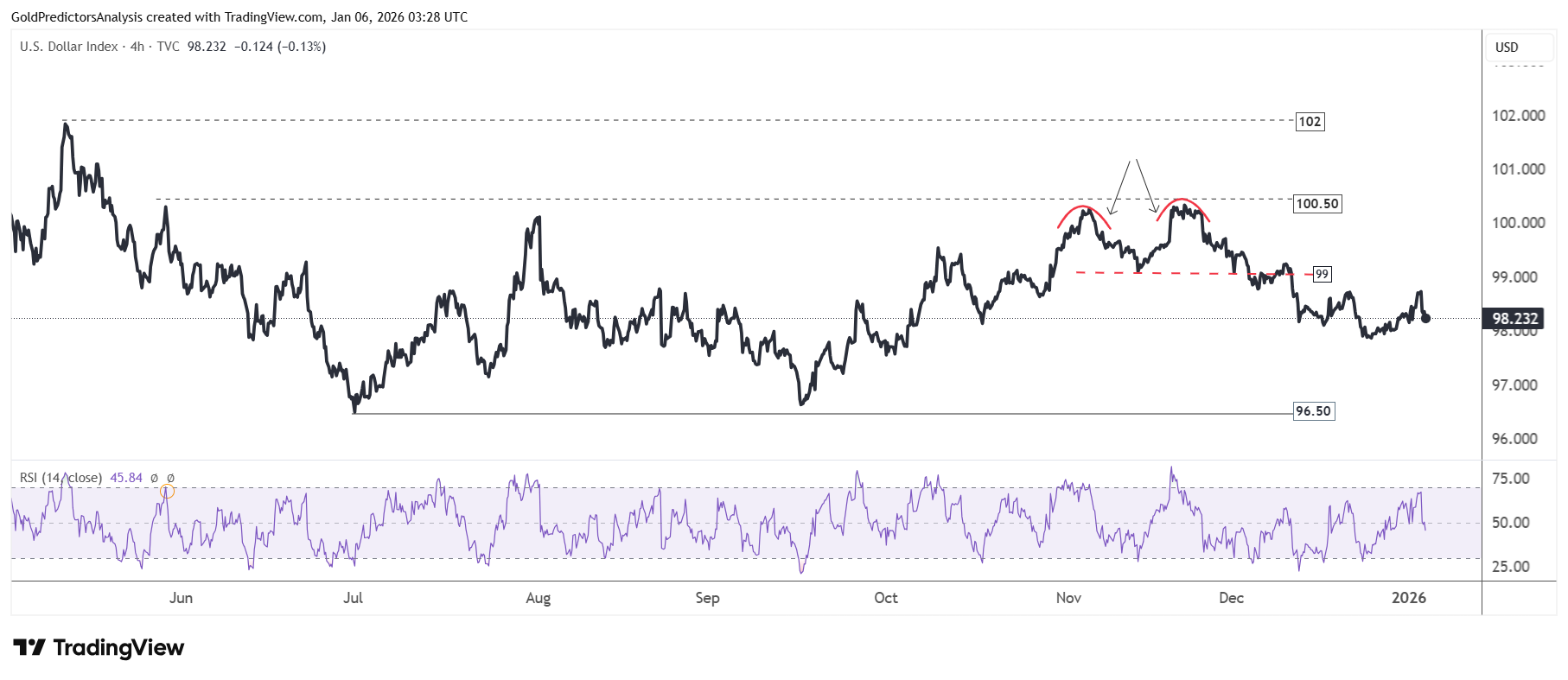
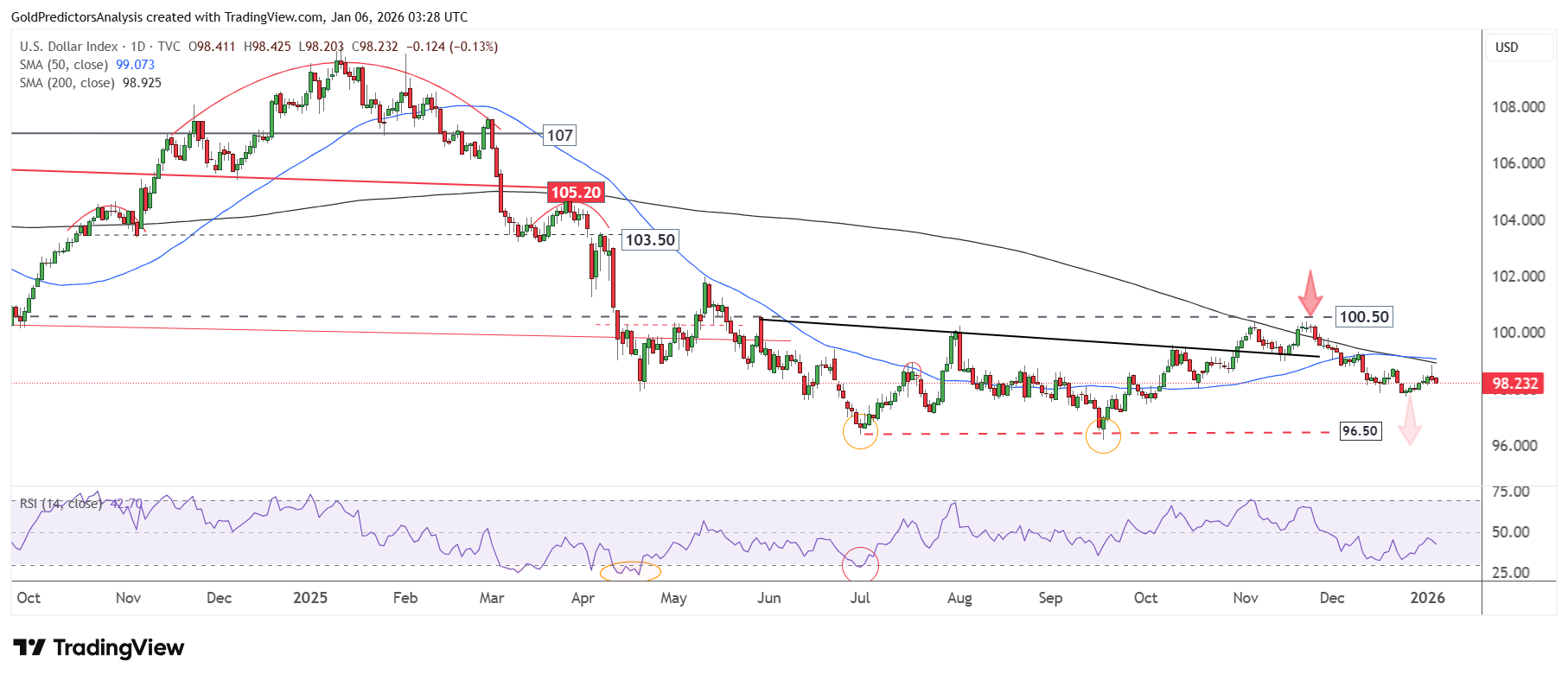
The daily chart for the USD Index shows that the index failed to break above the 200-day SMA and continues to move lower. The daily candle for Monday was a bearish hammer, which indicates that the next move in the USD Index could be much lower. A breakdown from the 97.50 level is likely and may signal further downside toward the 96.50 level.
The 4-hour chart for the US Dollar Index shows that the index failed to break above the 99 level and continues to move lower. The drop in the US Dollar Index from 99 suggests further downside toward the 97.5 and possibly the 96.5 level.