A powerful global trilemma is now erupting across Oil, inflation and geopolitical uncertainty and it has the potential to ignite one of the most aggressive Hard Asset repricings of the decade.
This is no longer a distant macro risk. It is happening now.
Energy disruption is tightening supply. Inflation pressure is rebuilding. Food and Fertilizer markets are flashing early warning signals. Climate risk is rising. The U.S dollar and Oil are moving in ways rarely seen before. And while much of the market remains distracted by yesterday’s trades, the foundations of the next great Commodity wealth transfer may already be shifting beneath the surface.
Oil. Natural Gas. Fertilizer. Copper. Silver. Gold. Food. Power.
These are no longer just Commodities. They are the critical assets that fuel nations, feed populations, secure supply chains and protect wealth when inflation, uncertainty and policy mistakes collide.
For traders, the message is urgent: the next major opportunity may not arrive with a warning bell. It may arrive as a supply shock, an inflation spike, a food crisis or a geopolitical escalation that instantly reprices the assets the world cannot live without.
As Lars Hansen, Head of Research at The Gold & Silver Club, warns: “The biggest mistake traders can make right now is assuming they will get unlimited time to react. In scarcity-driven markets, the repricing often happens before the consensus has even understood the trigger.”
The Three-Way Shock Now Reshaping Global Markets
Two shocks that markets have been treating separately are now converging into one.
Energy disruption through the Strait of Hormuz is tightening supply across the Gulf, feeding directly into Natural Gas prices and by extension, Fertilizer production costs. At the same time, climate models are increasingly pointing toward a major El Niño event forming by late 2026, threatening disrupted monsoons, weaker harvests and delayed planting cycles across key food-producing regions.
This is no longer a single-asset story. It is a full-spectrum scarcity trade.
“The market is still trying to price these risks in isolation,” says Hansen. “But energy, food, fertilizer and inflation are now part of the same macro chain. Once that chain starts tightening, the repricing can move very quickly.”
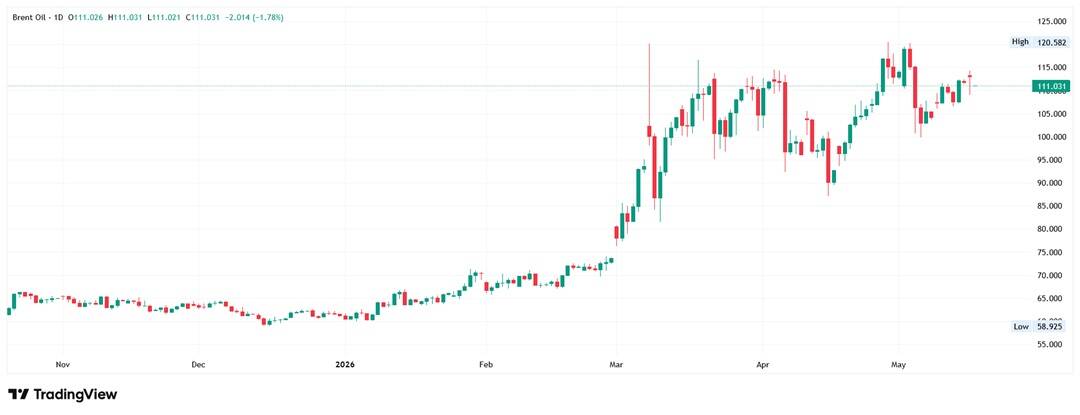
Brent Oil Price Forecast
Every new Brent Oil analysis as it publishes, today's technical signal and key levels, live price — on one page.
See all Brent Oil forecastsInflation Is No Longer a Background Risk
For much of the past year, traders convinced themselves inflation was contained. That assumption is now being challenged.
U.S inflation pressures are rebuilding, with monthly CPI momentum suggesting that annual inflation could move materially higher if current trends persist. Food, energy, transport and services are all vulnerable to renewed pressure, while households are already absorbing the impact of higher living costs.
For markets, the danger is not simply higher inflation. It is higher inflation at the same time as geopolitical risk, energy disruption and supply-side scarcity.
That combination changes everything.
Central banks can raise interest rates to cool demand, but they cannot print Oil, create fertilizer, refill grain inventories or reopen disrupted shipping routes. This is why Hard Assets behave differently in periods of structural scarcity. They are not merely investments. They are economic necessities.
“This is the trap many traders miss,” Hansen says. “Inflation driven by supply shocks is far harder to control than inflation driven by excess demand. Monetary policy cannot solve a physical shortage.”
Oil and the Dollar Are Sending a Warning Signal
One of the most unusual developments in global markets is the emerging positive correlation between Oil and the U.S dollar. Historically, Crude Oil and the dollar have often moved in opposite directions because a stronger dollar makes oil more expensive for international buyers.
But that relationship is changing.
When Oil rises alongside the dollar, markets are no longer trading a normal demand cycle. They are trading geopolitical stress, energy security and a flight toward liquidity at the same time. That is a powerful signal.
It suggests the world is entering a regime where Oil is not simply an economic input – it is becoming a strategic asset, an inflation driver and a geopolitical risk premium all at once.
Fertilizer May Be the Hidden Flashpoint
The most underappreciated part of this story may be fertilizer.
Ammonia production is heavily linked to Natural Gas. When gas prices rise, Fertilizer costs rise. When Fertilizer becomes more expensive or less available, farmers reduce usage, delay purchases or absorb higher costs. The result often appears later in food prices, crop yields and agricultural volatility.
Phosphate markets are especially vulnerable because they already face constrained supply, concentrated production and rising geopolitical sensitivity.
“If Energy is the first shock, Fertilizer is often the second,” Hansen notes. “Food inflation is usually the third. By the time the mainstream recognises the full sequence, traders who understood the chain early may already be positioned.”
The Hard Asset Wealth Transfer Is Accelerating
This is why 2026 may prove to be a defining year for Commodities.
Oil, Natural Gas, Gold, Silver, Copper, Fertilizer and Agricultural Commodities are no longer niche markets for specialists. They are becoming the pressure points of a new global order defined by scarcity, resource nationalism, supply-chain fragmentation and inflation volatility.
The winners of the previous cycle owned paper assets during an era of cheap money and globalization. The winners of this cycle may be those positioned in the physical assets nations need to power economies, feed populations and defend strategic interests.
At The Gold & Silver Club, the view remains clear: this is not the time to wait for confirmation from mainstream headlines. By the time the consensus narrative catches up, the cleanest opportunities may already be gone.
“The greatest risk is not being early to Hard Assets,” says Hansen. “The greatest risk is being late to the biggest structural repricing of real-world resources in a generation.”
The Oil shock, inflation shock and uncertainty shock are no longer separate stories.
They are becoming one.
And for traders paying attention, the global Hard Asset wealth transfer may already be underway.