



WTI Cracks Support as Selling Pressure Builds
Light crude oil futures are under heavy pressure Tuesday, slicing through key chart support and dragging sentiment with it. The selloff has momentum behind it, not panic — and that matters. Traders are reacting to a mix of geopolitics and demand anxiety, but the common thread is simple: the market doesn’t feel short oil right now.
At 13:06 GMT, Light Crude Oil Futures are trading $55.89, down $0.93 or -1.64%.
Crude Oil Breaks Key Support as Sellers Stay in Control
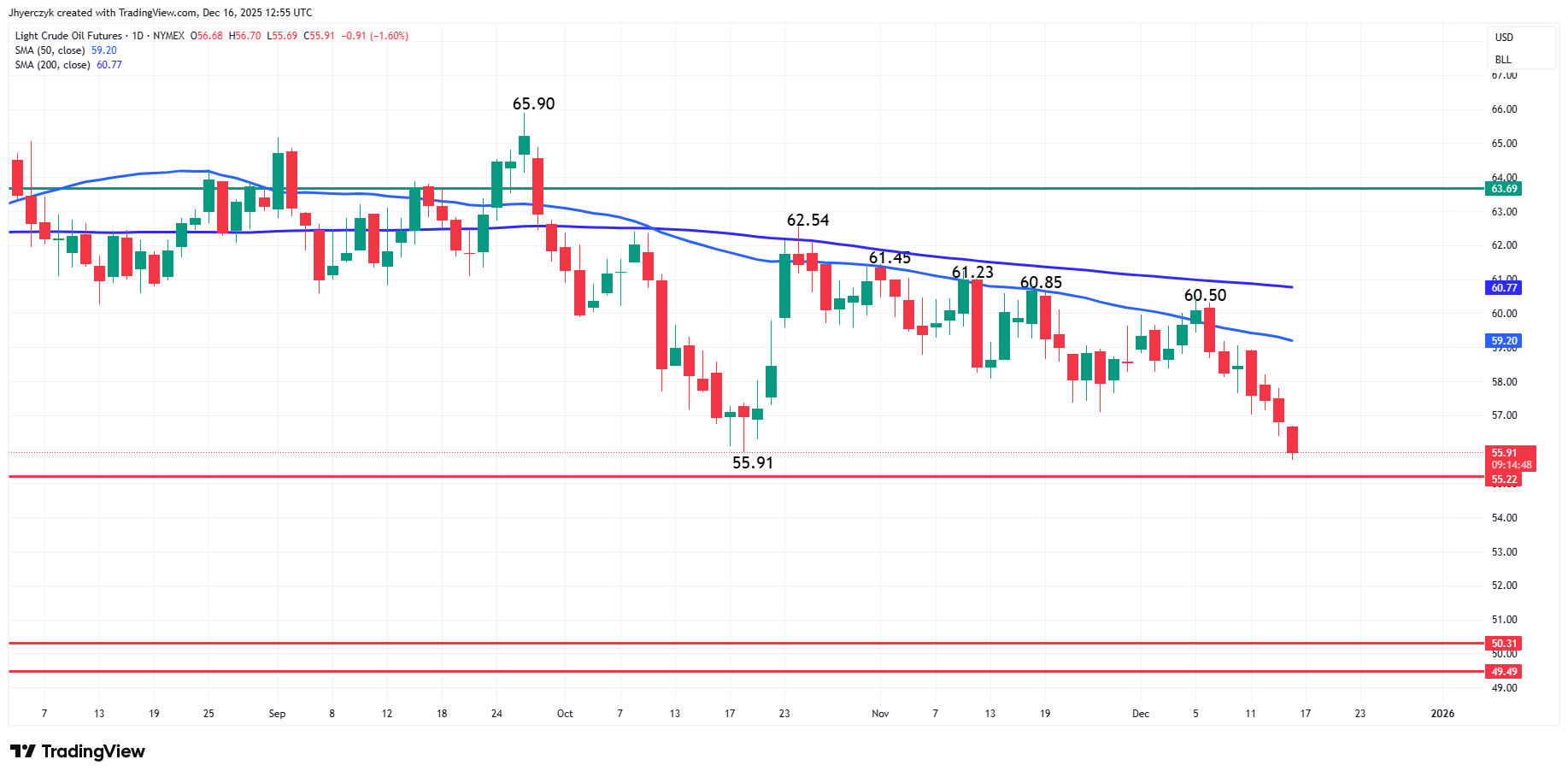
WTI punched through the October 20 main bottom at $55.91 early in the session, a level that had quietly held together the downside for months. That break puts the May 30 main bottom at $55.22 squarely in play. If that floor gives way, the chart opens up toward the $50.31–$49.49 downside target zone.
There’s no meaningful short-term resistance overhead, which tells you sellers aren’t meeting much pushback yet. The broader downtrend remains capped by the 50-day moving average at $59.20, with the 200-day moving average higher up at $60.77. Until price can reclaim either, rallies look more like selling opportunities than a change in tone, even if the pace of the decline cools.
Peace Talk Optimism Adds to Oversupply Anxiety
Fundamentals aren’t helping. Oil slipped below $60 after reports of progress in Russia-Ukraine peace talks revived expectations that Russian barrels could re-enter the market. The U.S. offering NATO-style security guarantees to Kyiv and European negotiators flagging progress was enough to get traders leaning harder into the oversupply narrative.
Russia pushed back on the idea of territorial concessions, which keeps the talks messy, but the market is trading the headline risk — not the fine print. As one analyst put it, the idea of additional Russian supply hitting an already well-stocked market is tough to ignore, even if timing remains unclear.
Brent Oil Price Forecast
Every new Brent Oil analysis as it publishes, today's technical signal and key levels, live price — on one page.
See all Brent Oil forecastsChina Data Reinforces Demand Doubts
On the demand side, China is flashing warning signs again. Factory output growth slowed to a 15-month low, while retail sales posted their weakest pace since late 2022. That data reinforced the view that global demand may struggle to absorb current supply growth.
There was a modest counterbalance from the U.S. seizure of a Venezuelan-linked oil tanker, but traders largely shrugged it off. Floating storage remains elevated, and a recent surge in Chinese buying from Venezuela suggests supply is still finding a home, just not at prices bulls would like.
Oil Prices Forecast: Pressure Persists Below $60
Bottom line: the market wants lower prices, or at least cheaper risk. As long as WTI stays below the 50-day moving average, sellers retain control. A clean break under the May 30 main bottom would likely accelerate losses toward the $50 area.
For now, buyers aren’t chasing the dip. Until either supply fears fade or demand shows real improvement, oil prices projections stay skewed to the downside. This remains a bearish setup in crude oil news today — and traders are trading it that way.
More Information in our Economic Calendar.