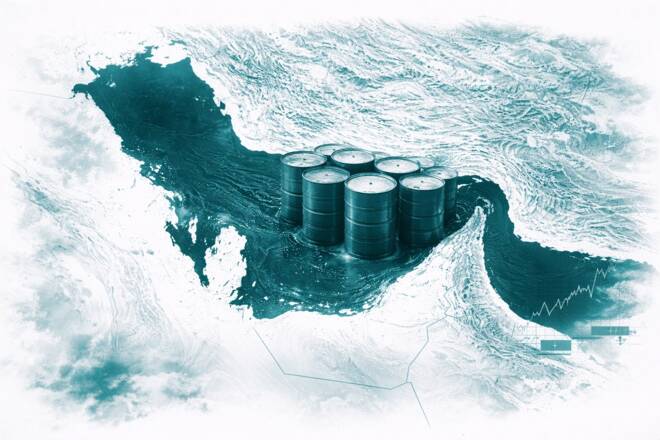
Oil prices rose on Tuesday due to the political turmoil affecting oil traders. Geopolitical tension has escalated with a warning from U.S. President Donald Trump concerning Iranian actions at the Strait of Hormuz. The Strait of Hormuz remains an important waterway for global flow of energy supplies. Therefore, if there are disruptions to this area, it will have an immediate effect on expected supplies. Brent crude oil (BCO) broke $113 per barrel and WTI crude oil (CL) broke $115 per barrel.

Strait of Hormuz Disruption and War Risk Drive Oil Higher
The Strait of Hormuz is again at center of attention for traders involved in shipping large volumes of oil across the globe. Iran’s military forces have successfully blocked passage through the Strait since tensions began in February. This blockage causes immediate disruption to global supplies of oil. This disruption has pushed buyers to compete for limited available barrels that increase demand and put upward pressure on oil. As such, premium prices for the barrels rose significantly, especially in Asia and Europe, which rely very heavily on crude oil from the Middle East.
The price fluctuations are still caused by political uncertainty. Iran did not accept a ceasefire offer and demanded a permanent cessation of the conflict. In the meantime, the military action in the region remains active as attacks on major energy infrastructure are carried out. These advancements add to the risk premium in oil prices as markets are concerned with additional supply chain disruptions.
The supply issues are extending outside the Middle East. Russia claimed destruction of a big export terminal due to drone attacks, which put a strain on an already constrained market. OPEC+ announced the increase in production; the effect is rather insignificant since several producers are unable to increase output due to current circumstances. The increase in official selling prices in Saudi Arabia is an indication of high demand and low supply that supports the positive trend in oil markets.
Oil Technical Outlook: Breakout Levels Signal Further Upside
Despite 48-hour notification by Donald Trump to Iran, oil prices continue to escalate higher on fears of further escalation. The chart below shows that WTI crude oil has been approaching $120 and shows strong bullish trend, which may likely break $120 this time.
Brent Oil Price Forecast
Every new Brent Oil analysis as it publishes, today's technical signal and key levels, live price — on one page.
See all Brent Oil forecasts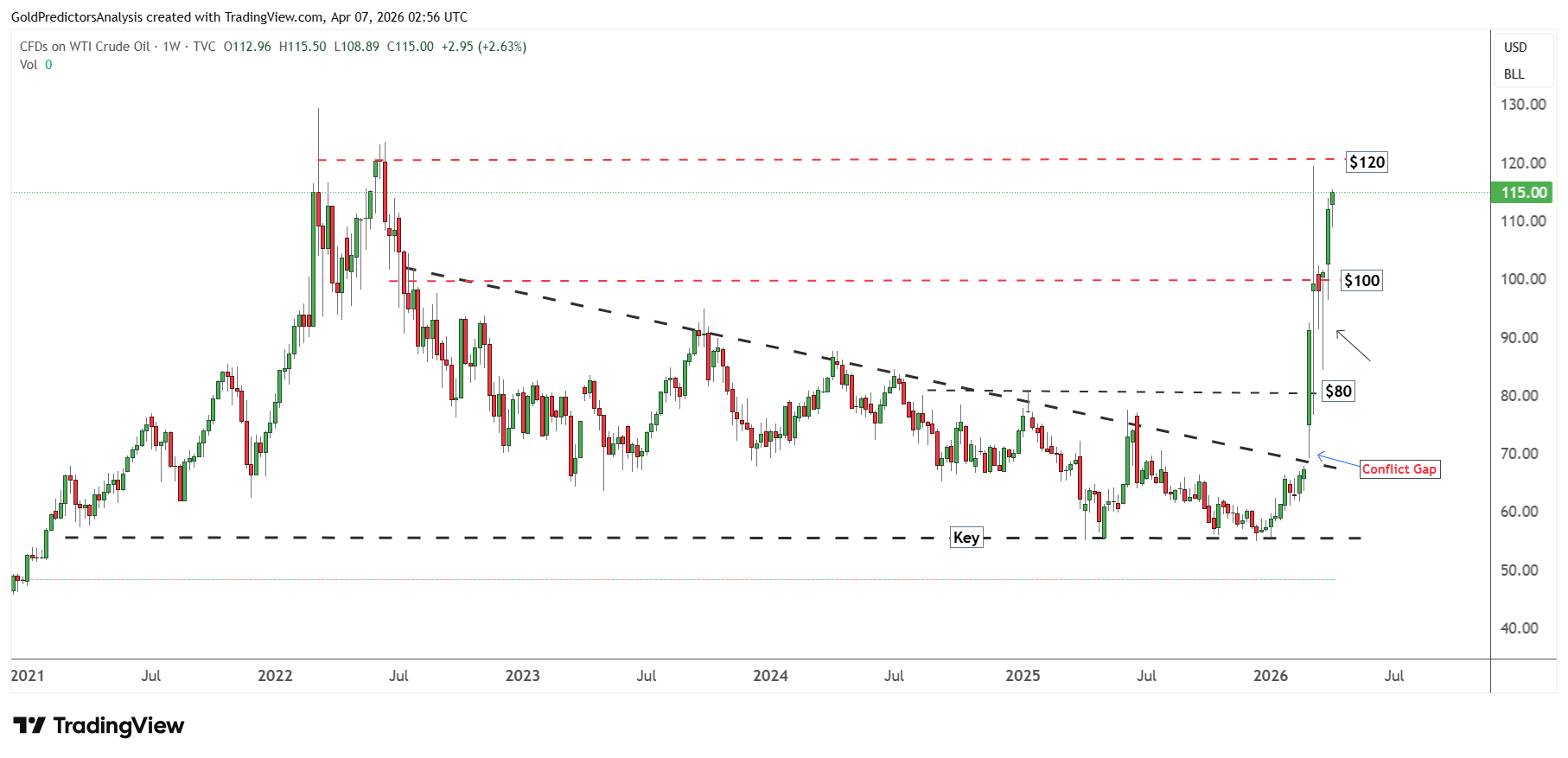
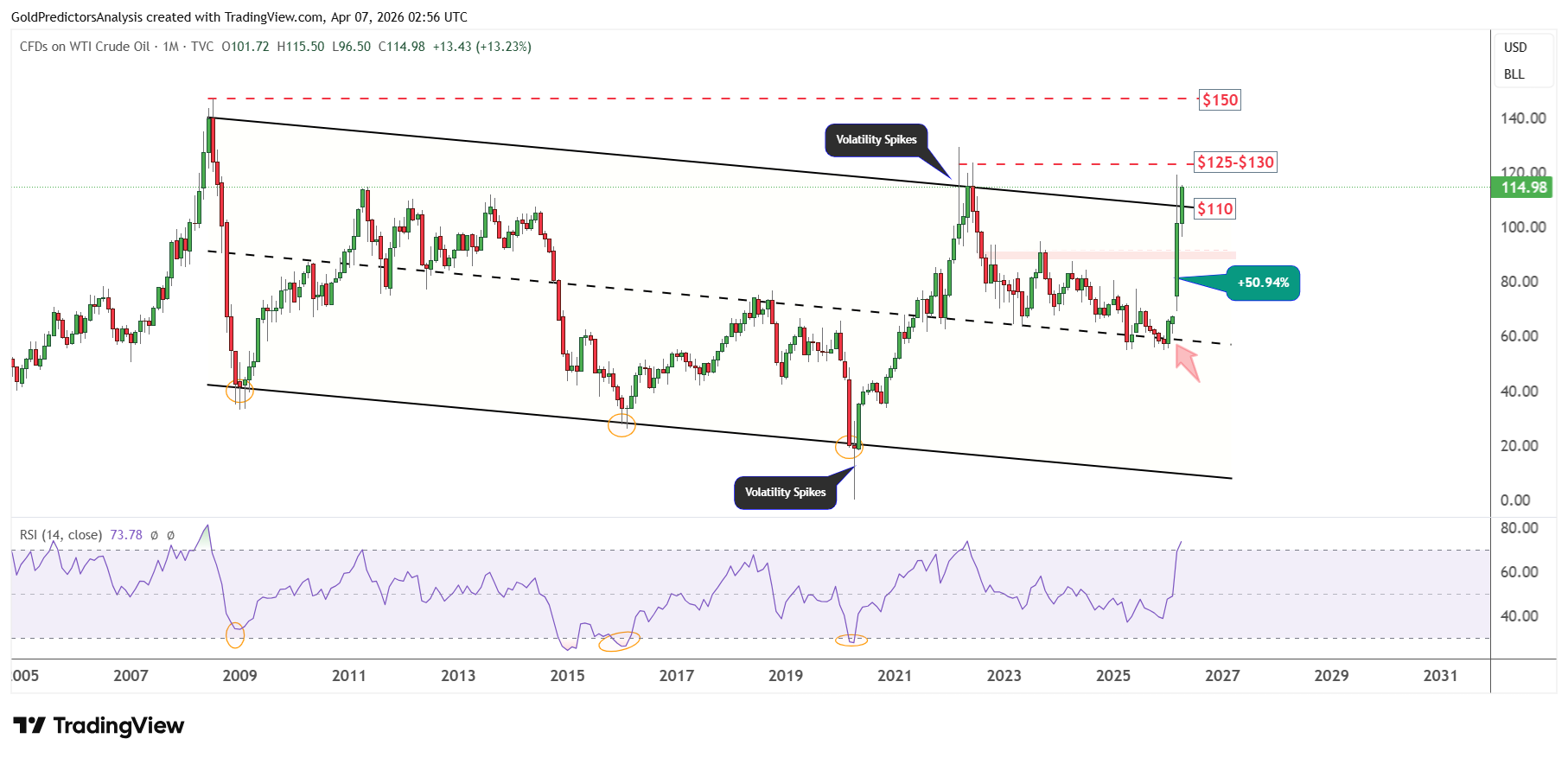
The RSI indicator shows that the $125 to $130 level is the key resistance level from the March 2022 highs. A break above this level will open the door for a rally towards the $150 area, which is the July 2008 highs. The RSI indicator shows further upside in the oil market as the fundamentals continue to support the rally.
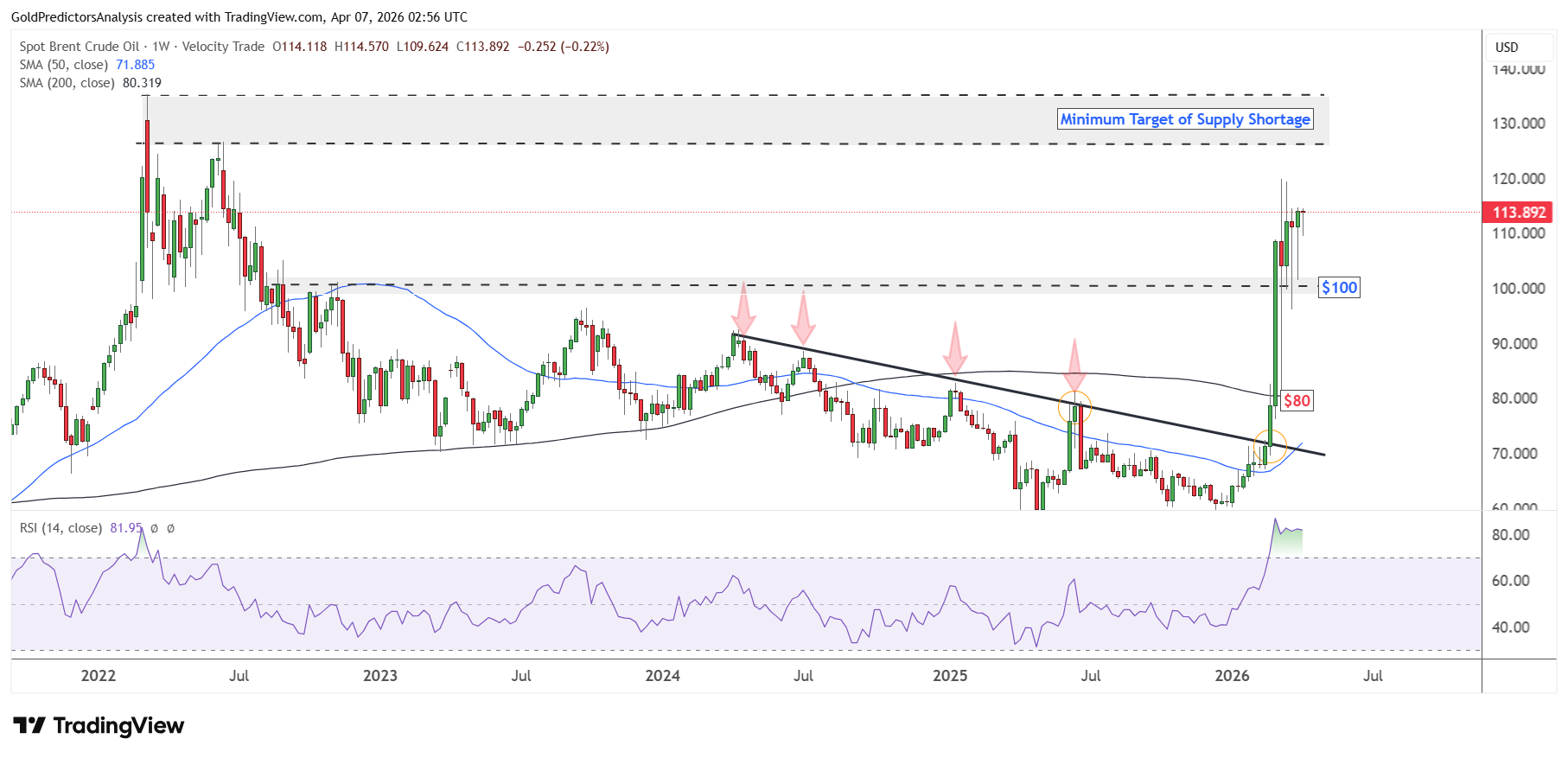
On the other hand, Brent crude oil also shows a strong bullish trend in the short term. The weekly candles are continuously closing above the $100 level. The shadows at the bottom of the candle indicate bullish strength in the market.
This bullish strength is likely to resolve to the upside. Therefore, a strong rally in the oil market is expected over the next few days to reach the short term target of $125 to $135. However, the RSI remains elevated in the short term, but the fundamentals and growing risk in the market will likely keep oil prices higher.
Bottom Line
Geopolitical risks have kept oil prices high as the market has remained elevated during the past few weeks. The situation around the Strait of Hormuz keeps supply tight and pushes prices higher. The competition among buyers for limited barrels still exists which builds further pressure on the upside. Meanwhile, the bullish trend is supported by sluggish growth of supply and constant disruptions.
From technical perspectives, the oil prices are showing a constructive structure which indicates further upside in the short term. The immediate target for WTI oil remains $125-$130. A break above this range would push the prices quickly to $150. On the other hand, Brent crude oil has an immediate target of the $125-$135 level.
If you’d like to know more about how commodity markets work, please visit our educational area.